A delayed game can hit players as an annoyance and investors as a warning. Once share prices start moving, CFD traders may see an opportunity, but the same leverage that makes those moves interesting can also empty an account faster than most beginners expect.
Gaming news has a business side that is easy to miss. A studio closure can hit confidence in a publisher, a weak hardware launch can affect sales forecasts and a major delay can move a company’s share price before the game ever reaches players. CFD trading gives traders a way to act on those movements without buying the shares themselves.
That makes the trading platform important. The charts need to be clear, the order controls need to make sense and the account costs need to be explained properly. Regulation also deserves close attention because a polished screen tells you very little about the company handling your money. This review looks at the platform’s trading tools, account structure and offshore status before deciding who it may suit in 2026.
What Axwel Offers CFD Traders
A major game delay or studio closure can reach far beyond gaming forums. These events affect sales forecasts and investor confidence, which can push the share prices of publishers and technology companies up or down. CFD trading gives people who already follow that business news a way to trade those price movements without buying the shares, although leverage makes every decision far more serious than choosing the wrong loadout.
A CFD, or contract for difference, ties the result of a trade to the price movement between opening and closing a position. Traders can buy when they expect a price to rise or sell when they expect it to fall. They do not receive ownership rights in the company or asset behind the contract.
Axwel brings those contracts together on one platform, with access to company shares and major stock indices. The range also covers forex, precious metals and commodities, along with cryptocurrency CFDs. That gives a trader room to follow a gaming publisher one day and a wider technology index the next without opening separate accounts for each market.
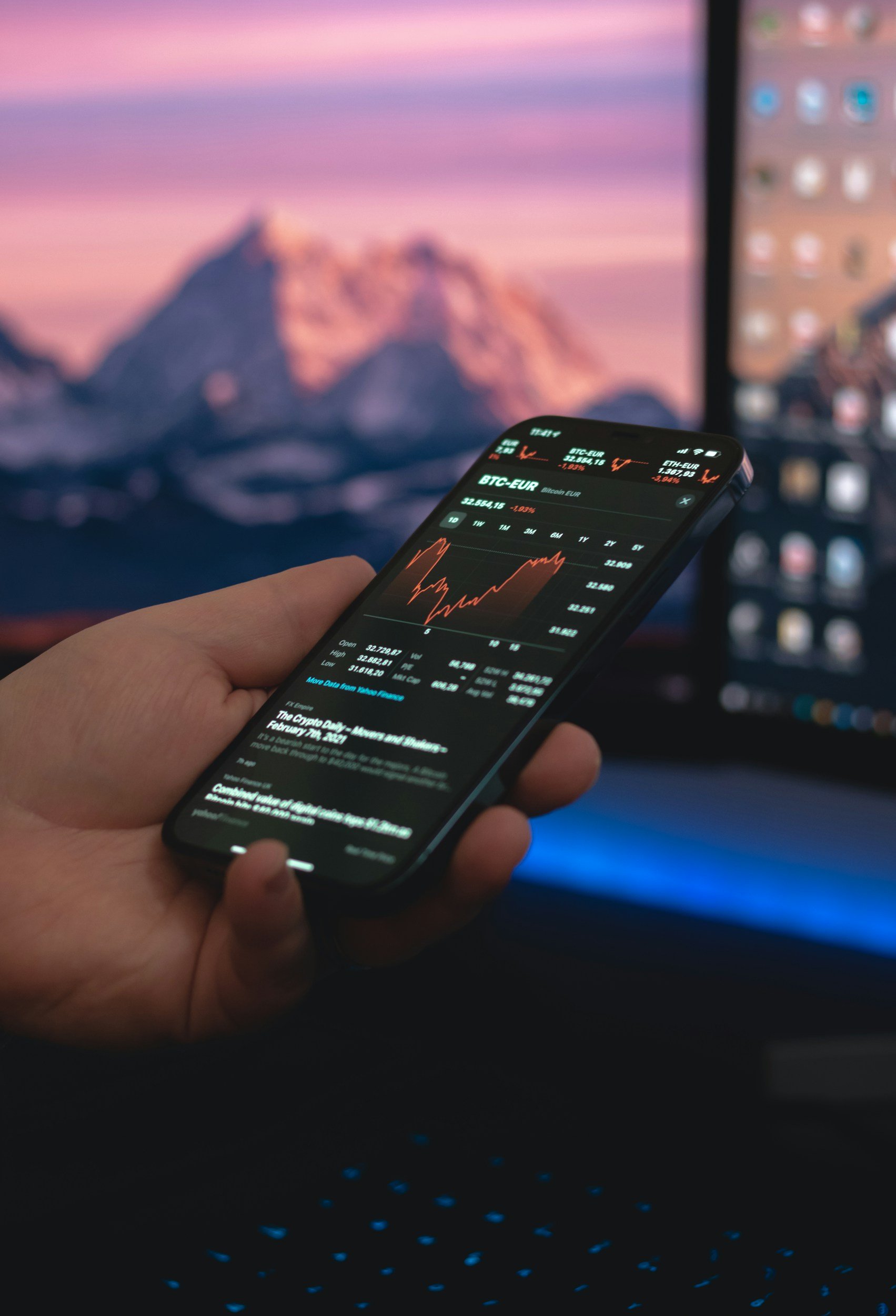
The service runs through a browser-based WebTrader and supports mobile trading for checking prices or managing an open position away from a desk. TradingView-powered charts provide live market data and technical analysis, while stop-loss and take-profit orders let you set an exit before the market reaches it. Alerts help you track price movement without staring at the screen all day.
There is one important limit for this audience: the platform does not accept residents of the United States. American readers can assess the service and learn how it works, but they cannot open an account. For eligible traders elsewhere, the offer is straightforward: one CFD account with several markets and tools built around live prices.
The Company Behind the Trading Platform
Company Background and Offshore Regulation
A trading screen can look polished, but the company behind it is the part that gives the account a legal identity. This service is operated by Flux Ltd, a company registered in the Comoros Union. Its website publishes an address and a company registration reference. It also provides legal documents covering account terms, privacy and financial risk.
Flux Ltd states that it is regulated by the Mwali International Services Authority under an offshore brokerage licence. That gives the business a formal regulatory home, although it is different from supervision by larger national regulators with longer records in retail finance. Offshore status does not automatically make a platform unsafe, but it gives traders fewer recognised routes for complaints or compensation when compared with brokers overseen in major financial centres.
The wider global fintech market generated about $650 billion in revenue during 2025, after growing by about 21% from the previous year. McKinsey placed the broader financial-services industry at $15 trillion, which shows how much digital financial platforms have grown without yet replacing established banks and investment firms.
Account Verification and Legitimacy
Account checks add another layer of operational safety. New customers must verify their email and complete a know-your-customer process before trading. The published requirements include government-issued identification and proof of address, with most checks completed within 24 to 48 hours. These controls help confirm who owns an account before money moves through it, which is a basic safeguard for any financial service handling deposits and withdrawals.
The platform has a named operating company and makes its legal position public. Mandatory verification also gives the account process a clear structure. Those points support the view that this is a legitimate service rather than an anonymous trading website. The offshore licence still deserves attention because regulation affects what protection may be available after a dispute.
Platform Safety and Trading Risk
Platform safety and trading safety must remain separate. The account can have proper controls and a traceable operator, yet a leveraged CFD position can still lose money very quickly when the market moves the wrong way.
Web Trading and Mobile Access
The browser-based WebTrader is the main place where the service brings its charts and order controls together. It runs without a separate software download, so traders can log in through a standard browser and move straight to the market they want to follow. The layout is built around live pricing, open positions and account information rather than decorative extras.
TradingView powers the charting tools, which gives users access to technical indicators and several timeframes. A trader following a game publisher, technology company or major index can mark support and resistance levels, compare recent price action and decide where a position should open or close. The larger screen of a desktop or laptop remains the better choice for detailed chart work because it gives each panel enough space to stay readable.
Mobile trading covers the practical jobs that cannot wait until you return to a desk. Live prices remain available, open positions can be checked and orders can be managed from a phone. That is useful when company results land during the day or a market reacts to unexpected news. A smaller display naturally gives charts less room, so the mobile setup works better for monitoring and quick account changes than for a long technical review.
Risk controls sit inside the same trading process. Stop-loss orders let traders choose a price where a losing position should close, while take-profit orders set an exit after the market moves in the intended direction. Price alerts can draw attention to a level without requiring constant screen time.
The platform also supports long and short positions, which means traders can act on an expected rise or fall. Hedging is available for users who want opposing exposure in the same instrument. These tools make the service flexible, but none of them removes the need to choose position size carefully or understand the market before opening a trade.
Silver, Gold and Platinum Accounts Compared
The three account levels use the same basic trading limits, so the main difference comes down to pricing. Silver, Gold and Platinum all allow leverage of up to 1:200, a minimum trade size of 0.01 lots and a 5% stop-out level. Moving to a higher tier does not increase the maximum leverage or unlock a smaller trade size.
Silver is the standard account. It carries the full spread and swap rates published in the contract specifications, which makes it the reference point for the other two levels. Axwel presents it as the starting option for newer traders who want access to the platform without the pricing adjustments attached to Gold or Platinum.
Gold keeps the same leverage and trading limits, but the account page lists a spread discount of “50% of Silver” and a swap discount of “40% of Silver.” Platinum uses the same structure, with a published spread discount of “75% of Silver” and a swap discount of “60% of Silver.”
| Feature | Silver | Gold | Platinum |
|---|---|---|---|
| Maximum leverage | Up to 1:200 | Up to 1:200 | Up to 1:200 |
| Minimum trade size | 0.01 lots | 0.01 lots | 0.01 lots |
| Stop-out level | 5% | 5% | 5% |
| Spread discount | None | 50% of Silver | 75% of Silver |
| Swap discount | None | 40% of Silver | 60% of Silver |
The wording on the account page does not explain the final numerical spread or swap charged on each instrument. It also leaves room for confusion about whether those percentages describe the discount itself or the resulting rate. Traders therefore need to check the live contract specifications before opening a position or leaving it open overnight.
In practical terms, Silver gives access to the standard conditions, while Gold and Platinum are aimed at traders who expect lower trading costs. The higher tiers become more useful when someone trades frequently or keeps positions open long enough for swap charges to add up.
Markets Available Through Axwel
The platform covers several CFD markets, which means traders can move between company shares and broader asset groups without opening separate accounts. That range suits someone who follows technology businesses closely but also wants access to currencies or commodities when the news moves elsewhere.
Share and Index CFDs
Share CFDs give traders exposure to individual companies. A strong earnings report, a delayed product launch or a change in management can move a share price quickly. For someone following the business behind gaming, that could include publishers or technology firms whose results depend partly on hardware sales, subscriptions and major releases.
Index CFDs spread that exposure across a group of companies. The S&P 500 follows large US businesses, while the DAX tracks major German companies and the FTSE 100 covers leading firms listed in London. An index can be useful when the wider sector is moving together, although one weak company will have less influence than it would in a single-share trade.
Forex and Metals
Forex trading covers major currency pairs and less commonly traded combinations. Currency prices react to interest-rate decisions, inflation data and central-bank policy, so the market runs on a different set of drivers from company shares. Metals include gold, silver and platinum, which traders often watch during periods of economic uncertainty or changing industrial demand.
Commodities and Cryptocurrency CFDs
Commodity CFDs cover markets such as oil and gas, with agricultural products including coffee and wheat also available. These prices can react to weather, transport problems and supply changes.
Cryptocurrency CFDs provide exposure to assets such as Bitcoin and Ethereum without requiring direct ownership or a separate crypto wallet. These markets can move sharply, so the same risk controls used elsewhere become even more important. The useful part is the breadth, but each category behaves differently and needs its own research before a position is opened.
Fees, Spreads, Swaps and Leverage
Spreads and Account Pricing
Trading costs begin with the spread, which is the gap between the price offered to open a buy position and the price available for selling. A trade starts slightly behind because the market must move far enough to cover that gap before the position shows a profit. The size of the spread can vary by instrument and market conditions, so a share CFD may carry a different cost from a currency pair.
Silver accounts use the standard spread pricing. Gold and Platinum accounts receive the pricing adjustments listed in the account comparison, although the public wording does not show the final spread for each instrument. The live price shown on the trading screen is therefore the figure that needs checking before an order is placed.
Overnight Swap Charges
Swap charges apply when a leveraged position remains open overnight. The charge reflects the cost of carrying the trade into another trading day and can either be positive or negative, depending on the instrument and position direction. A single night may produce a small amount, but the total can grow when a trade stays open for several days. Gold and Platinum accounts receive the published swap adjustments, while Silver uses the standard rate.
Leverage and Margin Risk
Leverage has a much larger effect on the account. The maximum offered is 1:200, which allows $100 of margin to control a position worth as much as $20,000. A 0.5% market move against that full position equals $100, which could use the entire amount committed as margin. The same movement in the right direction can produce a gain, but leverage applies equally to losses.
Stop-loss orders can limit exposure by closing a position at a chosen level, although a fast market may execute the order at a different price. Margin monitoring also warns when open trades are using too much of the available balance.
Other Charges to Check
Deposits do not carry a platform fee under the published terms. Withdrawal charges may depend on the payment method or provider. There is no complete public price sheet covering every spread, swap and possible payment cost, so traders need to check the live contract details before committing money. A strong market call can still become an expensive trade when the spread is wide or the position remains open longer than planned.
Deposits, Withdrawals and Account Verification
Funding the account starts with a minimum deposit of $250. The available payment methods include Visa and Mastercard, with Maestro also listed. Apple Pay and Google Pay provide another route for card-based deposits, while bank transfers and e-wallets are available for users who prefer a direct account-to-account method.
Deposits are described as usually instant, although the final timing can depend on the payment provider. Axwel states that it does not charge a deposit fee, so the amount sent should reach the trading balance without a separate platform charge. Currency conversion or provider costs may still apply when the payment method uses a different base currency.
Withdrawals take longer. The published processing range is two to five business days, with the final timing tied to the method used and any checks required before money is released. Withdrawal charges may also depend on the payment provider, so traders should check the cost before submitting a request rather than assuming every route is free.
Identity verification forms part of the account setup. Customers are asked for a government-issued ID and proof of address, with extra documents possible when local rules or account activity require them. The usual verification period is listed as 24 to 48 hours.
Completing those checks early makes the withdrawal process easier because the account holder has already been confirmed before funds move out. The process is standard for a financial account, although it adds a step that does not exist when buying a game or renewing a subscription. The platform needs to know who controls the account before it can release money.
Customer Support and Learning Tools
Support is available through live chat and email, with a contact form for questions that need a fuller explanation. Regional telephone lines are also listed. The service describes support as available 24 hours a day, although contact-form replies may take up to 48 hours, so live chat is the more practical route for an urgent account issue.
The support hub covers common questions about registration, deposits, withdrawals and platform use. That gives new users a place to check basic account procedures before contacting an agent. It also helps separate technical problems from trading decisions, since support can explain the platform but cannot tell you whether a position will make money.
A demo account provides the main learning tool. It uses virtual funds with live market conditions, which lets traders practise opening positions and using order controls without risking real capital. The market calendar helps track scheduled events that could affect prices, while platform guidance explains the main functions.
These tools make the service easier to learn, but they do not replace research or risk control. Knowing where the buttons are is only the first step.
Axwel Pros and Cons
The platform has a solid range of trading tools, but it also comes with limits that need to be weighed before opening an account.
Pros
Broad market access: Traders can use one account for share CFDs and major indices, with forex, metals, commodities and cryptocurrencies also available.
Browser-based trading: WebTrader runs without a separate download and includes TradingView-powered charts with live prices and technical indicators.
Mobile access: Open positions can be checked and managed away from a desktop, which is useful when markets react during the day.
Demo account: Virtual funds give new users time to learn the controls before committing real money.
Three account levels: Silver, Gold and Platinum provide the same leverage and trade-size limits, with different published spread and swap terms.
Risk controls: Stop-loss orders and take-profit orders help traders plan an exit before opening a position.
Several payment methods: Card payments and bank transfers are supported, with Apple Pay, Google Pay and e-wallets also listed.
Cons
Offshore regulation: The platform operates under the Mwali International Services Authority rather than a major national regulator.
Unavailable in the United States: US residents cannot open an account.
High leverage: The maximum of 1:200 can increase losses very quickly.
Unclear pricing language: The published spread and swap percentages do not explain the final cost clearly.
Limited public fee detail: Live costs need to be checked before trading.
Withdrawal delays: Requests may take between two and five business days.
Is Axwel Worth Using in 2026?
Axwel makes the most sense for traders who already understand CFDs and want a platform that brings several markets into one account. The service gives them a clear route into browser-based trading, with mobile access available when they need to check or manage a position away from a desk.
Beginners have a safer place to start through the demo account, although learning the controls is only part of the job. They still need to understand spreads, overnight charges and the effect leverage can have on a small balance before moving to live trading.
Is Axwel legit? The final judgement is straightforward. Axwel is a legitimate offshore-regulated platform with a published company background and clear account procedures. It may suit eligible traders who are comfortable with that regulatory position and who check live costs before opening a trade. It will not suit US residents, long-term investors looking to own shares directly or anyone searching for a low-risk financial product.
CFDs carry a high level of risk because leverage can increase losses as quickly as gains. Traders can lose some or all of the money committed to a position, so these products are not suitable for everyone. Use only money you can afford to lose.