Meme coins have evolved from their initial origins as internet jokes to represent a multi-billion-dollar cultural and financial ecosystem. This asset class is shaped by multiple factors, from liquidity flows to community governance and network utility. The entire sector’s market cap hovers between $19BN and $22BN based on daily trading activity this year. While new political and viral tokens emerge every day, Dogecoin remains the market’s anchor, being also the first meme coin ever launched.
Traders and investors alike closely monitor the Dogecoin prediction and the token’s continuous movements, which serve as a sentiment gauge; whenever speculative capital starts to flow into risk-on assets, DOGE (Dogecoin) is the first to react. Now, 2025 closed well below its all-time highs with only several tokens that managed to end the year above the $1BN threshold. A select few top contenders capture most of the market’s attention this year, so let’s look at the main six.
Dogecoin (DOGE)
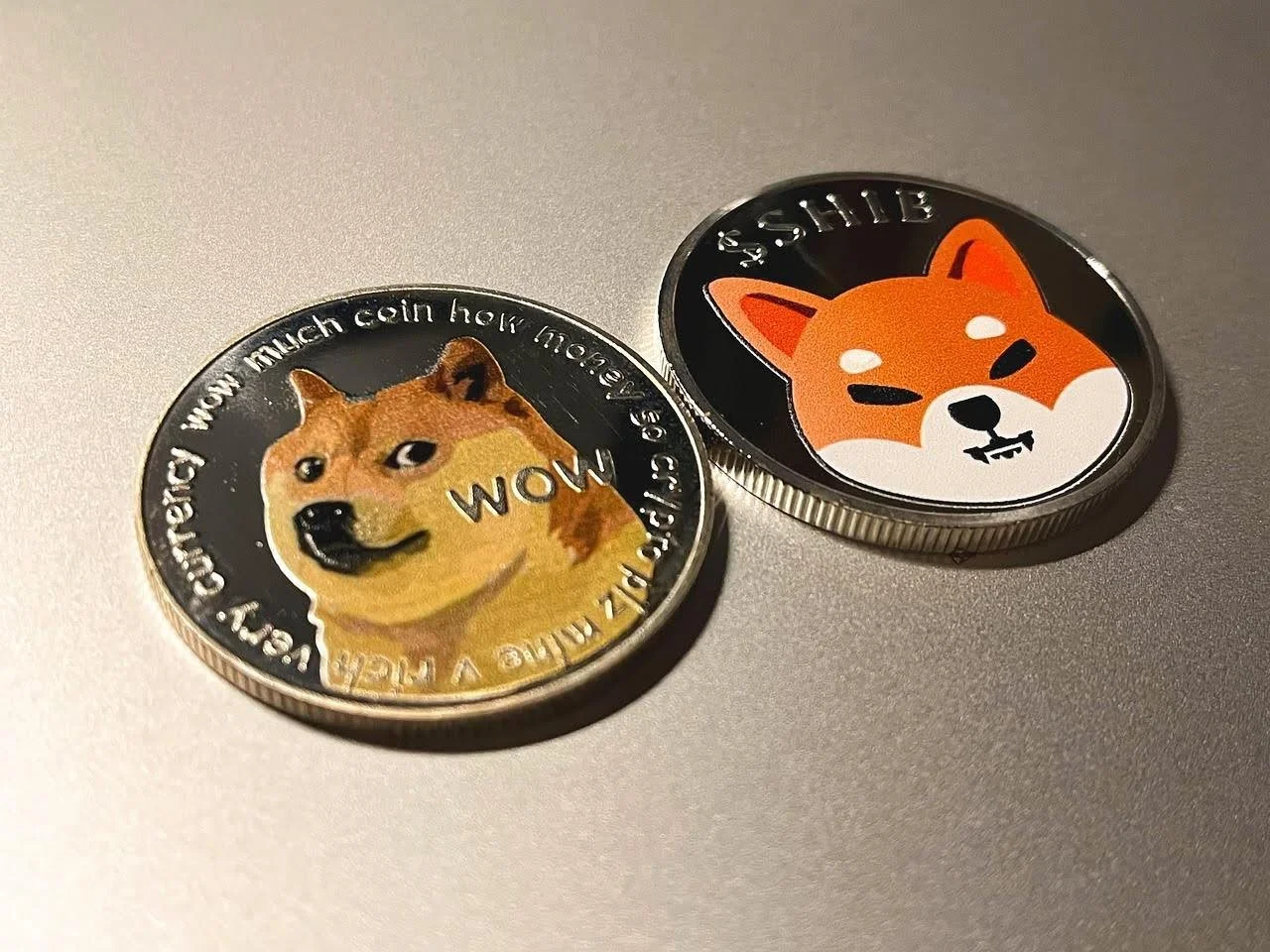
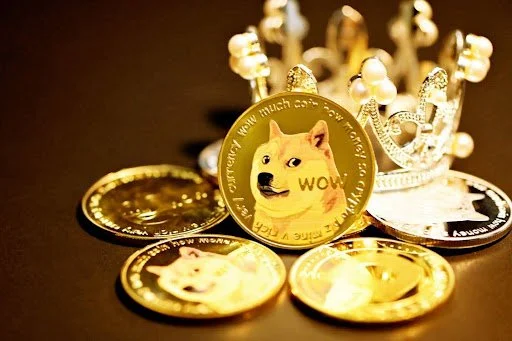
Dogecoin remains the main driver of the sector, backed by 13+ years of commitment from its community, the largest liquidity pools in the market, and the highest recognition a meme brand could enjoy. It’s an open-source digital token developed in 2013 by Jackson Palmer and Billy Marcus after it was forked from the Litecoin network. Dogecoin relies on a proof-of-work (PoW) consensus model powered by the Scrypt algorithm, and unlike other networks, it hasn’t migrated to staking. In terms of real-world commerce, DOGE can be used in numerous activities: as a payment method at AMC Theatres, utilized to make purchases at Tesla, spent on gaming products at GameStop, and more.
Dogecoin tokens are issued continuously and approximately 5BN new tokens are mined every year. It’s a key variable that long-term holders must keep in mind because a supply that continues to grow requires a change in how they manage risk.
Shiba Inu (SHIB)
Shiba Inu was initially released as an anonymous experiment and the industry nicknamed it the “Dogecoin Killer”. Ever since, it has managed to outgrow its origins and become a multi-token decentralized ecosystem. Shibarium, its proprietary Ethereum Layer-2 network, is the project's foundation and powers a growing number of decentralized financial tools. A known developer named Sytoshi Kusama is at the helm of the project now, after the anonymous SHIB’s anonymous founder known as Ryoshi disappeared four years ago.
SHIB’s ecosystem spans three primary tokens:
SHIB: the main currency and brand asset
BONE: the network’s governance and gas token
LEASH: an asset intended for different ecosystem rewards.
Despite the implementation of automated burn mechanisms, which are originally intended to maintain scarcity, investors should keep their expectations grounded. There are over 589TN tokens in circulation, a massive volume that means even significant burns represent a tiny fraction of the entire current supply. This makes a considerable spike in price almost impossible without a growth in demand and utility.
Pepe (PEPE)
Launched in early 2023 as an ERC-20 token on Ethereum, Pepe kept things super simple and skipped coin giveaways and presales. It leaned into internet culture, centered around the famous frog meme that took over social media at the time. It doesn’t try to build complex networks or support payments; it’s purely driven by vibes and community involvement. Its maximum supply is also a nod to fun, as it’s capped at 420.69 – two numbers that are famously known on social media.
Pepe is one of the largest cryptos worldwide and boasts a market cap worth around $1.22BN as of August 2026. It’s more volatile than Shiba Inu and Dogecoin and is highly impacted by speculation and momentum, which makes it a preferred choice for speculative traders.
Bonk (BONK)
While the first meme coins were developed on Ethereum and Bitcoin, Bonk took a different stance and was issued on the Solana Chain – the first meme coin to make this exception. Its launch in late 2022 gave Solana a massive boost and brought liquidity back to the Solana-powered decentralized exchanges. The interest in this coin remains high thanks to its ties and contribution to Solana’s ecosystem.
Bonk has real-world commerce utility as it’s accepted as both reward currency and payment solution across multiple DeFi (decentralized finance) protocols, NFT markets, and Solana dApps (decentralized apps). It runs on Solana’s hybrid model consensus mechanism that blends both proof-of-stake (PoS) and proof-of-history (PoH), which makes it possible to sustain a high throughput that gives it a considerable speed advantage. Because it’s closely tied to Solana, any pressure on SOL or network downtime can directly impact Bonk’s liquidity and trading activity.
MemeCore (M)
MemeCore represents a massive achievement in the progress of meme-based blockchain technology, as it turns memes from simple tokens into the fundamental architecture of a Layer-1 blockchain network. It doesn’t operate as a smart contract or another network, as is the case with Ethereum-fueled Shiba Inu, but has its own foundational infrastructure, designed to handle the particular demands of meme-based apps.
Because it’s one of the very few purpose-built Layer-1 blockchains, it can benefit considerably from a future boom of the meme coin sector. In April 2026, it grabbed the title of the second-largest meme coin by market cap and surpassed SHIB with an all-time high of about $4.86.
Pudgy Penguins (PENGU)
Pudgy Penguins was launched in 2021 as an NFT collection and is backed by an internationally recognized brand that sells toys in top stores like Target and Walmart. After issuance, it took 20 minutes for all of its 8,888 digital cartoon penguin pieces to sell. In December 2024, the project officially launched its native token, $PENGU, on the Solana blockchain through a massive multi-billion-dollar airdrop.
The token’s 24-hour trading volumes often surpass $100MN, which indicates that the liquidity for its market capitalization is pretty healthy.
Closing remark
Meme coins are by nature highly speculative assets, which means that their price performances are highly sensitive to factors like social media hype, broader crypto trends, and changes in community sentiment, to name three main drivers. That’s why many investors treat them as small and risk-on elements, leveraged to diversify portfolios but not to make the bigger part of them.