Winterspell kicks off the new year of Disney Lorcana with a set that feels immediately impactful, especially in sealed play. Between powerful bombs, clearly defined color identities, and meaningful synergies built around questing, challenging, and Boost, Winterspell rewards players who take the time to understand what their cards are trying to do. Whether this is your first prerelease or you’re a seasoned Illumineer looking to sharpen your edge, this guide is designed to help you navigate deck building, color choices, and in-game decisions so you can make the most of your Winterspell prerelease experience.
What to expect at Winterspell prerelease
If this is your first Disney Lorcana prerelease, welcome to one of the most enjoyable ways to experience a new set. Winterspell prerelease events are all about getting hands-on with the cards early, experimenting with new ideas, and enjoying the excitement of discovering what the set has to offer before it officially releases.
At the event, you’ll receive six booster packs of Winterspell along with one promo card. Using those packs, you’ll build a minimum 40-card deck. There’s no upper limit on deck size, and you’re free to include as many ink colors as you want—though sticking to two (or maybe three) inks will usually give you a smoother, more consistent deck. Most stores allow around 30–40 minutes for deck construction before gameplay begins, so don’t stress if you’re still reading cards right up until time is called.
Prerelease events typically run in a casual tournament format, usually three to four rounds depending on turnout. Matches are often best-of-one, though some stores may run best-of-three. This is your chance to test interactions, discover unexpected synergies, and see how Winterspell’s themes and strategies actually play out across the table.
If competitive play isn’t your thing, don’t worry—prereleases are designed to be welcoming and low-pressure. Everyone is learning the set together, and half the fun comes from seeing wild board states, surprising combos, and cards that completely shift the game when they hit the table. Wins are nice, but the real takeaway is familiarity with the set and a deeper understanding of how Winterspell fits into Lorcana’s evolving meta and story.
As always, come prepared with card sleeves, a deck box, dice or counters, and a positive attitude. Prerelease events are just as much about meeting fellow Illumineers and sharing excitement as they are about gameplay.
Promo Cards You Can Receive
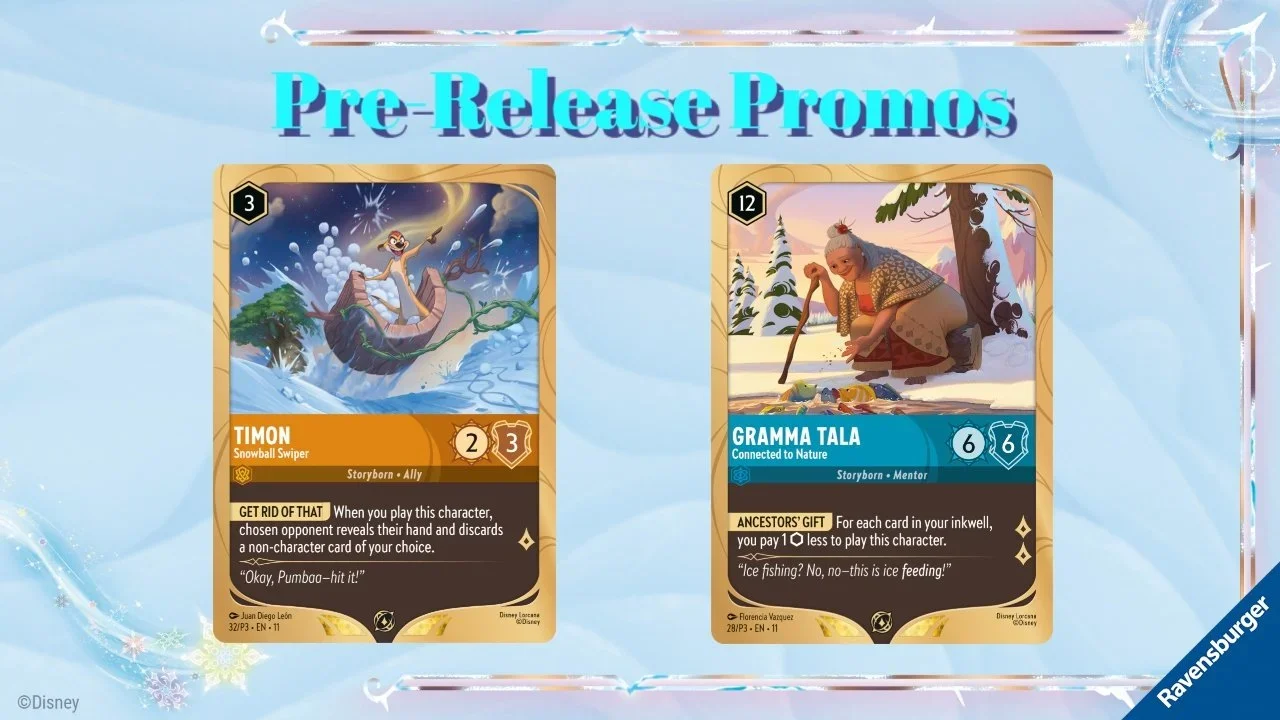
Winterspell prerelease kits include one of the following promo cards:
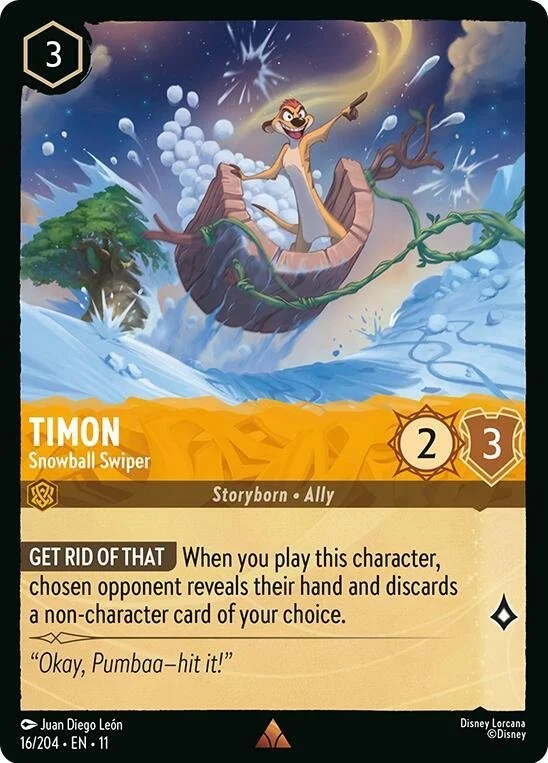
Timon – Snowball Swiper (Amber)
A 2/3 character for 3 ink with Get Rid of That: When you play this character, chosen opponent reveals their hand and discards a non-character card of your choice. This is a disruptive option that can strip away actions or items at a crucial moment.Gramma Tala – Connected to Nature (Sapphire)
A 6/6 character for 12 ink with Ancestors’ Gift: For each card in your inkwell, you pay 1 less to play this character. In slower, ink-focused builds, Gramma Tala can come down far earlier than expected and swing the game in your favor.
Depending on your deck plan, Timon – Snowball Swiper is often the stronger prerelease promo, especially if you’re leaning into Amber control.
Color Breakdown
Every Lorcana set tends to do one of two things: it either reinforces what each ink color already does well, or it introduces new tools that push those colors in fresh directions. Winterspell smartly does both. While familiar archetypes are still very much alive, each color also gains standout cards that meaningfully change how it can be played in sealed and limited formats.
Below is a breakdown of what each color is trying to do in Winterspell, along with the key cards you’ll want to keep an eye out for during your prerelease.
Amber
Amber traditionally leans into healing and card draw, and while both are still present in Winterspell, the color’s identity this time around feels far more control-focused. Amber wants to quest early and often, then protect its strongest questers through clever use of Actions, Songs, and enter-the-battlefield effects. Since aggressive questing naturally leaves characters vulnerable, Amber is packed with ways to keep them safe while steadily pulling ahead on lore.
Key Commons
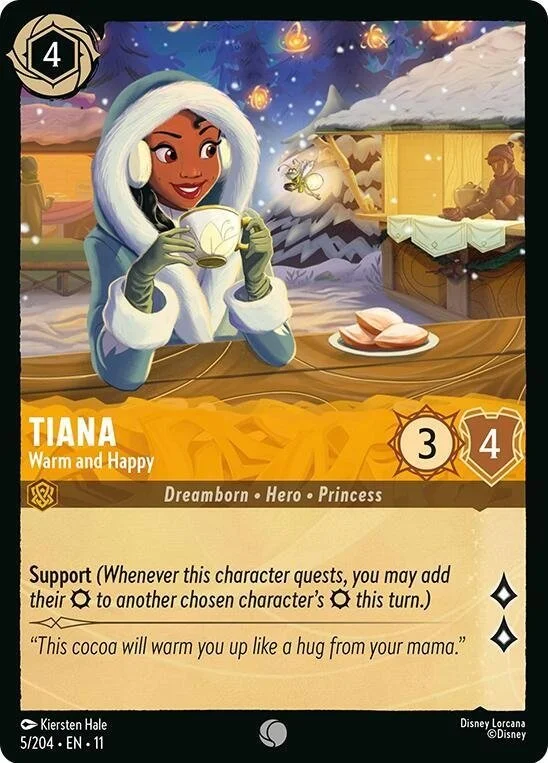
Tiana – Warm & Happy: Solid support body with strong questing stats
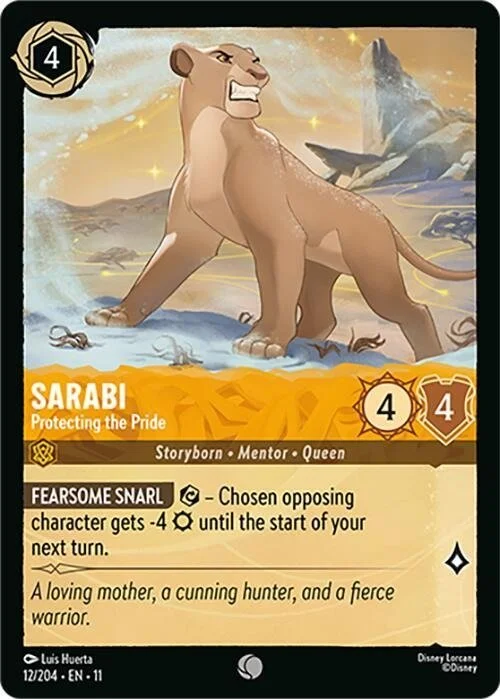
Sarabi – Protecting the Pride: Softens opposing characters before challenges
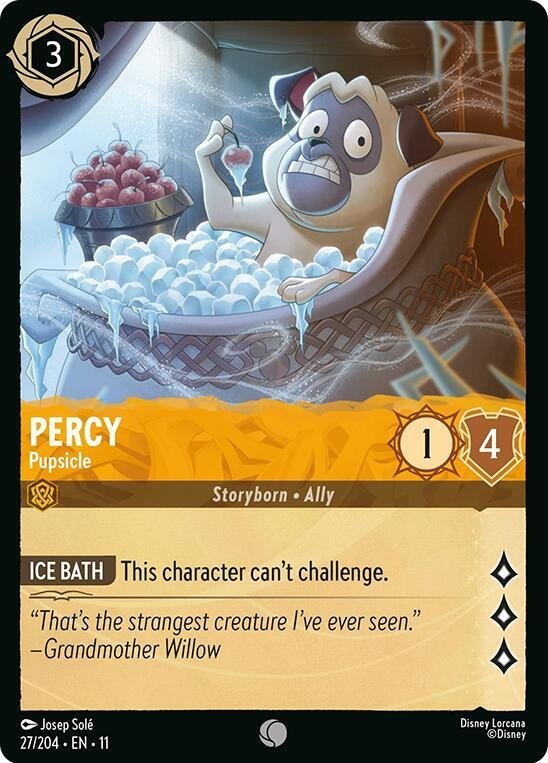
Percy – Pupcicle: Nothing flashy, but a reliable quester
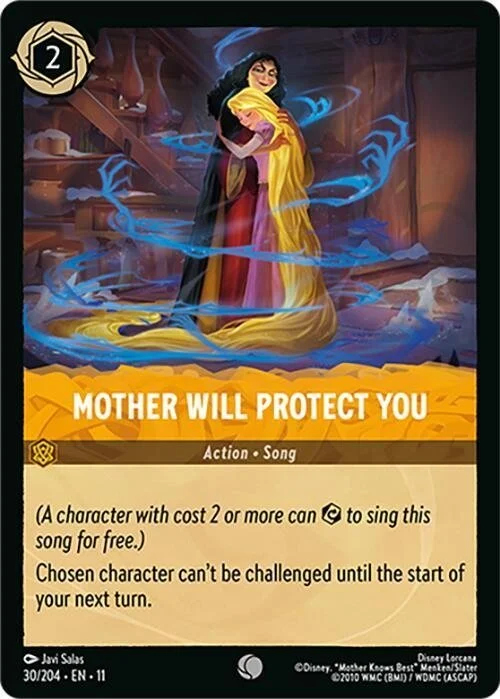
Mother Will Protect You (Song): Prevents challenges and keeps your best questers alive
Key Uncommons
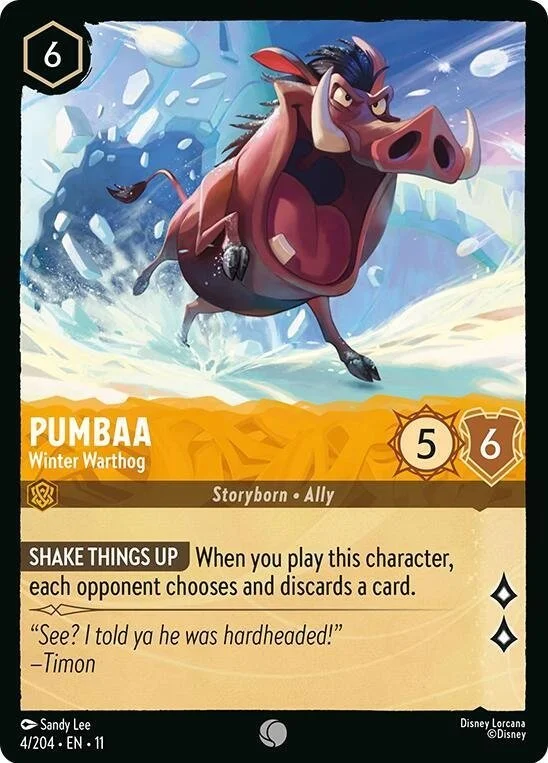
Pumbaa – Winter Warthog: Immediate discard pressure
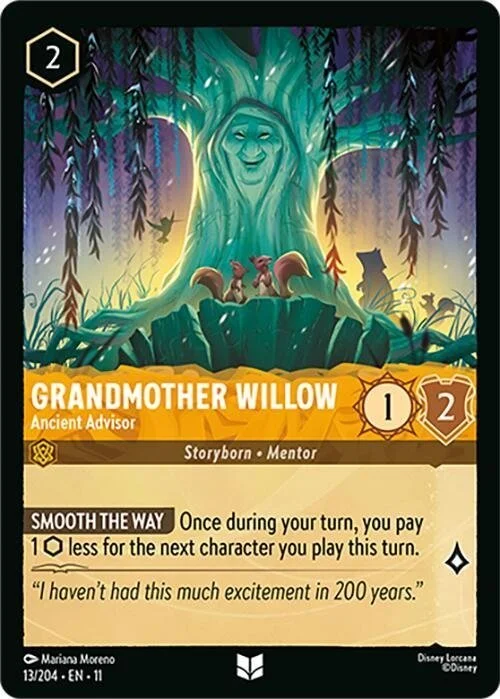
Grandmother Willow – Ancient Advisor: Long-term cost reduction adds up quickly
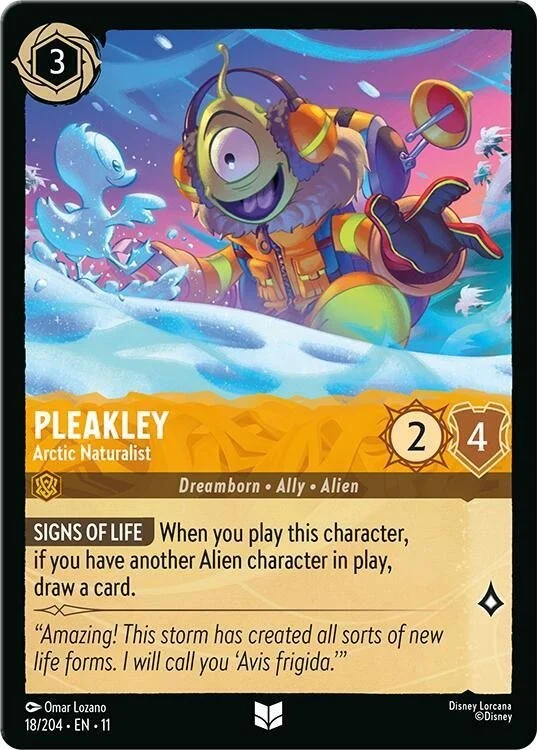
Pleakly – Arctic Naturalist: Strong synergy thanks to the number of Aliens in the set
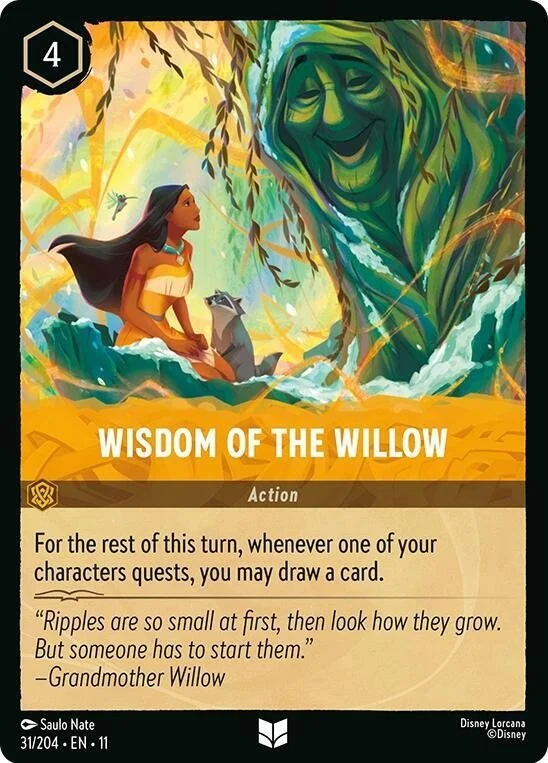
Wisdom of the Willow (Action): Explosive card draw in quest-heavy decks
Rares, Super Rares & Epics
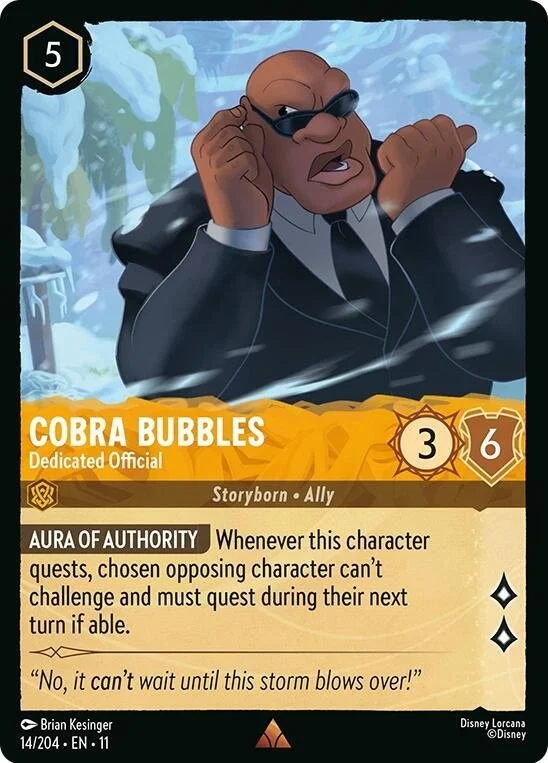
Cobra Bubbles – Dedicated Official: Forces awkward questing decisions for your opponent
Timon – Snowball Swiper: More discard pressure, possibly a promo highlight
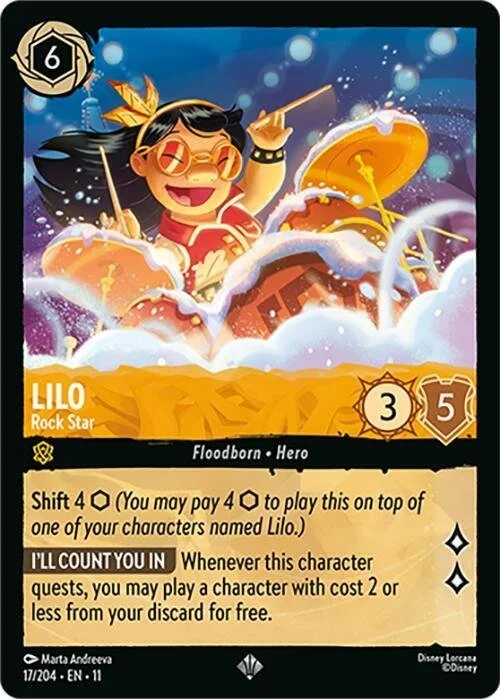
Lilo – Rock Star: Free recursion every time you quest
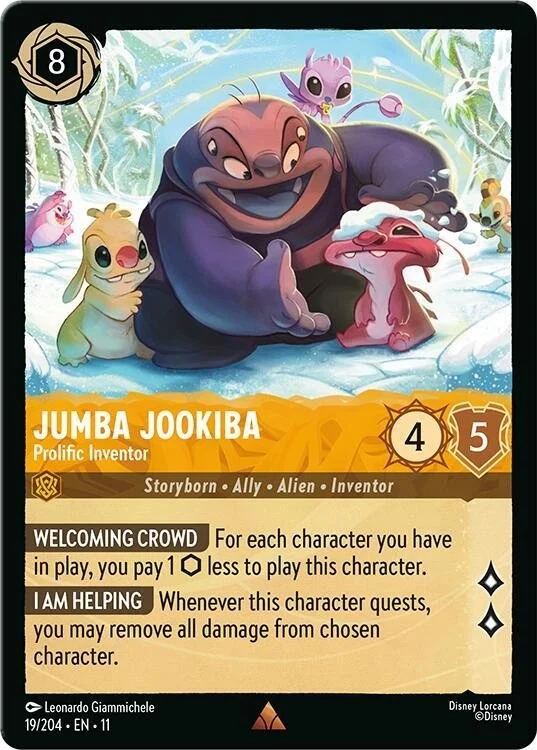
Jumba Jookiba – Prolific Inventor: The strongest healer Amber has access to
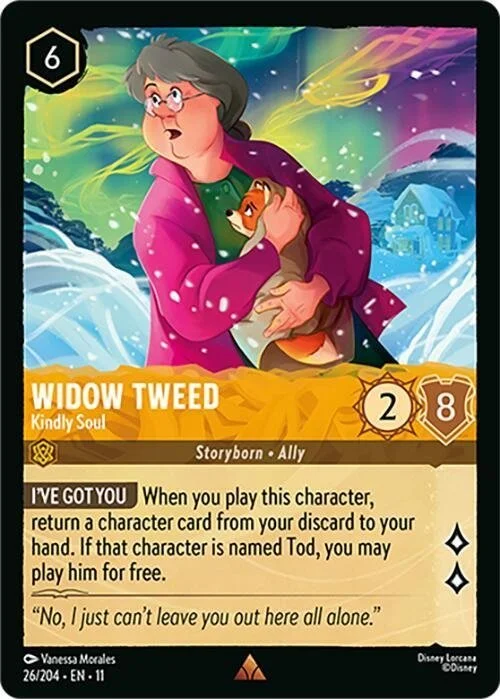
Widow Tweed – Kindly Soul: Discard recursion utility
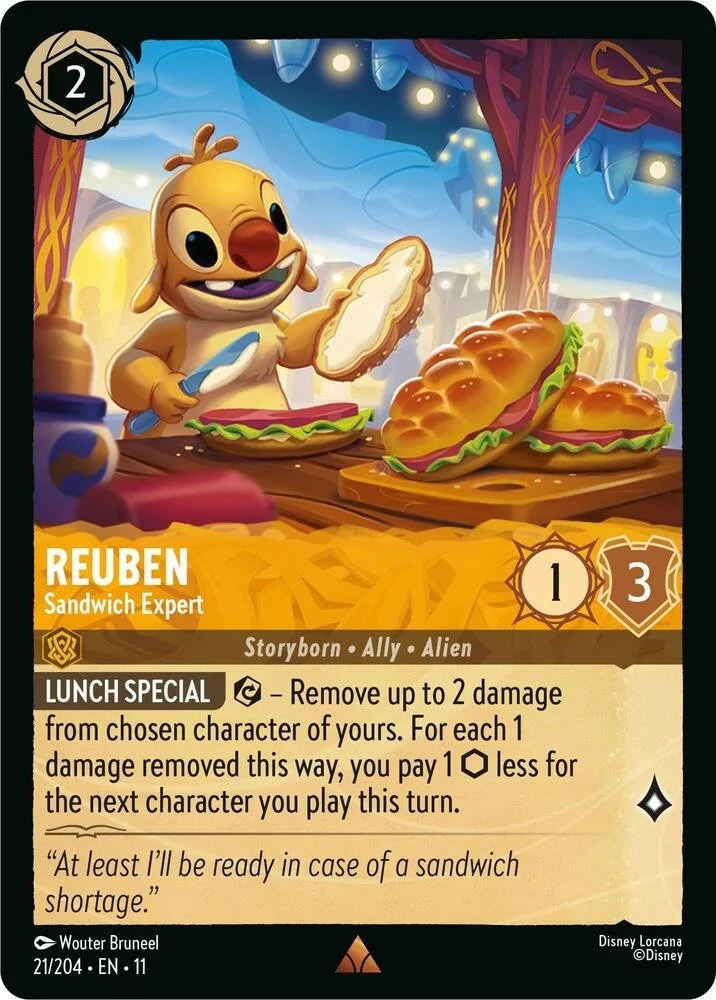
Reuben – Sandwich Expert: Healing plus cost reduction for spells
Amber Bombs
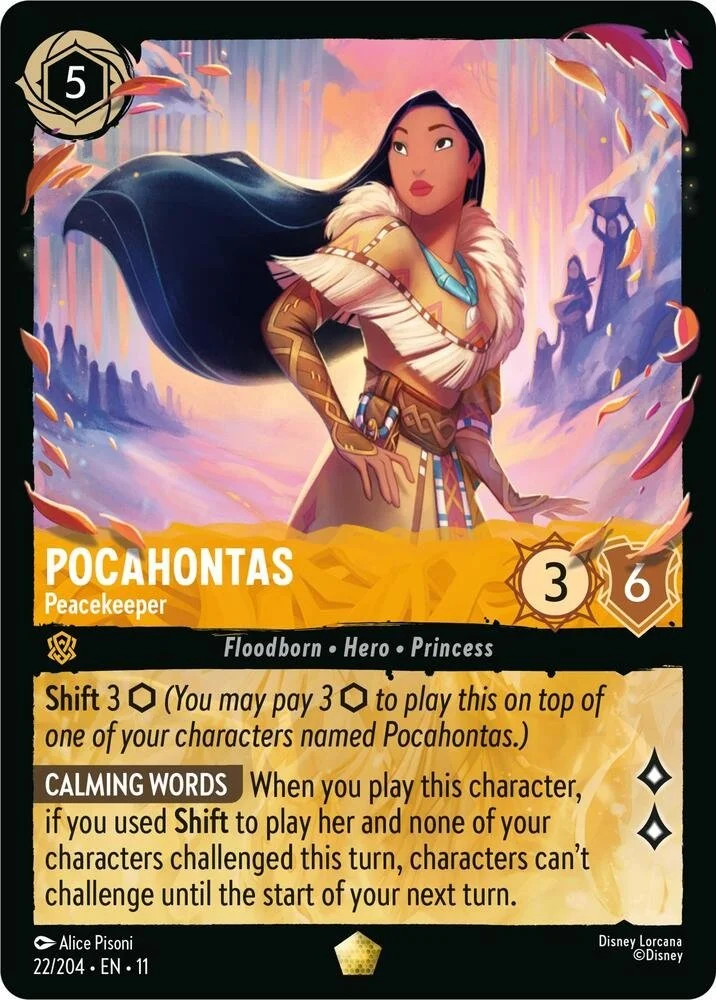
Pocahontas – Peacekeeper: A true finisher; shutting off challenges lets you quest uncontested
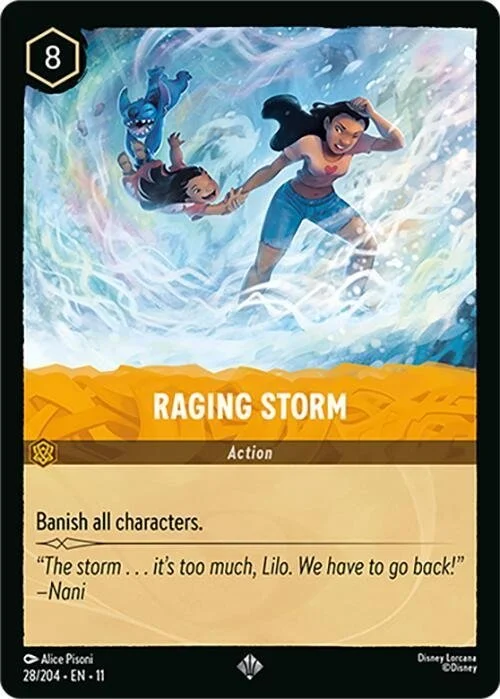
Raging Storm: Full board wipe when you need a reset
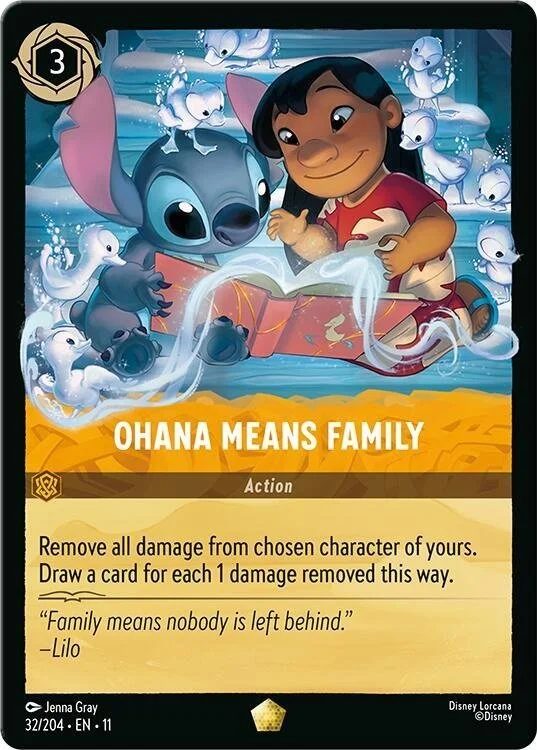
Ohana Means Family: Massive healing and card draw in one package
Amethyst
Amethyst continues to feel like a support color, excelling at control, card draw, and disruption rather than raw aggression. While it does have strong questers, Amethyst shines most when paired with another color that can capitalize on the advantage it generates. Winterspell reinforces this role with powerful hand manipulation and tempo tools.
Key Commons

Tigger – Bouncing All the Way: Bounce effects are always strong in limited
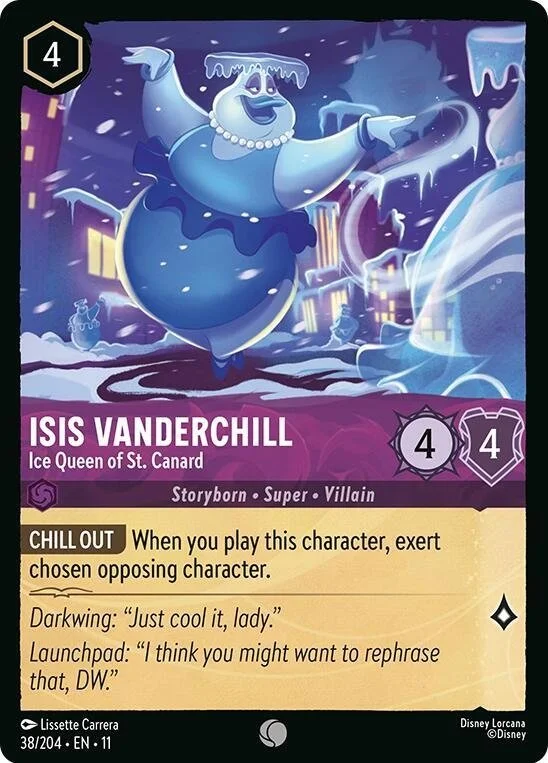
Isis Vanderchill – Queen of St. Canard: Exerts protected characters, opening them up
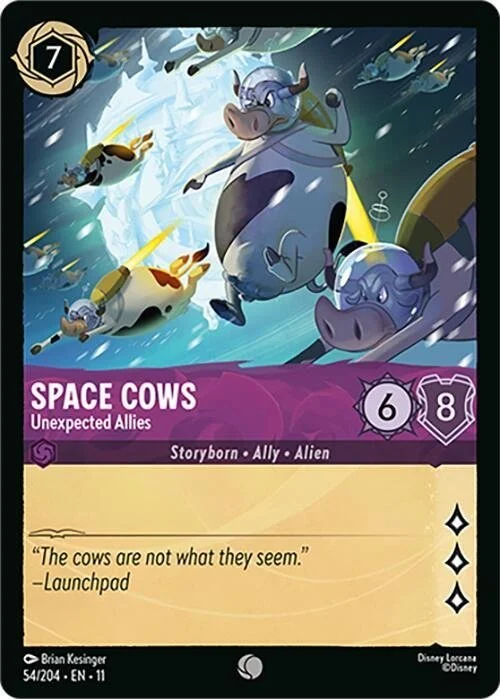
Space Cows – Unexpected Allies: Solid quester with great synergy potential
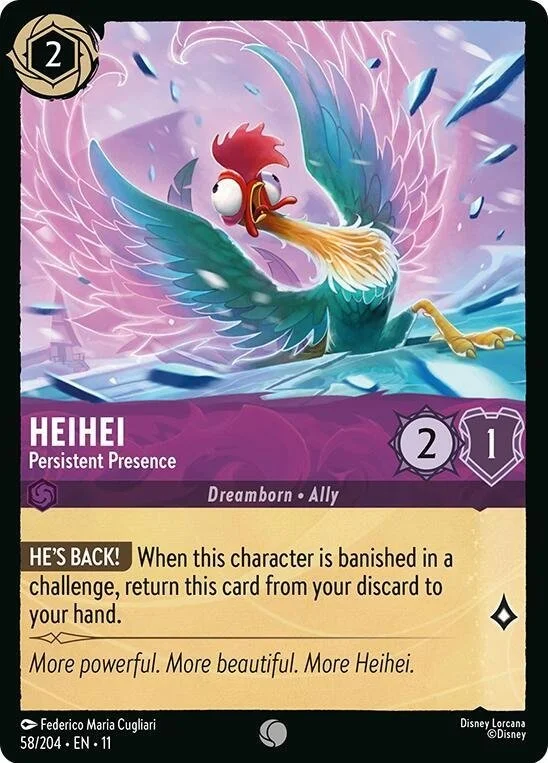
Heihei – Persistent Presence: Annoyingly difficult to remove
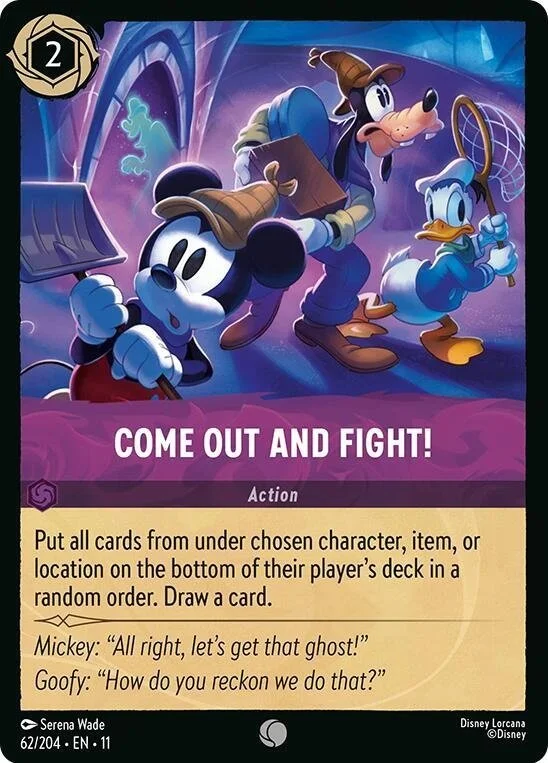
Come Out and Fight: Excellent sideboard tech against Boost-heavy decks
Key Uncommons
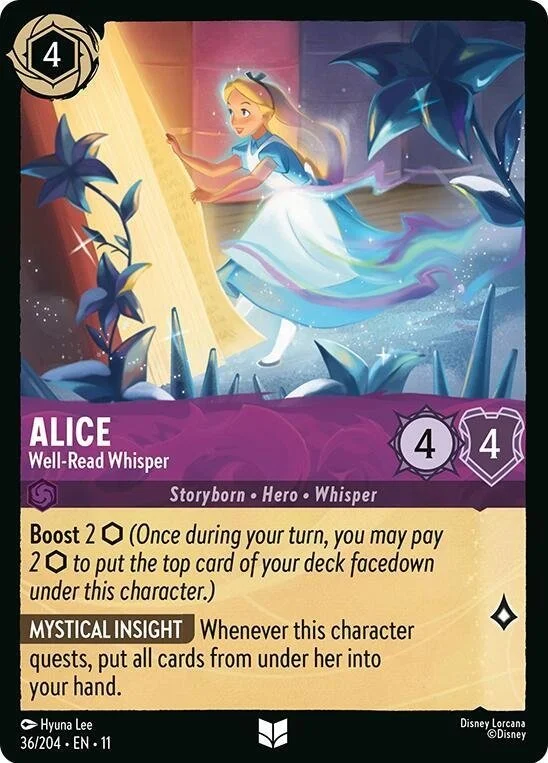
Alice – Well-Read Whisper: One of the best card draw engines in the set
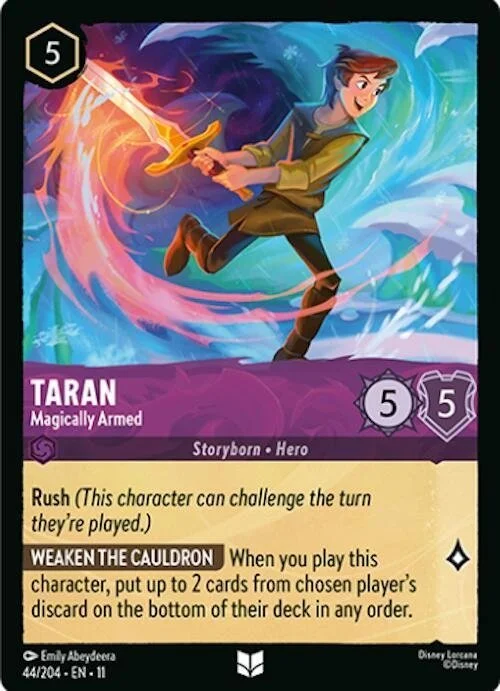
Taran – Magically Armed: Strong counterplay against discard recursion
Rares, Super Rares & Epics
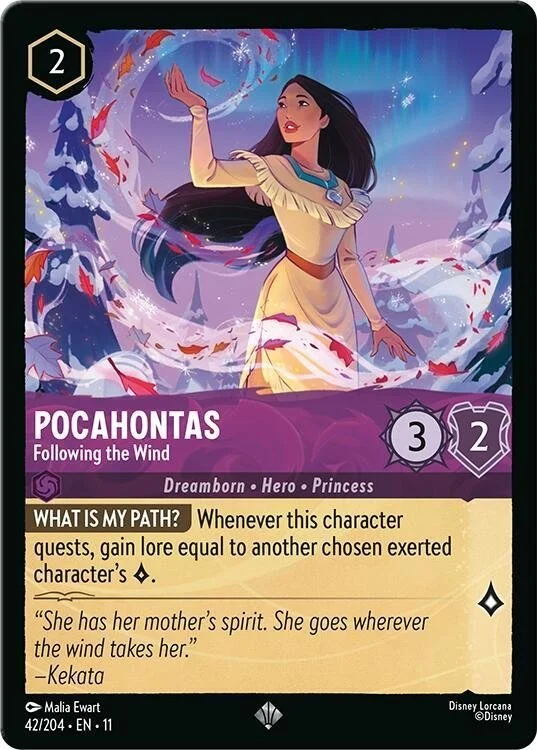
Pocahontas – Following the Wind: Elite questing stats
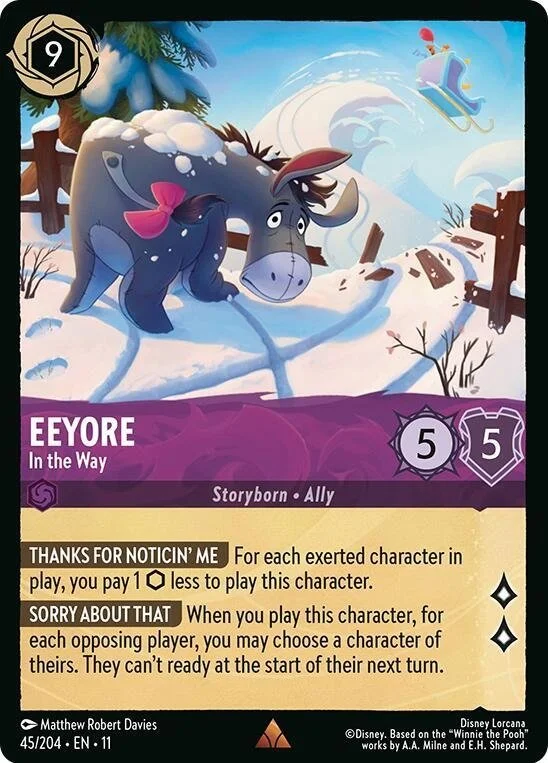
Eeyore – In the Way: Keeps opposing boards locked down
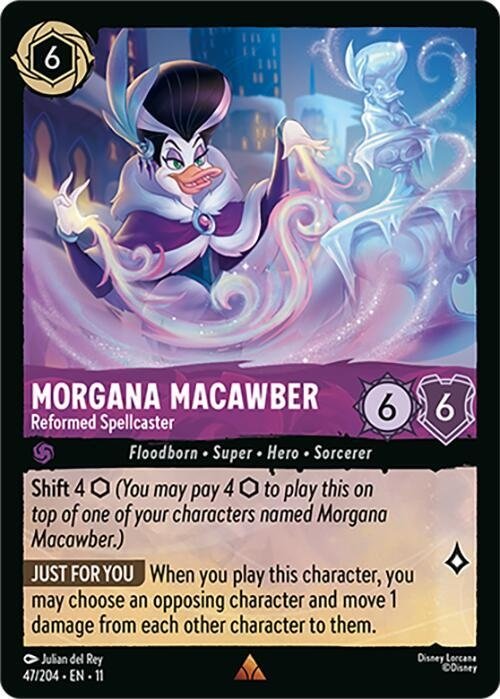
Morgana Macawber – Reformed Spellcaster: Board control plus healing
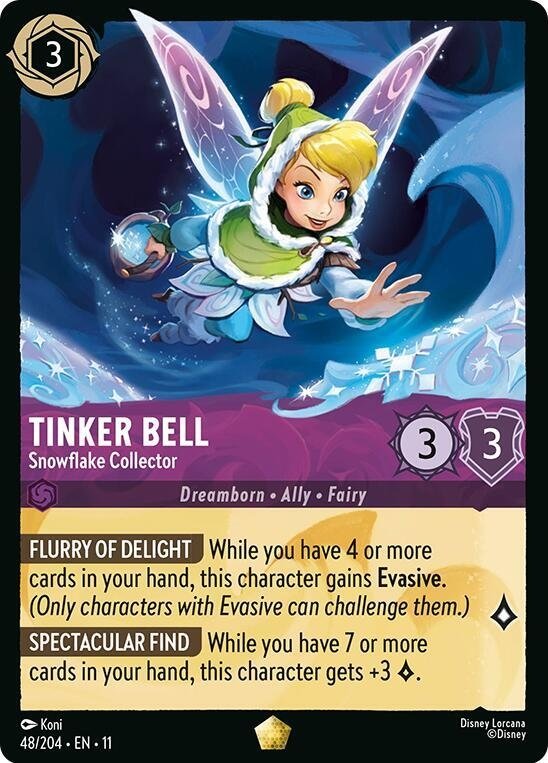
Tinker bell – Snowflake Collector: Scales incredibly well with hand size
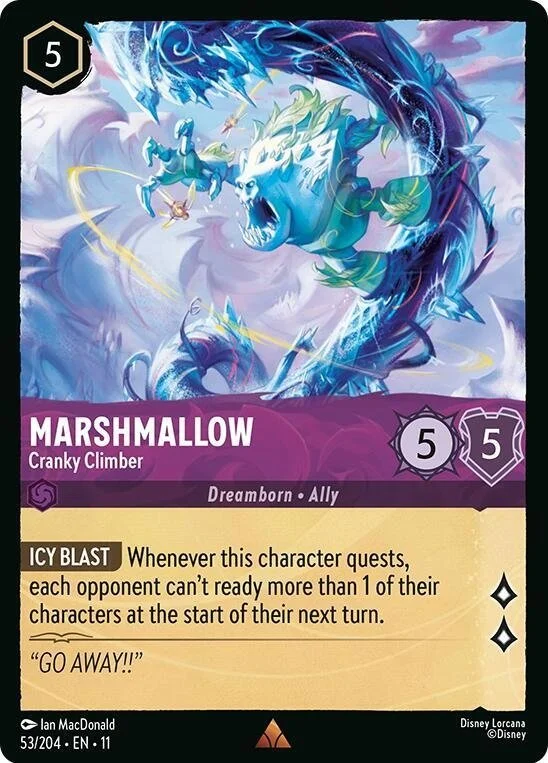
Marshmallow – Cranky Climber: Restricts opponents to one ready per turn
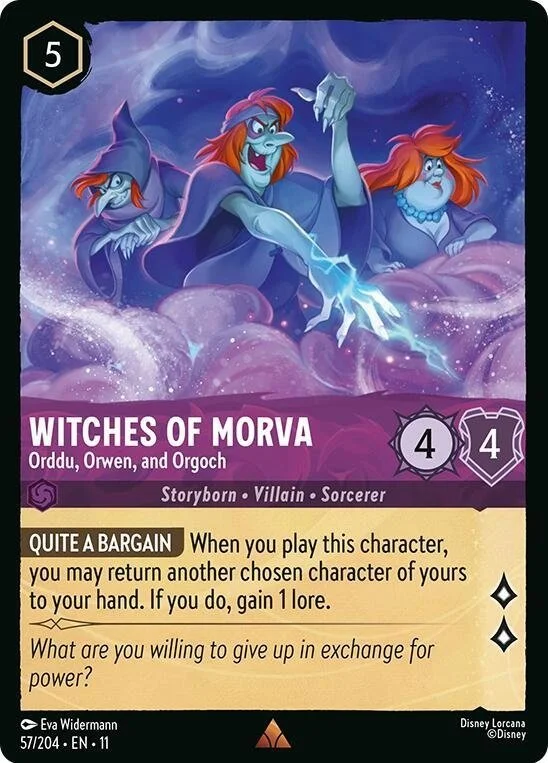
Witches of Morva – Orddu, Orwen, and Orgoch: Converts ETB effects into lore
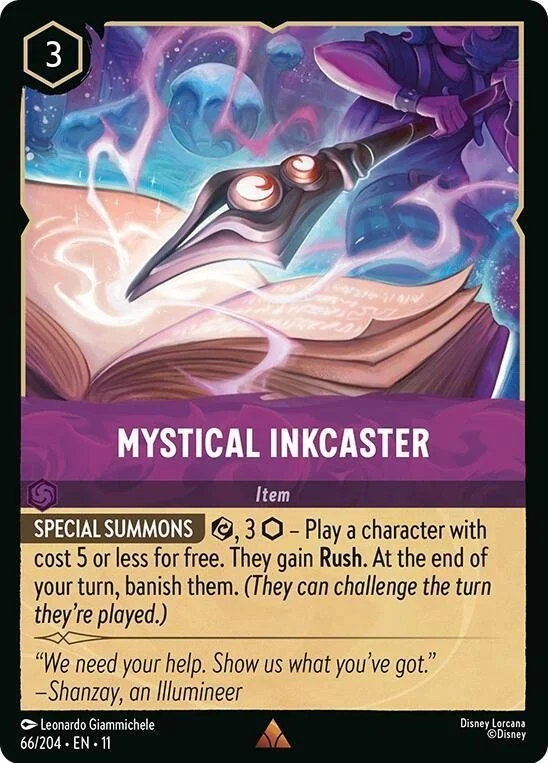
Mystical Inkcaster: Flexible removal or discard enabler
Amethyst Bombs
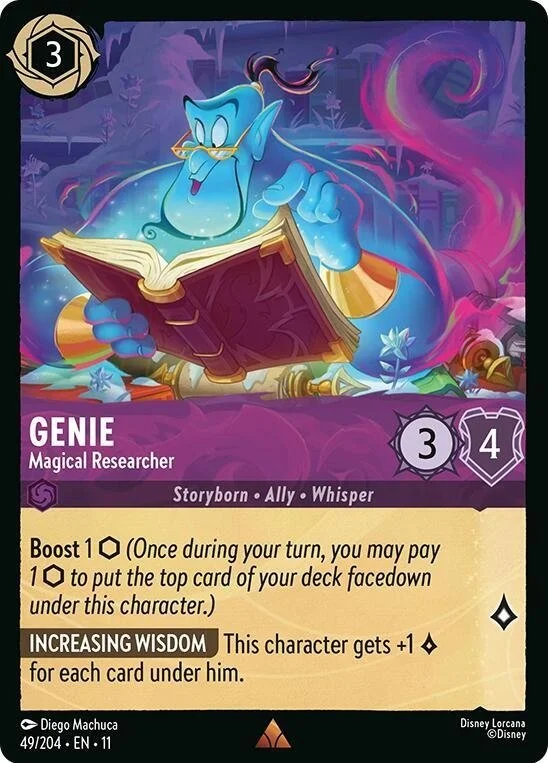
Genie – Magical Researcher: Lore output snowballs rapidly with Boost
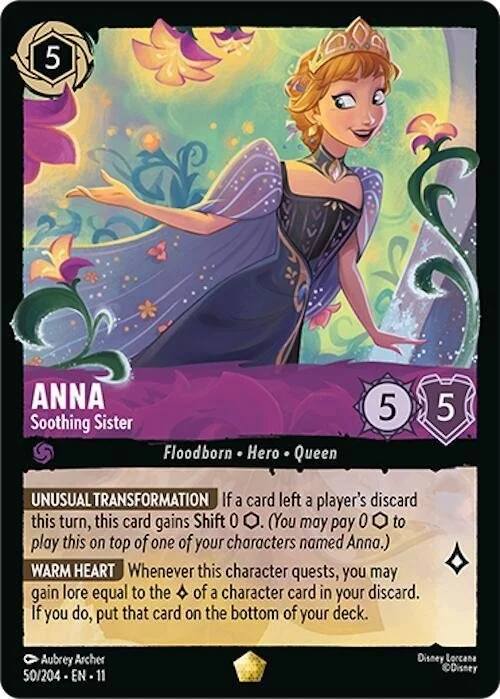
Anna – Soothing Sister: Free shift and consistent questing
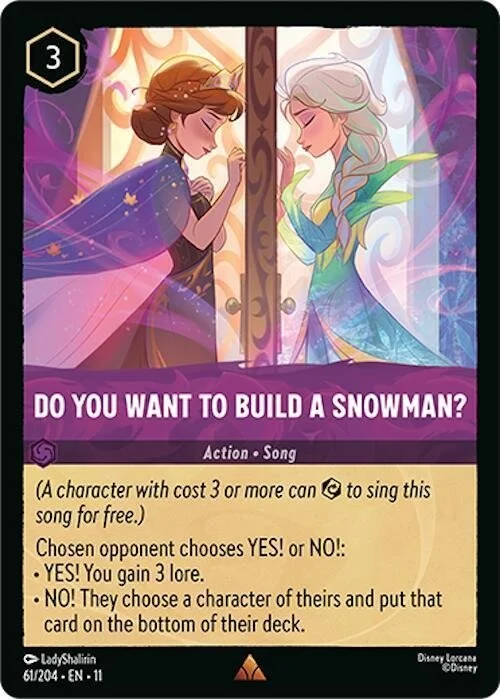
Do You Want to Build a Snowman?: Flexible, disruptive, and excellent at all stages of the game
Emerald
Emerald thrives on evasion, disruption, and tempo, and Winterspell doubles down on that identity. This color wants to quest aggressively while dodging interaction, punishing opponents who try to stabilize. Emerald also boasts some of the strongest Super Rare and Legendary cards in the set.
Key Commons
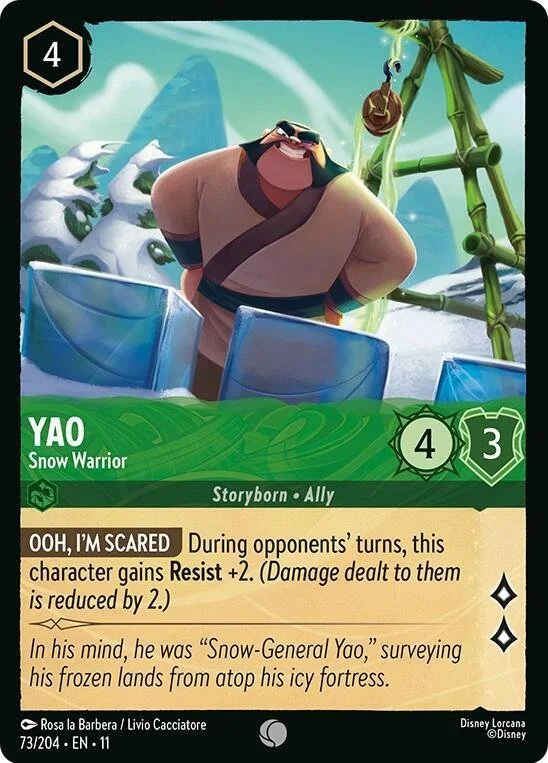
Yao – Snow Warrior: Resilient quester with built-in protection
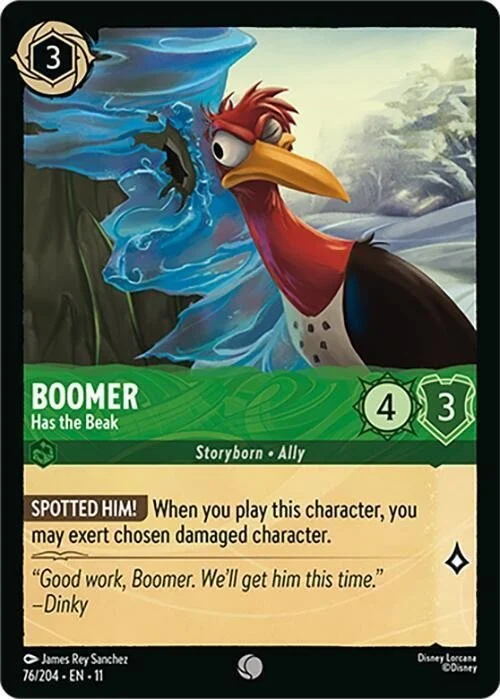
Boomer – Has the Beak: Forces opponents into awkward trades
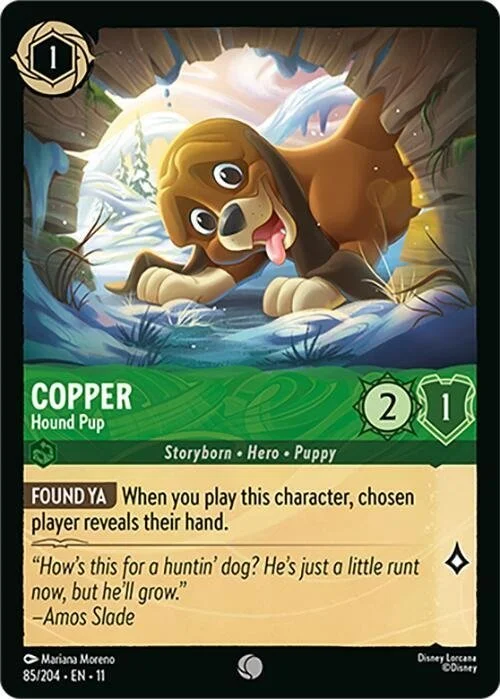
Copper – Hound Pup: Hand knowledge is invaluable in sealed
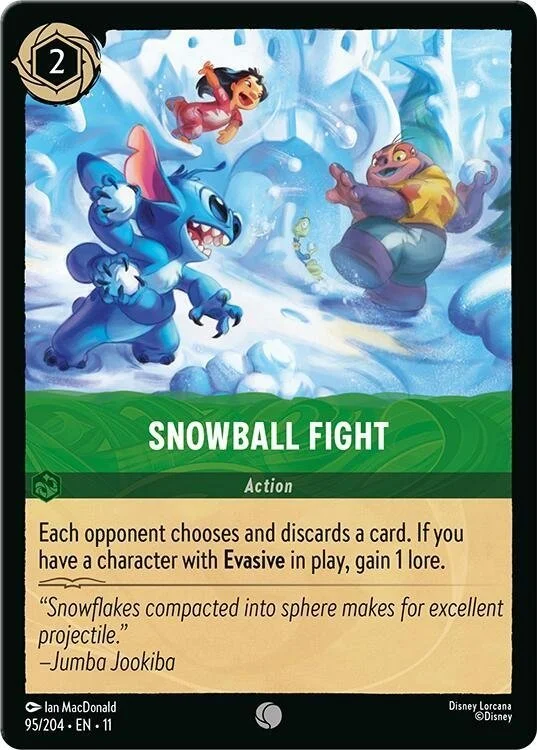
Snowball Fight: Discard plus potential lore gain
Key Uncommons
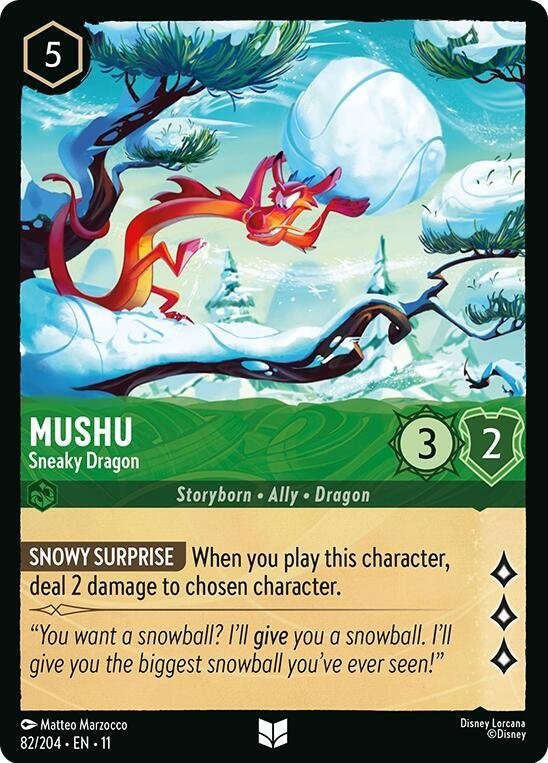

Mushu – Sneaky Dragon: Ping damage with excellent questing stats
Education or Elimination: Removal or evasive pressure
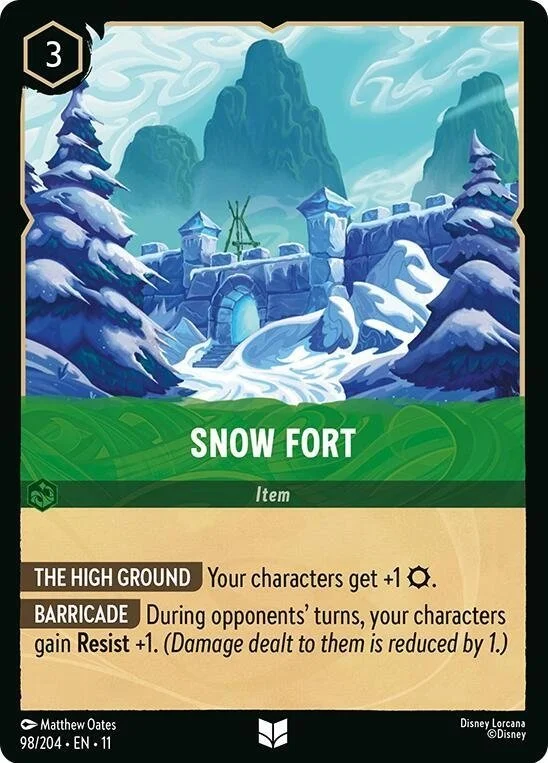
Snow Fort: Strong buffs, especially alongside Mulan
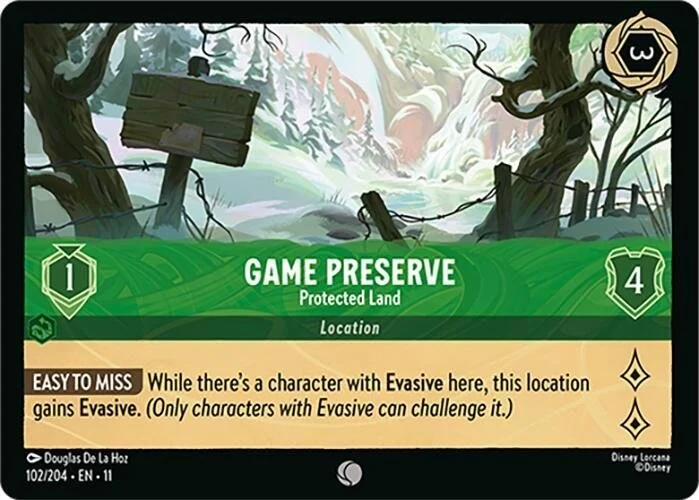
Game Preserve: Free lore every turn from a hard-to-interact-with location
Rares, Super Rares & Epics
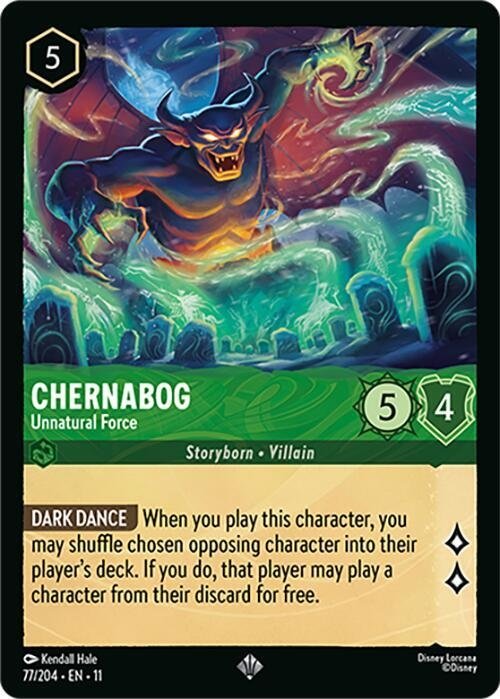
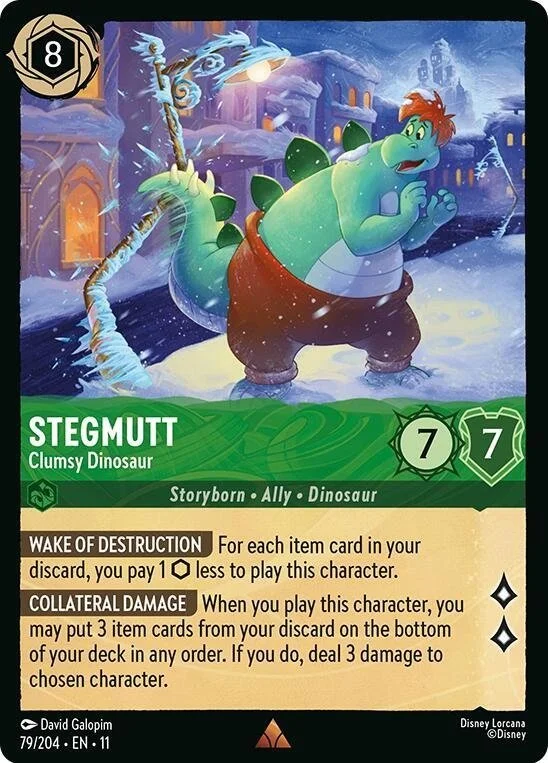
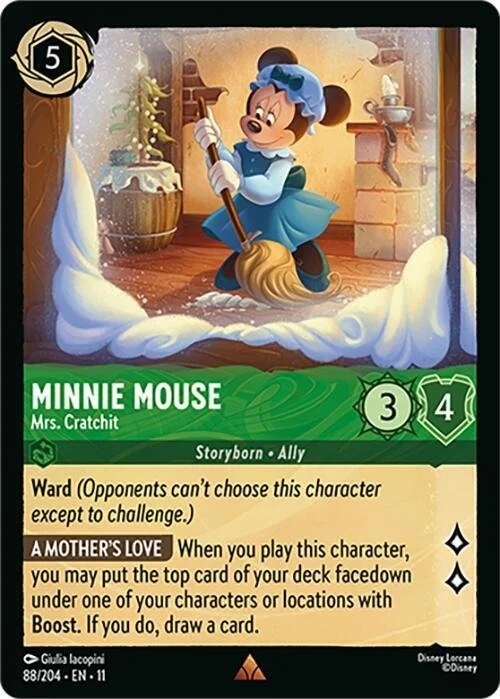
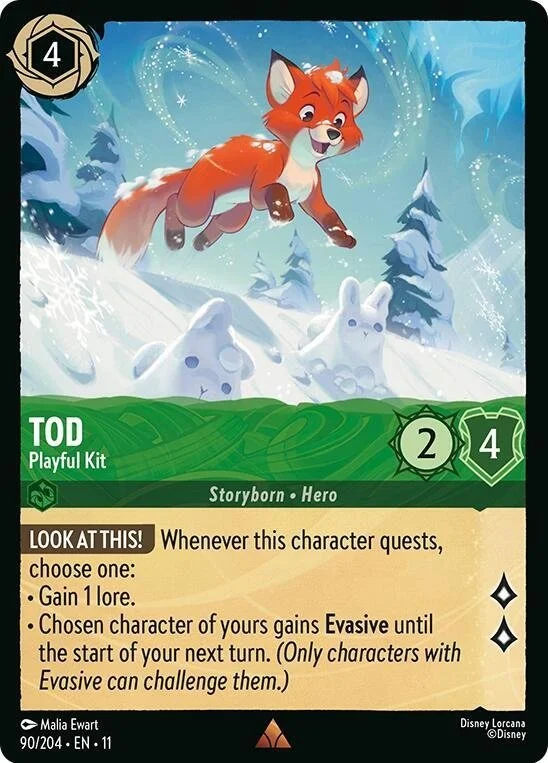
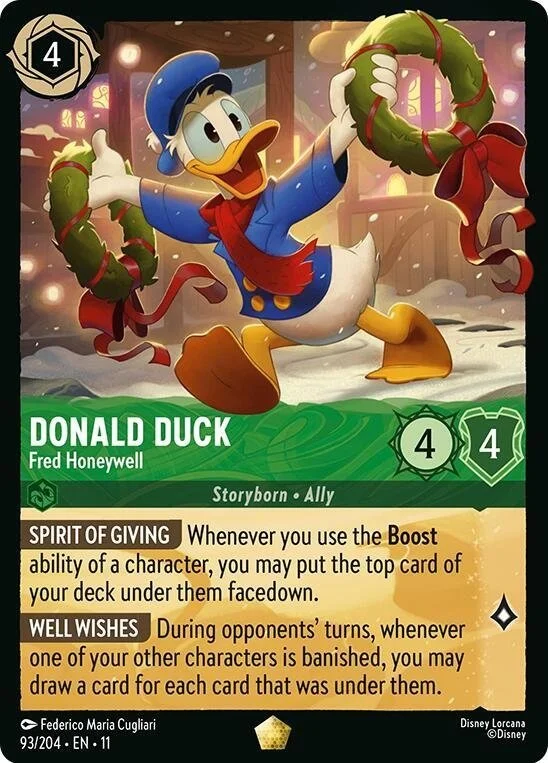
Chernabog – Unnatural Force: Powerful removal with risk if misused
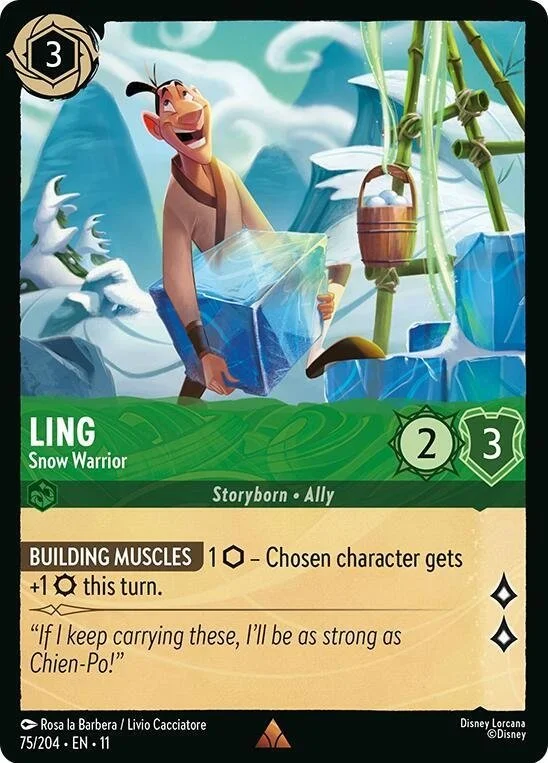
Ling – Snow Warrior: Repeatable power buffs without exerting
Stegmutt – Clumsy Dinosaur: Item-heavy decks only
Minnie Mouse – Mrs. Cratchet: Boost synergy, ward, and card advantage
Tod – Playful Kit: Flexible lore or evasion engine
Donald Duck – Fred Honeywell: Rewards Boost-heavy builds
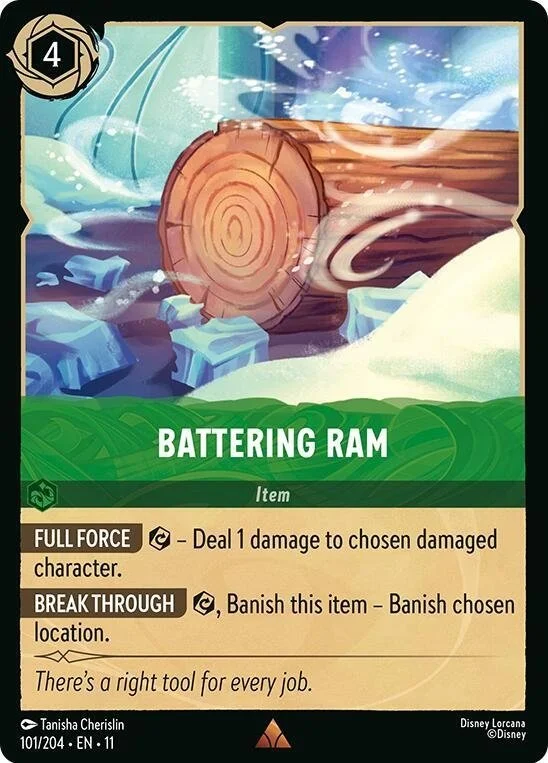
Battering Ram: Utility removal and location control
Emerald Bombs
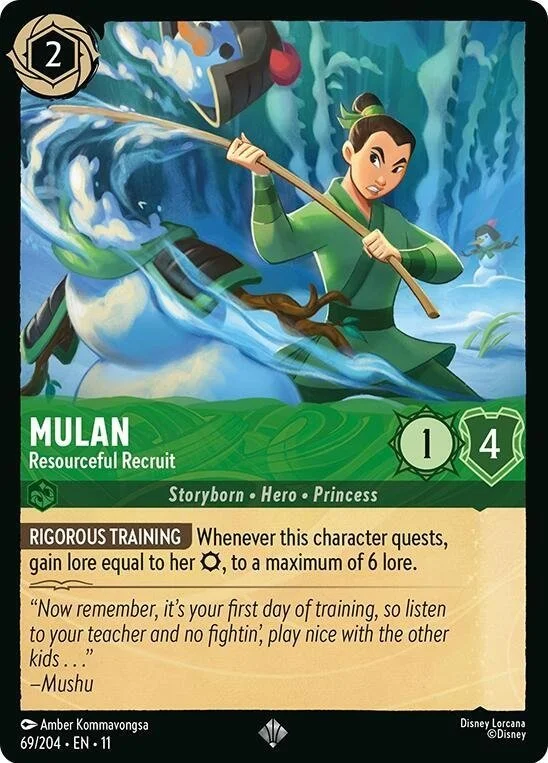
Mulan – Resourceful Recruit: One of the strongest questers in the set
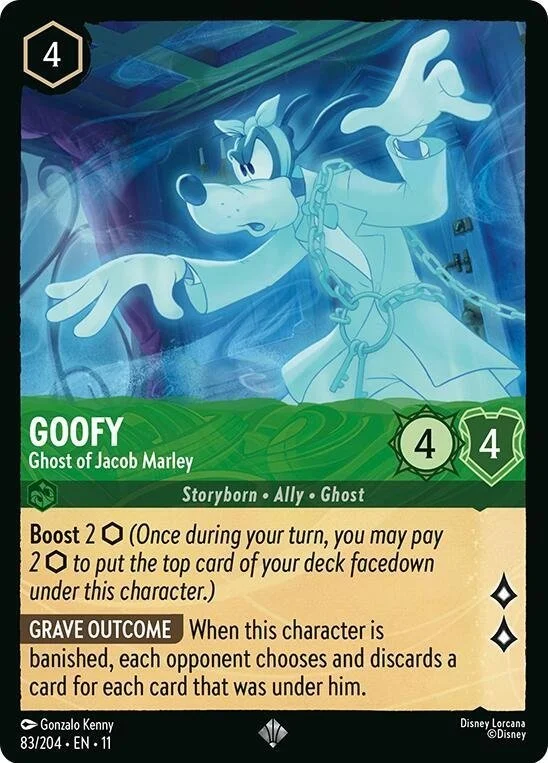
Goofy – Ghost of Jacob Marley: Removal magnet that scales rapidly
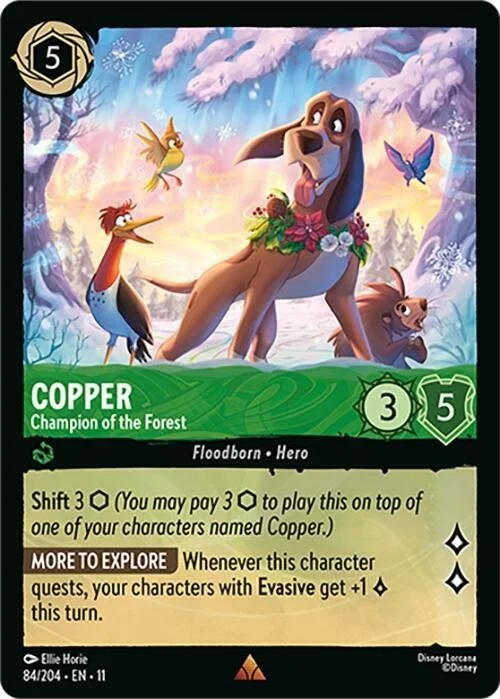
Copper – Champion of the Forest: Evasive decks gain absurd lore output
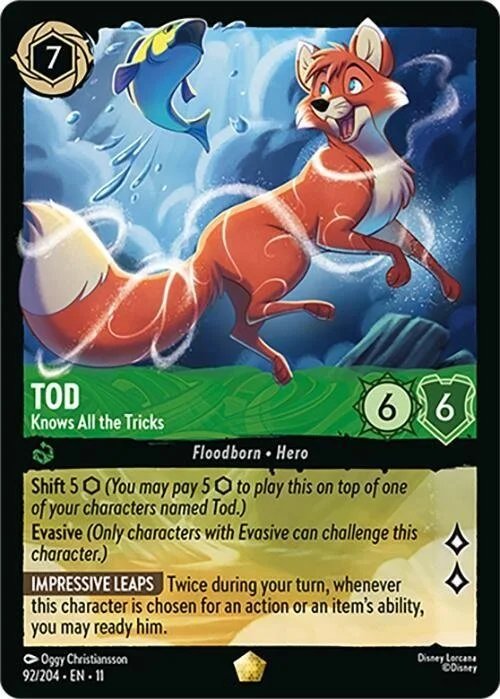
Tod – Knows All the Tricks: Can quest multiple times per turn
Ruby
Ruby is as aggressive as ever in Winterspell, rewarding players who lean into challenging and combat-focused play. This set adds even more incentives to fight early and often, turning removal into direct lore advantage.
Key Commons
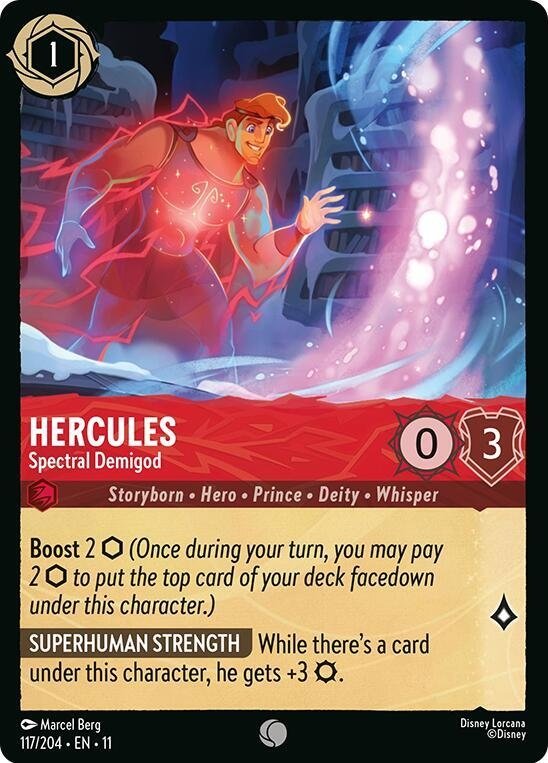
Hercules – Spectral Demigod: Efficient early challenger
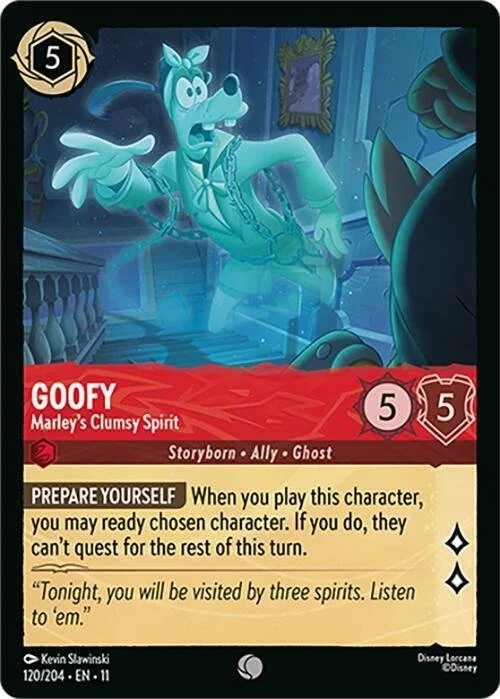
Goofy – Marley’s Clumsy Spirit: Enables challenge-and-quest turns
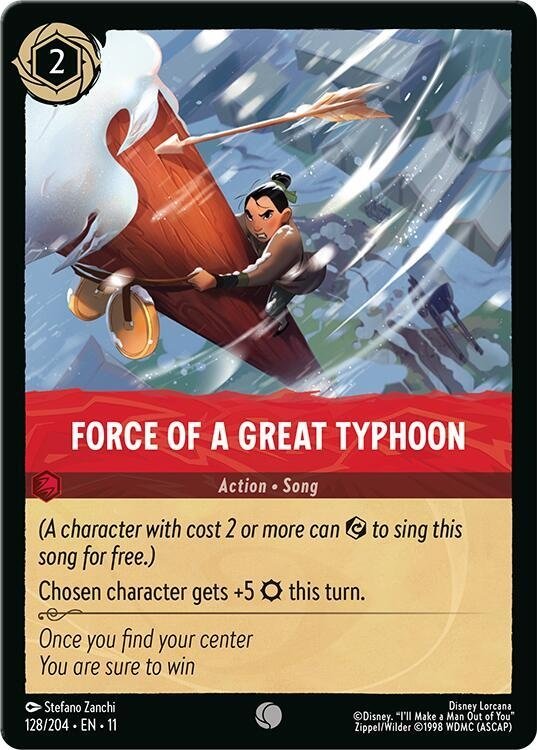
Force of a Great Typhoon: Massive combat buff
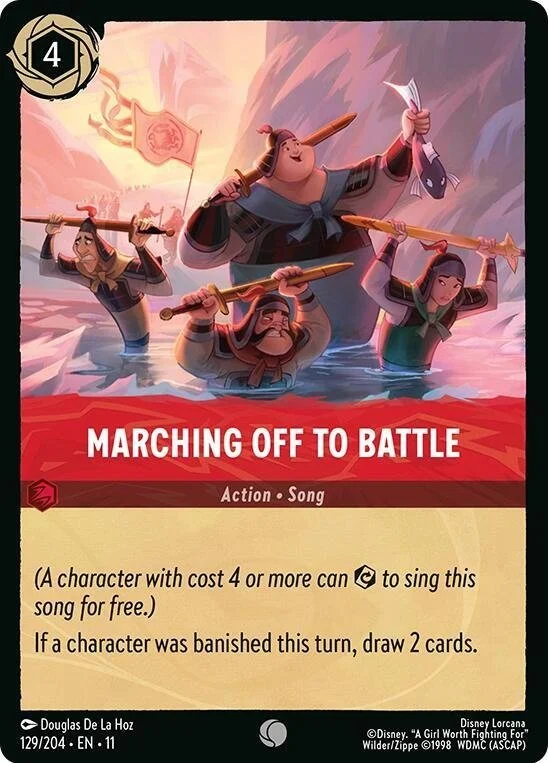
Marching Off to Battle: Turns trades into card advantage
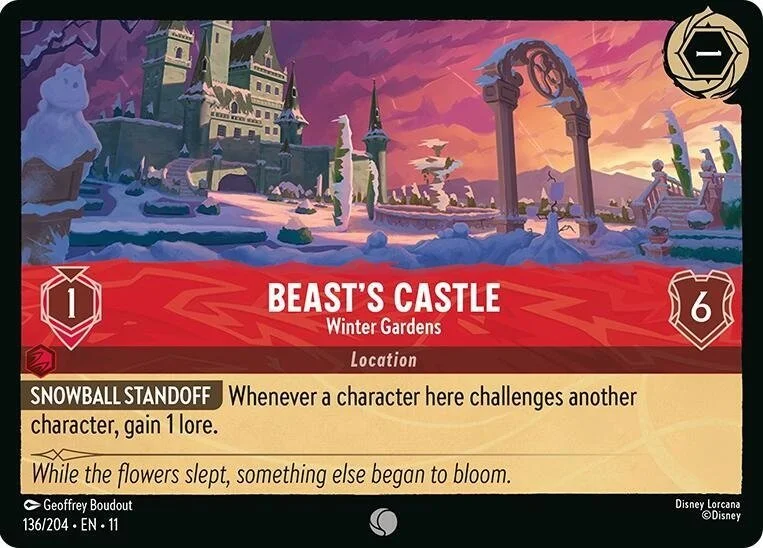
Beast’s Castle – Winter Gardens: Lore generation through challenges
Key Uncommons
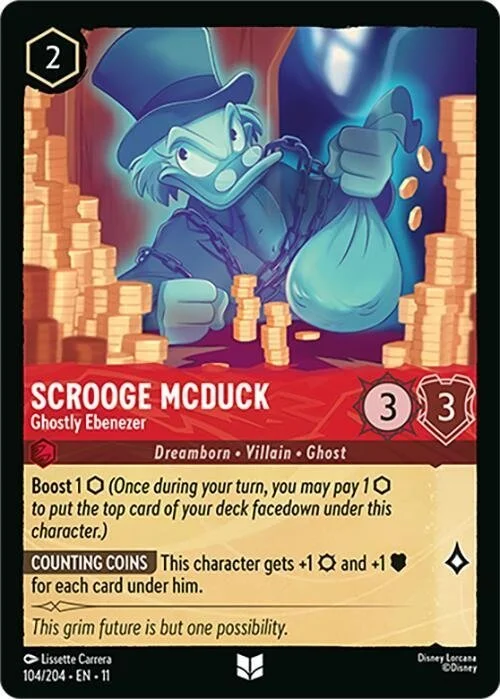
Scrooge McDuck – Ghostly Ebenezer: Scales every turn with Boost
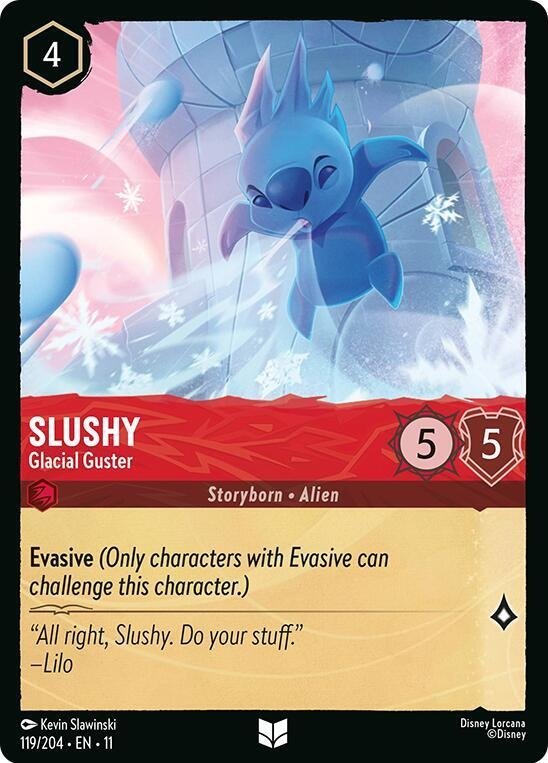
Slushy – Glacial Guster: Evasive challenger with huge stats
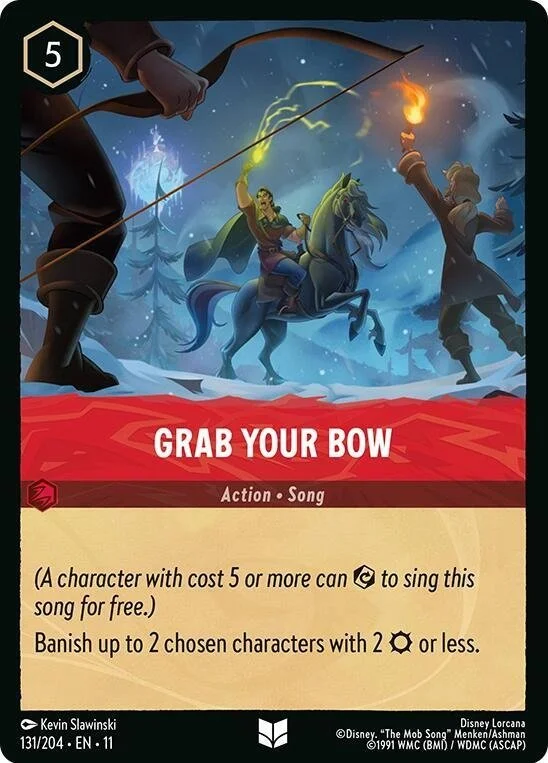
Grab Your Bow: Double removal
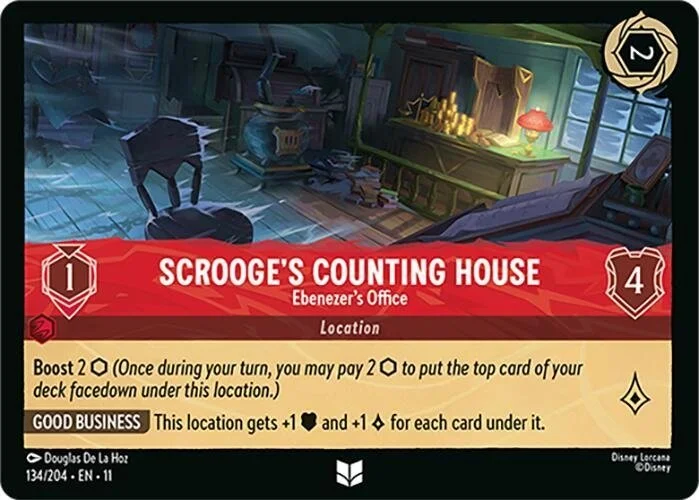
Scrooge’s Counting House: Self-scaling location
Rares, Super Rares & Legendaries
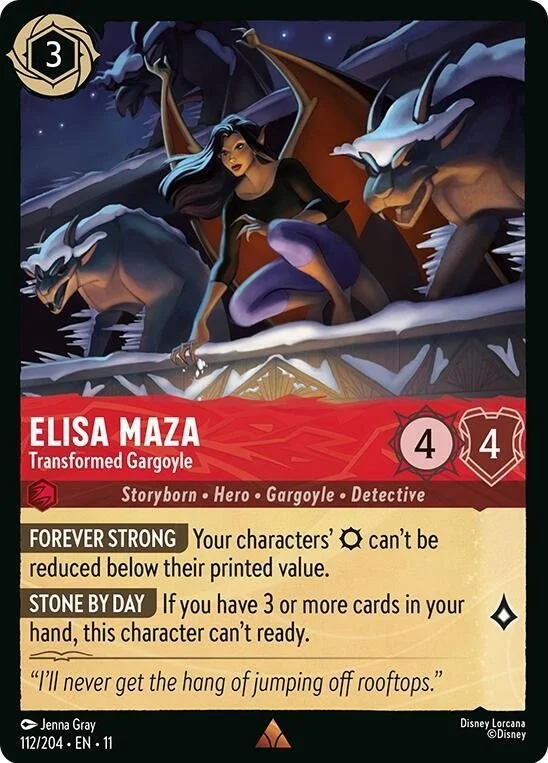

Elisa Maza – Transformed Gargoyle: Strong answer to Amber strategies
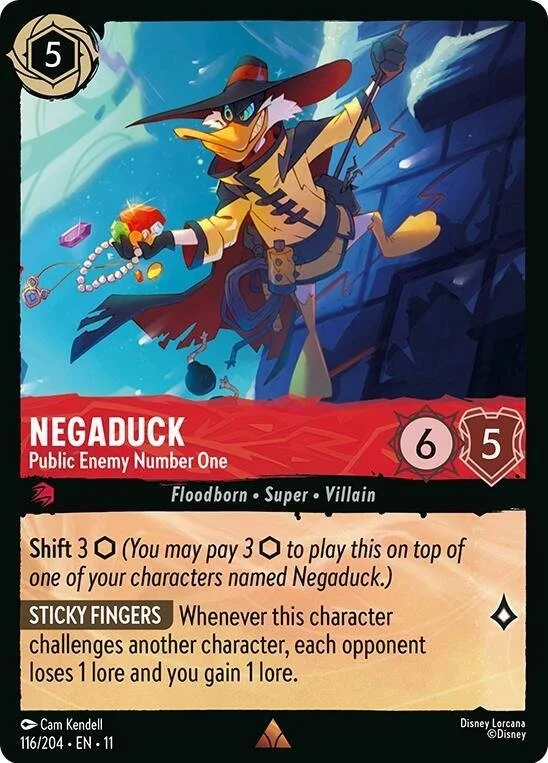
Negaduck – Public Enemy Number One: Lore theft
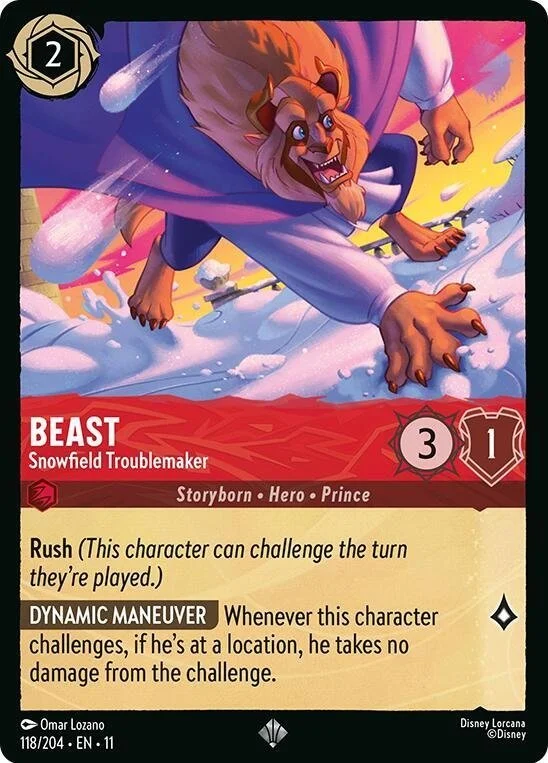
Beast – Snowfield Troublemaker: Premier challenger with location support
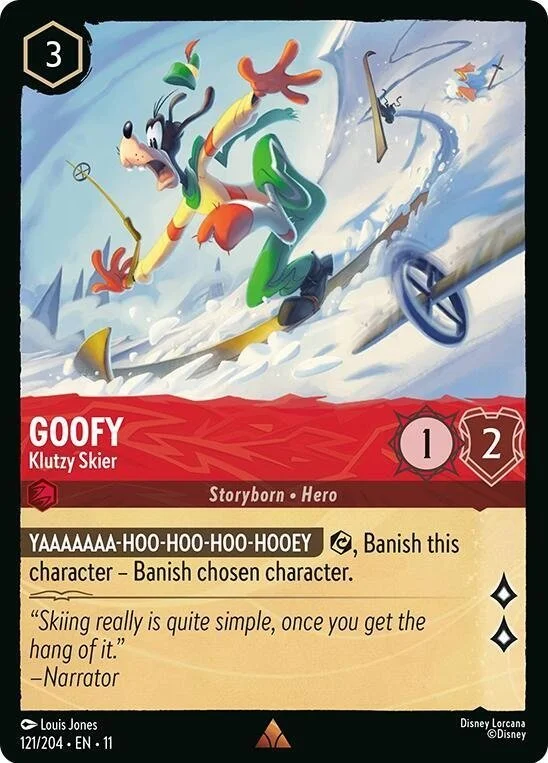
Goofy – Klutzy Skier: Instant removal bait
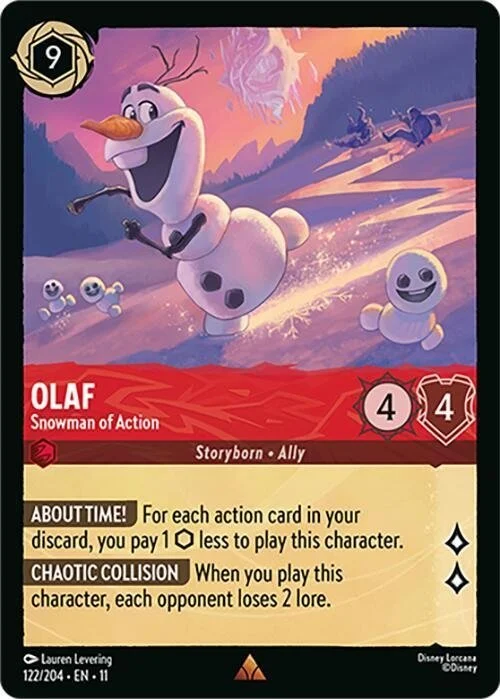
Olaf – Snowman of Action: Lore drain with recursion potential
Nani’s Payback: Big lore swing plus card draw
Ruby Bombs
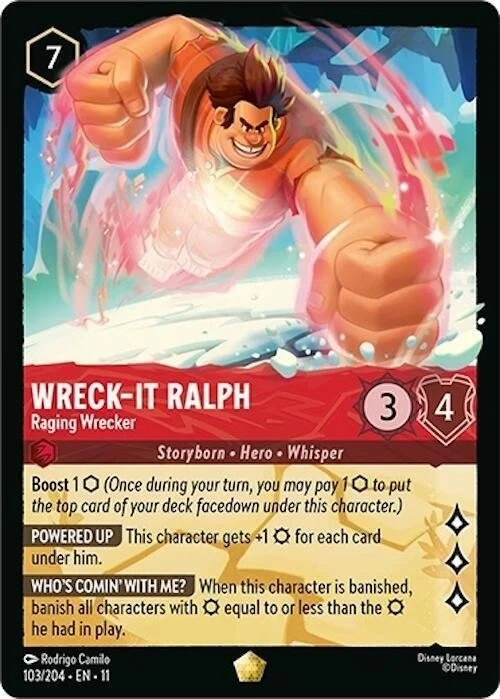
Wreck-It Ralph – Raging Wrecker: Boost-fueled board wipe on a stick
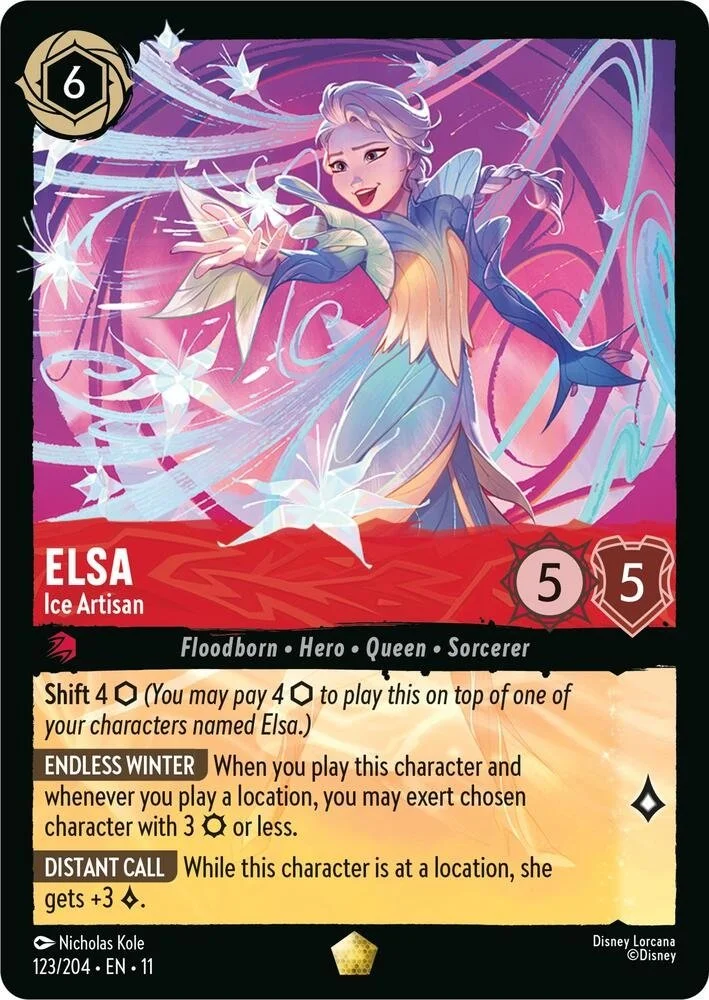
Elsa – Ice Artisan: Exerts protected characters and quests efficiently
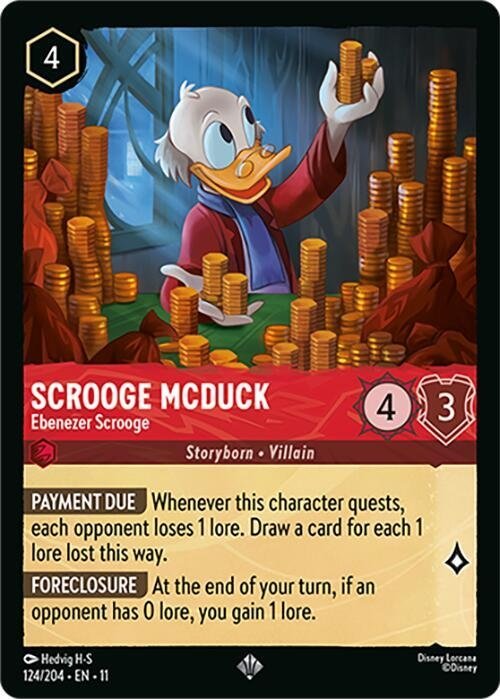
Scrooge McDuck – Ebenezer Scrooge: Lore drain, draw, and passive value
Sapphire
Sapphire may be the strongest overall color in Winterspell, thanks to incredible ramp options and discard synergy. Being able to ink cards from multiple zones gives Sapphire unmatched flexibility and late-game dominance.
Key Commons
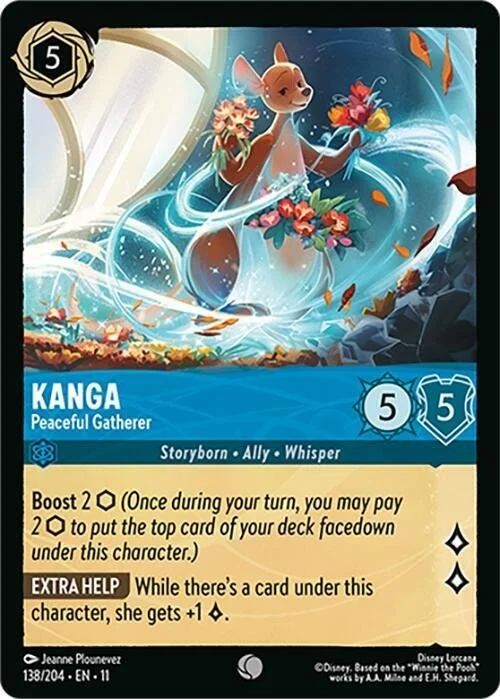
Kanga – Peaceful Gatherer: Durable quester
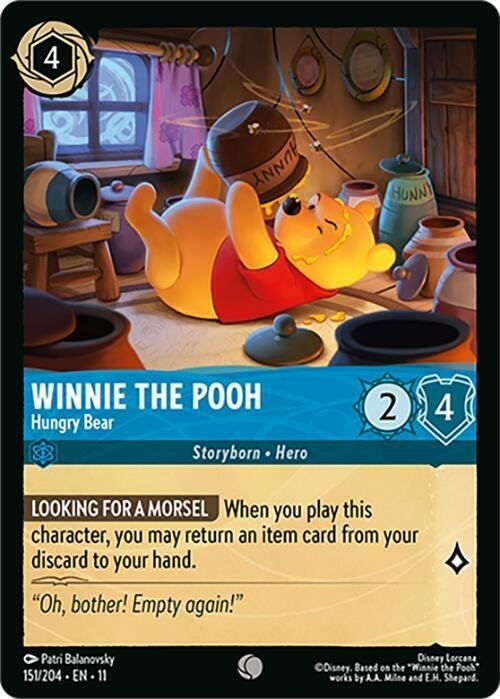
Winnie the Pooh – Hungry Bear: Item recursion
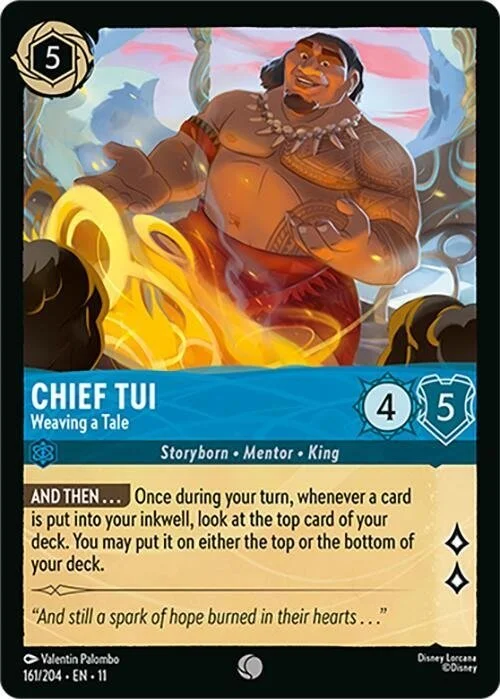
Chief Tui – Weaving a Tale: Topdeck control
Key Uncommons
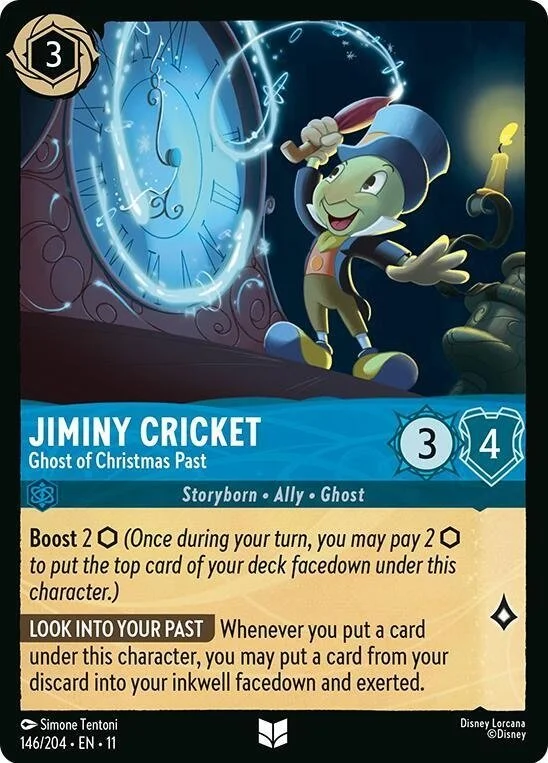
Jiminy Cricket – Ghost of Christmas Past: Boost-driven ramp
Rares, Super Rares & Legendaries
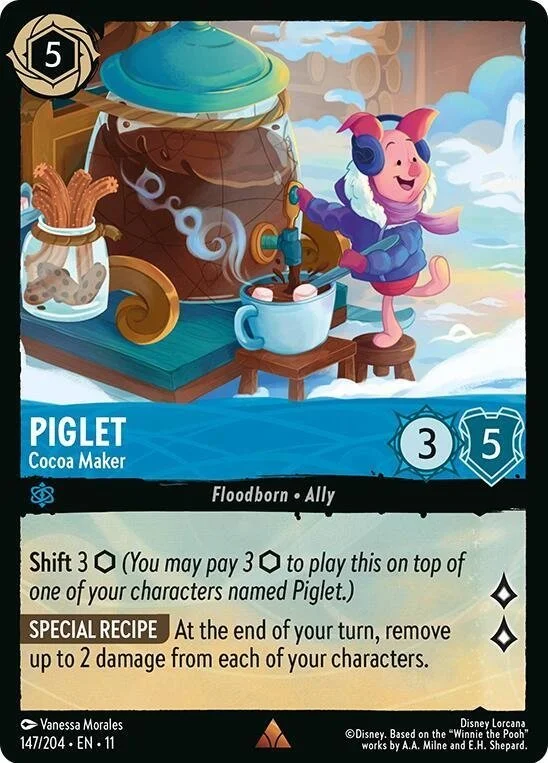
Piglet – Cocoa Maker: Team-wide healing
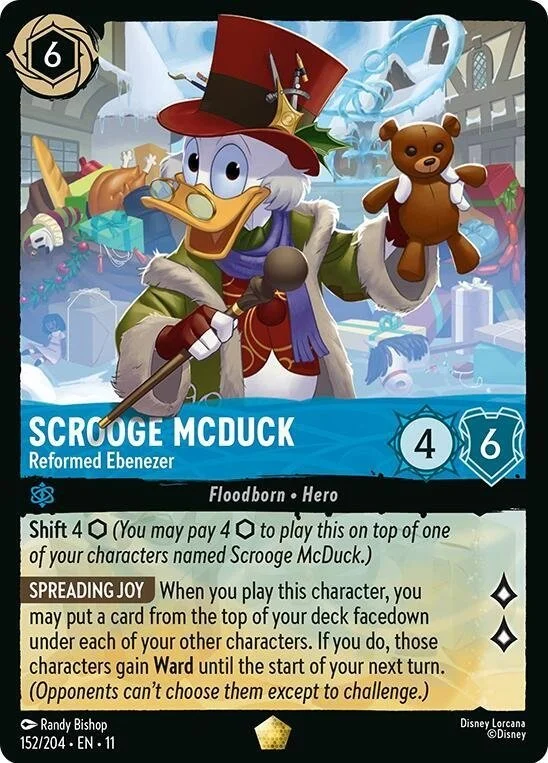
Scrooge McDuck – Reformed Ebenezer: Temporary blanket protection
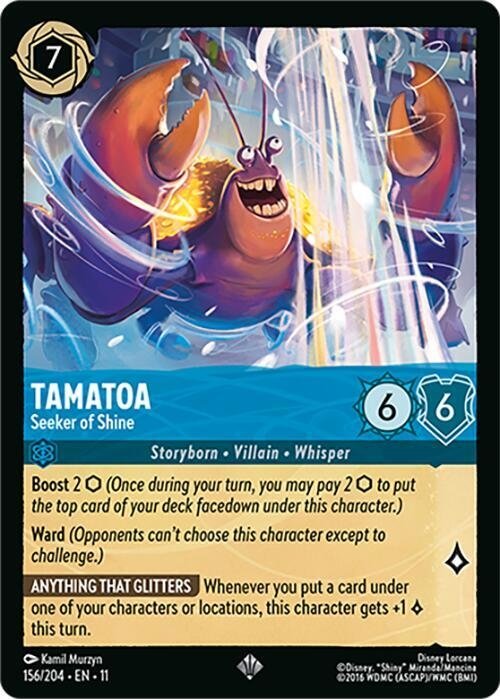
Tamatoa – Seeker of Shine: Boost-to-lore engine
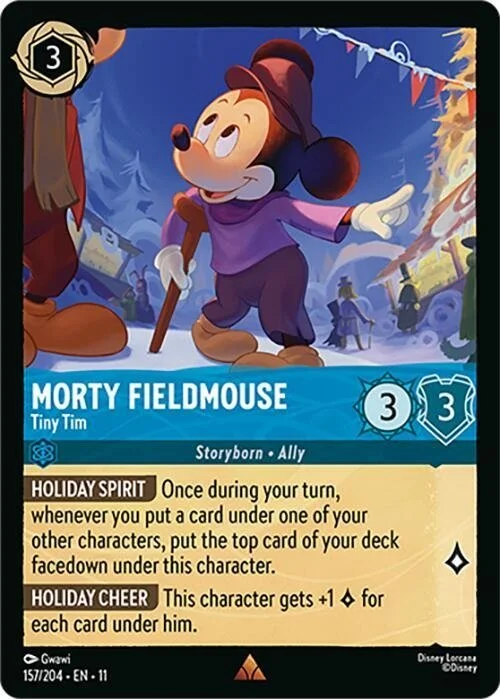
Morty Fieldmouse – Tiny Tim: Excellent quester with Tamatoa
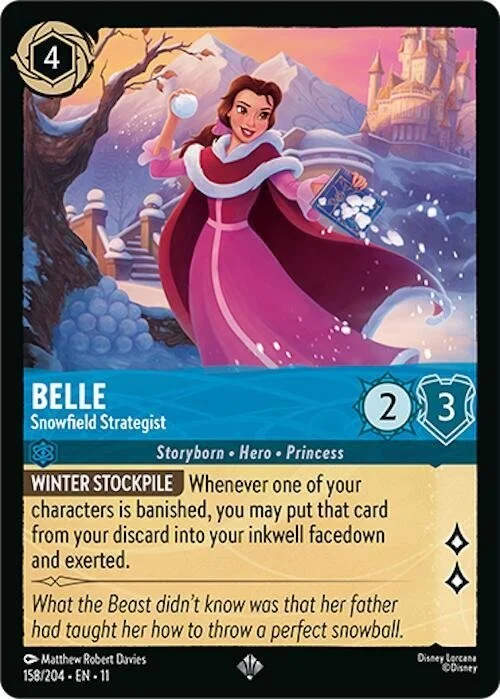
Belle – Snowfield Strategist: Premier ramp card
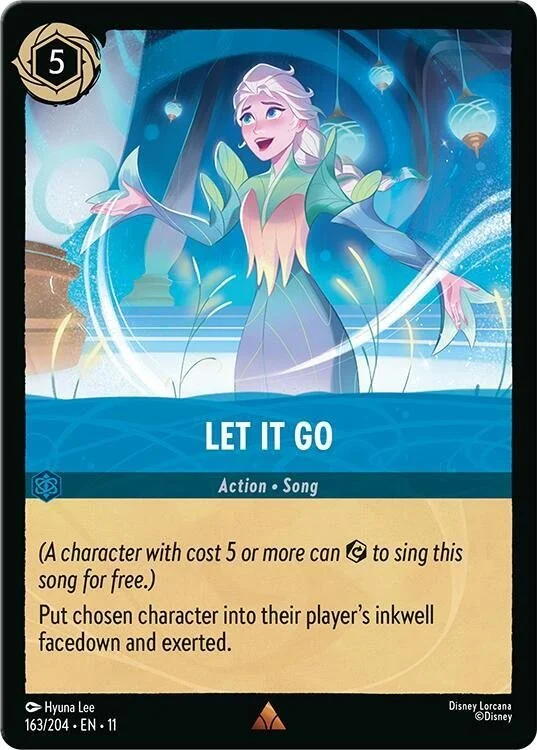
Let It Go: Clean character removal
Sapphire Bombs
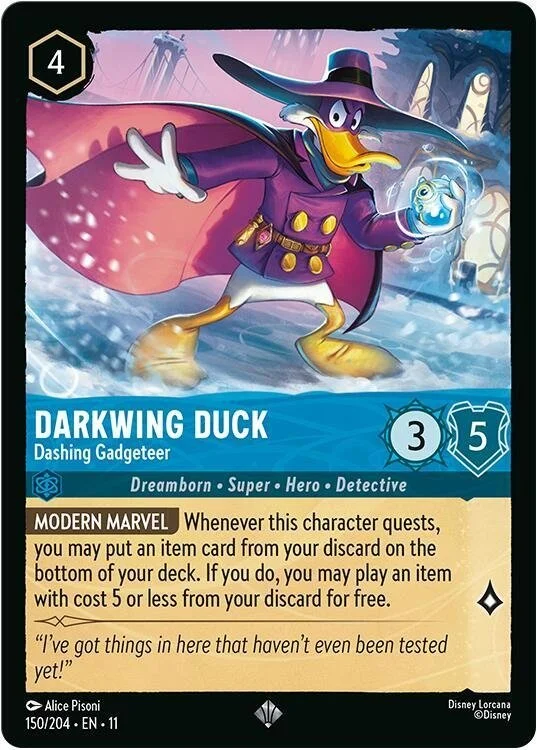
Darkwing Duck – Dashing Gadgeteer: Free item recursion
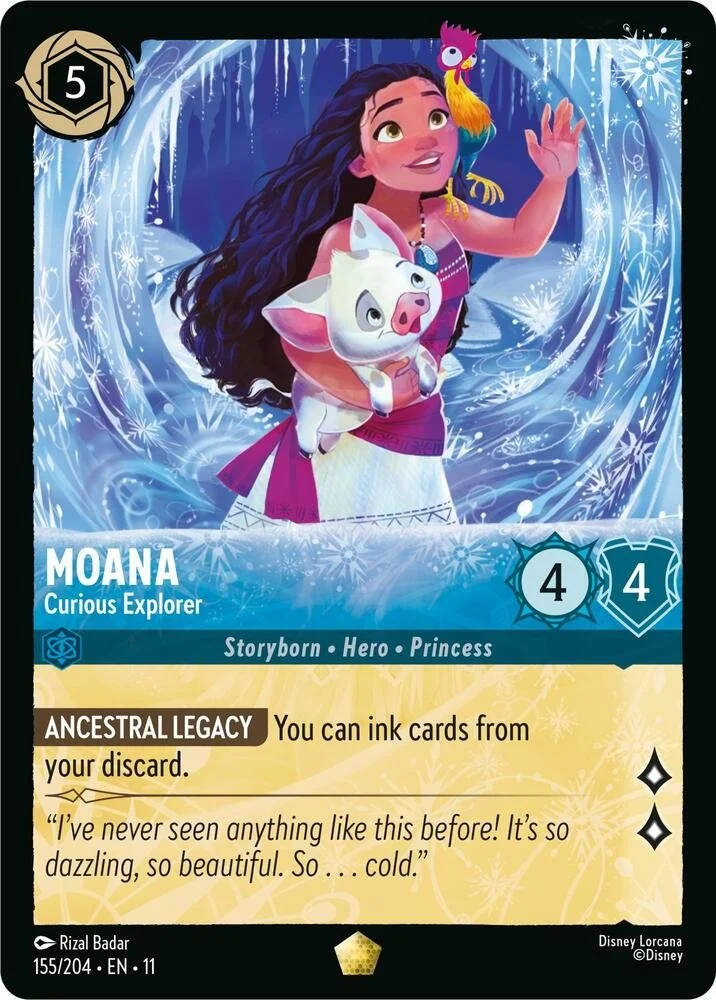
Moana – Curious Explorer: Inking from discard is absurdly powerful
Steel

Steel plays the long game, focusing on durability, control, and punishment. It doesn’t need flash — Steel wins by forcing opponents to play carefully and grinding them down.
Key Commons
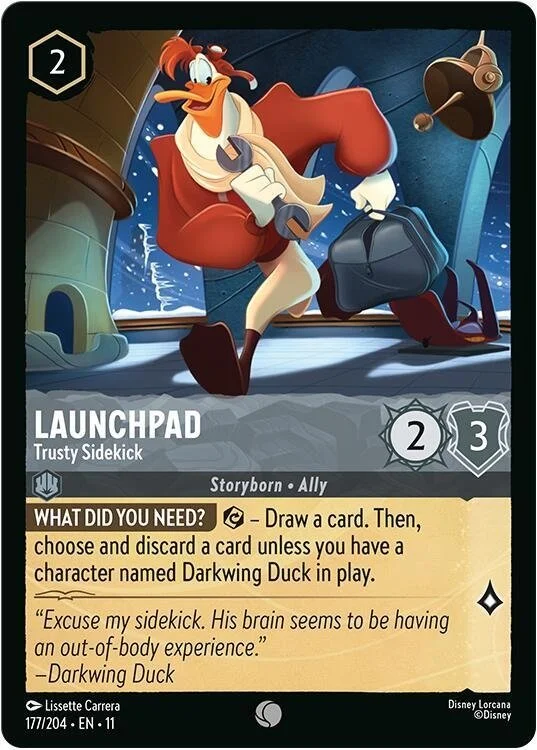
Launchpad – Trusty Sidekick: Free draw with Darkwing synergy
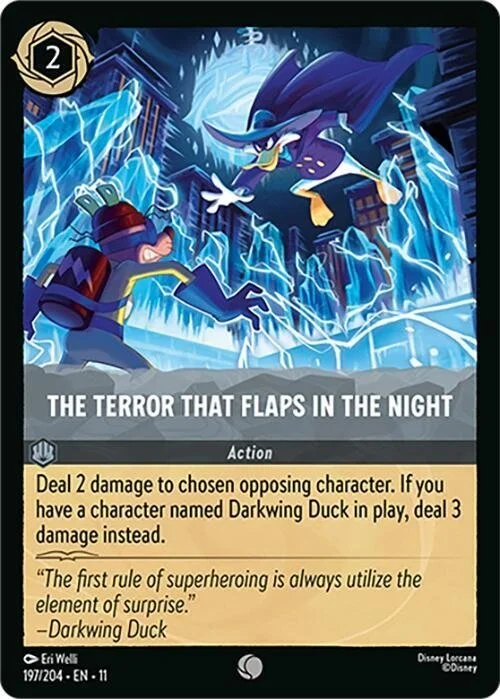
The Terror That Flaps in the Night: Efficient damage spell
Key Uncommons
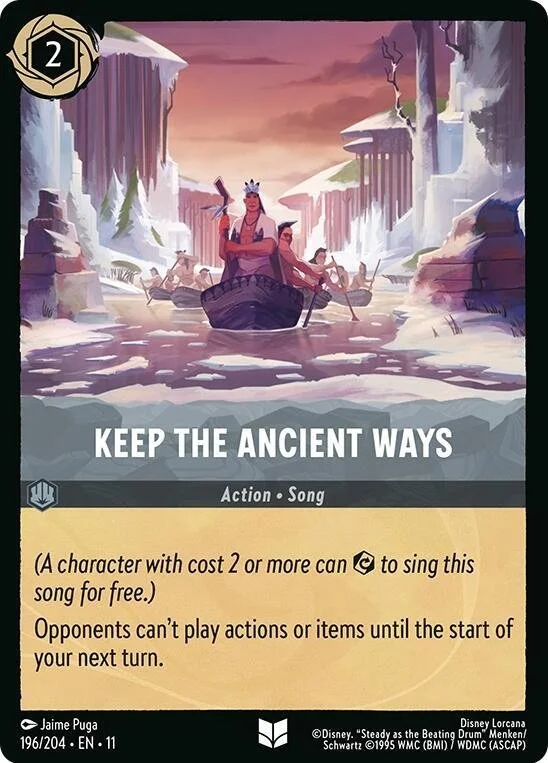
Keep the Ancient Ways: Slows aggressive decks
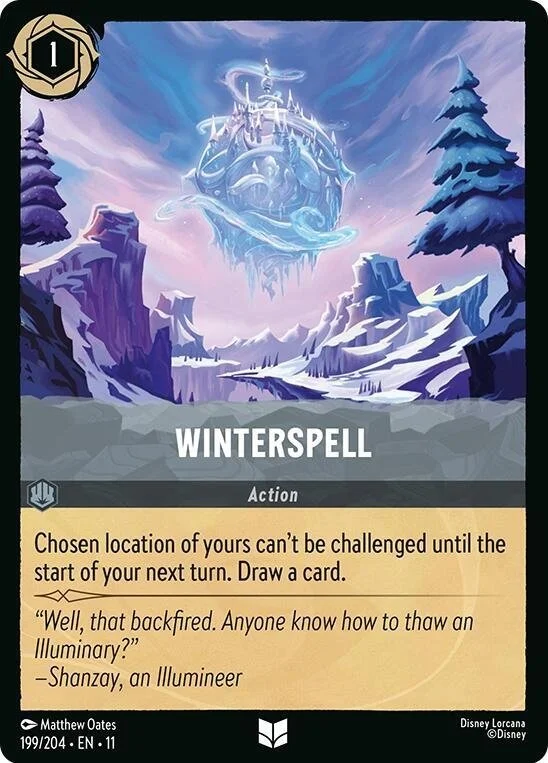
Winterspell: Card draw plus location protection
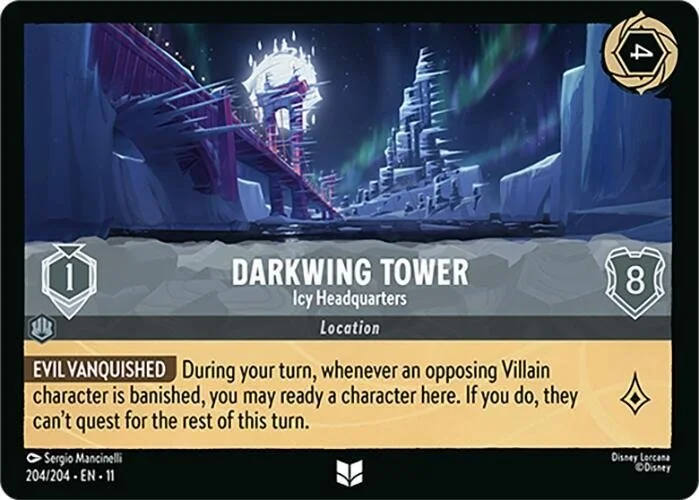
Darkwing Tower – Icy Headquarters: Ready characters after villain banishes
Rares, Super Rares & Legendaries
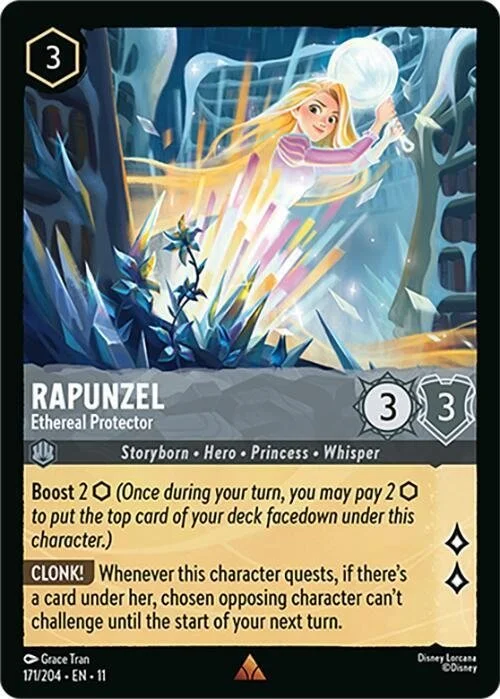

Rapunzel – Ethereal Protector: Locks down challenges
Dr. Hamsterviel – Infamous Scientist: More challenge denial
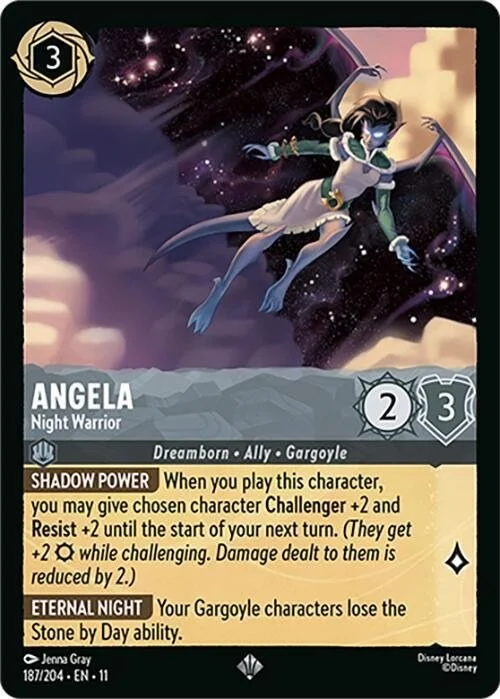
Angela – Night Warrior: Gargoyle synergy enabler
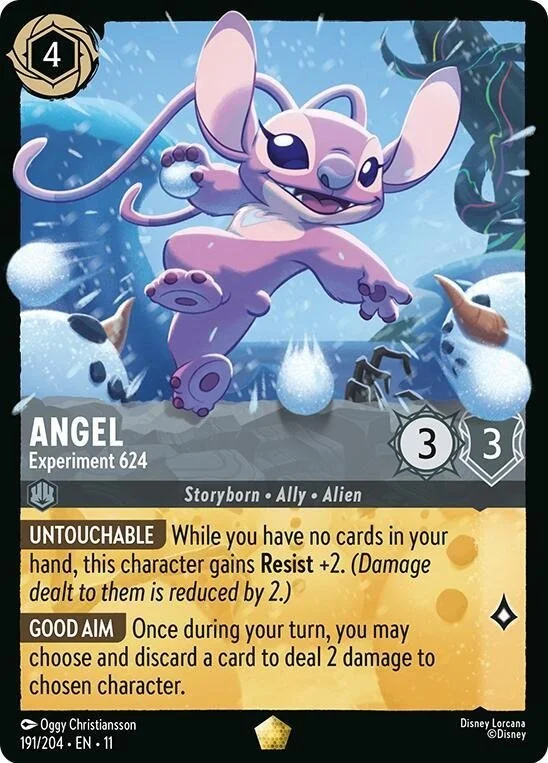
Angel – Experiment 624: Controlled ping damage
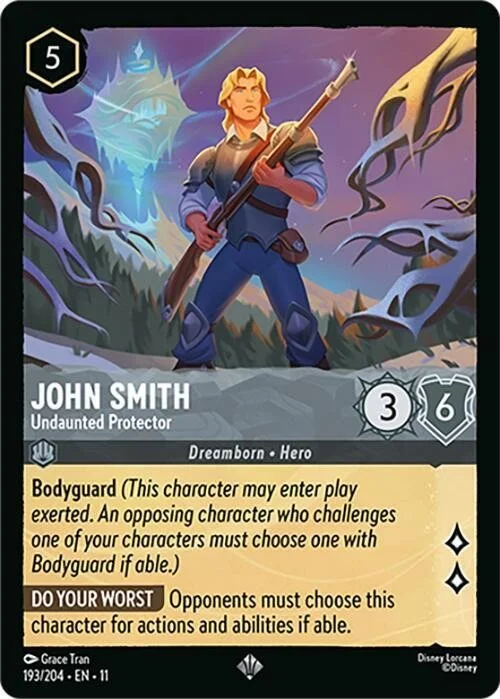
John Smith – Undaunted Protector: Bodyguard for both challenges and actions
Steel Bombs
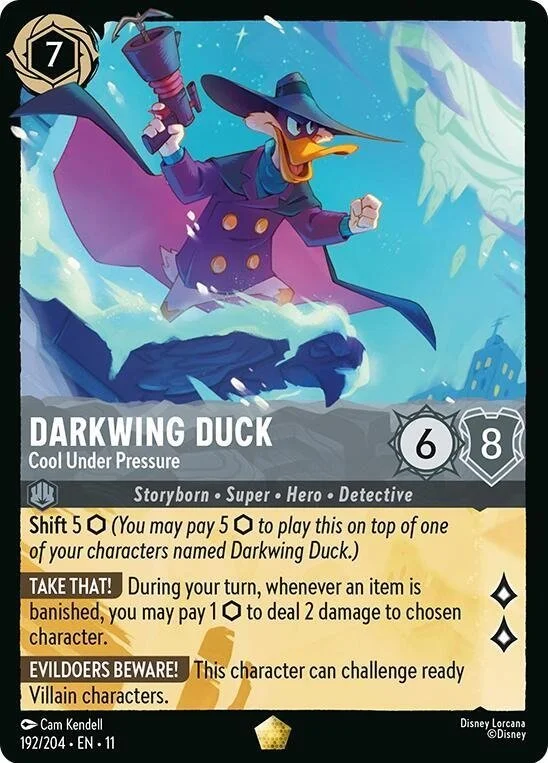
Darkwing Duck – Cool Under Pressure: Villain-heavy meta counter
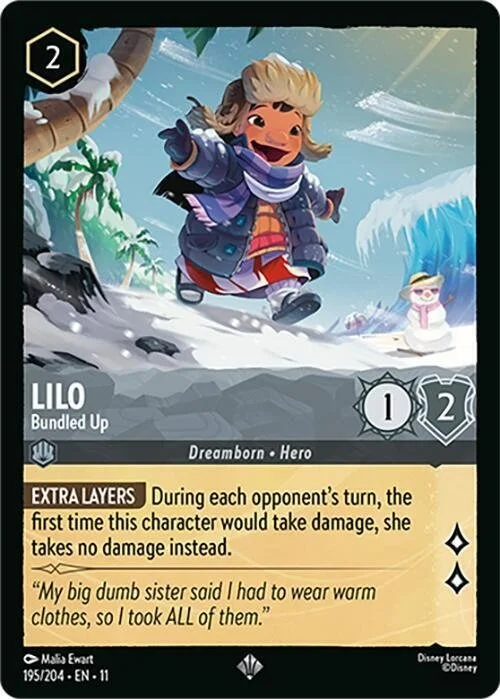
Lilo – Bundled Up: Extremely difficult to remove
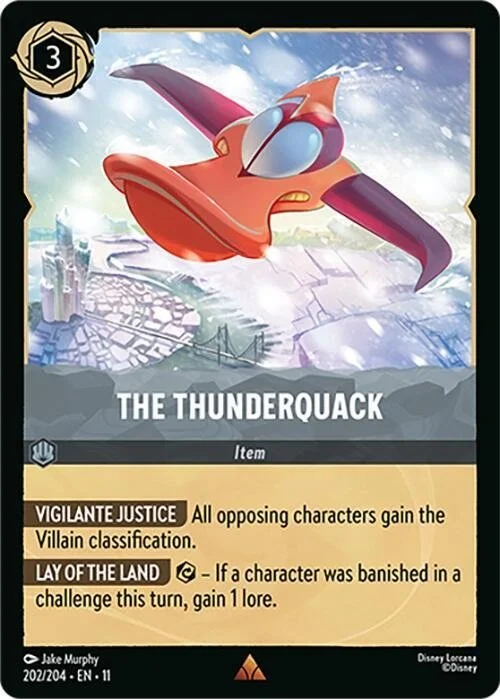
The Thunderquack: Perfect pairing with Darkwing Duck
What are the best color pairings in Winterspell?
After spending time with Winterspell, two color pairings stand out as the most consistently powerful and synergistic options in sealed and limited play: Amber/Steel and Ruby/Sapphire. While splashing a third color is always possible depending on your pulls, these pairings feel purpose-built, with game plans that naturally complement each other rather than fighting for space.
Amber / Steel Aliens – Control through pressure
If you’re looking to play a true control deck in Winterspell, Amber/Steel is where you want to be. The synergy here—especially when leaning into Alien support—is undeniable. This pairing excels at methodical, suffocating gameplay where you quest relentlessly while denying your opponent meaningful counterplay.
Amber provides the backbone of the strategy with strong questers, card draw, healing, and protection. Cards like Pocahontas, Lilo, and Wisdom of the Willow reward you for questing early and often, while Songs and Actions keep your key characters safe. Steel then steps in to lock things down, slowing aggressive decks and forcing opponents into awkward positions. With challenge denial, efficient damage, and sturdy locations, Steel ensures that once you establish a board, it’s incredibly difficult to break through.
Together, Amber and Steel create a deck that feels almost unfair when it gets rolling. You’re not trying to race your opponent—you’re trying to outlast them. By the time they’re ready to respond, you’ve already built an insurmountable lore lead or left them without clean answers.
Ruby / Sapphire Aggro – Relentless aggression with a late-game plan
On the opposite end of the spectrum is Ruby/Sapphire, a pairing that feels like an unstoppable force backed by inevitability. Ruby alone is terrifying in Winterspell, packed with challengers, lore drain, and brutal removal that rewards aggressive play. Cards like Wreck-It Ralph, Elsa, and Scrooge McDuck give Ruby the ability to dominate the early and midgame through sheer pressure.
What Sapphire brings to the table is what makes this pairing truly special. While Ruby pushes the pace, Sapphire ensures you never run out of gas. Ramp effects, inking from the discard, and efficient card advantage let you transition smoothly into the late game without losing momentum. Even if your opponent manages to stabilize early, Sapphire gives you the tools to reload and keep swinging.
This pairing thrives on constant pressure. Ruby applies the damage, Sapphire supports it with resources, and together they make sure your opponent never feels safe—no matter how long the game goes.
Amethyst and Emerald – The supporting cast
In Winterspell, Amethyst and Emerald feel less like standalone powerhouses and more like excellent support colors that enhance already-strong cores.
Amethyst naturally slots into control-oriented builds, making it a strong complement to Amber/Steel. Its card draw, exert effects, and bounce mechanics reinforce a slower, more calculated playstyle. If your Amber/Steel pool lacks consistency or interaction, Amethyst helps smooth things out while staying true to the control plan.
Emerald, on the other hand, pairs more naturally with Ruby/Sapphire. Its emphasis on Evasive characters, disruption, and tempo aligns well with aggressive strategies. Emerald doesn’t want to grind—it wants to sneak in lore while your opponent is already under pressure. When added to Ruby/Sapphire, it amplifies aggression without diluting the deck’s identity.
Sealed deck building tips for Winterspell
Sealed deck building example video coming soon…
When building a sealed deck for Winterspell, most successful pools naturally fall into one of three playstyles: slow control, aggressive challenging, or periodic questing. The key to building a strong deck is identifying which of those styles your card pool supports best and committing to it fully. If you open a heavy concentration of Ruby cards that reward challenging and Boost synergies, trying to force a slower control deck will only hold you back. Likewise, if your pool leans toward Amber or Steel control tools, rushing into an aggressive strategy will leave a lot of value unused. Let the cards guide your direction.
Before you start building, take the time to sort your cards by color—and if you can, by strategy as well. Winterspell has a lot of overlapping synergies, but once everything is laid out, patterns become much clearer. Character types, questing payoffs, Boost enablers, and removal density often matter more than raw rarity when deciding which colors to pair together.
While two-color decks are still the most consistent option, Winterspell is flexible enough to support light splashes when they serve a clear purpose. There are powerful strategy cards spread across every color, and splashing for removal, card draw, or a finisher can be worth it—as long as it supports your primary game plan and doesn’t dilute your consistency.
Winterspell is a very strong set, especially for the first release of the year, so even sealed decks tend to be more refined than usual. Expect real bombs, functional engines, and meaningful interaction across the table. Because of that, clean deck construction matters more than ever.
A clean ink curve goes a long way in sealed, and Winterspell is no exception. Here’s a reliable baseline to aim for when building your deck:
1-cost cards: 3–6
2-cost cards: 6–9
3-cost cards: 6–9
4-cost cards: 5–7
5-cost cards: 5–7
6+ cost cards: 3–6
Non-inkables (Actions, Items, Locations): 4–8 total
This curve keeps you active in the early game while still giving you enough top-end power to close things out. Falling behind early in Winterspell can be difficult to recover from, especially against aggressive Ruby or evasive Emerald strategies.
If you’re playing Sapphire, you can afford to push that curve higher. Sapphire’s ramp options, especially cards like Moana that let you ink from your discard, make higher-cost threats far more realistic and easier to deploy without falling behind.
Finally, if your deck uses Boost mechanics, don’t underestimate simpler characters with few or no abilities. Filling your Boost pool with safer options reduces the risk of accidentally tucking away your most important cards. In Winterspell sealed, smart Boost management can be the difference between a smooth game plan and one that stalls at the worst possible moment.
Gameplay tips and match strategy for Winterspell
Winterspell is a set where smart decision-making matters just as much as strong deck building. Knowing when to quest, when to hold interaction, and how to adjust to different matchups will often decide games long before the final lore is counted.
Know when to quest
Winterspell strongly rewards proactive questing, especially if your deck is built to protect exerted characters. If you have Songs, Actions, or abilities that prevent challenges, grant protection, or punish opponents for interacting, don’t be afraid to quest aggressively. Passing up safe quest opportunities often gives your opponent the breathing room they need to stabilize or set up their own engine. If your deck is designed to quest and defend, trust it to do exactly that.
Don’t fall for bait
Not every scary card needs to be answered immediately. Cards like Goofy – Klutzy Skier can look terrifying the moment they hit the board, but they only become truly dangerous if your opponent is willing to invest Boost cards or protection into them. Removing a threat too early can waste valuable interaction, especially if your opponent was never planning to commit resources in the first place. Take a moment to assess whether a card is an actual problem—or just potential pressure.
Adjust to the matchup
One of Winterspell’s biggest strengths is how distinct each ink color feels, and that means every matchup plays differently. Your strategy should adapt accordingly. If you’re playing a control deck and run into another control opponent, you may need to speed up your questing slightly to avoid a drawn-out stalemate—but without abandoning your core game plan. Against aggressive decks, slowing the pace and prioritizing board control becomes more important. Flexibility is key, but always stay grounded in what your deck is designed to do best.
Use your sideboard in best-of-three
If you’re playing best-of-three matches, your sideboard can win you games. Winterspell includes several cards that specifically interact with certain character types, items, or locations, and those effects become much stronger once you know what your opponent is relying on. Make sure you have item or location removal ready if your opponent is leaning heavily into them, and don’t hesitate to swap out narrow cards that aren’t pulling their weight in a given matchup.
Winterspell rewards players who think a turn ahead. Quest with confidence, avoid overreacting to pressure, adapt your tempo to the matchup, and use your sideboard intentionally. Small, thoughtful decisions add up quickly—and in this set, they often make the difference between a close loss and a clean win.
Final Thoughts
Winterspell is a standout sealed format that strikes a great balance between raw power and thoughtful decision-making. Every ink color has a clear identity, and while some—like Sapphire, Ruby, and Amber—may feel especially dominant depending on your pulls, no color feels truly unplayable when built with intention. The strongest decks are the ones that commit fully to a plan, whether that’s controlling the board, pressuring through challenges, or carefully timing big quest turns.
Color pairings like Amber/Steel and Ruby/Sapphire shine because their strategies naturally reinforce each other, but the set also leaves room for creativity through splashes and support colors like Amethyst and Emerald. Add in impactful Boost mechanics, meaningful sideboard decisions, and a high overall power level, and Winterspell becomes a prerelease environment where smart play is consistently rewarded.
Above all else, Winterspell prerelease events are about discovery. You’ll see surprising interactions, unexpected bombs, and games that swing wildly on a single decision. Don’t be afraid to experiment, learn from each match, and enjoy the process. If you walk away with a better understanding of the set—and a few memorable games under your belt—you’ve already won, regardless of the final standings.