Game reward mechanics keep players engaged by incentivizing them to make progress and paying them off in due course when they do. It’s a tried and tested formula, one that developers use every time, whether they are working on the latest RPG or a newly released sports game.
Still, although this mechanic is basically timeless, it still needs to appear fresh and organic so that players feel fully immersed, rather than ‘tricked’ into making progress just to get their hands on the next piece of gear.
To achieve this, games blend both intrinsic and extrinsic reward systems, along with a kick of randomness to spice things up. Here, we explain how each of these dynamics comes together to form the games that you love.
Extrinsic Rewards
Extrinsic rewards are tangible and direct. They may include new items, in-game currency, gear and equipment, or experience points that level up stats. Extrinsic rewards offer external validation for exploring a certain area of the map, battling through a tough dungeon, or defeating a boss.
When you receive an extrinsic reward, you know you are on track, and you feel ‘recognized’ by the game, which is directly paying you off for progression. The rewards typically scale according to how challenging or complex the challenge was, so that you feel appropriately rewarded for your efforts.
Nearly every game uses an extrinsic reward system, some more than others. For example, although RPGs are highly story-driven, they also constantly reward the player with XP, items, and gear, leading to a willingness by the player to grind out long hours of often repetitive tasks or battles.
Intrinsic Rewards
Intrinsic rewards offer internal satisfaction to the player, who gets to feel something positive as a result of their progress. Intrinsic rewards come in the form of story progression, hidden lore, mastering a difficult game mechanic, or surpassing a personal milestone.
It may seem like intrinsic rewards exist in and of themselves, they are most definitely built into the game. Developers focus on creating stunning environments, fine tuning game mechanics to make them more rewarding, and creating compelling narratives that build towards a finale in the same way that a movie does.
Games like Resident Evil lean heavily into intrinsic reward systems, with many of the items that you find usually serving as a means to survival rather than a shiny, flashy reward.
Balancing Intrinsic and Extrinsic Rewards
Extrinsic rewards are very important, but an overreliance on them leads to players having a superficial connection to the game. Finding new stuff is enough to keep most people engaged, as the overall experience falls flat if it is not backed by an immersive world. The key is to balance both.
Take Elden Ring, for example, which is undoubtedly one of the top titles in its category. As a player, you are consistently rewarded for exploration in the form of loot, while taking on any of the roaming bosses on the map pays off with rare weapons and gear.
But that’s not really what makes the game standout or keeps players coming back. The environment is rich and stunning, the mechanics are deep and rewarding, and the bosses are challenging enough that players will hunt them down regardless of whether they need the external reward that comes with it.

Randomness in Reward Systems
Another key game reward mechanic is randomness. Rather than giving players the same reward every time, which becomes predictable and sometimes boring, games keep players engaged by combining small wins with the hope of something bigger.
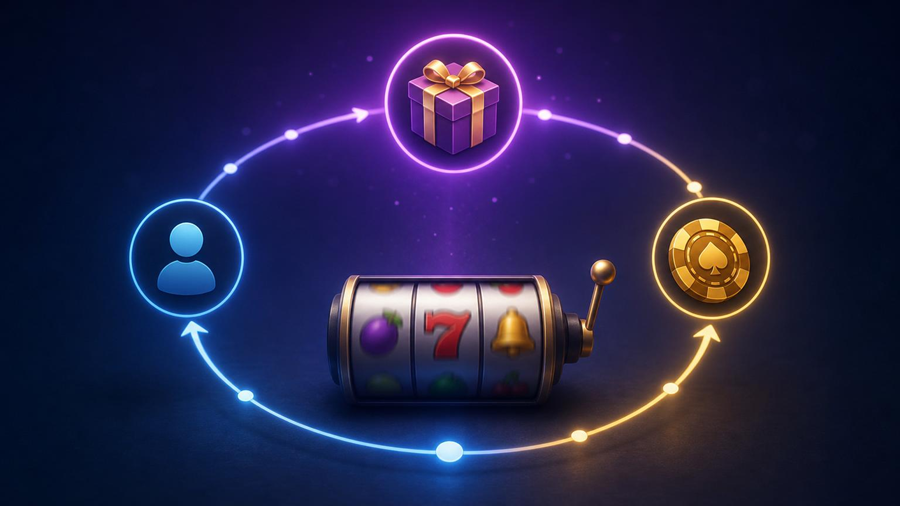
Online casino games are the perfect example of randomness in rewards. Slots typically pay small but frequent wins, combined with the chance that any single spin could yield a jackpot prize. It’s the uncertainty of the outcomes that forms the extrinsic reward system.
Although casino games are largely extrinsic when it comes to rewards, developers are also well aware of the need for intrinsic reward, which is why sites like 7signs online casino offer thousands of slots with different themes, characters, and even storylines.
Randomness in gaming is nothing new. Early Final Fantasy games, for example, had loot chests on the map that had a percentage chance of dropping rare gear, leading to hordes of players save-scumming for hours to hit that 5% rare gear drop.
Nowadays, randomness in video games has been taken to the next level with loot boxes and mystery chests, a somewhat controversial monetisation method that awards various rarities of gear.
Short Term Versus Long Term Rewards
Short term rewards offer immediate gratification with quick unlocks and achievements, such as a constant flow of XP points, novel items, or low grade equipment, along with intrinsic rewards such as character progressions or unlocking a new section of the map. They keep the player engaged in the short term.
Great game design also withholds some rewards as a longer term payoff. This can include end-game equipment, optional boss battles, or lengthy cutscenes that tie together plot points.
For a lot of players, the ultimate long term payoff is 100% completion, which offers both the intrinsic reward of finishing every aspect of the game, and the extrinsic reward of a shiny platinum trophy.