Disclosure: This is a paid guest post. The author or an affiliated third party paid for its publication, and the article may contain promotional links. The views and opinions expressed are those of the author and do not necessarily reflect those of GameTyrant or its editorial staff.
Disclaimer: The following content contains references to gambling, casinos, and related topics.
A roulette wheel looks pretty simple, doesn't it? The centre spins, the ball rolls around and eventually lands on a number. But making one takes a lot of precision; even a slight tilt can make some pockets more likely to catch the ball. Manufacturers have to check these details carefully, and casinos need to keep checking them as the wheel gets older.
A glance at Roulette77 in UK shows the different layouts, but manufacturers see another challenge: keeping pockets identical. Players see red, black and green but engineers see moving parts that must never favour one number over another. And getting that balance right takes more than a quick spin in the workshop.
The Numbers Come First
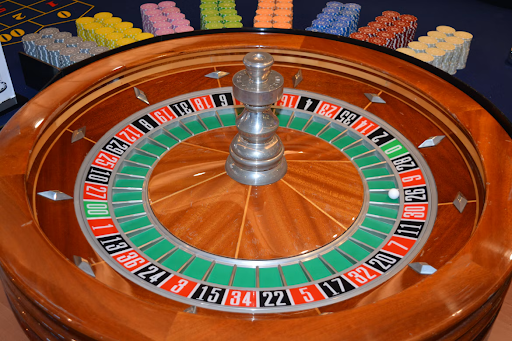
Not all roulette wheels are built the same. The European version has 37 pockets, numbered from zero to 36. Its American cousin squeezes in an extra double zero, with the total to 38. And if you've ever looked closely, you'll notice the numbers seem completely jumbled. Each version has its own established sequence, which manufacturers must follow.
Getting the layout right is only half the job. Every pocket needs to be the same size and depth. The metal dividers between them, known as frets, must also be evenly shaped. Imagine one pocket being slightly wider than the rest. It might catch the ball more often, giving that number an unfair advantage. Even a tiny difference can cause trouble.
The green pockets have a special role, too. They're what gives the casino its mathematical edge. On a European wheel, a bet on one number has a 1-in-37 chance of winning. Add the American double zero, and those odds become 1 in 38.
If you're curious about how these differences affect the game, Roulette 77 is a handy place to explore the rules. And there's more going on beneath those numbers than you might expect. The outer section, called the bowl, stays still while the central rotor spins. The ball travels around the bowl's outer track before dropping towards the moving pockets. Getting that movement right takes careful engineering. After all, the ball should never have a favourite place to land.
How the Parts Become a Working Wheel
Roulette wheels used to be made largely from hardwood. These days, manufacturers often combine wood, engineered composites and metal. Wood still gives the wheel its classic look, while modern materials help prevent warping and wear.
Much of the cutting is done by computer-controlled machines. They can shape metal parts far more precisely than someone working by hand. But people are still involved. Workers assemble the components, check how they fit and make adjustments where needed. Some manufacturers also produce the pocket dividers from a single piece of metal. That means fewer joints that might loosen over time.
A roulette wheel has several parts, each with a specific job:
Bowl: The fixed outer section containing the track where the ball first rolls.
Rotor: The spinning centre with all the numbered pockets.
Bearings: Allow the rotor to spin smoothly without catching or wobbling.
Deflectors: Small metal obstacles that change the ball's direction as it falls towards the pockets.
One of the trickiest jobs is fitting the rotor inside the bowl. It needs to sit exactly in the centre and turn without wobbling. If one side sits slightly higher, the ball might behave differently there. Technicians check the alignment and balance, then adjust the assembly if something looks off.
There's also a sloping cone in the centre of the rotor. When the ball loses speed and drops from the outer track, it can bounce across this surface. The metal dividers, or frets, separate the numbered pockets. Their height and shape matter because they affect those final bounces.
Finally, workers polish and finish the visible surfaces. They have to be careful around the track and pockets, though. A small patch of uneven coating could change how the ball rolls. That's why the finished wheel gets checked again before testing begins.
Testing: Looking for Problems That Eyes Miss
Before a wheel reaches a casino, technicians examine its movement. They check the bowl's level and the rotor's alignment.
Why One Hundred Spins Prove Very Little
After the physical checks come trial spins. Testers can record landing numbers and compare results across the wheel. But 100 spins don't give each European pocket a guaranteed turn. Even a perfectly fair wheel produces streaks and gaps.
What matters is whether unusual patterns continue across a substantial sample. An often-hit pocket might be coincidence, or it might suggest a physical issue. The first step is further investigation – a small sample can fool anyone.
The UK's Gambling Commission says ongoing integrity measurements of roulette wheels matter because fairness depends on more than initial installation. It also notes the value of checking outcomes across extended periods of play. That can reveal patterns worth checking against the wheel's physical condition.
When a pattern looks suspicious, technicians can inspect the likely causes. They might check levelling, worn frets, damaged balls or irregular rotor movement. Specialist equipment can also measure surfaces more precisely than visual inspection alone. The idea is to find a mechanical explanation, if one exists.
The Real Test Starts at the Casino
A roulette wheel can leave the factory in perfect condition and still develop problems later. Casino technicians regularly check the wheel's balance, clean its components and look for signs of damage. Sometimes, a small adjustment is enough. Other times, a worn part needs replacing.
But even a perfectly balanced wheel gives the casino an advantage. On European roulette, the house edge is about 2.7%, thanks to the single zero. American roulette has an extra double zero, raising that figure to 5.26%.
Interestingly, people have tried predicting roulette results using science. As an article about Doyne Farmer's shoe computers explains, researchers once developed wearable devices to calculate where a roulette ball might land. They measured how quickly the wheel and ball were moving, then estimated the likely landing area. The calculations weren't precise enough to name the winning number, but they could narrow the possibilities.
The experiment showed how much physics matters in roulette. The ball reacts to gravity, friction and changes in speed. Even a slight tilt can influence its path. That's why technicians pay attention to details that players would probably never notice.
Still, there's a difference between a faulty wheel and an ordinary winning streak. Seven reds in a row? Nothing unusual enough to suggest a problem. But if one section attracts significantly more balls over thousands of spins, technicians have a reason to investigate. They can check the wheel's level, inspect the pockets and look for worn components.
A fair wheel won't produce perfectly even results every evening. Some numbers will appear repeatedly, while others might not show up for hours. What matters is whether those differences come from chance or something wrong with the equipment.