There was a time when being social automatically meant spending money. Travel. Drinks. Food. Tickets. You’d look at your calendar, feel a bit lonely, then look at your bank balance and think, maybe next week. Over time, that gets old. You don’t stop wanting connection, you just stop wanting the hassle that comes with it.
That’s where gaming quietly stepped in. Not as a big cultural statement, but as a practical solution. Something you could do from home, on your own terms, without needing to justify the cost or the effort. And before anyone really noticed, it became one of the easiest ways to stay social.
Socialising changed, and gaming filled the gap
Modern life doesn’t leave much room for spontaneous plans. Schedules are messy. Energy levels dip fast. And trying to coordinate a group of friends can be one of the toughest things in the world.
By the time evening rolls around, the idea of getting ready and heading out can feel exhausting. You tell yourself to push through it, but half the time you’d rather just switch off and go do something else on your own.
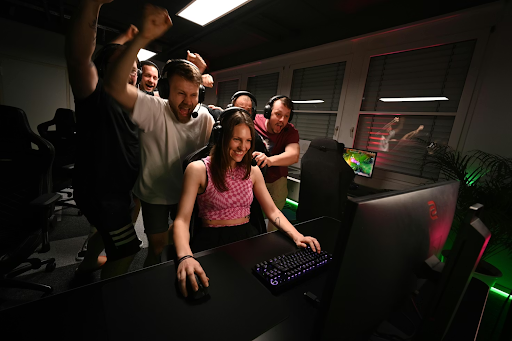
Gaming fits neatly into that reality. You can jump in for ten minutes or stay for hours. You can talk, listen, or just exist alongside others. That flexibility is a big reason gaming is a fantastic way to connect with others now. It doesn’t demand more than you’re able or willing to give.
And with programs like Discord being freely available, you can always stay connected with your friends. Chat with people, watch them play games, broadcast your gameplay to them, leave messages, and even send game invites through the program. It’s versatile, simple, and just a great way to stay connected.
Free games lowered the barrier completely
One of the biggest shifts has been access. You no longer need to spend money just to join in. Between sales, giveaways, and promotions, you can even find free games on steam from time to time that are genuinely worth playing.
That changes everything. There’s no risk. No pressure to “get your money’s worth” either. You can try something, see if it clicks, and move on if it doesn’t. Socialising stops feeling like a commitment where you’re paying for entry to someplace or for food and drinks. Instead, it starts feeling like an option, which is exactly what most people want.
Choice without cost became the norm
It’s not just one or two free titles either. There are so many different free to play games now that cover every mood and play style. Competitive, cooperative, creative, calm. Whatever fits your energy that day.
This variety means people can find communities that actually suit them. You’re not forcing yourself into a space that doesn’t feel right just because you paid for it. You choose what feels good, and that makes social interaction feel natural instead of awkward.
Not every social moment needs to be intense
Some days, you don’t want deep conversation or big group energy. You just want something gentle in the background. That still counts as connection.
For a lot of people, that looks like a round of freecell on your phone while chatting lightly or sharing a quiet moment online. It’s low effort. No pressure. No expectations. And sometimes, that’s exactly what makes it comforting.
And you’d be surprised at how competitive such a simple game can be among friends. Share scores, talk about strategies, or even compete against each other to see who can beat a round the fastest.

Gaming rewards consistency, not spending
Another reason gaming became more affordable is that enjoyment shifted away from buying new things. More people started focusing on improving your skills at the games you already own or play instead of constantly chasing the next release.
That mindset turns time into value. You get better. You feel progress. You build familiarity with people playing alongside you. Social bonds form naturally when you keep showing up in the same spaces, even if those spaces are digital.
This becomes especially true when you consider just how many of the most popular multiplayer games these days are free. Valorant, League of Legends, and Fortnite are among some of the most played games in the world, yet they’re free, can be played with others, and are heavily skill-based.
Online worlds replaced expensive meetups
Massive online games used to feel intimidating or niche. Now they’re one of the most accessible social spaces around. There are free to play MMORPG titles to check out that let you explore, cooperate, and chat without spending anything upfront.
These games offer something real-world socialising often doesn’t anymore: a shared sense of purpose. You’re working toward goals together. You see familiar names. You feel part of something, without needing to schedule a single meetup.
It works whether you’re outgoing or not
One of the quiet strengths of gaming is that it doesn’t favour one personality type. You can be talkative or quiet. You can lead or follow. You can join in fully or just observe.
A great thing about gaming compared to regular socialising is that you always have something to talk about. When you’re gaming, there’s a goal you’re trying to reach. Maybe it’s building something in Minecraft or beating other players in a shooter. And because there’s a goal, there’s something to talk about. You have a reason to communicate.
That makes it especially appealing when traditional social settings feel overwhelming. Some people just find it hard to come up with small talk. But with games, it’s different. You’re not performing. You’re participating at your own pace and talking about things that are happening. And over time, that builds comfort and connection without forcing anything.
Nobody planned for gaming to become the most affordable way to socialise. It just happened over time. People got tired of spending money to feel connected. They wanted something easier, cheaper, and more flexible. This is usually when people start realising that social life doesn’t have to look the way it used to. It can happen from home. It can cost nothing. And it can still feel real, meaningful, and surprisingly fulfilling.