While mobile poker wasn't intended as an elite-gaming market, mobile poker's success began when Zynga Poker launched on Facebook in 2007 and then on smartphones. At that time, there was little emphasis on strategy; players earned free chips every couple of hours; played against other unknowns at virtual tables; and bet everything they'd never risk betting in a live casino. These chips meant nothing; the opposition was informal; and that was exactly the point.
By 2012, Zynga Poker had around 35 million monthly players. This made Zynga Poker one of the most popular mobile games in the world, and established a fact many developers didn't realize until then: People will play poker using their phone, a whole lot of them, if the barriers to entry are minimal enough. No deposit required, no complicated setup, and — on Facebook — no standalone poker client to install, just sit down and play.
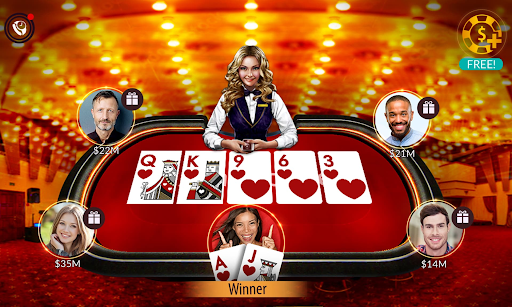
Titles such as Texas Hold'em Poker by Fully Loaded Apps, Poker Heat, WSOP App and Governor of Poker 3 followed. While each application improved upon the formula slightly — e.g., improved animation, daily tasks, loyalty systems — the primary element remained social. Play, lose your chips, wait for a chip replenish, repeat.
The Shift: Serious Players Want Real Competition
From around 2015, the mobile poker community underwent a subtle transformation. A small segment of the mobile poker population, which had grown-up using social poker apps, had progressed to the stage where they were playing low-stakes home games and had become interested in a form of competition and stakes that the social poker apps could never provide.
Also during this timeframe, improvements in smartphone hardware occurred. Processors in iPhones 6 and the best Android devices at that time offered sufficient performance and screen size to deliver highly sophisticated user interfaces for card games. And while mobile internet speeds had previously been too unpredictable to support high-quality live-multiplayer experiences without significant latency, that problem largely disappeared.
Online poker sites recognized this opportunity and seized it. PokerStars released a separate mobile application that replicated its desktop offering — multi-table support, tournament lobbies, hand histories, player notes. The mobile app was simply the full product squeezed into a smaller 5-inch display.
The other major operators followed suit. 888poker rebuilt its mobile offering from scratch instead of replicating its desktop product. GGPoker designed its mobile offering based on first-generation mobile design principles. Platforms like RedStar Poker developed their own mobile applications that provided players with the ability to access the same cash game tables and tournament schedules available on desktop.
Features Currently Available in Modern Mobile-Poker Applications
The difference between a 2013 social-poker application and a 2026 mobile-poker application is similar in scope to the difference between Snake on a Nokia and a current-generation open-world RPG. The offerings within both generations are not even remotely comparable.
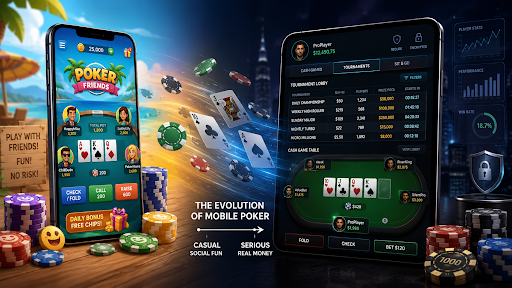
Modern mobile-poker applications currently offer:
Multi-Table Support: Players may maintain multiple tables concurrently on their device and switch between hands by tapping.
Full Tournament Experience: Satellite qualifier tournaments, multi-day tournaments, and rebuy tournaments are accessible solely via mobile devices.
Hand History and Tracking: All activity from previous sessions is captured and viewable by players so that they can evaluate their own play prior to their next session.
Fast-Fold Formats: Formats such as "Zoom Poker" (available on PokerStars) or "Rush & Cash" (available on GGPoker) are specifically designed for mobile usage. In these formats, players fold to a new hand immediately rather than waiting for another player to act.
Biometric Login and Two-Factor Authentication: Security measures that appeared excessive during the social-poker era are now considered de facto standards.
Cross-Platform Synchronization: Players can begin a session on their desktop computer, continue it on their mobile device during a commute, and resume it back on their desktop computer without losing any information.
Sliders for bet-sizing; action-buttons; and pot-odds-displays are designed with thumb input in mind rather than mouse-clicks. Customizable dark-mode themes; customizable table-felt colors; customizable deck-designs -- all cosmetic aspects serious players consider important -- are now ubiquitous.
The Current Landscape: Social and Real-Money Coexist
Although the social stream -- Zynga Poker; WSOP App; Governor of Poker 3 -- continues to attract massive user bases. WSOP App alone has had in excess of 50 million downloads. This social platform generates revenue based upon purchasing chips or making cosmetic enhancements. The poker within these applications is simulated; the competition is a mix of both competitive and non-competitive users; and overall this application offers an experience much closer to playing a card-based "idle" type game versus experiencing actual poker.
The real-money application stream is less populated in terms of total number of registered users; however, the products offered in this stream have evolved significantly in terms of features and functionality. Users in U.S. states that allow for regulated online poker — including Nevada, New Jersey, Michigan, Delaware, Pennsylvania, and West Virginia — may use licensed and fully compliant real-money poker applications.
One thing remains constant regarding the attraction of poker on a mobile device — the ability to take a deck of cards anywhere and at any time you wish and all you need is a wireless internet signal and your desire to engage in a poker hand.
Why This Trend Matters for Players
Those who initially learned how to play poker via social poker applications and game guides are better positioned today than they were ten years ago to make the move to fully functional poker platforms. Most of what they have learned about playing poker — hand rankings; position; pot odds — apply equally well to their new experience. They also have an understanding of reading betting patterns from one table to another, albeit now the stakes are higher.
Mobile poker provides a very clear example of how quickly a casual gaming application can become a legitimate gaming category. In just over fourteen years, mobile poker has evolved from being a social curiosity to a viable gaming category — and it did so without the two audiences ever getting in each other's way.