
The numerous enemies you fight in Nioh 3 are sure to provide a difficult challenge and plenty of deaths. Thankfully, you don’t have to face those challenges alone and can bring in other players to help.
There are a couple of different methods for enjoying the game in multiplayer, each with its own set of limitations. Here’s everything you need to know about how to play Nioh 3 in co-op.
How to Summon Visitors in Nioh 3
Your first introduction to co-op is through summoning visitors. This can be accessed by visiting any Shrine, selecting the Co-Op option, and then choosing Summon Visitor. Keep in mind that this option can only be used while you’re in a mission.
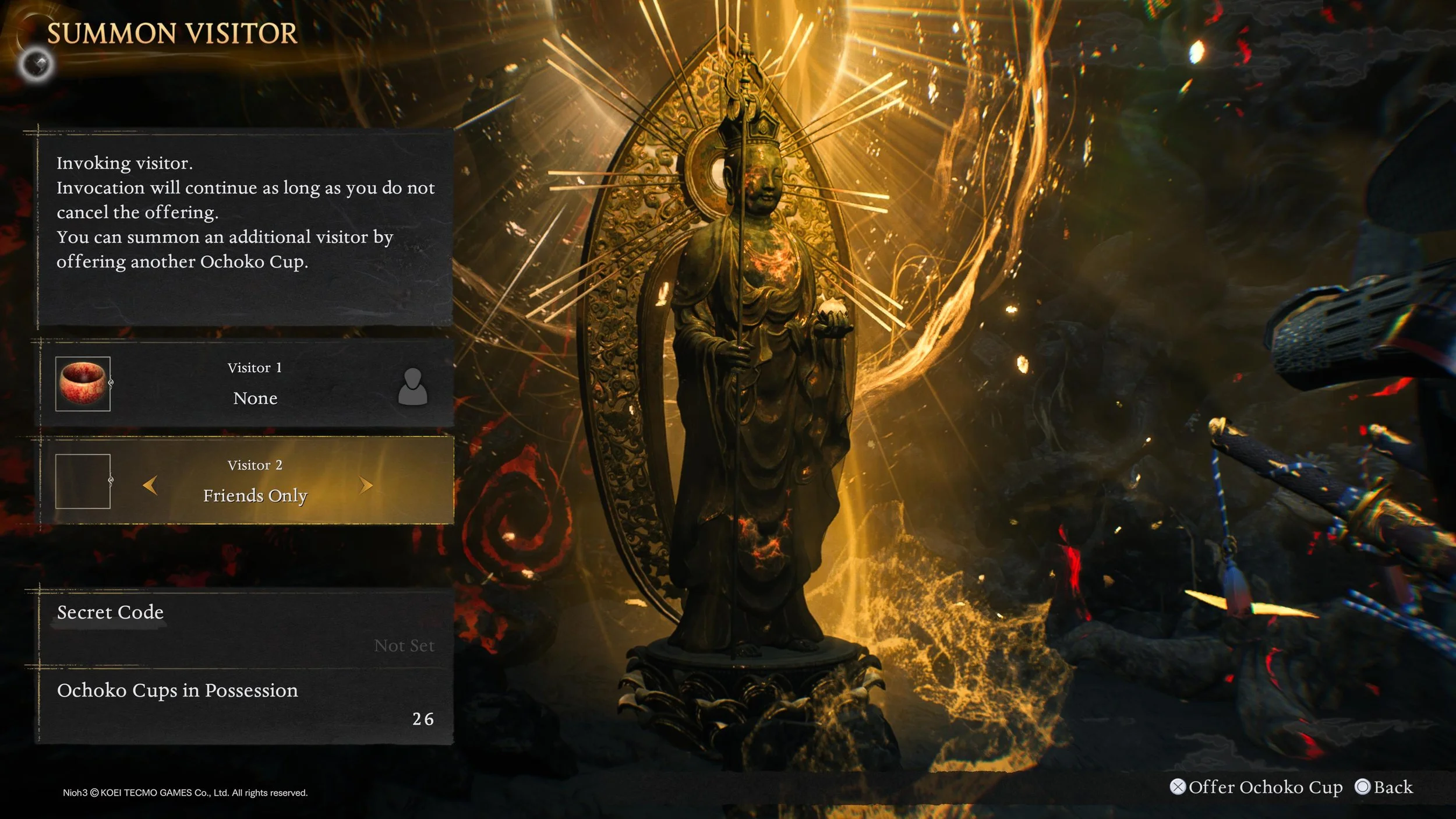
The way this works is that you can then offer up to two Ochoko Cups to summon up to two visitors. Ochoko Cups are primarily gained by playing in multiplayer or by defeating Revenants.
Any players who agree to join will help you until the mission is completed, after which they’ll depart from your world. Their involvement will not result in harder enemies or a change in loot for you.
If you want to experience the other side of this, select the Become a Visitor option in the Co-op menu. You can only join in on missions you’ve already completed.
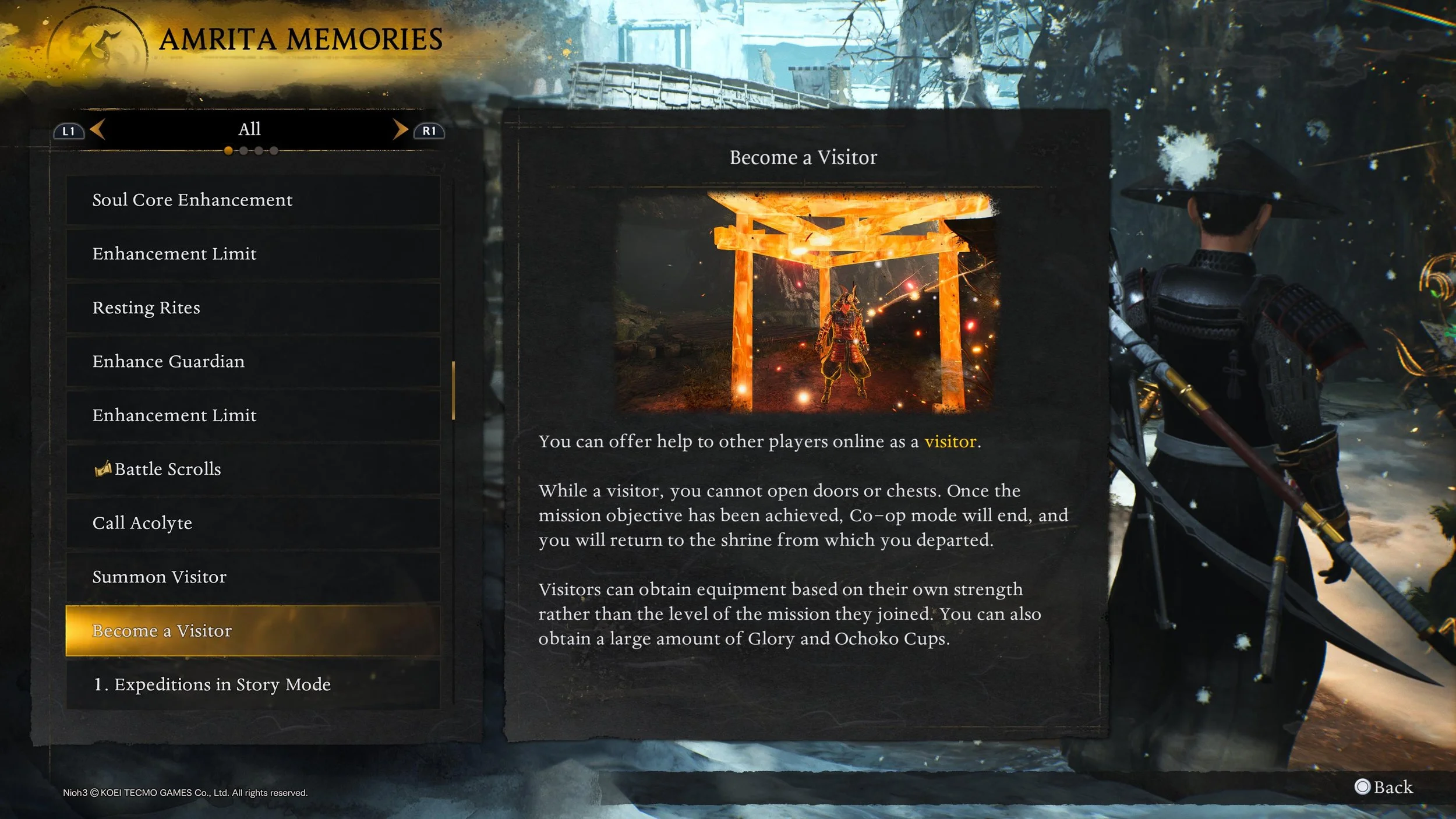
Since you’ll be a visitor, you won’t be able to open any chests or even doors. Any loot you find will match your level instead of what’s available during the mission. Lastly, you’ll earn a lot of Glory and Ochako Cups for helping out another player.
It’s worth noting that the option to summon visitors becomes available right before fighting Yamagata Masakage at the end of the tutorial. The option to become a visitor, as well as the Story Mode Expedition multiplayer, becomes available after activating your first proper Shrine in the Warring States era.
How do Co-Op Expeditions Work in Nioh 3
If you’re looking to play a longer multiplayer session with more exploring, you’ll want to check out the Expeditions option in a Shrine’s Co-Op menu. Expeditions are further split into two types: Story Mode and Mission Mode.
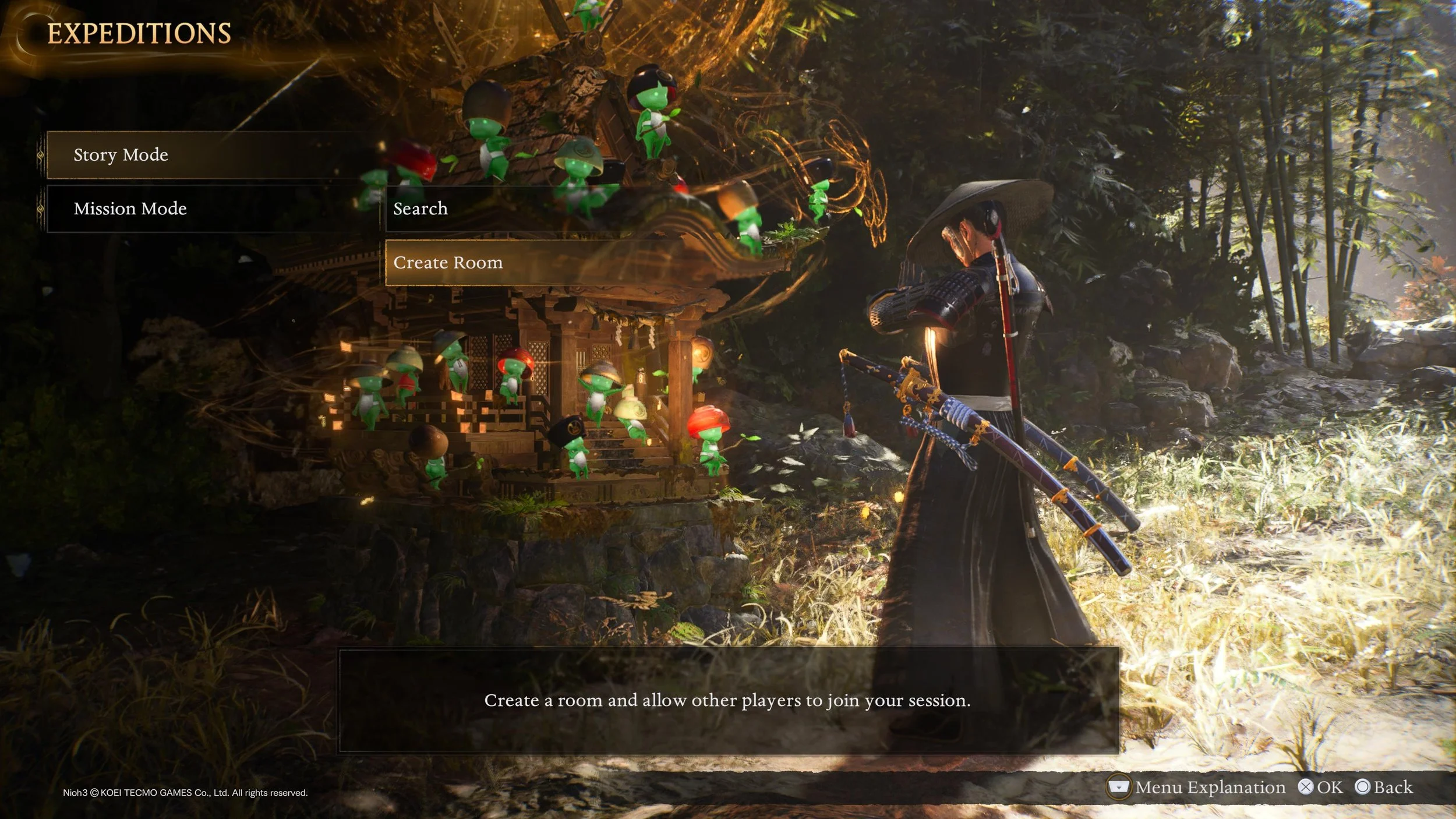
Story Mode Expeditions allow players to join a host’s world as Companions to explore and complete missions together. All progress is determined by how far along the host is in their world.
Whenever a host player prays at a Shrine, all guests in this world will have their life restored and be teleported to the Shrine. As with normal gameplay, visiting a Shrine will also respawn all enemies.
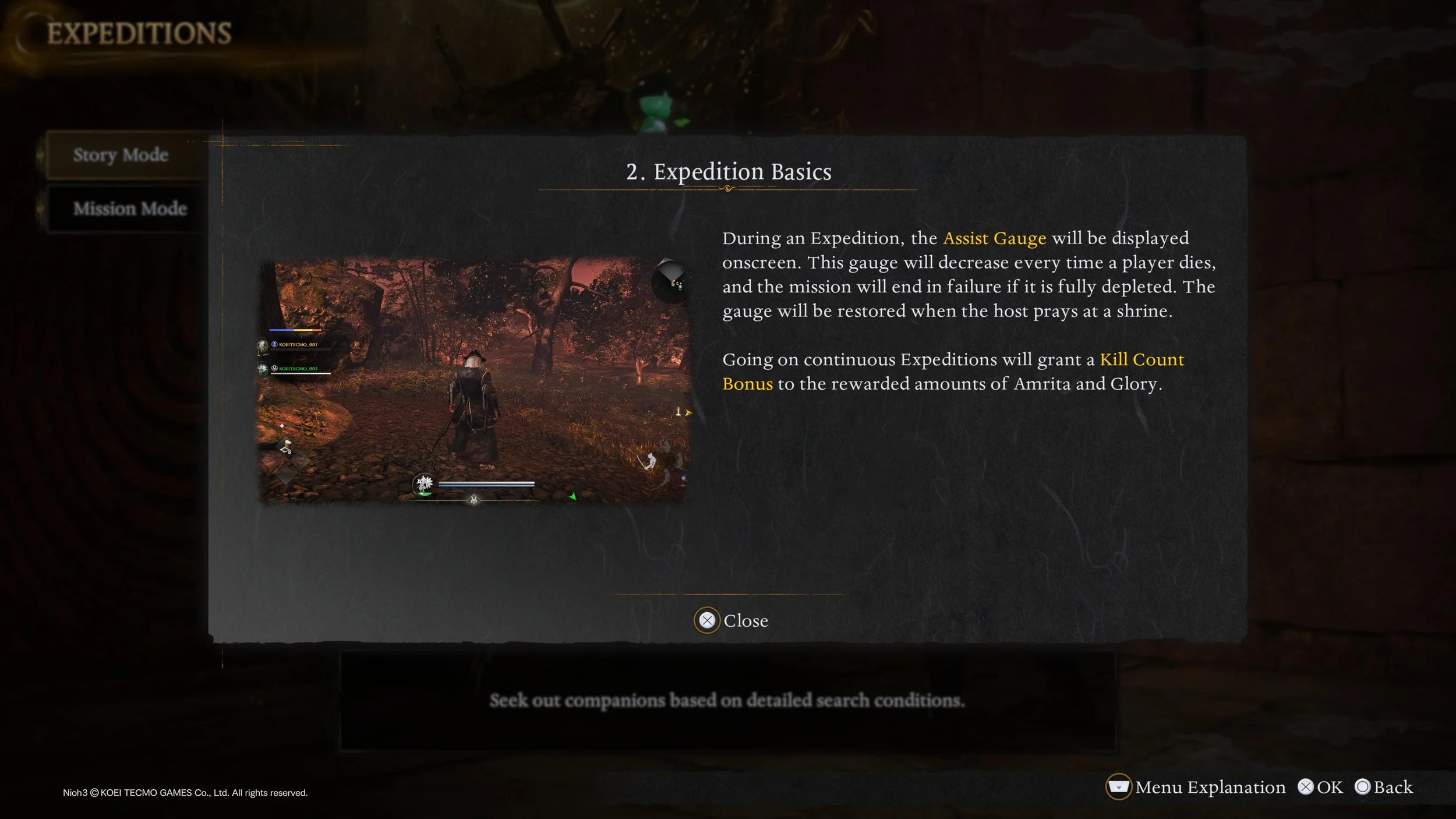
Something unique to Story Mode Expeditions is the Assist Gauge that appears over your companion’s names on the left. This gauge depletes every time a companion dies, with a completely depleted gauge sending everyone back to the previous Shrine with a reset.
Any player who’s been killed can wait for a quick revive by another player. If the would-be savior is fast enough, some of the Assist Gauge will be restored as well. The downed player can also self-revive, albeit at the cost of no Assist Gauge recovery.
Opposite of this mode are Mission Mode Expeditions, which unlock after Li Naotora gives you the Guiding Mirror. These are more focused experiences, letting players take on missions they’ve already completed or unlocked sub missions.
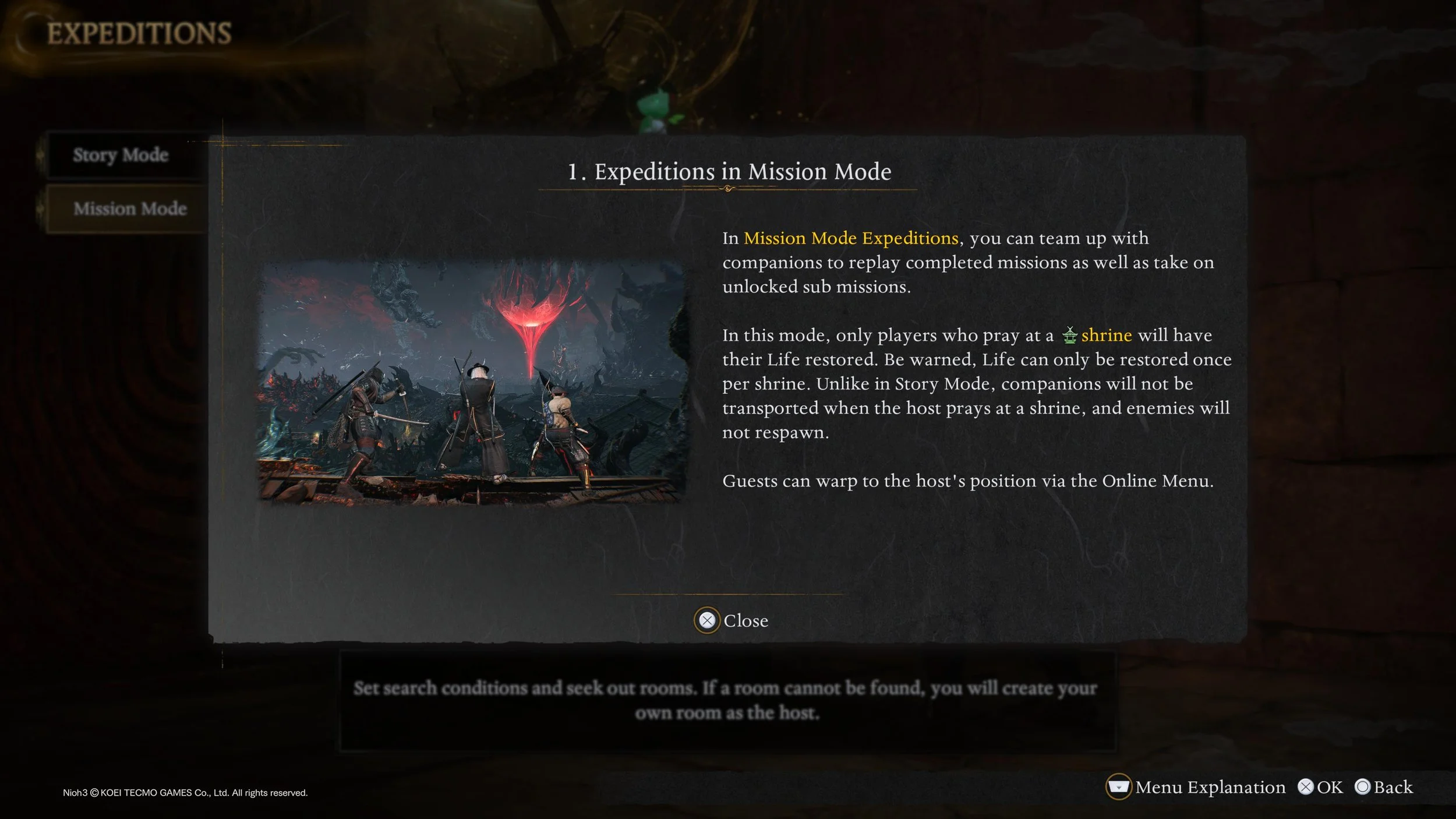
Companions won’t be teleported and healed when the host prays at a Shrine in this mode. Every player needs to pray individually to restore their life. Additionally, life is only restored once per Shrine.
The only other major difference is that enemies won’t respawn when a Shrine is used. You and your companions will still need to take care not to die and empty the Assist Gauge.
That covers how co-op multiplayer works in Nioh 3. Remember that you can also call in computer-controlled ghosts of players through the blue Benevolent Graves, but those won’t scratch the same itch of playing alongside a real player.
Nioh 3 is available now on PS5 and PC.