Disclosure: This is a paid guest post. The author or an affiliated third party paid for its publication, and the article may contain promotional links. The views and opinions expressed are those of the author and do not necessarily reflect those of GameTyrant or its editorial staff.
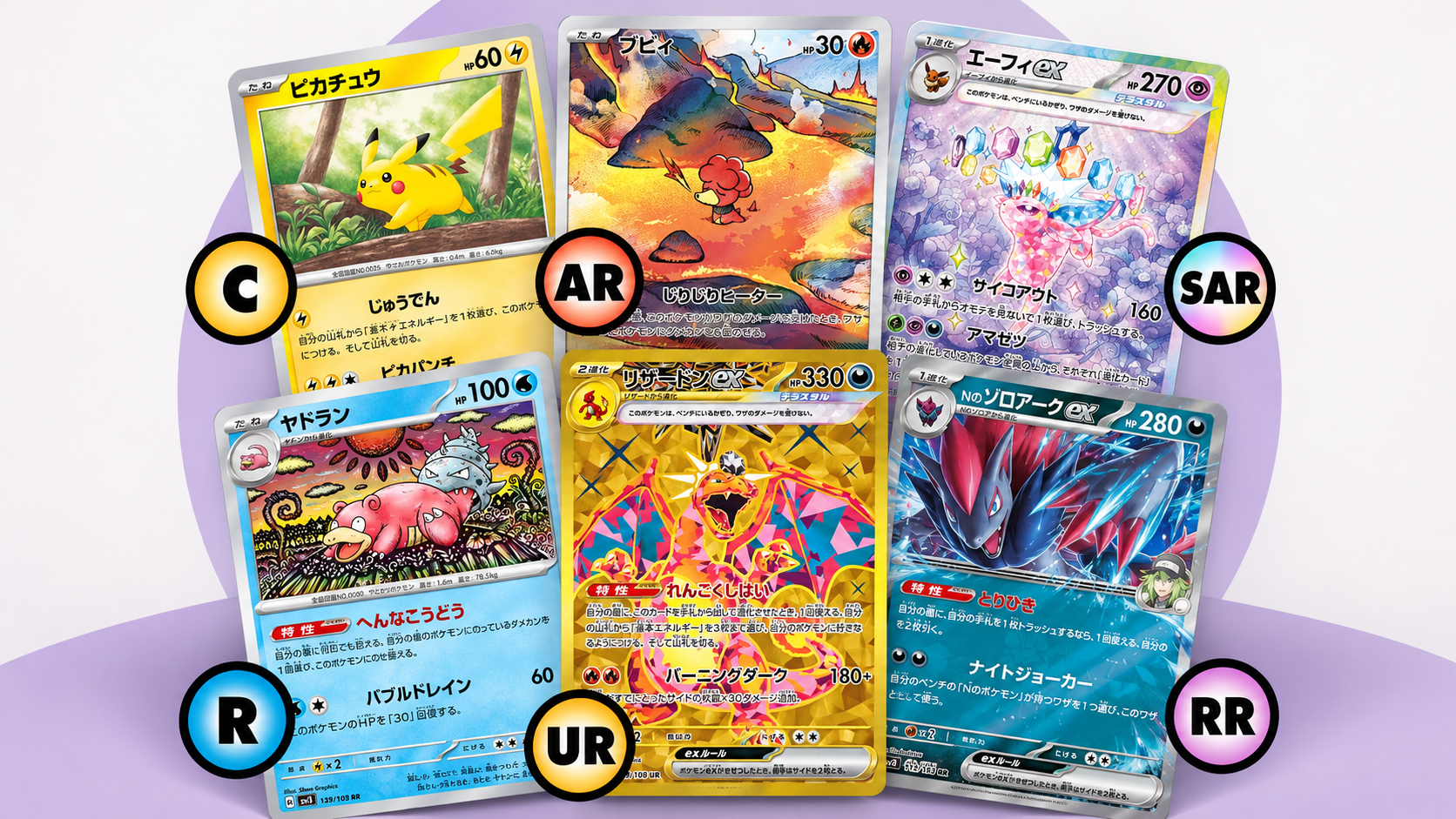
Ever pulled a Japanese Pokémon card and wondered what the tiny AR, SAR, RR, or K symbol actually means? With different rarity systems across generations, figuring out whether your card is common, rare, or a valuable collector's piece isn't always straightforward. Japanese Pokémon card rarity symbols indicate a card's rarity classification within its set, from Common (C) and Rare (R) to premium categories like Art Rare (AR), Special Art Rare (SAR), and Ultra Rare (UR). However, these symbols have evolved over time, and some older Japanese cards don't display a rarity symbol at all.
In this guide, we'll break down the 2026 Japanese Pokémon card rarity chart, explain how to identify each symbol, compare Japanese and English rarities, and help you understand what makes certain cards more collectible than others.
Modern Japanese Pokémon card rarity symbols chart (2026)
Japanese Pokémon card rarity symbols are letter codes that identify a card's rarity classification within a specific expansion. Modern Japanese sets use codes such as C (Common), RR (Double Rare), AR (Art Rare), and SAR (Special Art Rare), while newer releases have introduced special categories like MUR, MA, and BWR.
The chart below focuses on the main rarity codes used in modern Japanese Pokémon TCG expansions, especially the Scarlet & Violet and MEGA eras. For older symbols such as RRR, CHR, CSR, and K, see the separate historical rarity chart below.
Note: This is a modern rarity reference, not a universal ranking or pull-rate chart. Rarity categories vary by expansion, and special categories such as MUR, MA, and BWR do not appear in every set. ACE SPEC is discussed separately because it combines a printed card designation with a deck-building rule. For card-level verification, use the official Japanese Pokémon Card Game database.
C, U, and R – Common, Uncommon, and Rare
C (Common), U (Uncommon), and R (Rare) are the basic rarity categories found in many Japanese Pokémon TCG expansions. They cover much of a set's regular card lineup, including Pokémon and Trainer cards.
C – Common: Regular cards that appear frequently in booster packs, often featuring basic Pokémon and familiar artwork.
U – Uncommon: Cards classified above Common, including many evolution Pokémon and useful Trainer cards.
R – Rare: Cards assigned the Rare classification, often featuring holographic artwork in modern Japanese expansions.
When sorting a fresh booster pack, C and U cards may look fairly similar at first glance. Their printed rarity codes are the easiest way to tell them apart.
R cards tend to be more visually noticeable because of their foil treatment, although the exact finish depends on the expansion.
RR – Double Rare
RR (Double Rare) is a Japanese Pokémon card rarity commonly used for Pokémon ex and other special Pokémon mechanics, depending on the release era.
In Scarlet & Violet expansions, RR cards typically feature Pokémon ex with holographic artwork and a card layout that highlights the Pokémon's attacks and abilities.
A good example is Gardevoir ex (SV1S 028/078) from the Japanese Scarlet ex expansion. It carries the RR designation and features the standard Pokémon ex artwork for that release.
Unlike RR, which is part of the regular numbered lineup in this expansion, premium illustration variants may appear beyond the main set number.
RR also appears in the newer MEGA era, where Mega Evolution Pokémon ex feature their own distinctive card designs. The rarity code remains RR, even though the artwork and gameplay mechanics differ from earlier Pokémon ex releases.
AR vs. SAR – Art Rare and Special Art Rare
AR (Art Rare) and SAR (Special Art Rare) are Japanese Pokémon card rarities known for their illustration-focused designs. Both offer artwork that goes beyond the traditional card illustration window, but they differ in the types of cards featured and their visual treatment.
AR – Art Rare
AR cards feature full-card illustrations that often show Pokémon in everyday environments rather than dramatic battle scenes.
The scenes may show Pokémon in forests, homes, or alongside other characters. Some sets even use several cards to tell a connected visual story.
SAR – Special Art Rare
SAR cards are premium illustration-focused releases, commonly featuring Pokémon ex or Supporter characters.
They often combine elaborate artwork with textured foil finishes that become more noticeable when the card is tilted under the light.
One example is Gardevoir ex SAR (SV1S 101/078) from Scarlet ex. Its illustration belongs to a connected visual story featuring Ralts and Kirlia, showing the Pokémon growing alongside a family.
The distinction is the printed rarity classification, not a subjective judgment of which illustration looks more detailed.
SR vs. UR – Super Rare and Ultra Rare
SR (Super Rare) and UR (Ultra Rare) are premium Japanese Pokémon card rarities distinguished by their artwork and foil treatments.
Although their names sound similar to English Pokémon rarity categories, they do not always refer to the same card types.
SR – Super Rare
Japanese SR cards commonly feature full-art versions of Pokémon ex and Supporter cards.
Compared with a standard RR Pokémon ex, an SR version typically places greater emphasis on the character or Pokémon, filling more of the card with artwork and often adding a textured holographic surface.
Supporter SR cards are particularly recognizable because the Trainer character usually takes center stage in the illustration.
UR – Ultra Rare
Japanese UR cards are best known for their gold-colored designs, often with metallic-looking backgrounds and distinctive foil patterns.
Depending on the expansion, UR cards can feature Pokémon, Trainer cards, or Energy cards. Their gold finish makes them relatively easy to recognize when browsing a collection.
One important terminology difference is that Japanese SR broadly corresponds to English Ultra Rare, while Japanese UR broadly corresponds to English Hyper Rare in the Scarlet & Violet rarity system.
MUR, MA, and BWR – Special Rarities in Newer Japanese Sets
MUR (Mega Ultra Rare), MA (Mega Attack Rare), and BWR (Black White Rare) are special rarity categories introduced in newer Japanese Pokémon TCG expansions.
Unlike the more familiar AR, SR, and SAR categories, these rarities are associated with particular releases and distinctive card designs.
MUR – Mega Ultra Rare
MUR is a premium rarity category introduced during the Pokémon TCG MEGA era, associated with special Mega Evolution Pokémon ex printings.
A notable example is Mega Charizard X ex MUR (M2 116/080) from the Japanese Inferno X expansion. Its distinctive gold-colored presentation sets it apart from the regular RR and other premium versions of the Pokémon.
MA – Mega Attack Rare
MA stands for Mega Attack Rare, a rarity introduced in the Japanese high-class pack MEGA Dream ex, released on November 28, 2025.
MA cards feature Mega Evolution Pokémon ex in dynamic illustrations that emphasize their powerful attacks. The artwork has a dramatic, action-heavy style that makes these cards visually different from conventional full-art releases.
Examples include Mega Charizard X ex, Mega Lucario ex, and Mega Gardevoir ex in their MA versions from MEGA Dream ex.
BWR – Black White Rare
BWR is a special rarity introduced in the Japanese Black Bolt and White Flare expansions, released on June 6, 2025.
Its most recognizable feature is the monochrome artwork, designed around the contrasting black-and-white themes of the two expansions.
Two notable examples are:
Zekrom ex BWR from Black Bolt, featuring a predominantly black design.
Reshiram ex BWR from White Flare, featuring a predominantly white design.
The restricted color palettes give these cards a distinct appearance compared with the colorful illustrations commonly seen on SAR and other premium cards.
ACE SPEC Cards: A Special Designation and Gameplay Rule
ACE SPEC (ACE) is a special Japanese Pokémon TCG rarity designation with a unique deck-building rule: players can include only one ACE SPEC card per deck, regardless of its name.
Originally introduced during the Black & White era, ACE SPEC returned in 2024 with sets like Wild Force and Cyber Judge. These cards feature distinctive magenta designs and include powerful Trainer and Special Energy cards.
A notable example is Prime Catcher (SV5M 062/071) from Cyber Judge. Unlike traditional rarities such as AR or SAR, ACE SPEC is closely tied to gameplay mechanics rather than collectible value.
How to identify rarity symbols on Japanese Pokémon cards?
To identify a Japanese Pokémon card's rarity, check the small code printed near the bottom of the card, then match it with the card's expansion and collector number. Most modern cards include all three details, making it possible to identify the exact version without relying on the artwork or holographic finish alone.
On most modern Japanese Pokémon cards, the rarity code appears near the bottom-left corner, alongside the set code and collector number. The exact placement may vary depending on the card's generation.
For example, Gardevoir ex (SV1S 028/078, RR) displays three key identifiers:
SV1S: The set code for Scarlet ex.
028/078: Card number 028 out of the set's 78-card main lineup.
RR: Double Rare, the card's rarity classification.
Check these markings together to identify the exact card version, rather than relying on its artwork or holographic finish alone.
Older Japanese Pokémon Card rarity symbols chart explained
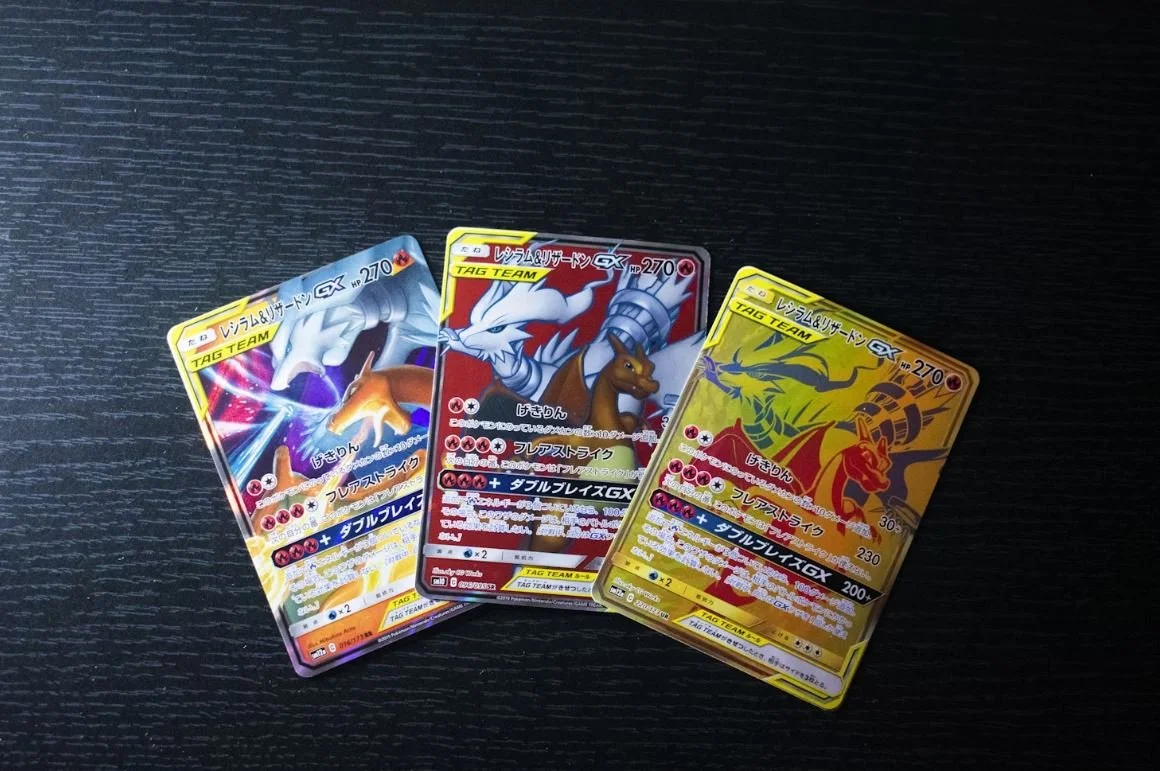
Before modern letter-based rarity codes became standard, Japanese Pokémon cards used circles, diamonds, and stars. Later generations introduced special rarities such as RRR, K, CHR, CSR, and SSR, many of which were exclusive to certain eras or expansions.
● (Common), ◆ (Uncommon), ★ (Rare): The original rarity symbols found in many early Japanese Pokémon sets.
RRR (Triple Rare): Commonly associated with Pokémon VMAX and VSTAR cards from the Sword & Shield era.
K (Radiant Pokémon): Shiny Pokémon cards with distinctive holographic patterns.
PR (Prism Rare): Special Prism Star cards introduced during the Sun & Moon era.
A (Amazing Rare): Pokémon cards featuring colorful, distinctive artwork from the Sword & Shield era.
CHR (Character Rare): Pokémon illustrated alongside human characters, often in everyday settings.
CSR (Character Super Rare): Premium full-art Pokémon V or VMAX cards featuring human characters.
HR (Hyper Rare): Premium cards known for rainbow-style finishes, particularly during the Sun & Moon and Sword & Shield eras.
S (Shiny): Special printings featuring Shiny Pokémon.
SSR (Shiny Super Rare): Premium Shiny Pokémon GX, V, or VMAX cards.
TR (Trainer Rare): Special Trainer card printings featured in selected Japanese expansions.
For example, Pikachu VMAX (S4 031/100) carries the RRR designation, while Starmie V (S9a 083/067) is classified as CSR. The rarity system depends on the card's release era, so older cards should be identified using their original set and printed markings.
One notable exception is the 1996 Japanese Base Set, which includes early printings without rarity symbols. These are known as No Rarity cards and require separate identification.
Japanese vs. English Pokémon card rarity symbols
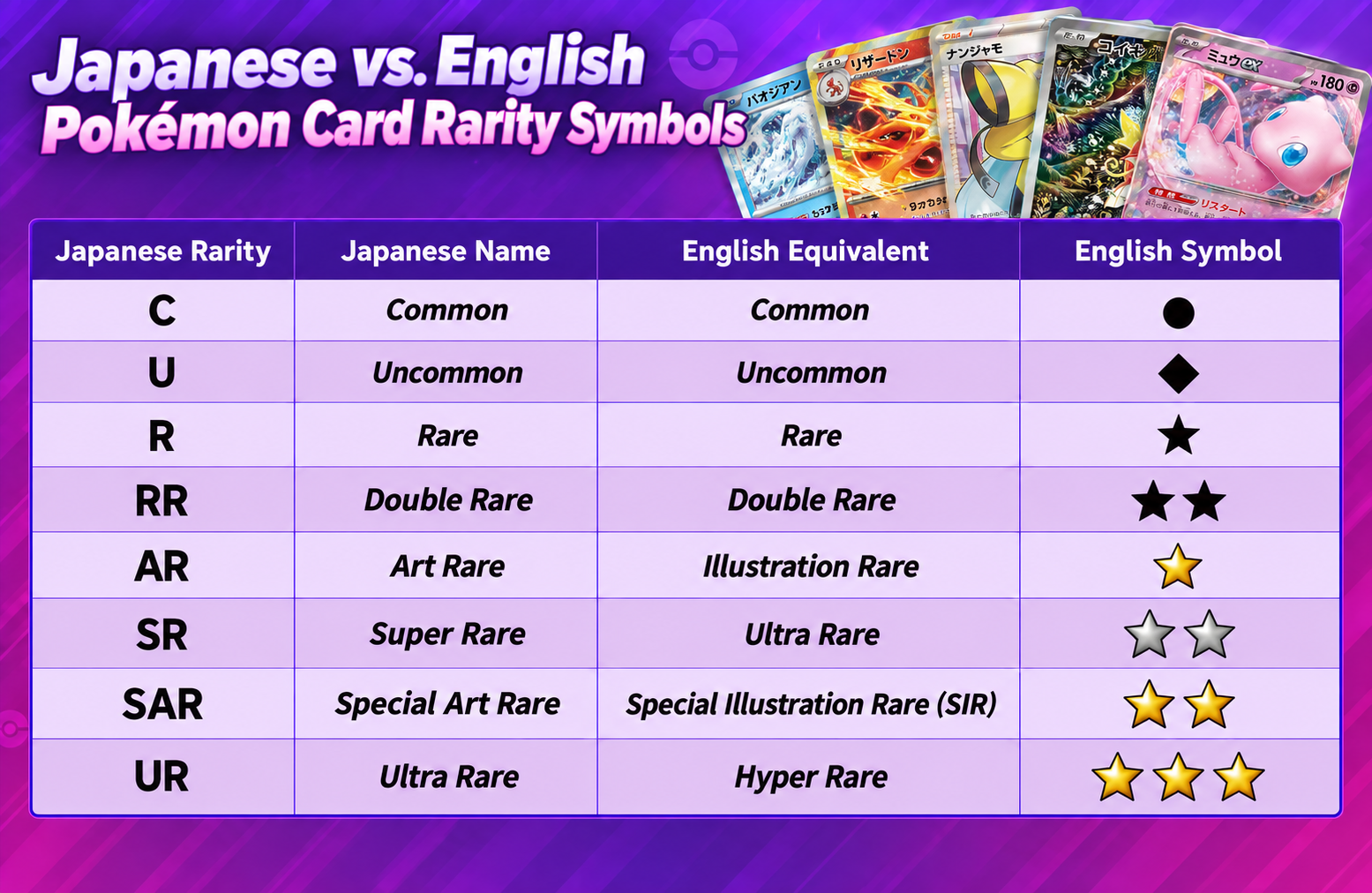
Japanese and English Pokémon cards use different rarity symbols and terminology. Japanese cards typically use letter codes such as AR, SR, and SAR, while English cards use circles, diamonds, and stars.
The table below shows the closest rarity equivalents from the Scarlet & Violet era.
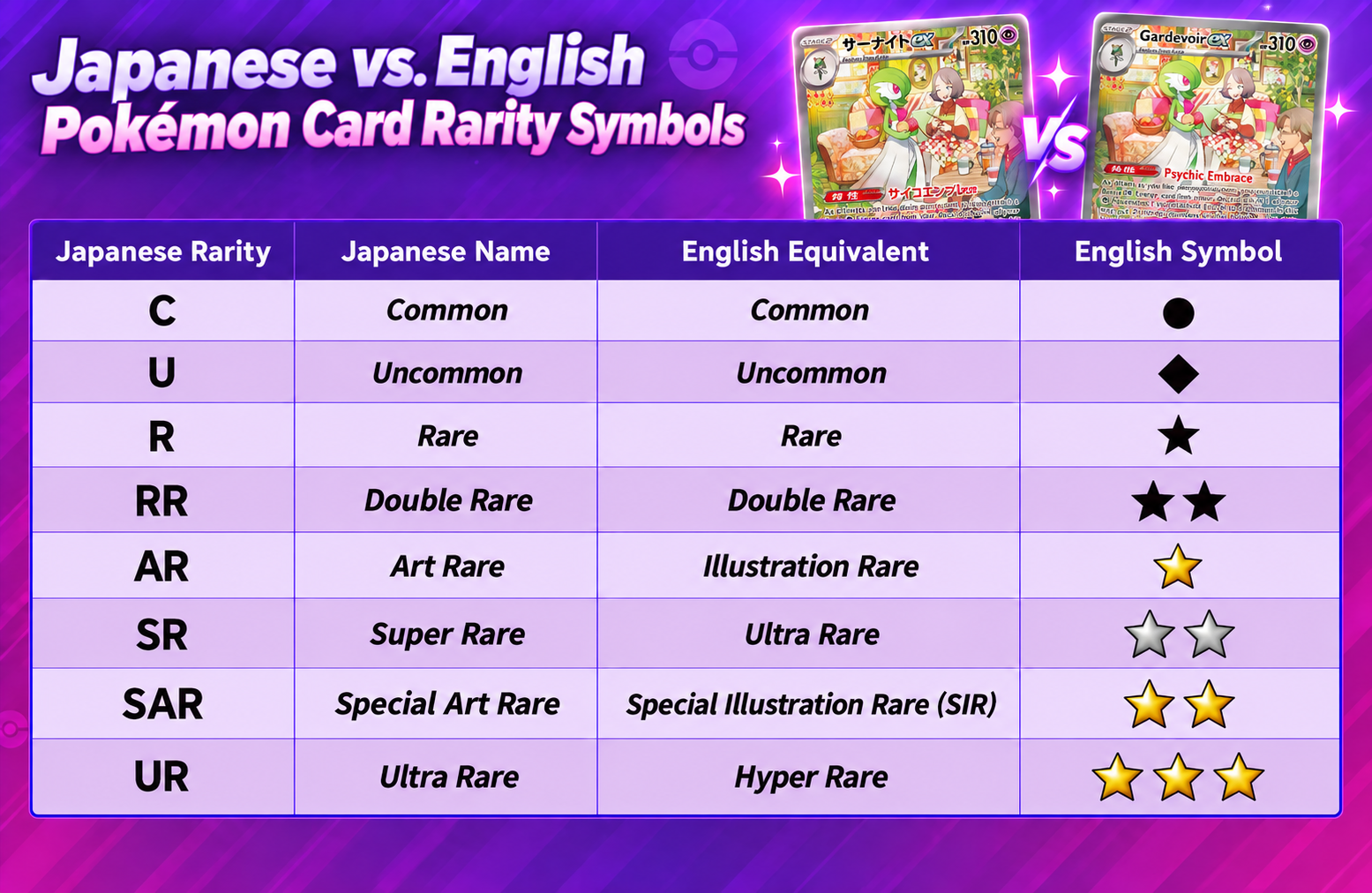
The key distinction is Ultra Rare: Japanese UR generally refers to gold-style cards, equivalent to English Hyper Rare, while English Ultra Rare corresponds more closely to Japanese SR.
These are approximate equivalents, not universal matches. Rarity classifications vary across generations, and corresponding Japanese and English cards may have different set codes and collector numbers.
Where to buy authentic Japanese Pokémon cards?
Collectors can find Japanese Pokémon cards through official Pokémon Center stores, established retailers like Plaza Japan, proxy shopping services such as ZenMarket, and Japanese marketplaces including Mercari Japan and Yahoo! Auctions. For resale listings, checking seller ratings, card condition, and authenticity is especially important.
For international collectors, Japan Figure offers authentic Japanese Pokémon trading cards, including booster packs, boxes, and collectible releases shipped directly from Japan.
Beyond trading cards, Japan Figure also specializes in Pokémon merchandise, anime figures, and other Japanese collectibles, making it a convenient destination for fans looking to expand their collections.
FAQs About Japanese Pokémon card rarity symbols
Does a higher Japanese Pokémon card rarity mean higher value?
No. A higher Japanese Pokémon card rarity doesn't automatically mean a higher market value. Rarity describes a card's classification within a set, while scarcity reflects how difficult a particular printing is to obtain. Market value also depends on collector demand, condition, and available supply.
Why do some Japanese Pokémon cards have no rarity?
Some Japanese Pokémon cards have no rarity symbol because they belong to early printings or special promotional releases. Notably, certain 1996 Japanese Base Set cards were printed without rarity symbols and are now known as No Rarity cards.
Is UR rarer than SAR?
Generally, UR (Ultra Rare) is considered a higher rarity tier than SAR (Special Art Rare) in modern Japanese Pokémon sets. However, actual pull rates vary by expansion, and a UR card isn't necessarily harder to obtain or more valuable than a specific SAR card.
Japanese Pokémon card rarity symbols become much easier to understand once you know which set and era you're looking at. Whether you're identifying a modern SAR pull or sorting through older cards, checking the rarity code, collector number, and exact printing will help you recognize what you have and avoid confusing similar-looking versions.