Some games are played through once and put away on the shelf; others are opened for the fiftieth evening in a row. The difference is almost never in the graphics and very rarely in the plot. We analyze which mechanisms force us to press "one more time" and why the same scheme works both in roguelike games and on the reels of an online casino.
The Loop Holds Tighter Than the Finale
Replayability lives not in the ending but in the base cycle, a piece of the game that repeats every few minutes. Took aim, shot, picked up an item, became a little stronger. If the cycle feels good by itself, the plot turns into a pleasant addition, rather than the only reason to continue.
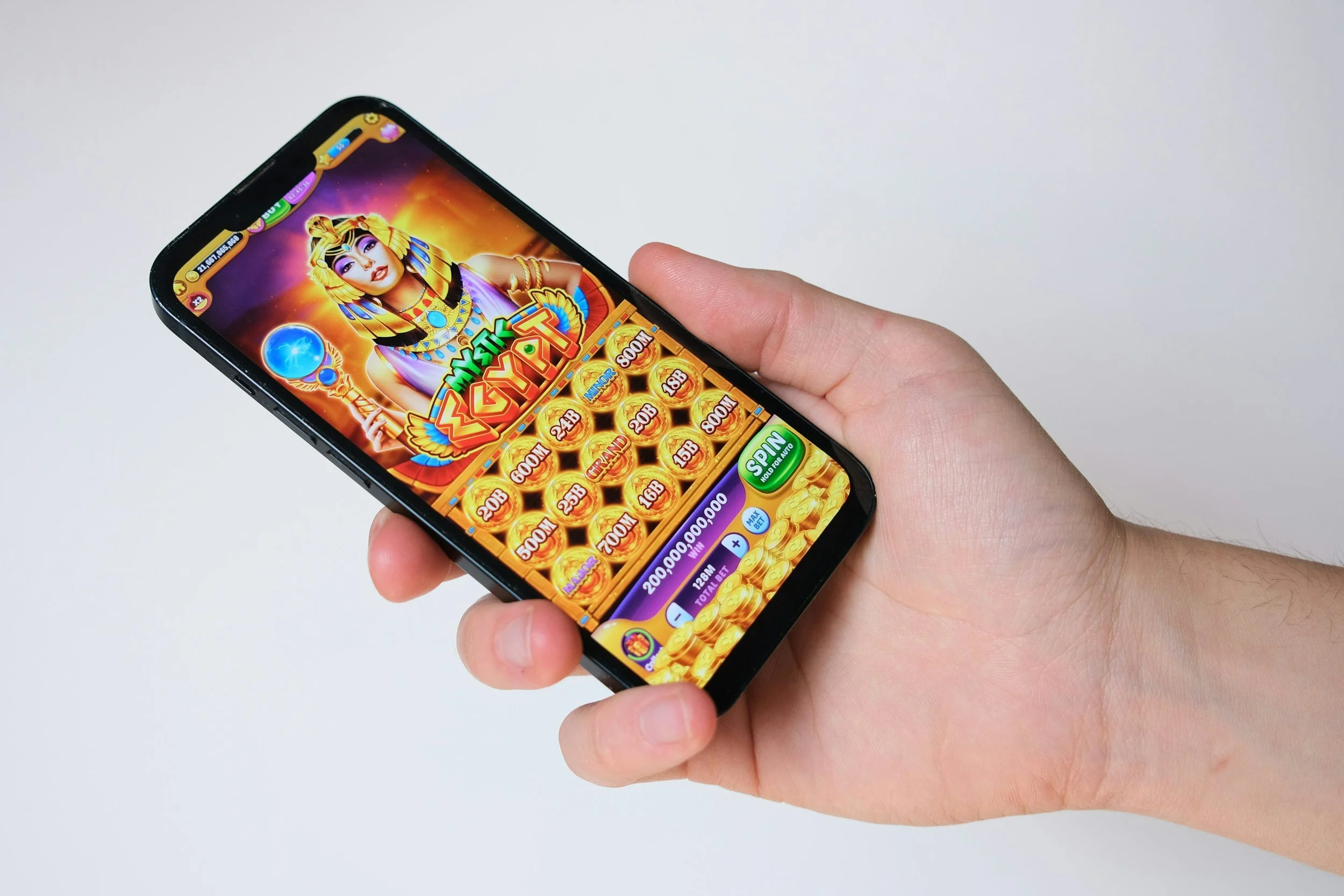
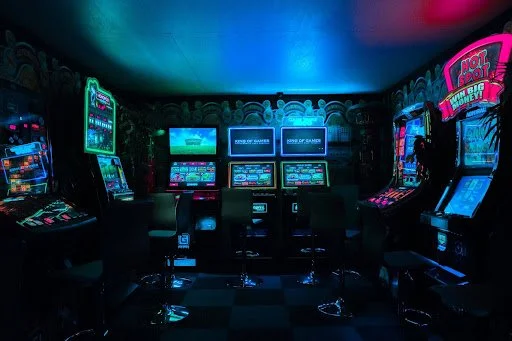
The clearest proof is a product with no ending at all. An online casino has no plot, no levels, and no final boss, only the loop: a spin resolves in seconds, and the next round sits one click away. Nothing is left to pull the player forward, and the loop pulls anyway. Reviews of platforms at kasynoniemcy.com follow that logic, breaking down session structure, deposit limits, wagering requirements, and payout speed rather than reel artwork.
Story-driven games face the opposite problem: half-hour runs hold attention longer than forty-hour campaigns with a single-use ending. The campaign ends with the credits; the cycle does not end at all.
Three Buttons Pressed by Good Design
Ryan, Rigby, and Przybylski in their 2006 work "The Motivational Pull of Video Games" showed that enjoyment of the game and intention to return are predicted by three needs: autonomy, competence, and connection with others. Each of them works independently of the rest. The feeling of flow rests on a narrow strip between boredom and panic, and holding a player on it is harder than drawing a spectacular level.
They are covered by quite specific techniques:
Autonomy, several working builds and routes instead of the only correct solution;
Competence, difficulty growing just as much as skill grows;
Connection, leaderboards, shared seeds, and exchange of finds within the community.
Although the set looks obvious, it is easy to miss. A game where the optimal strategy is found in two evenings kills autonomy; a game where death sets you back two hours kills competence. The balance between them is that very direction that is hard to copy from someone else's design document.
What Should Change From Run to Run
Predictability extinguishes interest faster than great difficulty. A repeating result stops causing a reaction, while an uncertain one retains it for a long time. Hence, level generation, random item sets, and rules are rewritten between runs.
Different studios solve this task with different tools:
| Mechanic | What changes between sessions | Need it targets | Example title |
|---|---|---|---|
| Procedural generation | Room layout and enemy placement | Novelty | Hades (2020) |
| Meta-progression | Permanent upgrades carried into the next attempt | Competence | Dead Cells (2018) |
| Seeded daily runs | One shared layout for every player | Relatedness | Slay the Spire (2019) |
| Time-scaled difficulty | Enemy strength tied to the session clock | Optimal challenge | Risk of Rain 2 (2020) |
| Emergent build stacking | Item combinations found mid-run | Autonomy | Vampire Survivors (2022) |
None of these techniques work alone. Pure randomness without accumulation turns into a lottery, and accumulation without randomness turns into a schedule played from memory.
Near-Misses, Slots, and What Casinos Borrowed From Games
The most powerful lever of all is the near-miss. Luke Clark and co-authors in Neuron in 2009 described an experiment on a simplified slot machine model: a miss near the jackpot felt less pleasant than an ordinary loss yet strengthened the desire to play more. The effect held only where the participant chose the combination themselves.
The reinforcement mechanic here is called a variable ratio: the reward comes after an unpredictable number of attempts, and it is this unpredictability that holds you at the screen, not the size of the prize. The gaming industry borrowed the same grammar long ago, and drawing the line is not easy. PEGI gave Balatro an 18+ rating for prominent gambling imagery and, in February 2025, reduced it to 12+ after a publisher appeal, citing mitigating fantasy elements; Luck Be a Landlord went through the same path with a formulation about the absence of transferable gambling skills.
The traffic runs in both directions. Over the past few years, casino platforms have been importing the tooling that keeps roguelikes alive: loyalty tiers that unlock permanently, weekly missions, tournament ladders, cashback that softens a bad streak, and daily wheels that hand every session a fresh variable. Verde Casino, one of the operators covered in that ranking, runs precisely this combination of a Daily Wheel, tournaments, and a points-based loyalty program, which is meta-progression under a different name. What differs between the two industries is not the psychology at work but only the currency in which the loop is paid.
The difference is still fundamental, and it lies in the price of repetition. A failed run costs half an hour and the understanding of what went wrong, whereas a real bet closes the cycle on the account balance. That is why deposit limits, session duration limits, and self-exclusion are not a formality but part of the same design, only turned toward the player. Self-control tools break the loop right where it resists breaking the most.
What Remains After the Hundredth Run
Replayability is assembled from decisions about what changes, what accumulates, and how much the next attempt costs. Strong games sell the feeling of growth; weak ones sell hope. Thus, the value of the phrase "one more time" is determined by what the player takes with them after it.