Disclosure: This is a paid guest post. The author or an affiliated third party paid for its publication, and the article may contain promotional links. The views and opinions expressed are those of the author and do not necessarily reflect those of GameTyrant or its editorial staff.
Disclaimer: The following content contains references to gambling, casinos, and related topics.
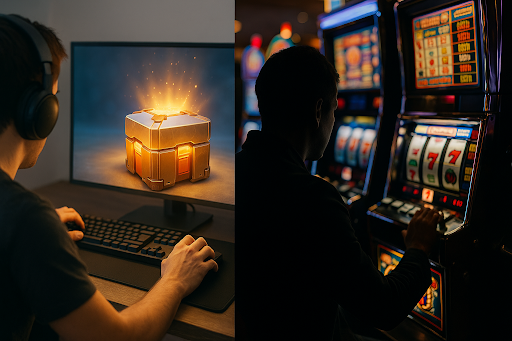
Loot drops and slot spins share more design DNA than you might expect.
An average of 212.3 million Americans, with an average age of 37, play video games each week, according to the Entertainment Software Association's 2026 report. Online casino games use many of the same design elements as video games do, likewise many video games also employ gambling mechanics - like reward loops, the use of random numbers, and practice rounds.
Reward Loops Are Everywhere
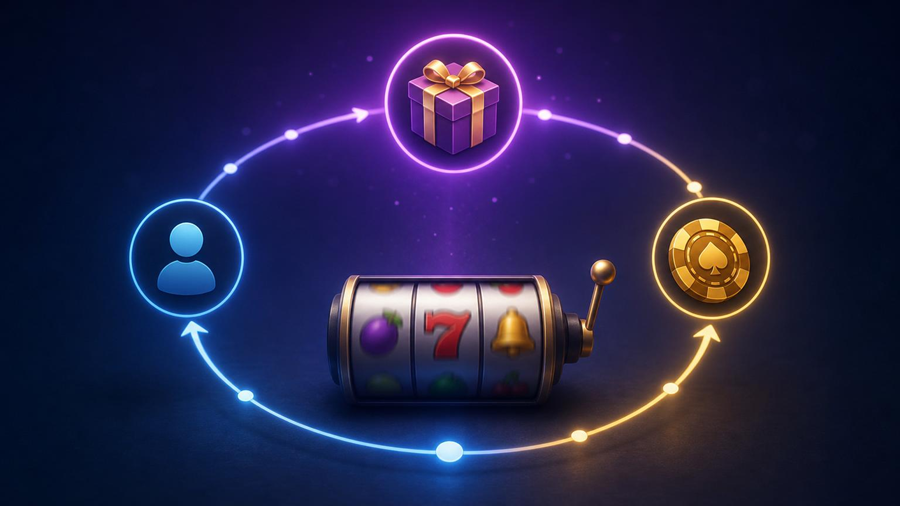
When opening a treasure chest in a video game, the player may hear the swell of music as they uncover whatever loot lies within. Slots employ the same principle on a smaller scale: a small action, then a payout that could be large or small. Designers refer to this as a variable reward, which is one of the most compelling game design elements.
Progress bars and daily login bonuses work the same way (a visible indicator that the player is making progress toward a reward that they will receive the next day). Similar systems can be seen in battle passes and loyalty programs from casinos.
One state's attorney general took issue with this in February 2026, when New York sued Valve, the developer behind Counter-Strike 2, alleging that loot boxes in several of its titles were in essence identical to slot machines. Valve has argued that loot boxes are not forms of gambling and are not illegal. Regardless of the outcome of that case, the similarities are easy to see.
Random Numbers Run The Show
Many video games and all online casinos use a random number generator (RNG) to control elements of chance in the game. Within video games, RNGs determine whether a player lands a critical hit or receives a rare drop; within online casinos, RNGs determine where the reels of a slot machine land or which cards are dealt to the player.
Licensed casino games undergo testing to make sure their results are truly random and that their stated return to player (RTP) percentages are accurate. RTP is the theoretical percentage of bets that a game pays back to its players, and for video games an RNG is necessary to create unpredictable rewards. With video games, however, it can sometimes be difficult to find the RNG math or the stated RTP.
Reading The Odds First
Before sinking 40+ hours into a build, most players would look over a tier list or patch notes. The same principles apply to finding the best casino sites. The website Casino.org provides a helpful guide: its US page lists the best online casinos that payout, and allows the user to sort them by state first, since real-money online casinos are legal in only a handful of states and the options shift from one to the next.
Each listing includes the win rate and payout time, while a 25-step review process ensures that the site's license and security are up to standard. A comparison table then lays out the differences between the casinos in terms of numbers - an average RTP of 96% for slots versus 99.5% for blackjack, for example. Bonus terms are written out in detail, including average wagering requirements of 35x, with some as low as 1x, and payment options are compared in terms of minimum deposits and withdrawal times. A list of casinos to avoid includes reasons why each should be avoided. Slots and table games with free versions are also linked, requiring no sign-ups.
This dedication to research is what makes the site's advice so valuable; its advice to check the RTP and volatility mirrors the same mindset used by many gamers when considering which game to invest time in. A low volatility game has frequent, smaller payouts, while a higher volatility game has longer dry spells, interrupted by larger wins. It’s an all-or-nothing strategy much like a glass cannon build.
Practice Modes And Play Together
Many video games include a try-before-you-buy system. A recent Steam Next Fest Demo update showcased upcoming games, offering a large catalog of titles to sample for free. Online casinos have adopted similar philosophy, with free-play modes that let the user test a bonus round without risking any money. This lets the player get a feel for a game before investing any resources.
Free trials are most useful in skill-based games like blackjack and poker, where the player's actions affect the outcome of a hand, and least useful in slots, where the results are completely random.
Another similarity between video games and online casinos is the ability to play together. 81% of parents who play games do so with their children, according to the ESA report. Many new games designed for co-op play are set to release this fall (and naturally include loot to collect). Live dealer tables bring similar appeal to online casinos, including a chat function with a human dealer.
Both video games and online casinos have embraced mobile devices as a way to connect with players. Mobile gaming is the preferred method of playing games among all age groups, at 80%, according to the ESA - which means casino apps are also seeing growth.
Play Smart, Either Way
Many young gamers (who represent the largest chunk of spending on games at 78%) have spent money on in-game purchases, usually around $20 a month for items in the game of their choice. Some habits promote healthier spending:
Setting time and spending limits before opening the game
Checking what random rewards in the game might cost
Enabling parental controls or purchase confirmations for younger accounts
Stepping away from the game if it is no longer enjoyable
Specific laws regarding gambling vary from state to state (though all restrict gambling to adults only) - check your local laws to see what is available where you live. If gambling starts to feel like it’s getting in the way of your relationships, work, or any other aspect of the rest of your life, the National Problem Gambling Helpline can help; it is staffed 24/7 at 1-800-GAMBLER.