Live dealer games change the feel of a table before the first card is dealt. The difference is not only the camera or the person on the screen. It is timing. A standard digital table can move as quickly as the player clicks. A live table has a shared rhythm, with the dealer opening the round, closing the betting window, handling the result, and resetting the scene.
That makes live dealer game pacing a design issue, not just a speed setting. A 2024 paper on video game pacing describes pacing as a way to coordinate intensity, interaction, and time across play. Live table games do the same work in a more visible way. The dealer becomes the metronome. The player reads the table, waits for the window, watches the action, then decides whether the next round fits the pace they want.
The Table Sets the Tempo
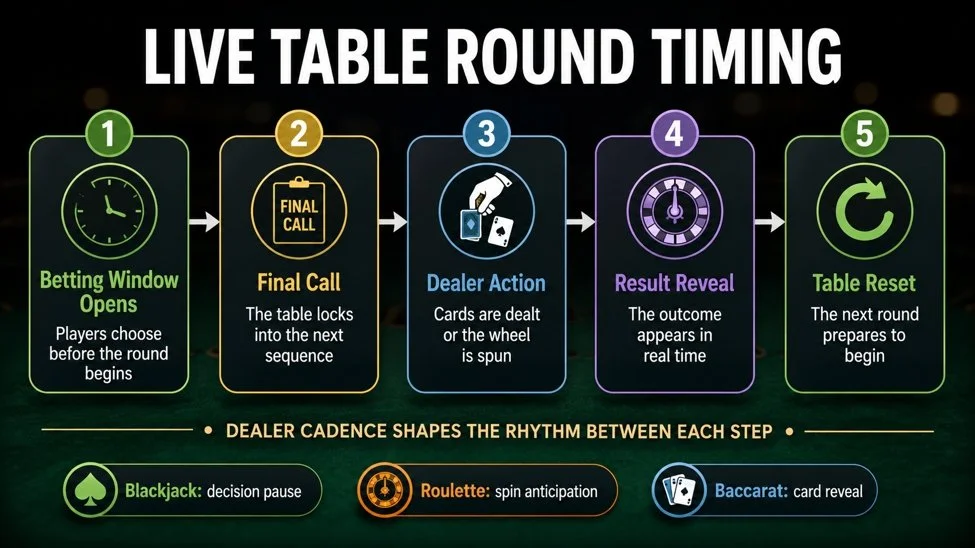
A better way to read live table games is to stop thinking in clicks and start thinking in rounds. In a standard digital table game, the player often controls the pace by moving from one action to the next as quickly as the interface allows. In a live format, the table has its own rhythm. The player joins a real-time sequence where a dealer opens the betting window, closes the round, handles the cards or wheel, presents the result, and prepares the next hand or spin.
That is why a gameplay-focused live dealer casino experience feels different from an instant-input version of the same game. Blackjack creates small decision pauses because each hit, stand, split, or double sits inside the dealer’s order of play. Roulette builds attention through the spin and the ball drop. Baccarat has a cleaner reveal rhythm, with much of the tension held in the turn of the cards. The live dealer format turns timing into part of the game’s texture, making the pauses feel intentional, rather than empty.
Blackjack Has Decision Pauses
Blackjack is the easiest place to see dealer cadence because the game asks for active choices during the round. A player may hit, stand, split, or double, but those choices sit inside the wider game’s rhythm. The dealer deals the opening cards, moves through each hand, waits for instructions where the format allows, then completes the round.
That creates a different feel from a standard online blackjack game. In a faster digital version, a player can rush from one decision to the next. In a live version, the hand has room to breathe. The pause before a card gives the player a clear moment to read the hand, understand the visible cards, and make the next choice within the table’s pace.
Roulette and Baccarat Use Waiting Differently
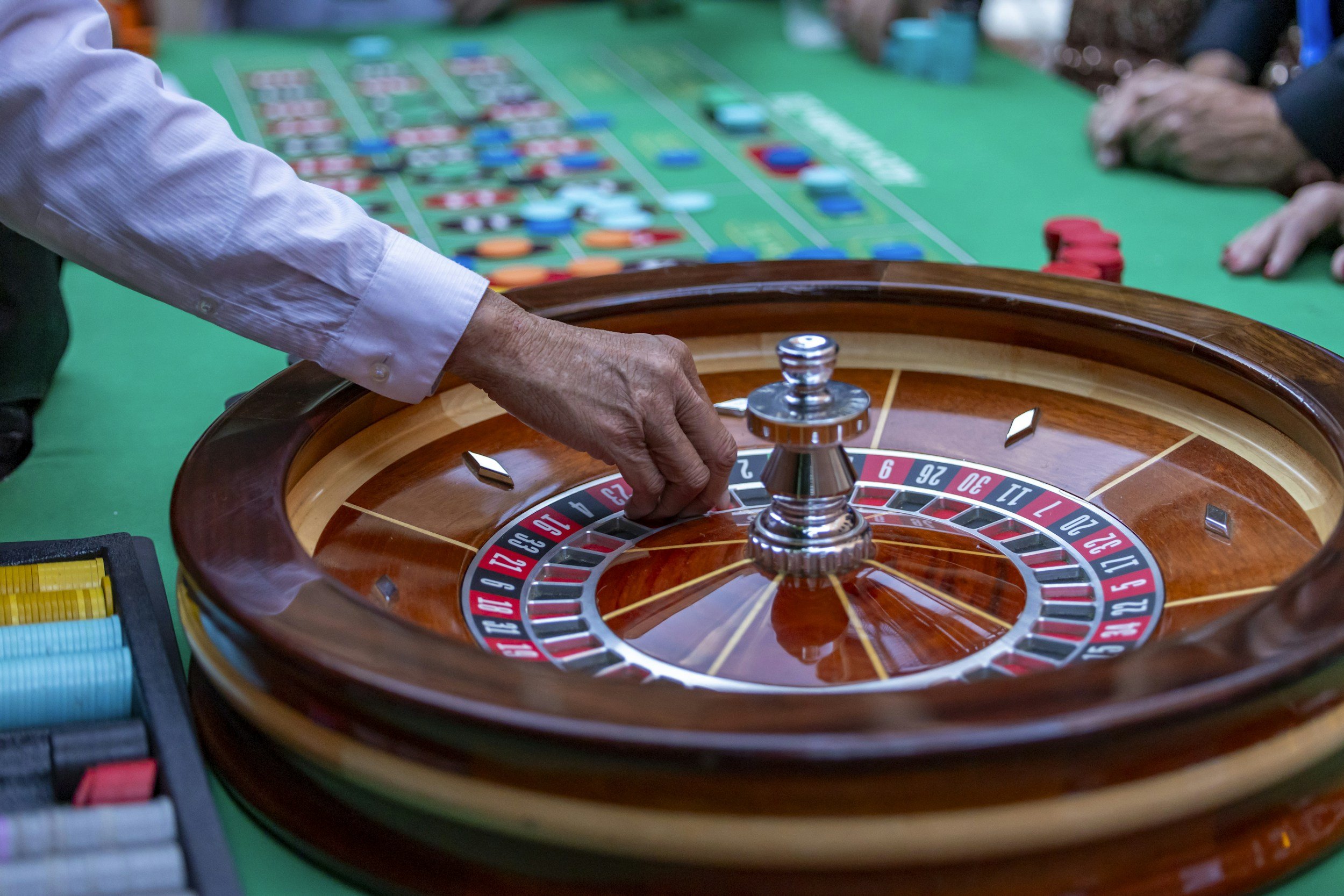
Roulette has fewer mid-round decisions, so its pacing comes from anticipation. The main choice happens before the spin, during the betting window. Once that window closes, the focus shifts to the wheel. The dealer spins, the ball moves, and the player watches the result arrive.
That waiting period is the core of the format. In a purely digital version, the spin can be compressed into a short animation. In a live format, the physical movement of the wheel and ball gives the round its shape.
Baccarat moves differently again. The decision structure is compact, but the reveal does most of the emotional work. Players choose a side before the cards appear, then watch the hand unfold in a fixed order. The dealer’s handling of the cards gives the round its shape. A faster version can shorten the cycle, but the essential rhythm remains the same: choose before the cards appear, then watch the result take form.
Why Timed Windows Matter
Timed betting windows are not just countdowns. They keep everyone inside the same round. In solo digital play, a player can hesitate, step away, or restart instantly. In live play, the table has to move as a shared event, so the window creates the boundary between preparation and action.
Before it closes, players can scan the table and decide whether to join the next sequence. After it closes, the round belongs to the dealer. The player is no longer controlling every second. They are matching the table’s timing.
The Dealer Is Part of the Design
The core of these games is focused on the dealer, and casinos ensure that they employ professional, skilled individuals for this role. A good dealer knows how to engage the players, ensure everyone is following the game’s events, and can often be a source of humor too.
That makes live games even more appealing because they contain personality and uniqueness, much like a game at a physical casino might. The bridge between digital convenience and this personality has helped make live games much more popular. That is why dealer cadence sits at the center of live table design, and why the person on camera can change the feel of a familiar game through live-stream interaction.