Counter-Strike: Global Offensive (CS:GO) has been one of the most influential competitive games in history. Millions of players know the maps, weapons, and iconic moments by heart. Yet behind the familiar smokes and clutches lies a surprising number of lesser-known facts that even long-time fans often overlook.
CS:GO was never meant to look “realistic”
Although CS:GO is often praised for its realistic weapon behavior, Valve deliberately avoided full realism. Early developers stated that absolute realism would hurt competitive balance. For example, real-life recoil patterns are chaotic, but CS:GO uses fixed recoil patterns that players can memorize and master. This design choice turned mechanical skill into a learnable discipline rather than a random outcome.
The game quietly collects heatmap data
Valve has long used anonymous player movement data to redesign maps. Heatmaps showing deaths, grenade usage, and common paths have influenced major changes to maps like Inferno and Nuke. Some chokepoints were widened or adjusted not because of pro feedback, but because data showed casual players dying in the same spots repeatedly. In other words, your ranked match deaths may have helped reshape the map.
Weapon sounds affect gameplay more than you think
Every weapon sound in CS:GO has a carefully tuned range and directionality. What many players don’t know is that sound propagation differs depending on surfaces and map geometry. On some maps, footsteps above or below you travel further than footsteps on the same level. This is one reason experienced players can “read” positions without seeing enemies–sound design is effectively part of the tactical layer.
The bomb timer is not perfectly constant
Most players assume the bomb always explodes exactly 40 seconds after planting. In reality, the timer is accurate, but defuse animations, sound cues, and server tick rates can create tiny discrepancies. This is why professional players often rely on internal counting rather than audio cues alone, especially in high-pressure clutch situations.
Skin prices were never intended to explode
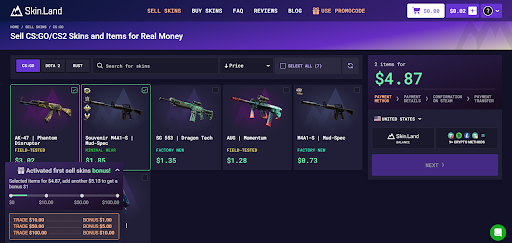
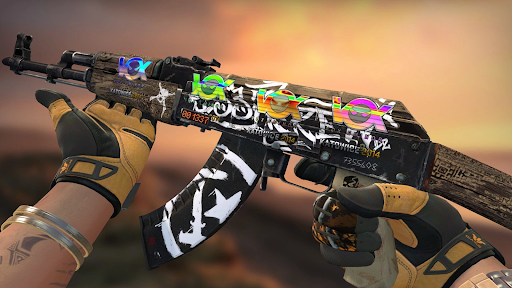
When Valve introduced weapon skins, they were meant as cosmetic progression, not financial assets. The idea that skins would become tradeable items worth thousands of dollars was not the original plan. The secondary market evolved organically, driven by rarity, professional usage, and community hype. Some skins became valuable simply because a famous player used them once in a major tournament.
CS:GO AI bots were trained on real players
The behavior of CS:GO bots is not entirely scripted. Valve used player data to shape bot decision-making, including common angles held and typical rush paths. While bots are still far from human-level opponents, their movement patterns reflect real player habits collected over years of matches.
Professional meta often comes from accident
Over time, teams refined these plays by evaluating what actually worked rather than what looked good on paper. This mirrors how analysts in other competitive environments rely on expected value instead of intuition alone, often using tools like an ev betting calculator to determine whether a decision is statistically profitable over the long run.

CS:GO is one of valve’s longest-living experiments
Unlike traditional sequels, CS:GO was continuously reshaped instead of replaced. Over a decade, Valve treated the game as a live experiment in competitive balance, economy design, and community-driven evolution. This approach laid the groundwork for how modern live-service competitive games are maintained today.
Conclusion
CS:GO’s success isn’t just about gunplay or nostalgia–it’s about thousands of invisible design decisions shaped by data, experimentation, and probability. That same analytical mindset is why many competitive gaming fans enjoy modeling outcomes outside the game as well, using tools like a 10 team parlay calculator to understand how small odds compound into high-risk, high-reward scenarios