RIP Sir Patrick Stewart
Aaaaaaaaand we’re here: the final set of Magic in 2026, ending with something that’s out of this world. Wink wink. This weekend (November 6th) your local game stores will be hosting prerelease events for Star Trek, with the set’s full release the following week (November 13th). Check with your local game store for its prerelease and draft schedule.
While I wouldn’t consider myself a Star Trek fan, I am absolutely a fan of Limited sets with ten two-color archetypes! Star Trek gives us another one of those environments, and between the Spacecraft and the focus on exploring new worlds, it reminds me quite a bit of Edge of Eternities. And that’s a good thing! If you’re anything like me, you’re ready to crack some packs and jump into Limited again. Here’s what you need to know beforehand!
Set Mechanics
Universes Beyond sets have too balance familiar Magic gameplay with mechanics that make their worlds feel recognizable. For Star Trek, that means transporting creatures, exploring planets, assembling a crew, and making some difficult decisions along the way.
There are five new mechanics and rules terms worth knowing for prerelease, alongside returning Spacecraft, Station, and Landfall. There’s a fair amount too take in, but understanding how these pieces work together should make building your deck a lot easier.
New Mechanics in Star Trek
Star Trek introduces five new mechanics introduced to the game, some reminiscent of already created mechanics, some care about creatures, and some care about lands.
Beam Me Up
The main graveyard mechanic in this set is Beam Me Up, which feels like a combination of Flashback and Web-Swinging. You can cast a spell with this ability from your graveyard by paying its Beam Me Up cost and returning a creature you control to its owner’s hand. This spell is then exiled when it leaves the stack.
Unlike Web-swinging, you don’t need to worry about tapping the creature first. A tapped creature or one you just played can be beamed up just fine. You do still follow the spell’s normal timing restrictions, though, so a sorcery doesn’t magically become an instant just because it’s in your graveyard.
For Limited formats, I’m looking at this as more than a second use of a spell. Returning a creature with a valuable enters ability gives you another payoff for that spell. An instant with Beam Me Up can also rescue a creature from removal, or target one for removal itself. Keep those interactions in mind before deciding which member of your crew gets transported, sometimes the lower the mana-value, the better.
Face a Dilemma
Facing a problem and deciding how to approach it is about as Star Trek as it gets. In Magic, you face a dilemma whenever you choose one or more modes for a modal spell or ability. Think of the familiar “choose one” cards with a list of options.
The important detail is that this includes abilities too. You aren’t limited to casting spells too get your dilemma payoffs working. But keep in mind, choosing several modes for a single spell or ability still only counts as facing one dilemma.
Blue-black is the main home for this strategy, so if those colors look strong in your pool, take a closer look at your modal cards. Flexibility is already useful in Limited, so getting rewarded for making those choices makes them even more appealing.
Federation
The Federation brings different people together, and its Magic mechanic rewards you for doing the same. Federation abilities care about the number of different creature types among non-Borg creatures you control.
That distinction matters, you’re counting creature types rather than simply counting creatures. A Human Officer and a Vulcan Scientist give you four different types, while a board full of 18 Human Officers still only gives you two. And of course, Borg creatures don’t contribute to that count as a way to thematically keep the Borg out of the Federation.
When evaluating your pool, look beyond the power and toughness boxes and read those type lines. A creature that adds a couple of new types could help your Federation cards considerably more than another creature whose types you already have covered.
Strange New Worlds
If Federation rewards a diverse crew, Strange New Worlds rewards a diverse collection of lands. These abilities care about how many differently named lands you control.
Three Forests still contribute only one name. Add an Island, you’re up to two. So on, and so forth, it’s simple enough. The typing here doesn’t matter, this mechanic specifically cares about the names.
One, I love green decks, so lands please. Two, this feels like a great way to represent exploring the planets that Star Trek has visited over the decades. My advice is to look for useful nonbasic lands that support your colors while adding new names. Just be careful about hurting your mana base to make a payoff bigger. You still need to cast your spells!
Assimilate
The Borg are a cybernetic collective seeking to assimilate other life into their idea of perfection. Sound familiar, Phyrexian fans?
Assimilate can bring a creature card onto the battlefield under your control or give you control of a creature already there, depending on the effect. The creature gets a +1/+1 counter, becomes a Borg Artifact Creature, and loses its other creature types.
That gives the mechanic some interesting overlap with artifact and graveyard strategies. It also creates a tension with Federation: your newly assimilated creature might be stronger, but it won’t contribute creature types to your Federation count anymore. Read the individual card carefully to see exactly what you can assimilate and from where.
Returning Mechanics in Star Trek
There are plenty of returning mechanics that need no explanation but the return of Spacecrafts and Station may need explanation for players who missed Edge of Eternities, and I’ll briefly cover Landfall since it plays a large part in this set.
Spacecrafts and Station
If you missed Edge of Eternities, Spacecrafts are artifacts that you build up using charge counters. Their text boxes have sections showing what abilities they have at different counter thresholds. Then eventually when fully stationed, they become artifact creatures, although you should check each card rather than assuming every ship works exactly the same way.
Station is how you charge up those counters. During your main phase, while the stack is empty, you can tap another untapped creature you control to activate a Spacecraft’s Station ability. When it resolves, you add charge counters equal to that creature’s power. A 2/1 creature contributes two counters. You can also station with a creature that has summoning sickness, which makes freshly played creatures useful even before they can attack.
The decision I’d keep an eye on during prerelease is when to commit your creatures to Stationing. Getting a powerful Spacecraft online is tempting, but tapping your potential blockers can leave you open to an attack. Take a look across the table before sending the whole crew to work.
Landfall
At this point, Landfall probably needs very little introduction, but it plays a big enough role in this set to deserve a quick refresher for brand new players. Landfall abilities trigger whenever a land enters the battlefield under your control.
That includes lands put onto the battlefield by spells and abilities, not just your normal land play for the turn. If you can get multiple lands onto the battlefield, you can get multiple triggers.
Before automatically playing your land each turn, check whether you can put a Landfall creature into play first. Sequencing your cards correctly is an easy way to squeeze a little more value out of your deck, all of those small advantages add up and make a difference in Limited.
Draft Archetypes in Star Trek
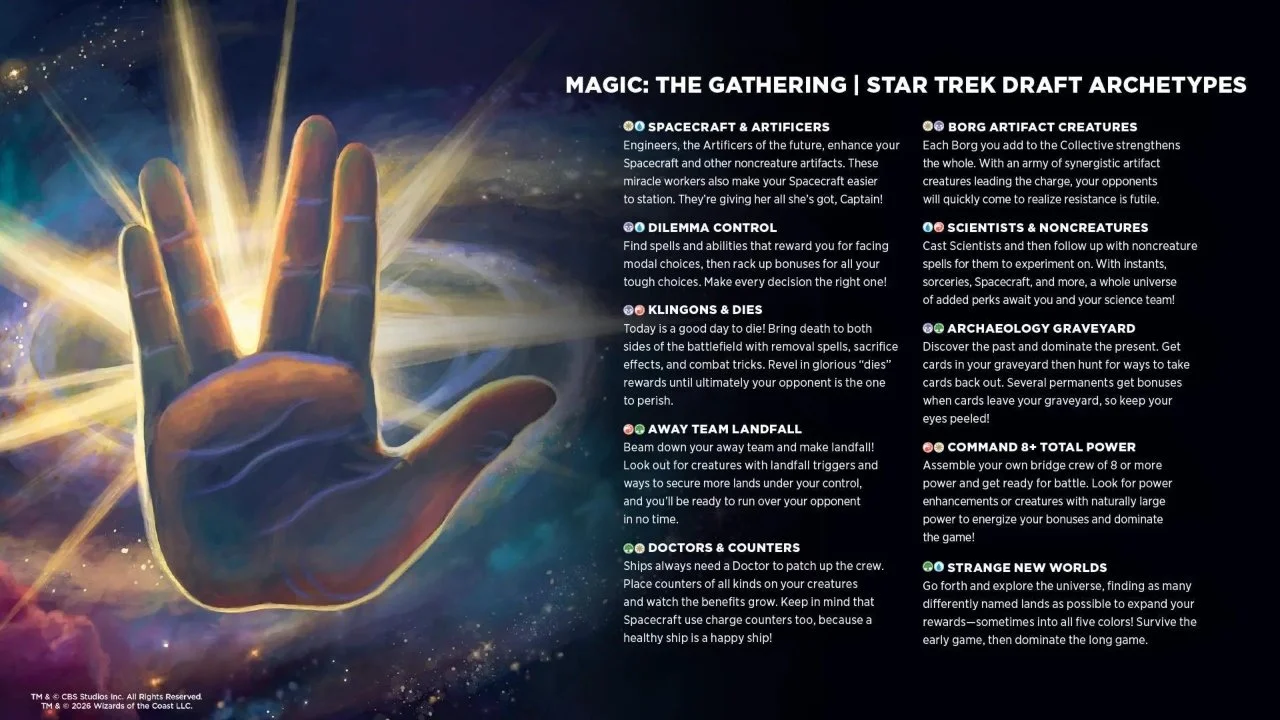
I will almost never complain about a ten-archetype Limited environment. Ten strategies fighting over a tiny card pool? Sure, that can be a problem. But a full set with something for ever two-color pair? Sign me up! Below, I’m breaking down each archetype’s gameplan, draft priorities, and the cards I’m looking for at each rarity.
Azorius / White-Blue Spacecraft & Artificers
White-blue has a reputation for playing control, but Wizards has been giving Azorius a few different assignments lately. This time, we’re assembling a fleet of Spacecraft and recruiting the creature that help get them off the ground.
Gameplan
This deck needs a balance of Spacecraft and creatures. Your ships provide the eventual payoff, but without enough creatures to station them, you’re going to spend a lot of time admiring a bunch of do-nothing artifacts.
The best crew members contribute more than their power. Creatures with abilities that trigger when they become tapped are born for this archetype, they’ll let you develop your fleet while gaining life, filtering cards, or improving your next draw. Creatures with built in counter multipliers will help your game speed and take those Station activations even further.
The basic plan looks like this:
Deploy useful Spacecraft and creatures early
Use Station alongside tap triggers and counter support
Take over the skies with a fleet of flying artifact creatures
I really like Spacecraft. Edge of Eternities was one of my favorite sets from last year where Spacecraft were introduced to Magic, and Hearthhull remains one of my most-played commanders. That said, I’m curious how consistent this archetype can get moving. I like the pieces, but I want to see how well they come together before calling it a top strategy.
Draft Priorities
Drafting every Spacecraft you see is an easy way to end up stranded. Eighteen ships sound impressive until you realize nobody showed up to fly them.
Your main priorities are:
Spacecraft that contribute before becoming creatures. Immediate value makes the setp much easier to justify.
Creatures that reward you for stationing. Tap triggers and useful ETB abilities help your crew earn their place.
Ways to accelerate charge counters. Reaching a ship’s threshold a turn earlier can change your entire position.
Interaction and early defense. You need time to build, especially against aggressive decks.
Like I said, balance matters more than committing to the theme at every opportunity. If you already have several good ships but barely any creatures, another Spacecraft probably isn’t what your deck needs. A reliable blocker or removal spell might do considerably more for you in the long run.
Win Condition
The goal is to survive your setup turns, get your strongest Spacecraft online, and win through the air. Removal, bounce, and well-timed counterspells can buy you the room to build your fleet. The tricky part is deciding when to station. Tapping your whole board might unlock a powerful ship, but it can also leave you exposed. Sometimes you’ll need to keep creatures back and accept that your fleet is launching a turn later.
This looks like a slower strategy with a strong payoff once everything starts moving. Be prepared to take a few punches, but make sure you’re actually progressing toward that payoff rather than spending every turn setting up.
Key Multicolor Cards
Hemmer is the multicolor card I’m most interested in for the Spacecraft engine. The other white-blue spells in this set are very useful, but you don’t need them for this engine.
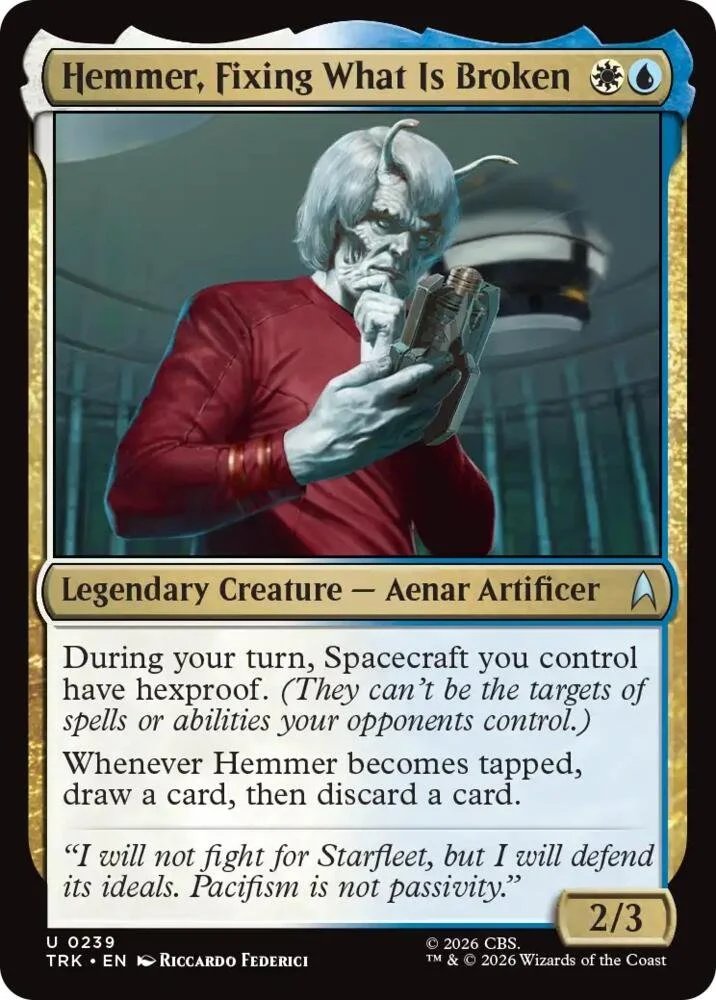
Hemmer, Fixing What Is Broken: Gives your Spacecraft hexproof during your turn, helping protect them from targeted interaction while you station and attack. Whenever Hemmer becomes tapped, you draw a card and discard a card, making him a useful
Best Common Cards for Spacecraft & Artificers
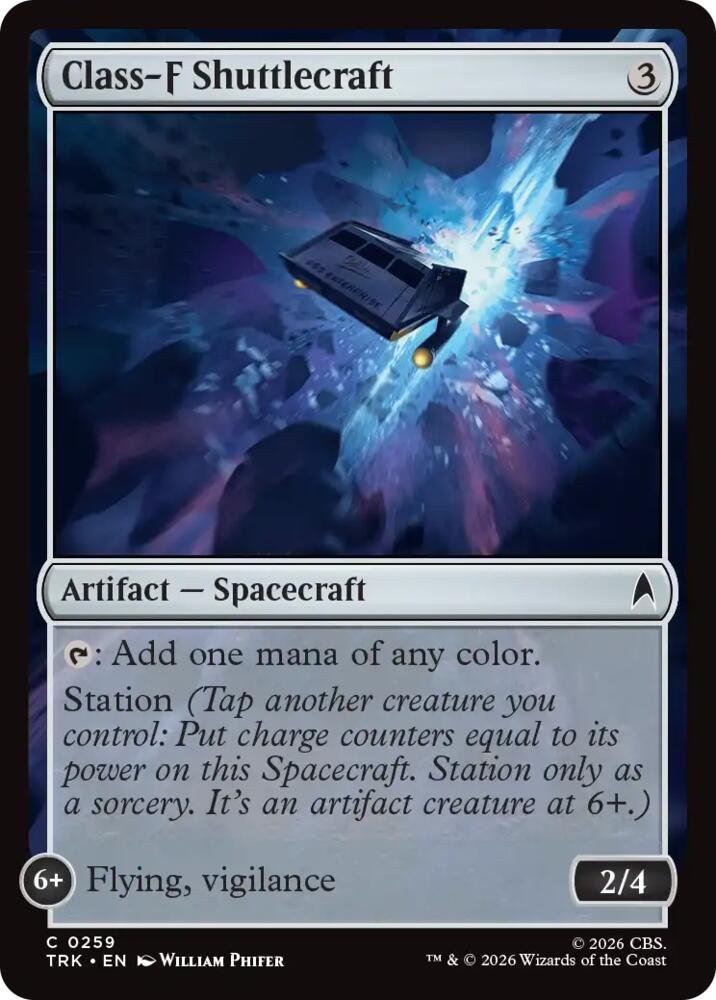
Class-F Shuttlecraft: A mana-dork immediately before becoming a 2/4 with flying and vigilance. Once it’s a creature, vigilance lets it attack while remaining available to produce mana.
DOT-7 Repair Squad: A flying creature that can untap another crew member for an additional Station activation or tap trigger once per turn, so make sure you use that untap where it counts.
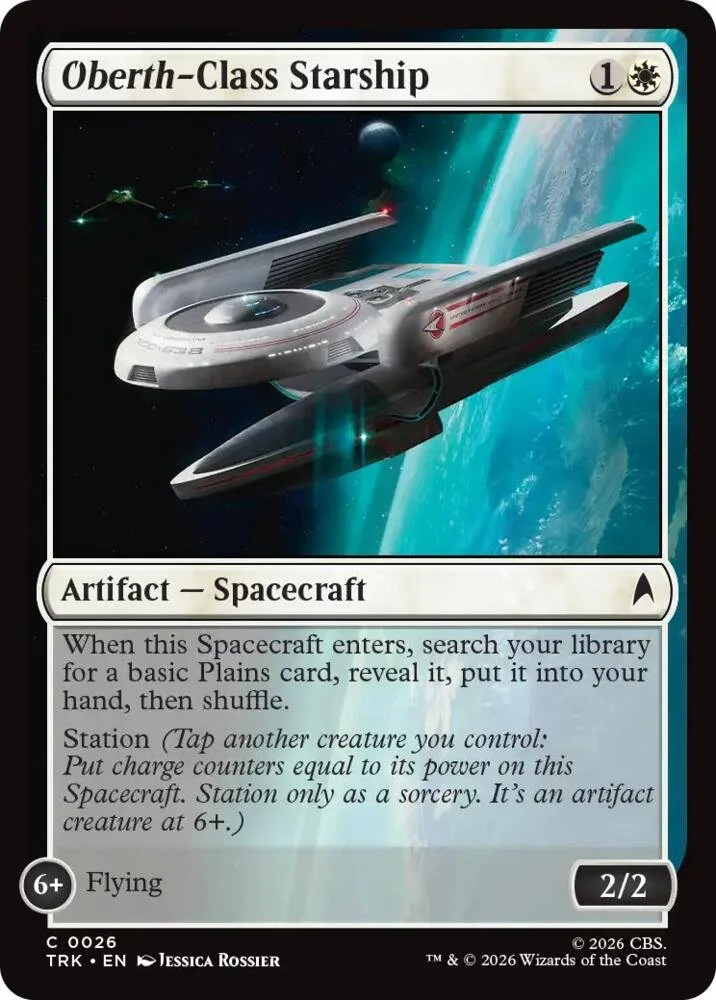
Oberth-Class Starship: Finds a basic Plains for your hand when it enters, and an eventual 2/2 flier. Useful for when you’re running dry on land drops.
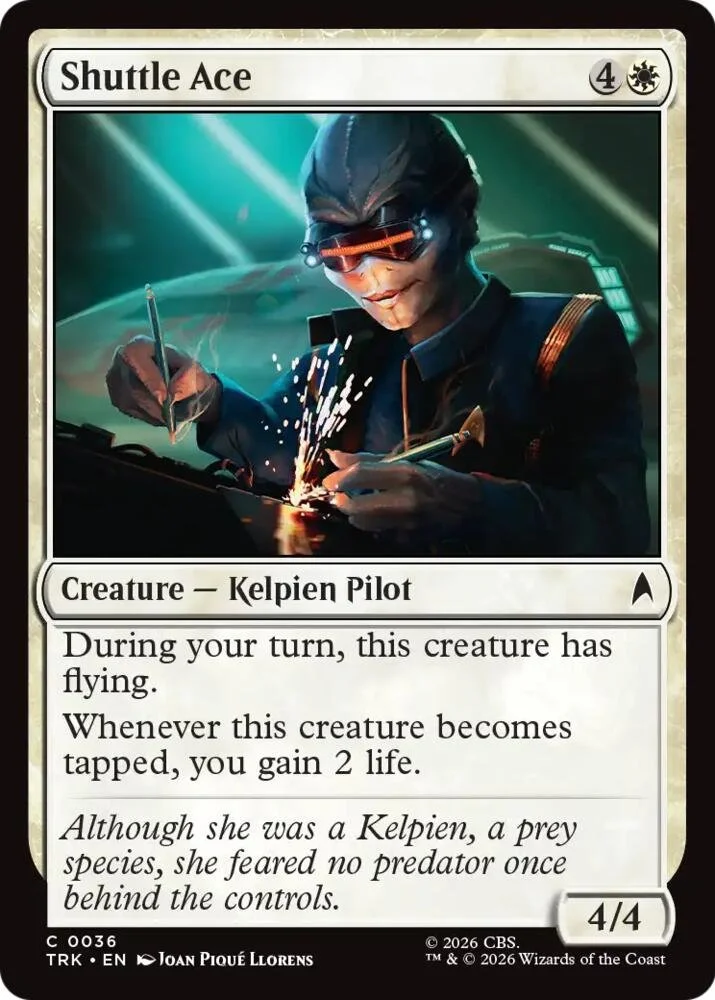
Shuttle Ace: Gains you 2 life whenever it becomes tapped, letting you recover a little breathing room while developing your Spacecraft. That’s a welcome bonus in a deck that may need time to stabilize.
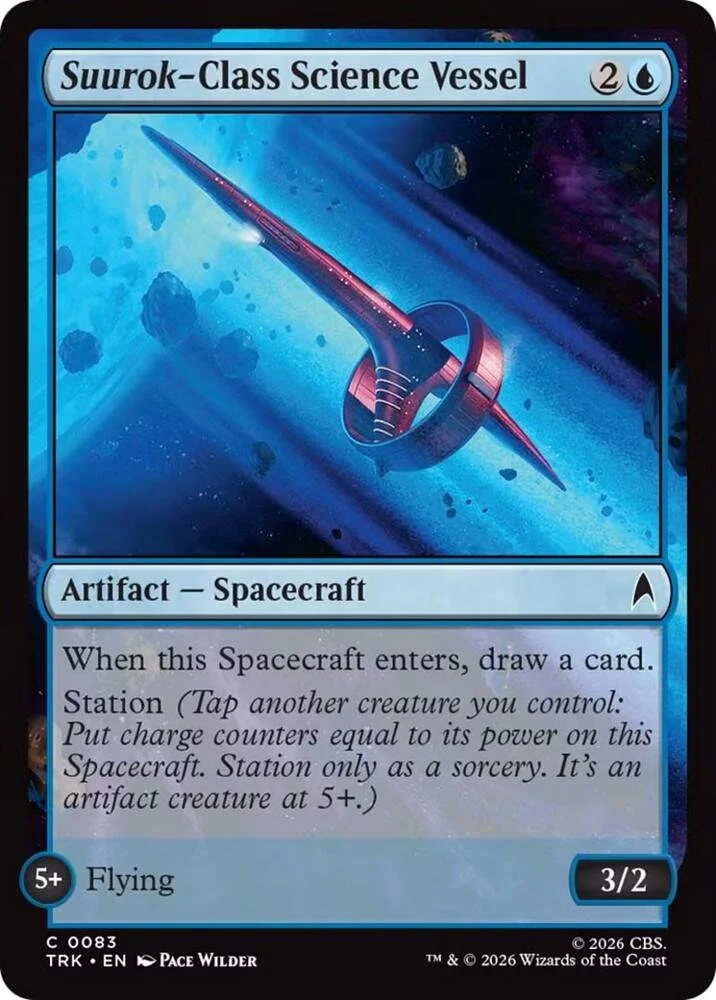
Suurok-Class Science Vessel: Draws a card when it enters and eventually becomes a flying 3/2. Replacing itself immediately is exactly the sort of value I want from a Spacecraft that still needs some work before attacking.
Best Uncommon Cards for Spacecraft & Artificers

Brad Boimler, Eager Ensign: One of my favorite support pieces here. When Boimler becomes tapped, he improves the counters you put on your permanents for the rest of the turn. His trigger resolves before the Station ability you tapped him to activate, so even that first activation benefits. He also does not specify charge counters, so the additional counter works for +1/+1 counters as well.
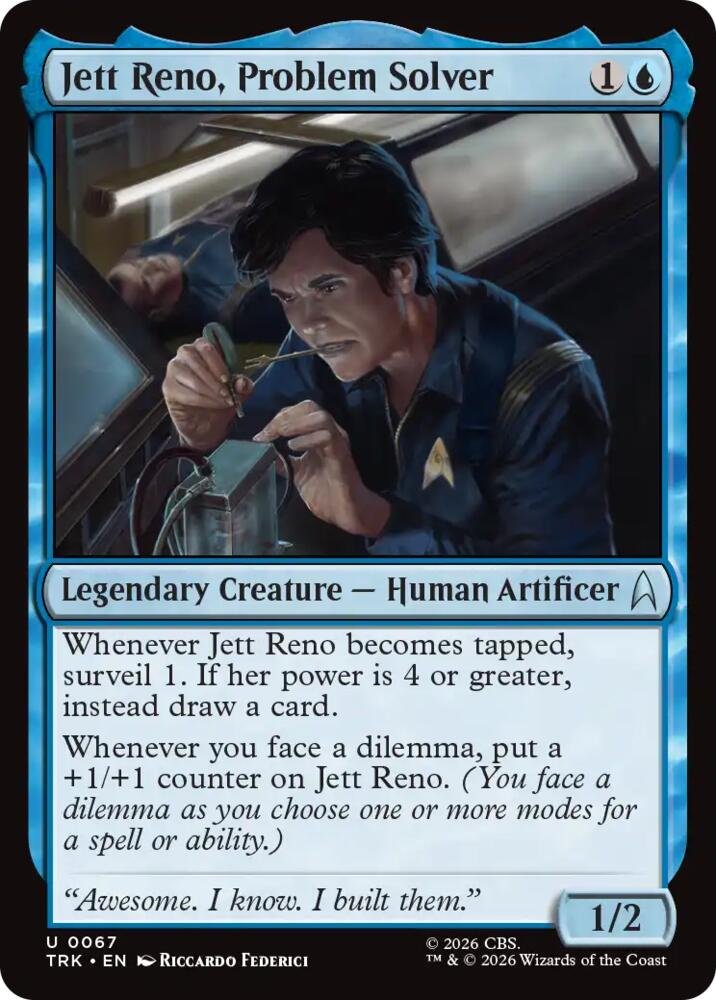
Jett Reno, Problem Solver: Starts by letting you Surveil 1 whenever she becomes tapped, helping you improve your draws. And once her power reaches 4, that becomes card draw instead. Her dilemma trigger gives her a way to grow, and additional power also makes her better at stationing.
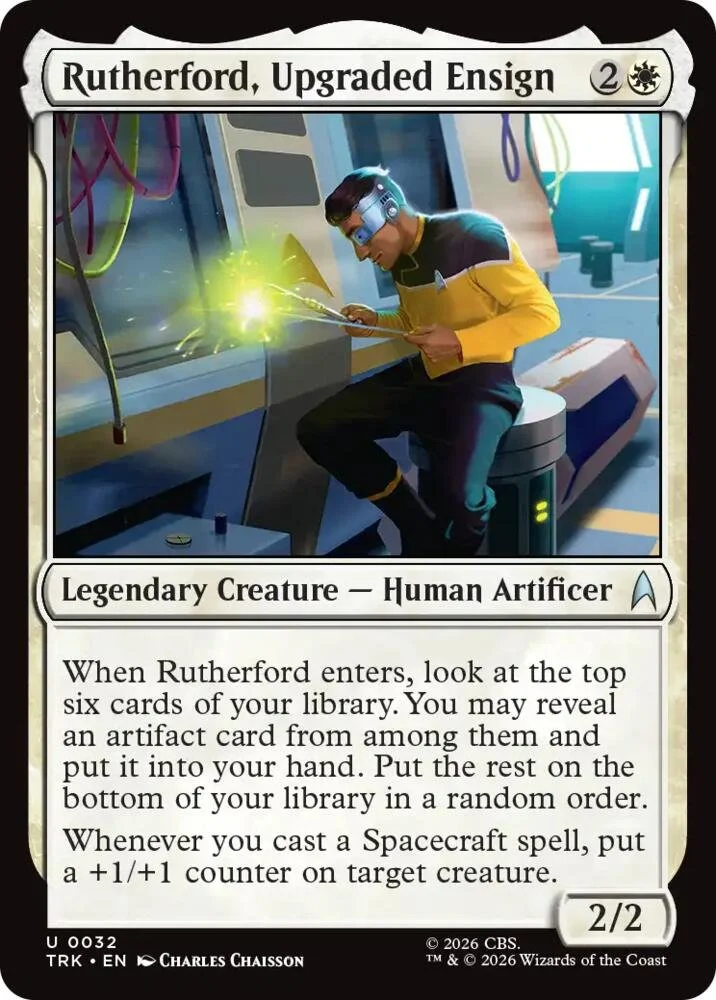
Rutherford, Upgraded Ensign: Looks at your top six cards for an artifact when he enters, then rewards each Spacecraft spell you cast with a +1/+1 counter on a creature. Growing a regular crew member increases the charge counters it can contribute on future turns.
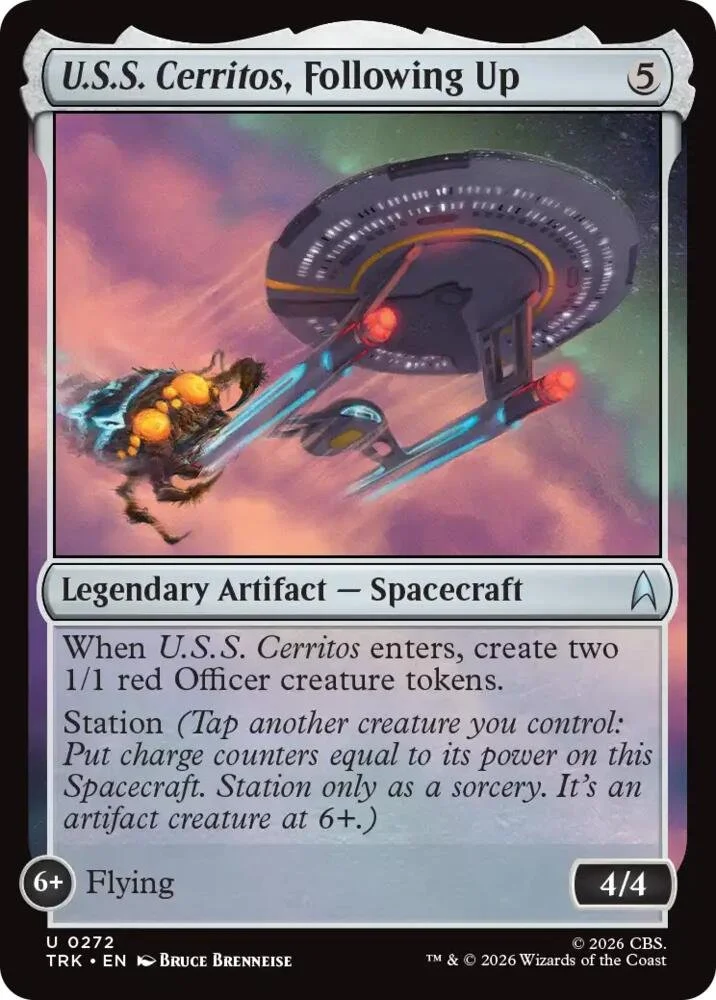
U.S.S. Ceritos, Following Up: Brings two 1/1 Officer tokens with it, giving you creatures that can station immediately. Eventually becoming a flying 4/4 makes this a particularly appealing package of ship and crew.
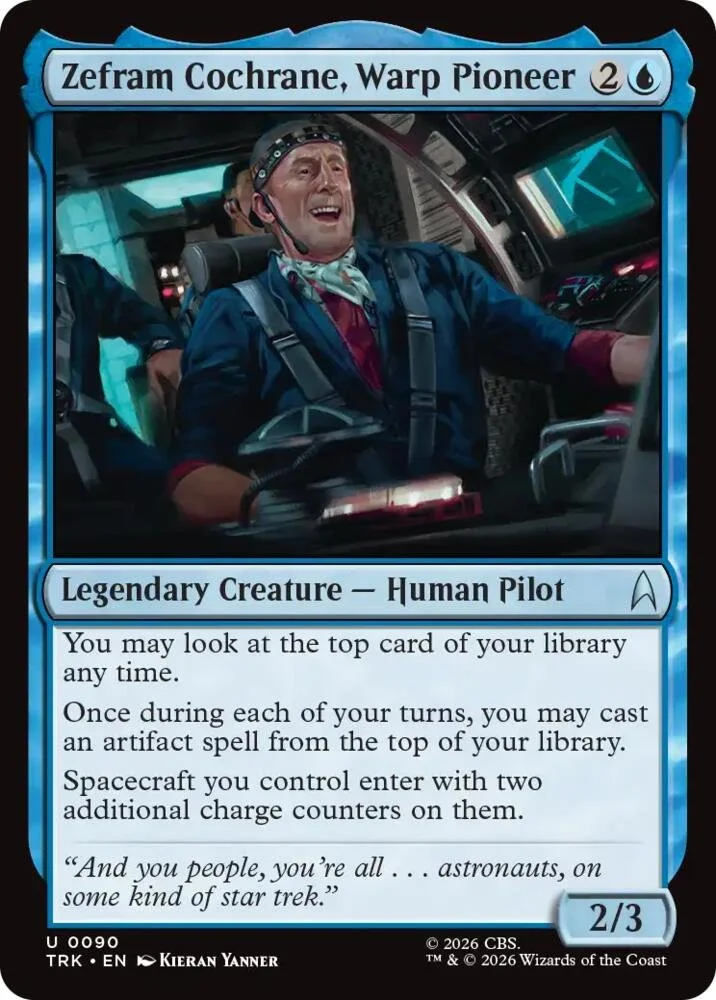
Zefram Cochrane, Warp Pioneer: Lets you cast an artifact from the top of your library once during each of your turns and gives your Spacecraft two additional charge counters as they enter. Both abilities help your fleet develop quicker, though the top-of-library casting permission is limited to once per turn.
Best Rare and Mythic Cards for Spacecraft & Artificers
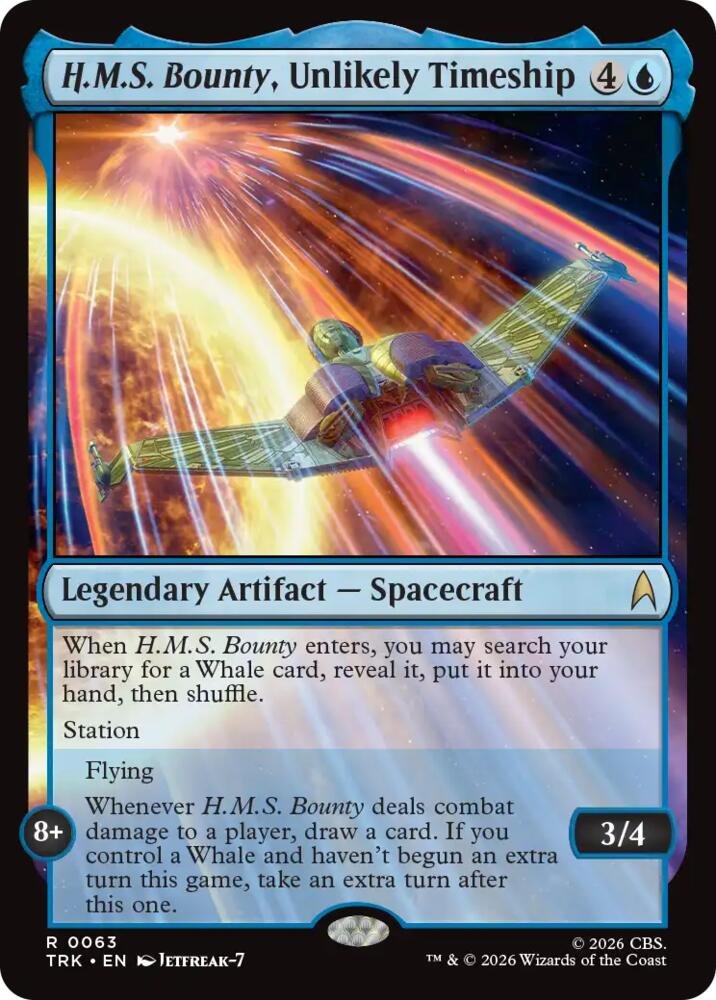

H.M.S. Bounty, Unlikely Timeship: Searches for a Whale when it enters and becomes a flying 3/4 when stationed. Connecting with a player draws you a card, with an extra turn on the table if you control a Whale and haven’t begun an extra turn that game. That’s a tempting ceiling, but check whether your deck can support the Whale requirement.
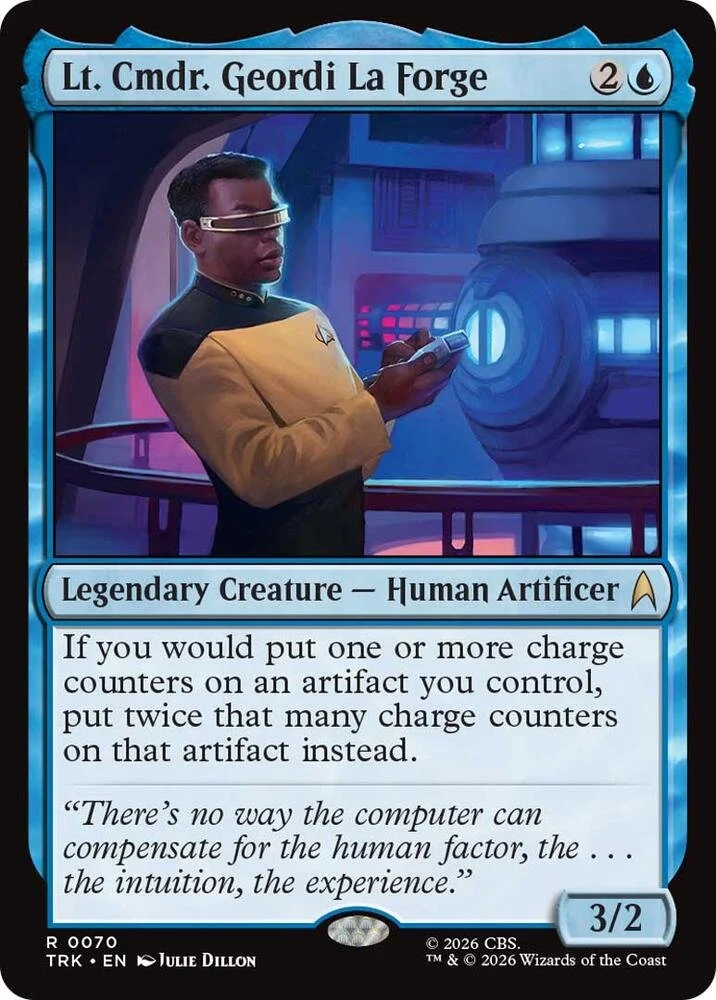
Lt. Cmdr. Geordi La Forge: Doubles the charge counters you would put on your artifacts. That can dramatically shorten the time between casting a Spacecraft and having it be battle ready.
Romulan Bird of Prey: Adds two charge counters to itself whenever you cast a noncreature spell while it isn’t a creature. Your other Spacecraft casts help charge it up, letting you direct more of your crew elsewhere.
Sulu, Space Swashbuckler: Draws a card when he becomes tapped if an Equipment or Spacecraft entered under your control earlier that turn. Play your ship before stationing with Sulu to get the proper payoff.
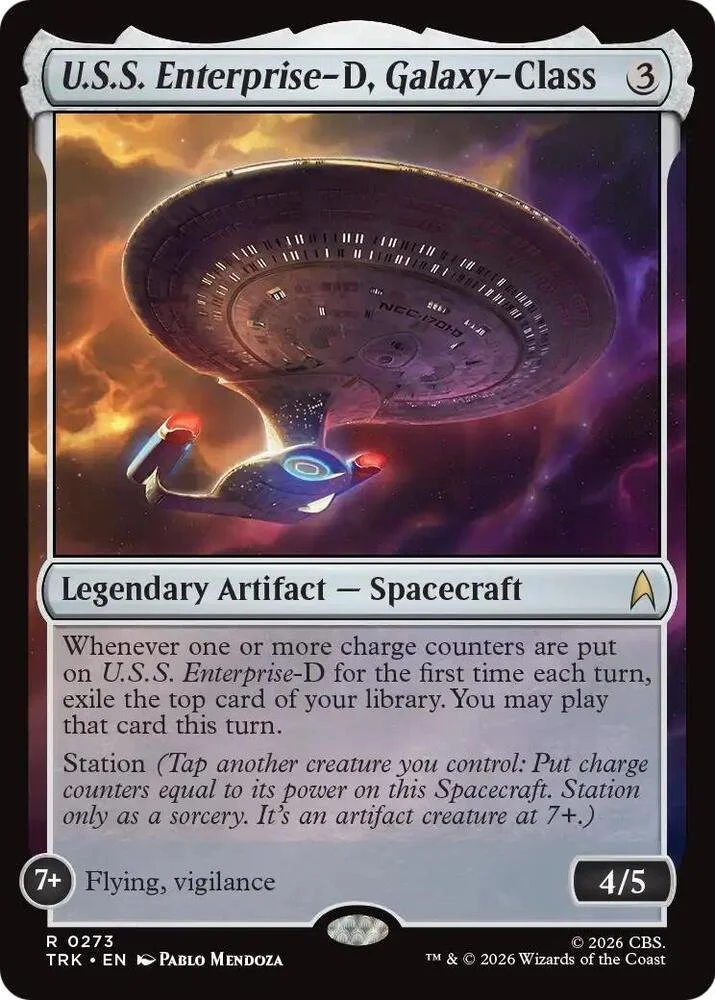
U.S.S. Enterprise-D, Galaxy-Class: Offers access to an extra card the first time it receives charge counters each turn, then becomes a flying 4/5 with Vigilance. Be wary of mana when stationing this Spacecraft because you have to use the card exiled by it this turn.
Dimir / Blue-Black Dilemma Control
Azorius may be busy getting its fleet off the ground, but Dimir gets to do what Dimir does best. Counter a spell here, kill a creature there, and eventually win with whatever your opponent hasn’t been able to answer. This time, a lot of those spells and abilities also ask you to face a dilemma, giving your creatures and enchantments a little extra value every time you choose a mode.
Gameplan
Dimir starts with the usual control tools. Use removal, bounce, and counterspells to keep your opponent’s board manageable, then pull ahead with card draw and evasive creatures. Plenty of cards you’d already want in that shell also give you a choice when you cast them, when they enter, or when they attack.
The basic plan looks like this:
Use cheap interaction to keep your opponent from getting too far ahead.
Play flexible spells and creatures that let you face dilemmas while advancing your board.
Let your payoffs grow into threats or chip away at your opponent’s life total.
I like that this deck can still play a normal game of Magic when its pieces show up in the wrong order. A modal spell can solve a problem on its own, and a creature like Melkotian Adjudicator can start attacking before you’ve found a way to grow it.
Draft Priorities
I wouldn’t sit down at a draft determined to play Dilemma Control. A lot of the best modal cards are good in any blue or black deck, so I’d start with the strongest interaction and threats I’m seeing. If both colors keep coming and the payoffs start showing up, that’s when I’d lean into Dimir.
Your main priorities are:
Interaction that fits your curve. You want to be able to answer something early and still have a play when your opponent passes with mana up.
Modal cards you’d be happy to play on their own. A cheap enters ability is a good start. A creature that gives you another dilemma every time it attacks can keep your payoffs going all game.
Payoffs that help you close. Growing a flier or draining your opponent turns all those little decisions into a clock.
On-color lands with modal enters abilities. If one comes your way, it can give you another dilemma without taking up a spell slot. Pay attention to when it enters tapped before you count on that trigger.
Drafting this archetype will happen naturally. You’ll finish your draft and see that maybe the other archetype you were aiming for didn’t quite work out but playing Dimir Control is pretty simple no matter what.
Win Condition
Your win condition is being a little rude to your opponent until a 2/1 flier turns into a real problem. Clear the way for your evasive creatures and let your drain effects chip away at their life total. Once you’re ahead, you can save your interaction for the spell that would actually get them back into the game.
Key Multicolor Cards
The two signposts show you both sides of the deck. Lore gives you a dilemma to work with, while Seven of Nine gives you a reason to keep facing them.
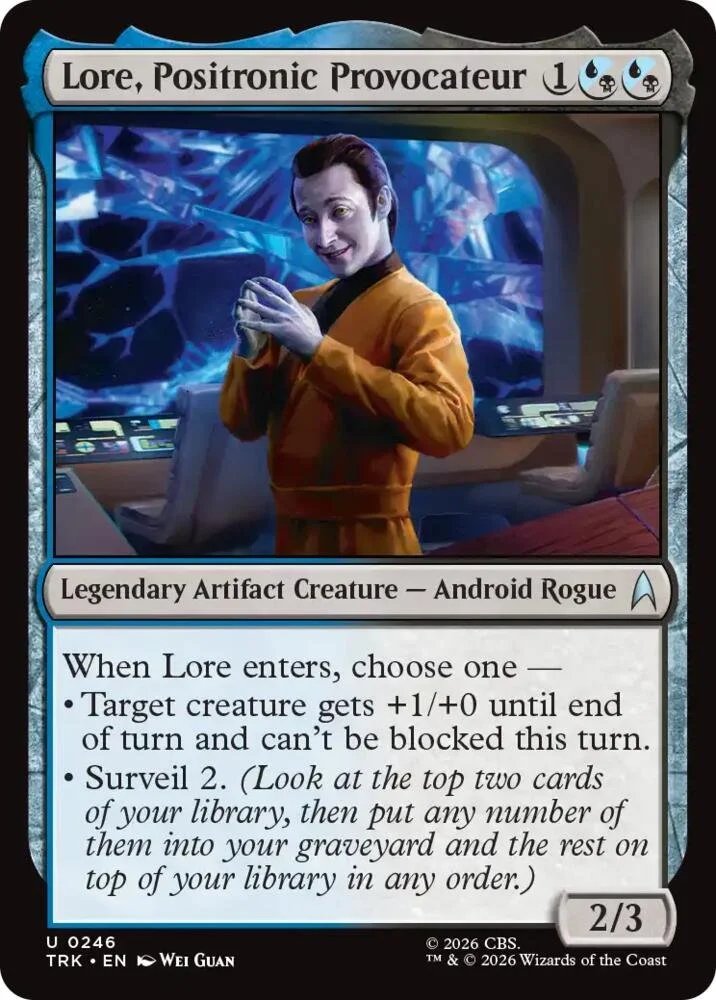
Lore, Positronic Provocateur: Comes with a modal enters ability, so he can trigger your dilemma payoffs as soon as he hits the board. He’s the kind of card I want when I already have a payoff in play and need another way to get it going.
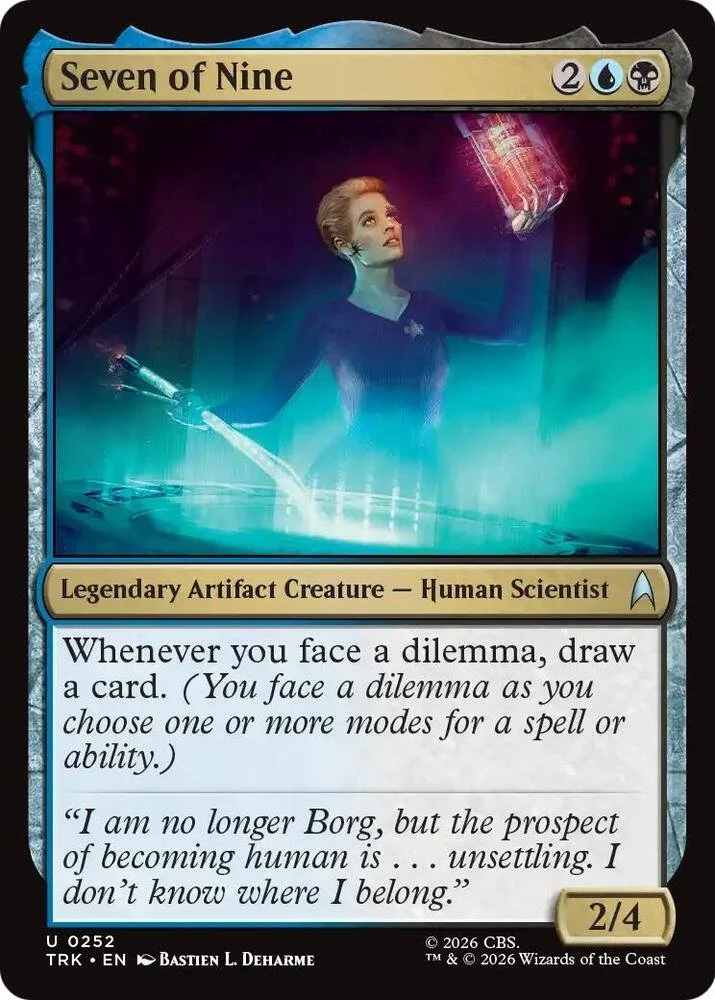
Seven of Nine: Gives you a card draw payoff for facing dilemmas once she’s transformed. She’s a reason to keep some cheap modal effects in your deck so you can get value without spending your whole turn.
Best Common Cards for Dilemma Control
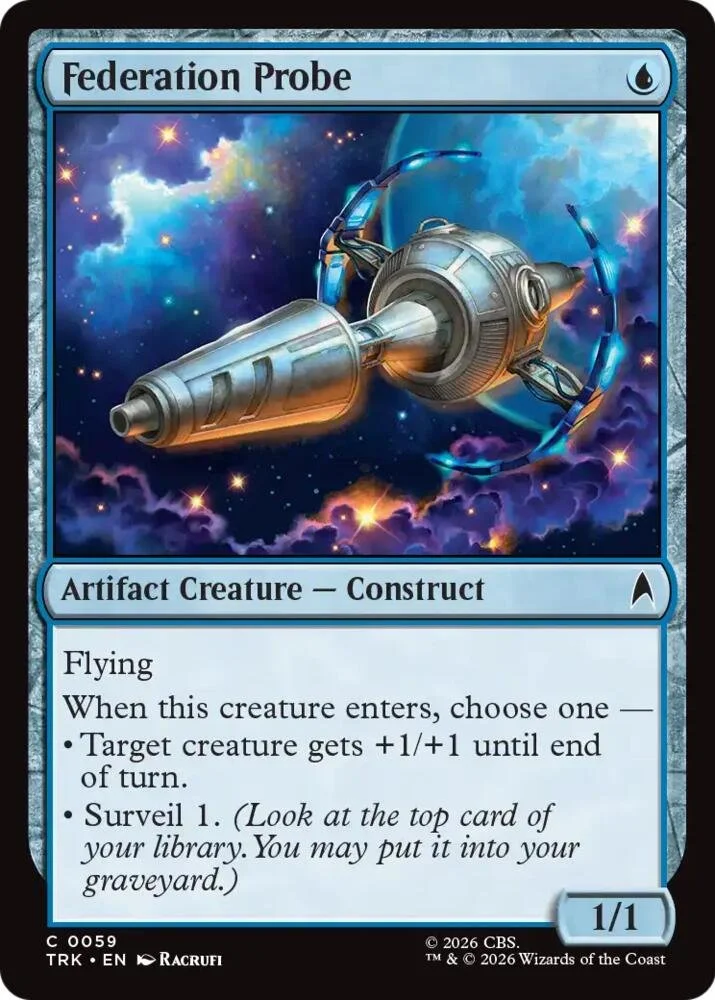
Federation Probe: A one-mana 1/1 flier with a modal enters ability. It’s an inexpensive way to trigger a payoff while adding an evasive body to the board.
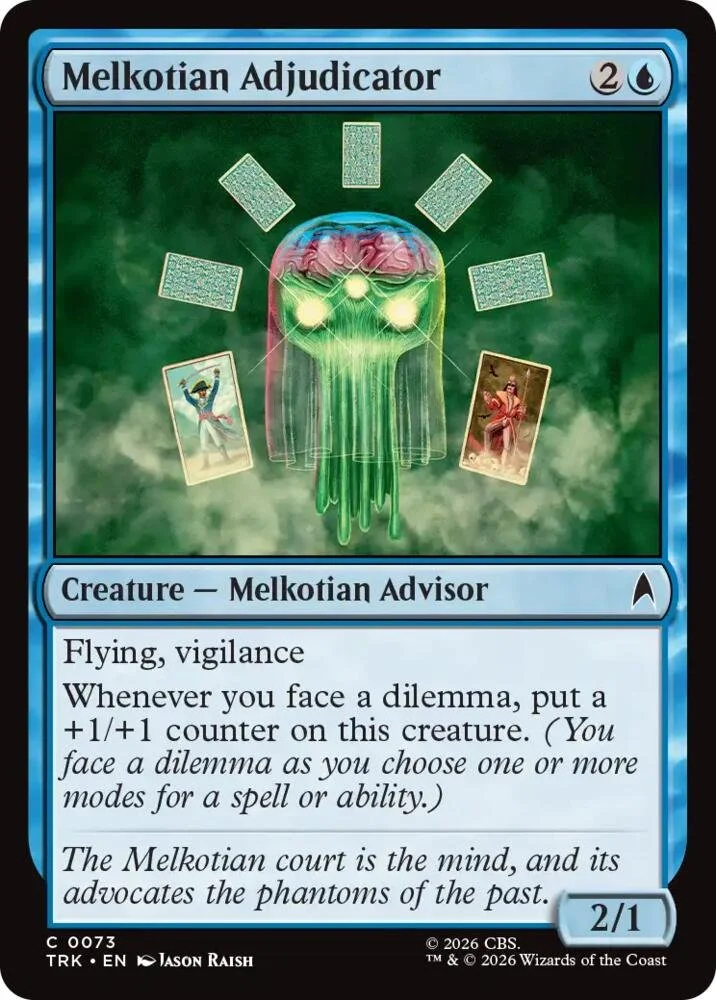
Melkotian Adjudicator: A 2/1 with flying and vigilance that picks up a +1/+1 counter whenever you face a dilemma. This is one of the commons I’d most want to protect once it starts growing.
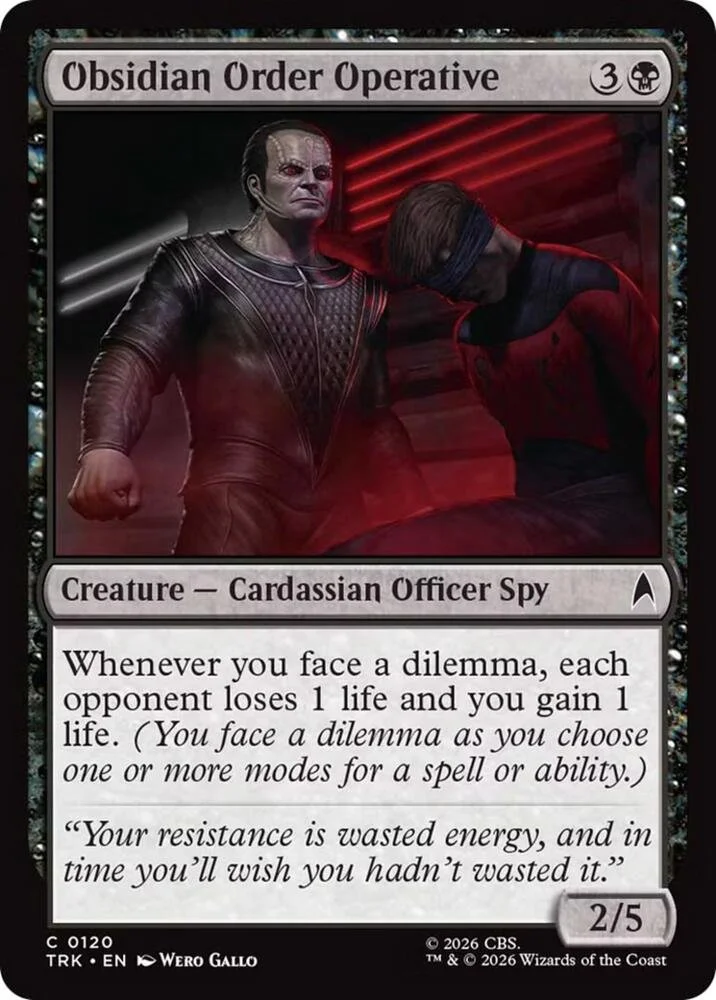
Obsidian Order Operative: Drains your opponent for 1 and gains you 1 life each time you face a dilemma. The life gain buys you time, and the damage adds up while your fliers do their thing.
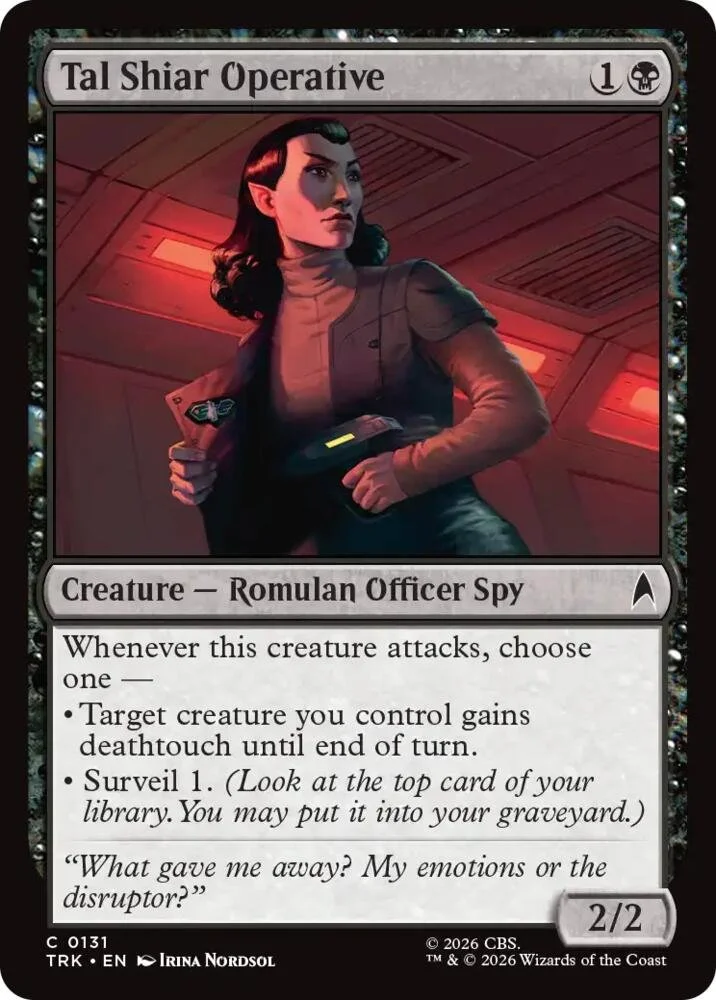
Tal Shiar Operative: Gives you another dilemma every time it attacks. Giving the Operative itself deathtouch is a good way to make a bigger blocker think twice about trading with your 2/2.
Best Uncommon Cards for Dilemma Control
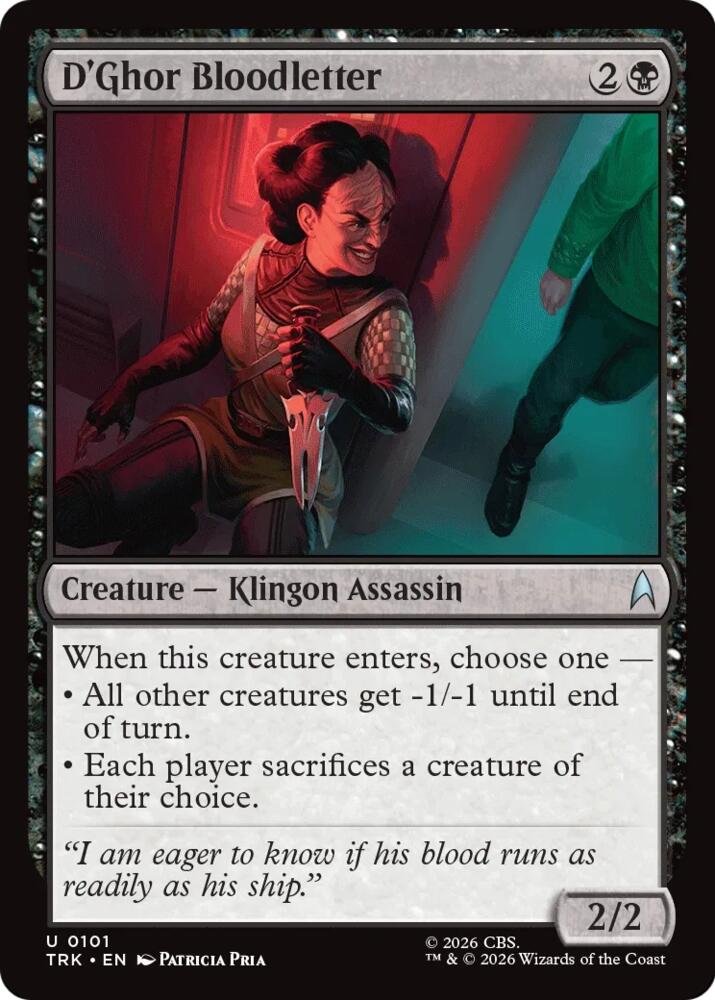
D’Ghor Bloodletter: Choose between shrinking your opponent’s creatures by −1/−1 for the turn or making them sacrifice a creature. The first option can punish a board of small creatures, while the sacrifice mode is at its best when your opponent has one threat they really want to keep.
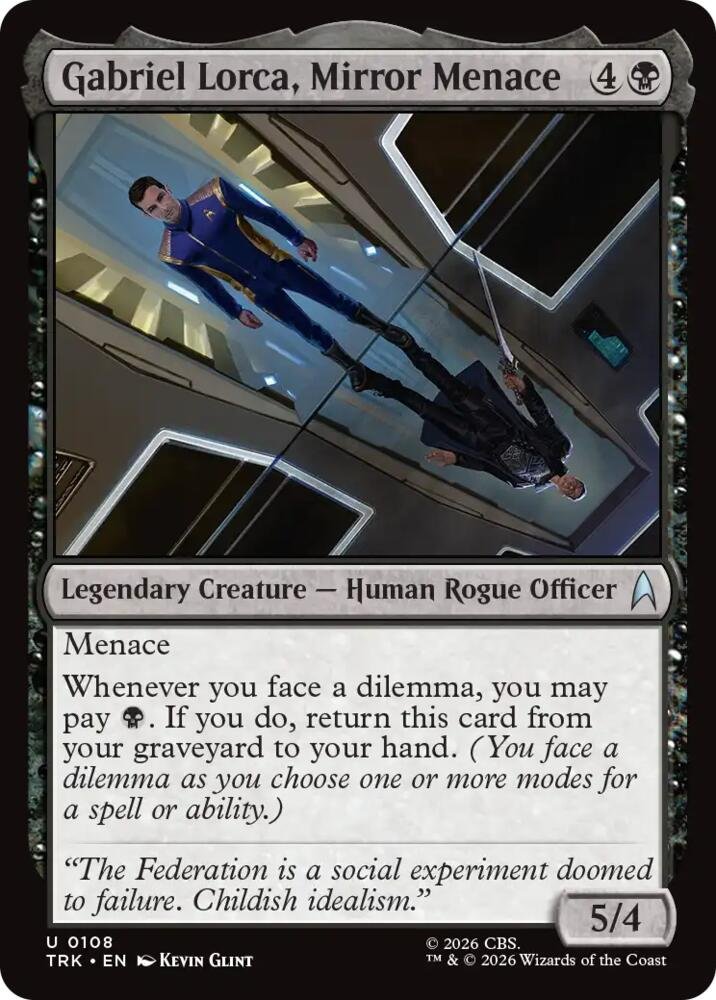
Gabriel Lorca, Mirror Menace: Lets you pay one mana to return him from your graveyard to your hand when you face a dilemma. That gives you a creature you can trade off early and get back later while playing your normal game.
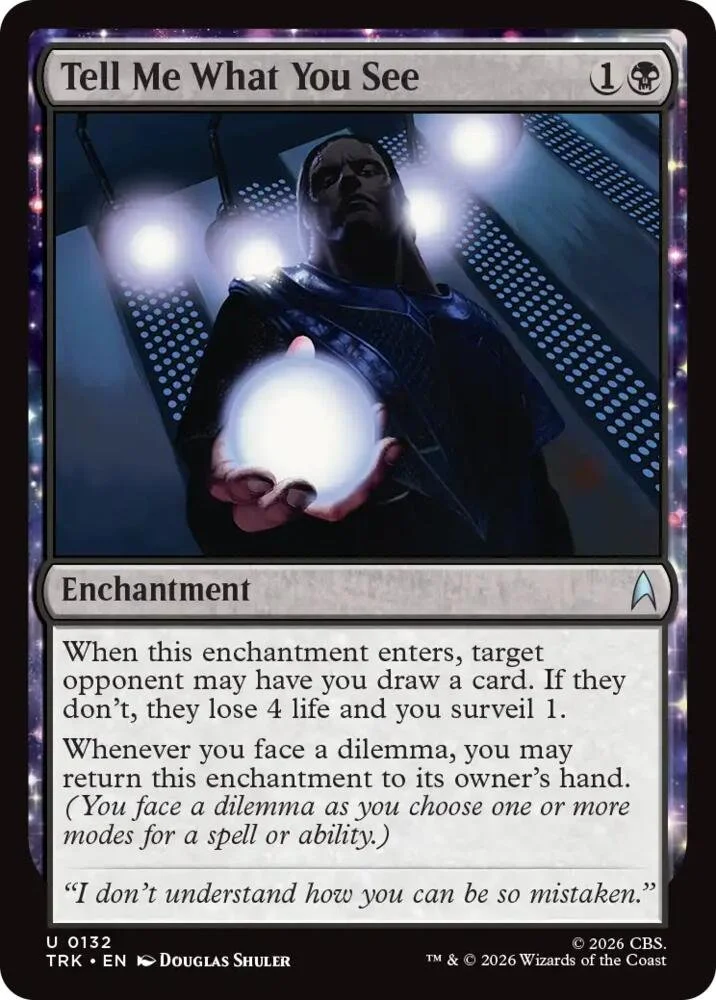
Tell Me What You See: Gives you a choice between drawing cards and draining your opponent for 4 when it enters. Another dilemma can bring it back to your hand, so you can take the cards early and come back for the life swing when it matters.
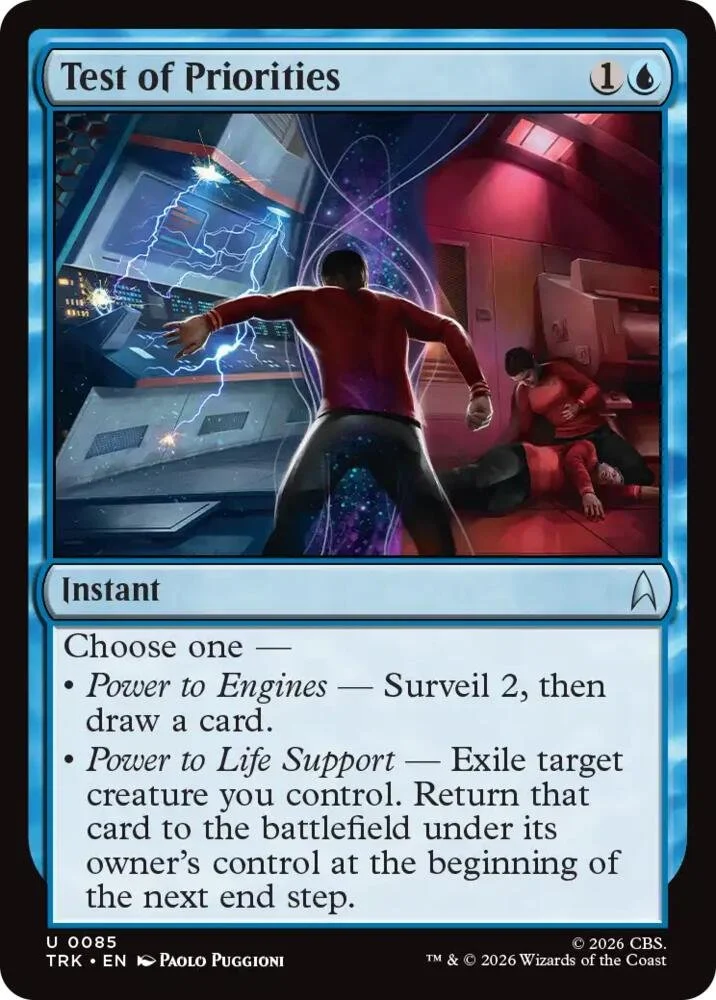
Test of Priorities: Lets you surveil 2 and draw a card, or temporarily exile one of your creatures and bring it back at the next end step. Use the second mode to dodge removal or reuse a modal enters ability for another dilemma.
Best Rare and Mythic Cards for Dilemma Control
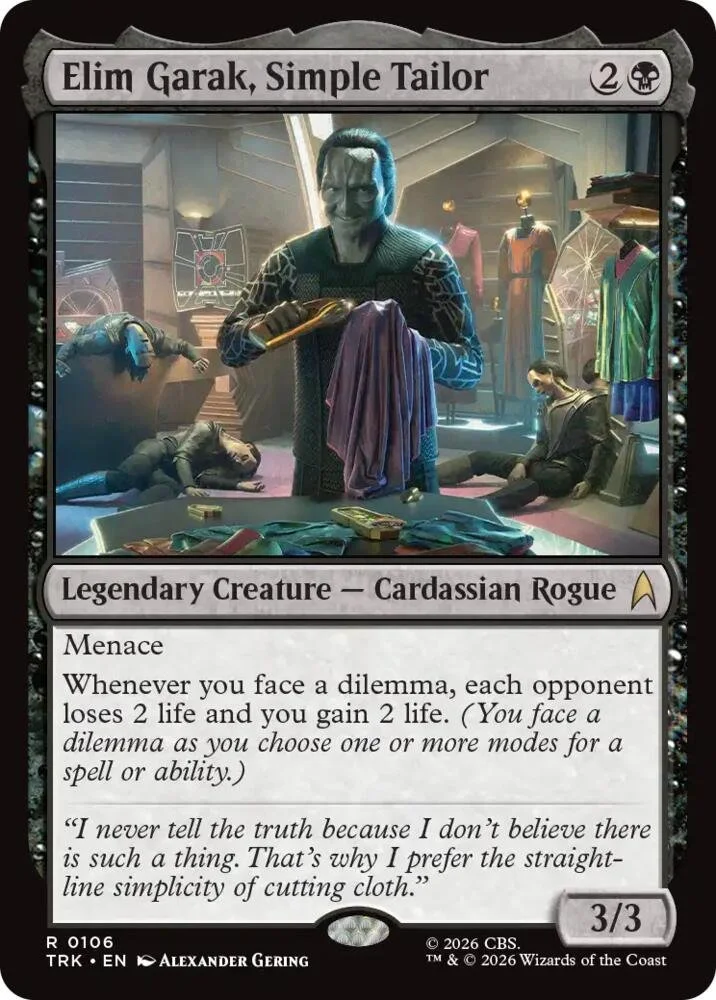
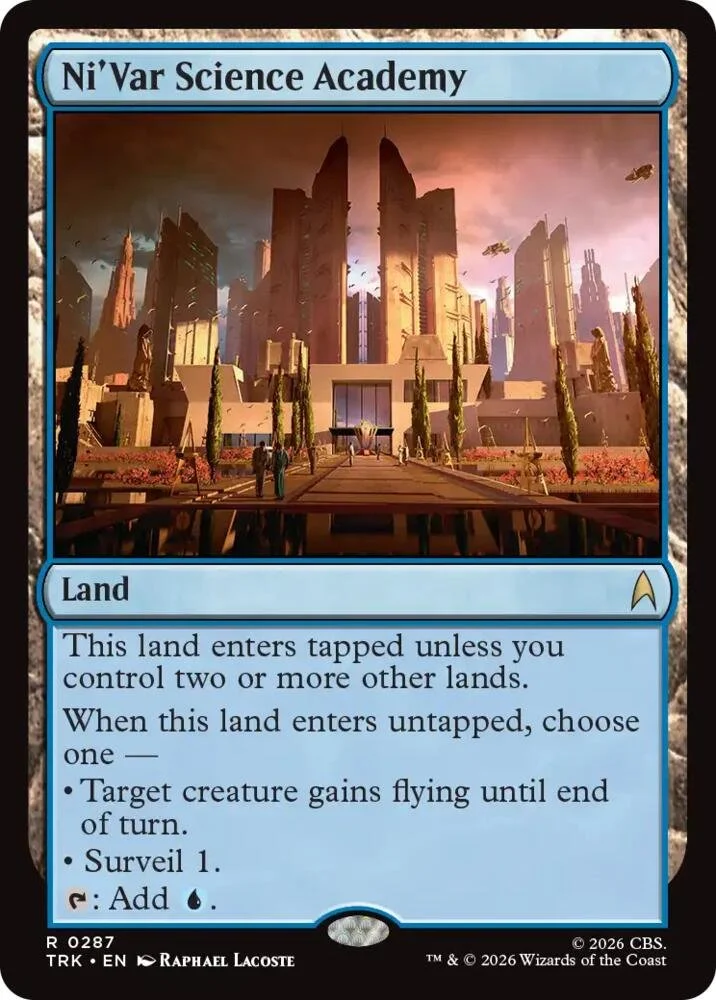
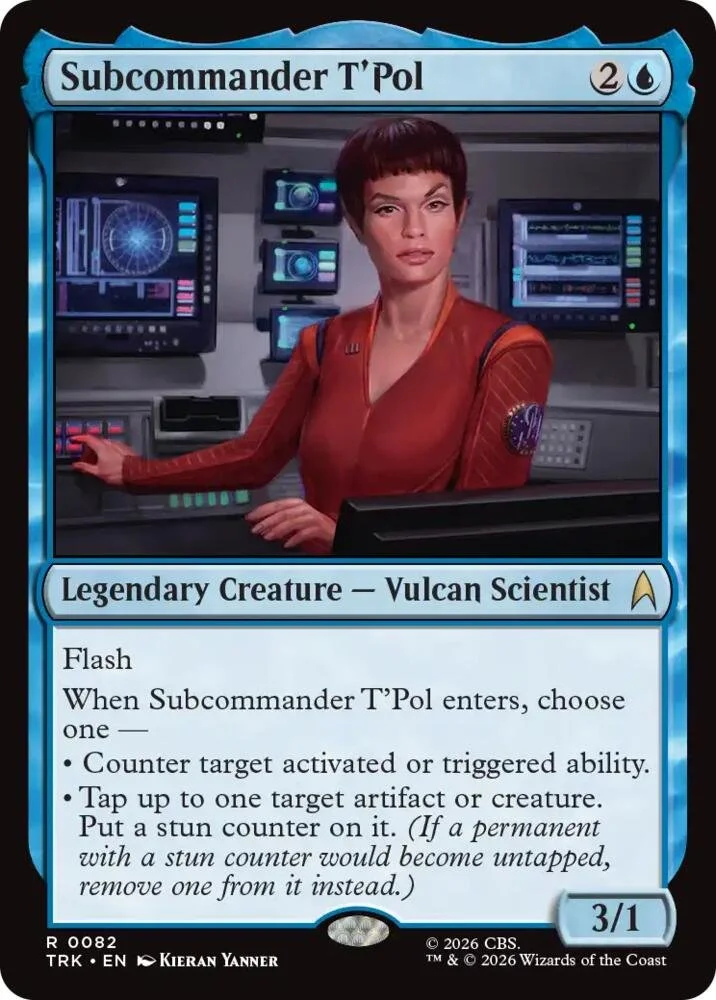
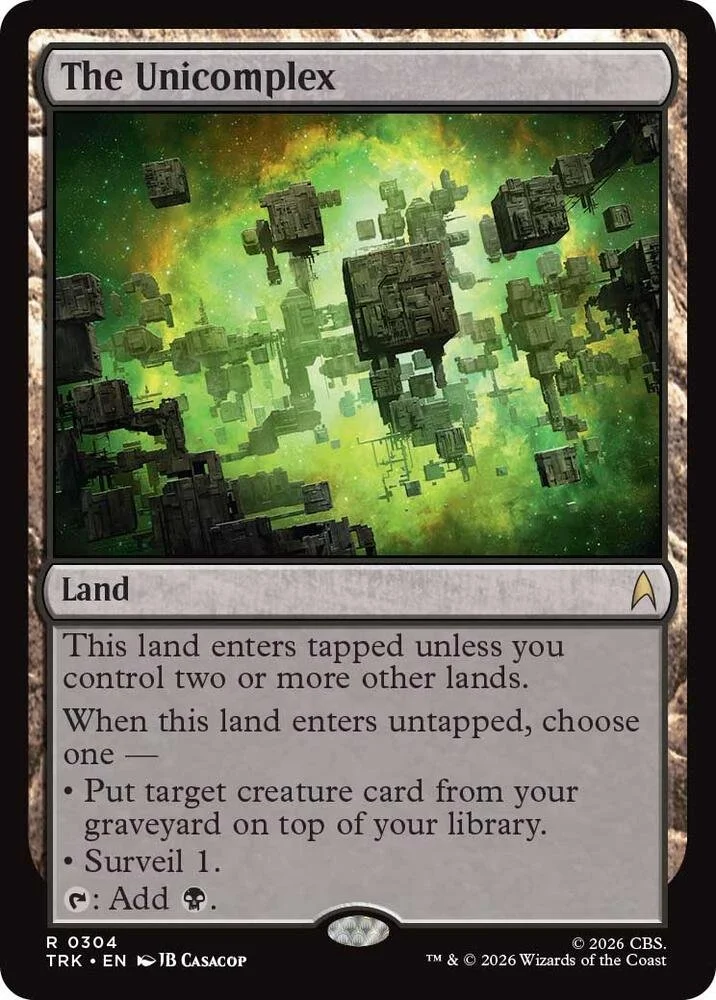
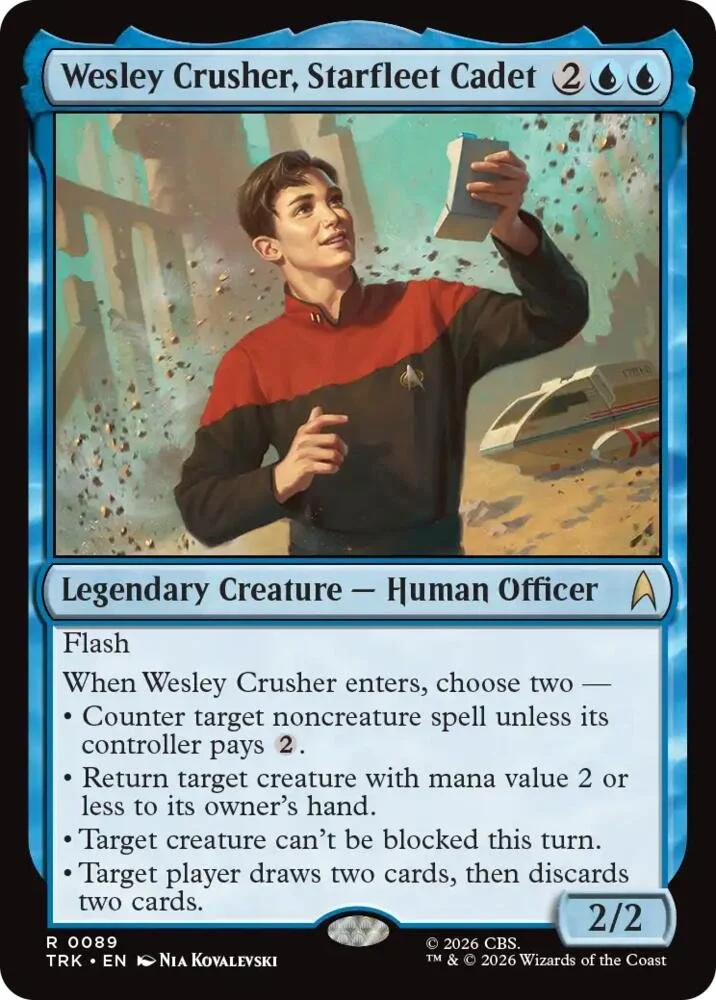
Elim Garak, Simple Tailor: Drains your opponent for 2 and gains you 2 life whenever you face a dilemma. Menace also gives Garak a way to push through damage while you’re using removal to thin out their blockers.
Ni’Var Science Academy: Gives you a dilemma from your land slot when it enters untapped. That’s a nice bonus when you already have a payoff on the board.
Subcommander T’Pol: Gives you an instant-speed dilemma on a creature with flash. You can counter an ability or stun a creature, depending on what your opponent gives you to work with.
The Unicomplex: Lets you surveil 1 or put a creature card from your graveyard on top of your library when it enters untapped. I’d take the creature when I know what I want to draw next and surveil when I’m still looking for an answer.
Wesley Crusher, Starfleet Cadet: A flash creature that lets you pick two modes, with options that include taxing a noncreature spell, bouncing a small creature, or making an attacker unblockable. He can disrupt your opponent’s turn or help push through the last few points of damage. You still face just one dilemma, even though you pick two modes.
Rakdos / Black-Red Klingons & Dies
Some decks want their creatures to live long, productive lives. The Klingons would prefer they die in glorious battle. Rakdos wants to get damage in early and make every creature your opponent trades with count.
Gameplan
Start attacking with cheap creatures, then use death triggers to keep the pressure up when combat gets messy. If your opponent stops offering trades, a sacrifice outlet lets you decide when something dies. Tokens give you bodies for both jobs.
Draft Priorities
I’m drafting the Klingons who can pick a fight early. Once I have enough creatures to make those first few attacks, I’ll start looking for ways to get paid when they die in glorious battle.
Cheap Klingons and other creatures that can attack early.
Death payoffs you can play before combat.
Sacrifice outlets and token makers in roughly the right balance. A hand full of outlets gets awkward fast.
Win Condition
Get their life total low enough that blocking becomes a problem of its own. Once they’ve stabilized the board, a death payoff like Vengeance Mission can finish the job without another clean attack.
Key Multicolor Cards
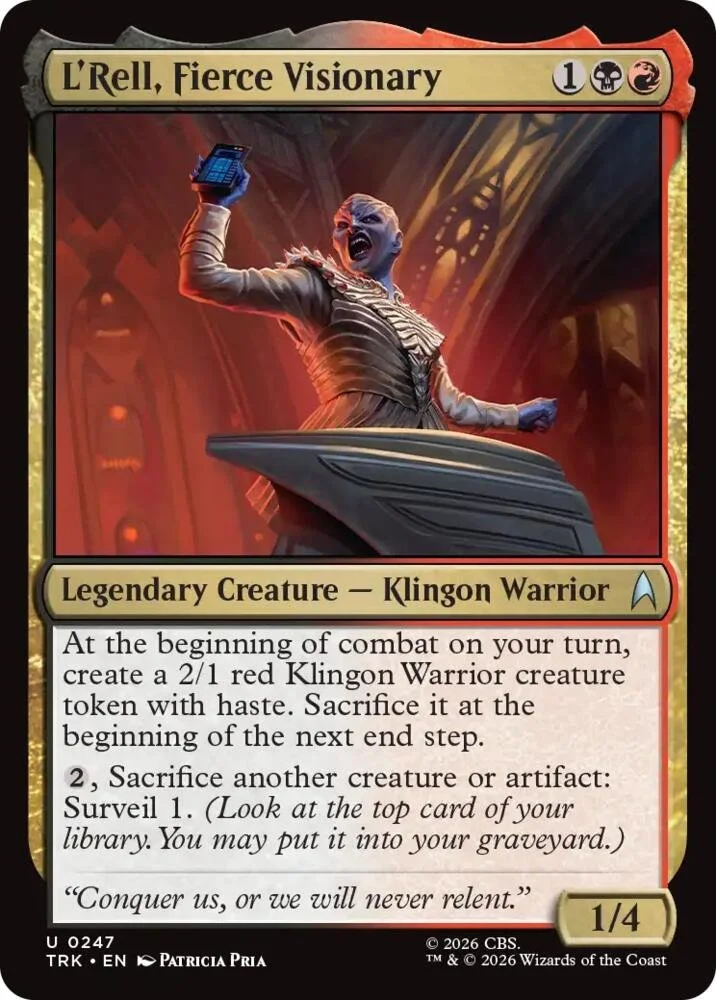
L’Rell, Fierce Visionary: One of the first cards I’d look at when deciding whether my black-red pool has enough support for its death payoffs. She gives you a reason to build around the creatures you expect to trade off.
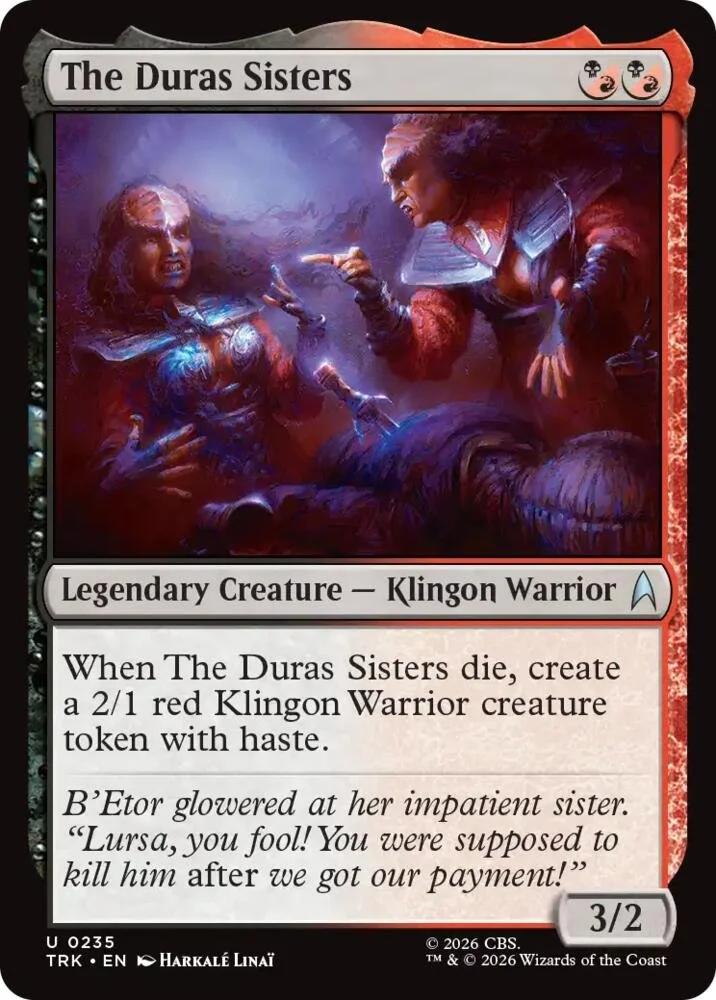
The Duras Sisters: A signpost for the aggressive Klingon deck. I’d play them alongside a curve that lets me start attacking before my opponent has time to set up.
Best Common Cards for Klingons & Dice
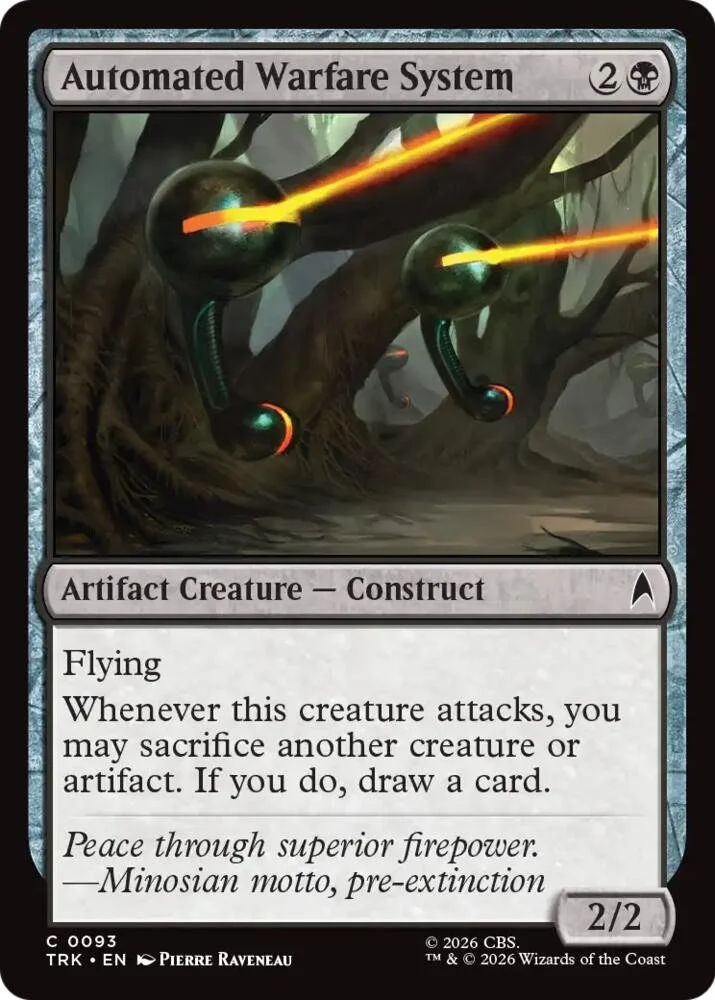
Automated Warfare System: A support piece for the sacrifice side of the deck. I’d pick it up once I know I have enough bodies to spare.
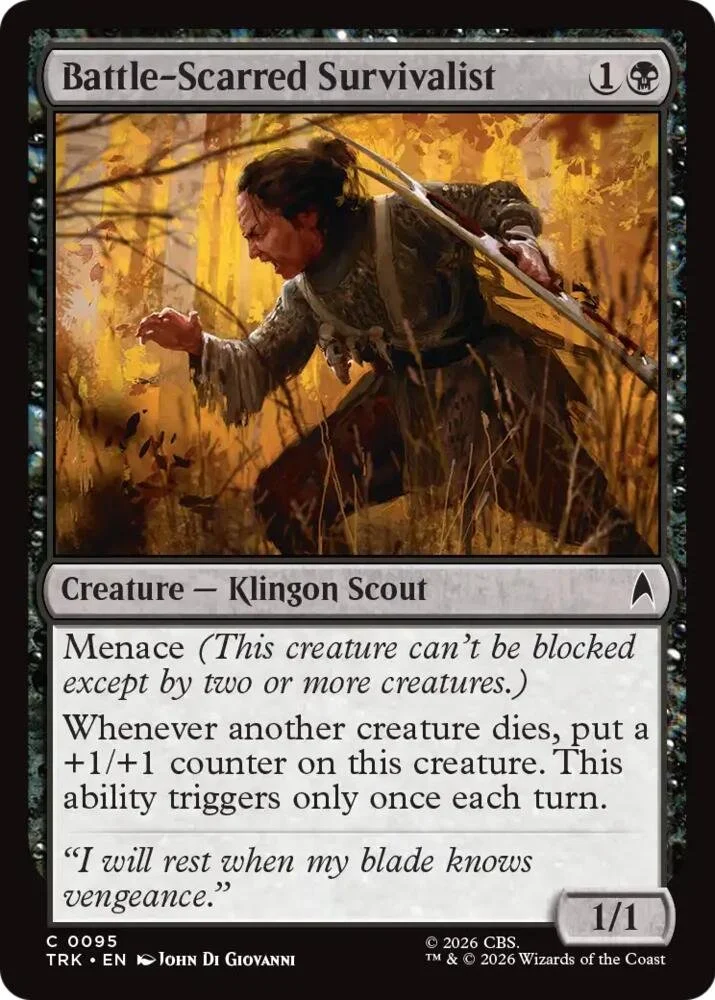
Battle-Scarred Survivalist: A creature I’m happy to put in combat when a trade will help turn on my death payoffs.
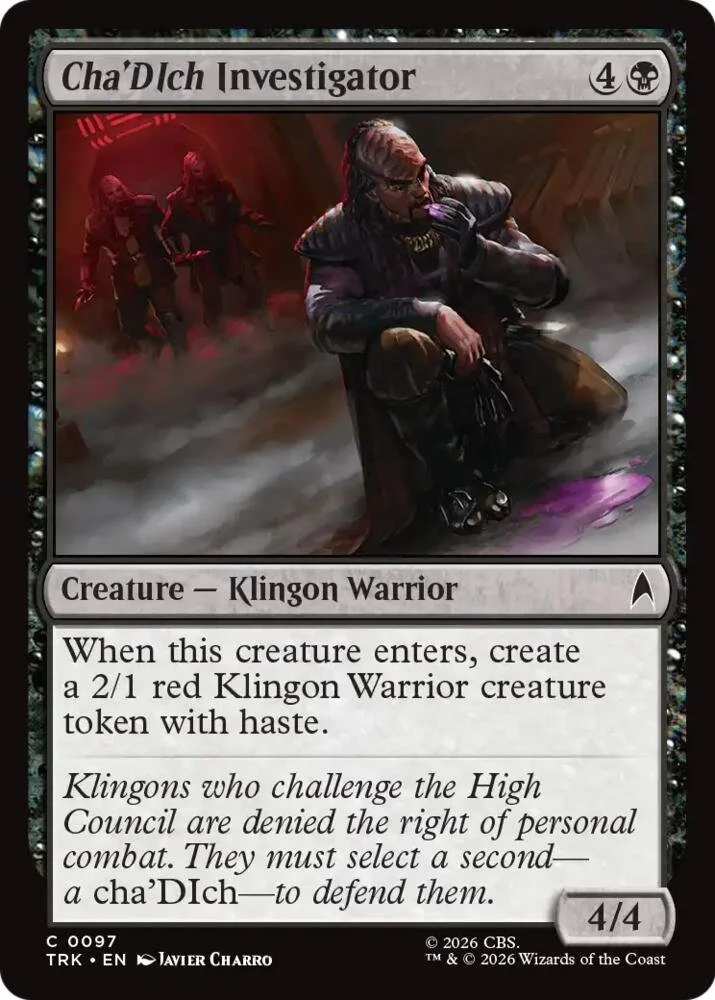
Cha’DIch Investigator: Helps fill out the Klingon creature package and gives the deck another body to work with.
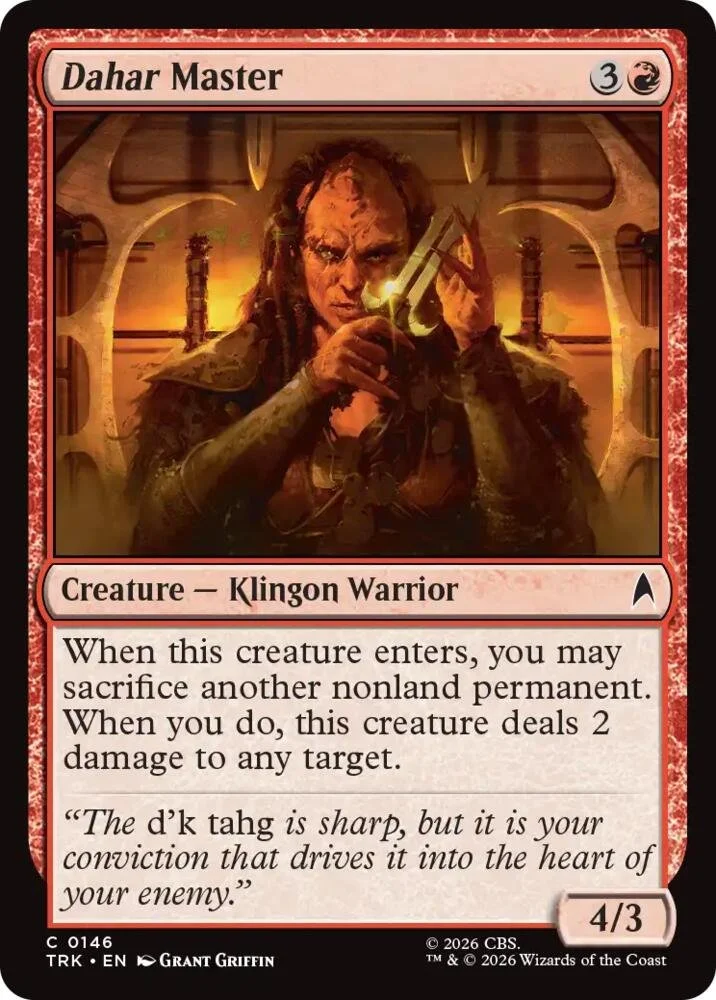
Dahar Master: A Klingon I’d look to when I need another creature that can keep the pressure on.
Best Uncommon Cards for Klingons & Dice
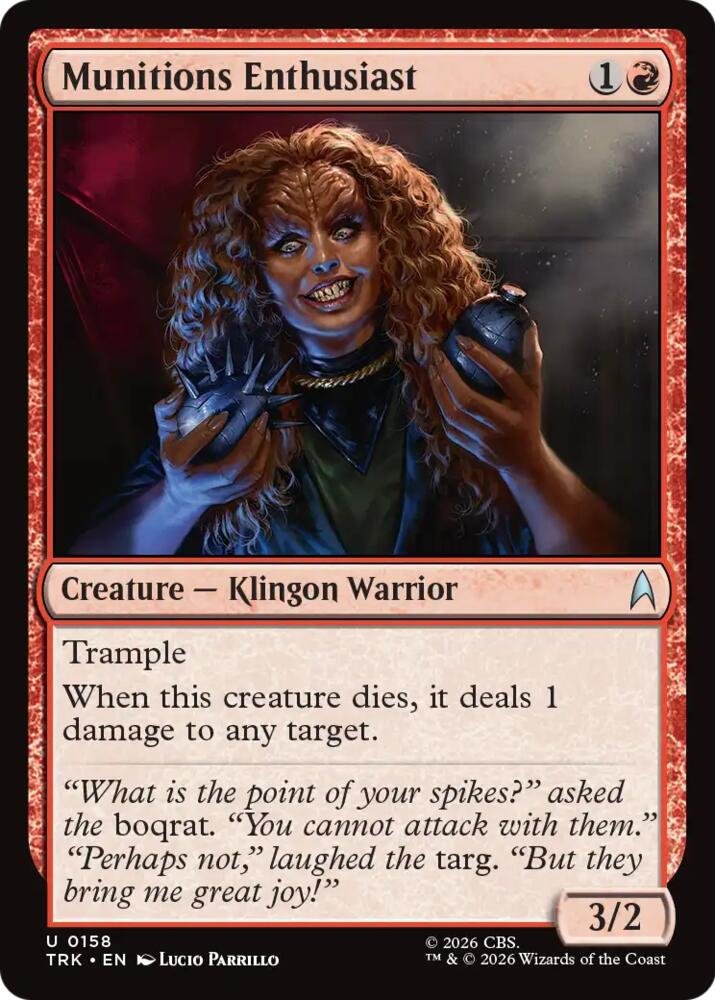
Munitions Enthusiast: Look here if your deck has expendable bodies and wants another way to make those resources matter.
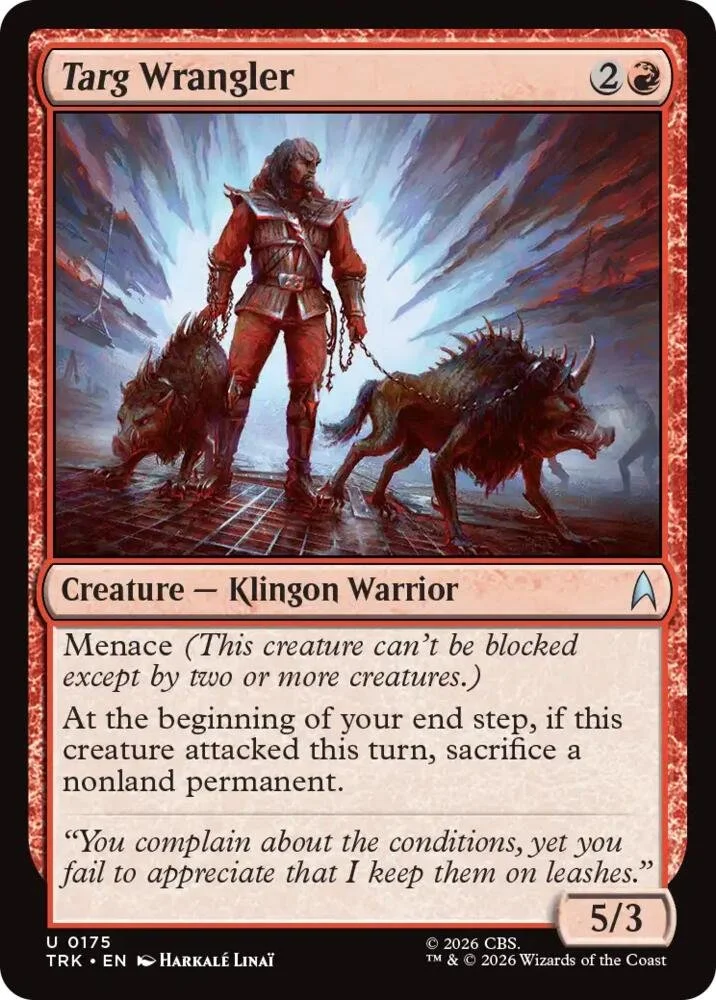
Targ Wrangler: Helps supply the bodies you need for a deck that expects to trade and sacrifice creatures.
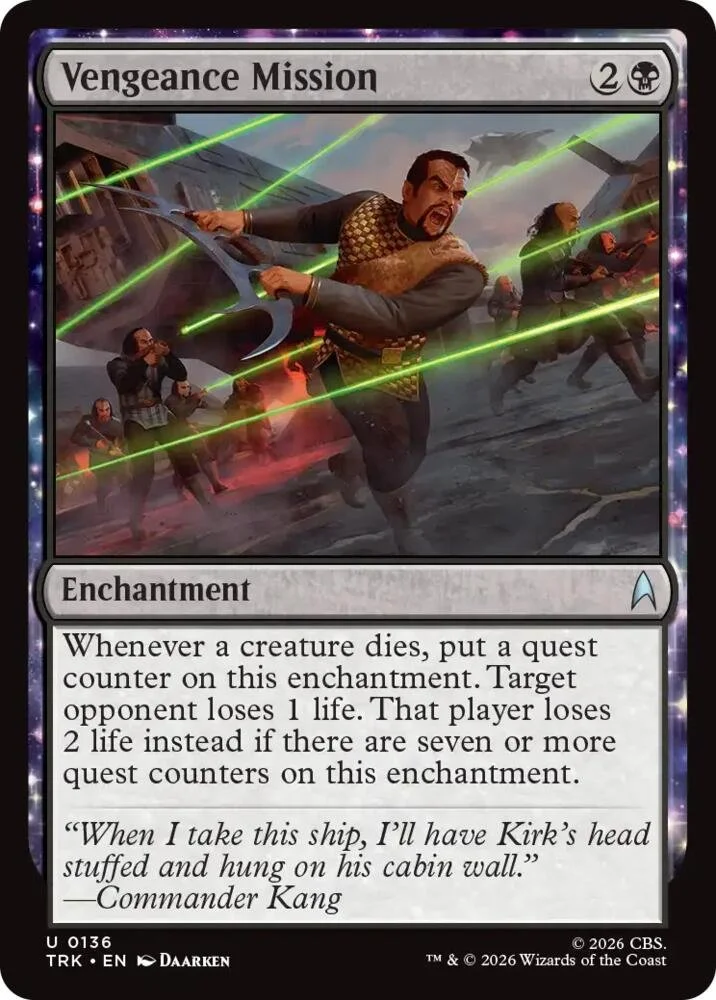
Vengeance Mission: Counts creature deaths on both sides of the table. It drains for 1 at your end step and starts draining for 2 once it has seven quest counters, giving you reach if the ground stalls.
Best Rare and Mythic Cards for Klingons & Dice
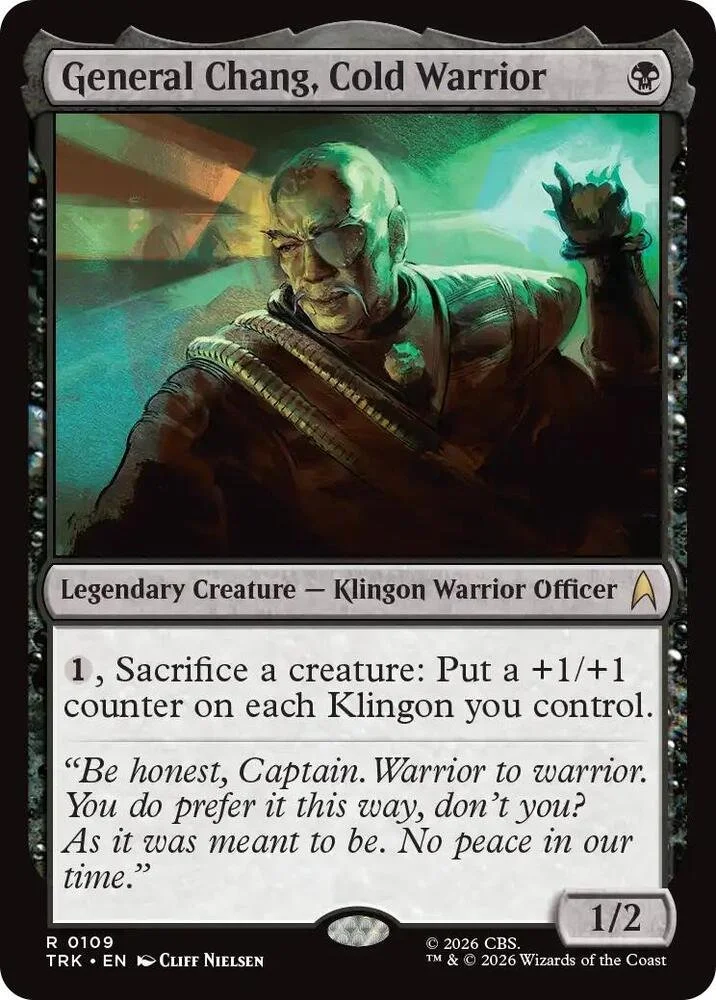
General Chang, Cold Warrior: A higher-rarity Klingon payoff I’d put in the aggressive build. Give him a deck that can put creatures into combat consistently.
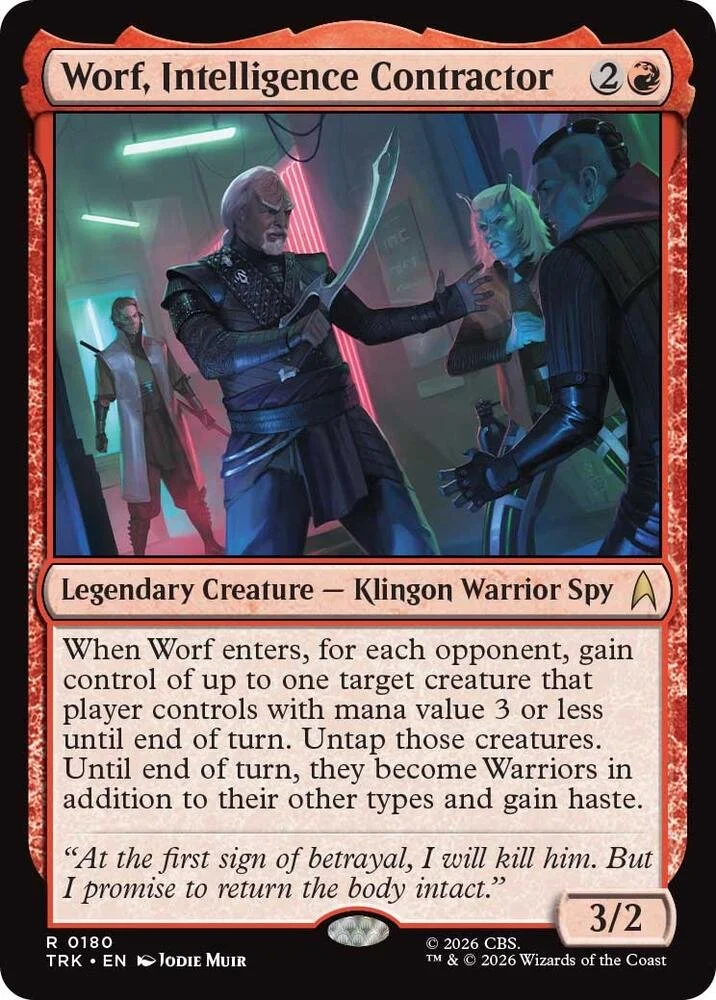
Worf, Intelligence Contractor: Borrows and untaps an opposing creature with mana value 3 or less and gives it haste. Attack with it, then sacrifice it if you have an outlet before it goes back.
Gruul / Red-Green Away Team Landfall
Landfall go brrrrr. I’m always happy to play extra lands, and Gruul gives you a good reason to turn those land drops into a combat step your opponent wasn’t ready for.
Gameplan
Get a Landfall creature down, then stack up land entries before combat. Save extra land effects for turns when they’ll change an attack or help you cast another spell. If you’re sacrificing lands, use spare land tokens when you can afford to lose them and keep enough colored sources to cast your hand.
Draft Priorities
You know I’m happy to draft cards that let me play more lands, but I want something on the board that makes those extra land drops hurt. An early Landfall creature gives me a reason to pick up the cards that can trigger it twice in a turn.
Landfall payoffs that can make good attacks after a single land drop.
Effects that put extra lands onto the battlefield or let you reuse a land.
Lands that fix your mana or do something useful later. Different names are a bonus if you picked up Strange New Worlds cards.
Win Condition
Set up a turn where two land entries make your attacks much better than they looked a moment ago. Once your opponent starts holding back multiple blockers, you can use the extra mana you’ve developed to widen the board or land a bigger threat.
Key Multicolor Cards
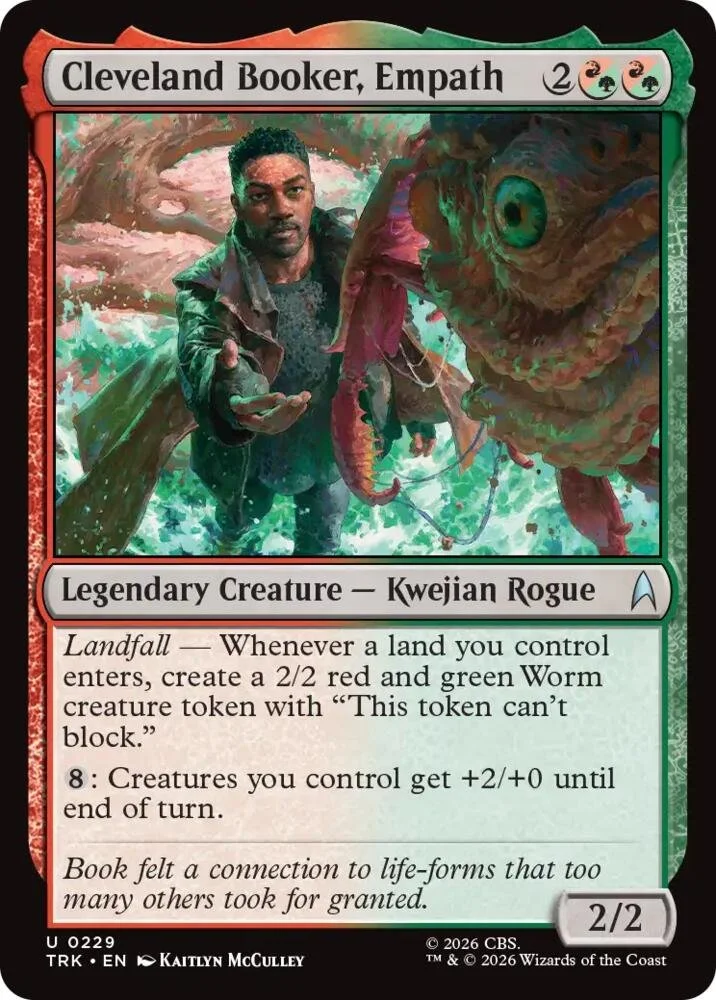
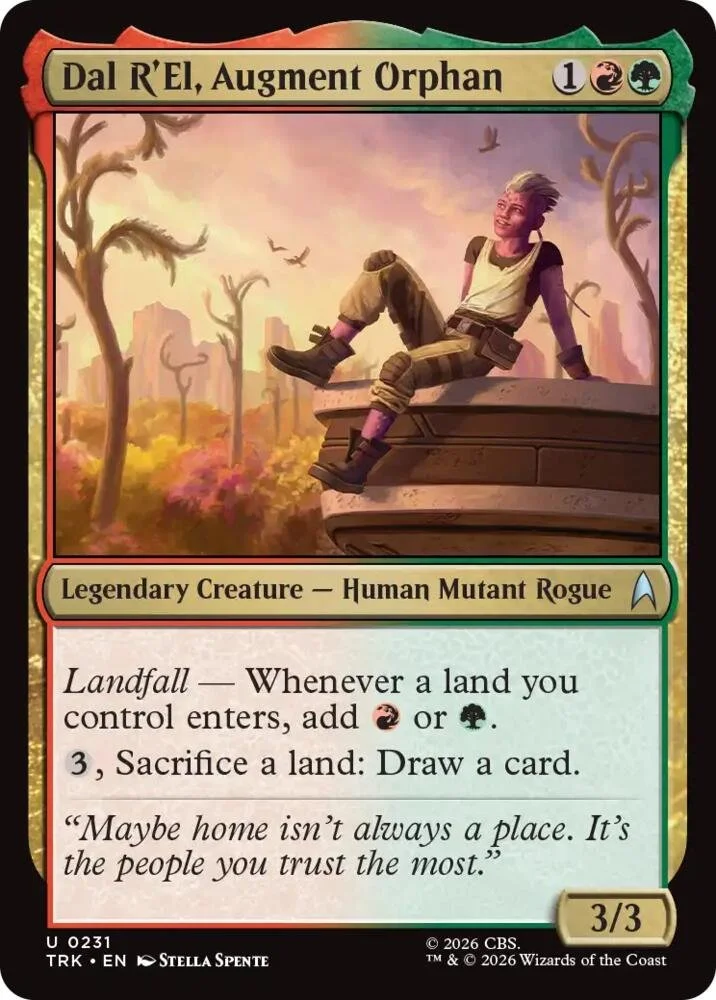
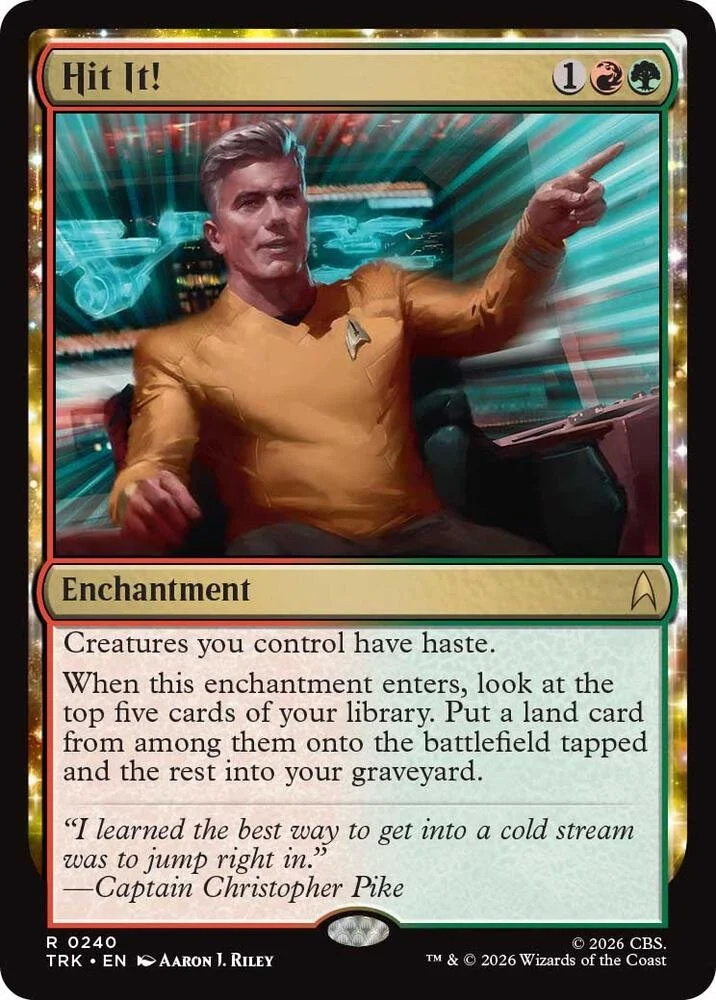
Cleveland Booker, Empath: A card I’d look for when building around Landfall. Get your payoff onto the battlefield before spending your extra land effects.
Dal R’El, Augment Orphan: Converts each land entry into red or green mana. Plan your land drops around what you can cast with that mana in the same phase.
Hit It!: Puts lands from the top of your library onto the battlefield. This is the kind of spell I want to cast with several Landfall abilities already on the board.
Best Common Cards for Away Team Landfall
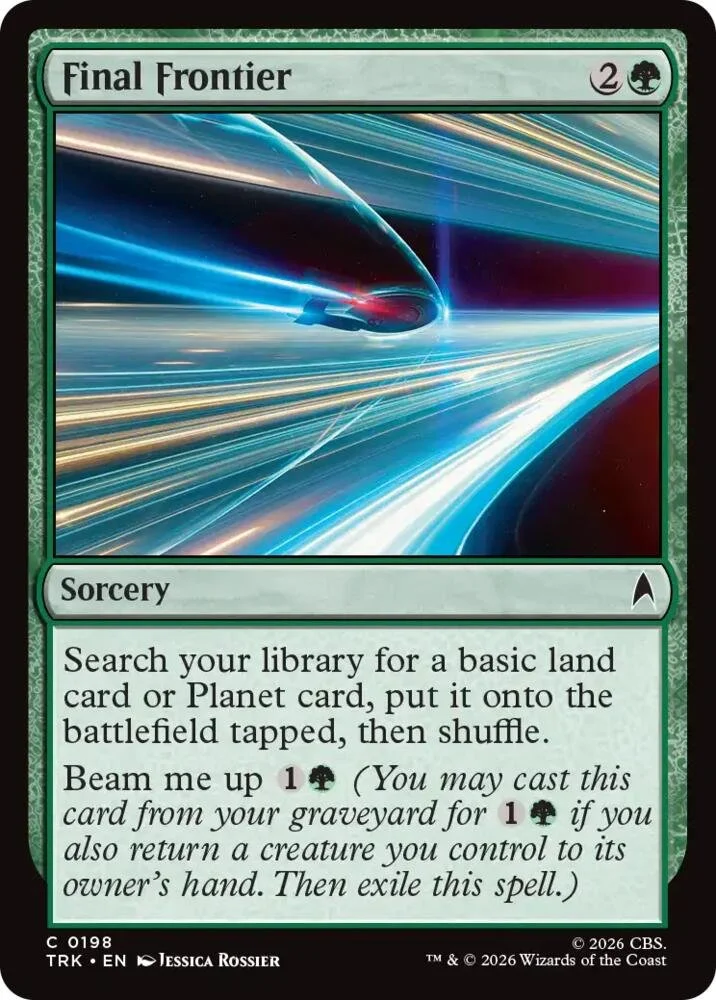
Final Frontier: Helps you find basic lands and keep the land drops coming.
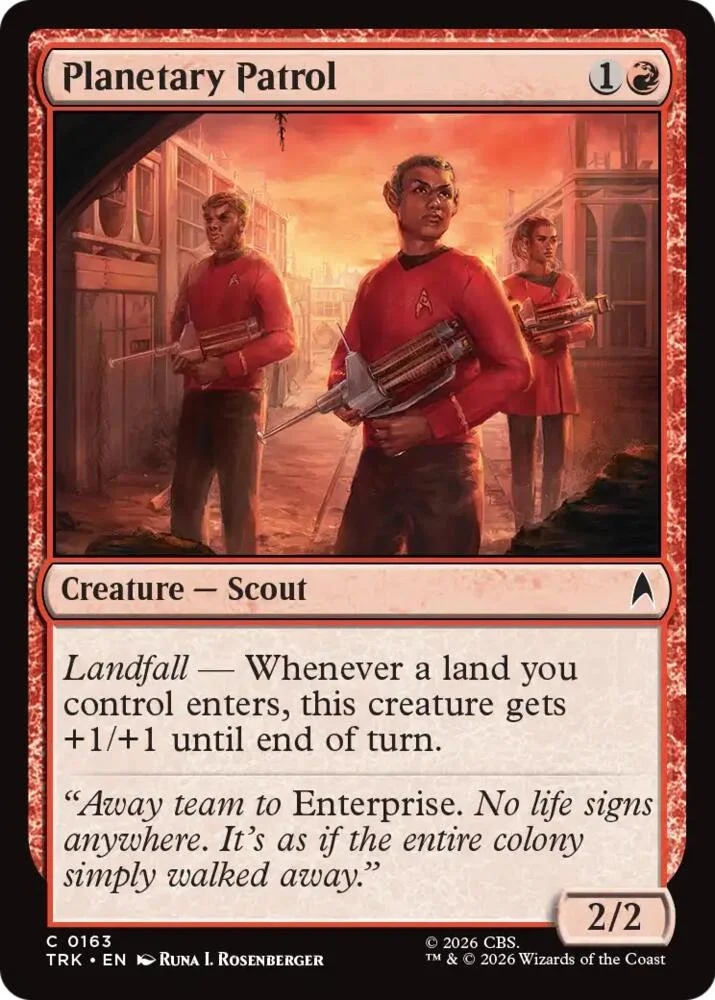
Planetary Patrol: A two-mana 2/2 that gets +1/+1 for the turn with each land entry. It’s exactly the sort of early attacker that makes an extra land drop worth setting up.
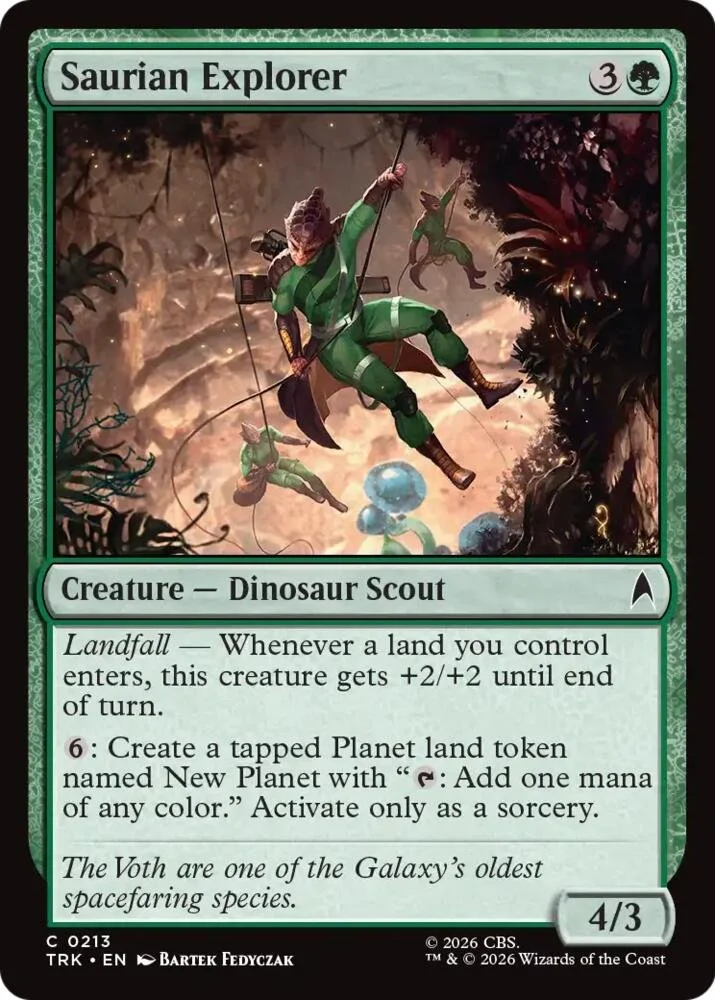
Saurian Explorer: A creature to look for when you want your land package to contribute to the board.
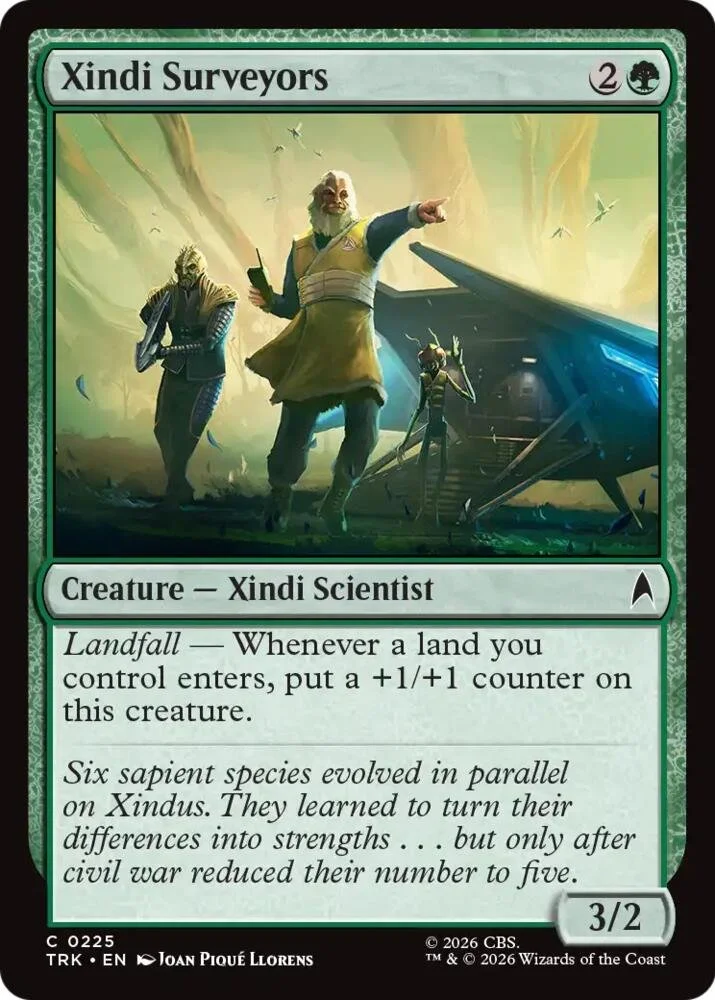
Xindi Surveyors: Helps round out your creature count in a deck built around land entries.
Best Uncommon Cards for Away Team Landfall
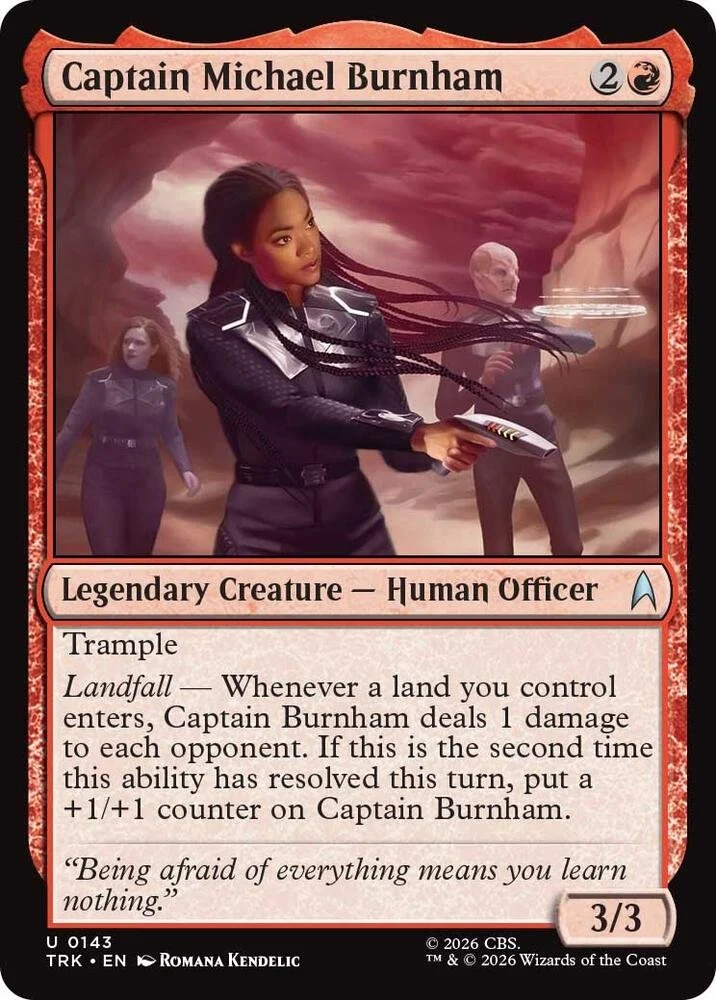

Captain Michael Burnham: A land-focused payoff I’d consider once the deck can reliably keep making land drops.
Erica Ortegas, Plucky Pilot: Can put a land onto the battlefield and return a land to hand. You can reuse the returned land later or use your normal land drop that turn if you still have it.
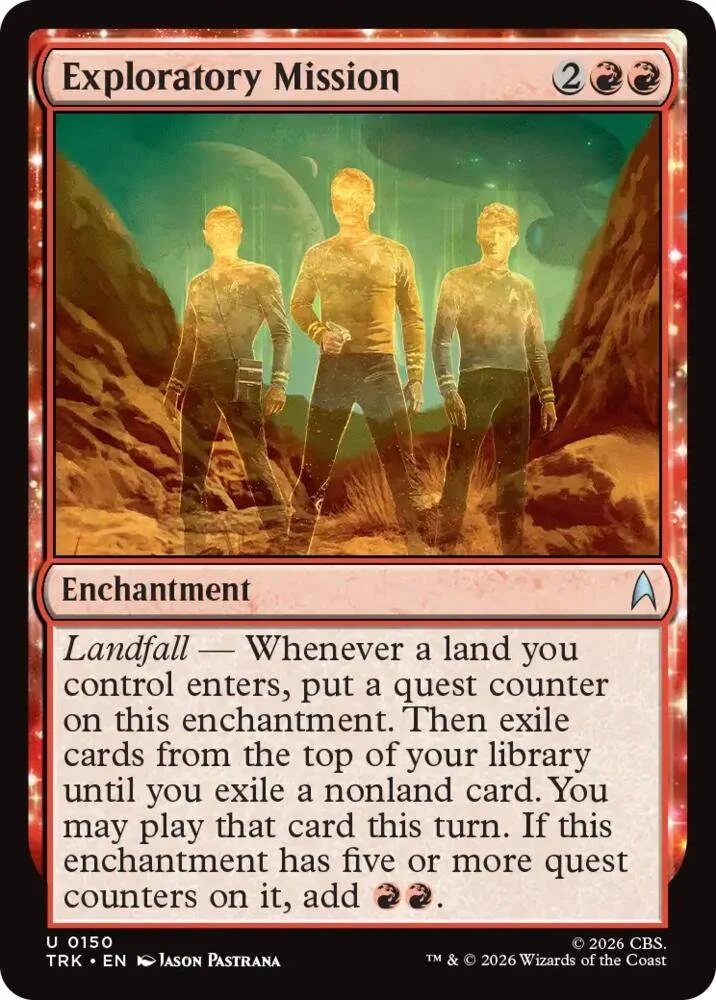
Exploratory Mission: A support card for the deck that wants to keep exploring after the first few turns.
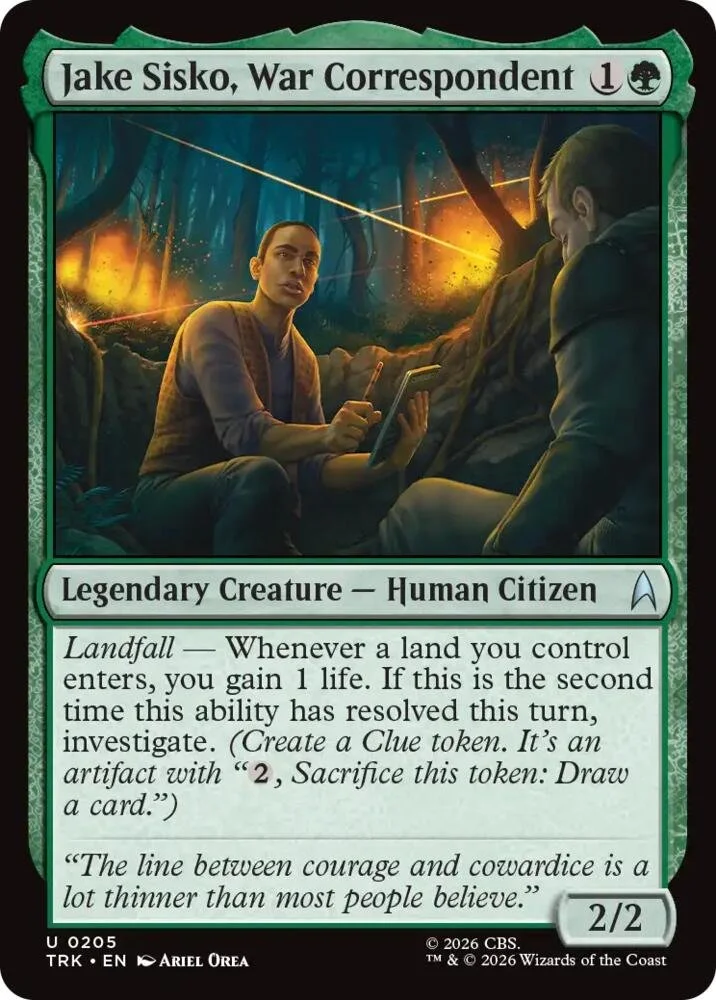
Jake Sisko, War Correspondent: Gains you a life for each land entry and gives you a Clue on the second Landfall resolution each turn. That gives your extra land effects something to do when attacking isn’t an option.
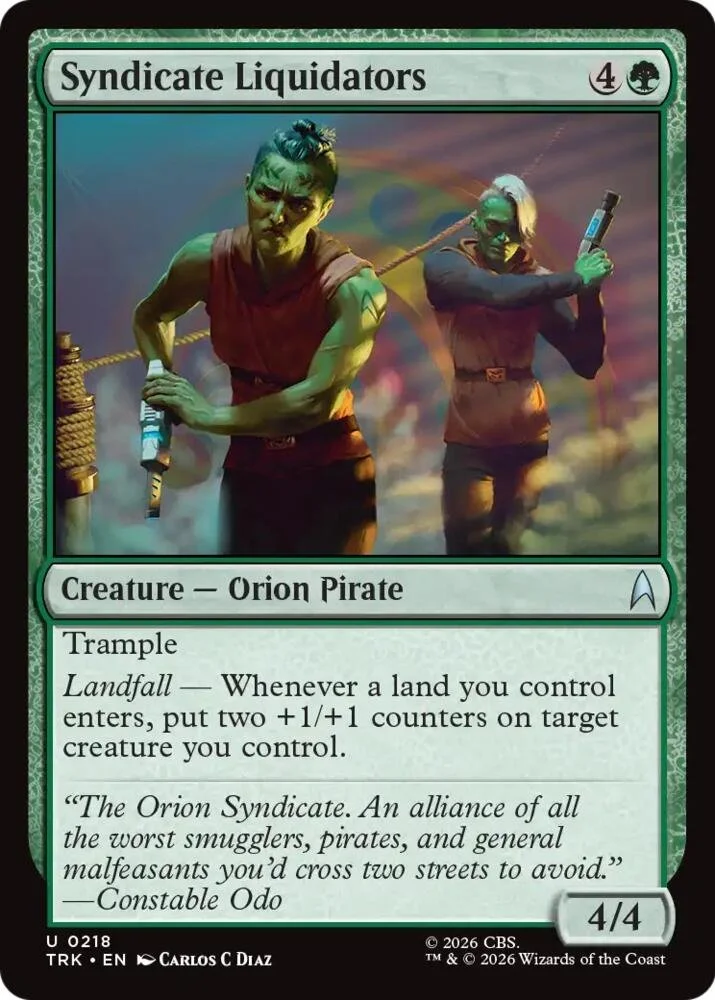
Syndicate Liquidators: A pick for builds that can afford to sacrifice lands. Check how much mana you’ll have left after the sacrifice before committing.
Best Rare and Mythic Cards for Away Team Landfall
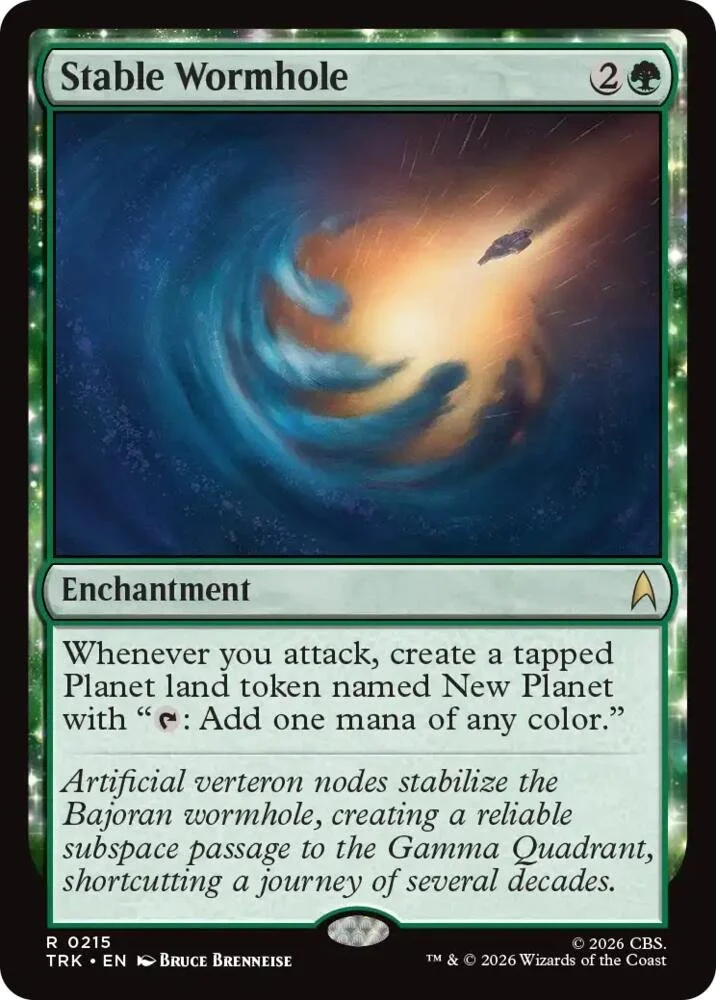
Stable Wormhole: A land worth looking at when the mana base can support it. It also adds a distinct name if you have Strange New Worlds payoffs.
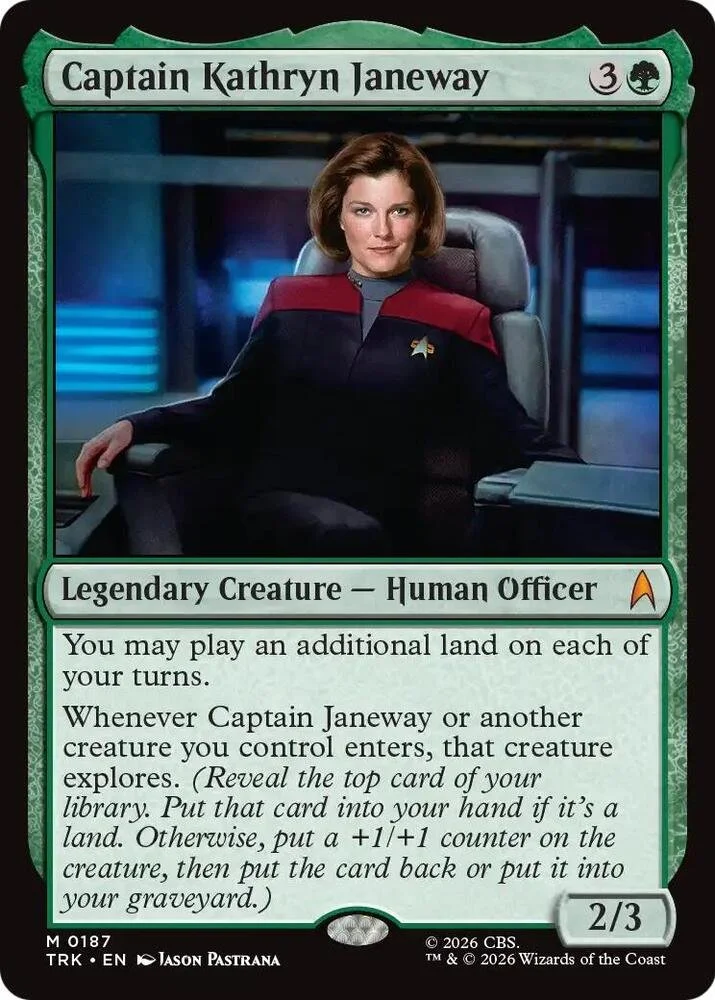
Captain Kathryn Janeway: Gives you an extra land drop each turn and lets your creatures explore as they enter, including Janeway herself. The creatures can find lands to play or pick up counters for your next attack.
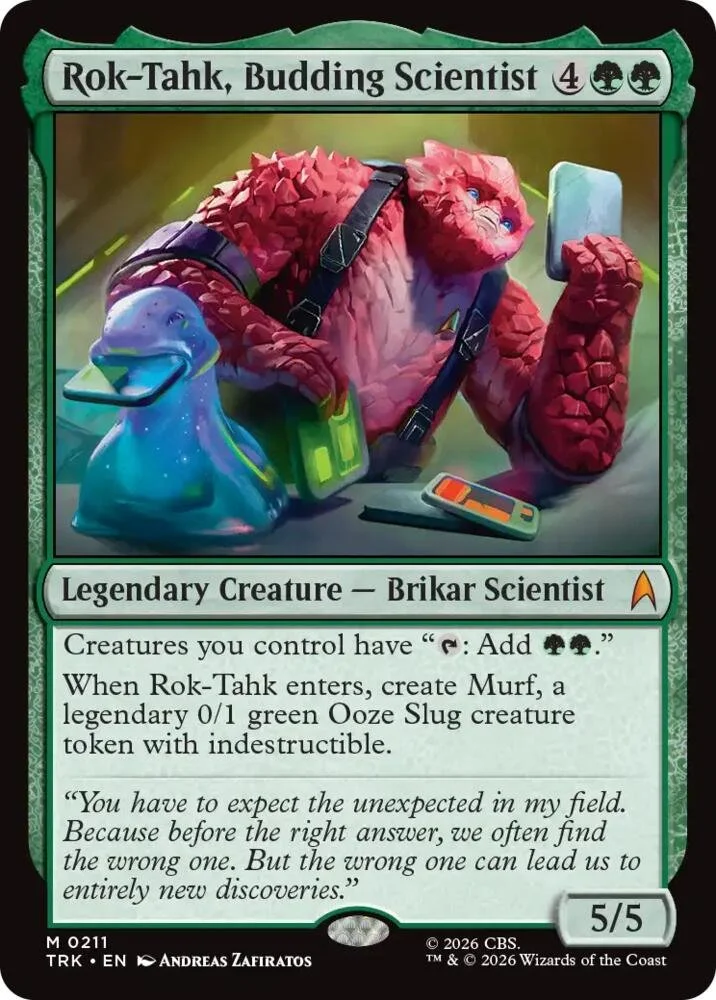
Rok-Tahk, Budding Scientist: A multicolor payoff worth building around when your mana and land package can support it.
Selesnya / Green-White Doctors & Counters
Green-white is going tall this time. Get a counter onto a creature early, then let the Doctors turn that first bit of progress into a board your opponent has to take seriously.
Gameplan
Play creatures on curve and start distributing +1/+1 counters. You can stack them on one threat when you have a clear attack, but spreading the first few counters gives cards like The Doctor, EMH more creatures to grow and makes a single removal spell less painful.
Draft Priorities
The Doctors have a lot more to work with if you’ve already put a few counters on the board. I’d start with cheap creatures and ways to place that first counter, then look for cards that make the whole team bigger.
Cheap creatures and spells that place the first counter.
Payoffs that grow multiple creatures or improve the counters you place.
Protection and ways to get a large creature through blockers.
Win Condition
Build two or three attackers that demand real blocks. When an opponent has to commit multiple creatures to one attacker, a protection spell or combat trick can leave them with a much smaller board for the next attack.
Key Multicolor Cards
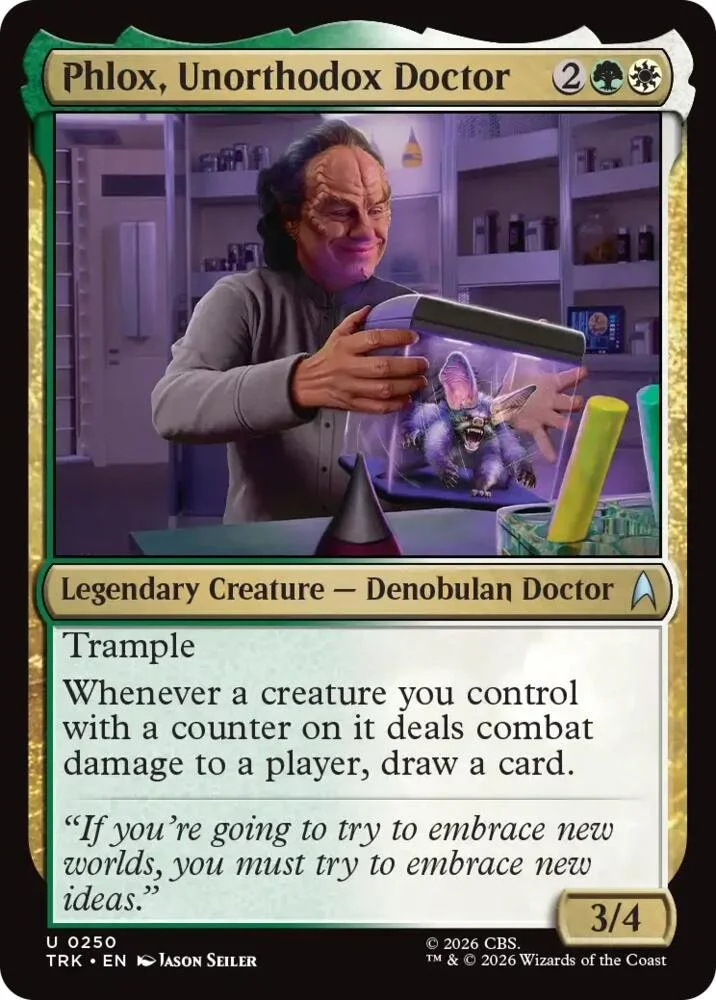

Phlox, Unorthodox Doctor: A signpost I’d look for once I have enough creatures and counter support to make green-white come together.
The Doctor, EMH: Puts a +1/+1 counter on a creature, then adds one to each of your creatures that already has a counter. The first target can benefit from both parts, so you can grow your best attacker while also improving the rest of the board.
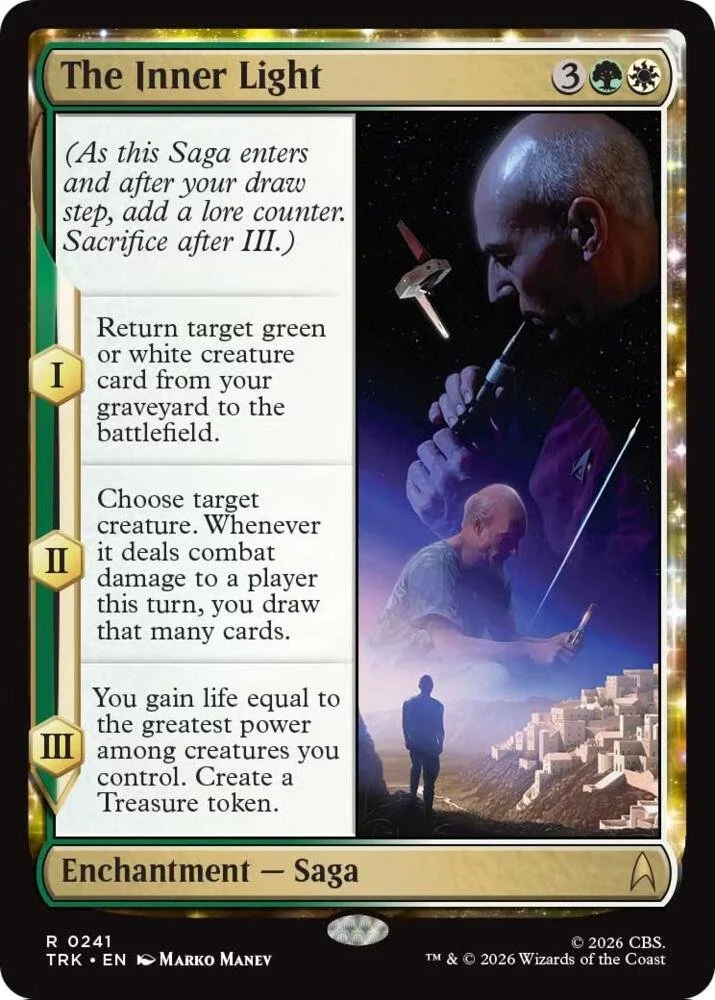
The Inner Light: A multicolor option for a deck that can keep creatures on the battlefield and make use of its counter support.
Best Common Cards for Doctors & Counters
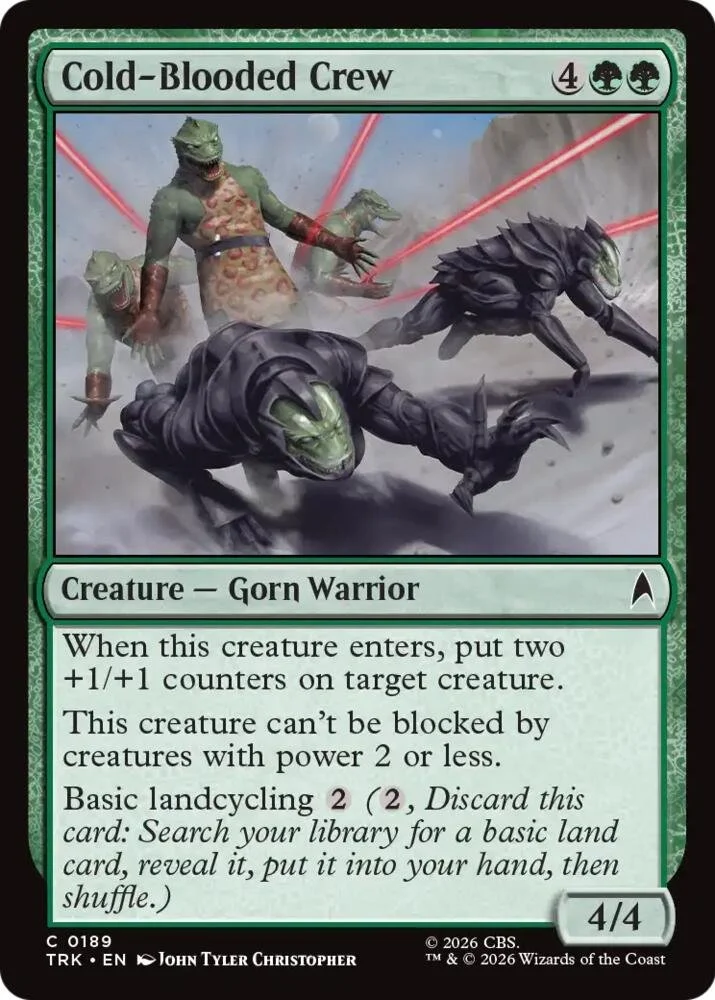

Cold-Blooded Crew: Helps fill out the creature curve and gives your counter effects another place to go.
Dominion Supervisor: A common I’d look at when I need more creatures to support the counter plan.
Emergency Medical Hologram: An early creature for the Doctors deck that helps you get on board before your bigger payoffs arrive.
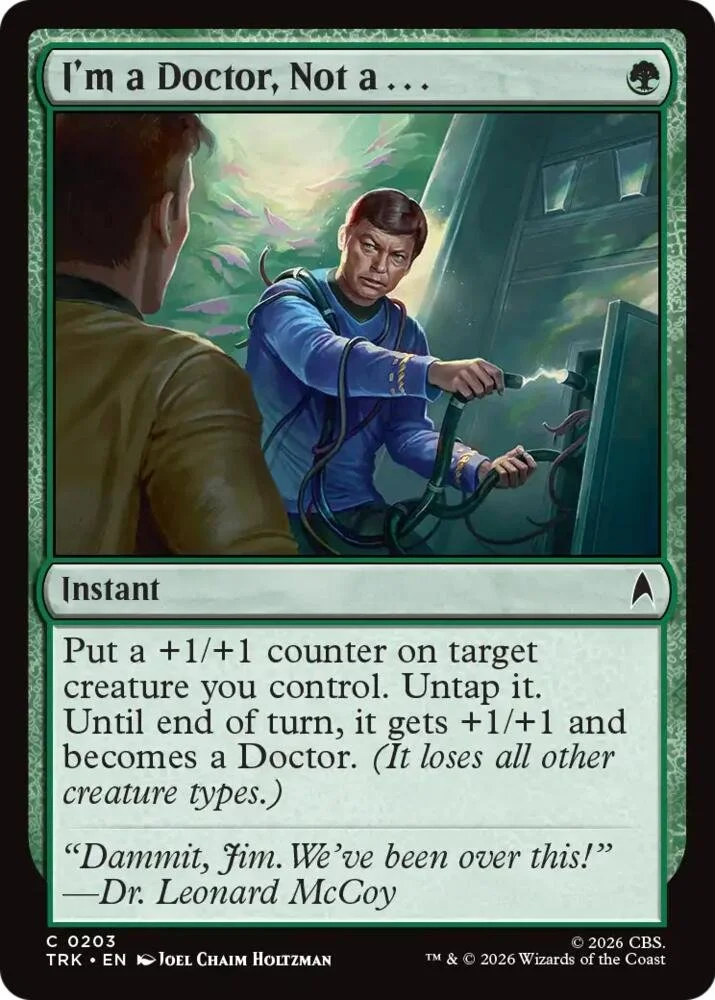
I’m a Doctor, Not a…: A support pick for the counter deck once you have enough creatures to make good use of it.
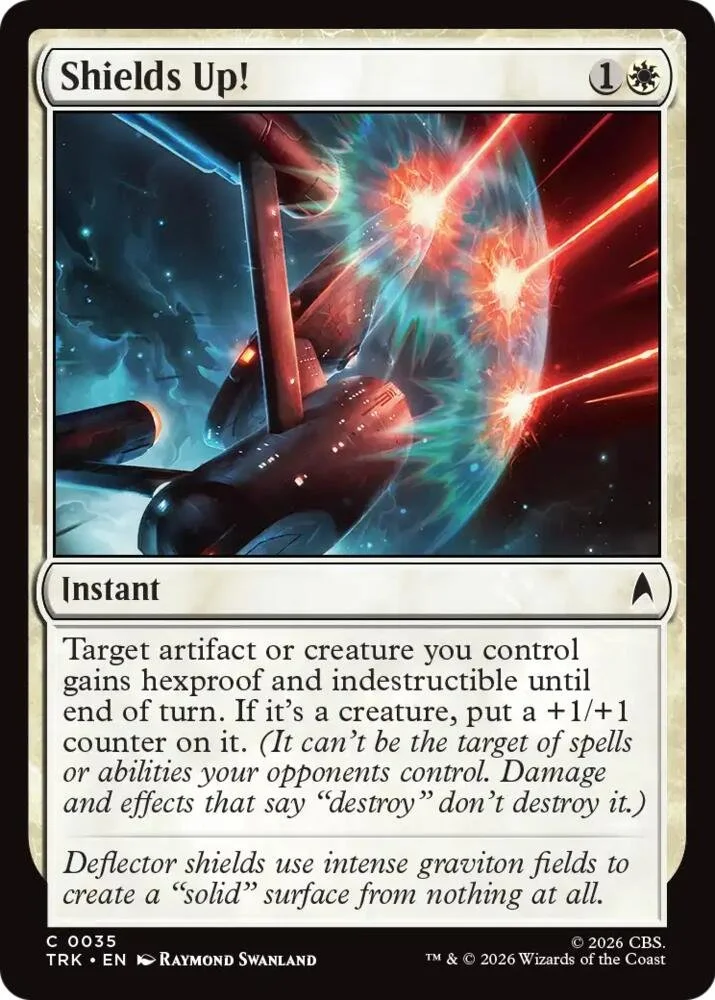
Shields Up!: Gives you a way to protect your investment when combat or removal threatens the creature carrying your counters.
Best Uncommon Cards for Doctors & Counters
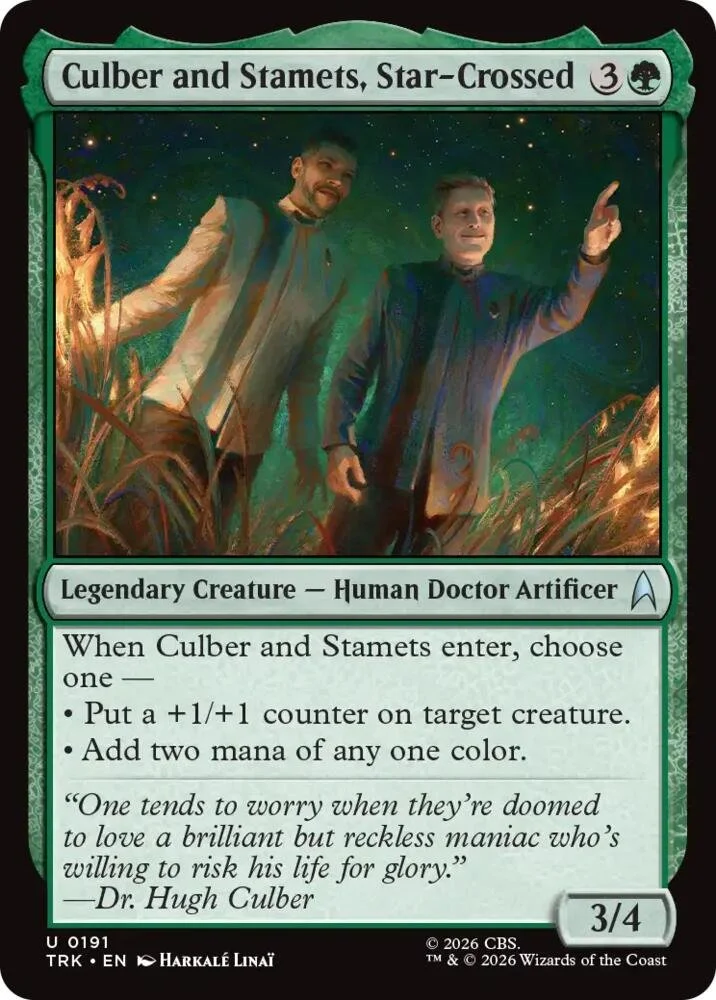

Culber and Stamets, Star-Crossed: Choose a +1/+1 counter or two mana of one color when they enter. Take the counter when it changes the board, or use the mana when it lets you fit another spell into the turn.
Dr. McCoy, Surly Surgeon: A Doctor I’d look at when I have enough creatures to make counter support worth a pick.
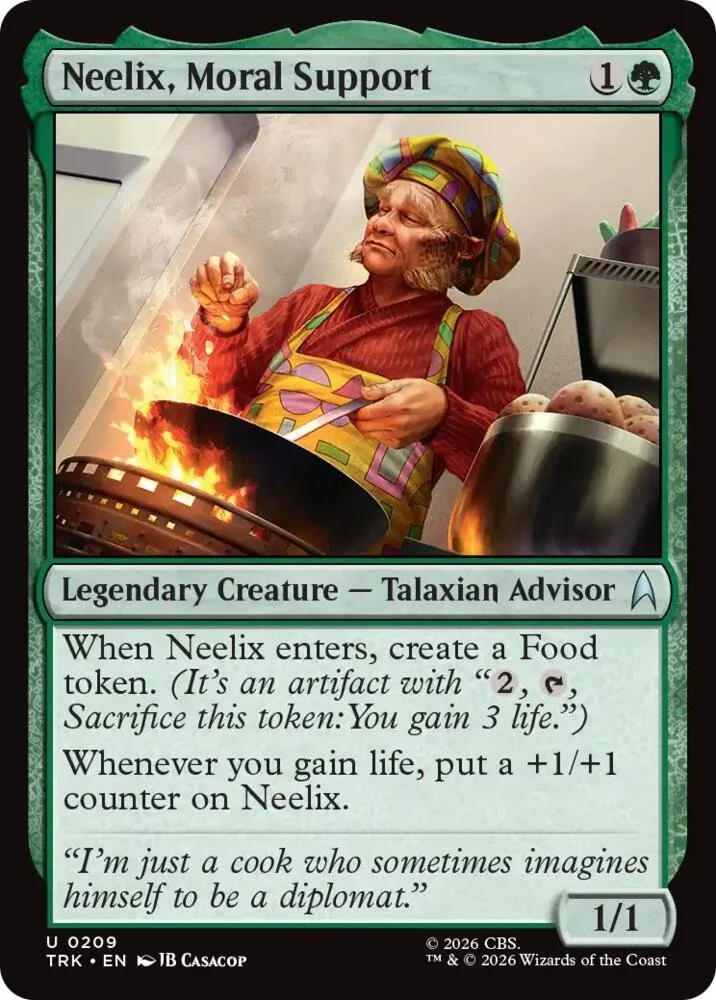
Neelix, Moral Support: Brings a Food token and grows whenever you gain life. The Food gives you a way to start growing him even if you haven’t drawn another lifegain card.
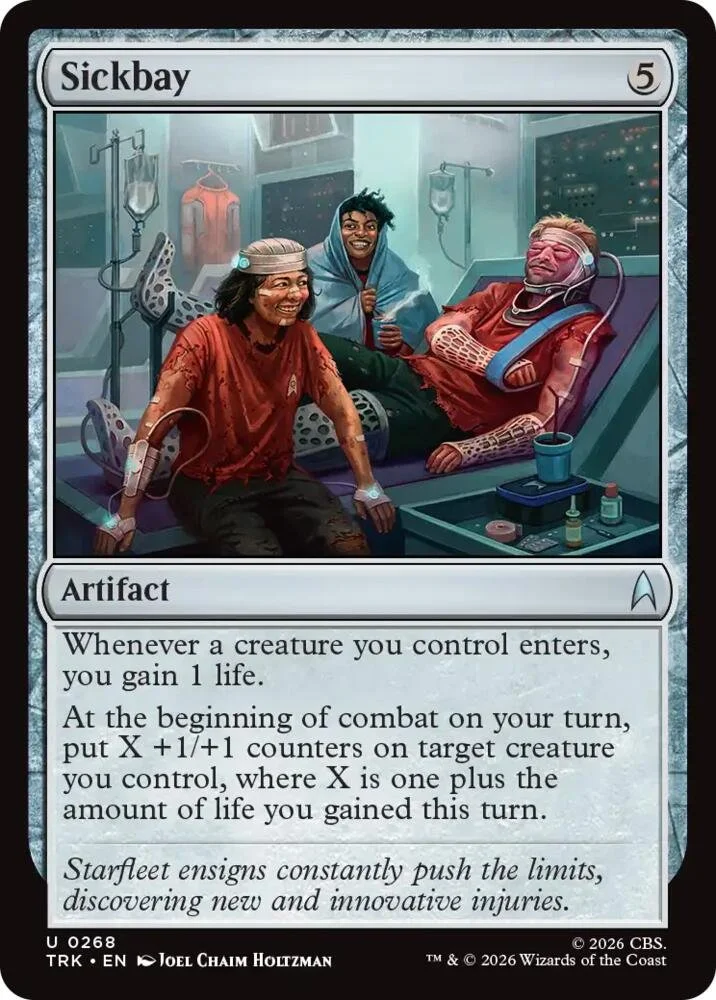
Sickbay: Turns creature entries into life gain and can build up an attacker at the start of combat. It’s an option when your deck can keep supplying creatures.
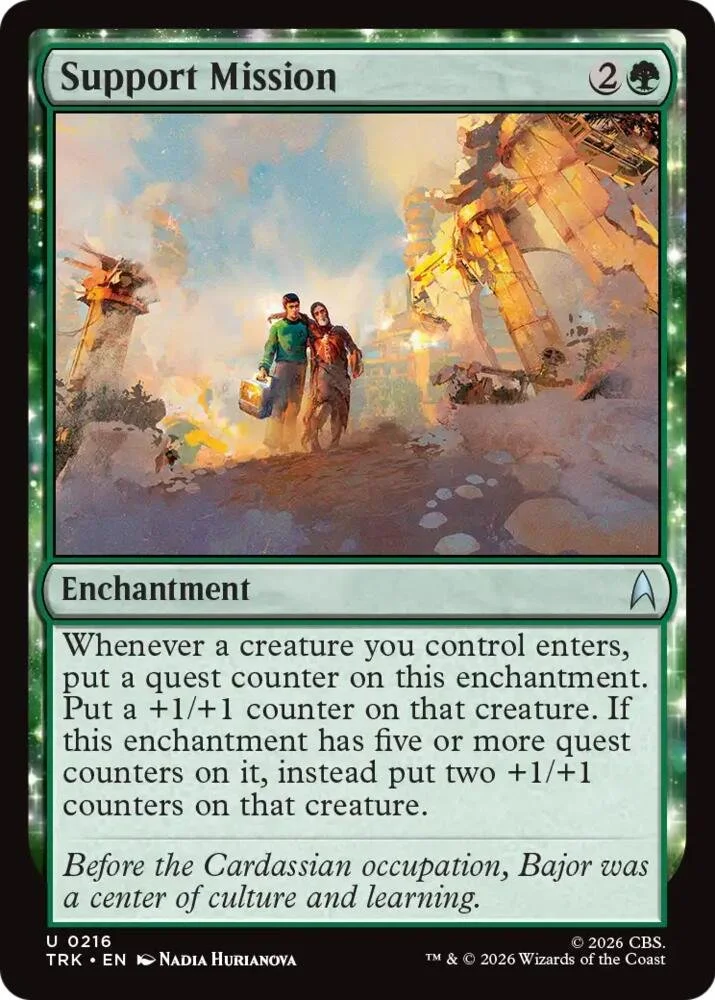
Support Mission: Puts a +1/+1 counter on each creature as it enters under your control. Once the Mission gets to five quest counters, those new creatures start getting two counters instead.
Best Rare and Mythic Cards for Doctors & Counters
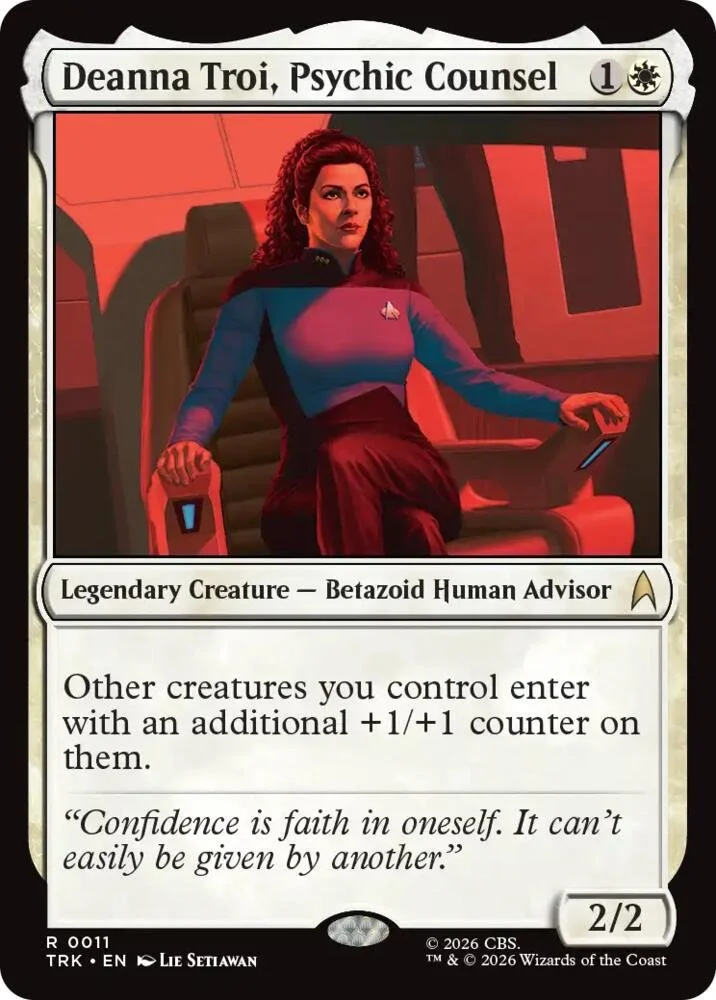


Deanna Troi, Psychic Counsel: A higher-rarity option I’d consider for a green-white pool with enough creatures to support its gameplan.
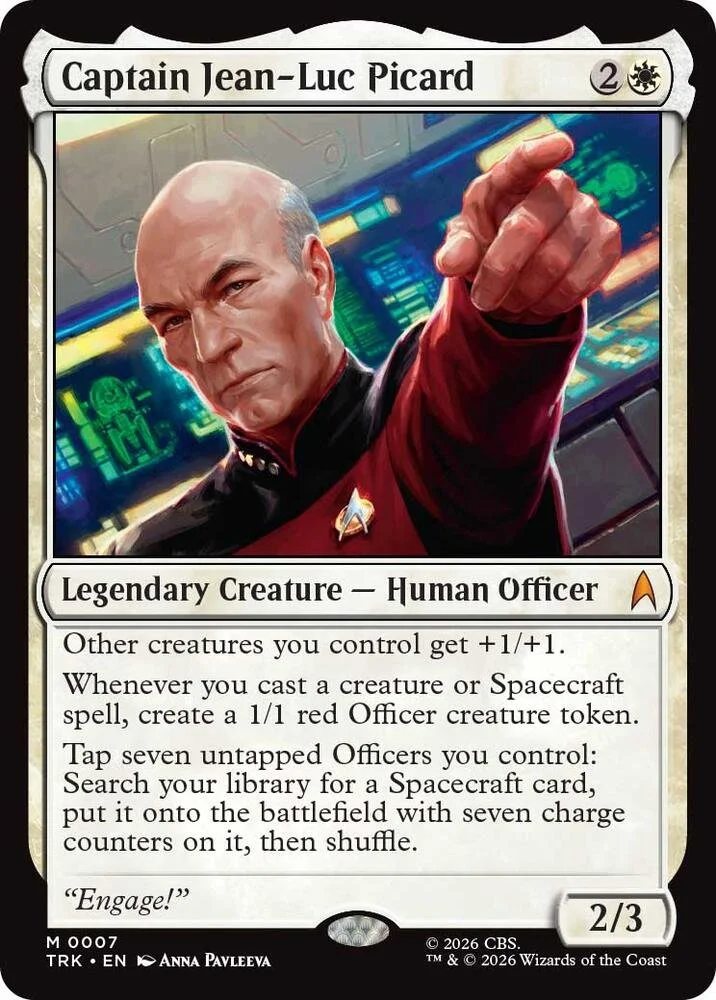
Captain Jean-Luc Picard: I couldn’t get through the Star Trek guide without a moment for Picard. Rest in peace, Sir Patrick Stewart. You’ll be greatly missed.
Dr. Beverly Crusher: A Doctor I’d be happy to look at when putting together the higher end of the counter deck.
Dr. Joseph M’Benga: Doubles the counters you put on your creatures and gives your other creatures with counters hexproof. I’d spread a few counters around so more of the board gets that protection.
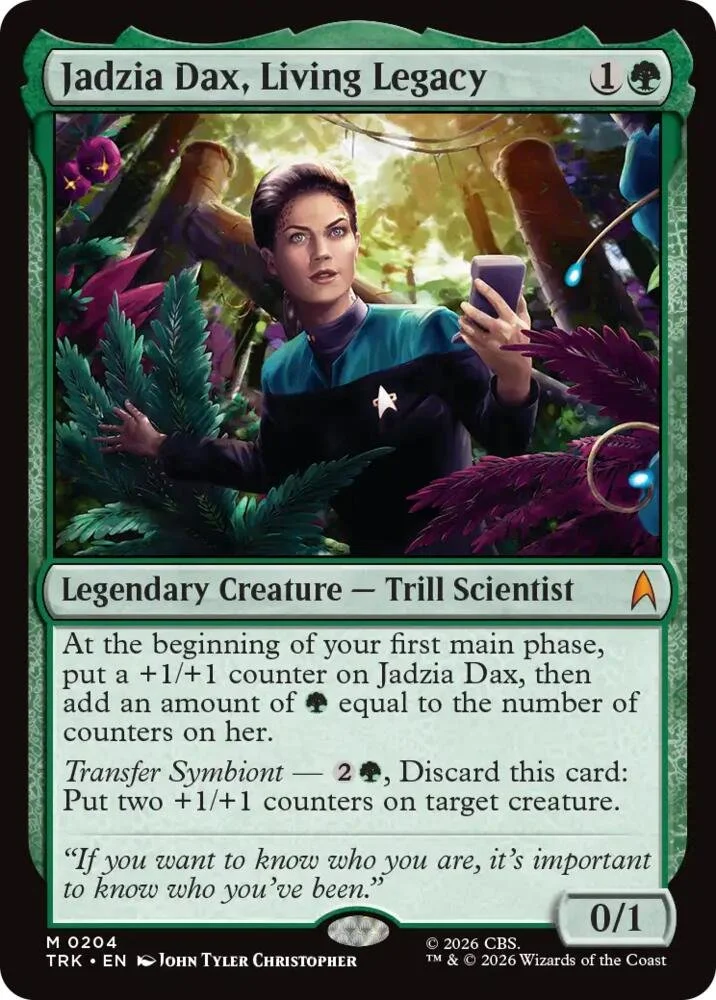
Jadzia Dax, Living Legacy: Grows at the start of your first main phase and produces green mana based on her counters. Extra counters can make her both a bigger attacker and a better source of mana.
Orzhov / White-Black Artifact Creatures
It turns out resistance is a lot harder when the Borg brought friends. Orzhov wants artifact creatures early, then uses buffs and assimilation to make that board harder to contain.
Gameplan
Play cheap artifact creatures, then build around payoffs that care about how many you have. Assimilate can add another body to the board and make it an artifact creature at the same time. Watch your type lines when building the deck. A regular artifact and a regular creature each do part of the job, but an artifact creature is what your strongest payoffs are asking for.
Draft Priorities
The Borg Cube is the flashy pick, but the little Drones are what make me want to draft this deck. I’m looking for cheap artifact creatures first so my payoffs have a whole Collective to work with when they come down.
Cheap artifact creatures, especially Borg that fit the curve.
Payoffs like Locutus that reward a wide board.
Removal and recursion that help you keep more bodies than your opponent.
Win Condition
Get enough artifact creatures down that a single team buff changes combat across the board. If the game goes long, Borg Cube or a repeatable assimilation effect can give you the last threat you need.
Key Multicolor Cards
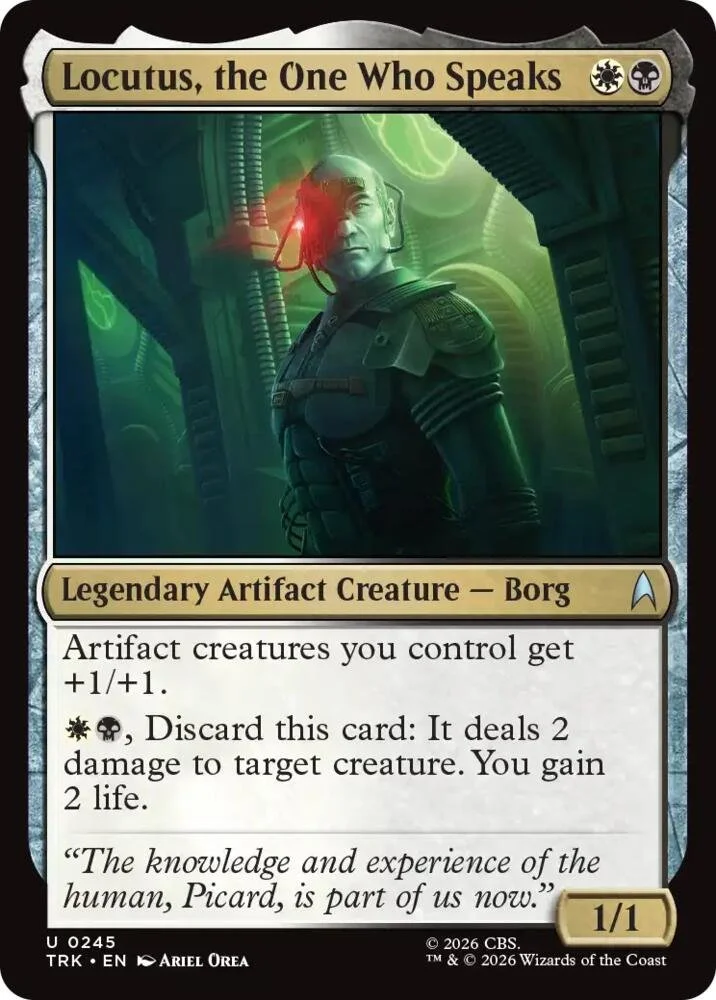
Locutus, the One Who Speaks: Gives your artifact creatures +1/+1. You can also discard him for his damage and life gain ability if there’s a creature you need to deal with right away.
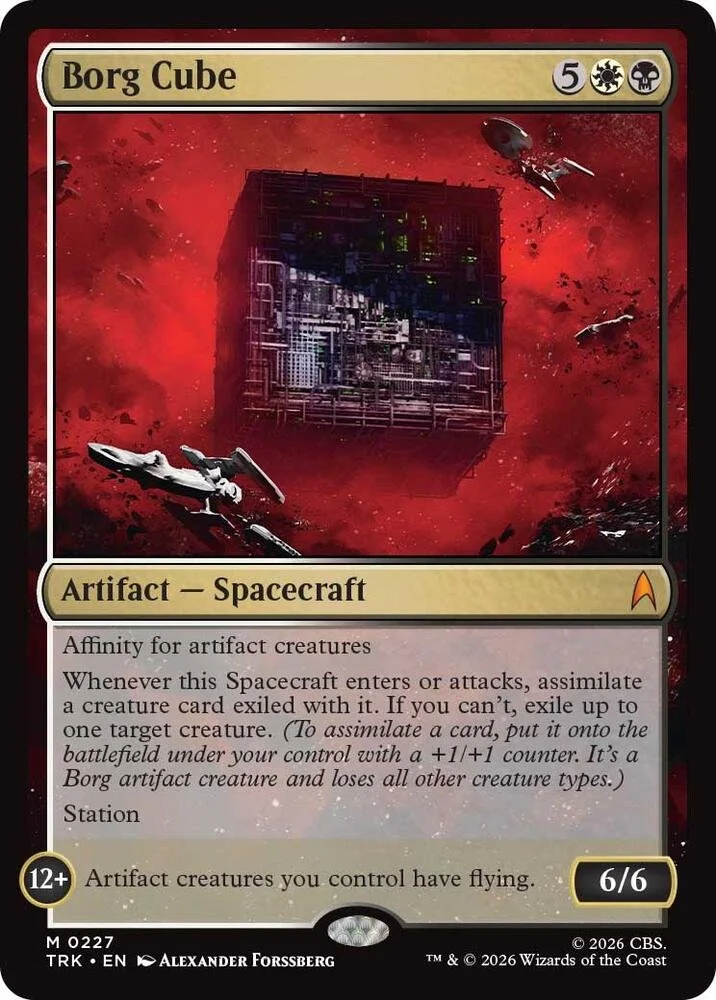
Borg Cube: Costs less for each artifact creature you control. It can exile a creature and later assimilate a card it exiled, and a fully stationed Cube gives your artifact creatures flying.
Best Common Cards for Borg Artifact Creatures
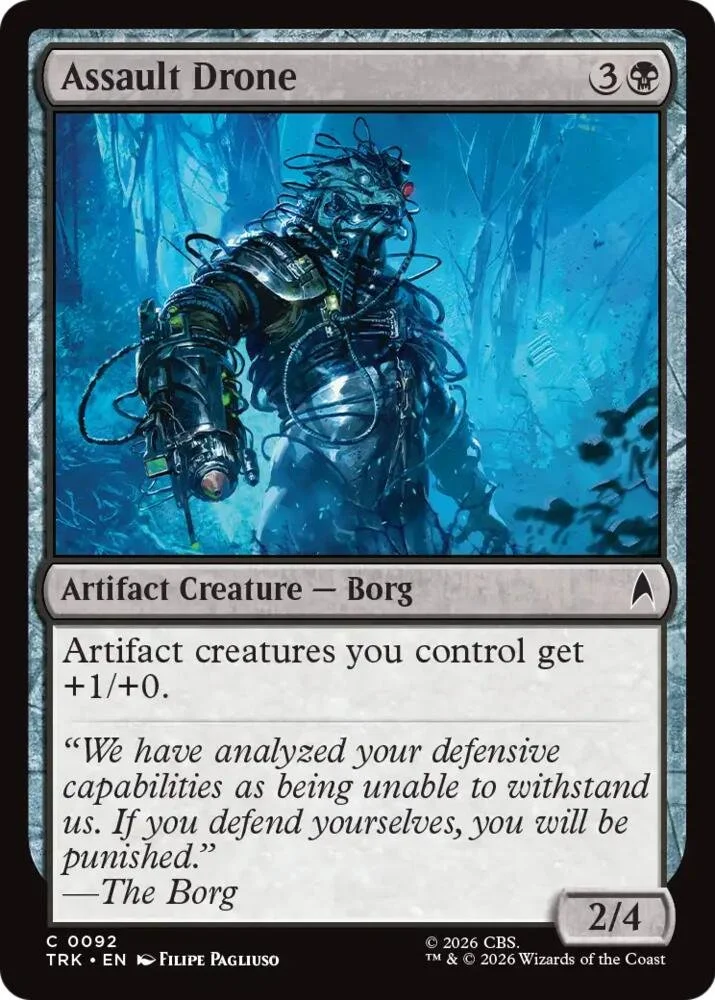
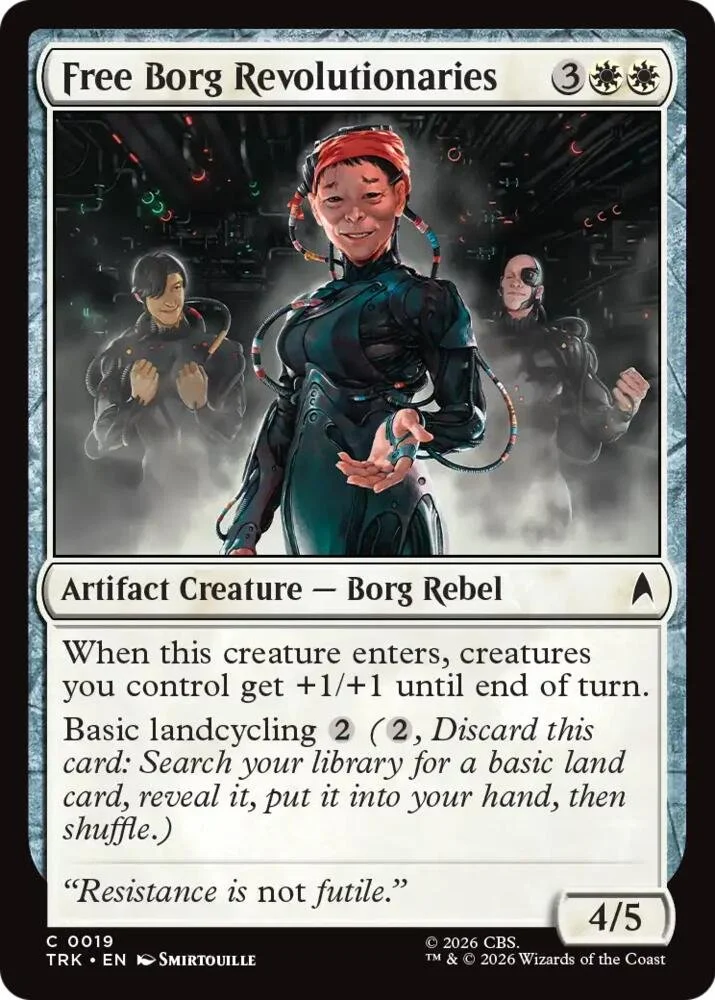
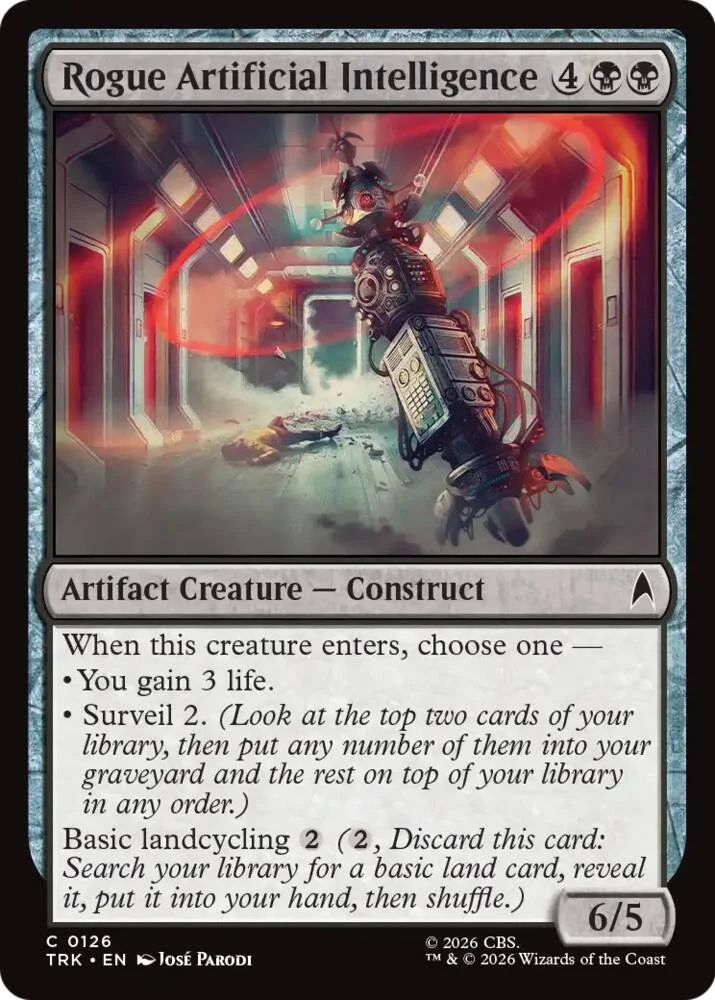
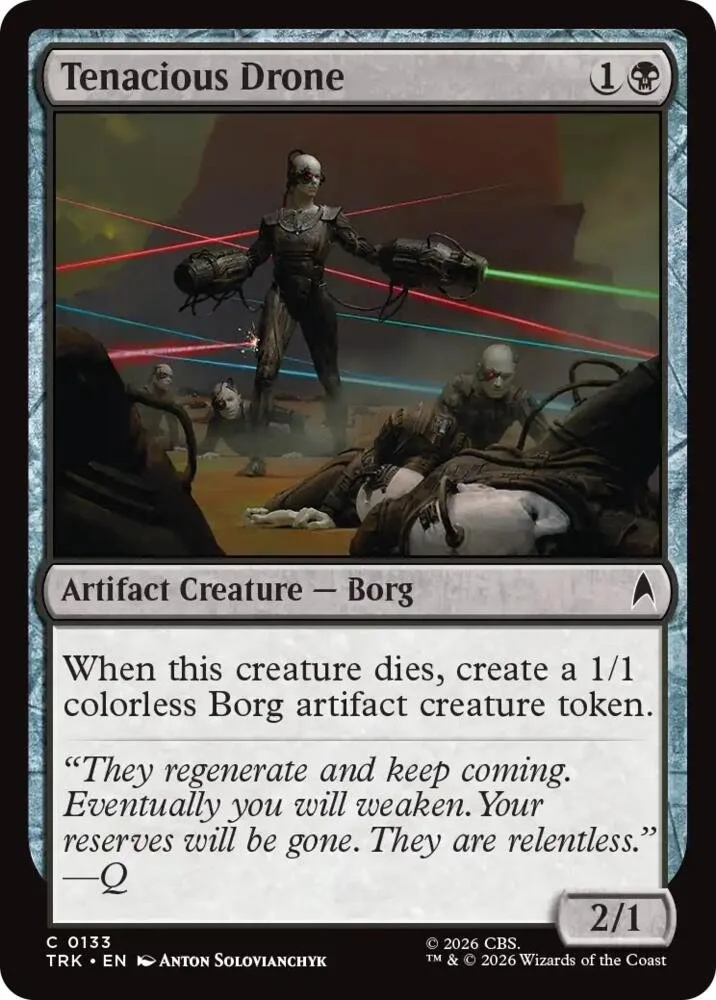
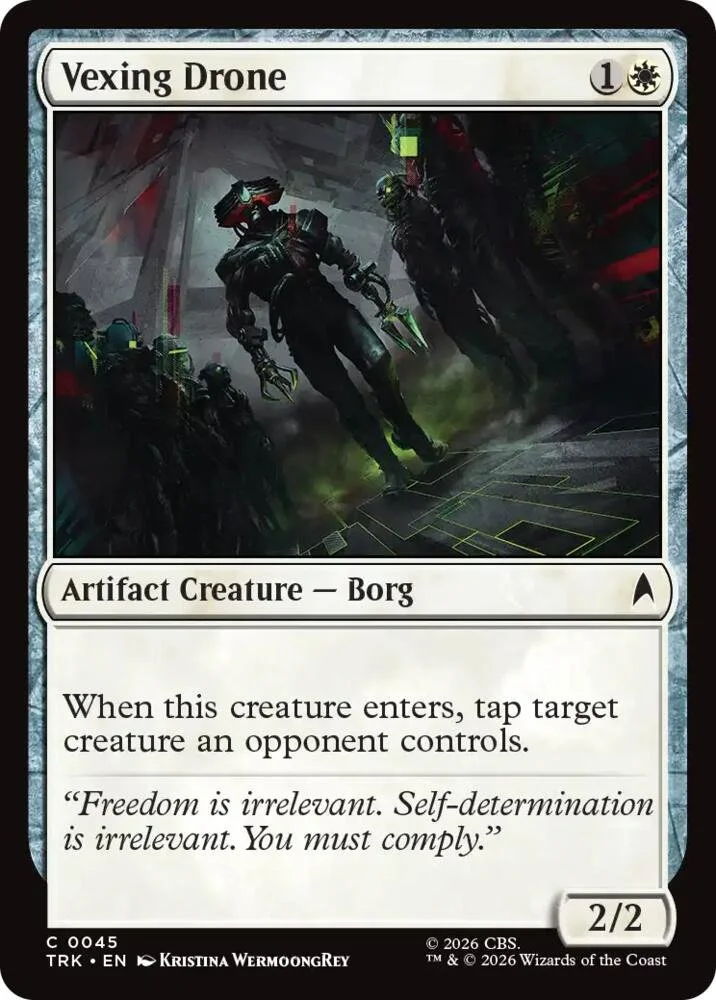
Assault Drone: A creature for the part of the deck that wants to start applying pressure early.
Free Borg Revolutionaries: A card to consider when you need more support for your artifact creature plan.
Rogue Artificial Intelligence: Helps you fill out the artifact side of your creature lineup.
Tenacious Drone: Another Borg body to consider when you need enough artifact creatures to turn on your payoffs consistently.
Vexing Drone: Rounds out your Drone options and gives your artifact creature buffs another recipient.
Best Uncommon Cards for Borg Artifact Creatures
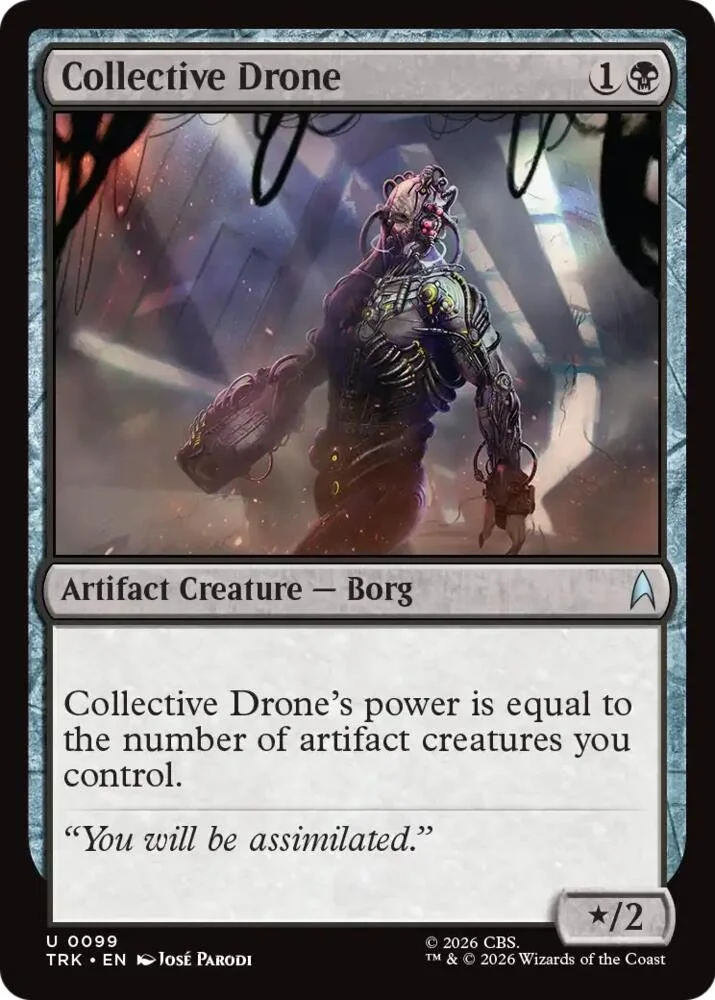
Collective Drone: Its power scales with your artifact creature count, including itself. This is a cheap attacker that gets a lot better when you can add multiple bodies to the board.
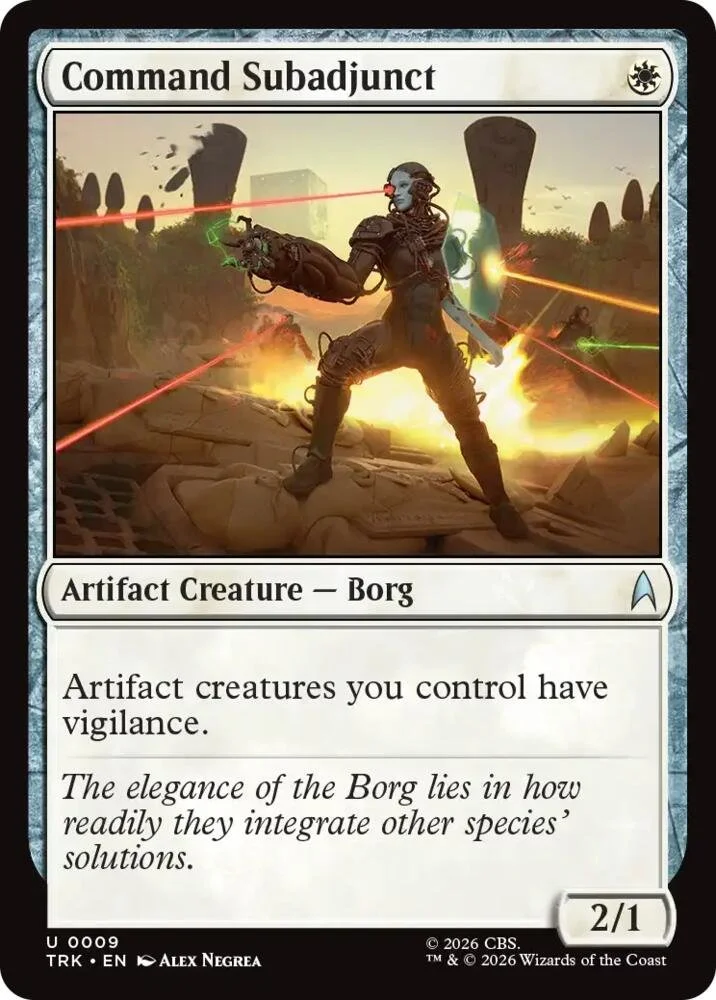
Command Subadjunct: Another piece I’d look at once I have the cheap bodies to support my artifact payoffs.
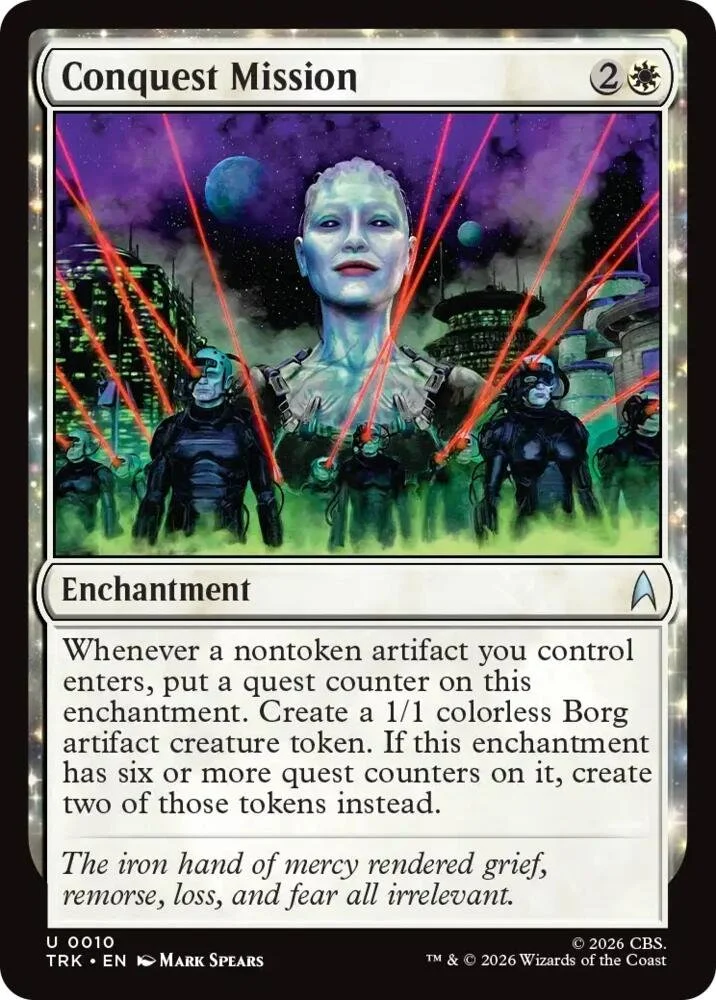
Conquest Mission: A payoff to consider if your artifact creature package is deep enough to support a card dedicated to it.
Hive Mind Coprocessor: A support piece for the Collective. I’d weigh it against how many artifact creatures I still need to draft.
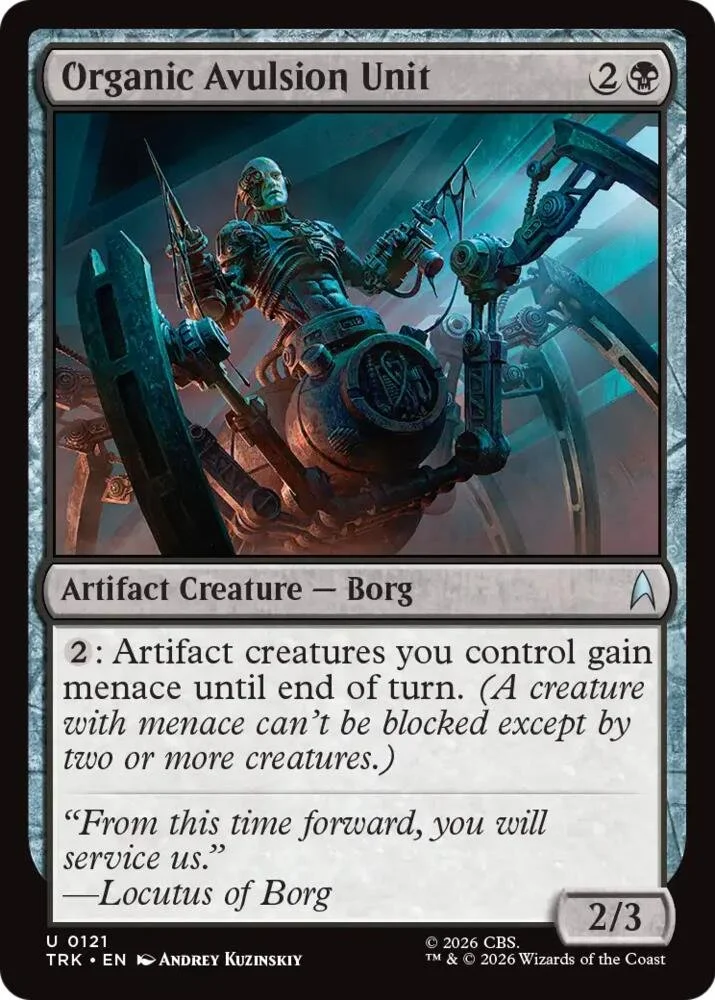
Organic Avulsion Unit: Helps fill out the Borg package and gives you another option as you build around artifact creatures.
Best Rare and Mythic Cards for Borg Artifact Creatures
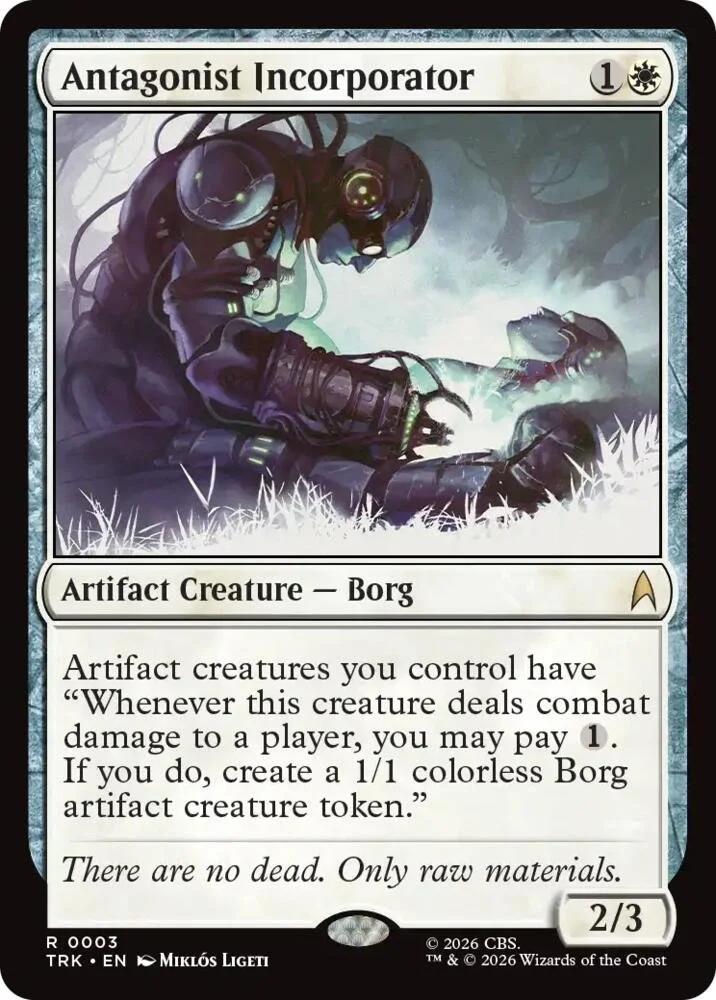
Antagonist Incorporator: A higher-rarity card I’d consider in a pool committed to the artifact creature plan.
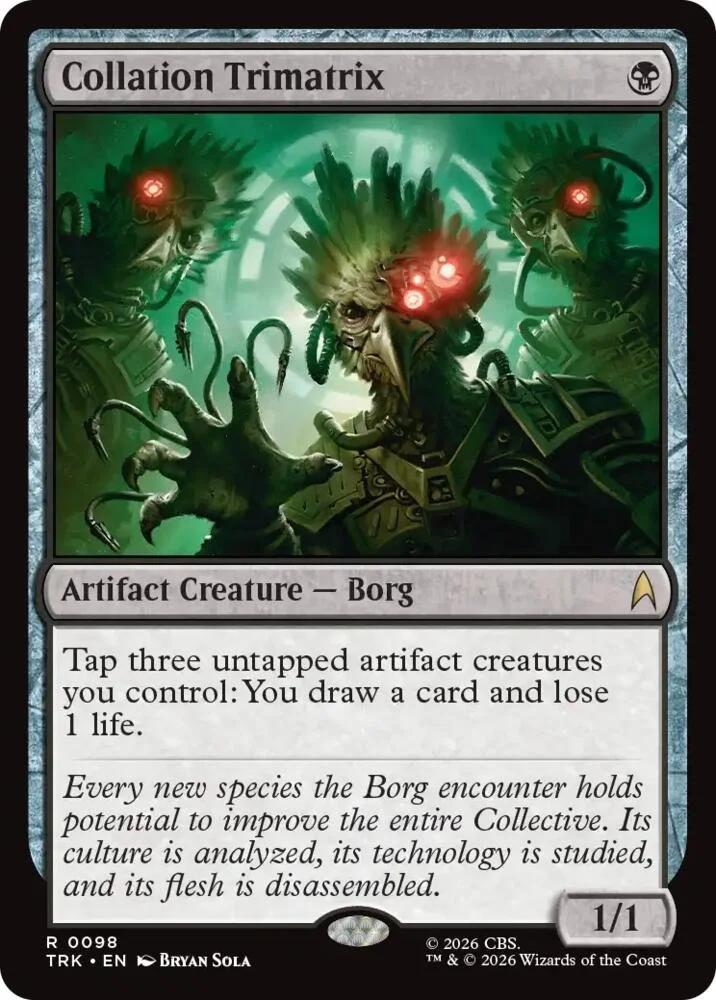
Collation Trimatrix: Lets you tap three untapped artifact creatures to draw a card and lose 1 life. If your opponent has shut down combat, those extra Drones can start drawing you toward a way through.
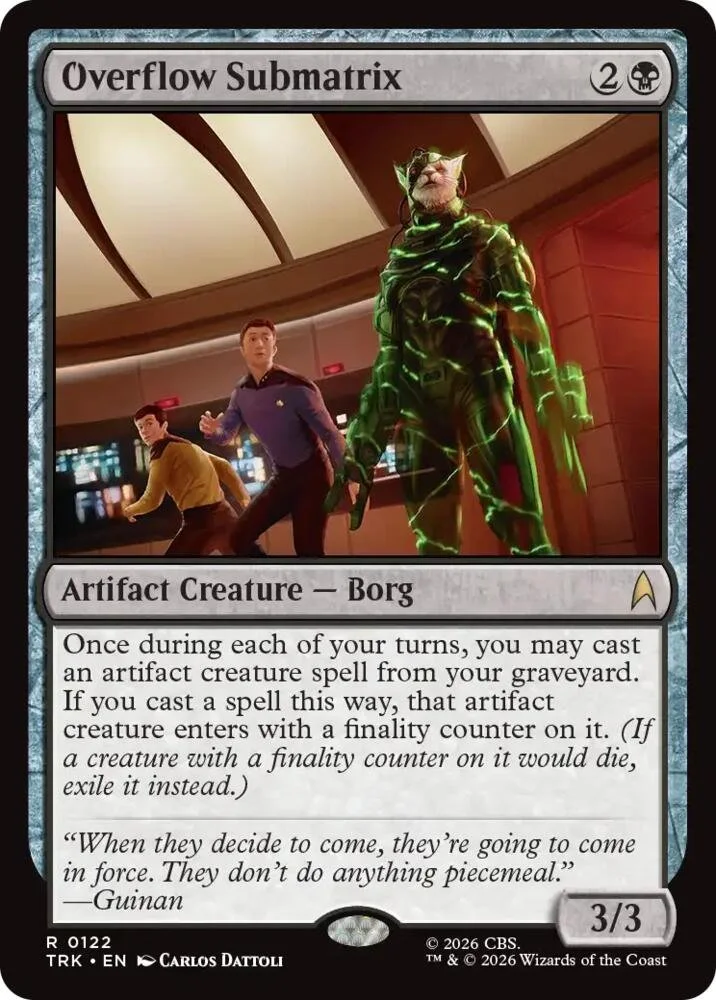
Overflow Submatrix: A pick to consider if your pool has the artifact support to make room for it.
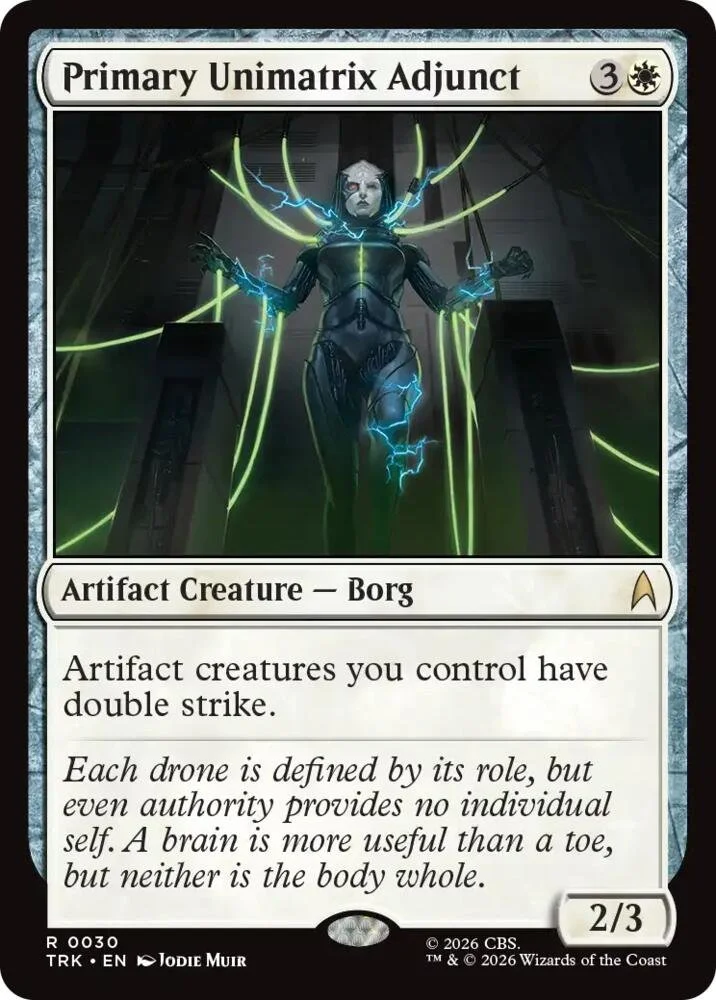
Primary Unimatrix Adjunct: A higher-end Borg option for a deck with enough early plays to reach it comfortably.
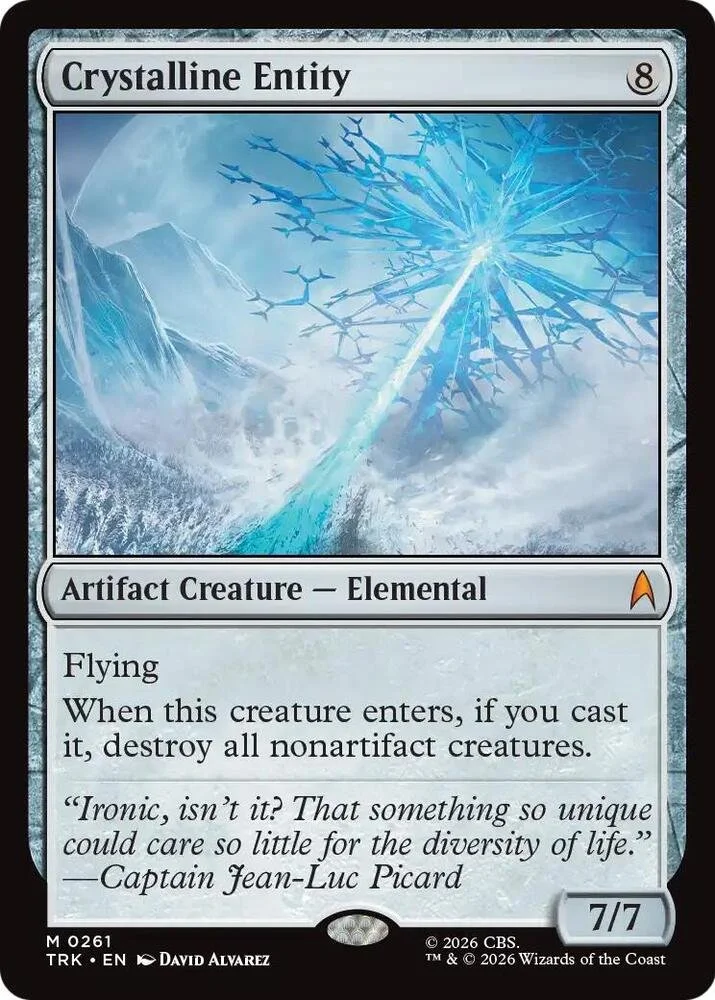
Crystalline Entity: Gives the deck another high-end threat to consider when you need something that can take over a longer game.
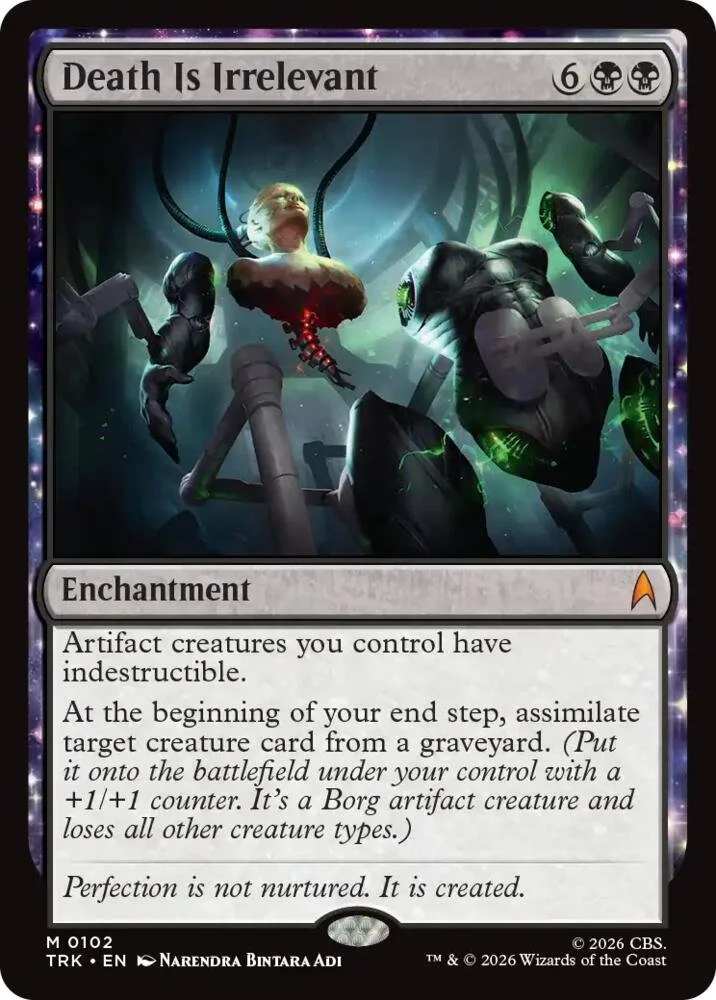
Death Is Irrelevant: Gives your artifact creatures indestructible and assimilates a creature card from a graveyard at each of your end steps. Eight mana is a lot, so I’d save it for a build with a credible plan to get there.
Izzet / Blue-Red Scientists & Noncreatures
Izzet gets a little bit of spellslinger and a little bit of artifacts. An artifact spell can help your Scientist just as much as an instant or sorcery, which makes building the deck a lot more flexible.
Gameplan
Get a creature that rewards you for casting noncreature spells into play, then follow it with cards you wanted to cast anyway. An artifact lets you develop the board, while removal or bounce can clear the way for your next attack. Keep enough creatures in the deck that you’ll have something to take advantage of those openings.
Draft Priorities
It’s easy to get excited about all the spells you can cast here and end up with nobody in the lab. I’d keep an eye on my creature count and pick up cheap noncreature spells that I’d still be happy to cast without a Scientist on the board.
Creatures that reward noncreature casts.
Cheap artifacts, instants, and sorceries that do a job on their own.
A mix of interaction and card advantage so you can keep casting spells after the first few turns.
Win Condition
Turn a turn with two spells into a big attack or a swing in board position. Once you’re ahead, keep your opponent’s best blocker off the table and make them answer the threats you’re already growing.
Key Multicolor Cards
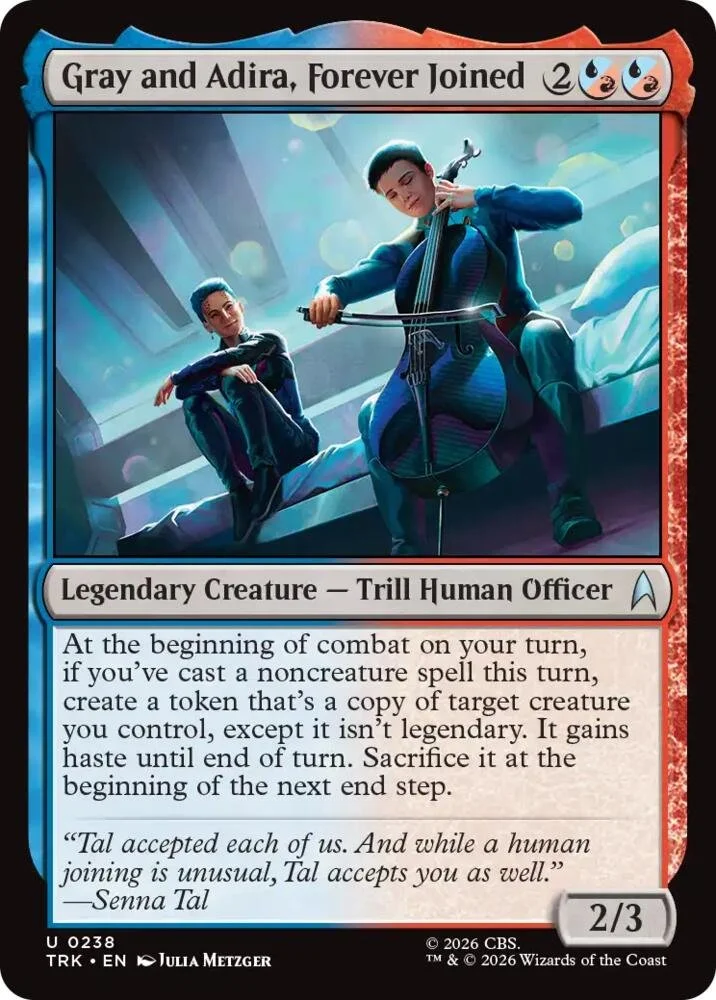

Gray and Adira, Forever Joined: Cast a noncreature spell before combat and they can make a temporary hasty copy of one of your creatures. Copy something with a useful enters ability if you can get value before the token goes away.
Spock, Always Your Friend: A signpost to look for when your deck has enough noncreature spells to support its Scientists.
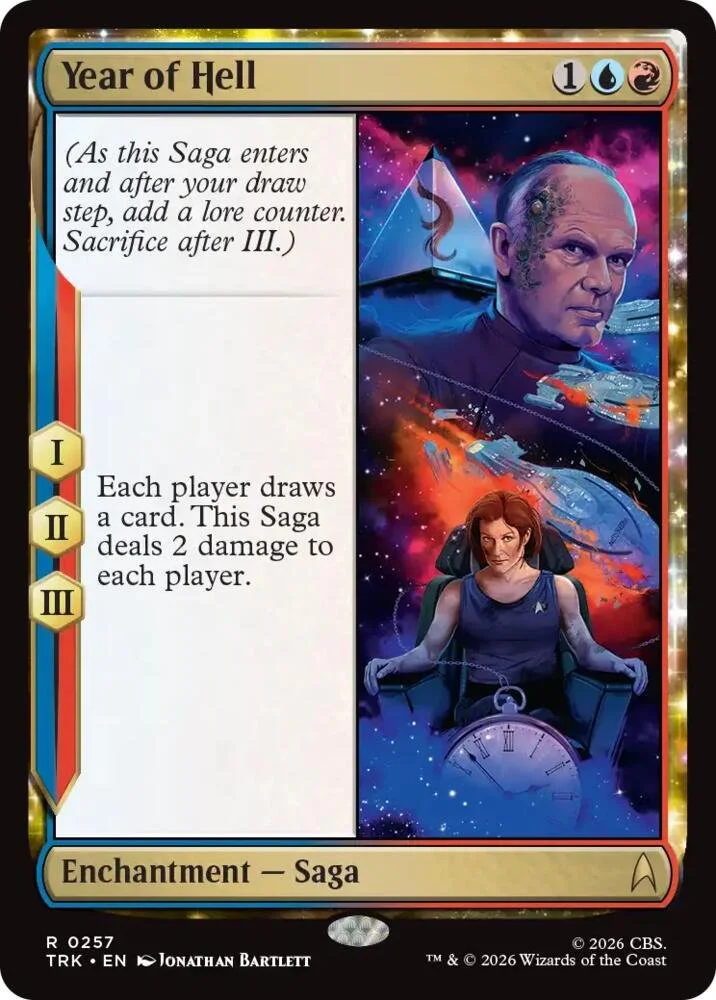
Year of Hell: An option for the slower Izzet builds that want another noncreature spell with an impact on the game.
Best Common Cards for Scientists & Noncreatures
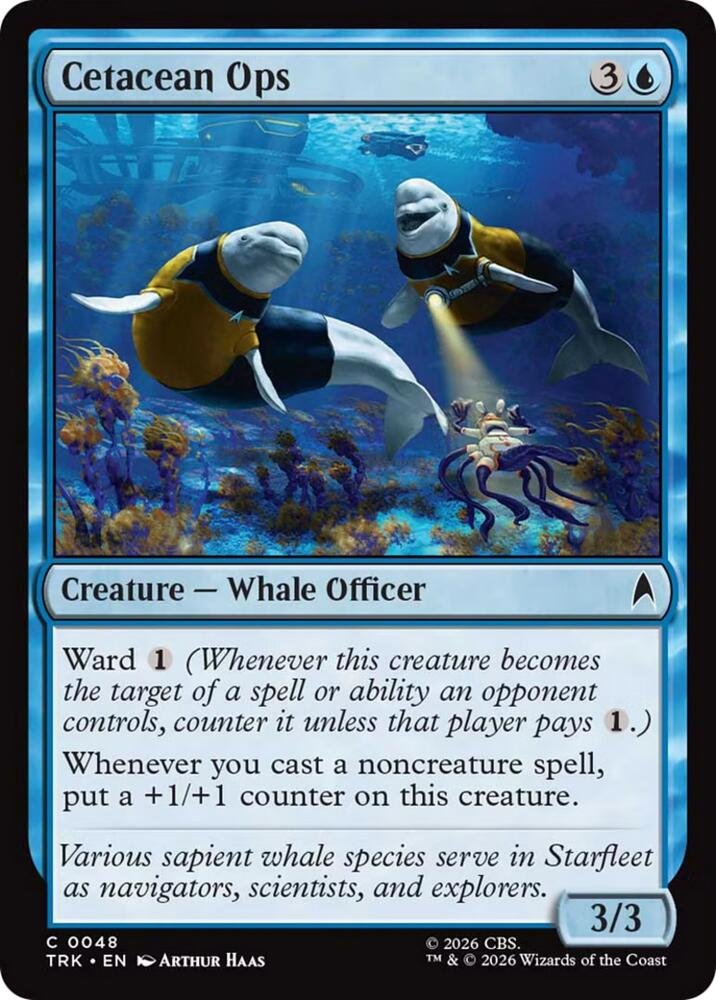
Cetacean Ops: A noncreature option to consider when you’re filling out the spells side of the deck.
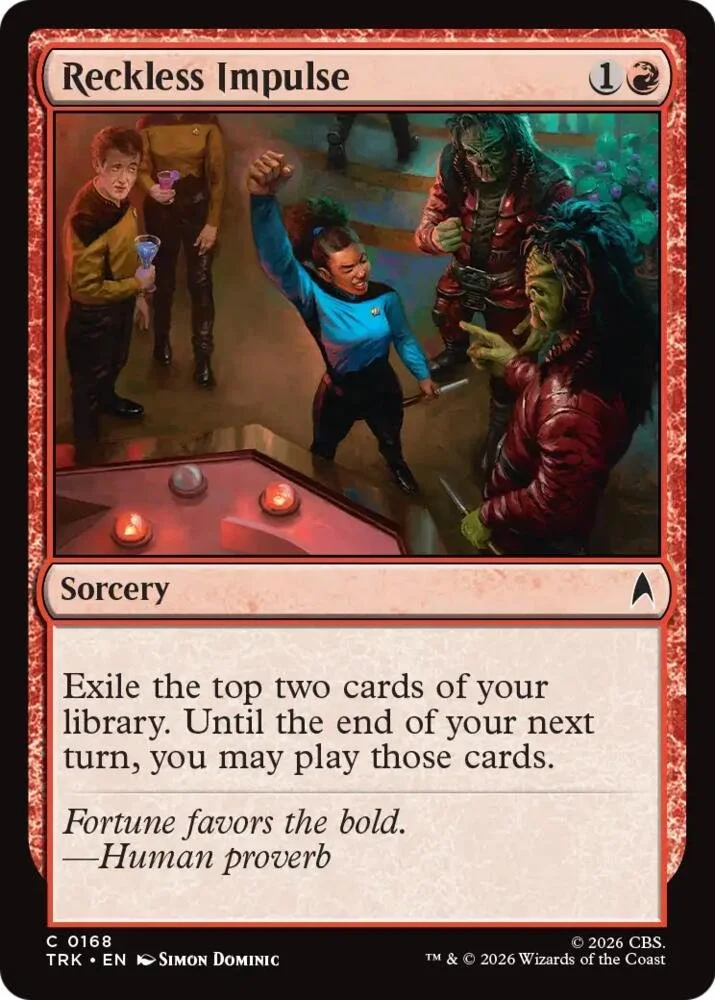
Reckless Impulse: Gives you access to two cards through the end of your next turn. Casting it while you still have time and mana to use those cards makes it much easier to keep the spells coming.
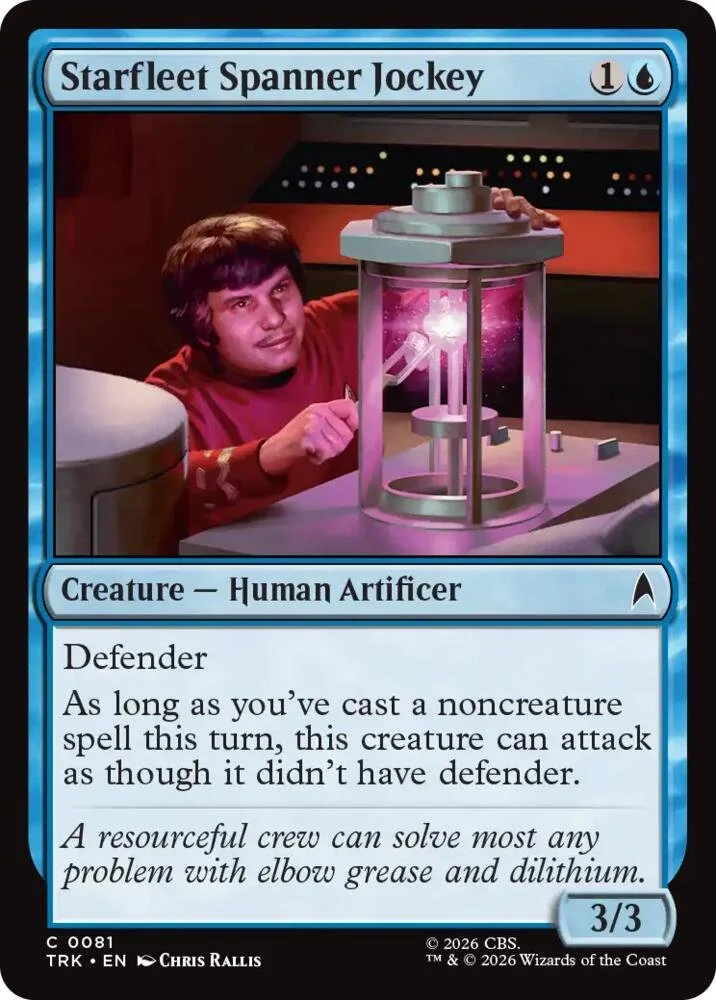
Starfleet Spanner Jockey: A creature to pick up when you already have the noncreature spells to support it.
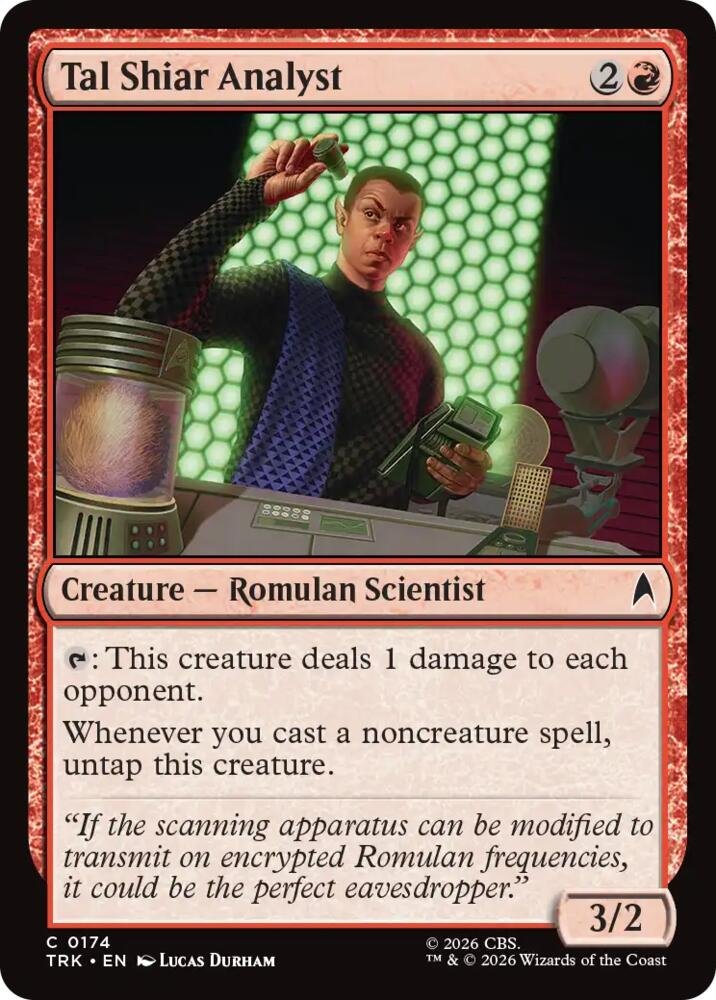
Tal Shiar Analyst: Helps fill out the creature side of the deck while giving you a reason to keep casting noncreature spells.
Best Uncommon Cards for Scientists & Noncreatures
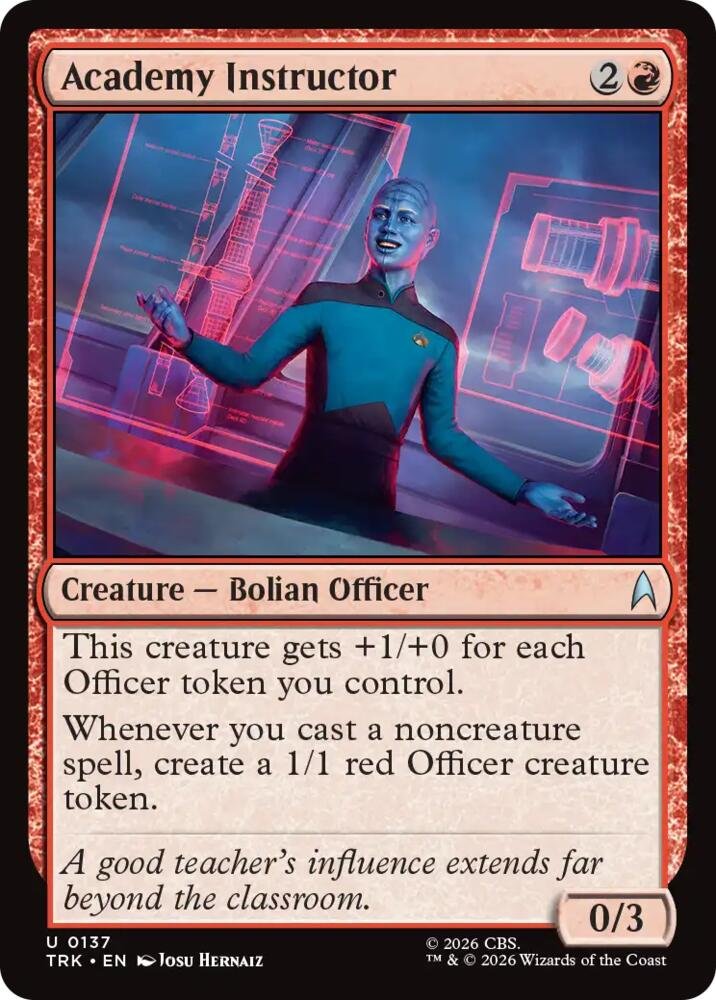

Academy Instructor: Makes an Officer token with every noncreature spell and gets stronger for each Officer token you control. A couple of cheap spells can add a surprising amount of power to the board.
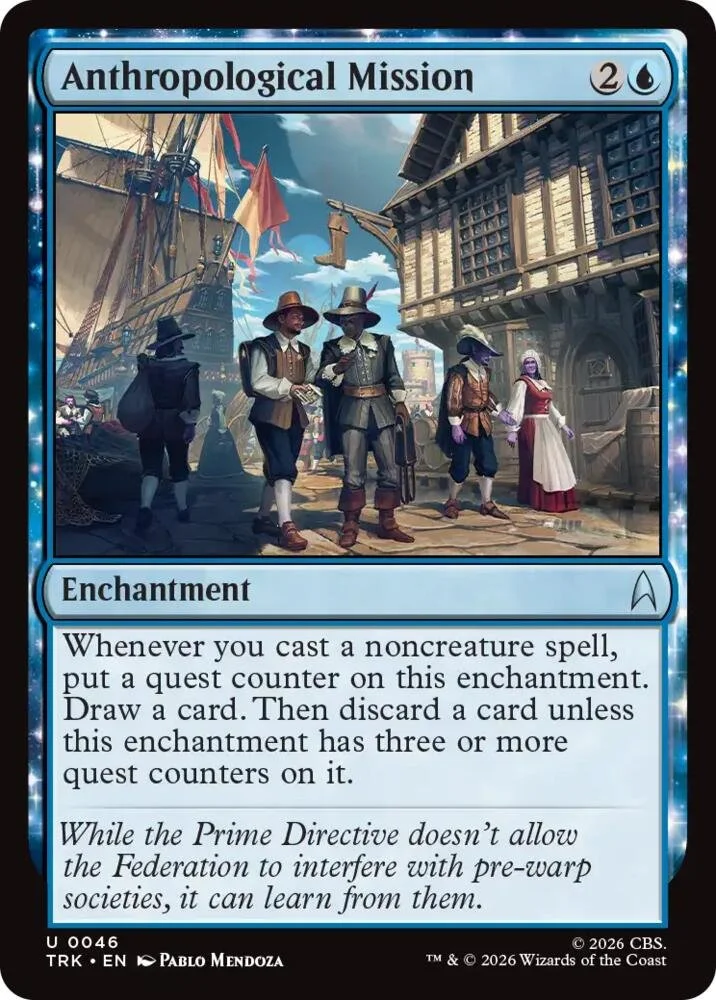
Anthropological Mission: A noncreature pick for builds that can give their Mission time to pay off.
Data, New Life: A creature payoff to consider when your spell count is high enough to make the Scientist package work.
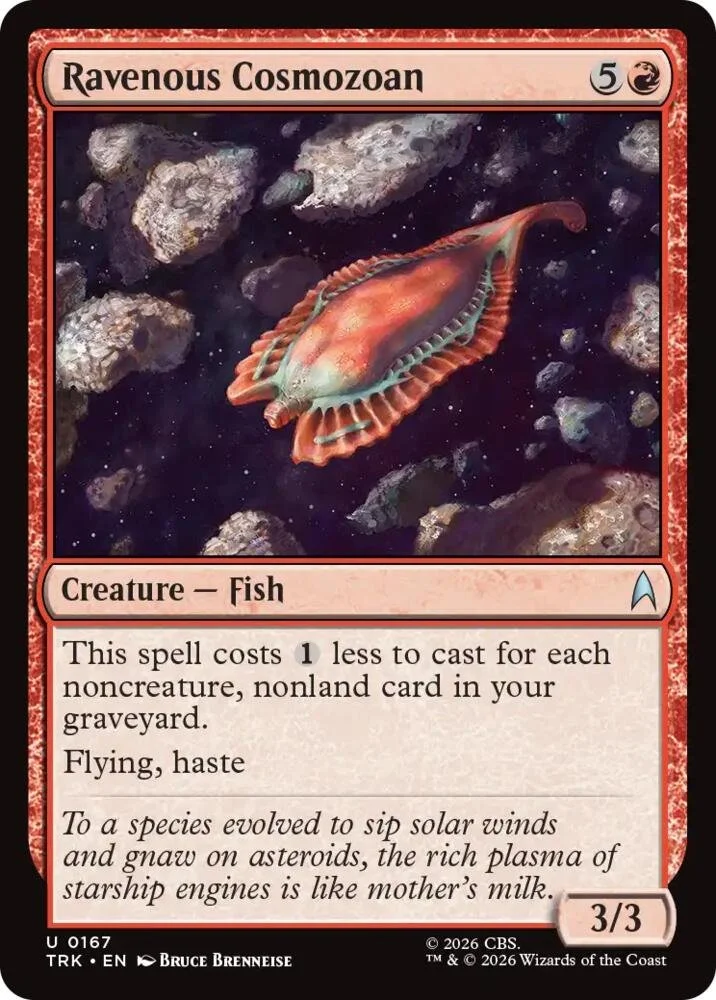
Ravenous Cosmozoan: Gets cheaper as noncreature, nonland cards pile up in your graveyard. A discounted 3/3 with flying and haste is a good way to turn the spells you’ve already used into damage.
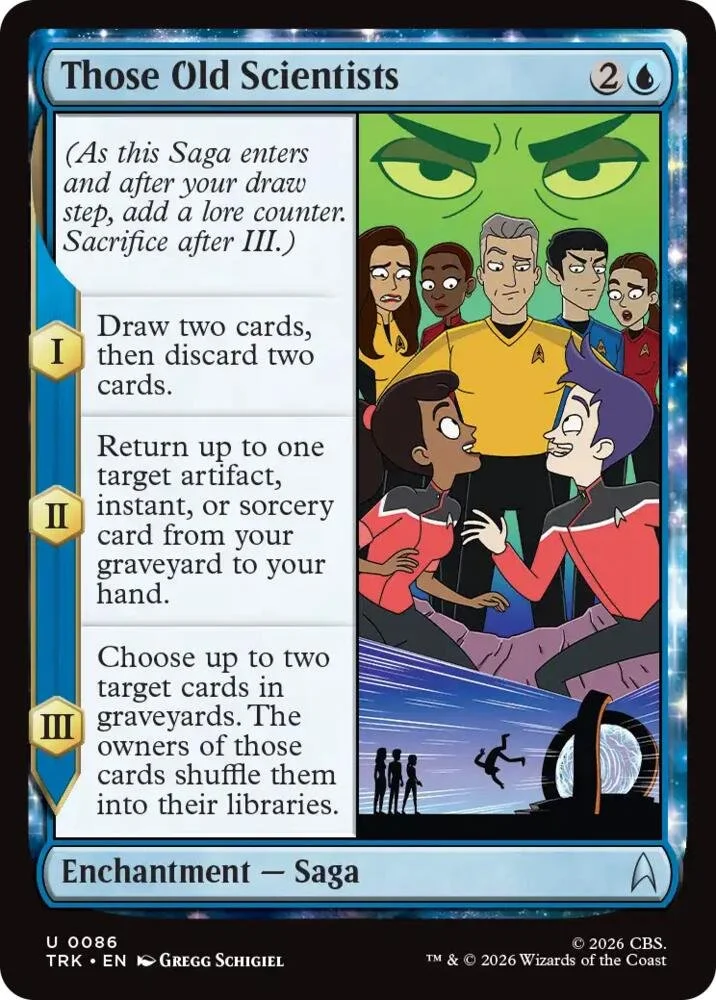
Those Old Scientists: A noncreature card to consider once the deck has enough payoffs to make each cast matter.
Best Rare and Mythic Cards for Scientists & Noncreatures
These cards give you reasons to play a little longer or to take a bigger turn. Cheap spells still do the work of getting you there.
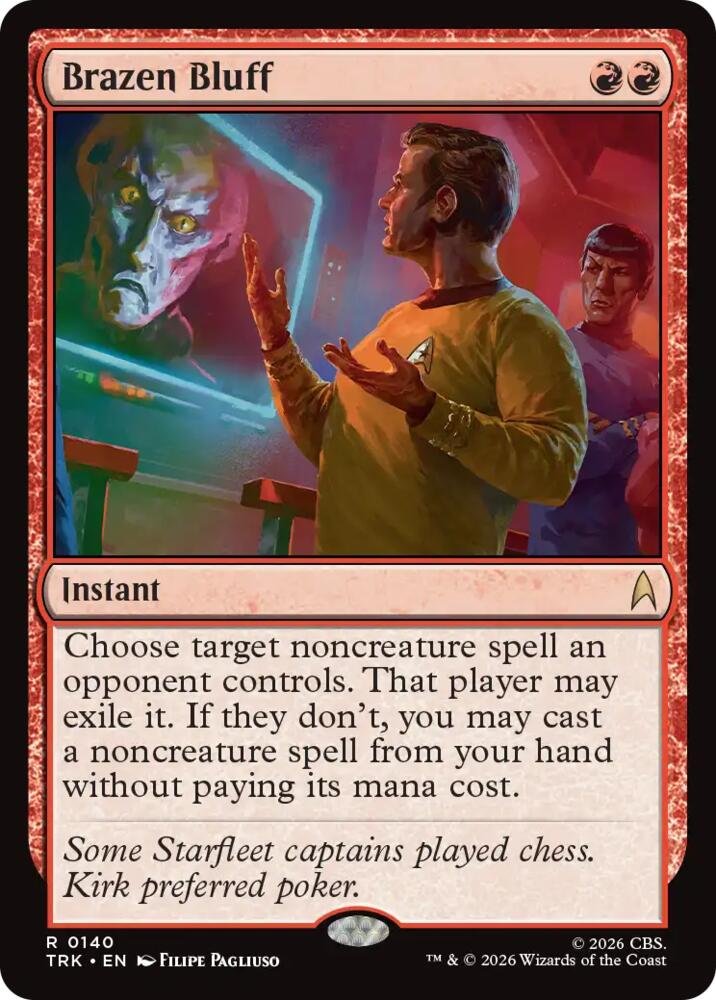
Brazen Bluff: Offers your opponent a choice between exiling their noncreature spell and letting you cast a noncreature spell from your hand for free. It’s most interesting when you have something worth bluffing with.
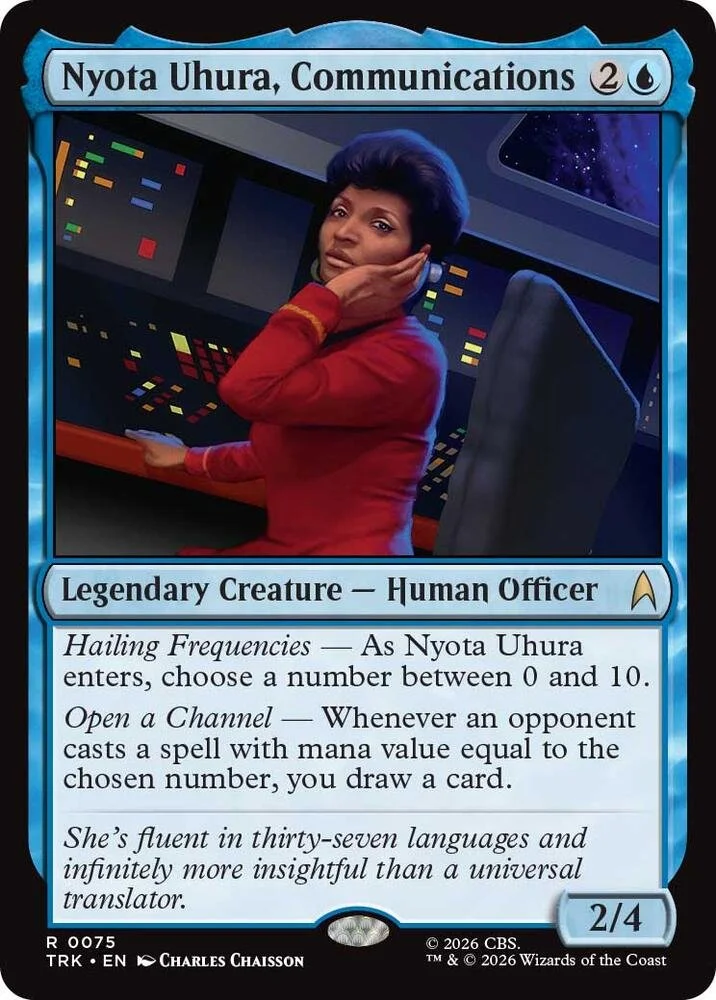
Nyota Uhura, Communications: Pick a mana value as Uhura enters. You draw whenever your opponent casts a spell at that value, so I’d choose based on what I’ve seen from their deck and what they’re likely to play next.
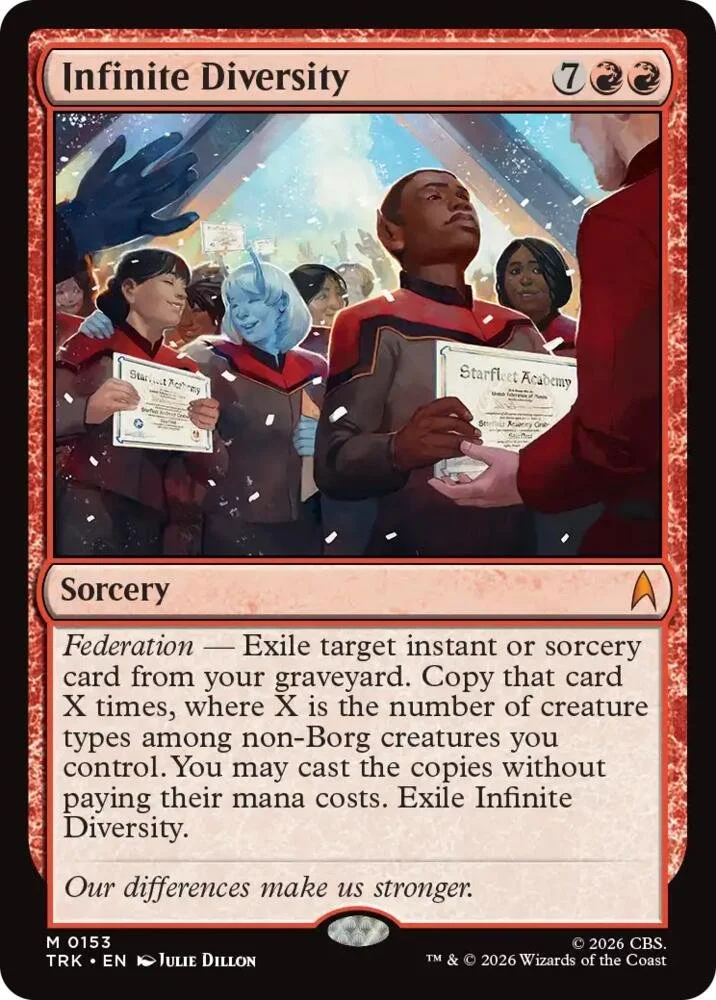
Infinite Diversity: A noncreature payoff to consider for a build that can get value from its board and afford to spend mana on a bigger spell.
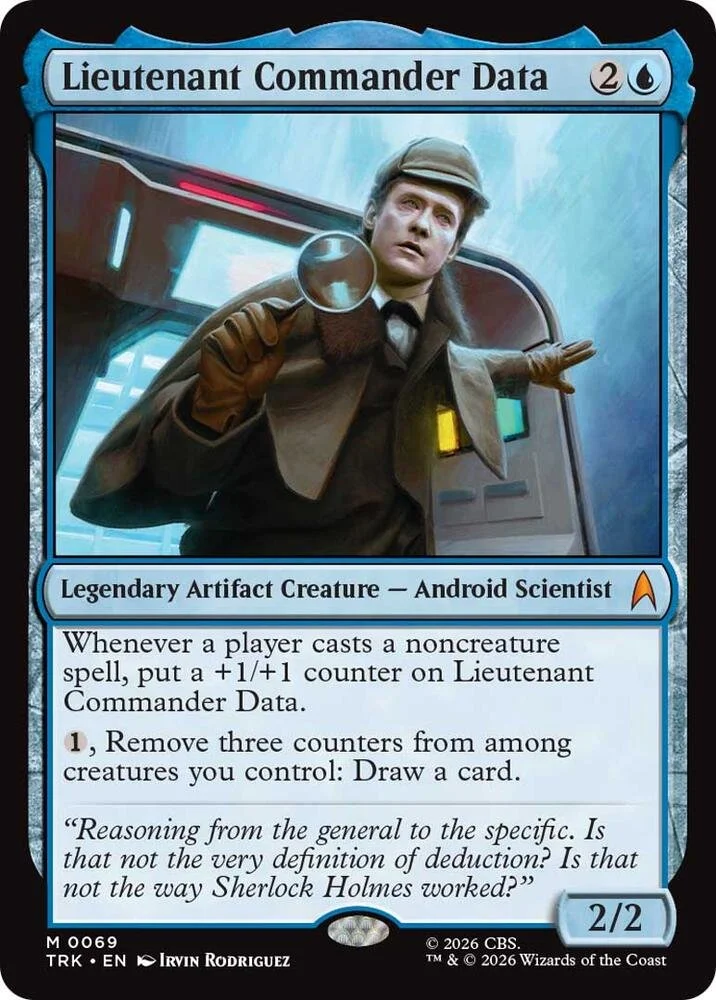
Lieutenant Commander Data: Gets a +1/+1 counter whenever either player casts a noncreature spell. Even an opponent trying to play their own spells game can help grow him.
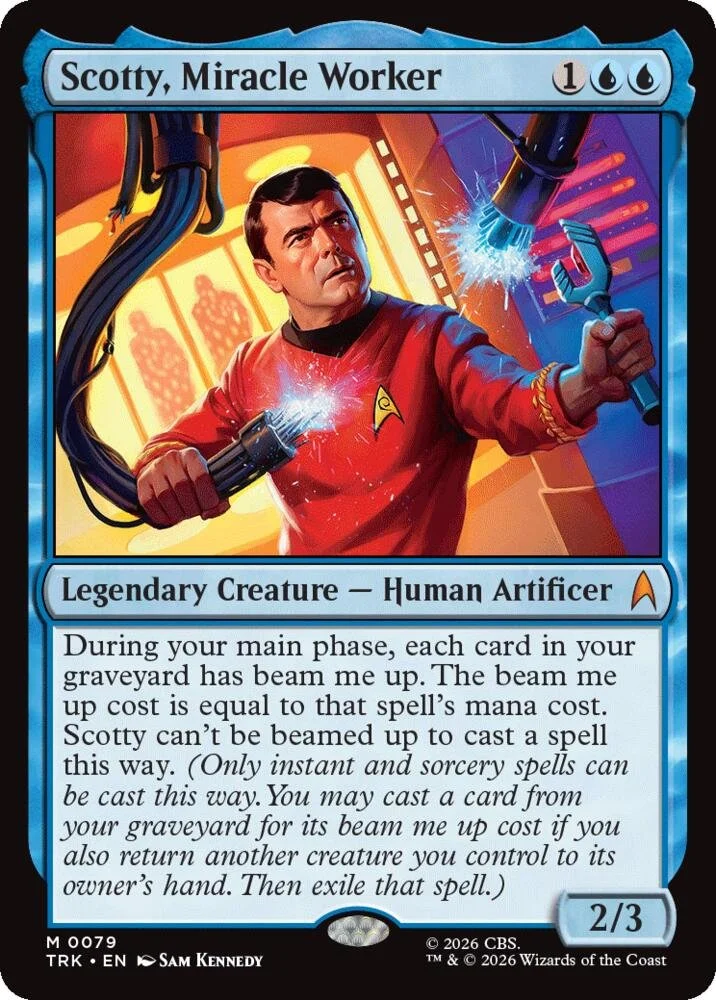
Scotty, Miracle Worker: Gives your graveyard spells Beam Me Up during your main phase. Look for cheap creatures with good enters abilities to return, and remember that Scotty can’t pay the return cost for the ability he grants.
Golgari / Black-Green Archaeology Graveyard
Golgari is going digging. I’m happy to trade or sacrifice a creature if I can bring it back later, and this archetype gives you reasons to care about both filling your graveyard and taking cards back out.
Gameplan
Stock the graveyard with cards you can use later, then trade creatures or sacrifice expendable permanents to keep the game moving. Bring back a creature with a good enters ability, or use a card leaving your graveyard to trigger another payoff. Some of the artifact cards you’d take in Orzhov also fit here when you have a way to sacrifice or recur them.
Draft Priorities
Before I start drafting ways to dig cards out of my graveyard, I want something worth digging up. Creatures with useful enters abilities are where I’d start because I’m happy to cast them the first time and even happier to get a second use out of them.
Recursion that can reliably get back something worth casting again.
Creatures with good enters abilities or bodies you can afford to trade.
Sacrifice outlets and ways to fill the graveyard without taking too many turns off.
Win Condition
Trade early and make those trades favor you later. If your opponent has to spend a second removal spell on a creature they already killed, you can pull ahead with the rest of your board and finish with a threat they can’t answer again.
Key Multicolor Cards
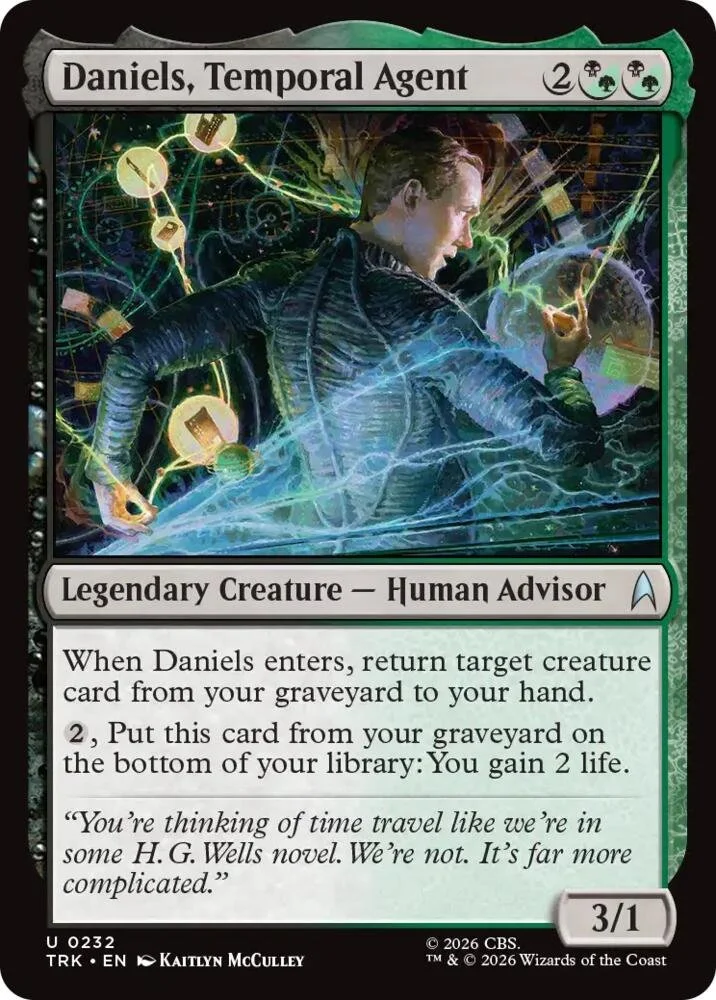
Daniels, Temporal Agent: A signpost I’d look at once my deck can reliably put cards in the graveyard and make use of them there.
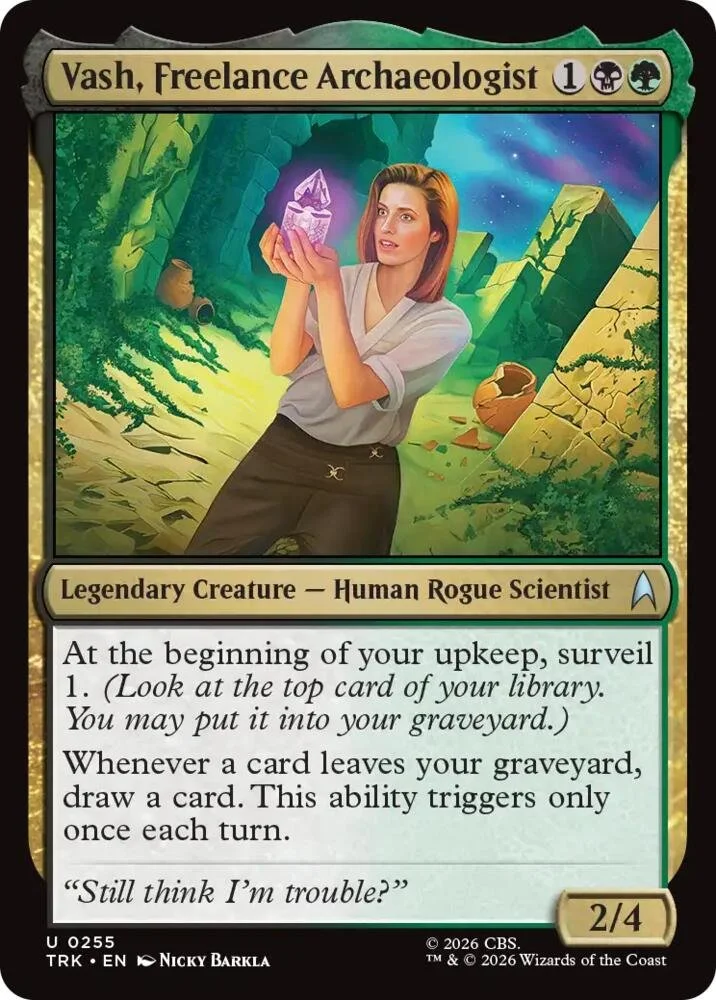
Vash, Freelance Archaeologist: A reason to lean into the Archaeology plan if your pool already has the enablers to support it.
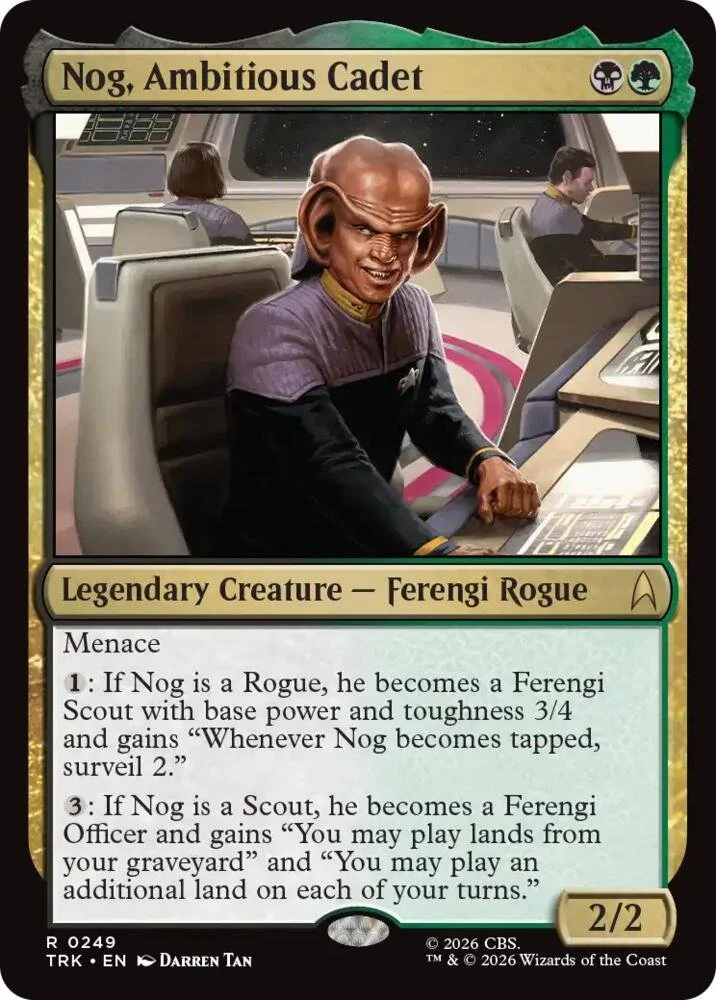
Nog, Ambitious Cadet: Starts as a 2/2 with menace and can level up into a 3/4 that surveils whenever it becomes tapped. Upgrade him again to play lands from your graveyard and make an extra land drop each turn.
Best Common Cards for Archeology Graveyard
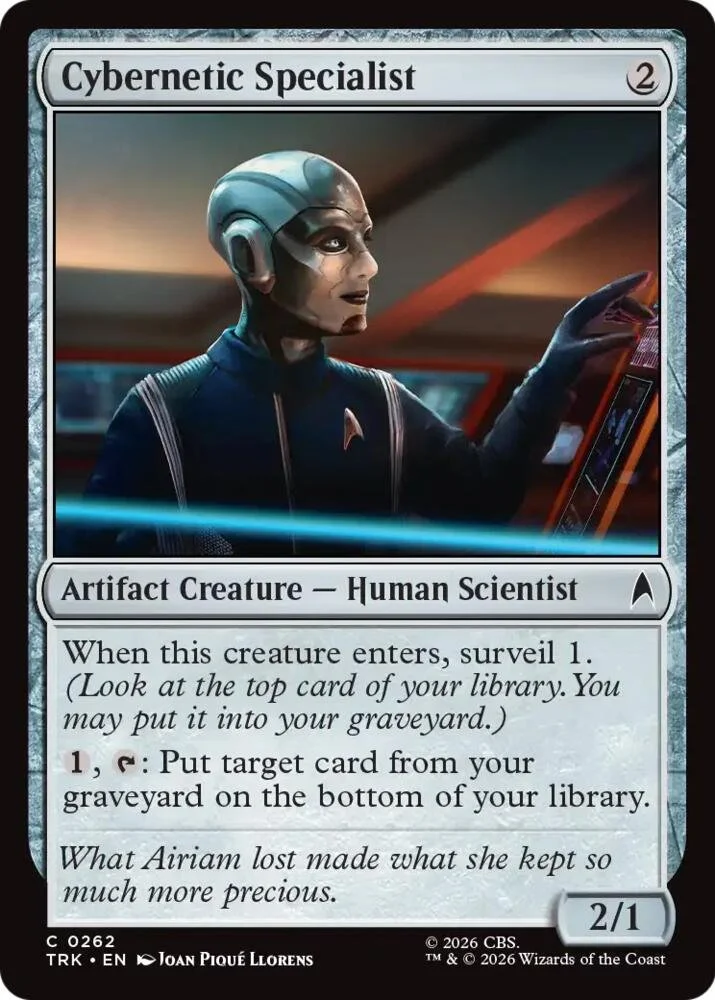
Cybernetic Specialist: A creature to look at when your graveyard build has some overlap with artifacts.
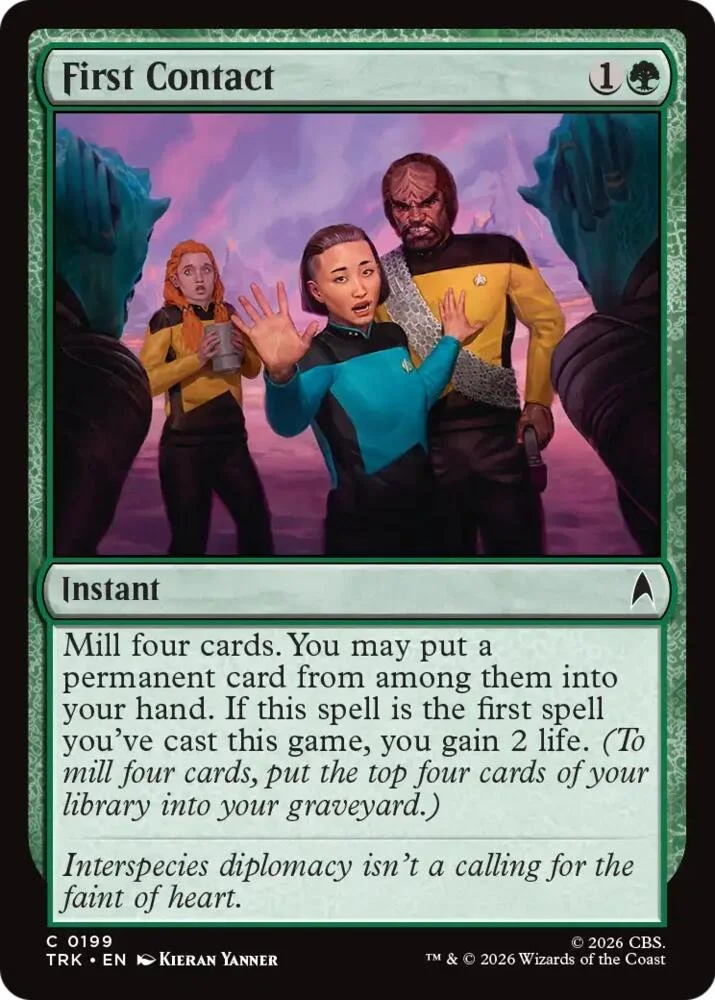
First Contact: A support card I’d consider when the deck needs more ways to make its graveyard package work.
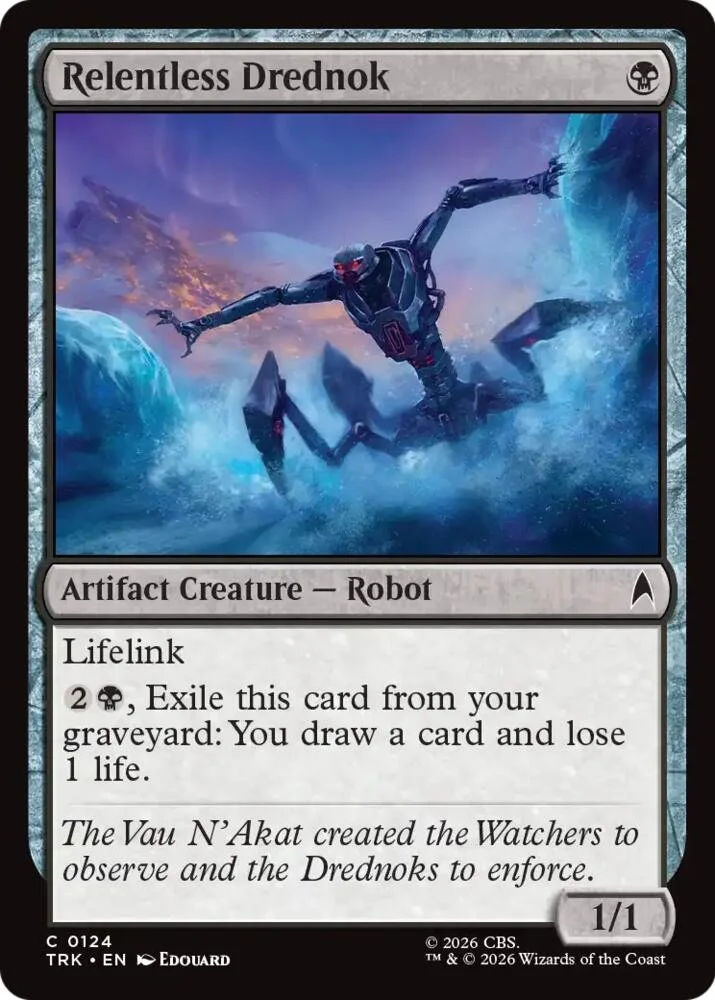
Relentless Drednok: A creature I’d look for when I want bodies that fit the deck’s plan of trading and getting value later.
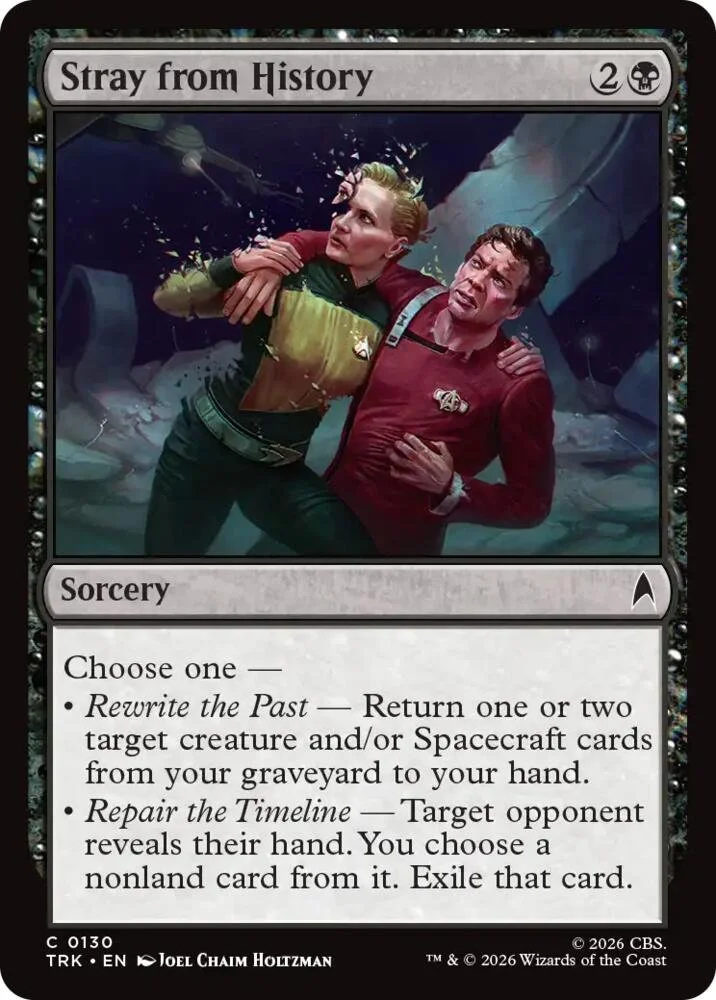
Stray from History: Helps fill out the spell side of a build that expects to use its graveyard.
Best Uncommon Cards for Archeology Graveyard
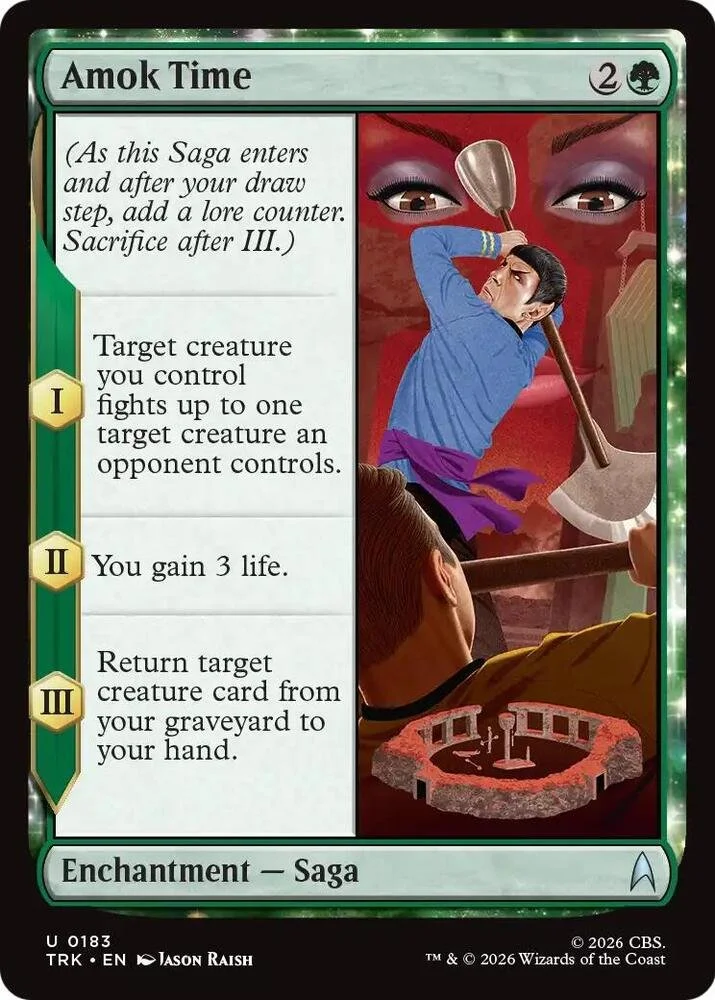
Amok Time: A pick to consider when you need interaction alongside the graveyard pieces.
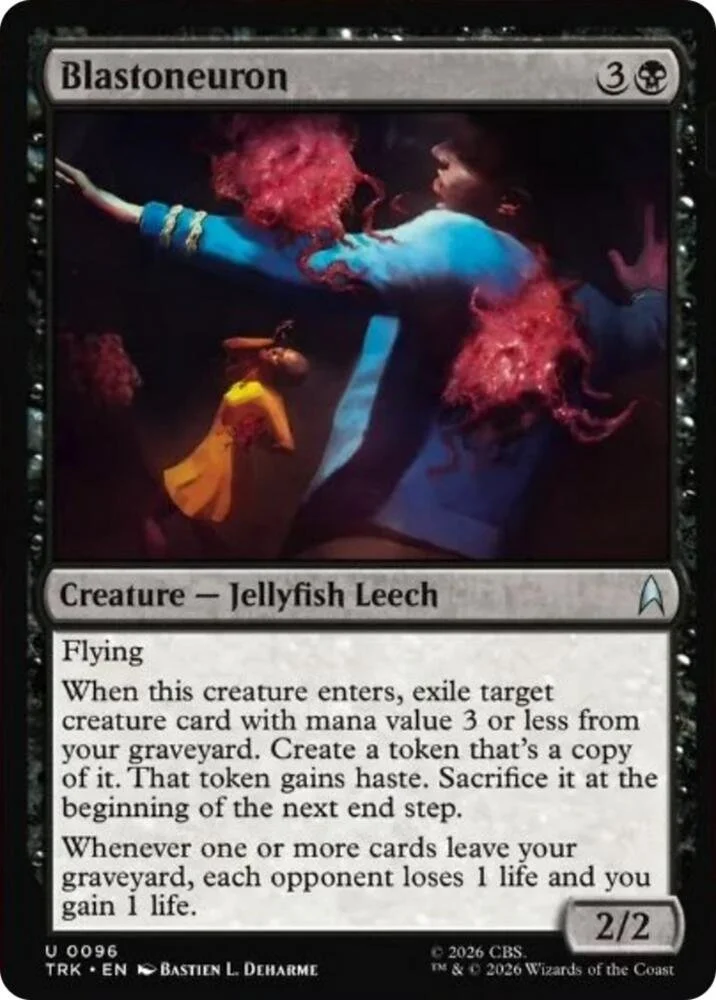
Blastoneuron: A creature option I’d look for if I’m building around trading resources and getting them back.
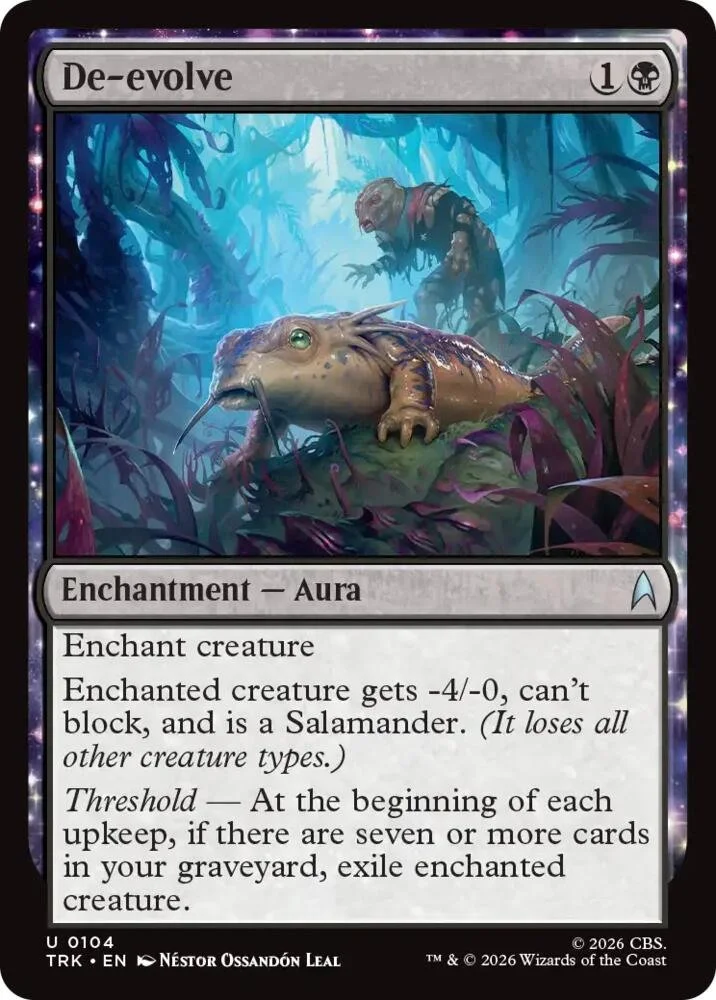
De-evolve: A spell to consider when the deck needs more ways to affect the board while setting up its longer game.
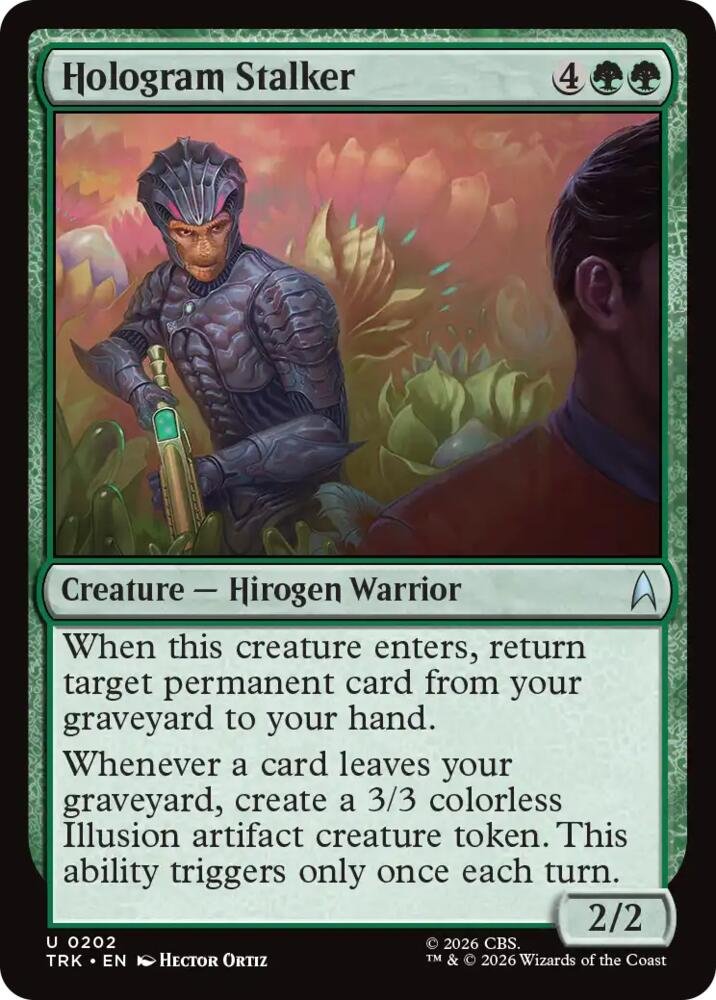
Hologram Stalker: Another creature to look at once the graveyard package is taking shape.
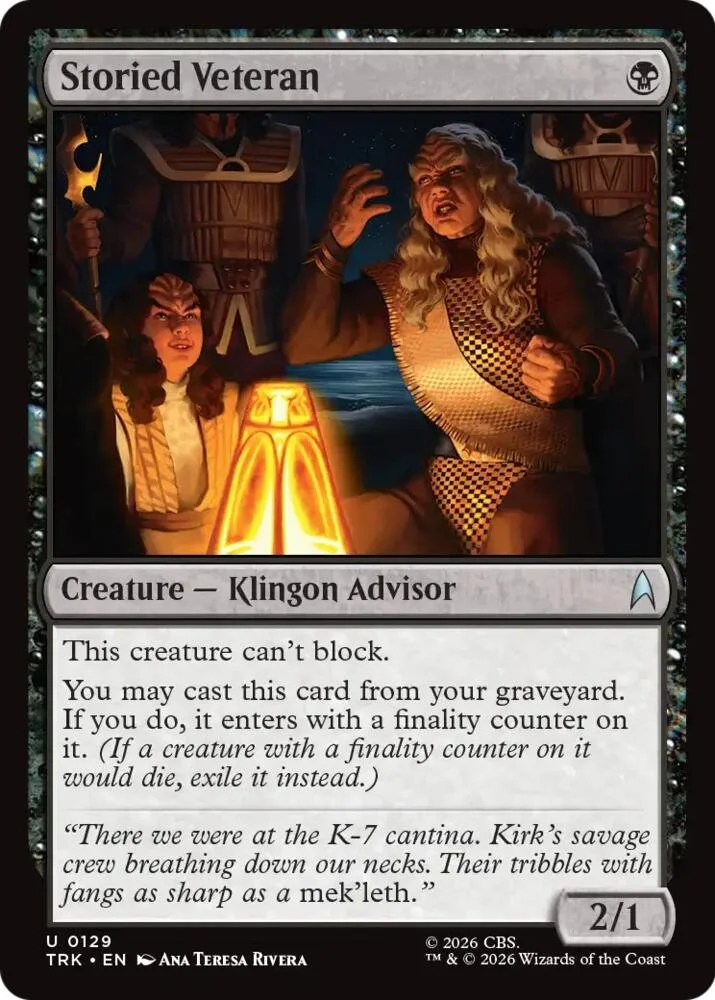
Storied Veteran: You can cast it from your graveyard with a finality counter. It can’t block, so I’d play it when I want a cheap attacker or sacrifice fodder I can use again.
Best Rare and Mythic Cards for Archeology Graveyard
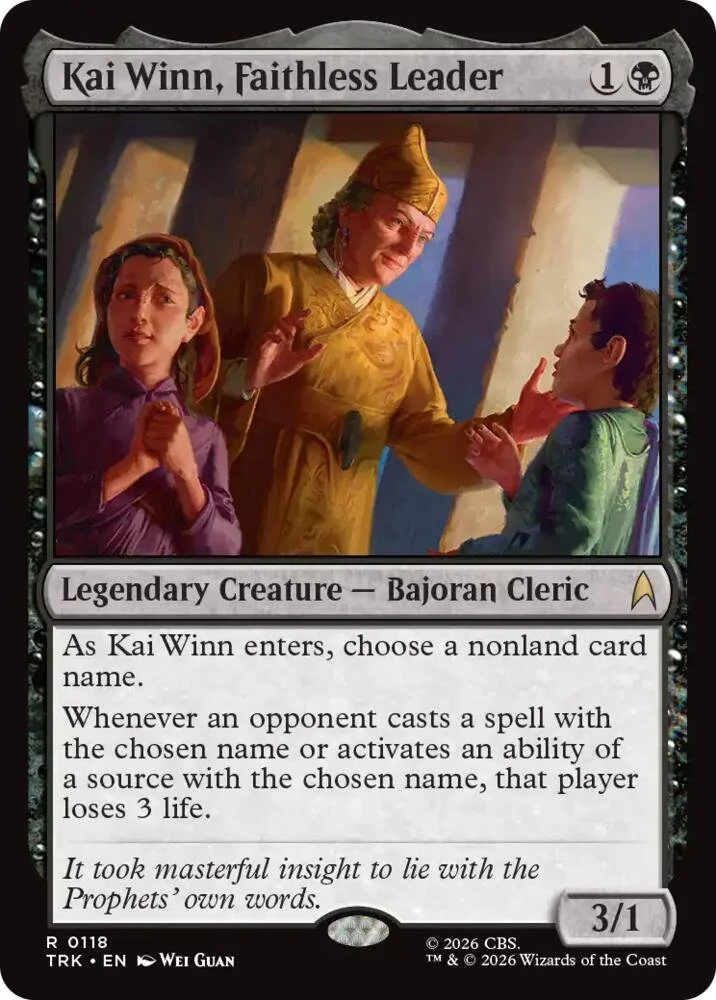
Kai Winn, Faithless Leader: A higher-rarity option for a deck that’s already comfortable sacrificing permanents and grinding through trades.
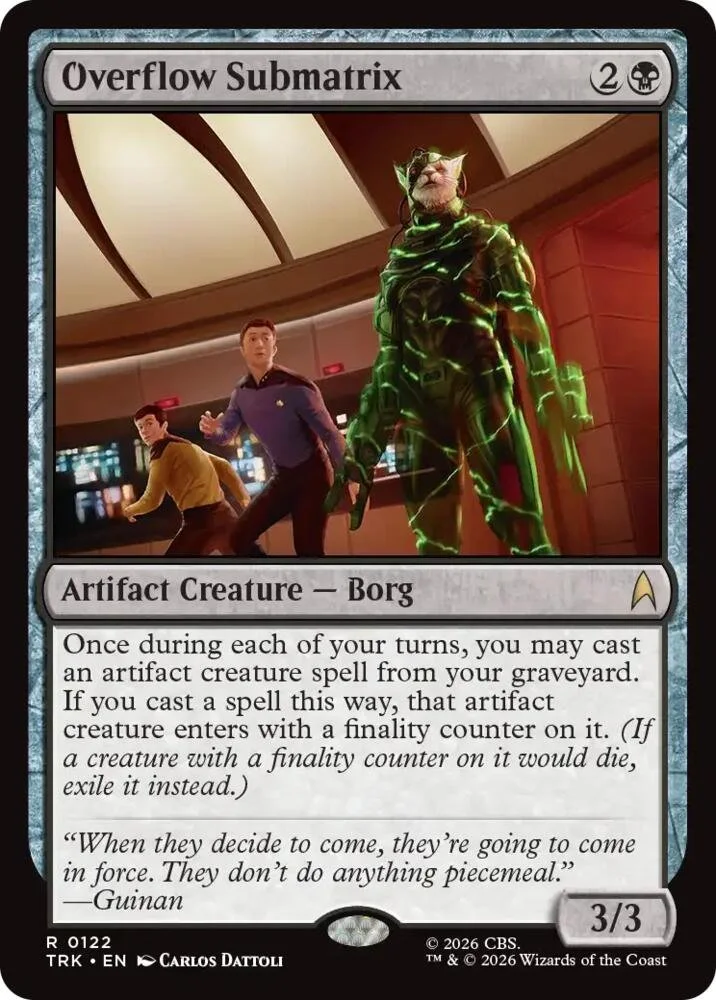
Overflow Submatrix: Worth considering when your graveyard deck also has an artifact package.
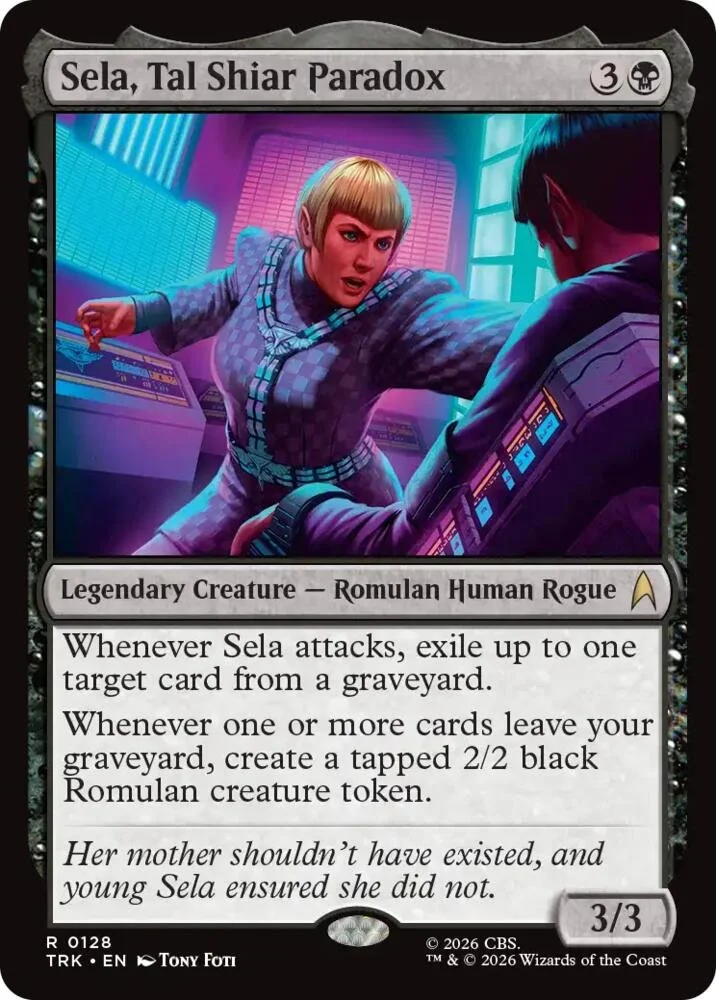
Sela, Tal Shiar Paradox: Makes a tapped 2/2 Romulan when one or more cards leave your graveyard. Her attack trigger can exile a card from your own graveyard to get things started.
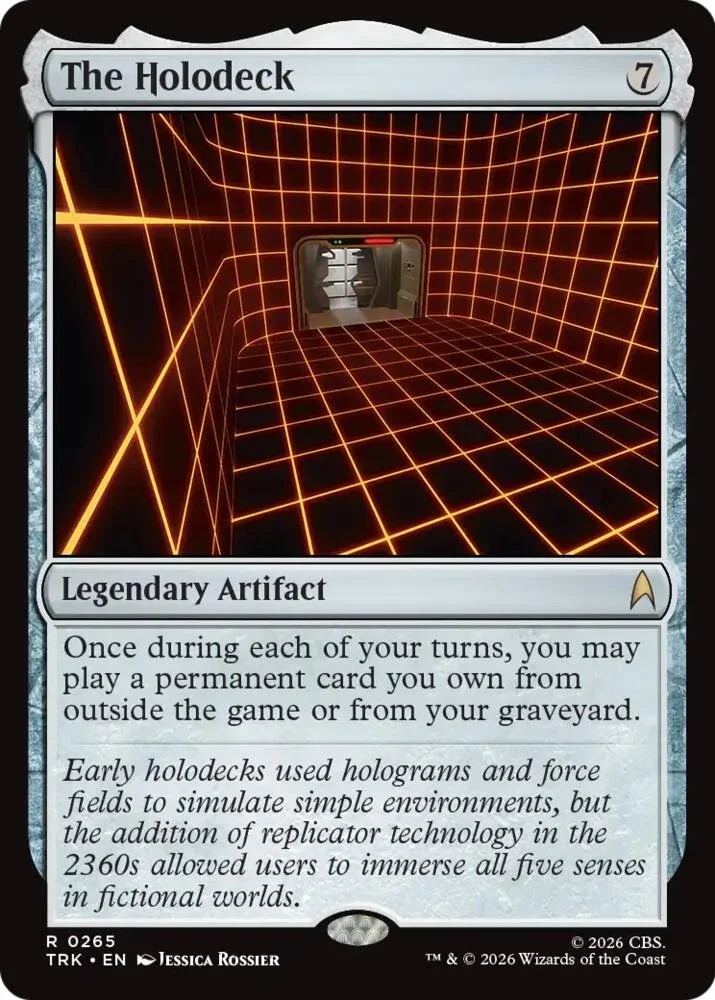
The Holodeck: A late-game option to consider when your pool has enough support for it and room for another payoff.
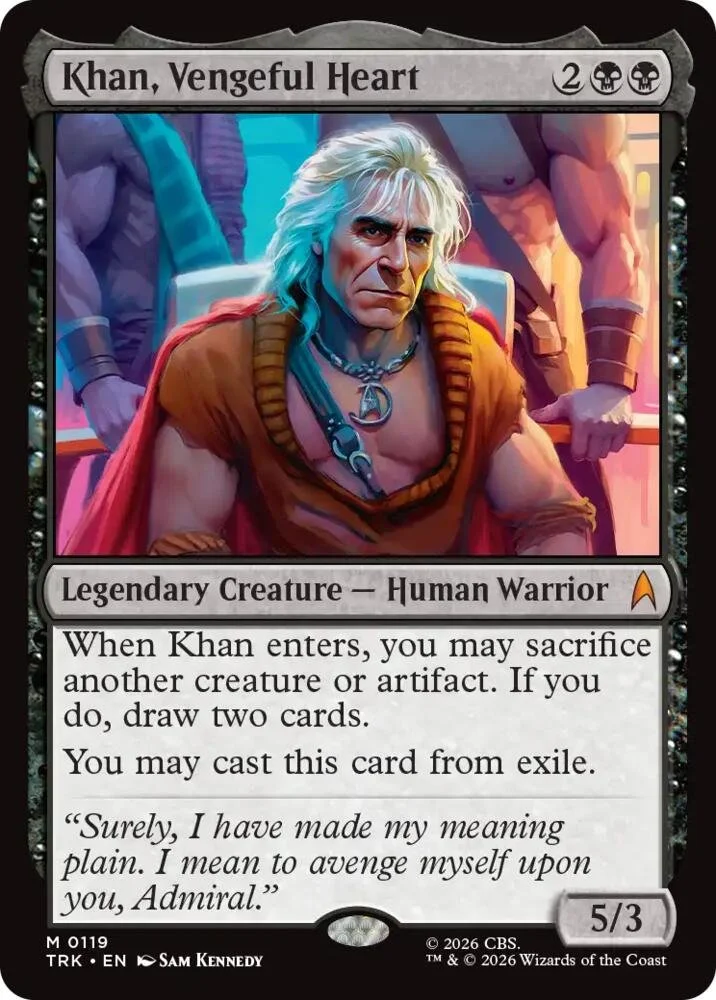
Khan, Vengeful Heart: Lets you sacrifice another creature or artifact when he enters to draw two cards. A spare token is a much better price than a creature you still need in combat.
Boros / White-Red Command 8+ Total Power
Boros wants the crew ready before it gives the order to attack. Eight total power sounds like a lot until you realize the creatures staying back can help you reach it, too.
Gameplan
Curve out and build toward eight power across your creatures. Check your total before declaring attackers, especially if you can use a precombat boost to reach the threshold. You can send in the creatures with good attacks and leave the rest to help hold the board.
Draft Priorities
I want to know how my deck is getting to eight power before I start taking every card that rewards me for it. Cheap creatures and token makers are what get the crew ready to attack, especially after you’ve already traded a creature or two.
Cheap creatures with good power for their mana cost.
Token makers and power boosts that get you to eight quickly.
Command payoffs worth attacking for. I’d wait to see enough support before committing because the deck can struggle if it keeps coming up short.
Win Condition
Make an attack that triggers more than one payoff and use the advantage to keep your opponent on defense. Removal and first strike can help you win blocks while preserving enough power to do it again on the next turn.
Key Multicolor Cards
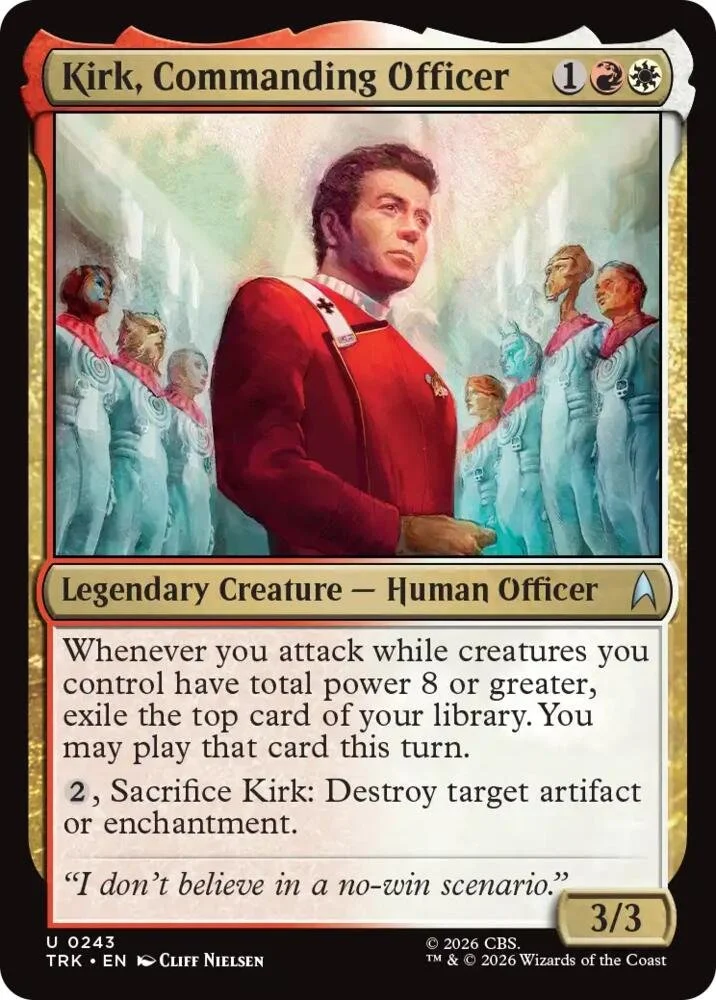
Kirk, Commanding Officer: Turns attacks at eight or more total power into access to the top card of your library for the turn. Leave yourself some mana to play what you find when you can.
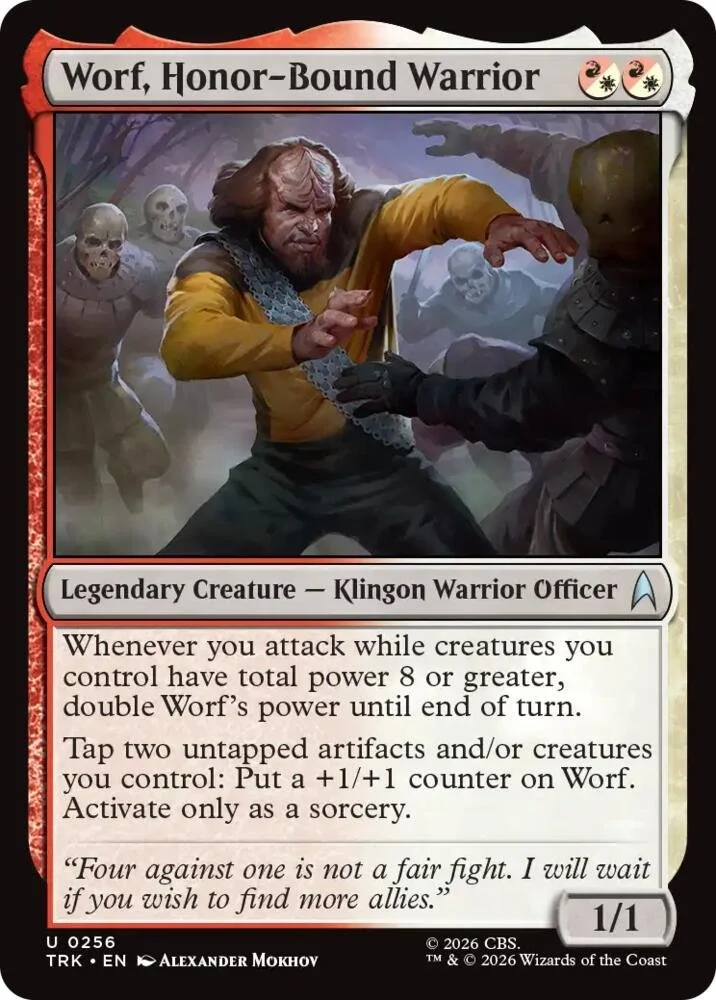
Worf, Honor-Bound Warrior: A reason to build toward the eight-power attack. I’d look for him once my creature curve can reach that number consistently.
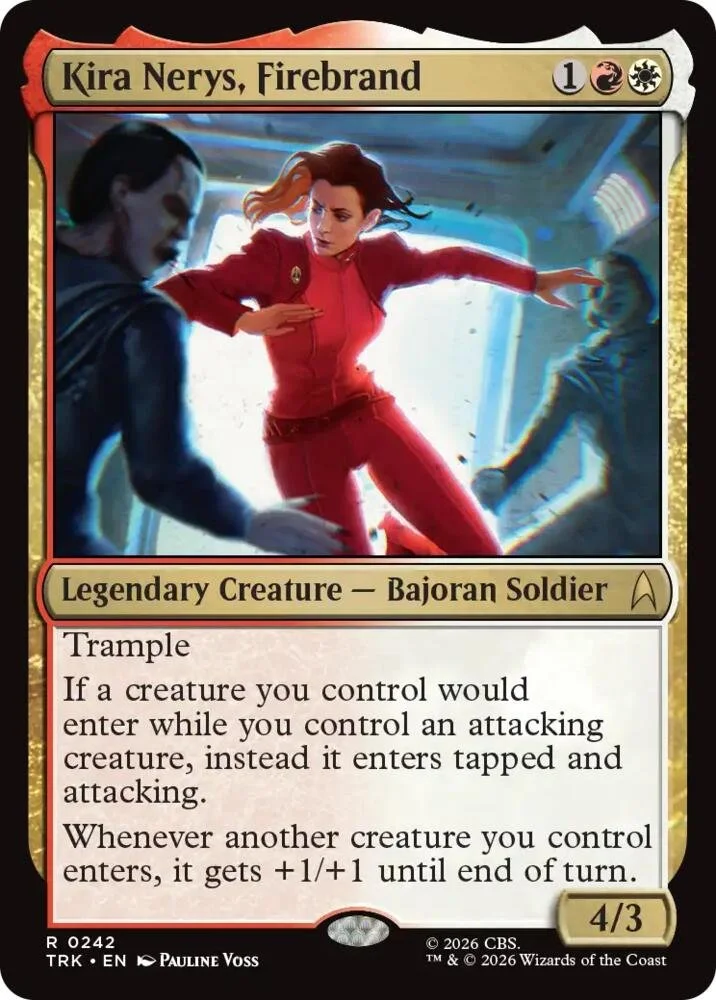
Kira Nerys, Firebrand: Another multicolor card to consider for the attacking deck when you already have creatures to build around.
Best Common Cards for Command 8+ Total Power
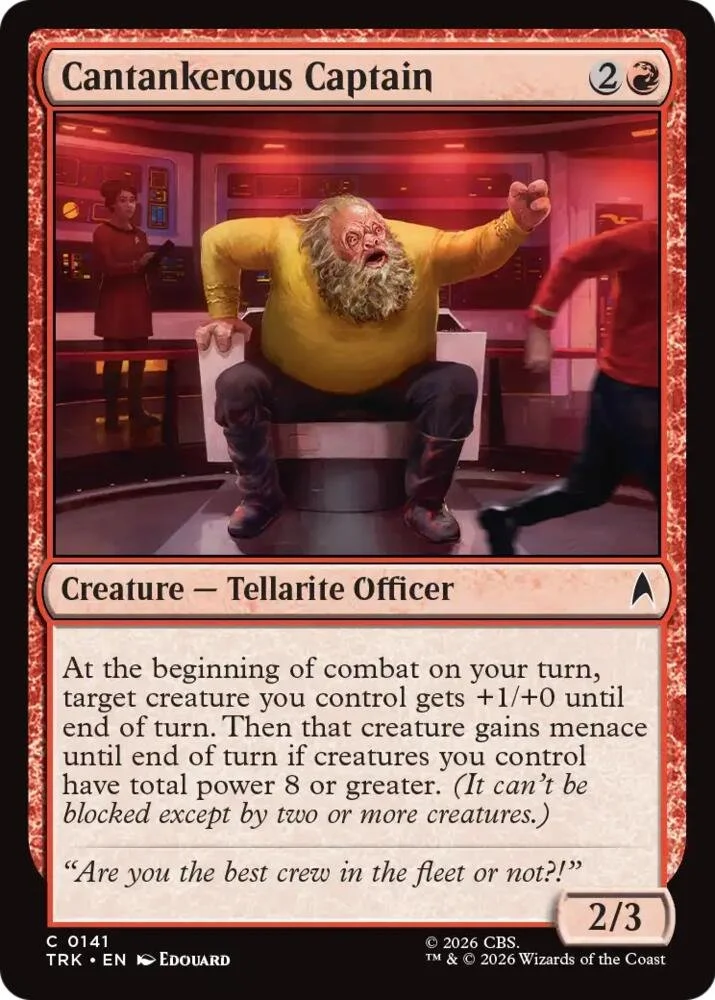
Cantankerous Captain: A creature to look for when you need another attacker that contributes to the power threshold.
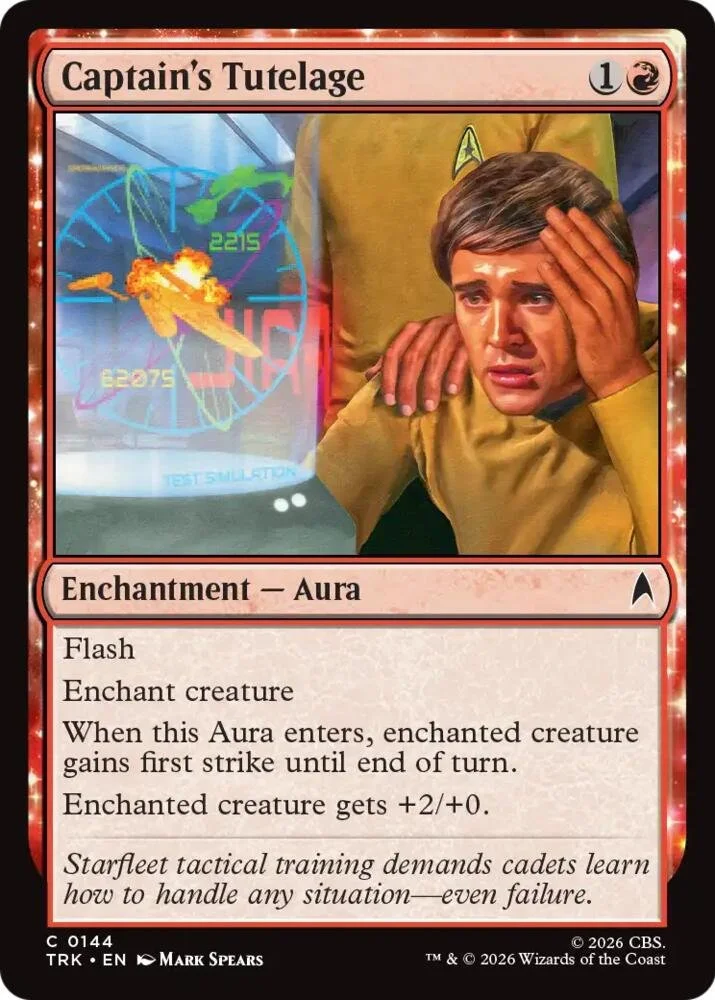
Captain’s Tutelage: A support pick for a deck that can develop enough creatures to take advantage of it.
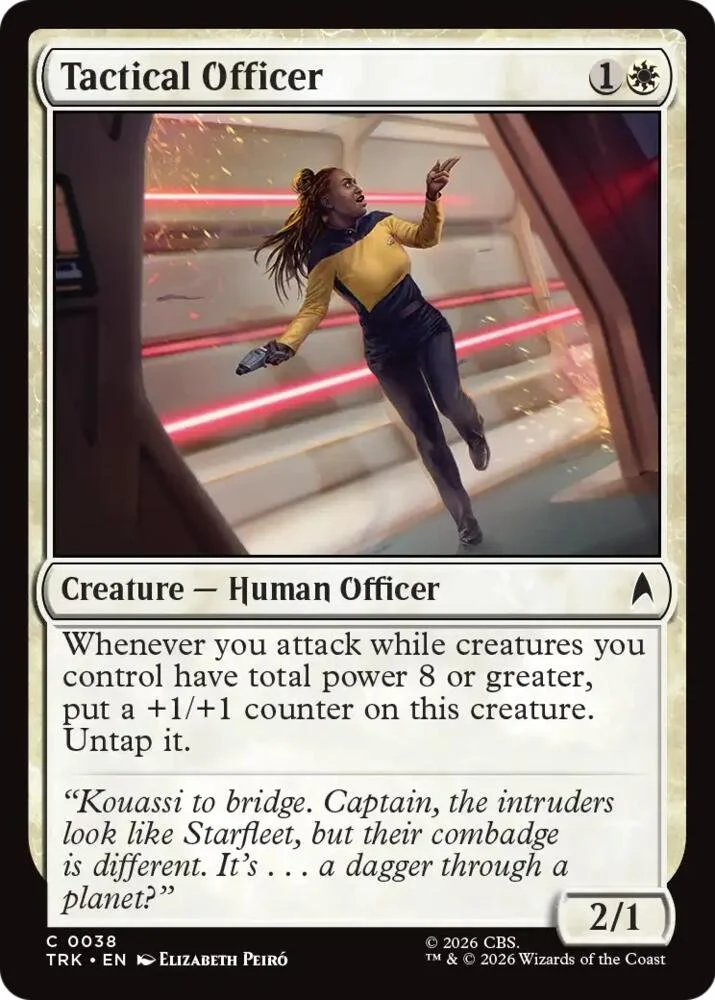
Tactical Officer: Helps fill out your crew and gives you another body contributing to the attack threshold.
Best Uncommon Cards for Command 8+ Total Power
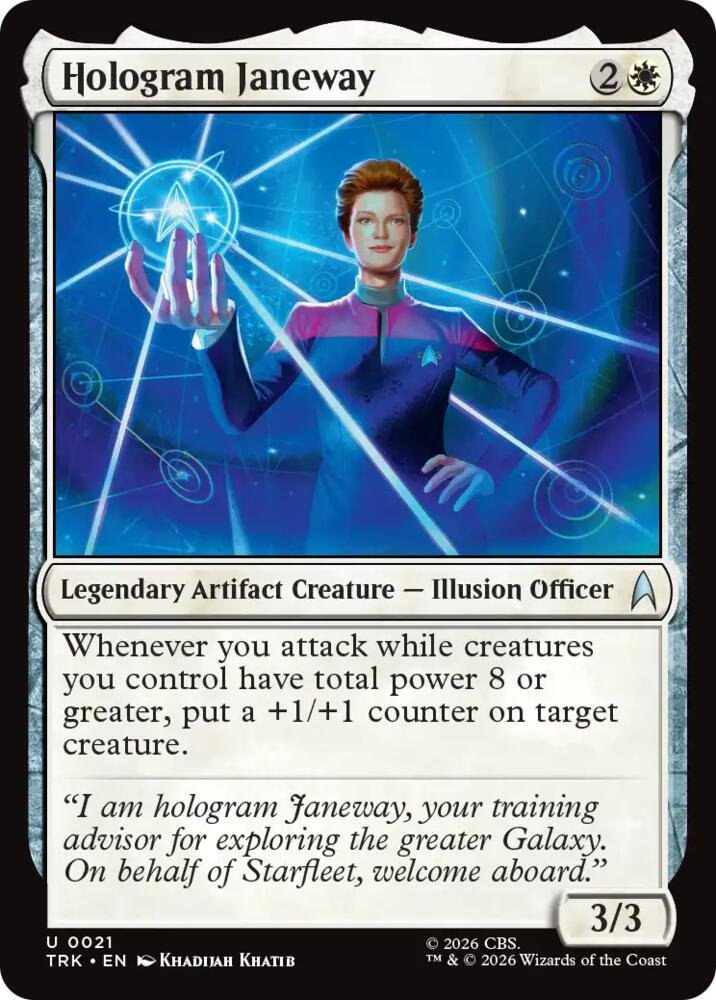
Hologram Janeway: A card I’d consider once I have enough early creatures to support the Command plan.
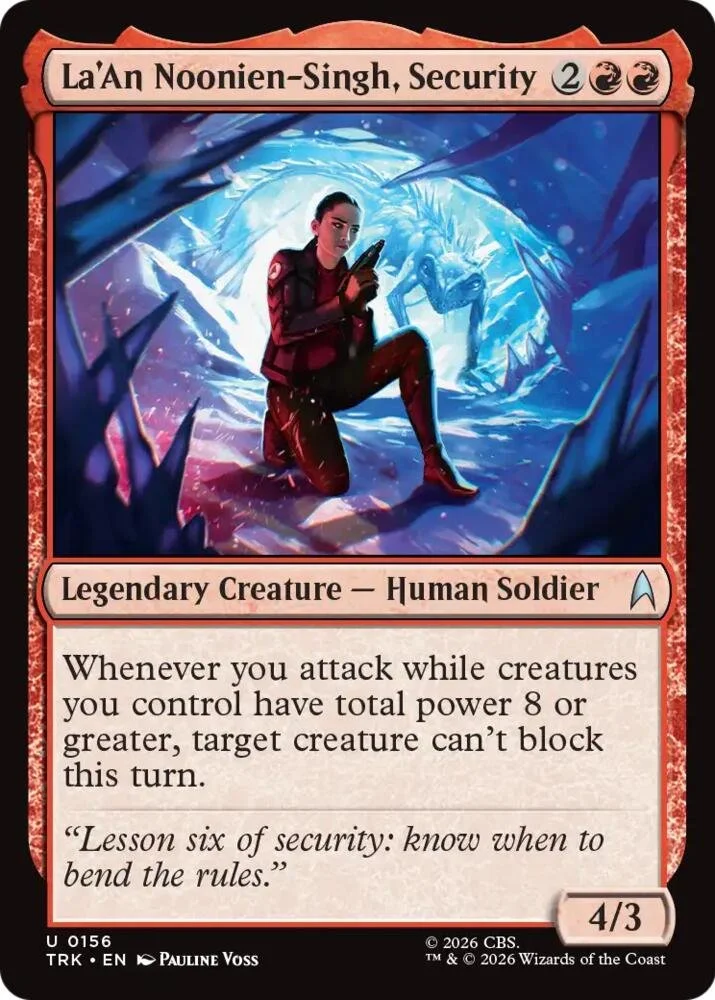
La’An Noonien-Singh, Security: A crew member to look for when you’re putting together the aggressive part of the deck.
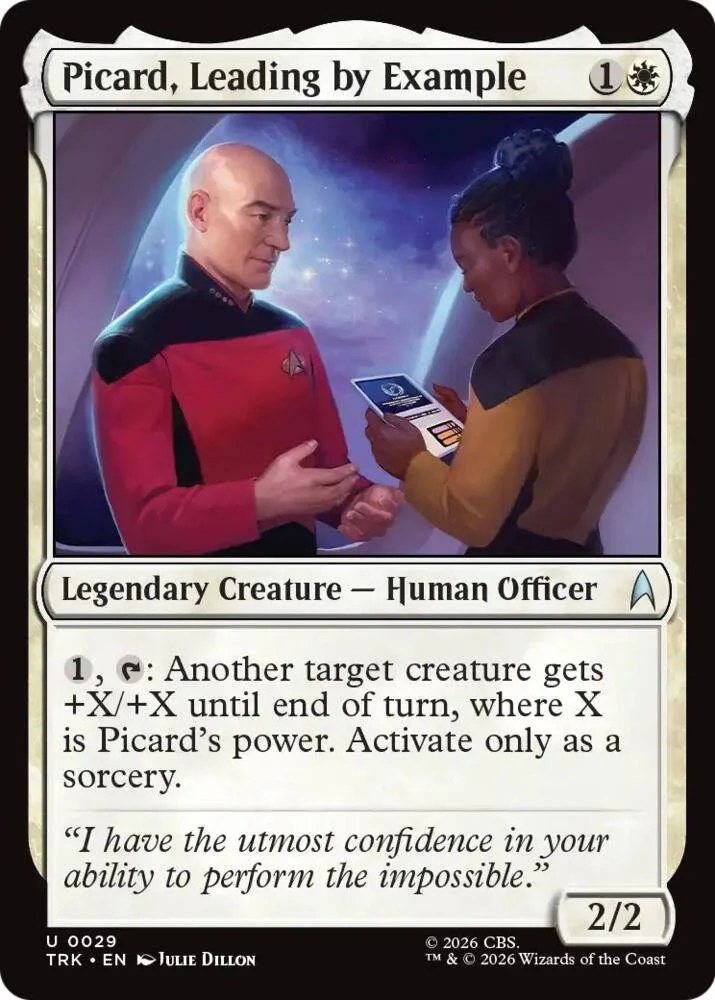
Picard, Leading by Example: A payoff to consider when your deck can consistently get enough power on the battlefield.
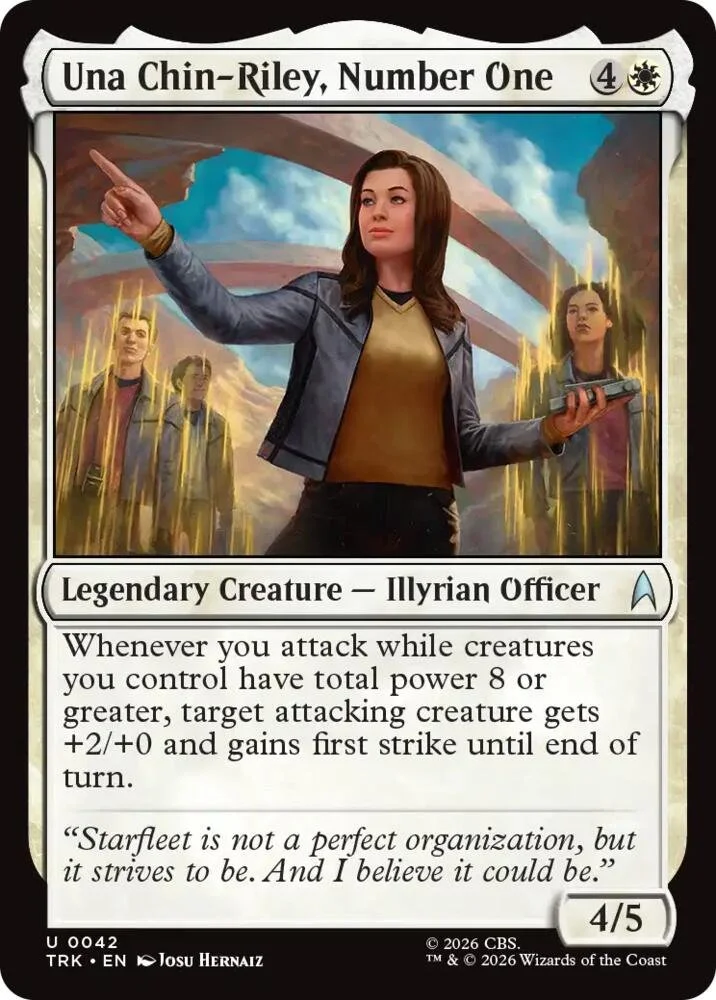
Una Chin-Riley, Number One: Rewards an attack at eight or more total power by giving an attacking creature +2/+0 and first strike. Get to eight before declaring attackers so her ability can trigger.
Best Rare and Mythic Cards for Command 8+ Total Power
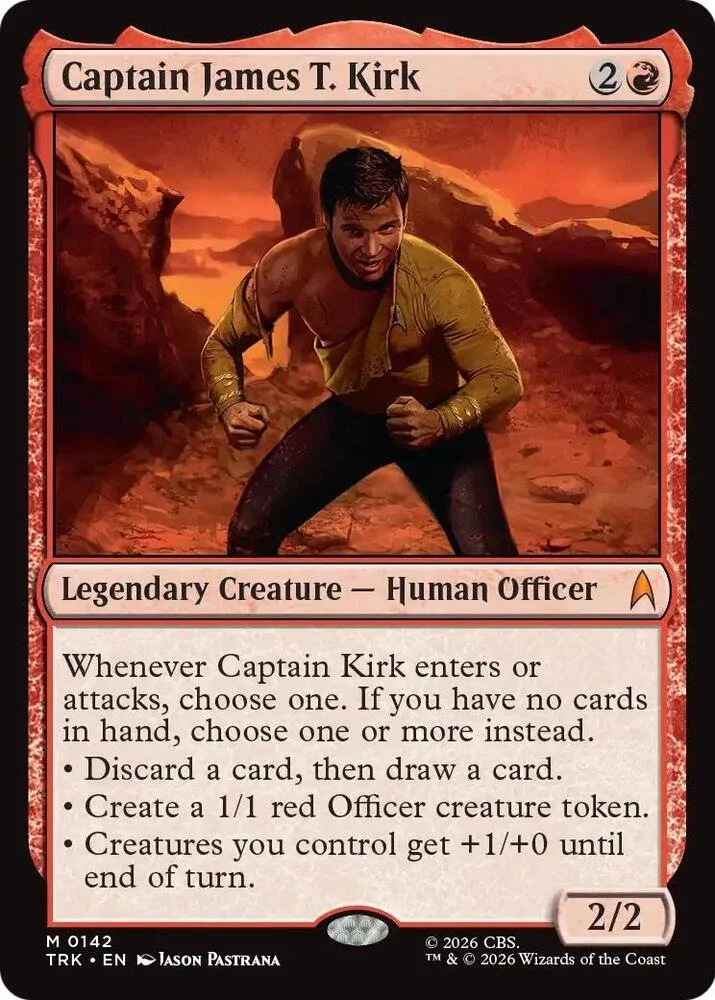
Captain James T. Kirk: Gives you a choice when he enters or attacks. Make an Officer, filter your hand, or boost your team’s power. If your hand is empty, you can choose multiple modes.
Simic / Blue-Green Strange New Worlds
Simic wants to see the galaxy, which apparently means I finally have a good excuse to spend draft picks on lands. This deck wants as many different land names as it can get while still casting its blue and green spells on time.
Gameplan
Build a reliable green-blue mana base, then use fixing and utility lands to raise your count. I’m happy to splash a strong card when the mana supports it. A dual land that fixes a splash and adds another name does both jobs at once, while a random off-color basic can make an opening hand much worse.
Draft Priorities
Yes, I’m telling you to draft lands. I’d start with the ones that cast my green and blue spells, then pick up more names once I have a payoff that gives me a reason to explore.
Strange New Worlds payoffs that improve at realistic land counts.
On-color dual lands and fixing that keep your early plays castable.
Utility lands and rare lands that add a name and do something your deck needs.
Win Condition
Spend the early turns developing your mana and keeping the board manageable. Once your land count gets high enough, turn it into a threat like The Traveler or a big spell like Branching Timeline that gives you more material than your opponent can handle.
Key Multicolor Cards
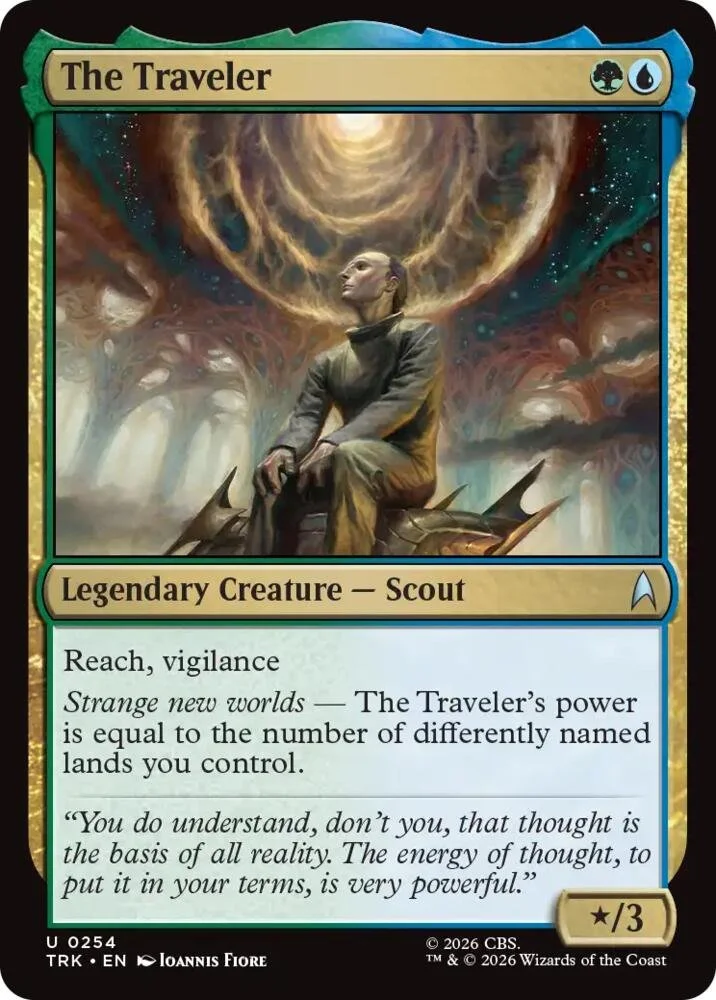
The Traveler: Has reach and vigilance, and its power scales with your differently named lands. It can hold off a flier and still attack once you’ve built up enough land names.
Best Common Cards for Strange New Worlds
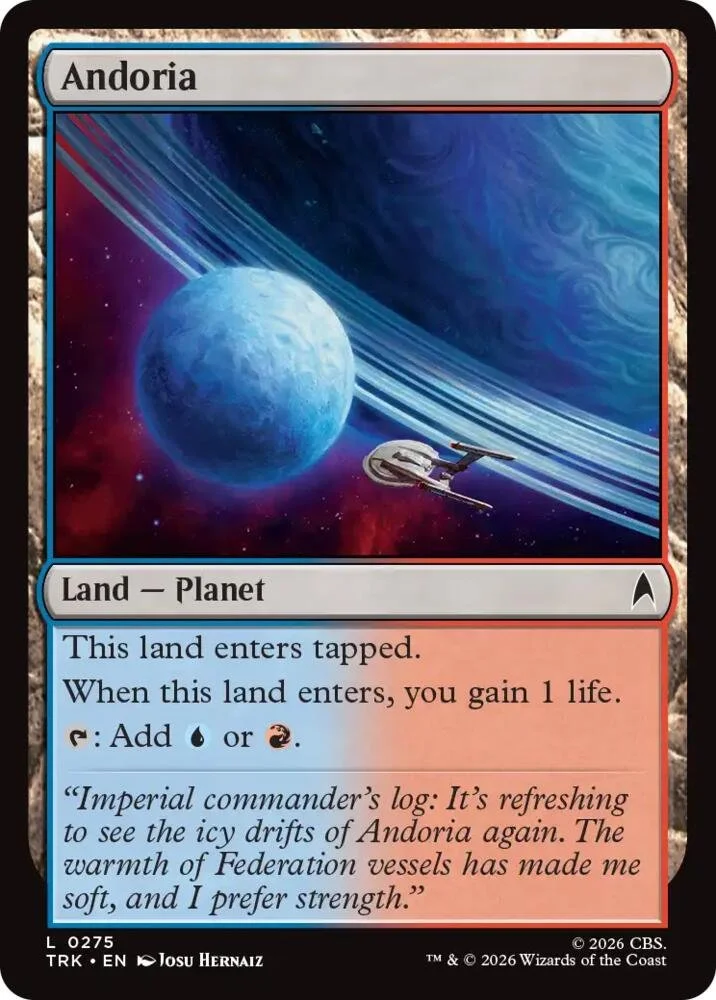
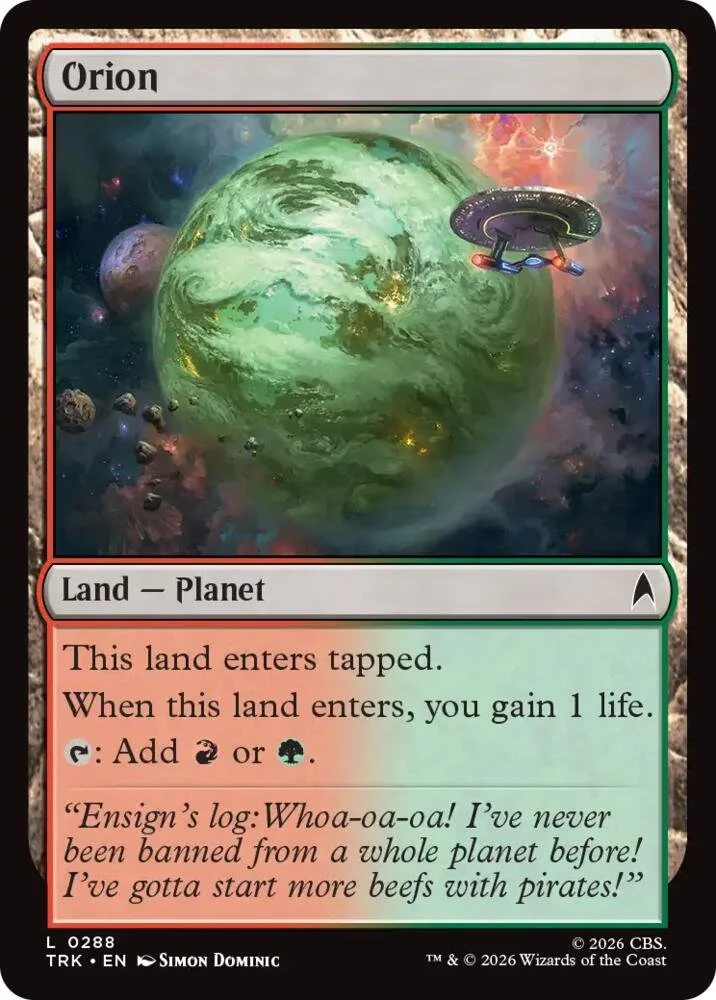
Common two-color Planets: Andoria, Bajor, Cardassia Prime, Orion, and the rest of the cycle give you more names to work with. Pick the ones that cast your spells and remember that two copies of the same Planet count as one name.
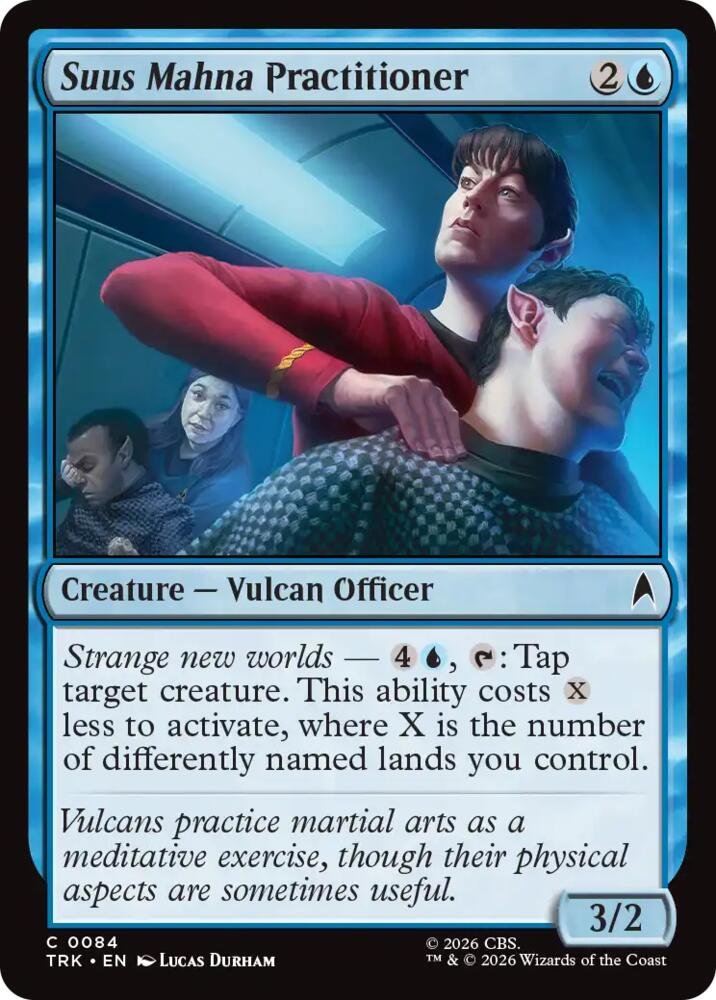
Suus Mahna Practitioner: A creature to look for when you need early board presence alongside the lands package.
Best Uncommon Cards for Strange New Worlds
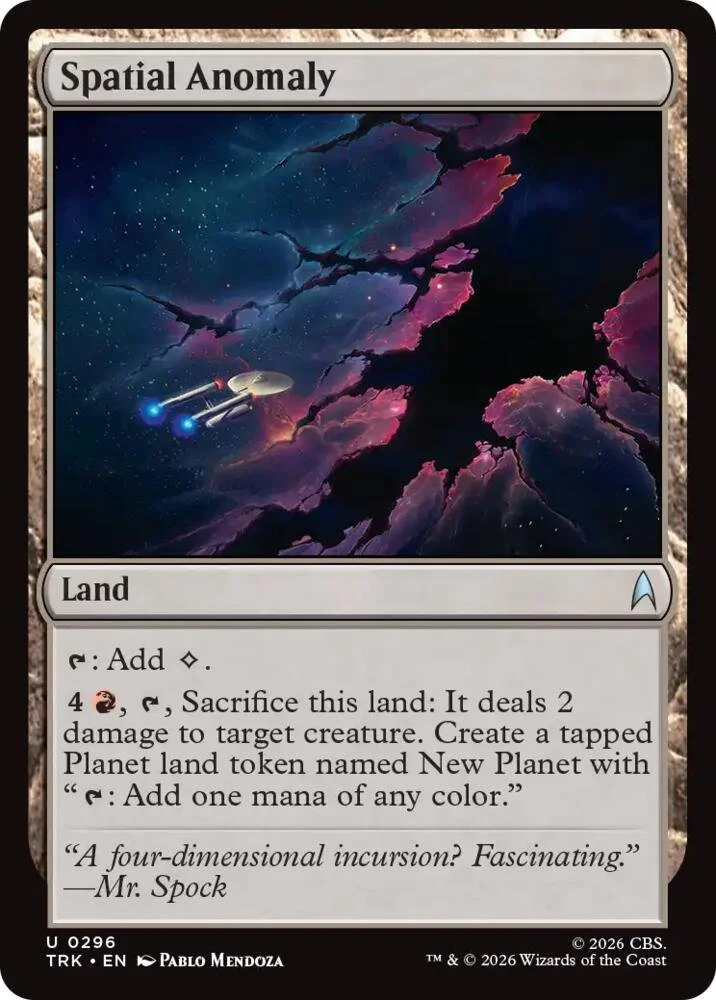
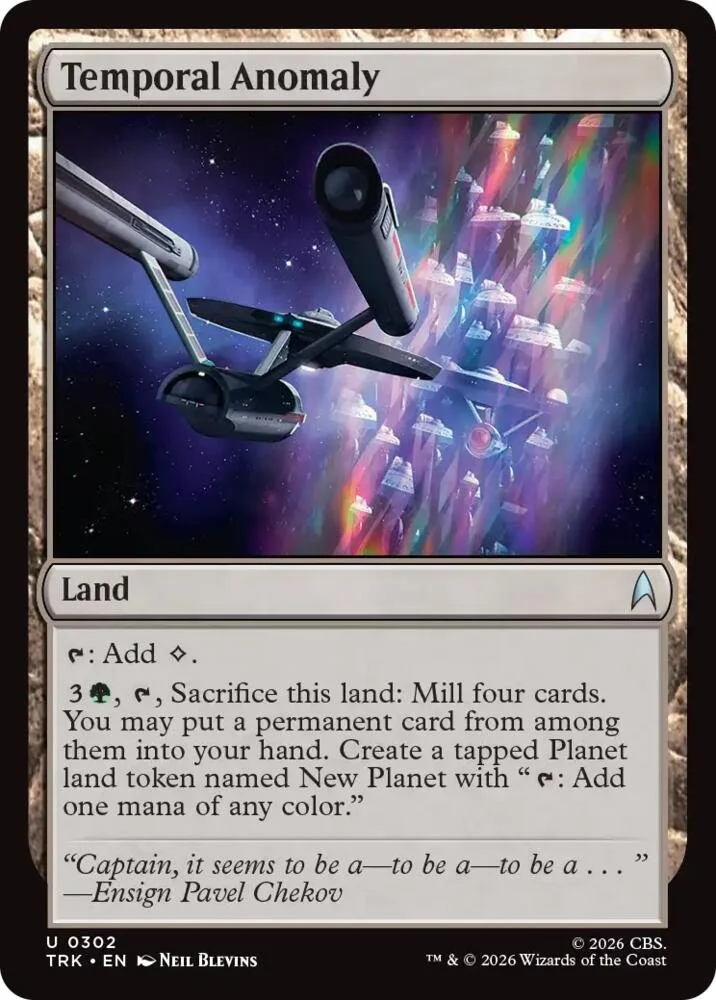
Anomaly lands: Lands such as Spatial Anomaly and Temporal Anomaly can give you extra names and late-game utility. Check what colors their abilities require before adding them.
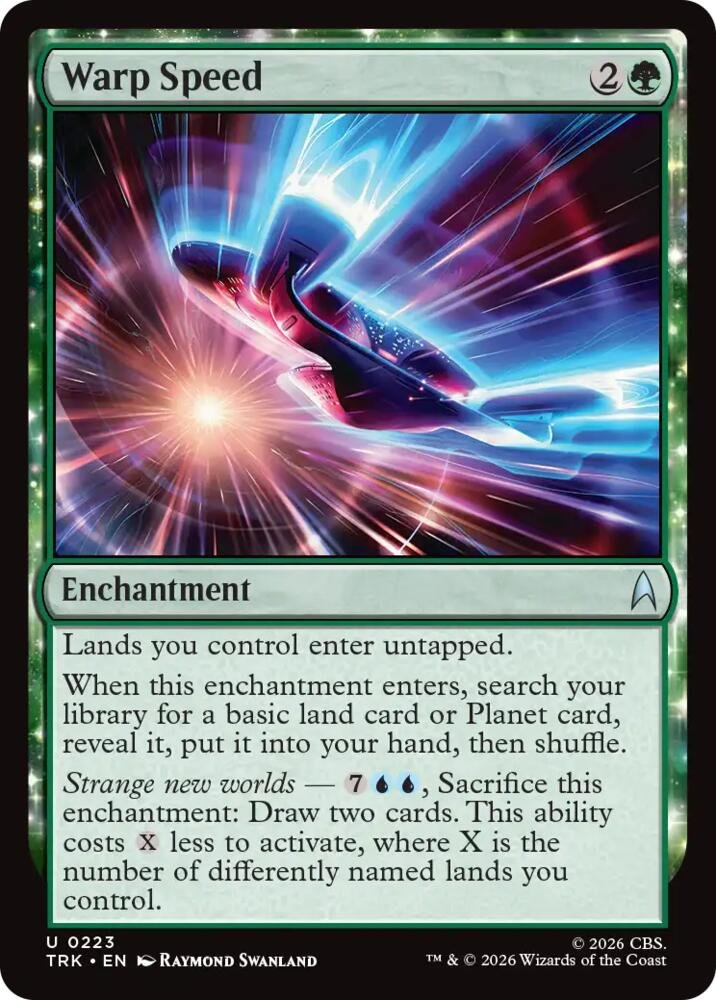
Warp Speed: Finds a basic land or Planet and lets your lands enter untapped. Later, you can cash it in for two cards at a discount based on how many different land names you have.
Best Rare and Mythic Cards for Strange New Worlds
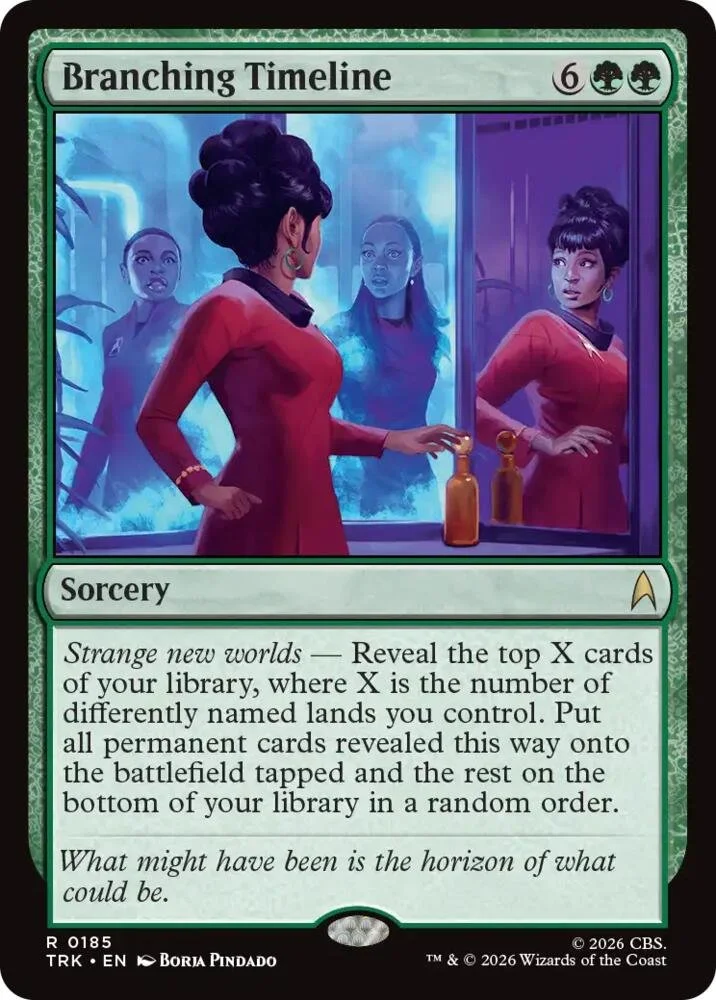
Branching Timeline: Looks at more cards as your number of differently named lands goes up, then puts the permanents you hit onto the battlefield tapped. Give it enough permanents to hit and enough early plays to reach eight mana.
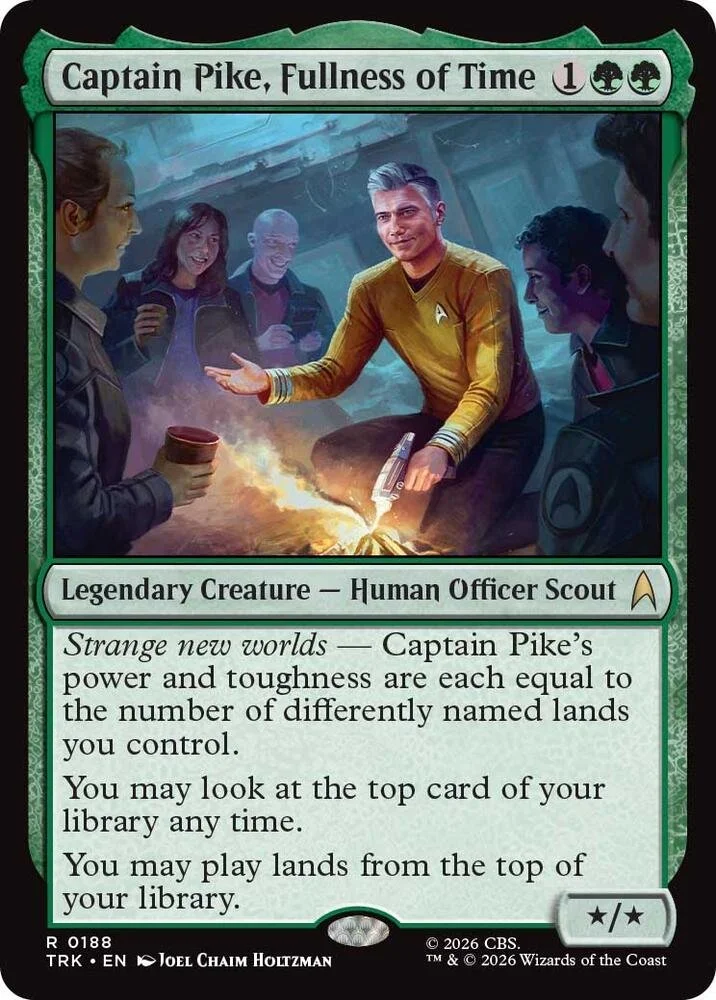
Captain Pike, Fullness of Time: A higher-rarity payoff to consider for a pool that can reliably build toward its bigger Strange New Worlds turns.
Best Interaction and Removal Cards in Star Trek
As always, interaction is one of the most important parts of Limited. In Star Trek, I’m giving artifact removal a little extra credit. Taking out a Spacecraft before it can attack is a perfectly good use of a card, especially after your opponent has spent a turn or two stationing it. Here are the answers I’m looking for in each color.
White
White has ways to answer big threats and buy time against smaller ones. I’d check how many of my answers can deal with a creature that’s staying back and generating value.
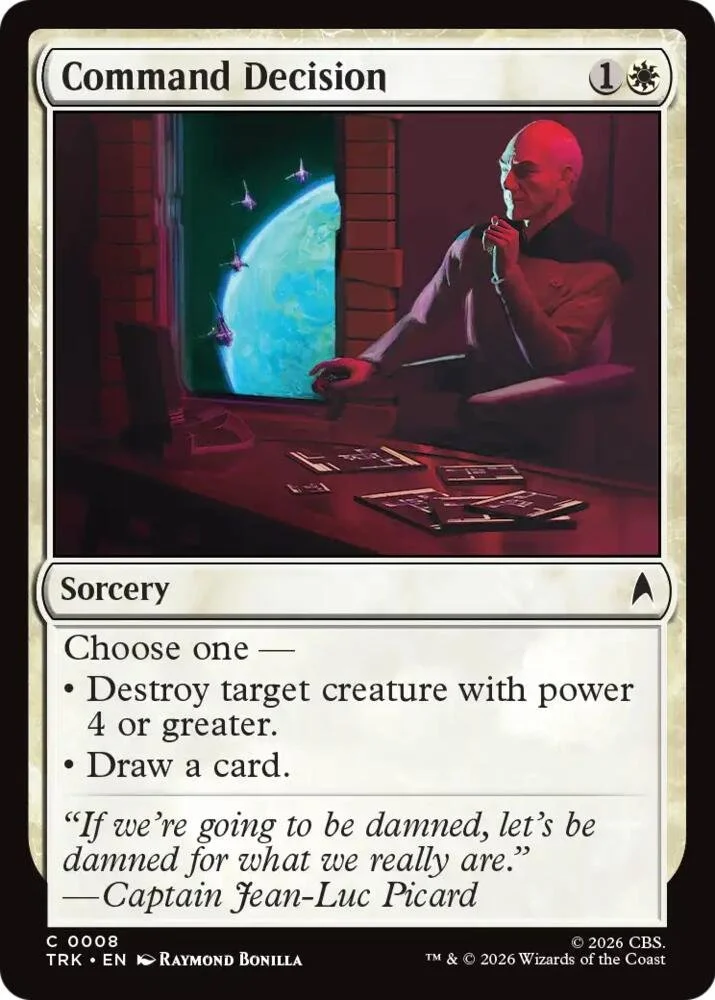
Command Decision: Destroys a creature with power 4 or greater, which is a good deal when your opponent has invested several turns getting a ship online. You can cycle it into a fresh card when there’s nothing big enough to kill.
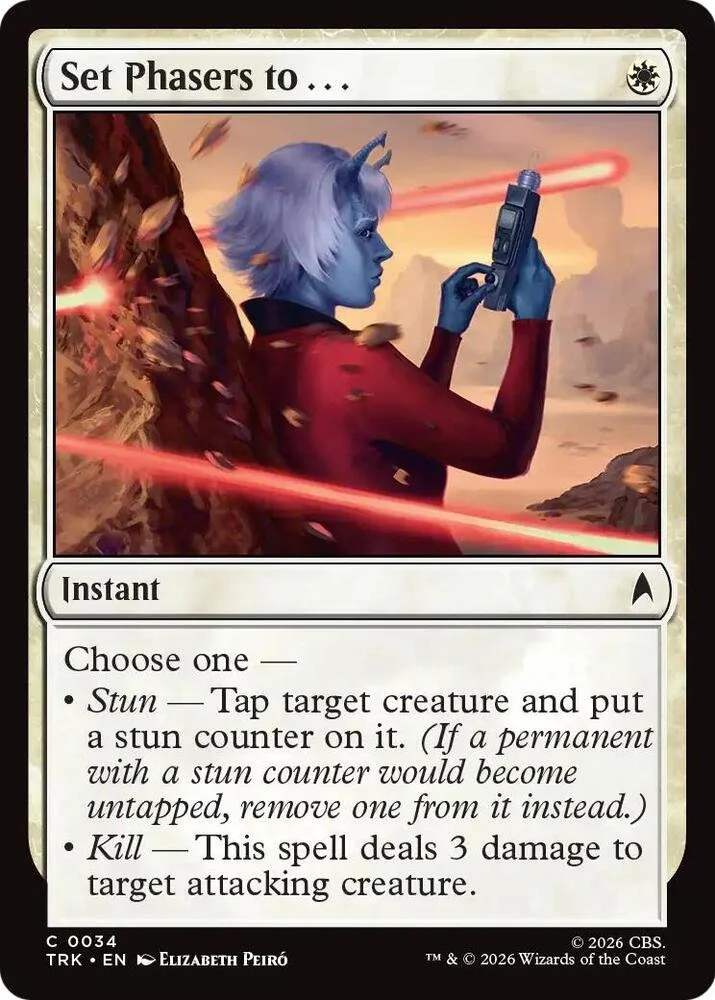
Set Phasers to . . .: Deals 3 damage to an attacking creature or taps a creature and gives it a stun counter. Use the stun mode before combat to take an attacker or blocker out of the equation for a while.
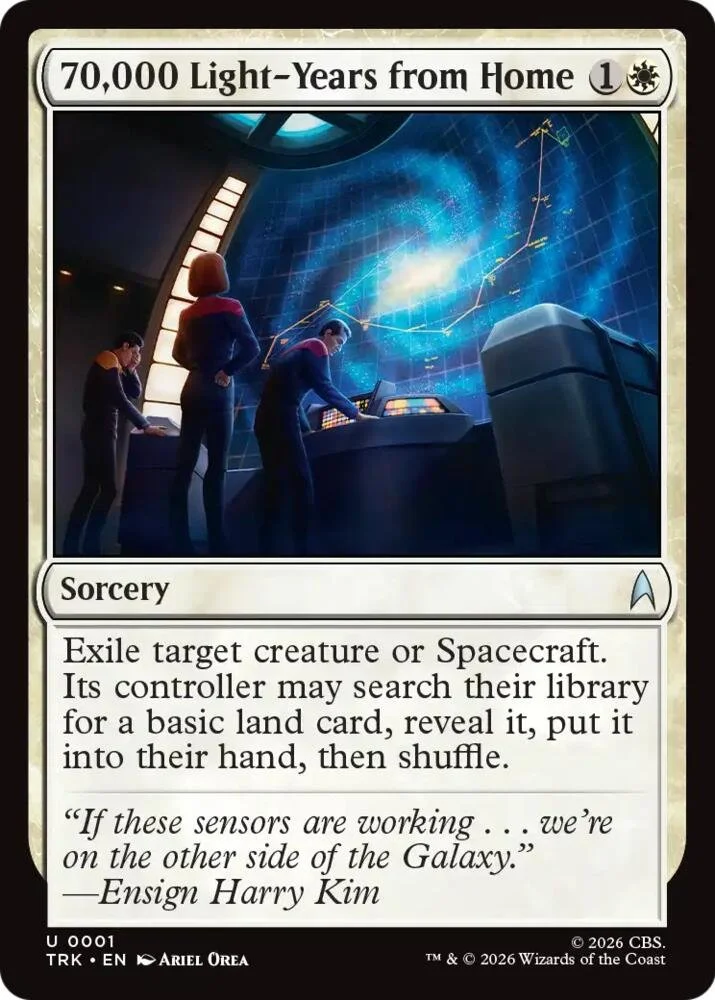
70,000 Light-Years from Home: Exiles a creature or Spacecraft, and its controller can find a basic land for their hand. I’ll take that trade when I need to get rid of a ship before it comes online or keep a creature out of the graveyard.
Blue
Blue buys time with bounce and stun counters and can stop a threat before it hits the table. I’d pair those temporary answers with a creature that can actually make use of the extra turn.
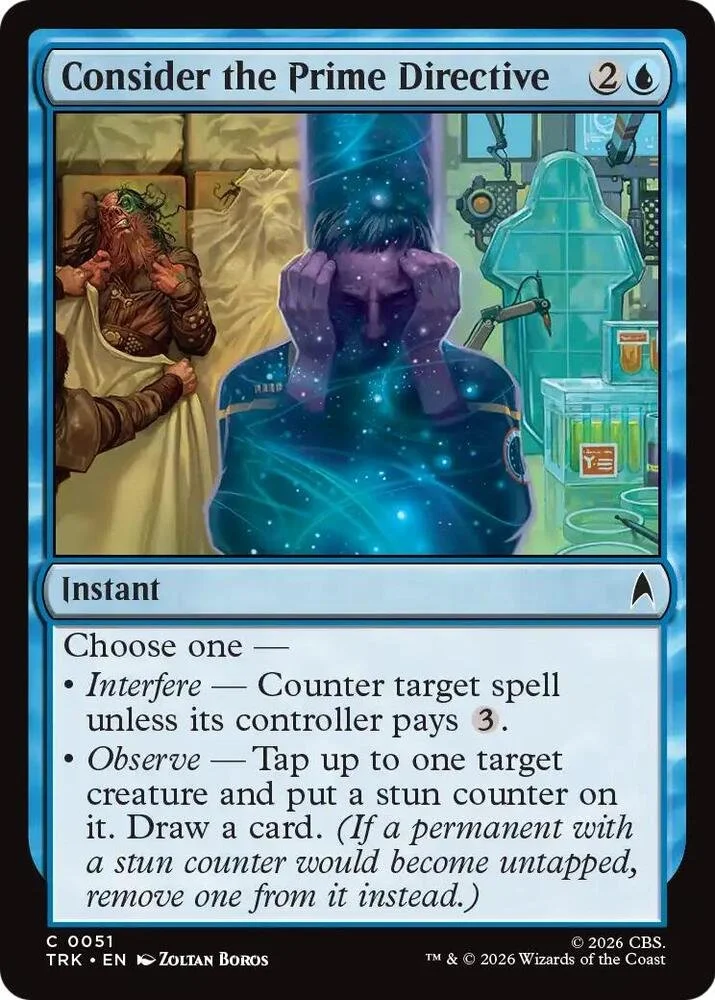
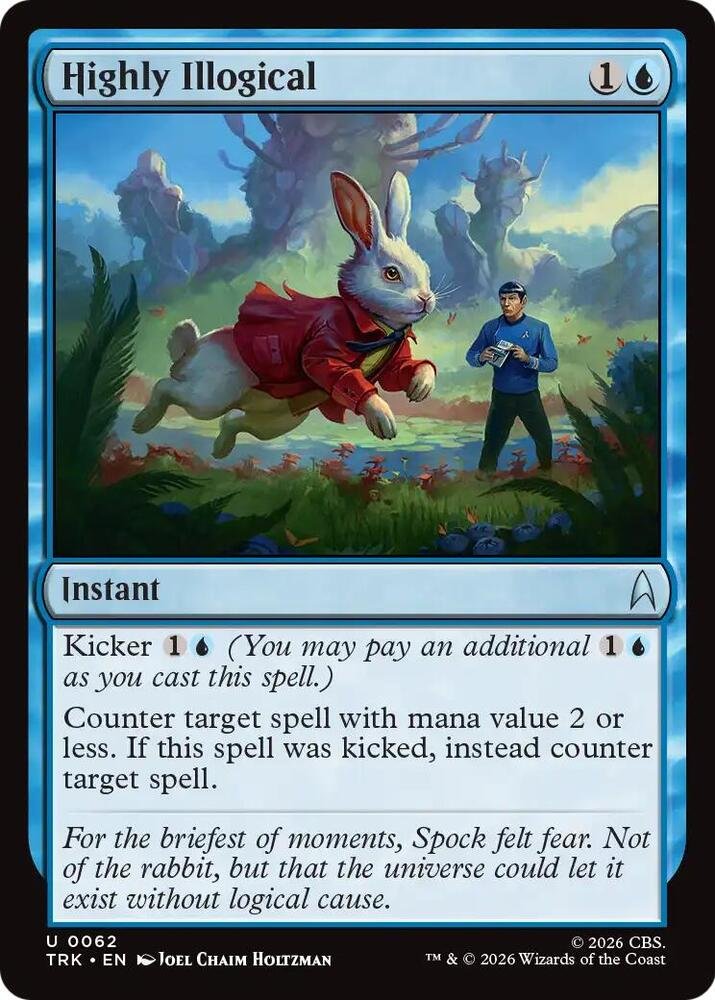
Consider the Prime Directive: Taxes a spell for three mana or lets you tap and stun a creature while drawing a card. I like that you can hold up a counter and still have a play if your opponent casts nothing worth stopping.
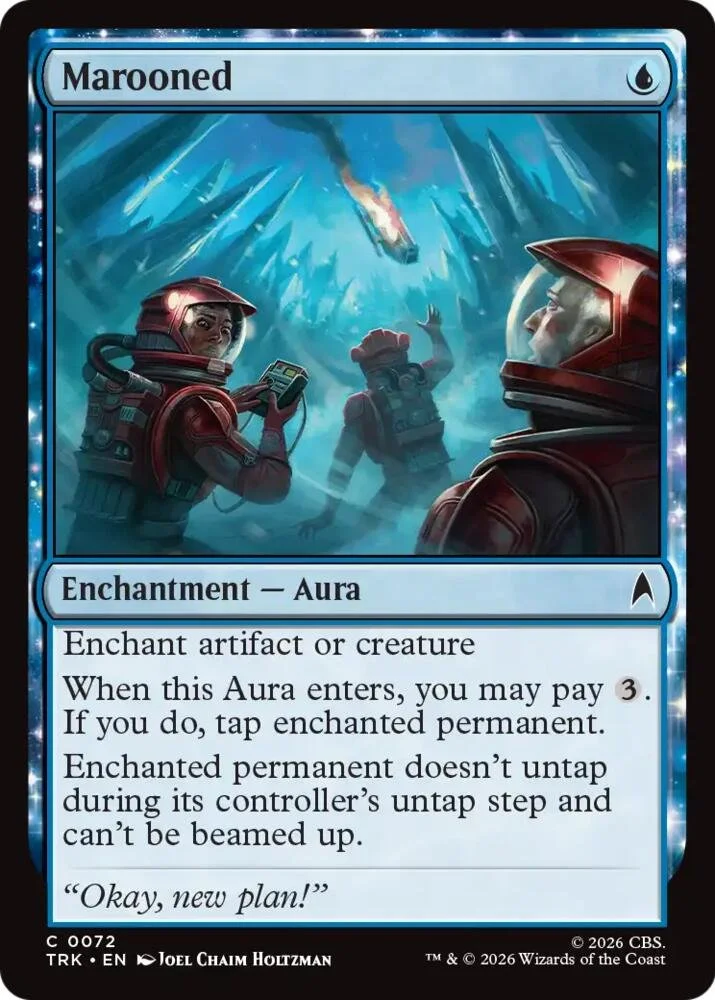
Marooned: Keeps a creature or artifact from untapping normally and prevents it from being returned to pay a Beam Me Up cost. I’d put it on something that’s already tapped when possible. If it’s still untapped, you can pay three extra mana as the Aura enters to tap it.
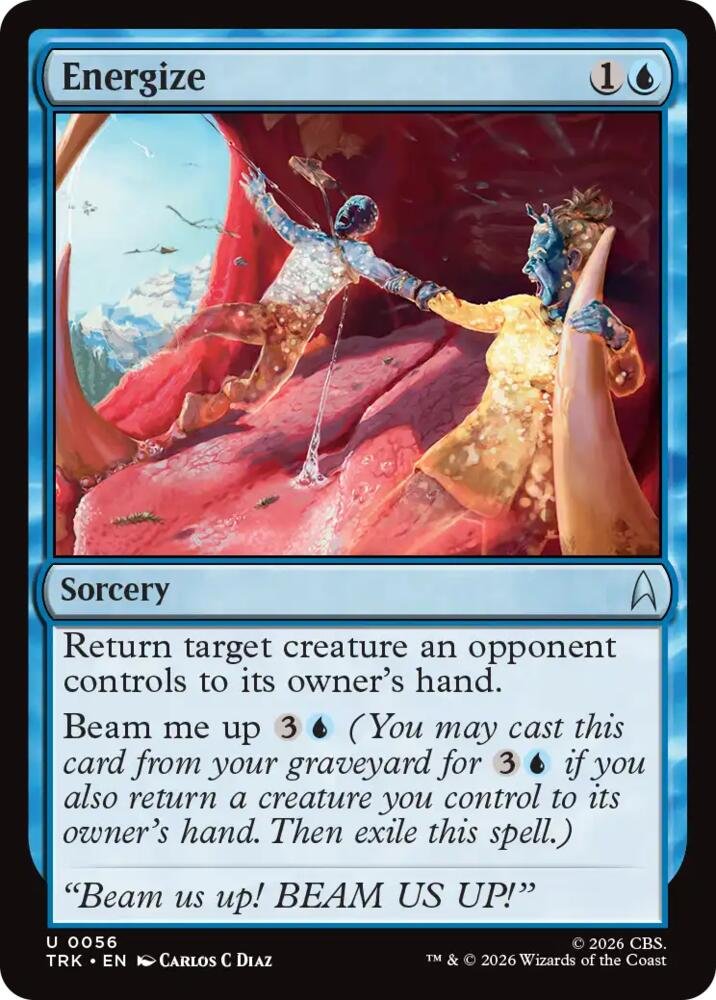
Energize: Bounces an opposing creature at sorcery speed and can do it again from your graveyard with Beam Me Up. I’d look for a chance to clear a blocker while returning one of my own creatures with a good enters ability.
Highly Illogical: Counters a spell with mana value 2 or less for two mana. With kicker, it costs four total and can counter any spell, so it stays useful once your opponent starts casting their bigger threats.
Black
Black has some of the cleanest creature removal in the set. Pay attention to the restrictions on your cheaper spells, especially when the opponent starts playing Borg.
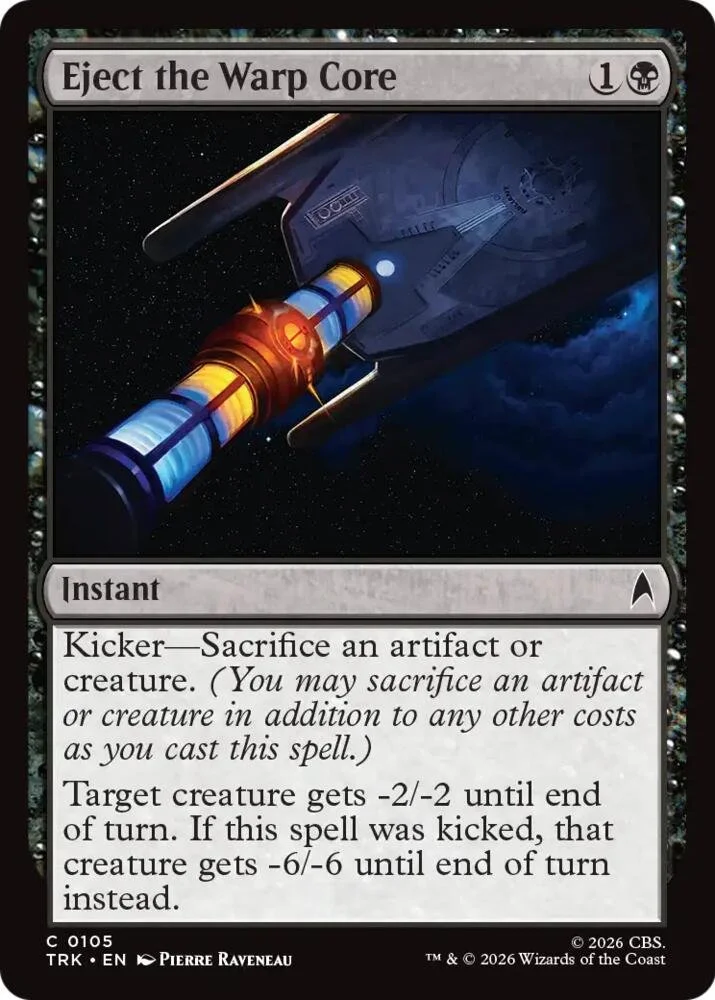
Eject the Warp Core: Gives a creature −2/−2 at instant speed, or −6/−6 if you sacrifice an artifact or creature to kick it. A spare token is an easy price to pay when it lets you take out a much bigger threat.
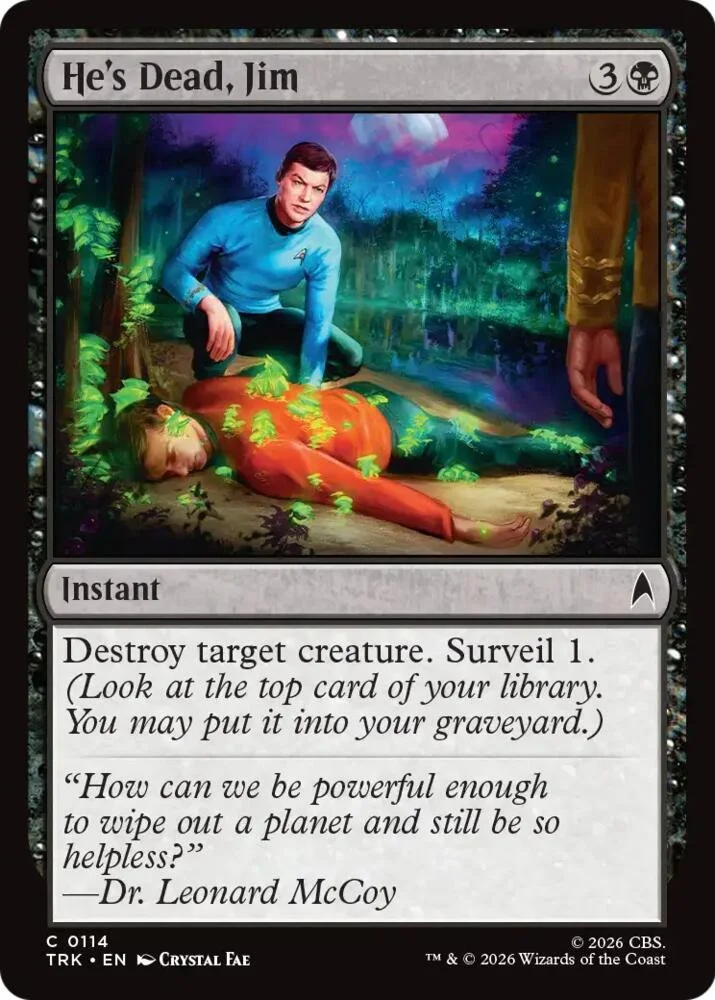
He’s Dead, Jim: Destroys a creature at instant speed and lets you surveil 1. It’s the black removal spell I’d reach for when I want an answer to both regular creatures and artifact creatures.
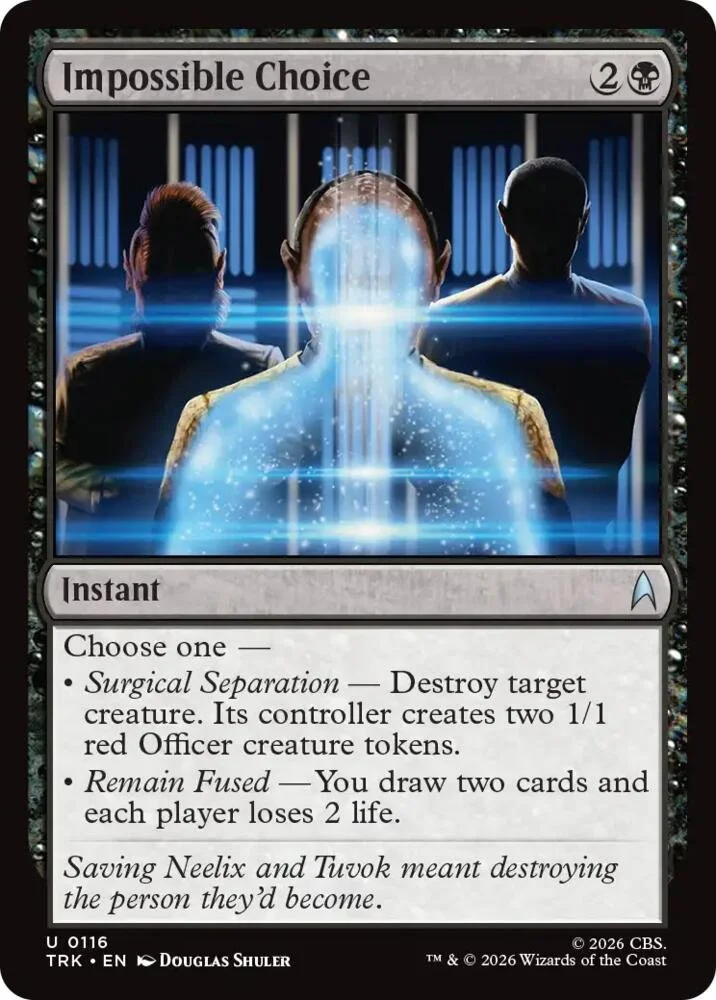
Impossible Choice: Destroys a creature at instant speed but gives its controller two 1/1 Officers. I’m happy to make that trade against a big flier. If the board is already under control, you can draw two cards and have both players lose 2 life instead.
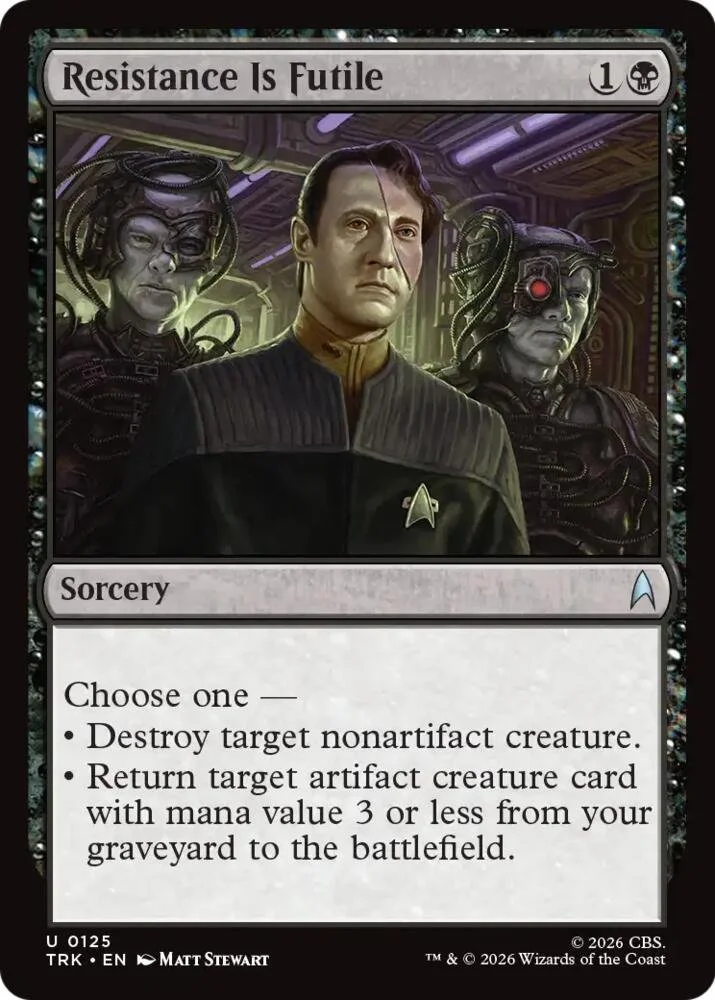
Resistance Is Futile: Two mana to destroy a nonartifact creature is a great rate, but check the type line before counting on it against the Borg. The other mode brings back one of your own artifact creatures with mana value 3 or less.
Red
Red can burn out small creatures, punish a crowded board, or blow up a Spacecraft. A few of these spells can also give you the last points of damage after your opponent has stabilized.
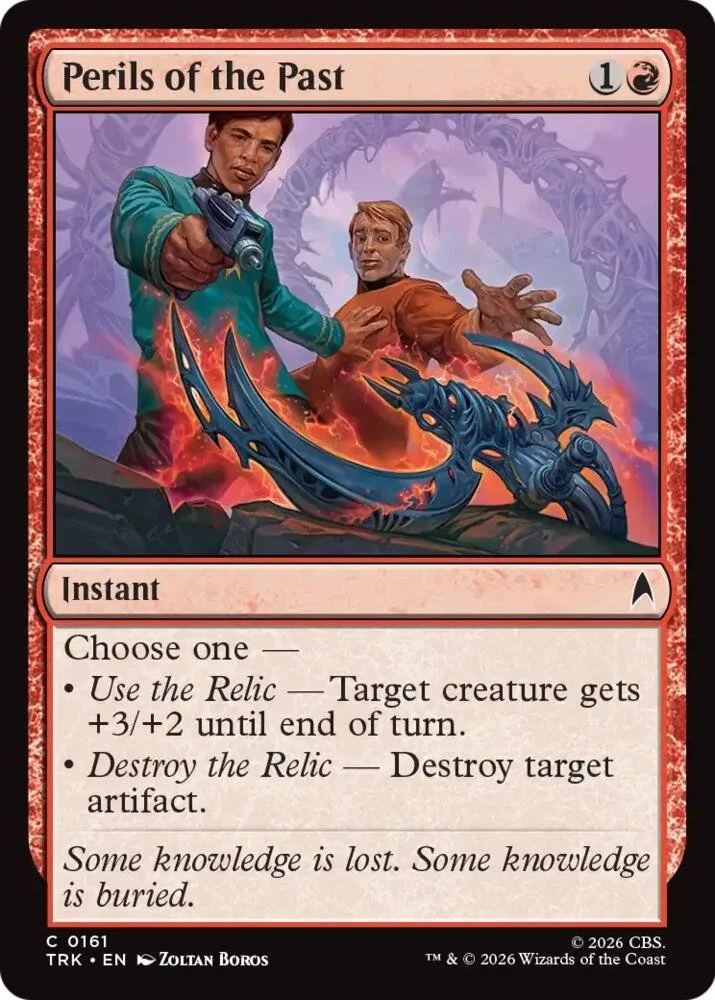
Perils of the Past: Either destroys an artifact or gives a creature +3/+2 for the turn. I like having an answer to Spacecraft in my main deck that can still win a combat when there’s no artifact worth blowing up.
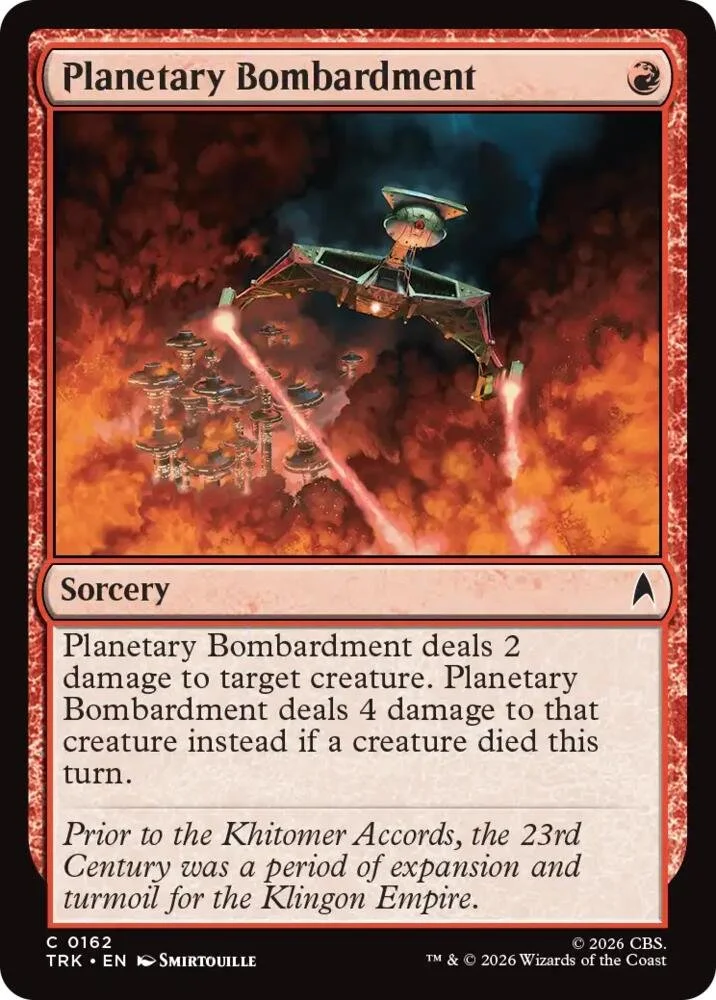
Planetary Bombardment: Deals 2 damage to a creature, or 4 if any creature died that turn. In Rakdos, I’d look for a combat trade or a sacrifice before casting it so I can take out something bigger.
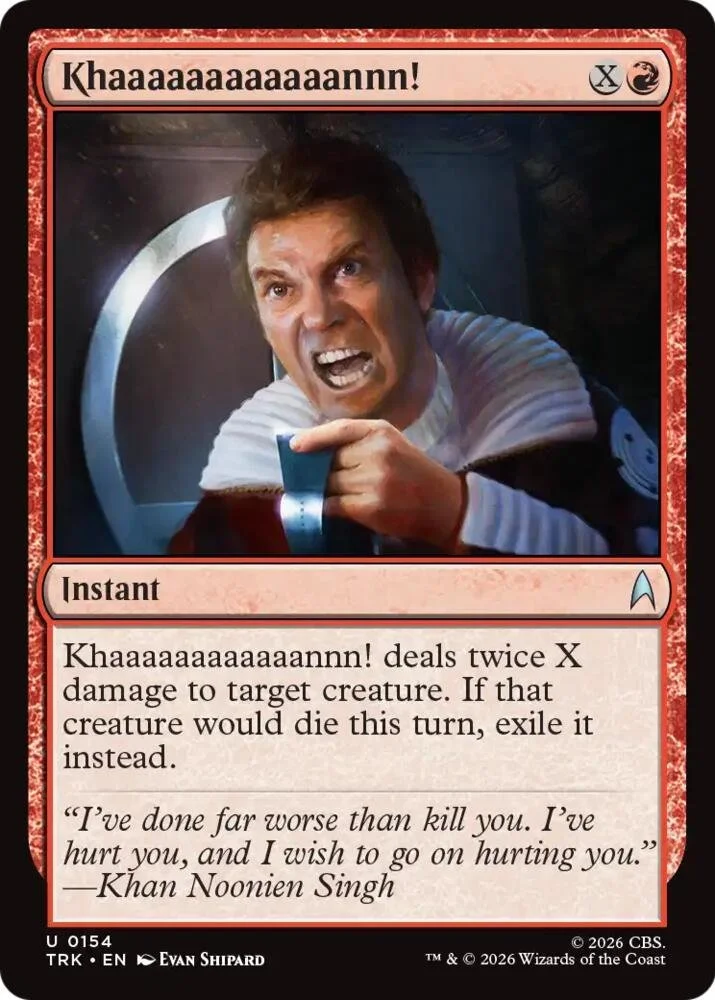
Khaaaaaaaaaaaannn!: Deals twice X damage to a creature and exiles it if it would die that turn. Four damage for three mana is already a good rate, and it scales when you need to answer something larger.
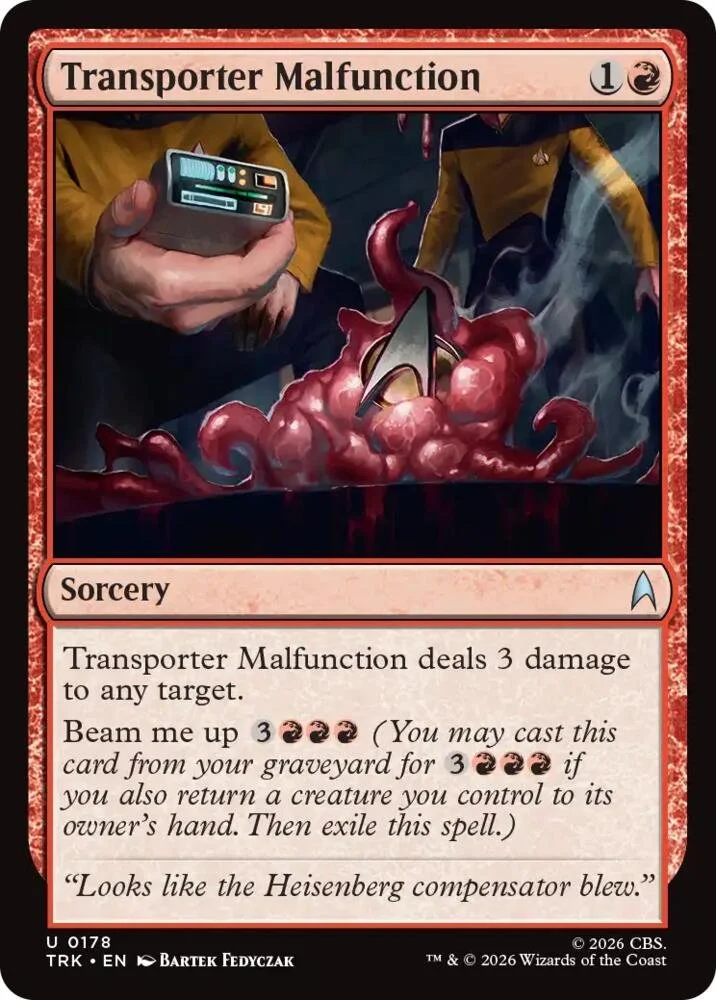
Transporter Malfunction: Deals 3 damage to any target, so it can clear a blocker or finish the game. Beam Me Up gives you a second shot if you can afford the six mana, including three red, and have a creature to return.
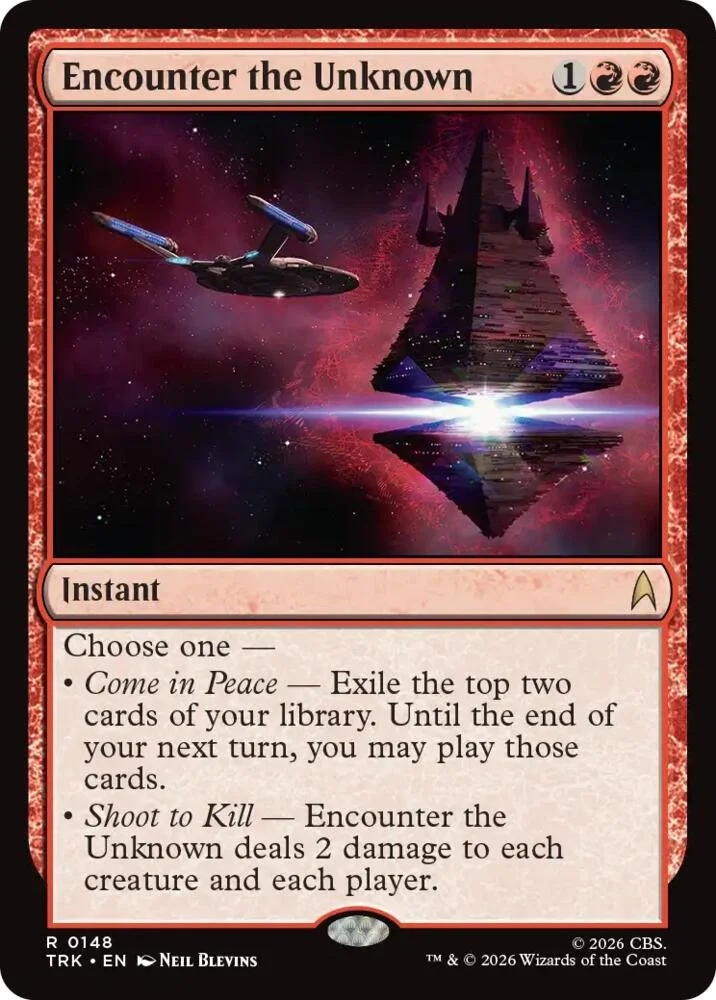
Encounter the Unknown: Deals 2 damage to every creature and player, or gives you access to the top two cards of your library through the end of your next turn. I’d check both boards and both life totals before firing off the damage mode.
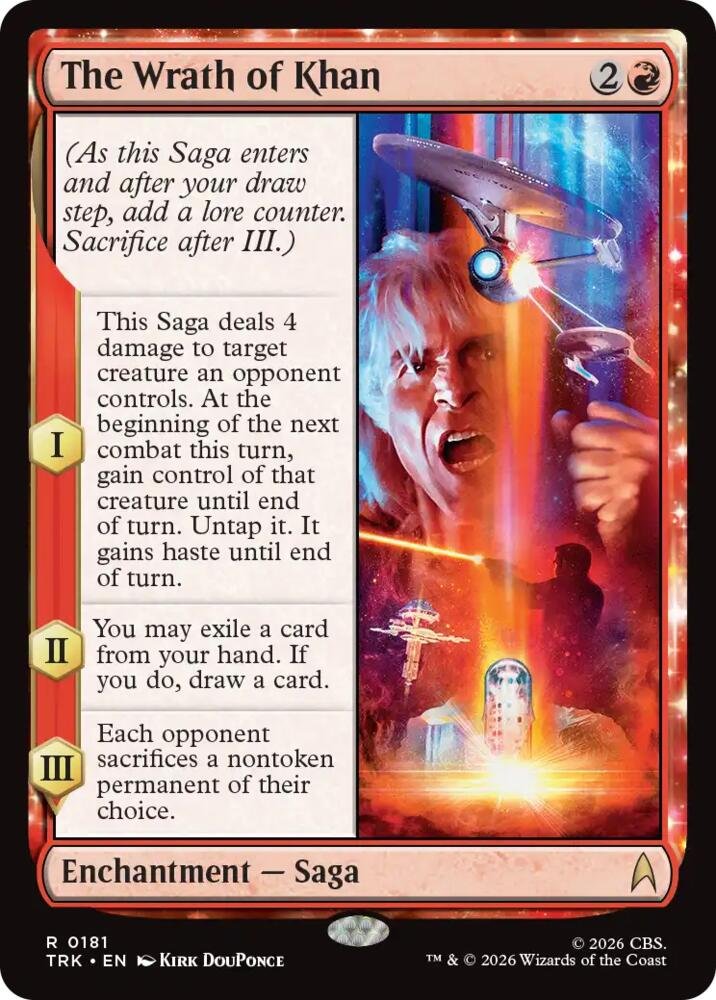
The Wrath of Khan: Starts by dealing 4 damage to a creature an opponent controls. Getting that removal up front means the Saga has already done something useful while you wait for the later chapters.
Green
Green’s best creature removal depends on having some power on the board. It also has ways to deal with artifacts and enchantments, though you’ll want to check what each spell can actually hit.
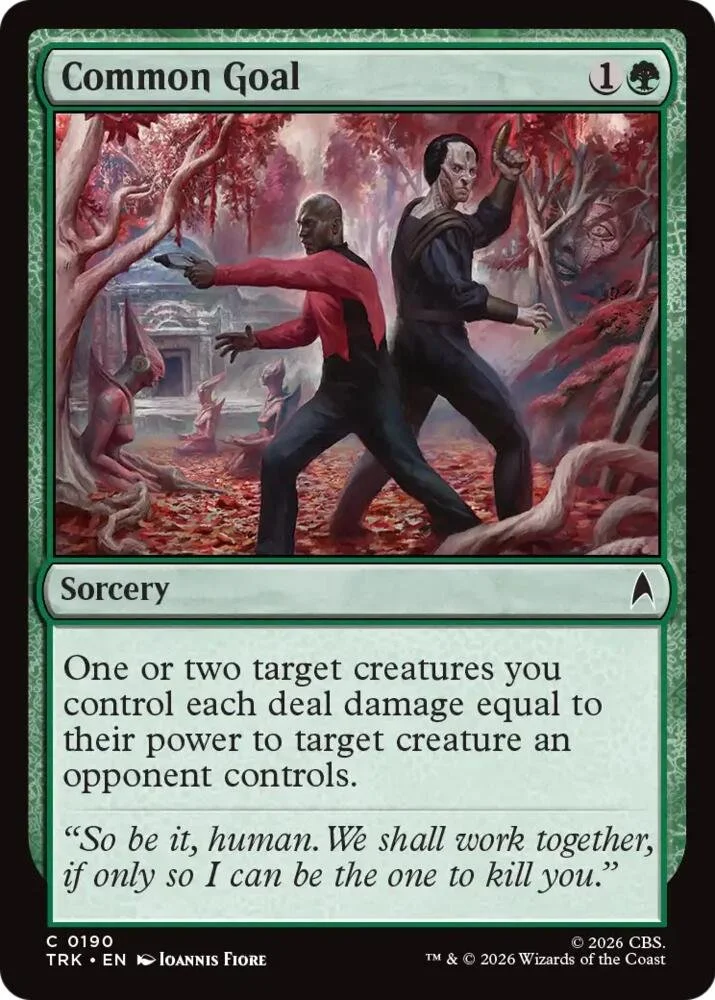
Common Goal: Lets one or two of your creatures deal damage equal to their power to the same opposing creature. Your creatures don’t take damage back, so you can combine two smaller bodies to take out a threat neither could handle alone.
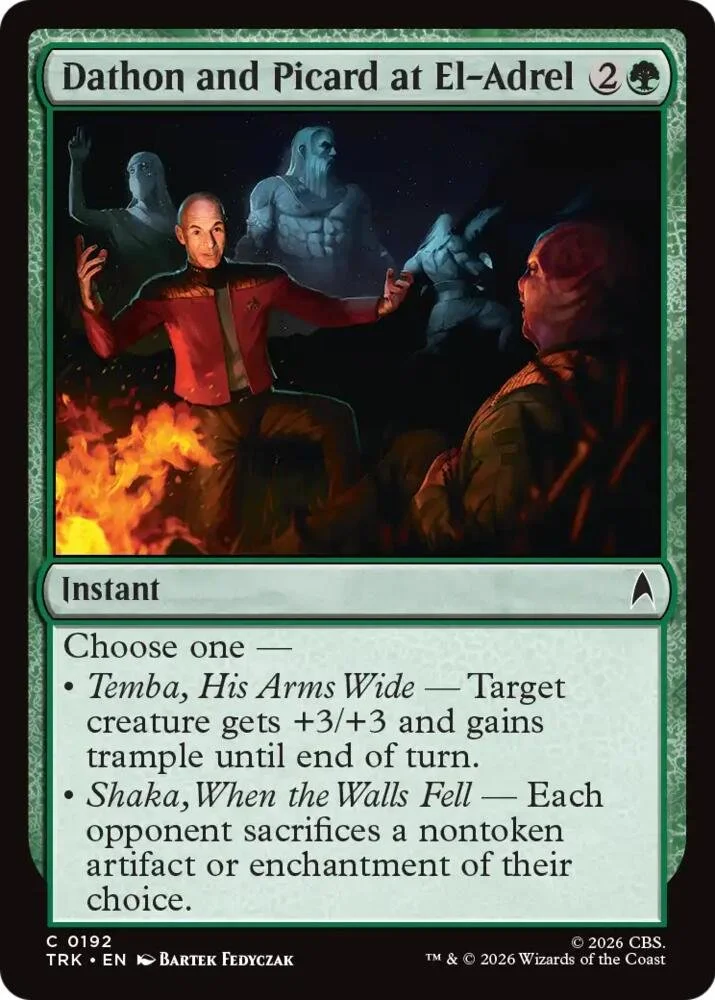
Dathon and Picard at El-Adrel: Gives a creature +3/+3 and trample for the turn, or makes your opponent sacrifice a nontoken artifact or enchantment of their choice. I like the removal mode best when there’s only one thing they can give up.
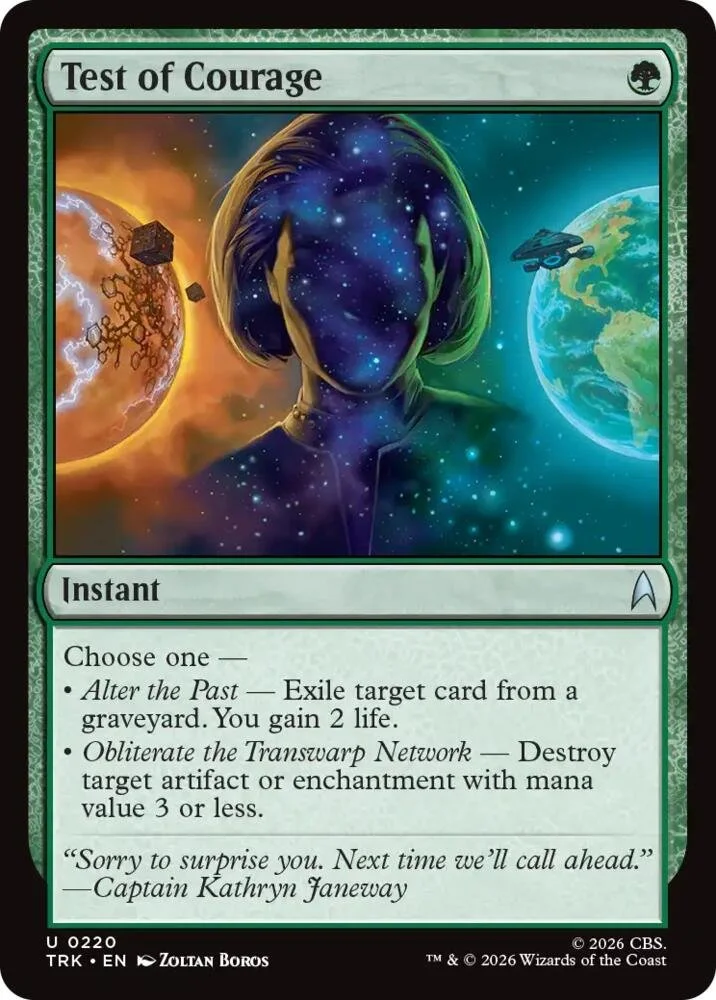
Test of Courage: Destroys an artifact or enchantment with mana value 3 or less, or exiles a card from a graveyard and gains you 2 life. I’d bring it in when I’ve seen cheap artifacts worth answering or a graveyard spell I want to catch before my opponent can use it.
What’s the Best Draft Archetype in Star Trek?
My pick is Orzhov Borg Artifact Creatures. There’s enough support at common and uncommon to build a deck that can put pressure on your opponent early, and some of the best rares and mythics give you a way to take over if the game goes long. I’d be happy drafting the deck without a Borg Cube. Opening one just makes the decision a whole lot easier.
Selesnya Doctors & Counters is my pick for newer players. The plan is easy to see while you’re building your deck. Play creatures on curve, start putting counters on them, and let the Doctors make those counters go further. It’s straightforward and still gives you some interesting decisions about where to put your counters.
I’m a little lower on Boros Command 8+ Total Power and Dimir Dilemma Control. Both have cards I’d happily play, but I’d want to see enough support before building around either theme. Boros needs enough creatures to hit eight power and stay there through combat trades. Dimir can play a perfectly good control game, but I’d let the modal cards and payoffs come to me. Golgari Archaeology Graveyard is the deck where I’d be most tempted to splash white if I opened a strong artifact payoff and had the fixing to cast it.
Deck-Building Tips for Star Trek Limited
Splash for a card you’ll be happy to draw late. There’s plenty of fixing in Star Trek, so I’m willing to go into a third color for a strong payoff or an answer my deck needs. I still want my main colors to cast my early creatures on time. A splash is a lot easier to justify when the card only asks for one mana of that color.
Give Strange New Worlds more land names. If I’m playing Simic, I’m looking for Planets and utility lands that add names while helping me cast my spells. I’ll even consider lands that produce all five colors across the mana base if the fixing is there. Start with enough green and blue sources, then see how many different names you can fit. Three Forests still count as one name.
Gameplay Tips for Star Trek Limited
Save removal for what your deck struggles to answer. If your opponent is stationing a ship that’s about to become a big flier and you have no good blocks for it, keep an answer handy. Against Golgari, look for a chance to exile the creature they keep bringing back. If they target it with a recursion spell, that’s often a good time to use instant-speed graveyard hate.
Take a hit if it buys you a better turn. If I’m building toward a big Spacecraft turn or waiting for a payoff, I’m willing to take a few points of damage to keep a creature I’ll need later. Check what your opponent can swing for next turn before deciding how much life you can afford to spend.
Playing an aggressive red deck? Attttttaaaaaaack! Rakdos and Boros both get paid for getting into combat. A trade can turn on a death payoff or make Planetary Bombardment hit harder, so look at what you get out of combat before you rule out an attack.
Leave someone behind to block. Just because you can Station with your whole crew doesn’t mean you should. If the last creature you tap still leaves your ship short of its threshold, you may be better off keeping that blocker and finishing the job next turn.
Final Thoughts
Star Trek has me curious to see which decks come together once we start cracking packs. The Borg are my early pick, but you know I’m going to have a hard time passing up a good Landfall deck. Green go brrrrr.
If you’re heading to prerelease, start with what your pool gives you. A solid curve and a few good answers will carry you a long way, and the archetypes can help you decide which synergies are worth building around. Good luck at prerelease, and may your Spacecraft come online before your opponent’s do.