Pre-Rift events are your first hands-on chance to dive into Riftbound: Spiritforged in a fun, low-pressure environment. Much like a prerelease in other TCGs, these events are all about discovery—opening packs, learning new mechanics, and figuring out how each Legend plays before the set officially launches.
With seeded Legend kits, a smaller deck size, and relaxed deck-building rules, Pre-Rift events are approachable for newcomers while still offering plenty of depth for experienced players looking to get an edge.
On this page
- What is a Pre-Rift event?
- What Legends are available in the Pre-Rift kits?
- How to build a Pre-Rift deck
- Cards to Watch for Each Legend
- Ezreal
- Irelia
- Jax
- Lucian
- Rek’Sai
- Renata Glasc
- Deckbuilding and Pre-Rift gameplay tips
- Common Mistakes to Avoid at Pre-Rift Events
- Final Thoughts
- Legend Recommendation Guide
What is a Pre-Rift event?
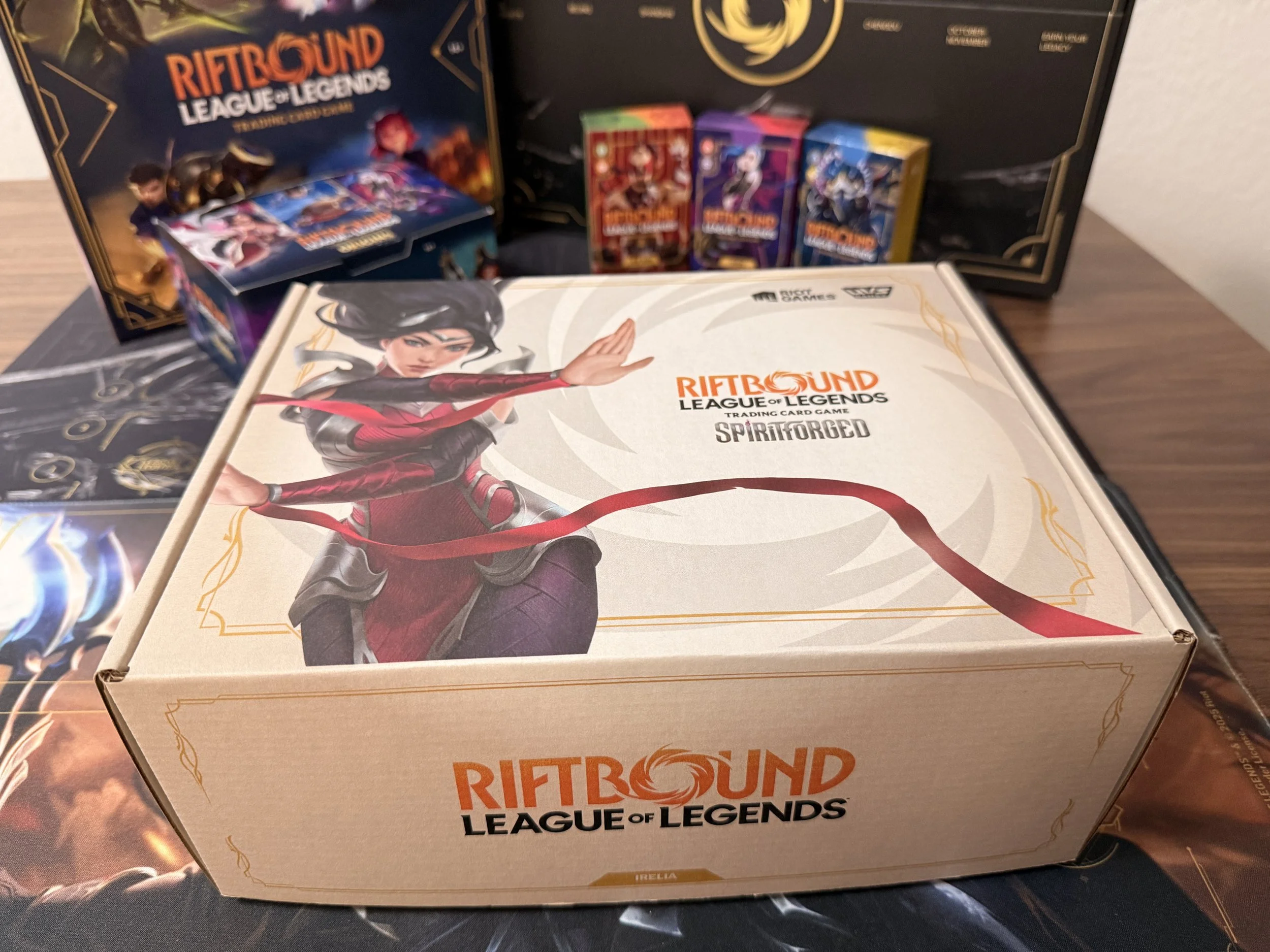
Pre-Rift events are sealed, casual pre-release tournaments hosted by your local game store. After signing up, you’ll receive a Pre-Rift kit that includes:
A 15-card seeded Legend pack, featuring
One of six possible Legends
A battlefield designed to support that Legend
Additional cards that synergize with their playstyle
A Pre-Rift Yone promo card
Five booster packs of Riftbound: Spiritforged
Your local game store will typically provide runes, though it’s never a bad idea to bring your own just in case. Once the judge gives the start signal, you can open your kit and begin deck construction.
What Legends are available in the Pre-Rift kits?
There are six different seeded Legend packs available at Pre-Rift events:
Ezreal
Irelia
Jax
Lucian
Rek’Sai
Renata Glasc
You aren’t required to play the Legend from your seeded pack if you open another one in your boosters. That said, sticking with your seeded Legend is usually the strongest option—you’re guaranteed a coherent starting core with a Legend, a chosen Champion, and a battlefield that already supports your strategy.
How to build a Pre-Rift deck
Once you open your Pre-Rift kit, you’ll have five Spiritforged booster packs to either upgrade your seeded Legend deck or build something entirely new.
A few important things to keep in mind:
Deck size is only 25 cards, making consistency much easier to achieve.
Using your seeded Legend is strongly recommended, since it guarantees a chosen Champion and a functional foundation.
If you don’t have enough playable cards in your Legend’s domain, sealed rules allow you to splash a third domain. This is extremely powerful and often correct.
Players who choose not to run a Legend or Champion may draw an extra card on turn one and use any three colors—but in most cases, the seeded Legend + one additional color will be the optimal route.
With the smaller deck size, even a handful of strong synergies can define your entire strategy, so focus on consistency over greed.
Cards to Watch for Each Legend
Each of the six Legends is designed to highlight different mechanics and playstyles in Spiritforged. Some lean heavily into new mechanics like repeat or Gold generation, while others focus more on aggressive combat or equipment synergies. What I really like about this lineup is how different these Legends feel compared to the Origins Legends and the pre-constructed Champion decks—each one pushes you toward a distinct sealed strategy.
Ezreal
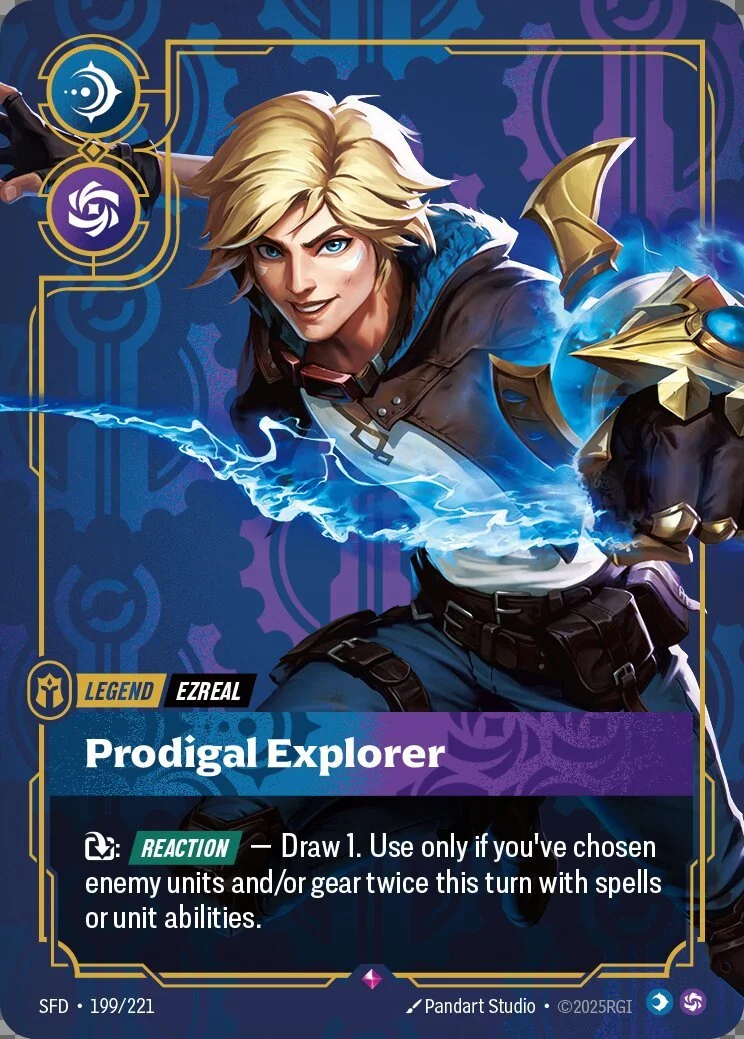
Ezreal is a classic spell-slinger Legend and likely many players’ first real exposure to the repeat mechanic—probably why he was chosen as one of the seeded packs. His Legend ability lets you exhaust Ezreal to draw a card as a reaction, but only after you’ve targeted opposing units or gear twice in the same turn.
That requirement is a little steep at first glance, but it clearly signals how Ezreal wants to be built. Cheap spells, repeat effects, activated abilities, and Gold generation all help you consistently trigger his ability. Any card that targets enemy units or gear, generates Gold, or rewards spellcasting fits naturally into this deck.
Notable cards:
Hard Bargain – Counter spell
Factory Recall – Return gear to owner’s hand
Switcheroo – Shrink an enemy unit and buff yours
Spirit Wheel – Gear that draws cards
Fizz – Trickster – Replay spells from your trash
Vex – Cheerless – Makes spells cheaper
Ezreal – Prodigy – Reduces optional spell costs
Sivir – Mercenary – You’ll be casting spells often, so she’ll usually have the +2 bonus and Ganking
Irelia
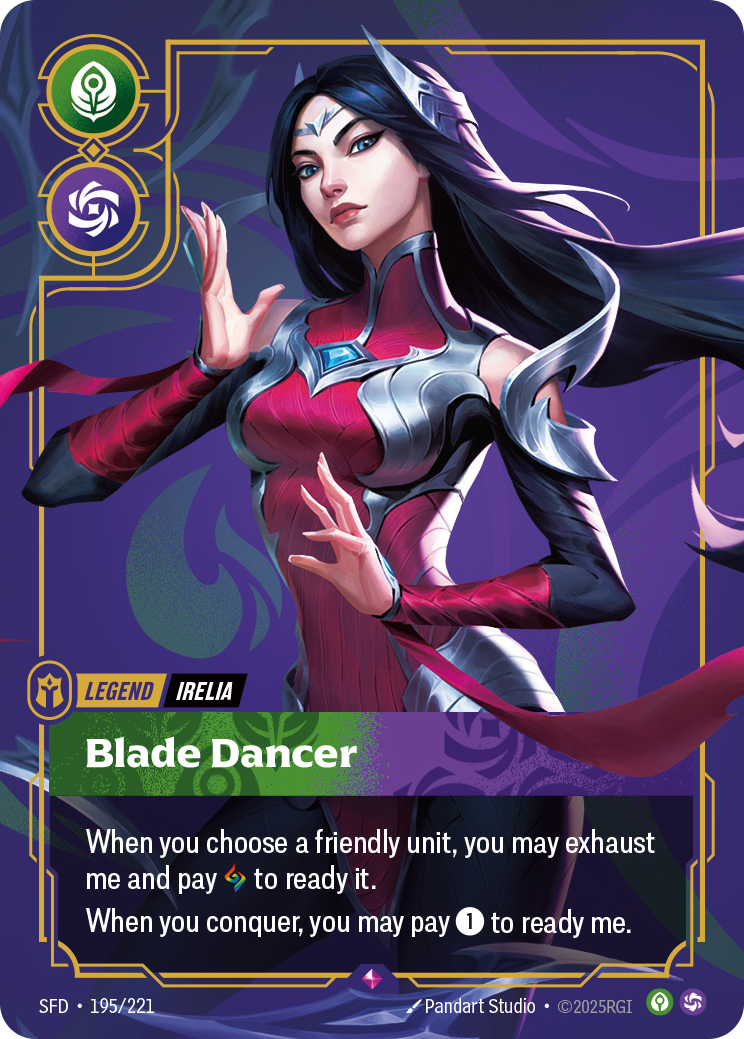
Irelia is essentially Ezreal’s opposite. Instead of targeting enemy units, her Legend ability rewards you for targeting your own units. Each time you do, you can recycle a rune to ready that unit, and whenever you conquer, you can pay 1 to ready your Legend—letting you reuse units multiple times in a single turn.
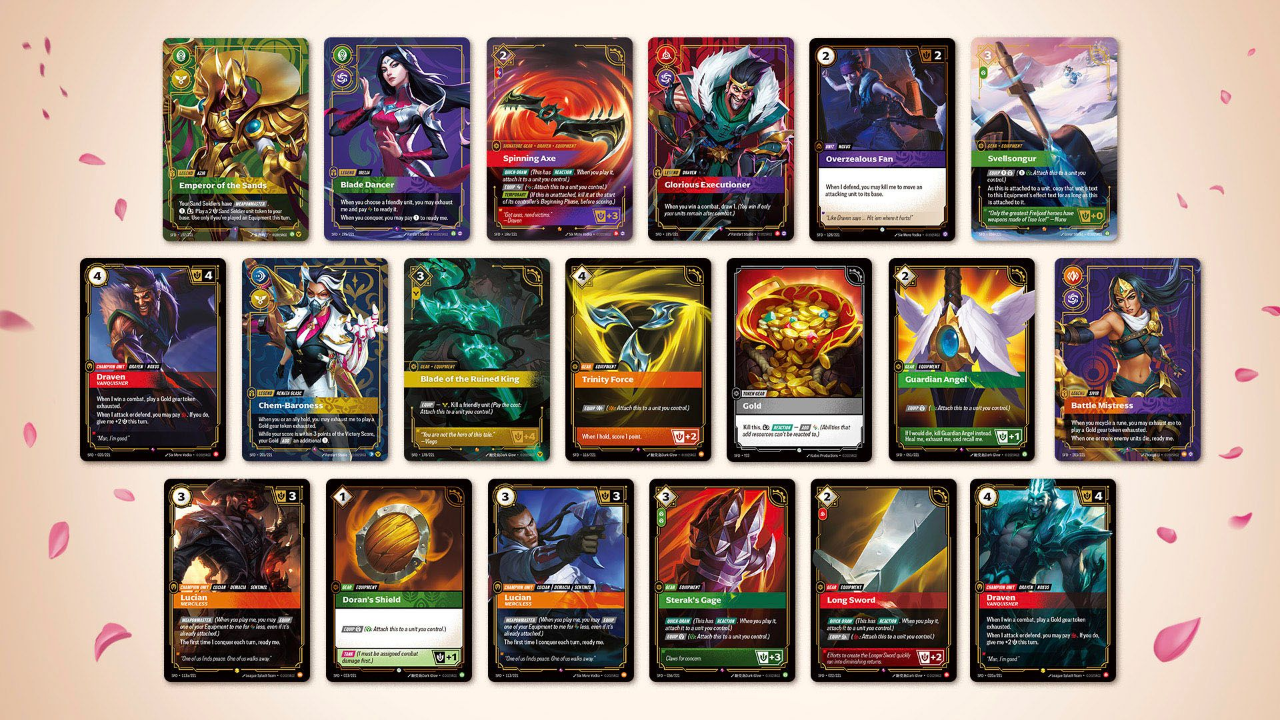
To make Irelia shine, you’ll want a mix of buffs, Equipment, and Ganking effects. If everything comes together, Irelia decks can generate explosive turns where the same units attack, ready, and attack again.
Notable cards:
Boots of Swiftness – Gives a unit Ganking
Emperor’s Divide – Opens up a battlefield you can attack freely
Draven – Audacious – Excellent target to ready multiple times
Tiana Crownguard – Shutting down opponent scoring is mean
Feral Strength – Cheap, repeatable buff
Irelia – Fervent – Champion unit that benefits heavily from being chosen and readied
Heart of Dark Ice – Excellent buff gear
Defiant Dance – Signature spell that buffs a friendly unit while shrinking an enemy
Sivir – Mercenary – You spend energy for Irelia’s ability, so she’ll often have Ganking
Seal of Discord / Seal of Focus – Helps pay the energy cost of Irelia’s ability more efficiently
Jax
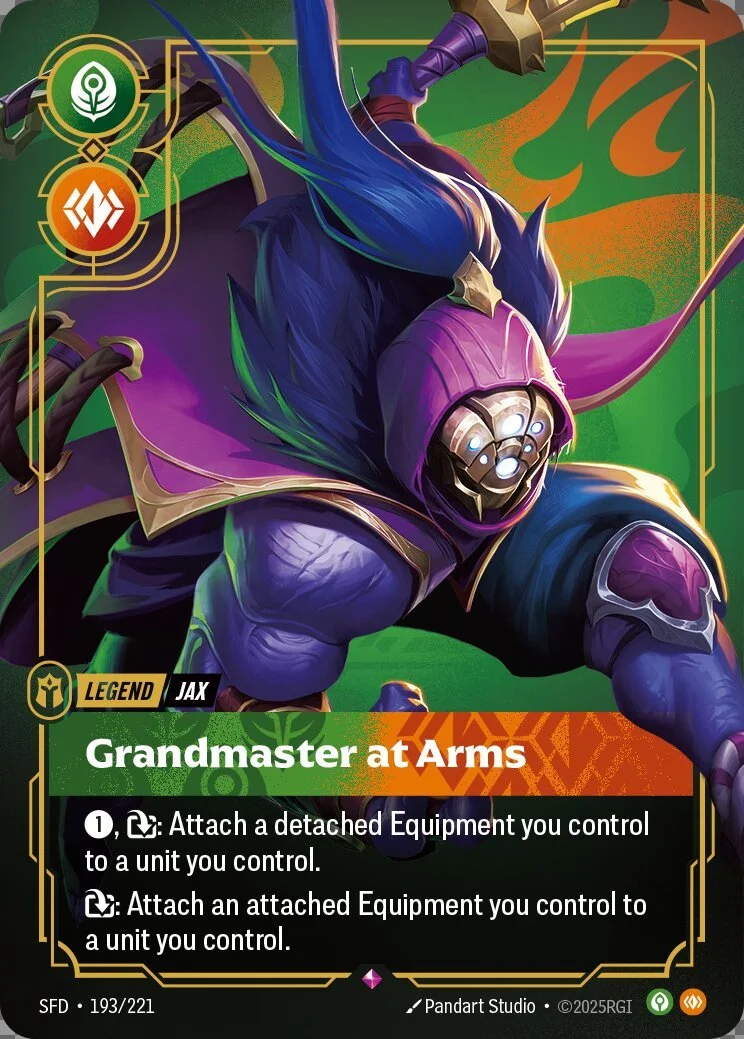
Jax is the premier equipment-focused Legend in Spiritforged, second only to Ornn in raw gear synergy. His Legend ability lets you either pay 1 and exhaust him to equip a detached piece of equipment, or exhaust him to move already-attached equipment between units.
You can’t do this at reaction speed (thankfully because that would be crazy), but even at normal speed the flexibility is extremely powerful. Jax decks want to stack Equipment, abuse Weaponmaster, and leverage Quick Draw to control combat.
Notable cards:
Warmog’s Armor – Equipped unit gets +1, then buffs further when it conquers
Trinity Force – Extra point for holding and +2 Might
Ruin Runner – Ideal equipment target since it can’t be targeted by spells or abilities
Yone – Blademaster – Weaponmaster with the ability to target enemy battlefields
Akshan – Mischievous – Weaponmaster that can steal enemy gear (ideally equipment)
Ornn – Blacksmith – Card advantage specifically for Gear strategies
Jax – Unrelenting – Card draw whenever you attach equipment
Boneshiver – Helps ramp to offset equipment costs
Sterak’s Gage – Quick Draw plus +3 is no joke
Lucian
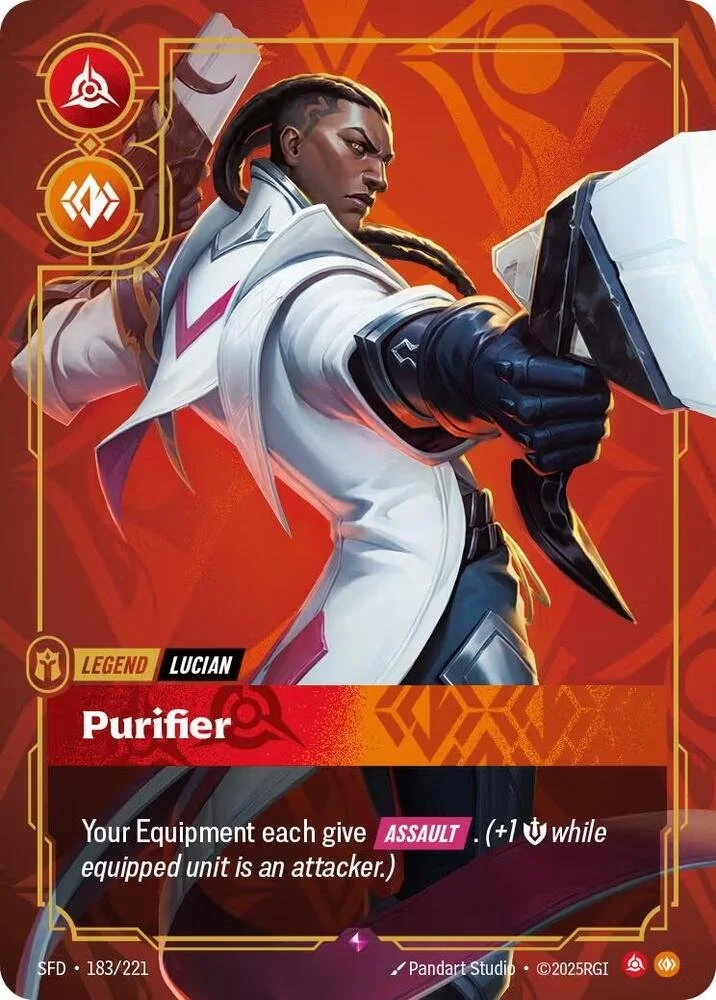
Lucian also lives in the equipment space, but plays far more aggressively than Jax. While Jax is about value and positioning, Lucian just wants gear on units and those units attacking immediately.
His Legend ability gives units Assault +1 for each equipped item, and yes, it stacks. The game plan here is simple: suit up your units and throw them into battle over and over again.
Notable cards:
Lucian – Gunslinger – Deals damage equal to his Assault, which can get very high
Relentless Pursuit – Signature spell that enables multiple attacks
Marching Orders – Lets equipped units punch up into larger threats
Akshan – Mischievous – Stealing enemy equipment is just as good here
Kato the Arm – Excellent aggressive unit
Recurve Bow – Deals damage before the damage step
Rell – Magnetic – Free equipment is perfect for Lucian
Hexdrinker – Gives the equipped unit Deflect
Rek’Sai
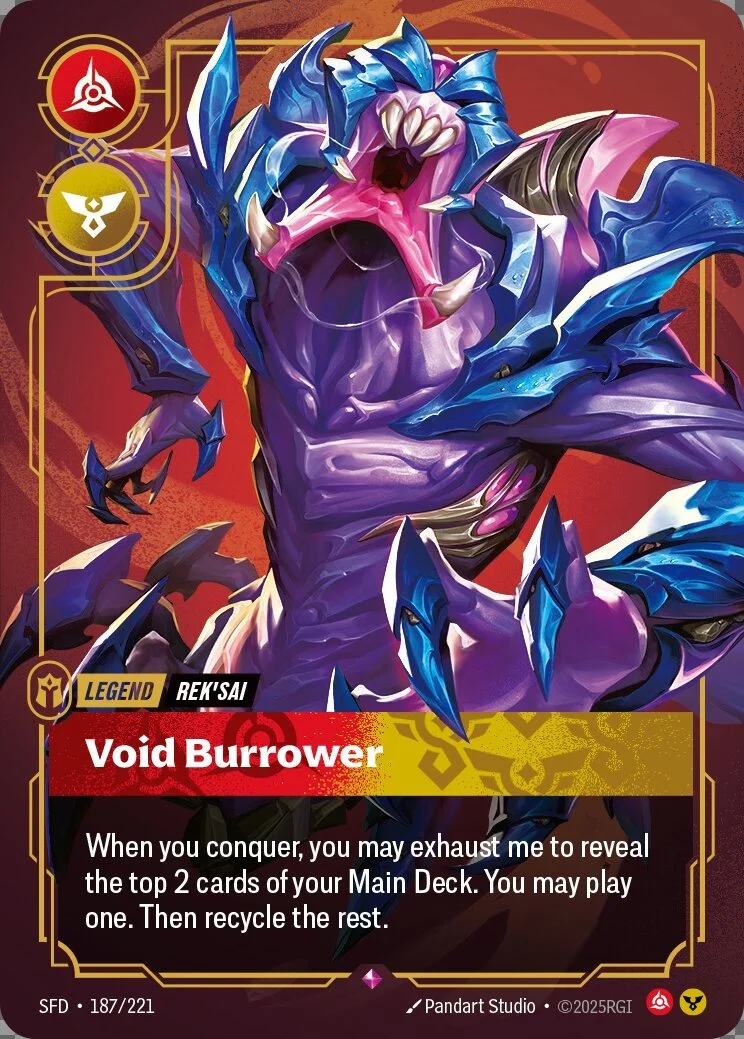
Rek’Sai doesn’t lean hard into a single new mechanic, but she does excel at aggressive card advantage. Her Legend ability (and her Rare unit) allow you to reveal cards from the top of your deck and play them, letting you maintain pressure without relying on a full hand.
This deck wants to play cards constantly, so ramp, Gold generation, and any form of advantage from reveals are key.
Notable cards:
Rengar – Pouncing – Reaction-speed unit that’s perfect to reveal mid-attack
Battering Ram – Gets cheaper the more cards you play, which is exactly the plan
Altar of Memories – Filters through your deck for what you need
Undertitan – Benefits from being revealed and provides light ramp
Dunebreaker – Strong ready unit for a deck that doesn’t need many cards in hand
Rek’Sai – Breacher – Gets buffed when you activate your Legend ability
Void Rush – Signature spell that either discounts plays from the deck or provides card advantage
Renata Glasc
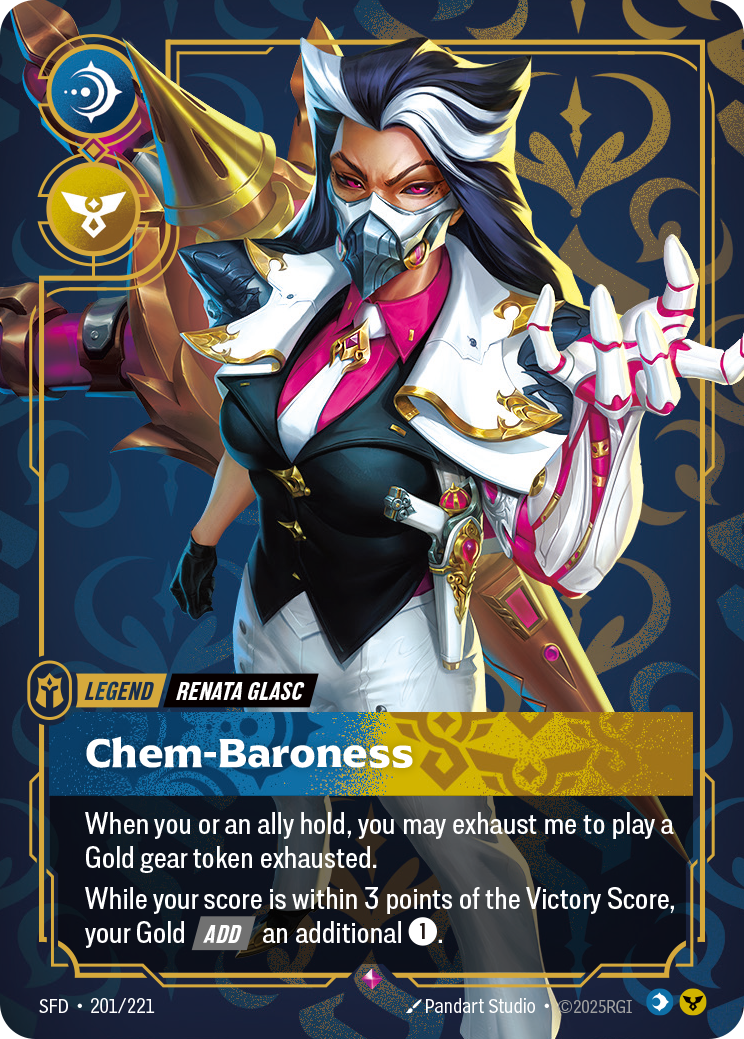
Renata Glasc is your Gold-hungry value engine. She rewards you for holding battlefields by letting you exhaust her to create Gold tokens, which later generate even more value. In the late game, those Gold tokens produce an extra 1 each, turning Renata into the ultimate ramp Legend.
Her seeded battlefield, Power Nexus, strongly supports Gold strategies and becomes even better if you open Seals, since you typically won’t want to recycle runes in this deck.
Notable cards:
Jayce – Man of Progress – Play free gear for the cost of one Gold
Prize of Progress – Using Gold counts as activating it
Hostile Takeover – Signature spell; why play big units when you can steal them?
Renata Glasc – Mastermind – Card draw and bonus points
World Atlas – Generates two Gold when holding
Soraka – Wanderer – If you’re playing fewer units, saving the ones you have matter
Deckbuilding and Pre-Rift gameplay tips
Pre-Rift events are sealed formats, which means consistency, efficiency, and flexibility matter far more than flashy synergies. With smaller decks and limited access to answers, a few smart deckbuilding choices can easily swing games in your favor.
Prioritize Removal Early
Removal is devastating in Limited, and Pre-Rift is no exception. Most decks won’t have many clean answers to problematic units or stacked equipment, so any card that can remove, shrink, steal, or neutralize a threat should be treated as premium.
Even “soft” removal—like shrinking a unit, bouncing gear, or temporarily disabling something—can be enough to win games when board states are tight. Don’t be afraid to include removal that feels slightly inefficient; in a 25-card deck, drawing any answer at the right time is often game-winning.
As a rule of thumb:
If a card meaningfully disrupts your opponent’s plan, it’s probably worth running.
Use Your Third Color to Cover Weaknesses
One of the most powerful (and frankly broken) aspects of Pre-Rift sealed is the ability to splash a third color. Instead of using that splash to jam more threats, it’s usually better to choose a color that covers something your Legend struggles with.
For example:
Aggressive Legends may want a splash that provides removal or disruption
Slower, value-based Legends might benefit from early units or tempo plays
Spell-focused decks can splash for unit pressure or survivability
Think of your splash as a toolbox, not a theme. You don’t need many cards—just a few high-impact ones that shore up bad matchups.
Lean Into Your Seeded Pack
Your seeded Legend pack is doing a lot of work for you. It already gives you:
A Legend
A chosen Champion
A battlefield that supports your strategy
Unless your sealed pool opens something truly absurd, sticking close to your seeded plan will usually lead to a more consistent deck. Pre-Rift games are often decided by who executes their game plan more cleanly—not who tries to do the most things at once.
Don’t Overbuild for Combos
It’s tempting to chase perfect synergies, especially with new mechanics on display, but Pre-Rift is not the place to force combos that require multiple specific pieces. If a card is only good when everything goes right, it’s probably not making the cut.
Favor cards that:
Are good on their own
Have multiple use cases
Stay relevant whether you’re ahead or behind
Simple, flexible cards win more sealed games than clever but fragile setups.
Play Patiently and Trade When You Can
Because decks are small and removal is limited, every trade matters. If you can trade a unit or piece of gear for something more valuable, that advantage tends to snowball quickly.
Don’t rush attacks just because you can—especially against equipment-heavy Legends. Sometimes the best play is to hold, build resources, and force your opponent to act first.
Common Mistakes to Avoid at Pre-Rift Events
Pre-Rift events are meant to be exploratory, but that doesn’t mean every mistake has to be learned the hard way. These are some of the most common in-the-moment errors players make during Pre-Rift games—especially when learning a new set.
Burning Limited Resources Too Early
Gold, runes, energy, and even reaction-speed effects are all finite in Pre-Rift. A common mistake is spending these resources the moment they’re available instead of when they matter most.
Using a reaction just because you can, or spending Gold early on marginal value, often leaves you defenseless when a real threat hits the board. In Limited, having the last meaningful play in a turn cycle is often more important than being the first.
Forgetting About Reaction Windows
With so many new abilities, triggers, and reaction-speed effects, it’s easy to accidentally play at sorcery speed when you shouldn’t. Missing a reaction window—especially with spells, tricks, or units that can be played mid-combat—can swing games.
Take your time during combat steps and ask yourself:
“Do I want to act now, or am I better off waiting?”
Even just representing a reaction can change how your opponent plays.
Misusing Your Legend Ability
Legend abilities are powerful, but they aren’t always meant to be used on cooldown. Some players fire them off every turn without considering the cost—whether that’s exhausting the Legend, spending energy, or losing flexibility later.
It’s often correct to hold your Legend ability until it creates a clear advantage, protects a key unit, or forces your opponent into a bad position. Treat it like a finisher or pivot tool, not just another button to press.
Overcommitting to a Single Battlefield
Locking in hard on one battlefield too early can make your game plan predictable. If your opponent knows exactly where your pressure is coming from, they can line up blocks, removal, or steals more effectively.
Maintaining pressure across multiple battlefields—even lightly—forces tougher decisions and opens up better attack windows later in the game.
Playing as If You’re in Constructed
Pre-Rift is Limited, not Constructed. Decks are less consistent, answers are fewer, and threats matter more. A common mistake is assuming your opponent will eventually have an answer—because in Limited, they often won’t.
If you have a strong advantage, press it. If you’re ahead on board, force trades. If your opponent stumbles, capitalize. Waiting for the “perfect” line can give them time to stabilize.
Tilting After a Bad Open or Missed Trigger
Because Pre-Rift decks are small, bad openings or missed triggers can feel extra punishing. The mistake isn’t the misplay—it’s letting it spiral into rushed decisions or overly aggressive lines.
Stay focused. Limited games are swingy, and a single good turn can completely flip the board. Reset, reassess, and play the game you’re in—not the one you wish you were in.
Final Thoughts
Pre-Rift events are one of the best ways to experience Riftbound: Spiritforged for the first time, and they’re happening this weekend at your local game store. The seeded Legend kits give every deck a clear identity, the smaller deck size keeps games fast and interactive, and the relaxed sealed rules encourage experimentation without punishing creativity.
Whether you’re slinging spells with Ezreal, stacking equipment with Jax or Lucian, or grinding value with Renata Glasc, the format rewards players who understand their Legend’s strengths, manage resources carefully, and adapt on the fly. You don’t need a perfect pool to succeed—just a focused plan and the willingness to learn as you play.
Most importantly, remember that Pre-Rift events are about discovery. Try new cards, ask questions, read your opponent’s Legends, and don’t stress over every misplay—everyone is learning together. Play clean, take your time, and enjoy seeing Spiritforged come to life for the first time. Best of luck at your Pre-Rift event, and may your sealed pool treat you kindly.
Not sure which Legend fits your playstyle best? Make sure to check out our Legend Recommendation Guide, where we break down which Legends to try based on how you like to play.