Every Counter-Strike player knows the ritual. The wheel slows, the colors tick past, and for exactly one heartbeat you believe the gold is coming. It almost never is — and now we can tell you, with unusual precision, exactly how much that heartbeat costs.
We cross-referenced Valve's official drop odds against live Steam Market prices for every item in all 42 CS2 weapon cases currently tradable on the market. The result is the closest thing to a complete profit-and-loss statement for case opening in July 2026. Spoiler: the loss column wins. Every time.
The odds Valve doesn't print on the box
Valve has never displayed drop rates inside the game in most regions, but the numbers became public in 2017, when Chinese regulations forced disclosure — and community testing has backed them ever since. Every weapon case uses the same fixed table:
Mil-Spec (blue): 79.92%
Restricted (purple): 15.98%
Classified (pink): 3.20%
Covert (red): 0.64%
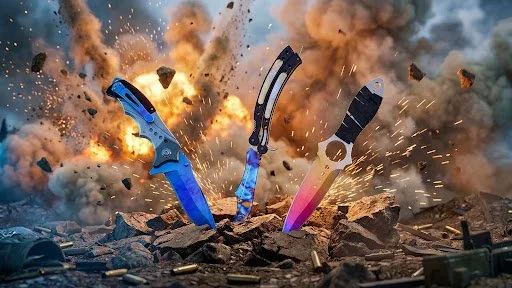
Rare Special — knives and gloves (gold): 0.26%
That last line is the one your brain fixates on, so let's translate it: one gold in roughly 385 cases. Four out of five opens land on a blue that's usually worth less than the key you just used.
How we ran the numbers
For each of the 42 cases, we took the odds above and multiplied them by the average Steam Market price of every skin in each rarity tier, across all wear conditions, then compared that expected value against the real cost of an open: the case's market price plus the $2.49 key. The price data comes from the same live feeds that power CS2WH's free CS2 case calculator, which recomputes the full ROI board for every case twice a day. Our snapshot is from July 29, 2026 — prices drift daily, but the pattern below has held for months.
The house edge isn't where you think it is
Here's the finding that surprised us: three cases are actually profitable on paper. The Horizon Case returns 103% of its cost in expected skin value. Operation Wildfire and the Prisma Case both return 102%. If expected value were the whole story, opening those three cases forever would be a money printer.
It isn't, because paper value isn't money. To turn a skin into wallet funds you sell it on the Steam Market, and Steam takes roughly 15% of every sale. Run the same three cases through that fee and they land at 88%, 87%, and 87%. The math flips from slightly winning to reliably losing at the exact moment you try to cash out.
The edge, in other words, isn't hidden in the odds. It's standing at the checkout.
Best and worst of all 42
After fees, the full board runs from mediocre to brutal.
The least-bad opens (net return per dollar):
Horizon Case — 88¢
Operation Wildfire Case — 87¢
Prisma Case — 87¢
Gallery Case — 84¢
Shadow Case — 81¢
The money pits:
CS:GO Weapon Case — 27¢
Operation Bravo Case — 31¢
eSports 2013 Case — 33¢
Fracture Case — 43¢
Operation Breakout Weapon Case — 45¢
The median case across all 42 returns about 60 cents per dollar. And the bottom of the table teaches its own lesson: the original CS:GO Weapon Case now trades at about $183 — not because its 2013-era skins justify it, but because the case itself became a collectible. Open one and you're shredding a collector's item to gamble on a decade-old prize pool. It's the worst deal in Counter-Strike.
The knife tax
The gold chase deserves its own line item. In the Prisma Case, 26% of the entire expected value is locked inside that 0.26% knife slot — mostly the Talon Knife Doppler, which averages around $1,300. Strip the knife out and the case you're realistically opening (the other 99.74% of the time) is far worse than the headline number suggests.
That's the quiet trick of case design: the item that makes the math look almost fair is the one you will almost certainly never see.
So what should you actually do?
If you enjoy opening cases, open cases — it's a slot machine with better sound design, and there's nothing wrong with paid entertainment as long as you book it as entertainment. But the data supports two rules:
If you want a specific skin, buy it. On average, every $100 spent opening cases converts into about $61 worth of skins. Buying the skin you actually want off the market is nearly 40% cheaper than gambling your way to it — and infinitely more reliable.
If you're opening for fun, pick a near-parity case. Horizon, Wildfire, and Prisma give you the longest ride for your money and a genuine (if tiny) shot at a four-figure knife.
The full, continuously updated ROI table for all 42 cases — including per-case odds simulations — is free to explore at CS2WH, so you can check whether your favorite case has drifted up or down the board since this article was written.
Just remember what the numbers said on the way in: the wheel is fun. The wheel is not an investment.
Data: Valve official drop rates; live Steam Market pricing (July 29, 2026) via the open-source ByMykel CSGO-API item dataset and csgotrader price feed. Expected value = odds × average tier price across wears; net figures apply Steam's ~15% market transaction fee.