Disclosure: This is a paid guest post. The author or an affiliated third party paid for its publication, and the article may contain promotional links. The views and opinions expressed are those of the author and do not necessarily reflect those of GameTyrant or its editorial staff.
You find the folder by accident — an old external drive, a phone backup you never cleaned out. Inside is the clip. The boss you finally beat at two in the morning. The lucky shot your friends still bring up. You press play, and the moment is all there. The picture is not.
Half of that gap belongs to the file. Clips from a few years back were captured at smaller sizes, squeezed down to fit a share limit, then squeezed again by whichever site you uploaded them to. Stretch that across a modern screen and every shortcut shows. This is the half you can actually do something about: a video upscaler takes a clip you already have and raises its resolution while trying to bring back visible detail, though how much comes back depends on how much survived the trip.
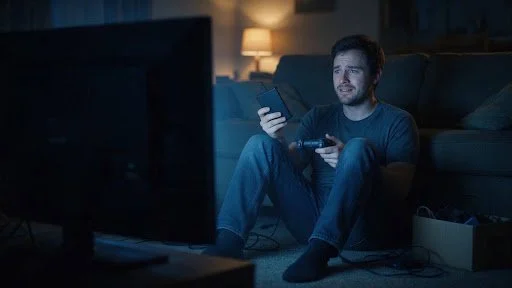
The other half belongs to you, and it is the stranger one. Every time that moment gets retold in a group chat, the retelling leaves a mark on the memory.
Every retelling edits the memory a little
There is a well-known experiment from 1974 that shows how easily this happens. Elizabeth Loftus and John Palmer, at the University of Washington, showed 150 students a short film of a multiple-car accident. Afterward, fifty of them were asked how fast the cars were going when they “smashed” into each other. Another fifty got the same question with the word “hit.” The last fifty were not asked about speed at all.
A week later, without seeing the film again, everyone answered a list of questions. One of them was whether they had seen any broken glass. There was no broken glass in the film. Sixteen of the fifty people who had heard “smashed” said yes, against seven in the “hit” group and six in the group that was never asked. One word, a week earlier, had quietly changed what people reported seeing. The study was published in the Journal of Verbal Learning and Verbal Behavior.
That research is about car accidents and eyewitness memory, not about games, and it was a lab exercise rather than a real crash. But the mechanism is ordinary enough. A memory is not a file you open. It is something you rebuild each time, out of what you saw and everything that has been said about it since. Tell the story of a clutch play forty times and you are not replaying the footage. You are replaying the last telling.
What actually happened to the footage
The file, meanwhile, went through something much less mysterious.
Capture settings are the first part. Most people record with whatever the default is, and defaults are built for the screens and connections of their moment. What looked fine in a small window looks soft stretched across a big display.
Compression does most of the rest. Video is enormous, so it gets shrunk by discarding the information your eye is least likely to miss. That works well once. It works badly three times over. A clip compressed on capture, again for a chat app, and again by a video site has been through the process repeatedly, and each pass starts from an already damaged copy.
Motion makes it worse in exactly the wrong place. Fast camera turns, explosions, a crowded team fight — these give a compressor the most work to do, so they are where a clip falls apart. The quiet seconds often survive. The moment you saved it for does not.
And the room changed around the file. Screens got bigger and sharper. Aspect ratios shifted. A clip you once watched in a small window is now judged full screen. Nothing about the video changed. The standard you hold it to did.
Why players keep the clips anyway
Old clips are not really about picture quality. They are receipts.
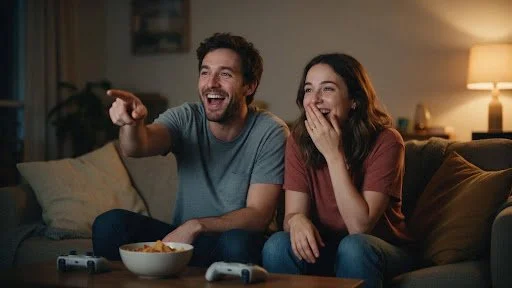
A lot of what gaming communities pass around is proof of something that would otherwise be a story nobody believes. The frame-perfect jump. The wipe that was somehow one person’s fault. The draw in a card game that changed the mood at the table for an hour. Written down, it is a claim. On video it is a shared fact, and it can be dropped into a chat years later with no setup at all.
Clips also mark time. A raid night is a date and a handful of people who were in that voice channel. A speedrun attempt is a record of how good someone was on one specific evening. Tabletop and card players keep the same thing as photos of a board state or a hand they will never draw again. The footage is a bookmark, and the bookmark is the point.
There is also the plain fact that games go away. Servers close, storefronts change, a mode gets replaced in an update. Sometimes a soft, badly compressed clip in a group chat is the most complete record anyone has of how something used to feel to play.
Getting more out of a clip you care about
If you want to bring one back for a wider audience, a few unglamorous things help more than they sound like they would.
Start from the most original copy you can find. The version on your own drive is almost always better than the one you pulled back down off a website, because the download has been through an extra round of compression. Dig through old backups before you settle for whatever is easiest to reach.
Keep the audio. The shout, the party chat, the exact second everyone realized what had happened — that is usually the part people react to, and sound survives the trip better than the picture does.
Go easy on sharpening. It is tempting to push edges and contrast until a clip feels crisp, but past a point the result reads as brittle rather than clear, and the artifacts you were trying to hide end up outlined instead.
Trim first. Thirty seconds of setup around a five-second moment is the most common reason a good clip lands badly.
And think about who else is in it. Old footage usually contains other people — voices in chat, names on a scoreboard, a face in a webcam corner. Only use material you have the right to use, and if it includes another person, make sure you have the consent you need for how you plan to share it.
The clip will probably never match the version in your head, and that is not really a failure of the file. Your memory has spent years being retold, polished and argued about. The footage has spent those years sitting still, losing a little every time it moved. You can close some of that distance with a better source and some patience. The rest of it is just what remembering does.
Which is fine. Nobody replays an old run for the pixels.