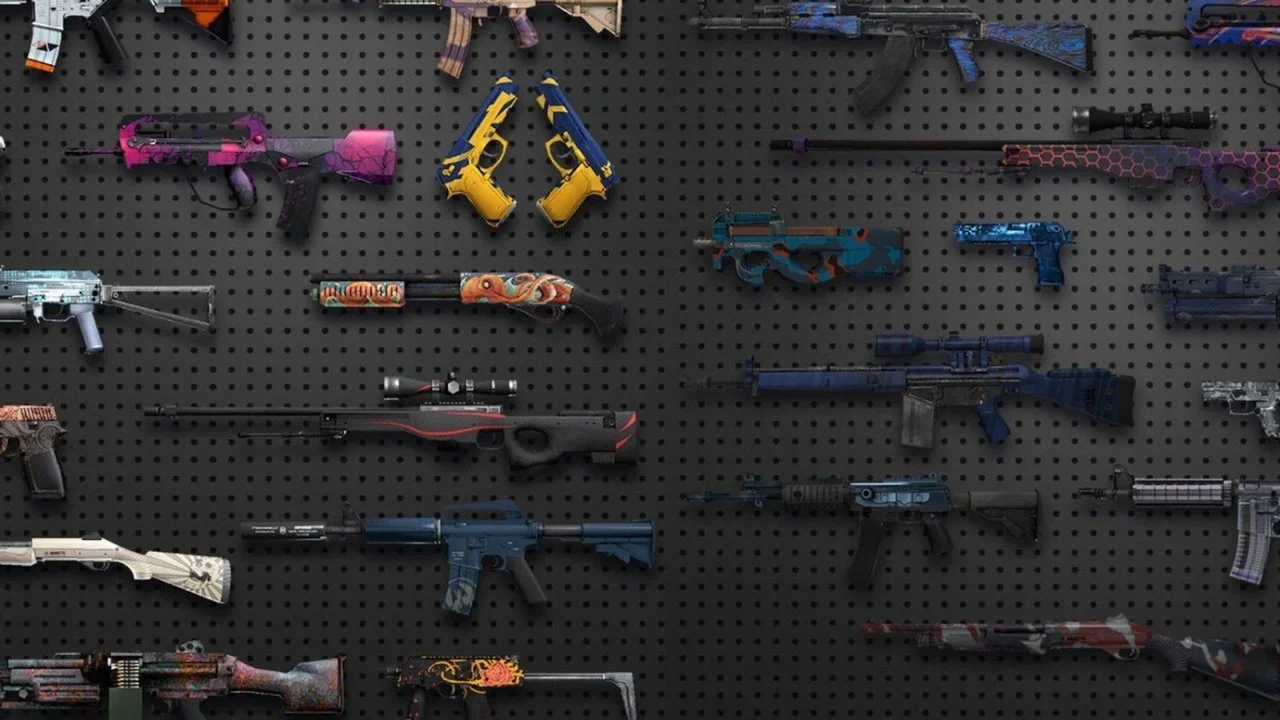
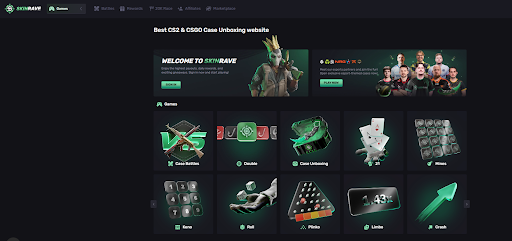
My first hour on a case-opening site, I barely opened anything. What got me was the drop feed: a live ticker of other people's pulls scrolling up the side of the screen, knives and gloves and rare patterns surfacing every few minutes out of a crowd I couldn't see. Valve kicked this culture off when the Arms Deal update brought weapon cases and keys to CS:GO back in August 2013, and unboxing has long since outgrown the game client. There are standalone platforms now whose entire business is the case, the crowd, and the few seconds where the two meet.
I've spent enough evenings poking at these sites to have a working theory about them. The case art is set dressing. What decides whether a platform survives is the stuff you can't screenshot, starting with the cryptography that convinces people the rolls are honest.
The Fairness Math
The core problem is easy to state. A website controls the random number and the prize table. Why would you believe anything it shows you? The answer the industry settled on is called provably fair, and the player-side version goes like this. Three ingredients decide every roll: a server seed you can't see yet, a client seed you're free to change, and a counter that ticks up with each open. Before anything spins, the site publishes the SHA-256 hash of its server seed, which pins the seed down without revealing it. Each roll then combines the two seeds and the counter through an HMAC function to produce a result. When the seed eventually retires, the site reveals it, and you can rerun every roll you made to check that nothing was touched.
Most sites running this didn't write it themselves. Doing it properly means seed storage, a verifier ordinary players can operate, payment rails and live item pricing, so the fairness layer turned into something operators buy. Evoverse builds turnkey case opening software with the provably fair system already in it. Published math is cheaper than the arguments it prevents, which is most of why it spread. Licensed markets went the other way years ago, and turnkey casino software there leaned on accredited test labs instead. Case sites grew up outside all that, so they had to convince players directly. The good ones put per-case drop rates right beside the verifier.
The Spin Itself
Now the part everyone underestimates: the spinner. A case reveal is a few seconds of horizontal scroll, and every frame of it is doing psychological work. Deceleration curves are tuned so the reel drifts past something expensive on its way to your result, and researchers have a name for what that does to a brain. A 2009 study in the journal Neuron, led by Luke Clark, found that near-misses light up reward circuitry much the way wins do. Case spinners are near-miss delivery machines with sound design to match, the tick-tick-tick slowing into silence right before the reveal.
All of it collapses if the tech stutters. The animation runs in CSS or Canvas and has to hold frame rate on a five-year-old laptop. The drop feed and the chat ride persistent WebSocket connections that push events the instant they happen, because a ticker that updates on page refresh kills the feeling of a live room. This look at Resident Evil Requiem on Switch 2 landed on the same lesson from the other direction: smooth delivery on modest hardware reads as quality. On an unboxing site, a mid-spin hitch reads as something worse.
Build or Buy
I used to wonder why so many of these sites feel identical under the hood. The buy-side math explains it. Most operators need the same handful of modules, so most license a pre-built stack and spend their energy on branding, case curation and community instead. Ground-up custom casino development still has a place; it's for the operator whose ideas don't map onto anyone's existing modules. Owning every security patch and payment-gateway change forever after is the price of that freedom, and it compounds year over year.
Sticky by Design
The retention layer is where these platforms quietly out-design a lot of full-priced games. Case battles turn a solo pull into a spectator event. Daily streak bonuses give the calendar a hook. Upgrade and contract modes give junk pulls somewhere to go, which matters more than it sounds, because an inventory full of dead weight is a reason to leave. Multi-tier VIP ladders pay volume back automatically. I've caught myself logging in for a streak bonus I didn't even care about, which is the point: that loop was built by someone who knew I would.
Regulators have noticed the same loops, and more jurisdictions keep adding rules around randomized rewards, so the safe assumption for anyone building here is more compliance work every year and an architecture that can absorb it.
As for what's next, the vendor roadmaps mostly agree on payment stacks that treat crypto and cards as equals, plus richer gamification. The rulebooks will thicken regardless. My own prediction is duller than the vertical deserves. The winners will be the platforms whose boring parts, the ledgers and seeds and uptime, were solid on day one. The next time a spin resolves instantly on a site that never seems to go down, that's the part I notice now.
Disclosure: This is a paid guest post. The author or an affiliated third party paid for its publication, and the article may contain promotional links. The views and opinions expressed are those of the author and do not necessarily reflect those of GameTyrant or its editorial staff.