Competitive games have changed dramatically over the last decade. What was once a simple contest of mechanical skill has become a much broader experience built around progression, strategy, teamwork, community, and constant improvement.
Games such as Valorant, Counter-Strike 2, League of Legends, Rocket League, and other competitive titles have managed to maintain large player communities because they offer something that traditional single-player experiences often cannot: the feeling that there is always another level to reach.
A player can spend hundreds or even thousands of hours in the same game and still find new strategies to learn, mistakes to correct, and goals to pursue.
But what actually makes a competitive game worth mastering?
The Best Competitive Games Are Easy to Understand but Hard to Master
One of the strongest characteristics of a successful competitive game is a simple core concept.
Counter-Strike is built around shooting, positioning, economy, utility, and teamwork. Rocket League revolves around controlling a car and a ball. Valorant combines tactical shooting with character abilities.
The basic idea behind these games can be understood relatively quickly.
Mastering them is a completely different story.
This creates a progression curve that keeps players interested. A newcomer can understand what is happening, while experienced players can spend years refining small details of their gameplay.
That distinction is important.
If a game is too complicated from the beginning, new players may struggle to understand why they are losing. If everything can be mastered within a few hours, experienced players may eventually run out of meaningful challenges.
The most successful competitive games find the middle ground.
Ranked Systems Give Players a Reason to Keep Playing
Competition becomes more meaningful when players have clear goals.
Ranked systems provide exactly that.
Instead of simply playing match after match, players can work toward a specific rank or rating. A victory becomes part of a larger progression system, while a loss provides another opportunity to identify what went wrong.
This is one reason ranked modes have become such an important part of modern multiplayer games.
A player who reaches a new rank may immediately begin thinking about the next one.
That cycle can continue for years.
The psychological appeal is straightforward: improvement becomes visible.
Even small achievements can create a sense of progress, whether that means learning a new map, improving aim, understanding an opponent's strategy, or finally reaching a competitive milestone.
Mechanical Skill Is Only One Piece of the Puzzle
It is easy to assume that the best players simply have better reflexes.
In reality, competitive gaming is usually much more complicated.
Mechanical skill matters, but decision-making can be equally important.
A Valorant player might have excellent aim but still lose because they rotate too early, use abilities inefficiently, or fail to communicate with teammates.
The same principle applies across competitive genres.
League of Legends players need to understand positioning, objectives, timing, and resource management. Counter-Strike players have to consider economy, utility, map control, and timing. Rocket League players need mechanical consistency as well as positioning and anticipation.
As players improve, they gradually discover that winning is rarely about doing one thing perfectly.
It is about making fewer mistakes across many different areas of the game.
Teamwork Creates Another Layer of Competition
Team-based games introduce a completely different dimension.
A player can perform exceptionally well individually and still lose because the team does not coordinate effectively.
Communication, role distribution, utility usage, positioning, and trust become increasingly important as the skill level rises.
This is one reason competitive games can remain interesting even after thousands of hours.
The players may understand the fundamentals, but every team and every opponent introduces different variables.
A strategy that works against one opponent might fail completely against another.
The result is an environment where adaptation becomes just as important as execution.
Maps and Metas Are Constantly Changing
Competitive games also benefit from change.
Developers regularly introduce new maps, characters, weapons, balance adjustments, and gameplay systems. These changes can completely alter the way players approach a game.
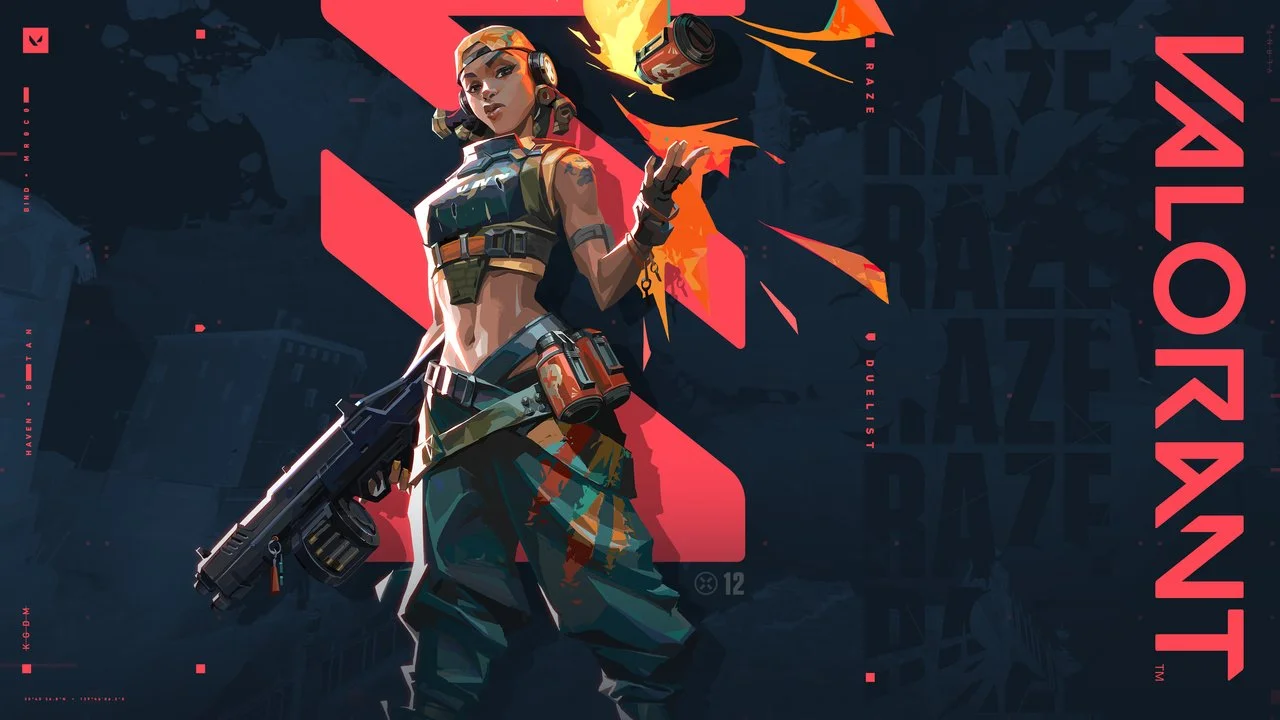
Valorant is a particularly good example.
New agents and maps can change team compositions, defensive setups, attacking strategies, and even the value of certain positions.
Professional teams have to adapt quickly because the competitive environment never stays completely static. Recent Valorant coverage has highlighted how new maps can force teams to rethink callouts, economy, utility, and role flexibility.
For everyday players, these changes create another reason to keep learning.
The game they mastered six months ago may require a different approach today.
Improvement Is Part of the Entertainment
The most dedicated competitive players often enjoy improvement itself.
Winning is obviously satisfying, but learning something new can be equally rewarding.
A player might spend an evening practicing a particular mechanic, studying a map, reviewing match statistics, or experimenting with a different strategy.
The next time that situation appears in a real match, the player is better prepared.
This creates a unique relationship between failure and entertainment.
In a single-player game, failing a difficult section can simply mean repeating it.
In a competitive game, a loss can reveal something about your own decision-making, your opponent's strategy, or the weaknesses of your team.
That information can then be used in the next match.
The process never really ends.
Competitive Communities Keep Games Alive
A competitive game also needs a strong community.
Players do not exist in isolation. They watch tournaments, follow professional teams, discuss updates, create guides, share strategies, and watch streamers.
Esports is particularly important because professional competition gives ordinary players something to study.
A new strategy appearing in a major tournament can eventually make its way into ranked matches.
This creates a feedback loop between professional competition and everyday gaming.
Players watch professionals.
Professionals influence the meta.
The community experiments with those strategies.
Developers observe how the game is being played and make future changes.
Then the cycle starts again.
Players Now Have More Ways to Approach Progression
The modern competitive gaming ecosystem has also created a wide range of ways for players to approach progression.
Some players prefer to improve entirely on their own. Others play with friends, follow educational content, analyze statistics, or experiment with different strategies.
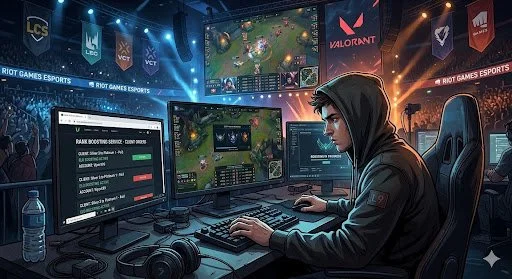
There are also players who use services built around ranked progression. For example, people researching Valorant boosting may be looking for an alternative way to reach a particular competitive milestone when they have limited time or a specific progression goal.
Regardless of the approach, the underlying demand is the same: players care about progression.
That is an important change from the early days of multiplayer gaming.
A competitive game is no longer simply something people play for a few hours.
For many players, it becomes a long-term hobby with measurable goals.
Why Some Competitive Games Survive for Years
Not every multiplayer game achieves long-term success.
Some disappear after a few months, while others remain popular for a decade or longer.
The difference is rarely just graphics or marketing.
Long-lasting competitive games usually have several things in common.
They have strong core mechanics.
They provide meaningful progression.
They reward practice.
They offer enough variety to prevent matches from becoming predictable.
They maintain active communities.
And perhaps most importantly, they make players believe that they can still improve.
That last point is particularly powerful.
If players feel that their next match could be better than their previous one, there is always a reason to queue again.
The Future of Competitive Gaming
Competitive gaming is likely to become even more sophisticated as technology continues to develop.
Better analytics can help players understand their performance. Improvements in matchmaking can create more balanced games. New spectator tools can make professional competition easier to follow.
Artificial intelligence may also influence how players practice, analyze matches, and learn strategies.
At the same time, developers face an important challenge.
A competitive game needs to evolve without destroying the fundamentals that made players fall in love with it in the first place.
Too little change can make a game feel stale.
Too much change can make years of learned experience feel irrelevant.
Finding that balance will remain one of the biggest challenges for competitive game developers.
The Real Appeal Is the Pursuit of Mastery
Ultimately, the strongest competitive games are not defined by a single feature.
Their appeal comes from the combination of mechanics, progression, strategy, teamwork, community, and the possibility of improvement.
There is always another rank to reach, another strategy to learn, another opponent to understand, or another mistake to correct.
That is what makes competitive gaming different from many other forms of entertainment.
The game does not simply end when the credits roll.
The challenge keeps evolving.
And for players who enjoy that pursuit, there is always another match waiting.
Disclosure: This is a paid guest post. The author or an affiliated third party paid for its publication, and the article may contain promotional links. The views and opinions expressed are those of the author and do not necessarily reflect those of GameTyrant or its editorial staff.