When Magic: The Gathering | Marvel Super Heroes was first announced, I’m sure a lot of us had the same thought: this could easily end up being another small Universes Beyond set packed with recognizable characters, but without enough depth to really stand on its own.
Thankfully, now that we can see the full set, that is not the case at all.
Marvel Super Heroes feels like a set with a real Limited ecosystem. This is not just a pile of cool Marvel cards thrown together. There are actual archetypes, meaningful mechanics, and enough crossover between themes that Draft and Sealed both look like they should have plenty of room for experimentation. I would happily Draft this set next to something like Strixhaven or Lorwyn Eclipsed, and honestly, it only reinforces something I’ve been saying for a while: the problem is not Universes Beyond. The problem is small sets and product fatigue.
That is a discussion for another time, though. For now, let’s break down what you need to know before jumping into Marvel Super Heroes Limited.
Set Mechanics
One of the first things I noticed about the mechanics in Marvel Super Heroes is that they are not completely locked to specific archetypes, which is a huge positive for Limited. Some mechanics definitely appear more often in certain colors than others, but you are not heavily punished for playing them outside of one exact strategy.
That flexibility should make Draft feel a lot smoother. You can start with a strong card, stay open, and still find ways for your mechanics to matter even if you do not end up in the most obvious color pair.
Let’s go over some of the set’s major mechanics.
Power-Up
One of the brand-new mechanics in Marvel Super Heroes is Power-Up, and I think it works really well both mechanically and thematically.
Power-Up essentially gives certain creatures a built-in upgrade kit. The way I look at it, Power-Up feels like a mix between a kicker-style mechanic and an activated exhaust ability. You can pay the Power-Up cost as the creature enters to get the upgraded effect immediately, or you can wait until the creature is already on the battlefield and pay the cost later for a more staggered effect.
That flexibility is what makes the mechanic exciting in Limited. Sometimes you will want to curve out and play the creature early, then Power it up once you have extra mana. Other times, especially later in the game, you may want the full effect right away. It gives your creatures more use at different points in the game, which is exactly what you want in Draft and Sealed.
Thematically, Power-Up is also a perfect fit. It represents a hero or villain reaching their full potential, unlocking a stronger version of themselves, or finally getting the boost they need to take over the battlefield.
Teamwork
Teamwork is a keyword ability that appears on instants and sorceries, and it is another mechanic that fits the Marvel theme incredibly well.
Teamwork is an optional additional cost. When you cast a spell with Teamwork, you can tap any number of creatures with total power equal to or greater than the Teamwork number. In return, the spell usually gives you access to more than one mode instead of forcing you to choose only one.
So, in a lot of ways, Teamwork also plays like a kicker-style mechanic. You can cast the spell for its base effect when you need to, but if you have the right board state, you can tap your creatures and get the full value.
In Limited, this mechanic rewards you for building a board and maintaining pressure. It is especially interesting because it turns your creatures into a resource beyond just attacking and blocking. Sometimes tapping a creature for Teamwork may be better than attacking with it, especially if the spell gives you a major tempo swing or helps stabilize the board.
Thematically, Teamwork is exactly what it sounds like: heroes coming together to be stronger than they would be alone.
Plans
Plans are a new subtype for enchantments, and they might be one of the most flavorful additions in Marvel Super Heroes.
A Plan is an enchantment that gives you a smaller benefit whenever its trigger happens. Then, after that ability resolves, you put a plan counter on it. Most Plans are building toward a bigger payoff, and once they reach four plan counters, they sacrifice themselves and give you one final, more powerful effect.
In Limited, Plans seem like they will reward you for setting up a game plan early and sticking to it. They may not always give you immediate board impact, but if you can keep triggering them, they can slowly build value before eventually cashing themselves in for a bigger swing.
Thematically, this is a perfect fit for Marvel. Heroes and villains are always working toward some massive plan, whether that means saving the world, taking over the world, or stopping someone else from doing something ridiculous. Plans capture that idea really well by giving you small steps along the way before the big moment finally pays off.
Heroes and Villains
Hero and Villain are not new set mechanics, but the creature subtypes return from Marvel’s Spider-Man, and they do matter in Marvel Super Heroes Limited.
These subtypes are especially important in a couple of the set’s archetypes, so you will want to pay attention to whether your cards care about Heroes or Villains. Personally, I like the inclusion of these subtypes. They help sell the flavor of the set, and they give certain archetypes a stronger identity.
That said, it is still funny seeing some creatures walk around with what feels like five different creature types stapled onto them.
Connive
One of the returning keyword mechanics in Marvel Super Heroes is Connive, which has become a pretty popular mechanic across the larger Magic ecosystem.
Connive is simple but powerful. When a creature connives, you draw a card, then discard a card. If the card you discarded was a nonland card, you put a +1/+1 counter on the creature that connived.
In Limited, Connive is great because it does two important things at once. It helps smooth out your hand by filtering away cards you do not need, and it can also grow your creature into a bigger threat. That makes it useful in aggressive decks that want to keep pressure on the opponent, but it is also strong in slower decks that want better card selection.
Any mechanic that helps you dig through your deck while also improving your board is going to be worth paying attention to in Draft and Sealed.
Prowess
The other major returning mechanic is Prowess, and if you have played Standard recently, you probably know this one very well.
Prowess appears on creatures and gives them +1/+1 until end of turn whenever you cast a noncreature spell. It is the classic “noncreature spells matter” ability, and it can make combat very difficult for your opponent.
In Limited, Prowess rewards you for building your deck with the right balance of creatures, instants, sorceries, and other noncreature spells. You do not want to overload your deck with tricks and removal at the cost of having a board, but if you have enough cheap noncreature spells, your Prowess creatures can attack and block much better than they look on paper.
Prowess also plays especially well with Teamwork, since both mechanics care about timing and board presence in different ways. A well-timed spell can trigger Prowess, enable a strong attack, or swing combat in your favor.
Draft Archetypes in Marvel Super Heroes
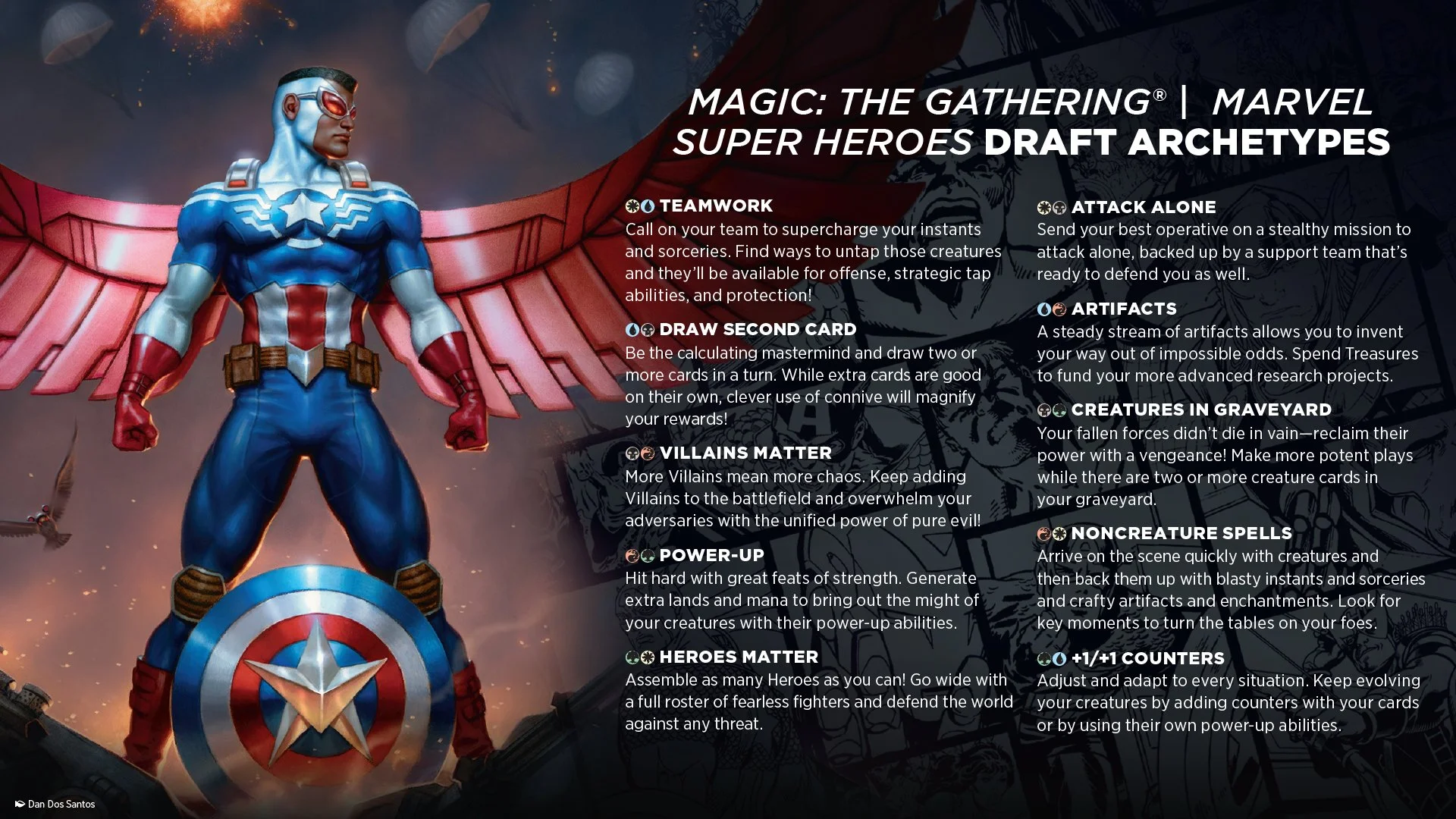
After three sets in a row with only five draft archetypes, I have to say it feels really nice to return to a full ten-archetype Limited environment.
Personally, I think ten archetypes are just more fun from a player standpoint. When a set only has five main archetypes, it can feel like you need to open or get passed the right rare to fully commit to one of them. If you do not, your draft can start to feel like it is falling apart pretty quickly. With ten archetypes, there is a lot more room to pivot, adjust, and find the open lane at the table.
That flexibility already makes Marvel Super Heroes feel more exciting for Draft and Sealed. You are not just locked into one obvious lane. You can start with powerful cards, read your colors, and move into the archetype that makes the most sense for your pool.
Azorius / Blue-White — Teamwork
Azorius is one of the more interesting archetypes in Marvel Super Heroes because, on paper, it is the Teamwork deck. In practice, though, it plays a little differently than just “cast Teamwork spells and win.”
This archetype reminds me a bit of Azorius Merfolk from Lorwyn Eclipsed. It wants to tap its own creatures for value, then find ways to untap them so they can still attack, block, or be used again. That creates a nice little engine where your creatures are doing more than one thing each turn.
That said, I do not think Azorius should be treated like a pure combo deck. My recommendation is to draft it more like a traditional Blue-White deck first. Think Azorius Fliers, Azorius Control, or a tempo deck with a Teamwork subtheme. If the Teamwork pieces come together, great. If they do not, you still want a deck that can win games by playing efficient creatures, using removal, and attacking in the air.
Game Plan
The main goal of Azorius Teamwork is to get double value out of your creatures.
You want to tap creatures for Teamwork or other effects, untap them when possible, and still use them in combat. If everything comes together, your board can feel incredibly efficient because your creatures are contributing to spells, attacks, and blocks all in the same turn cycle.
The basic plan looks like this:
Tap creatures for value.
Untap them when possible.
Attack with fliers or vigilance creatures.
Play a traditional White-Blue tempo or control game.
This archetype does not fall into one super narrow strategy the way some of the other color pairs might. As long as you draft a solid Azorius deck and treat Teamwork as a bonus rather than the entire plan, you should be in a good spot.
Draft Priorities
For Azorius, I would prioritize cards that let your creatures keep working even after they are tapped. That means vigilance creatures, ways to untap your own creatures, efficient fliers, and Teamwork spells that are worth enabling.
Your main priorities are:
Teamwork spells with strong payoffs.
Vigilance creatures.
Ways to untap your own creatures.
Fliers and evasive threats.
Cheap interaction.
I definitely would not prioritize Teamwork spells just because they say Teamwork. The payoff needs to be worth the setup. However, if you have strong untap support like Captain America, Living Legend, then the strategy becomes much more appealing.
Win Condition
Azorius wants to win by making its creatures do double duty.
Ideally, you are tapping your creatures to power up strong Teamwork spells, untapping them, and then attacking with them anyway. If you have a lot of vigilance and fliers, your board can become very annoying for your opponent to deal with.
This is a very stoic archetype. At its best, Azorius feels like a wall with knives sticking out of it. You are hard to attack into, but you are still chipping away in the air and getting value every turn.
Azorius Key Multicolor Cards
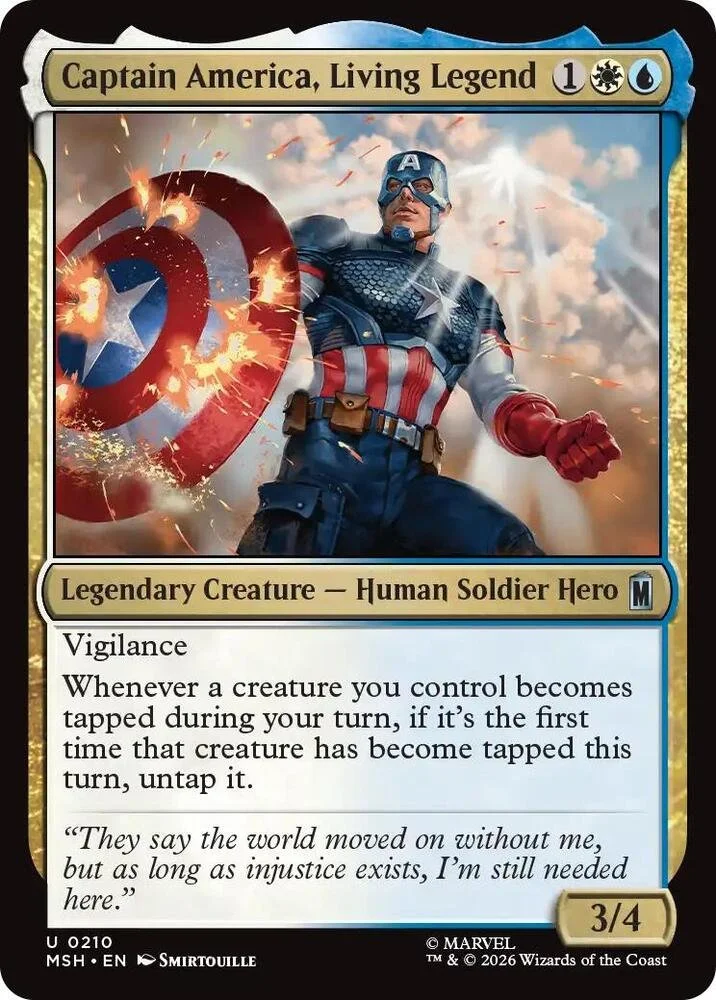
Captain America, Living Legend — The Azorius signpost uncommon for the set and exactly what this archetype wants. His ability to untap a creature the first time it becomes tapped each turn is incredibly strong here, letting you tap a creature for Teamwork, untap it, and still use it to attack or block. That gets even better with vigilance creatures, since they can attack without tapping and remain available for other effects. If you are drafting Azorius and see Captain America early, he is a very strong reason to move into the archetype.
Best Common Cards for Azorius Teamwork
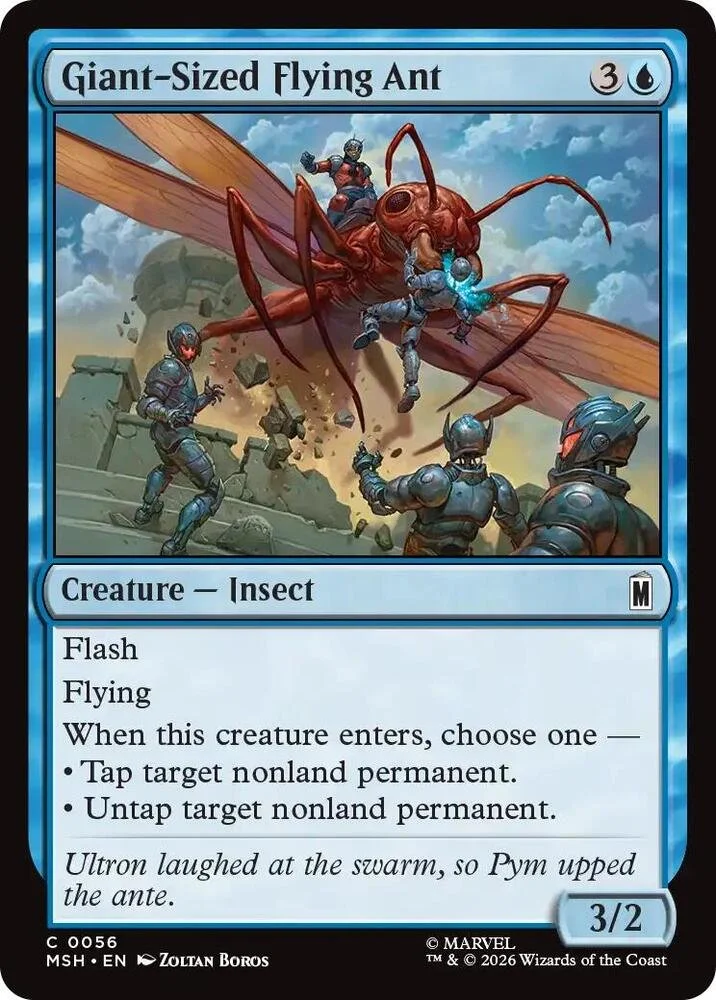
Giant-Sized Flying Ant — A strong common because it does a little bit of everything Azorius wants. A four-mana 3/2 with flash and flying is already solid in Limited, but untapping another creature when it enters the battlefield makes it especially useful here. It can recover a creature used for Teamwork, create combat tricks, or let you use a creature a second time for additional value.
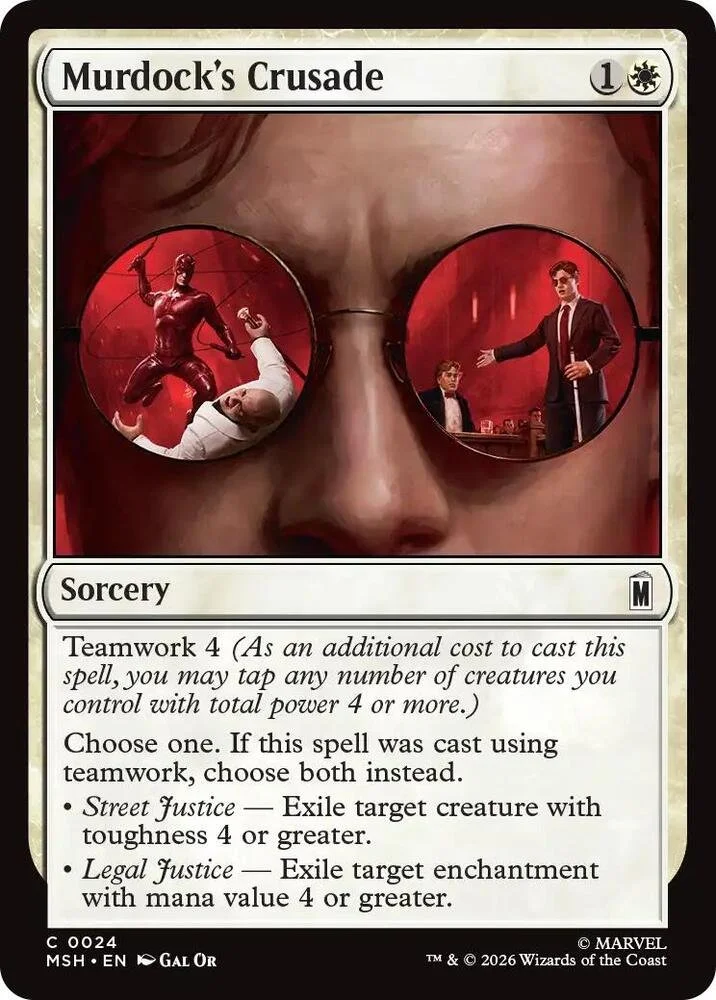
Murdock’s Crusade — A Teamwork 4 spell that can exile a creature with toughness 4 or greater. Even without Teamwork, that is useful removal against larger threats. When you can pay the Teamwork cost and choose both modes, it becomes a legitimate payoff and exactly the kind of Teamwork card worth building around.
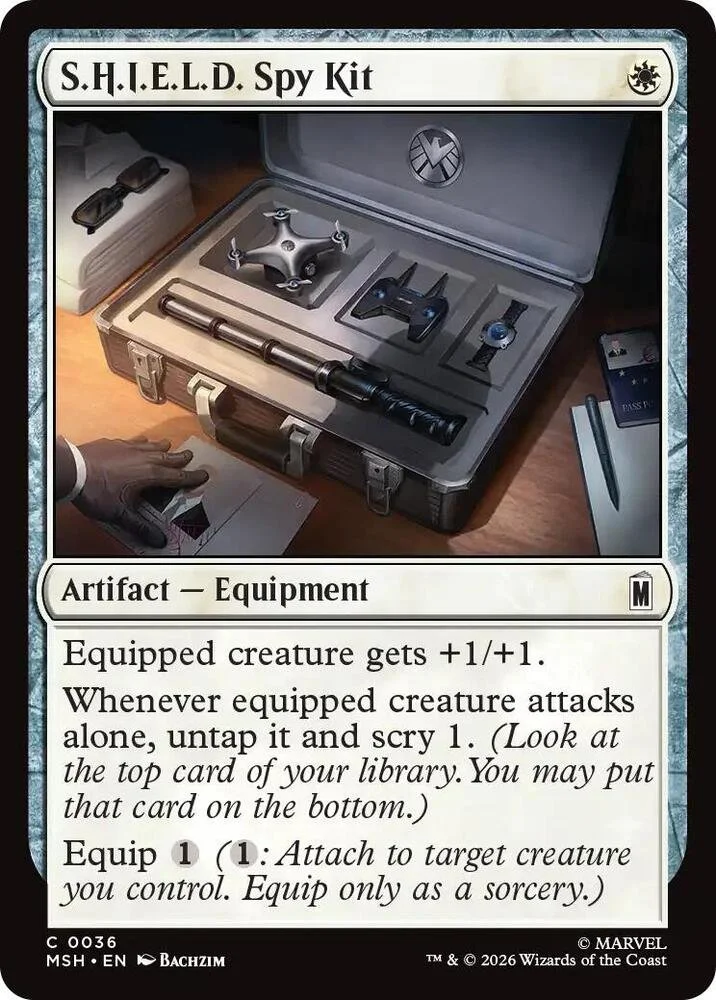
S.H.I.E.L.D. Spy Kit — Fits nicely into Azorius because the untap ability gives your creatures more flexibility. Being able to attack and still have access to a creature for Teamwork matters a lot, helping smooth out awkward turns and giving you more control over your resources.
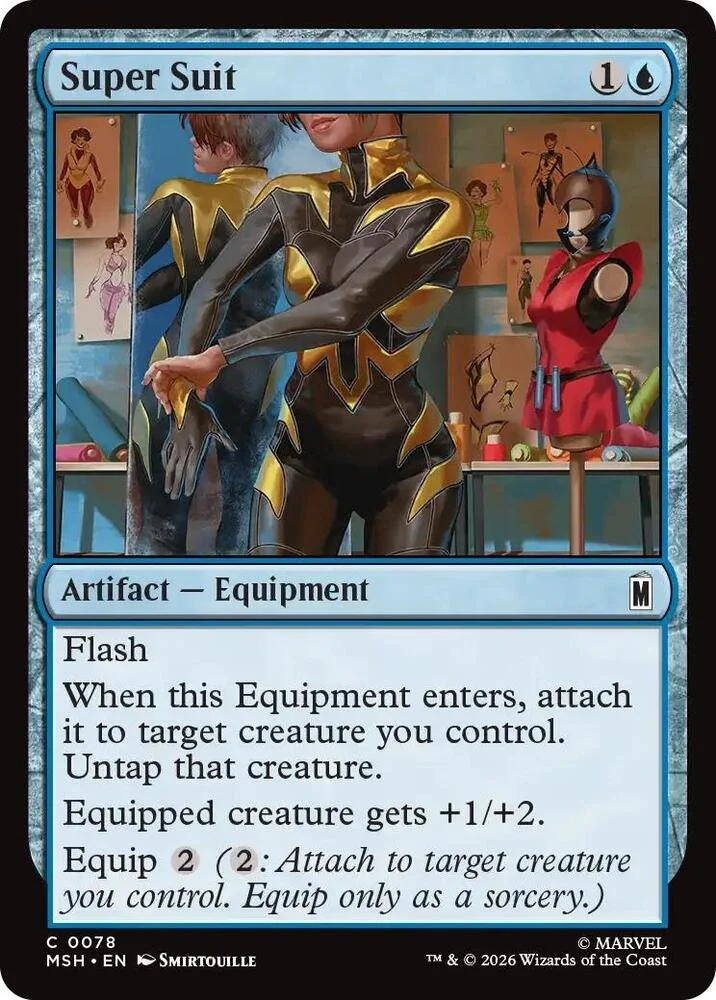
Super Suit — Another useful card for the archetype because it can untap a creature at instant speed. Flash equipment already creates combat flexibility, but the untap clause is what really matters here, letting you reuse creatures after Teamwork, surprise opponents in combat, or keep up blockers they thought were unavailable.
Best Uncommon Cards for Azorius Teamwork
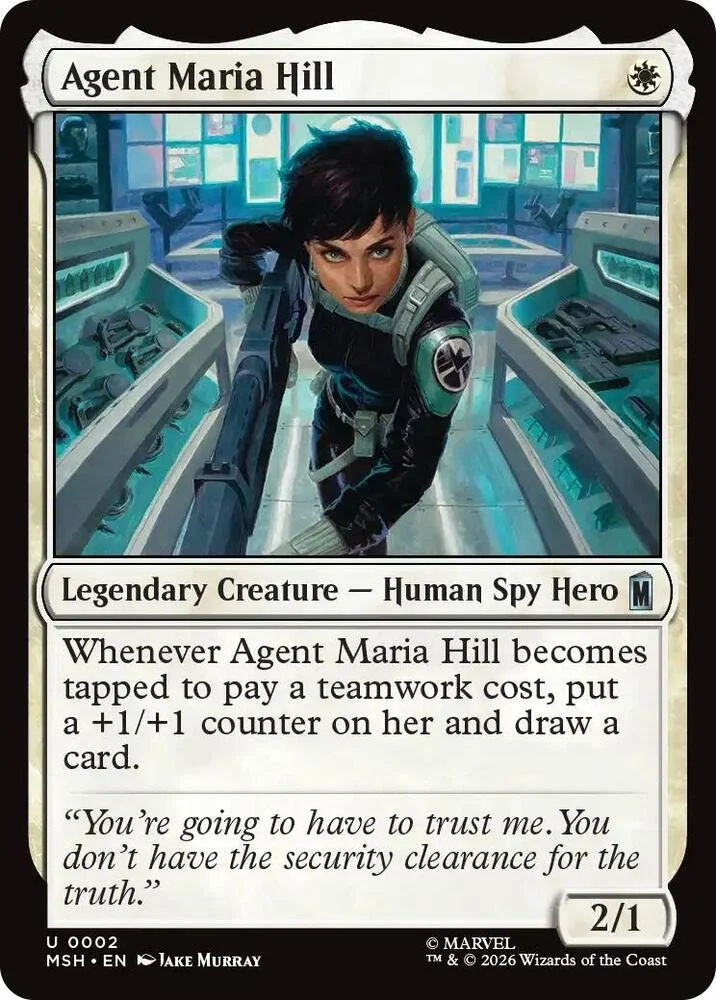
Agent Maria Hill — One of the clearest cards built specifically for the Teamwork archetype. Whenever she is tapped to help pay a Teamwork cost, she gets a +1/+1 counter. She rewards you for doing exactly what the deck already wants to do, growing into a real threat while also helping enable your spells.
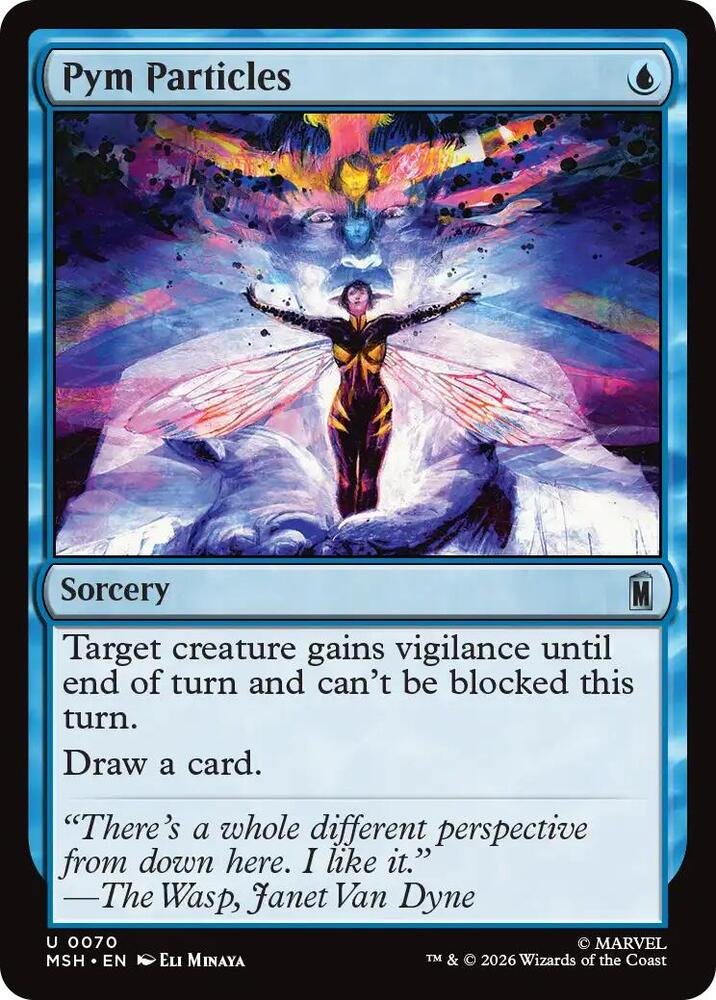
Pym Particles — Provides card draw and can give a creature vigilance until end of turn, which is highly relevant in this deck. Sometimes Azorius needs to attack while still keeping creatures available for Teamwork, and Pym Particles helps make that happen while replacing itself.
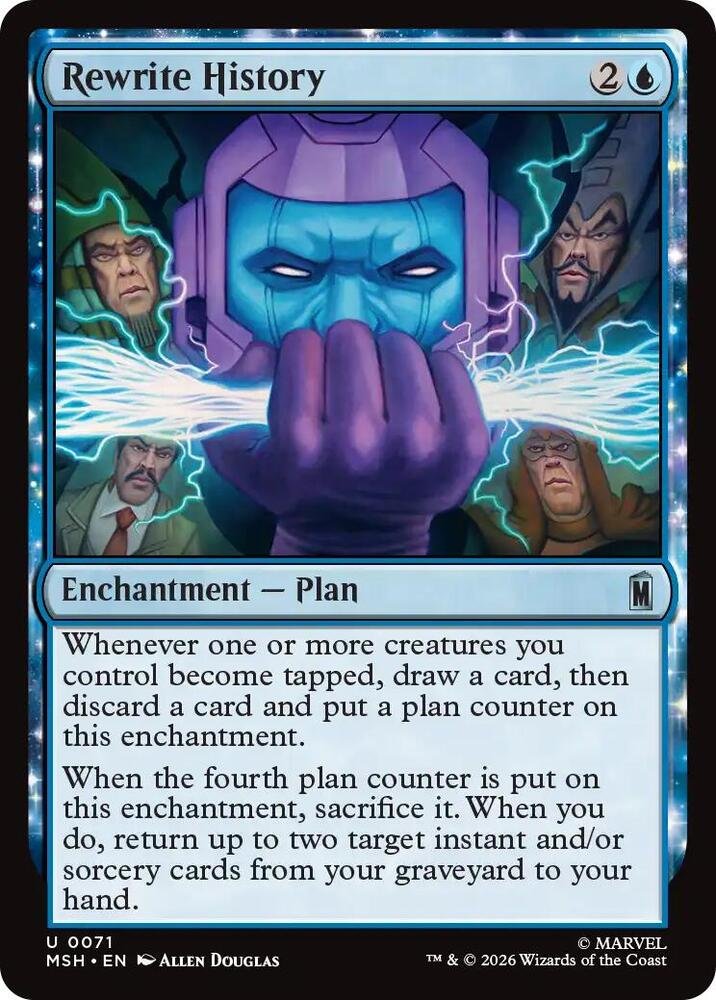
Rewrite History — A Plan that gains a plan counter whenever you tap one or more creatures. Once it reaches four counters, it sacrifices itself and returns two instant or sorcery cards from your graveyard. The card can be powerful, but it comes with a warning: if your deck lacks reliable ways to tap creatures outside of combat, it can be slow and underwhelming. In the right build, however, it becomes a strong value engine.
Best Rare and Mythic Cards for Azorius Teamwork
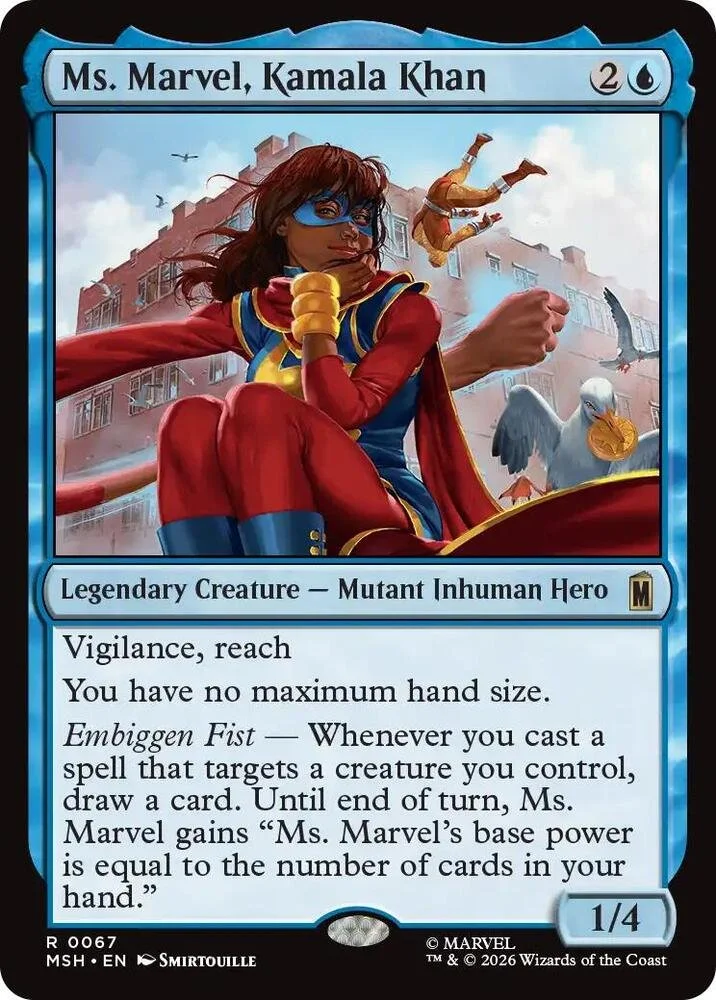
Ms. Marvel, Kamala Khan — Gives you no maximum hand size, which is a flavorful bonus, but the real reason she shines in Azorius is vigilance. Vigilance is one of the most important abilities for Teamwork decks because it lets creatures attack while remaining available for other effects. Any strong vigilance creature gets a boost in this archetype, and Ms. Marvel is no exception.
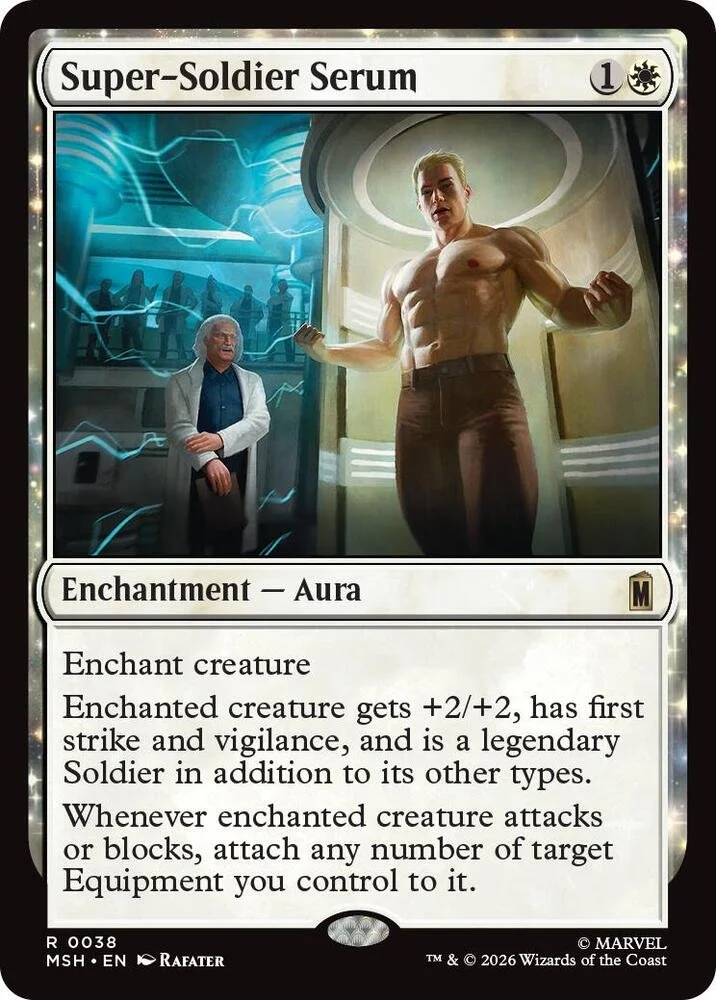
Super-Soldier Serum — An aura that provides a significant stat boost, but the most important text for Azorius is the vigilance it grants. Vigilance is incredibly valuable in Teamwork decks because it keeps creatures active on offense, defense, and during Teamwork turns. This is exactly the kind of rare that can elevate the archetype.
Dimir / Blue-Black — Draw Two
Dimir is built around the classic “draw your second card each turn” archetype, which is something we have seen pretty recently in sets like Avatar: The Last Airbender. I did not think it was the strongest archetype in that set, but I think it works a lot better here thanks to Connive.
This is where the Connive effects in Marvel Super Heroes are really going to shine. Connive naturally helps you draw and discard, which means it can trigger your second-draw payoffs while also filtering your hand and growing your creatures. That gives Dimir a much stronger engine than simply hoping to draw extra cards every turn.
Drawing extra cards is already good in Limited, but in this set, you want a little extra oomph. These are superheroes, after all. Dimir is not just trying to draw cards for value. It wants to turn those extra draws into counters, drain effects, tokens, and long-term inevitability.
Game Plan
The main goal of Dimir Draw Two is to set up an engine and keep it running.
You want to use Connive and other card draw effects to consistently draw your second card each turn. Once your payoff cards are on the battlefield, every extra draw starts turning into real value. That might mean growing creatures, draining your opponent, creating tokens, or digging deeper into your deck for answers.
The basic plan looks like this:
Connive to filter your hand and grow creatures.
Draw extra cards to trigger your second-draw payoffs.
Use discard and graveyard synergies to gain additional value.
Build an engine that slowly takes over the game.
This is not the archetype for players who want to curve out and swing for massive chunks of damage right away. Dimir is more patient. You are trying to build a board, generate value, and win through repeated small advantages.
Draft Priorities
For Dimir, you want cards that either help you draw your second card or reward you for doing so. Connive creatures are especially important because they can trigger your payoffs while also improving your board.
Your main priorities are:
Creatures that Connive.
Second-draw payoff cards.
Repeatable card draw.
Graveyard recursion.
Cheap removal and interaction.
The graveyard recursion matters because Connive will naturally put cards into your graveyard. Sometimes that means discarding a creature you actually want later. If you are going to be scheming and conniving, you should have a way to bring some of those cards back.
Win Condition
Dimir wants to win through engine value rather than one huge swing.
You can grow your Connive creatures into real threats, drain your opponent with second-draw payoffs, or go wide with token generation. The longer the game goes, the better your deck should become, assuming your engine stays intact.
This archetype is more of an engine win than a swing-out win. If you like longer setups that eventually combo out or bury the opponent in value, Dimir is going to be a great fit. If you are looking for big, burly attacks, keep scrolling until you get to Gruul.
Dimir Key Multicolor Cards
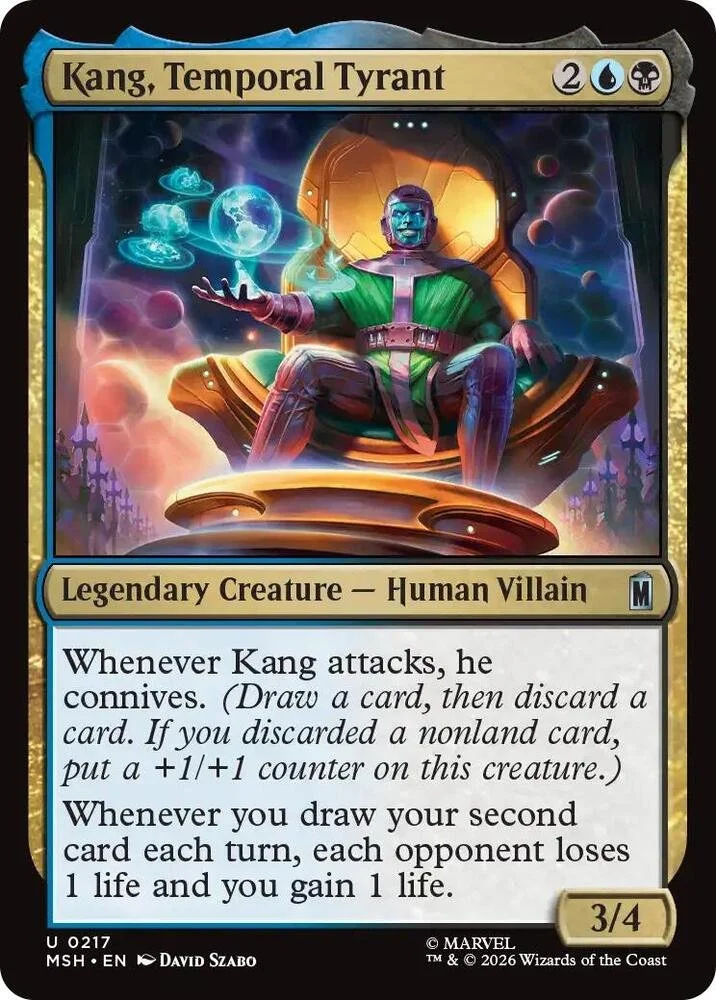
Kang, Temporal Tyrant — The Dimir signpost uncommon for the set and one of your main drain engines. Kang only cares about your second card each turn, so this does not keep stacking for your third, fourth, or fifth card drawn. That means timing matters. You want to make sure your draw effects are set up properly so you can consistently trigger him on both your turn and, when possible, your opponent’s turn.
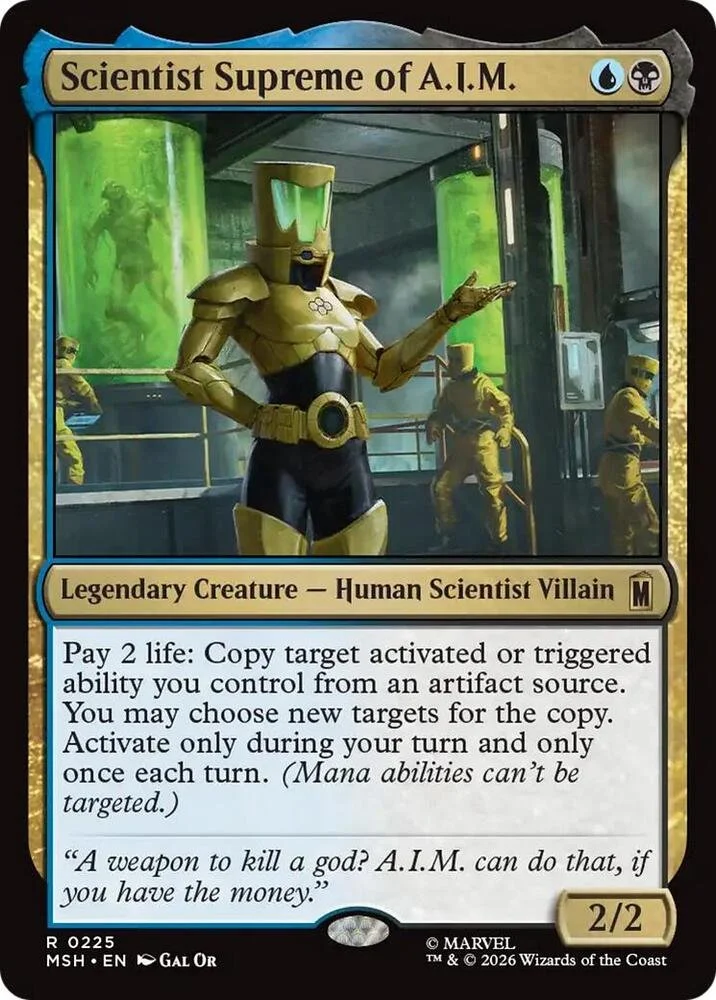
Scientist Supreme of A.I.M. — While this is not directly a draw-two payoff card, it is very interesting in Dimir because it can copy an ability. Copying something like Kang’s drain ability can help set up a stronger engine and make your second-draw turns much more impactful.
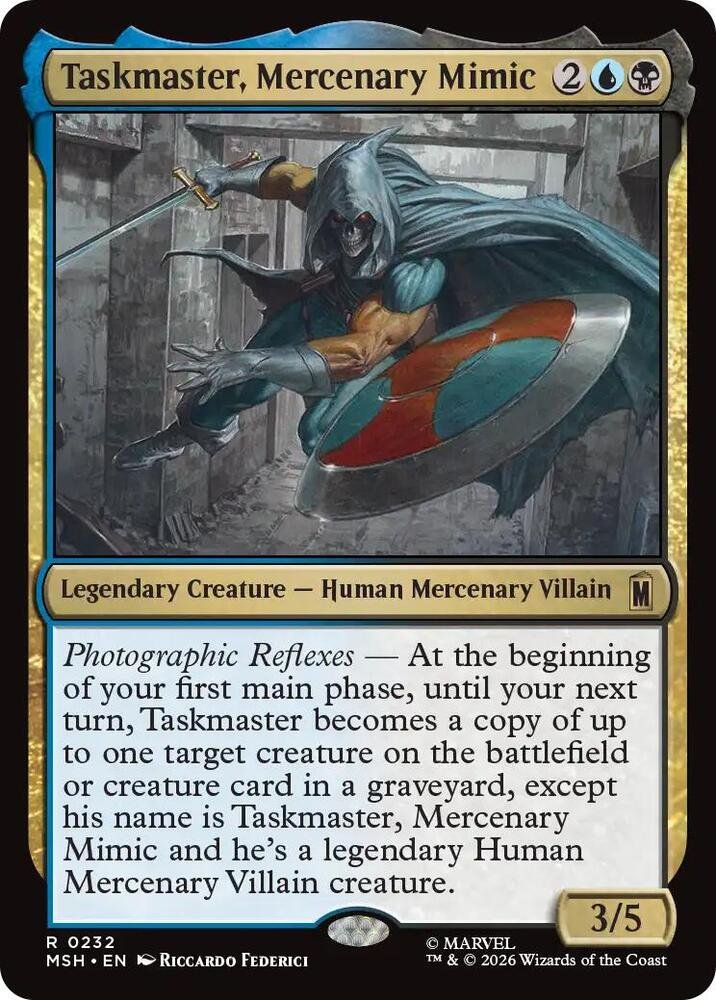
Taskmaster, Mercenary Mimic — Similar to Scientist Supreme, Taskmaster does not directly benefit you on its own in the draw-two strategy. However, being able to copy your engine cards makes it a lot more valuable once you already have the right pieces on the battlefield.
Best Common Cards for Dimir Draw Two
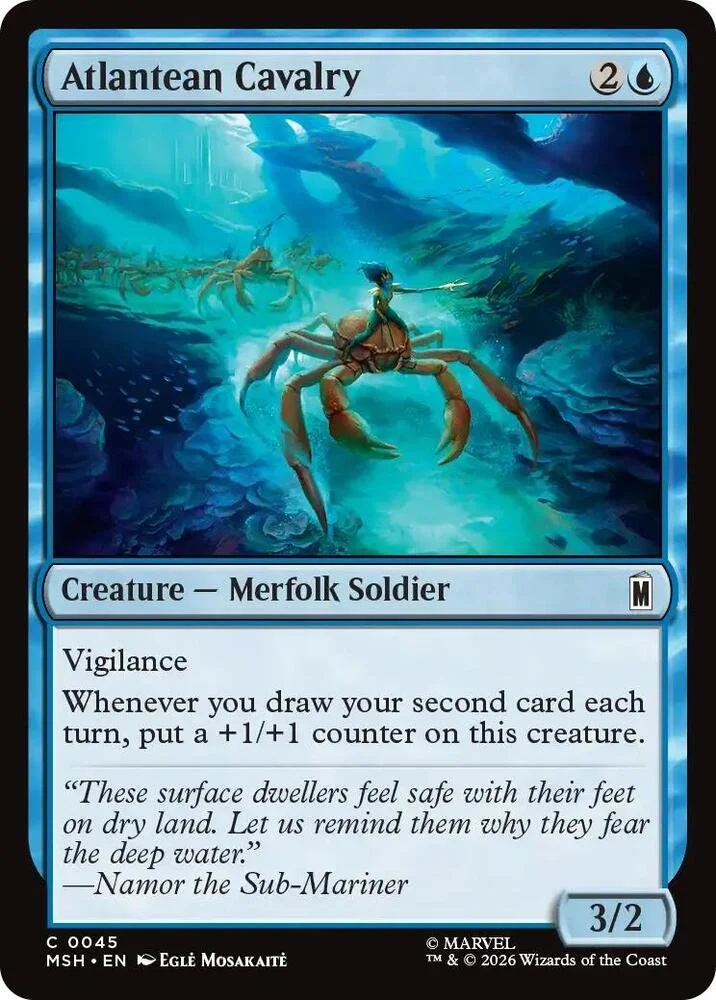
Atlantean Cavalry — Gets stronger each time you draw your second card, making it one of the cleaner commons for this archetype. Since it is nonlegendary, it is also a great card to have multiple copies of in Draft or Sealed. If you can trigger it consistently, it can quickly become a real threat.
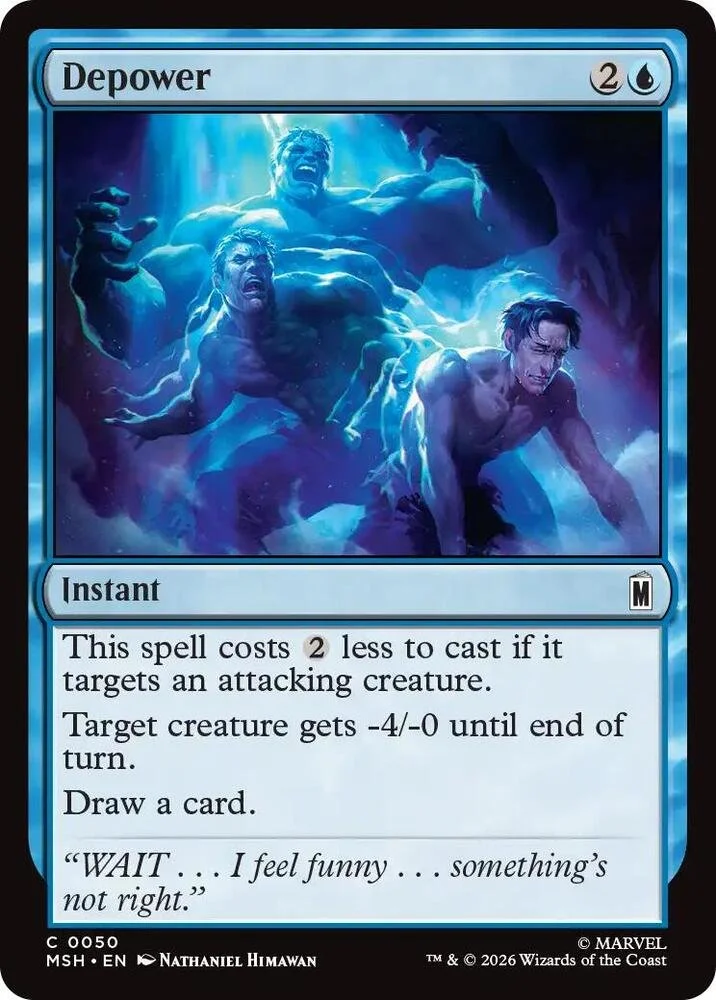
Depower — A useful interaction spell that can lessen the impact of an incoming attack or function as a combat trick, while also drawing you a card. That extra card draw matters a lot here because it can help trigger your second-draw payoffs at the right time.
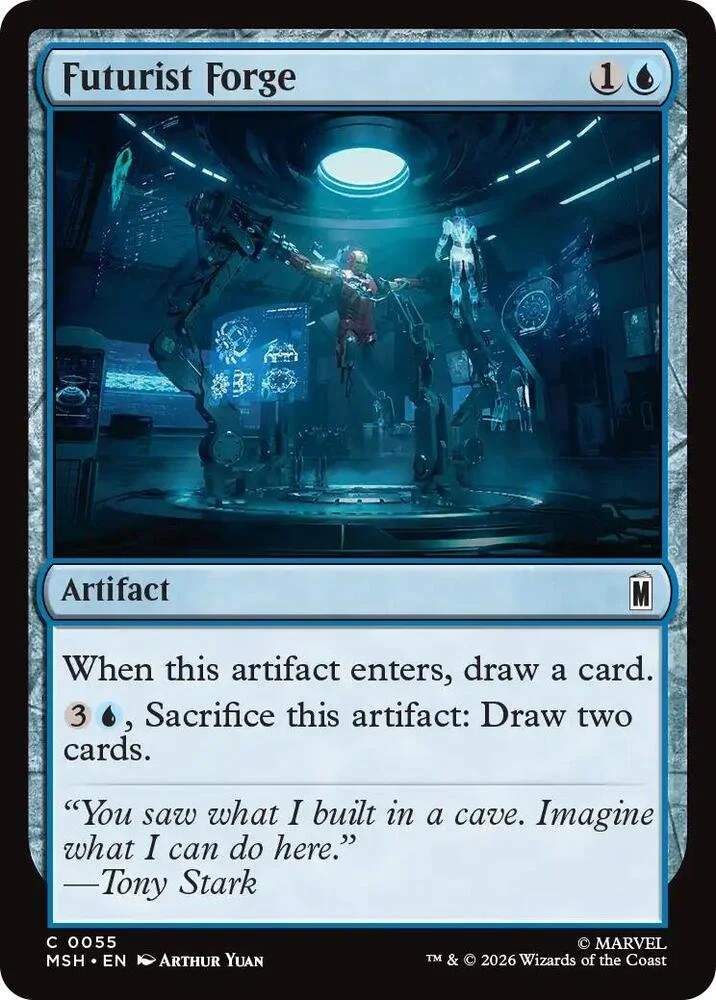
Futurist Forge — A solid enabler because it can help trigger second draw twice: once when it enters and again when it leaves. That gives you multiple chances to turn on your payoff cards, which is exactly what Dimir wants.
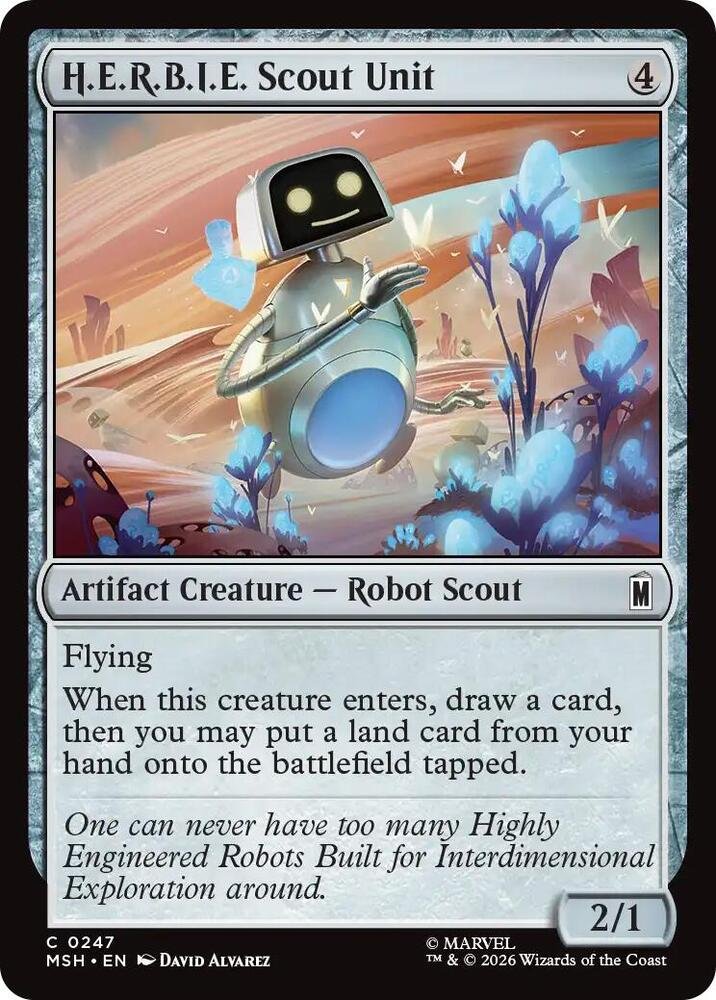
H.E.R.B.I.E. Scout Unit — A colorless creature that draws a card when it enters the battlefield, which already helps with the draw-two plan. It also functions as ramp by letting you put a land from your hand onto the battlefield tapped. That combination of card draw and mana smoothing makes it useful in a lot of Limited decks, but especially helpful here.
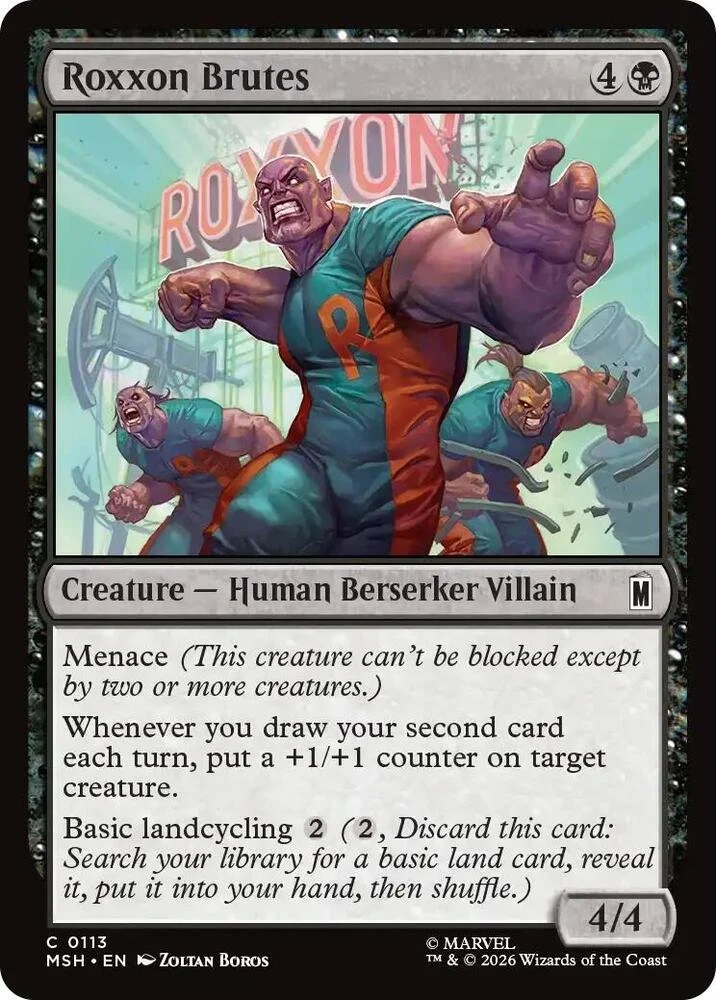
Roxxon Brutes — A nice common for Dimir because it benefits from you drawing your second card. If you do not need it as a creature, you can also cycle it for a basic land, which helps smooth out your draws and keeps your engine moving.
Best Uncommon Cards for Dimir Draw Two
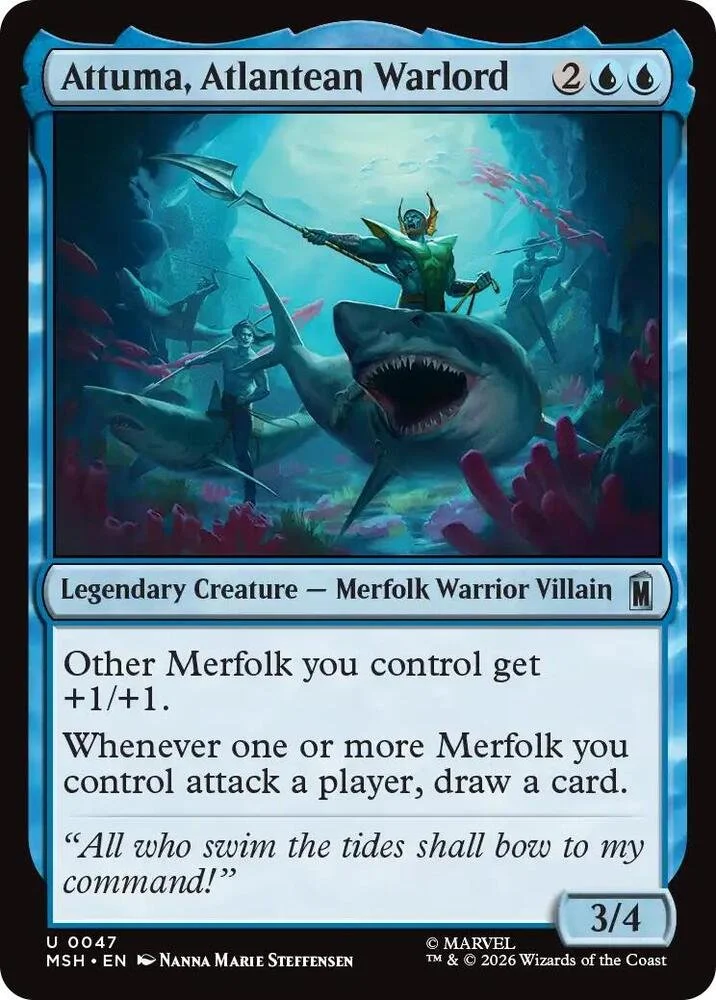
Attuma, Atlantean Warlord — Dimir Draw Two has a slight Merfolk subtheme, and Attuma supports that very well. Giving your Merfolk +1/+1 is already solid, but drawing a card whenever a Merfolk attacks gives you another way to trigger your second-draw payoffs. If you have enough Merfolk, Attuma becomes a strong reason to lean harder into this version of Dimir.
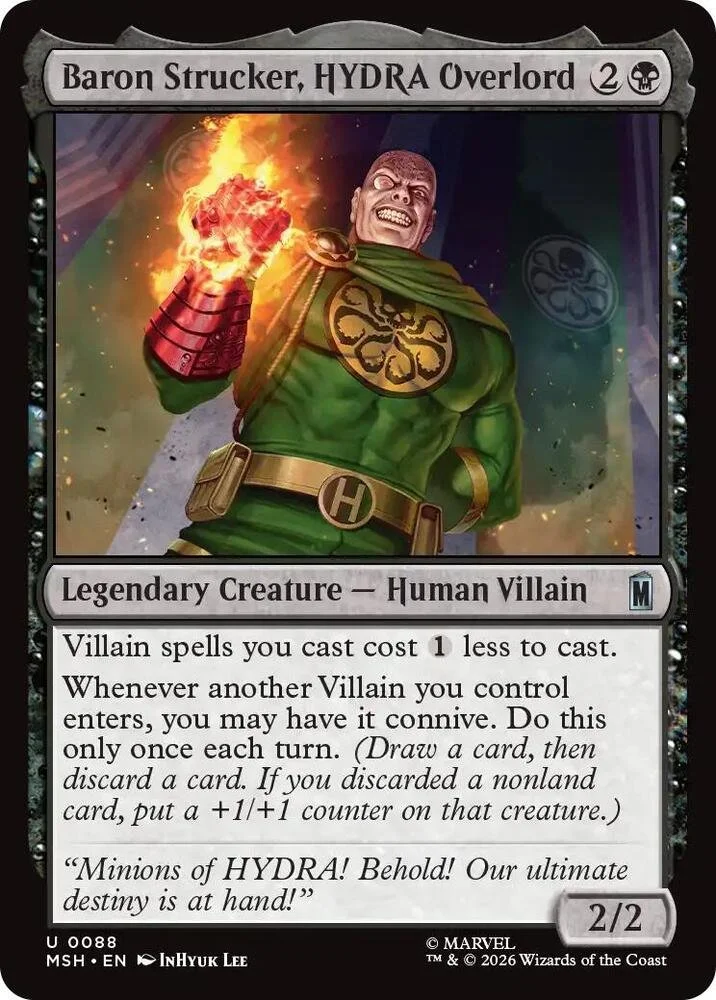
Baron Strucker, HYDRA Overlord — A top-tier card that honestly works in almost every black archetype. In Dimir, it gets even better because whenever a Villain enters under your control, that creature connives. That means you can trigger your second draw, filter your hand, and potentially grow your Villains all at once. This is exactly the kind of card that makes the engine feel scary.
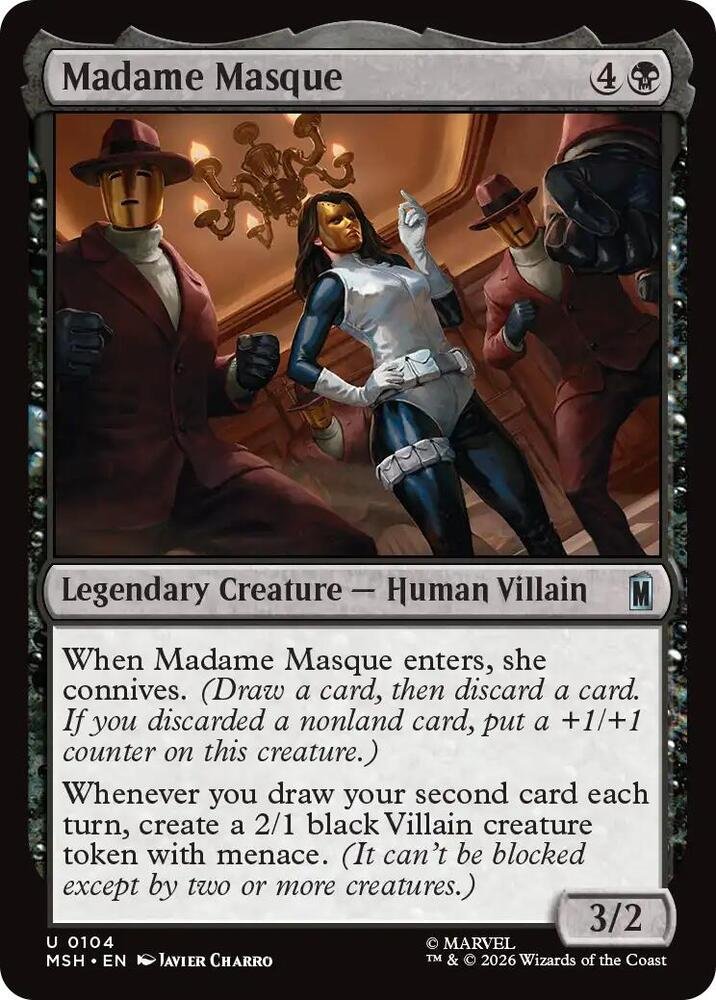
Madame Masque — Does two important things for this deck. First, she connives when she enters the battlefield, helping trigger your second-draw payoffs right away. Then, she rewards your second draw by creating a 2/1 Villain token. That gives you both an enabler and a payoff on the same card, which is exactly what Dimir wants.
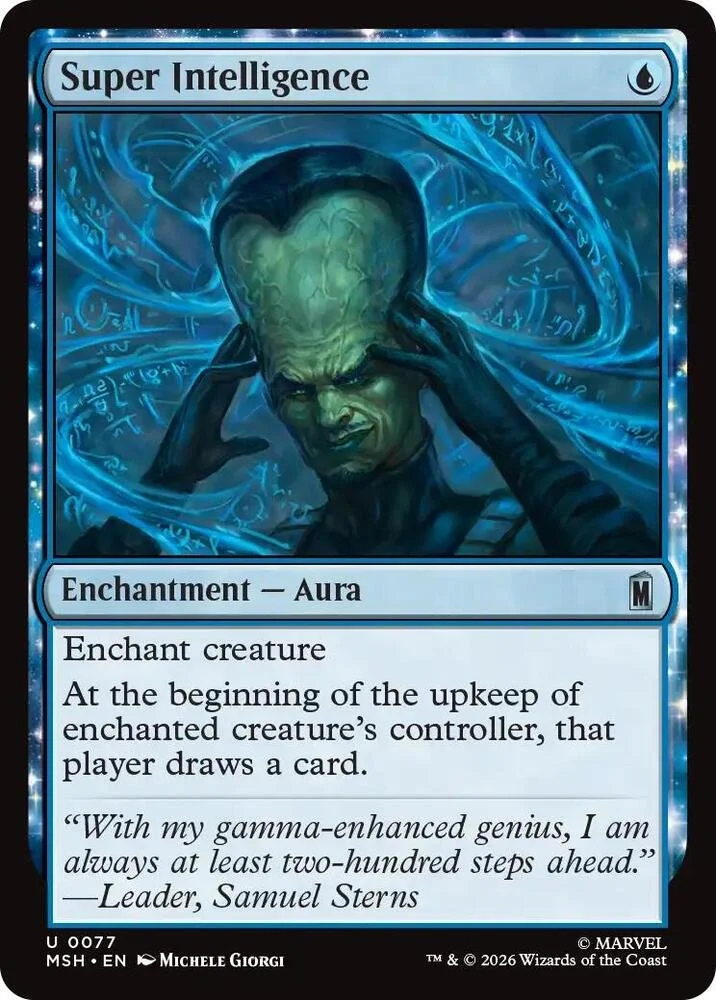
Super Intelligence — A very useful Aura if you are struggling to trigger your second draw consistently. As long as the enchanted creature stays on the battlefield, Super Intelligence can help guarantee that you draw a second card each turn. It is a little vulnerable because it depends on the creature surviving, but the payoff is strong if your opponent cannot remove it.
Best Rare and Mythic Cards for Dimir Draw Two
Quick note: the mythic Namor can be good in this archetype if you pull it, mostly because of the Merfolk subtheme. However, I would not say it directly supports the draw-two game plan the way some of the other rares and mythics do.
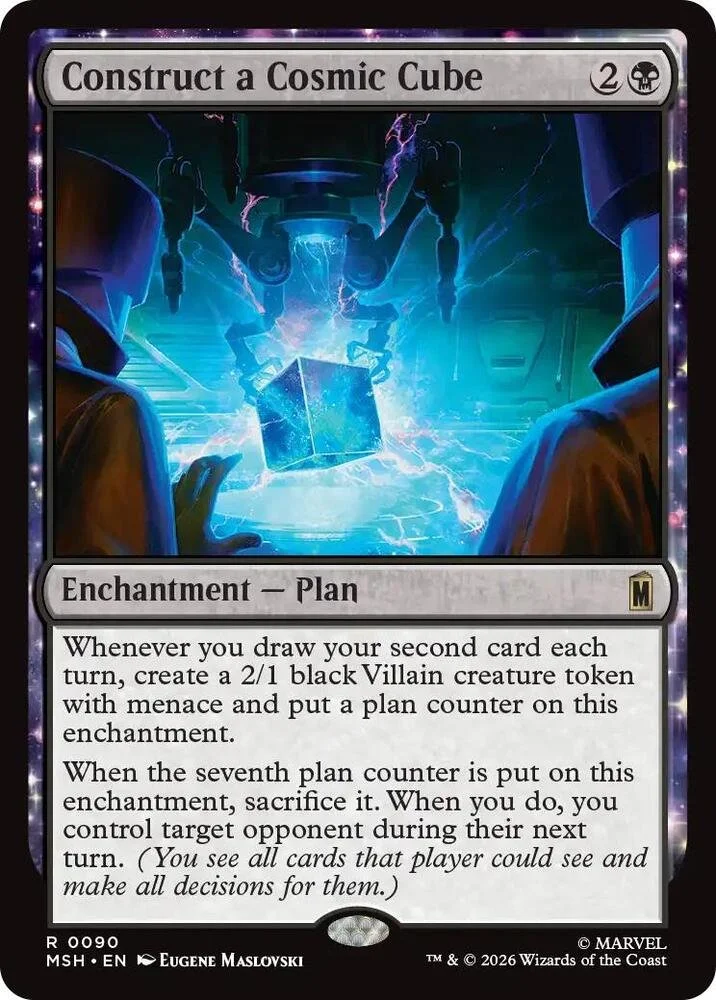
Construct a Cosmic Cube — A four-turn timer for what is essentially an extra-turn-style payoff. This Plan creates a 2/1 Villain whenever you draw your second card, and when it finally pops, you control your opponent’s next turn. That is an incredible payoff, but this card is 100% removal bait. If your opponent can answer it before it finishes, they absolutely will.
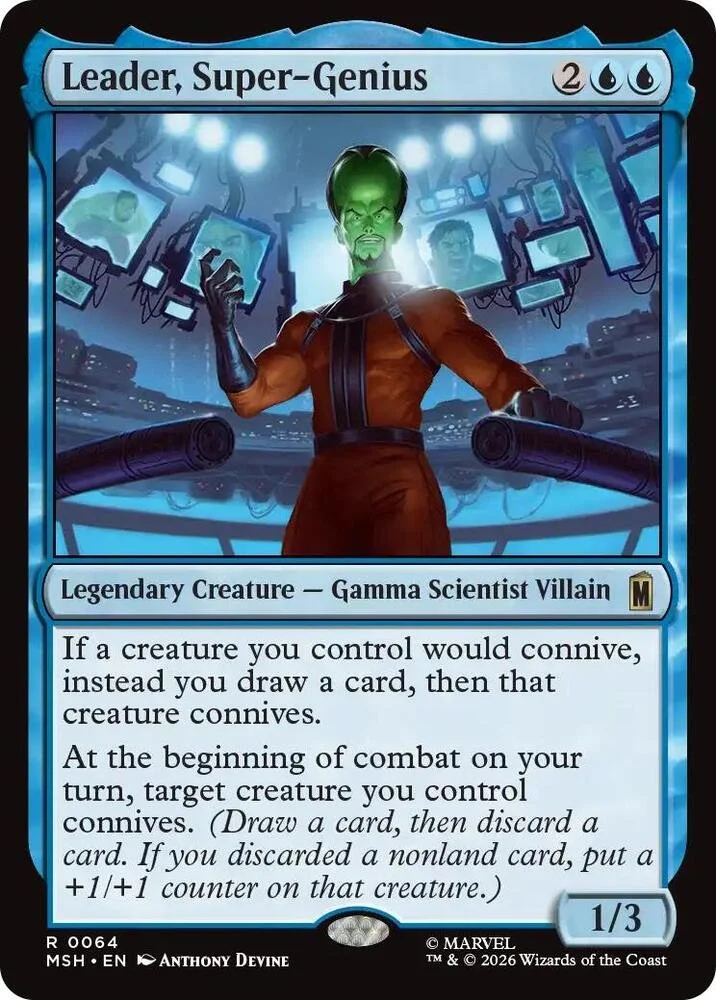
Leader, Super-Genius — Makes your Connive effects better and helps guarantee a Connive trigger each turn. That is exactly what Dimir wants, since Connive fuels both your second-draw payoffs and your graveyard setup. If you are building around this archetype, Leader is one of the cleanest rare payoffs you can open.
Rakdos / Black-Red — Villains
Rakdos is the Villains matter archetype in Marvel Super Heroes. If you are drafting Black-Red, you are looking for creatures, enchantments, artifacts, and payoffs that care about Villains entering the battlefield, attacking, dying, or simply being on your side of the board.
This is one of the more straightforward archetypes in the set, and that is not a bad thing. Typal archetypes like this are usually a little less demanding during gameplay because a lot of the work happens during deckbuilding. Once you make sure your deck has enough Villains and enough cards that reward you for playing Villains, the actual game plan becomes pretty clear: play threats, build pressure, and punish your opponent before they can stabilize.
Game Plan
Rakdos Villains wants to be aggressive while still getting value from its creature type synergies.
You are not trying to build a slow, complicated engine the way Dimir might. Instead, you want to curve out with Villains, use your payoffs to create extra damage or extra bodies, and force your opponent to deal with constant pressure.
The basic plan looks like this:
Play Villains early and often.
Use Villain payoffs to create extra value.
Set up big turns with token generation or damage triggers.
Stay aggressive and keep your opponent on the back foot.
The nice thing about Rakdos is that it should play pretty naturally as long as you paid attention during deckbuilding. If your deck has the right creature count and enough Villain support, your cards should start working together without needing too much setup.
Draft Priorities
For Rakdos, your priorities are pretty simple: you need Villains, cards that make Villains, and cards that reward you for having Villains.
Your main priorities are:
Efficient Villain creatures.
Villain token generators.
Payoffs that trigger when Villains enter the battlefield.
Aggressive removal.
Cards that let you reuse or benefit from Villain ETB effects.
At the risk of sounding like a broken record, you really just want the best Villains and the best Villain payoffs you can get. The archetype does not need to be overcomplicated. If your deck is full of Villains and your cards reward you for playing them, you are probably doing the right thing.
Win Condition
Rakdos Villains wants to win by pressuring your opponent early and turning Villain synergies into extra damage.
This is less of a “build an engine and eventually take over” deck and more of a “burn your opponent out while attacking them” deck. Villain ETB triggers can slowly drain your opponent or create extra bodies, and while that is happening, your creatures should be attacking as much as possible.
At its best, Rakdos makes the opponent feel like they are never getting a clean turn. They are taking damage from attacks, losing life from triggers, and dealing with a board that keeps replacing itself or producing more Villains.
Rakdos Key Multicolor Cards
All of the Black-Red multicolor cards in this set look very strong, but these are the ones that directly support the Villains game plan and should make you actively consider moving into Rakdos.
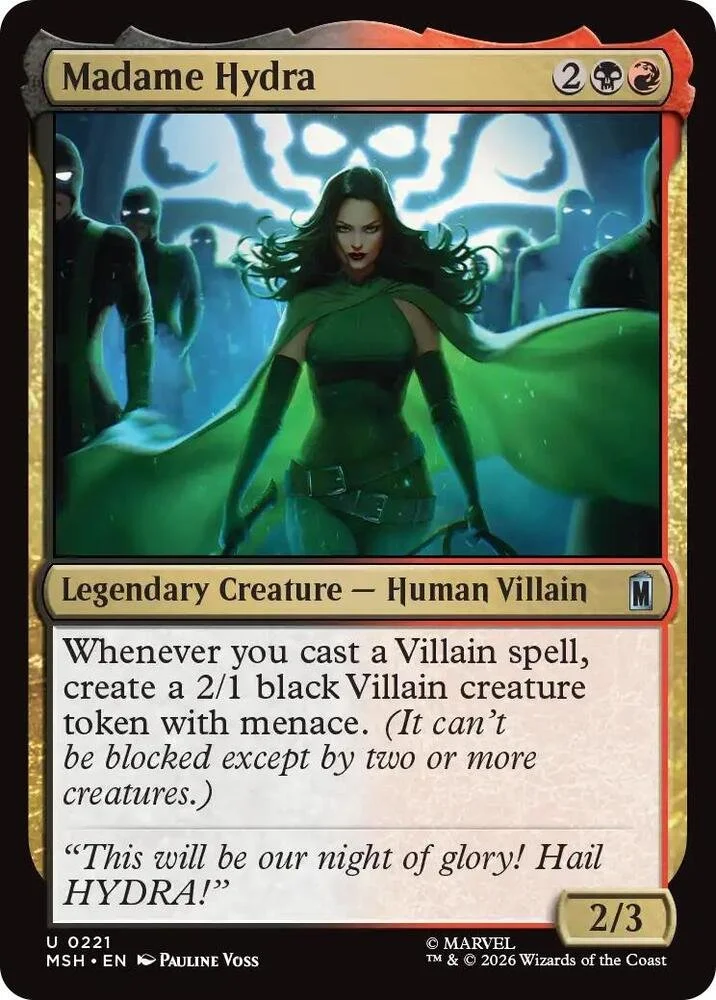
Madame Hydra — The Rakdos signpost uncommon, and exactly what this archetype wants. Madame Hydra rewards you for casting Villains by creating extra 2/1 Villain tokens, giving you more bodies for attacks, sacrifice effects, or additional Villain payoffs. If you see her early, she is a strong signal that Rakdos Villains may be open.
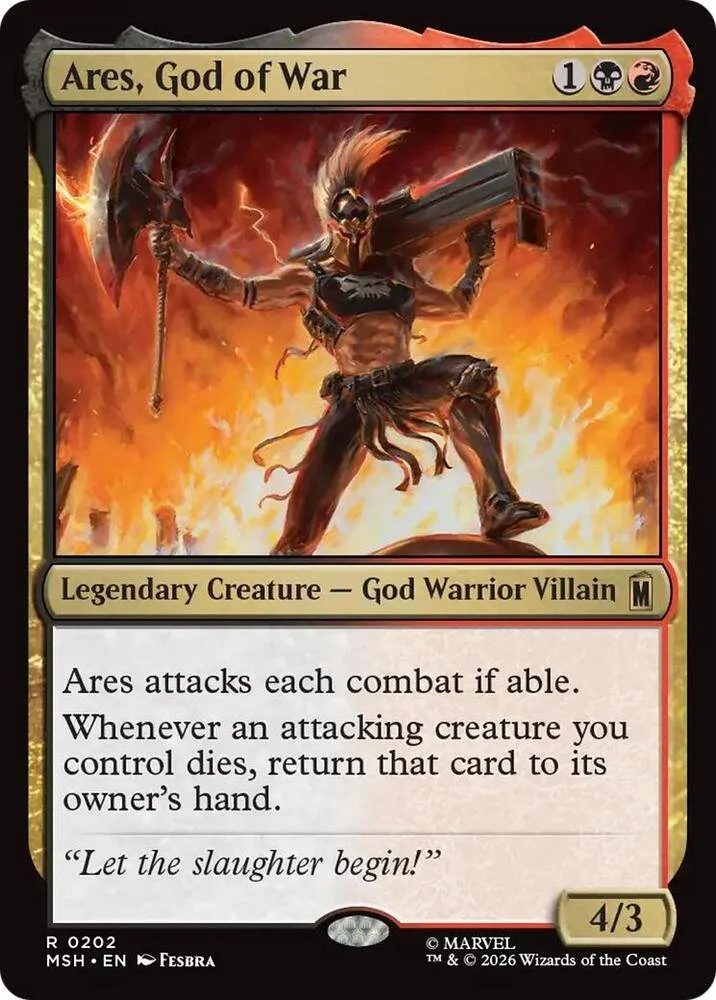
Ares, God of War — Ares supports the aggressive side of Rakdos perfectly. He has to attack each turn, which fits the deck’s pressure plan, but the real upside is that whenever an attacking creature you control dies, you return it to your hand. That lets you replay Villains, retrigger ETB effects, and make combat awkward for your opponent. They may have to block, but they are not always getting a clean trade.
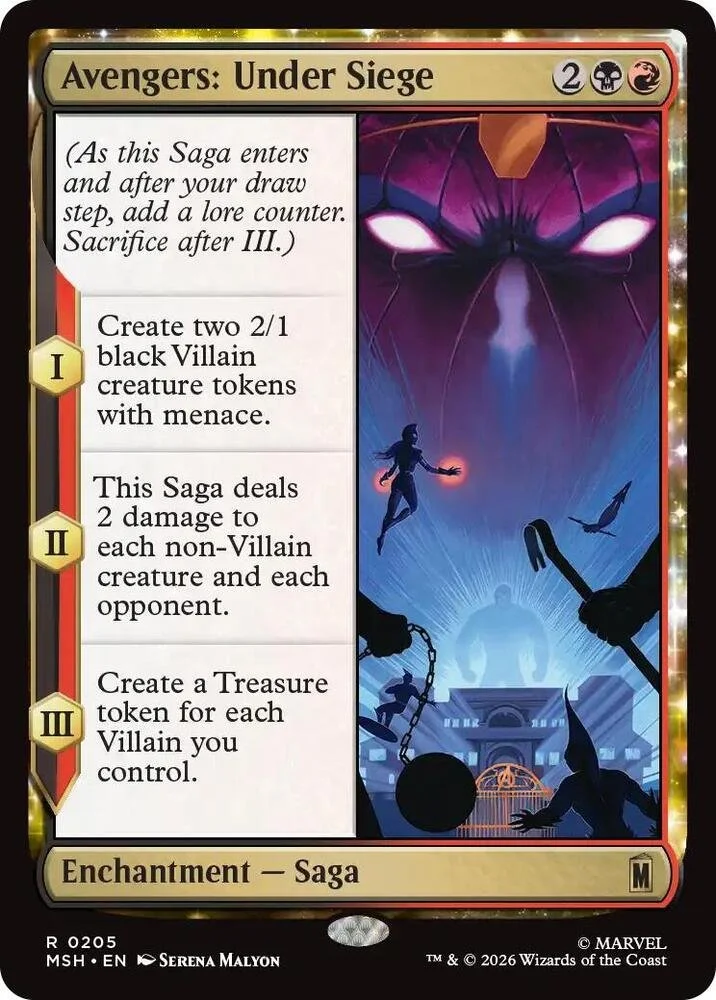
Avengers: Under Siege — A strong saga for this archetype because it gives you a Villain token right away, then deals damage across the board to non-Villains, and finally rewards you with Treasure tokens based on the number of Villains you control. That is a great payoff for doing what Rakdos already wants to do: flood the board with Villains and punish everything that is not on your side.
Best Common Cards for Rakdos Villains
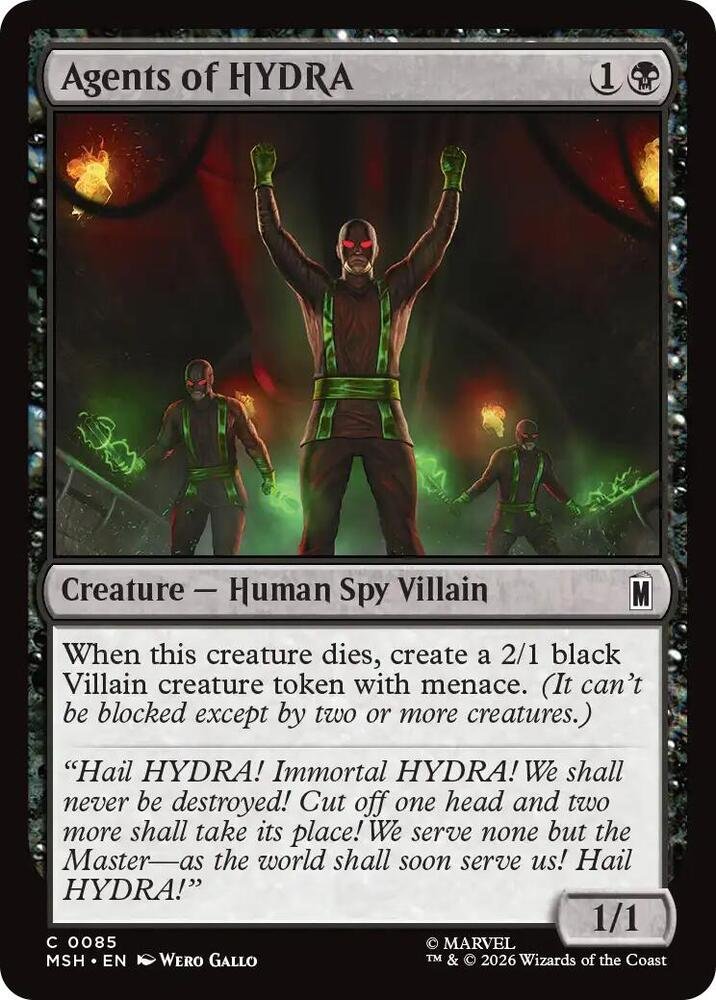
Agents of HYDRA — A Villain creature that leaves behind another 2/1 Villain when it dies. That is exactly the kind of sticky creature this archetype wants. It gives you an early body, keeps your Villain count high, and makes removal or combat trades less clean for your opponent.
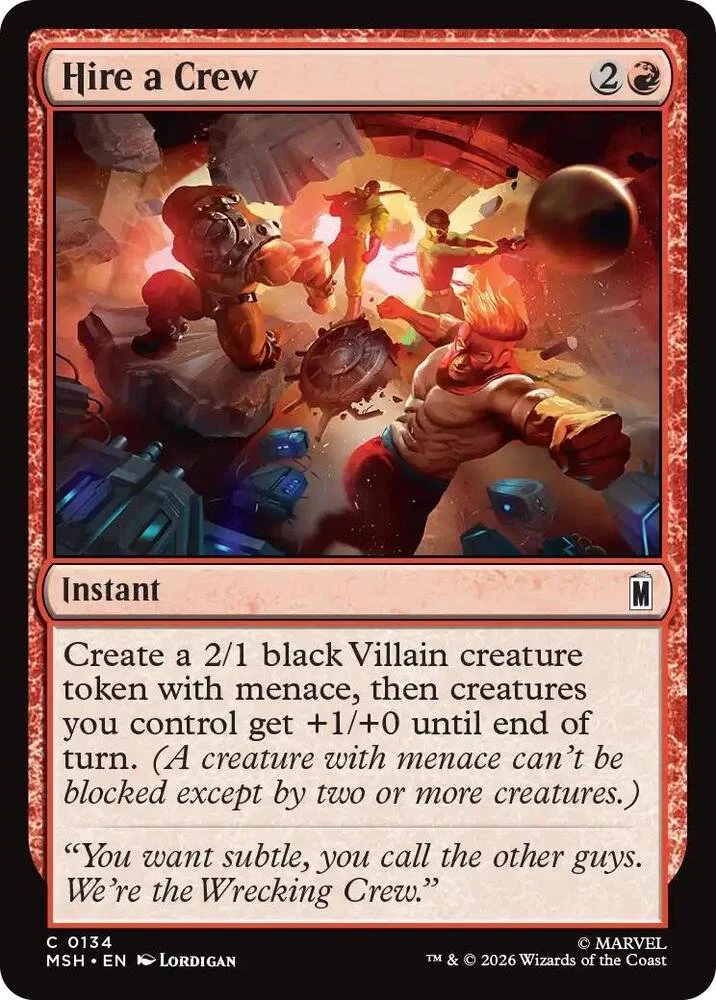
Hire a Crew — Instant-speed Villain creation with a board-wide buff attached. This can help you rebuild, surprise your opponent in combat, or set up a stronger attack. In a deck that cares about Villains entering the battlefield and attacking in numbers, Hire a Crew does a lot of good work.
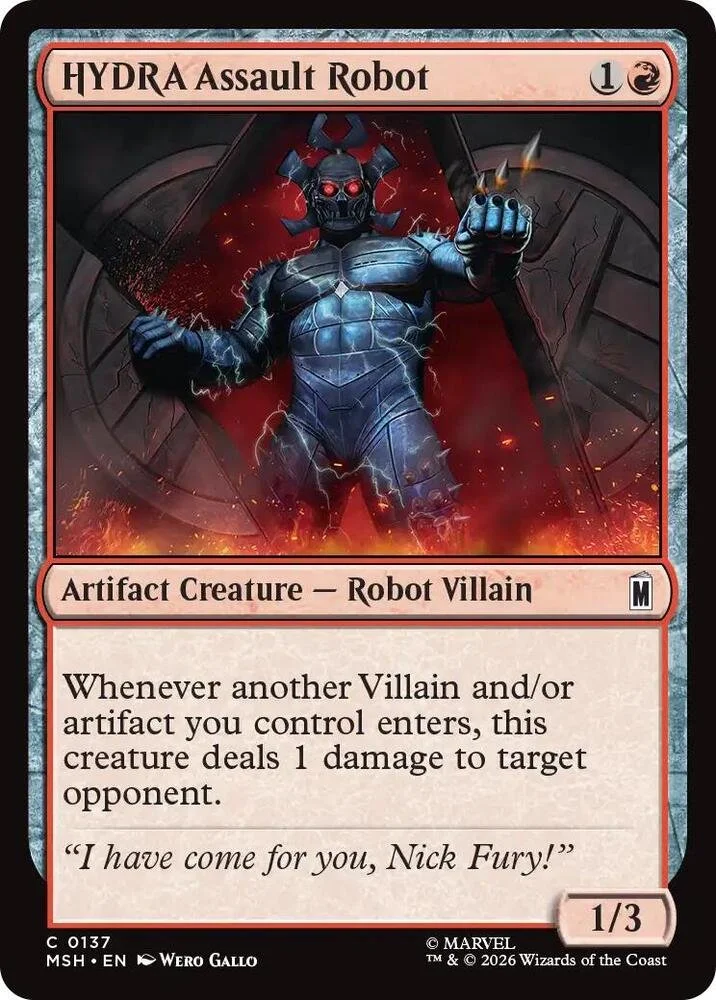
HYDRA Assault Robot — This is one of the commons I would be very happy to pick up multiple copies of in Draft or Sealed. It works well in Rakdos Villains, but it also crosses over into Izzet Artifacts. Whenever a Villain or artifact enters the battlefield under your control, it deals one damage to each opponent. That gives Rakdos a very real burn plan, especially if you are creating multiple Villain tokens over the course of a game.
Best Uncommon Cards for Rakdos Villains
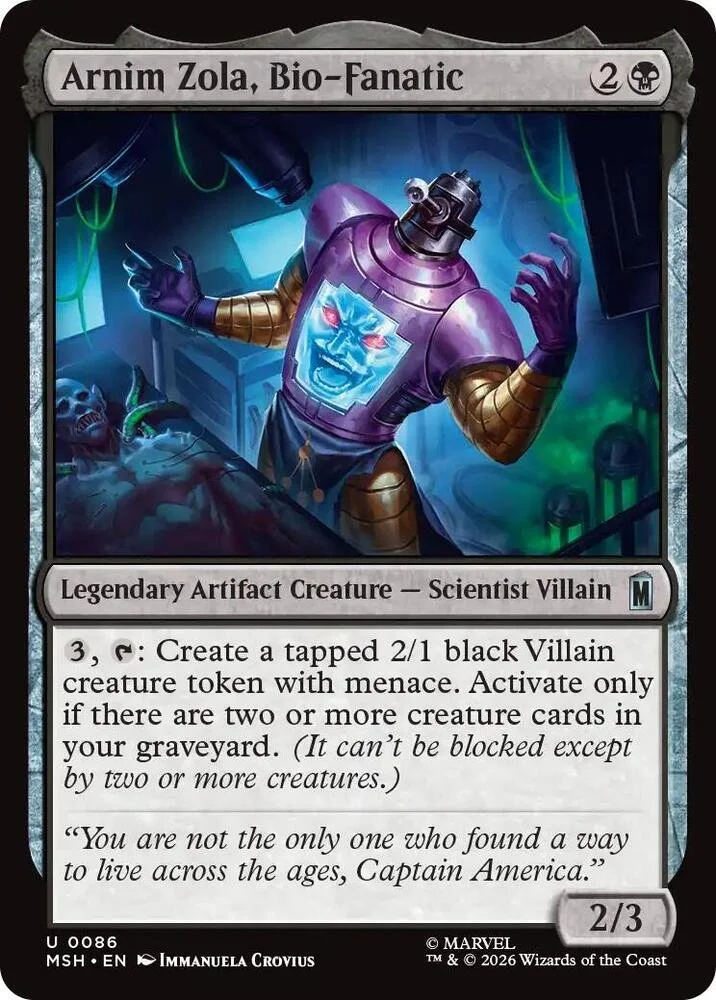
Arnim Zola, Bio-Fanatic — A repeatable Villain generator, which is exactly what this deck wants once the game goes longer. He gets better later in the game when you have more mana available, letting you continue producing Villains and triggering your payoffs even after your hand starts to run low.
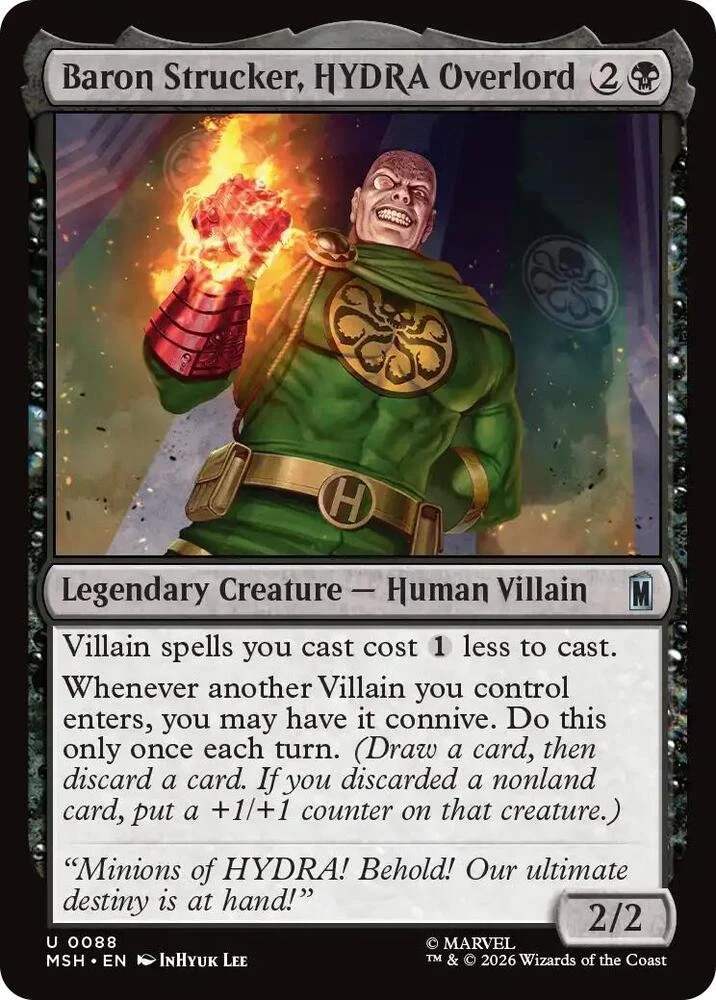
Baron Strucker, HYDRA Overlord — A strong card in almost any black deck, but especially scary here. Making your Villains cheaper helps you double-spell more often, flood the board faster, and turn on your payoffs ahead of schedule. In Rakdos, cost reduction can translate directly into pressure.
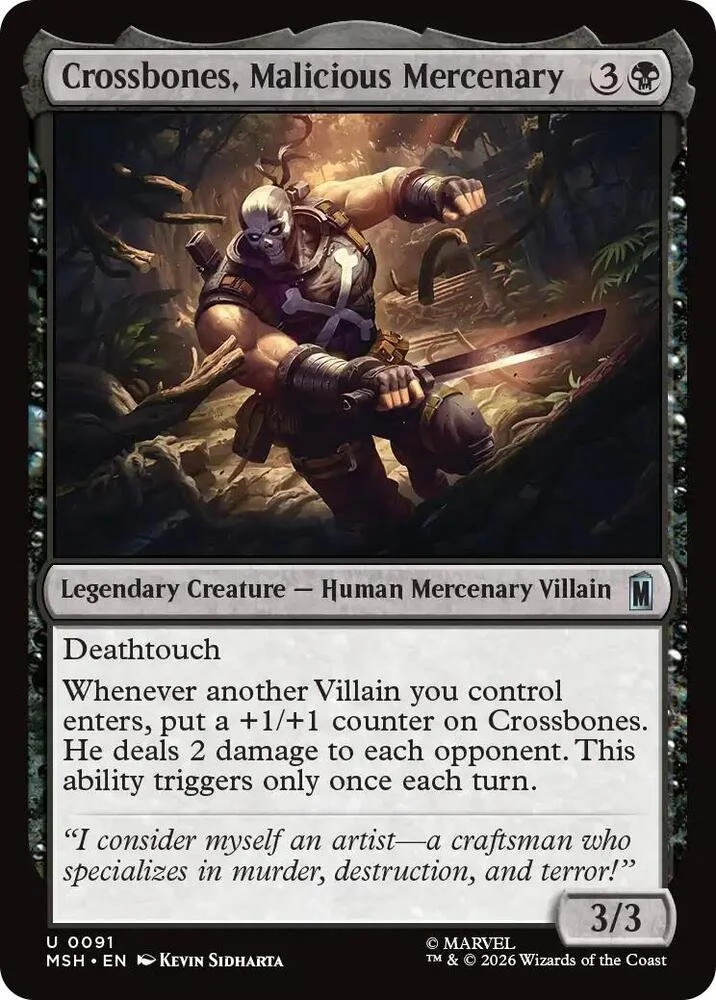
Crossbones, Malicious Mercenary — A great payoff creature for this archetype. Crossbones gets a +1/+1 counter whenever a Villain enters the battlefield under your control, which means he can grow quickly in a deck with enough Villain creatures and token generators. If unanswered, he can become one of your biggest threats.
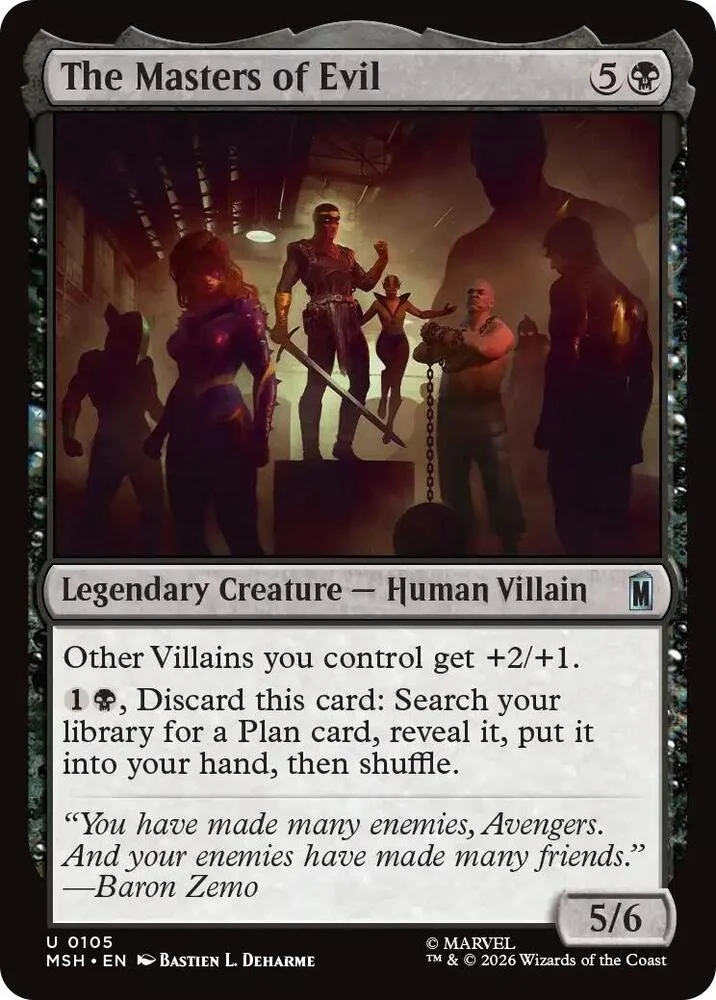
The Masters of Evil — A very clean payoff for going wide with Villains. Giving all your Villains +2/+1 can turn a normal board into a massive attack out of nowhere. This is the kind of card that can close games quickly if your opponent does not respect your board.
Best Rare and Mythic Cards for Rakdos Villains
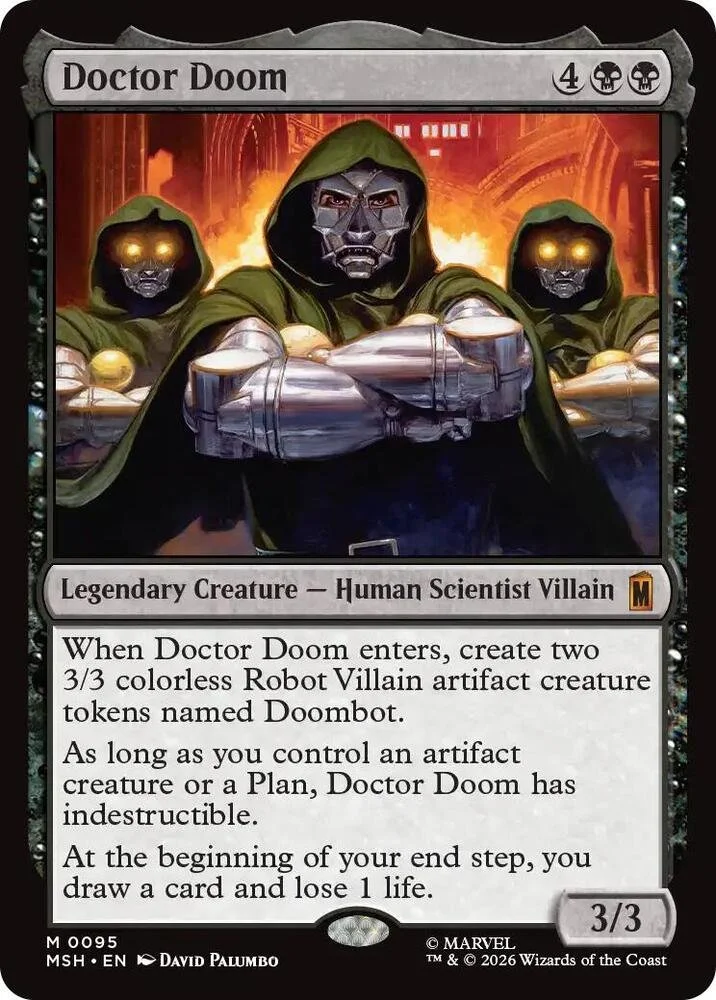
Doctor Doom — An indestructible 3/3 as long as you control an artifact, with bonus card draw every turn. Doctor Doom does not need much explanation. He is hard to remove, he keeps cards flowing, and he gives Rakdos a powerful threat that can take over the game if left alone.
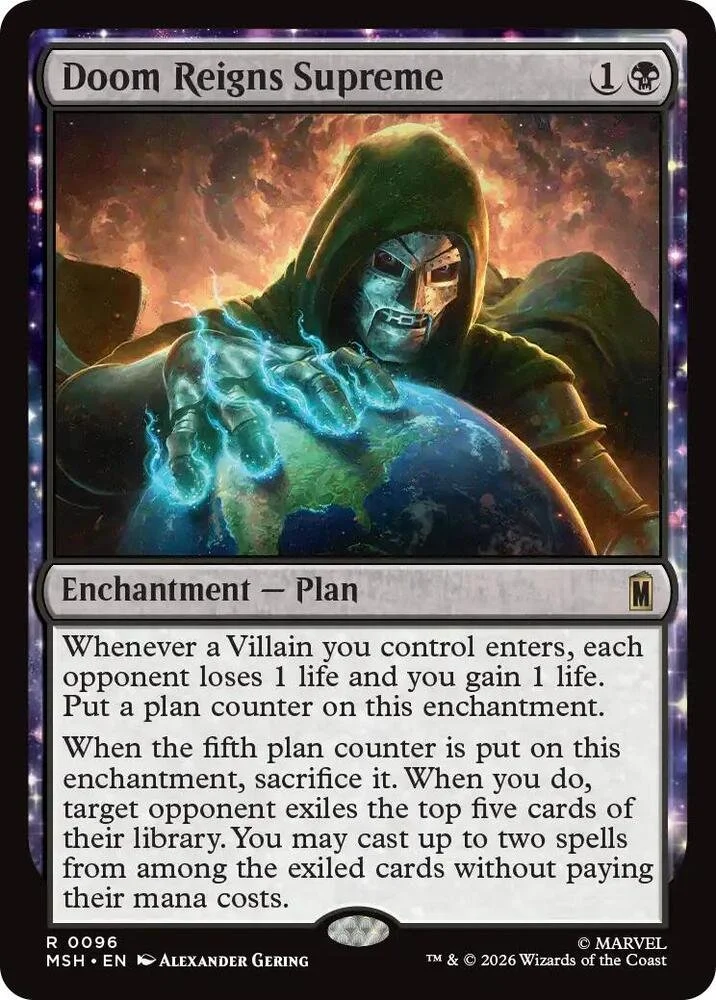
Doom Reigns Supreme — A Plan that drains your opponent and gains you life whenever a Villain enters the battlefield under your control. Then, once the Plan completes, you exile five cards from your library and can cast two of them for free. This is a huge payoff for the Villains deck, giving you both early life swings and a massive late-game burst.
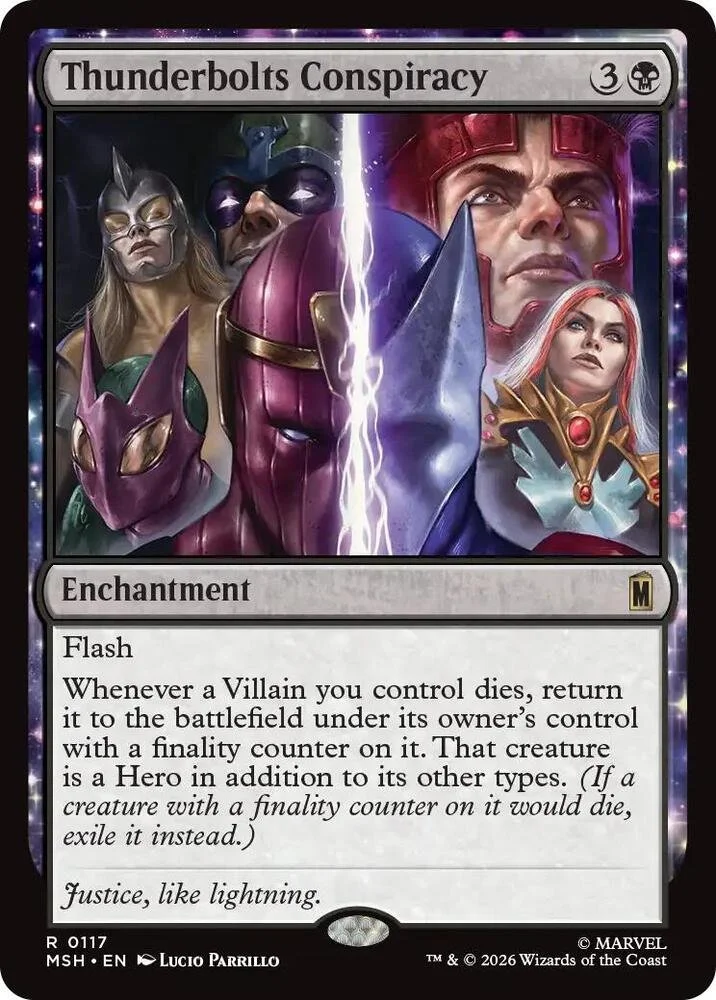
Thunderbolts Conspiracy — A very cool thematic card because the Thunderbolts are villains turned “heroes,” and mechanically it gives your Villains one more chance. Returning your Villains to the battlefield with finality counters can rebuild your board after removal, retrigger ETB effects, and give you one last push to close the game.
Gruul / Red-Green — Power-Up
These are Hulk colors, and Hulk colors smash.
Gruul is the Power-Up archetype in Marvel Super Heroes, and it plays exactly the way you would expect Red-Green to play. You are casting big creatures, making those creatures even bigger, and trying to beat your opponent down before they can properly answer your board.
This is a pretty traditional Gruul archetype, but I think it looks like a ton of fun. The Red-Green lane is backed by a strong mix of creatures with Power-Up abilities, big bodies, combat pressure, and cards that reward you for turning your creatures into absolute monsters.
Game Plan
Gruul Power-Up wants to curve out with creatures, then use Power-Up abilities to turn those creatures into game-ending threats.
You are not trying to be subtle here. You want to build a board, grow your creatures, and force your opponent to have answers. If they cannot remove or block your powered-up threats cleanly, the game can end very quickly.
The basic plan looks like this:
Play big creatures.
Power-Up your best threats.
Use combat tricks, removal, or protection to keep them alive.
Literally Hulk Smash your opponent.
This archetype is simple, but that does not mean it is weak. In Limited, a deck full of efficient creatures and mana sinks can be extremely dangerous. Power-Up gives Gruul something very important: creatures that are useful early but still threatening later in the game.
Draft Priorities
For Gruul, your main priority is finding creatures with strong Power-Up abilities. You also want enough creatures on curve so you are not sitting around waiting to make one huge play, and you want ways to protect your best powered-up threats.
Your main priorities are:
Creatures with strong Power-Up abilities.
Efficient creatures on curve.
Protection for your powered-up creatures.
Combat tricks and removal.
Ramp or mana support when available.
The key is making sure your deck does not become too slow. Power-Up is powerful, but you still need to play the early turns correctly. You want removal bait, solid curve plays, and enough pressure that your opponent cannot just save all their answers for your biggest creature.
Win Condition
HULK SMASH.
Gruul wants to win by turning creatures sideways and making combat miserable for your opponent. You are using Power-Up to grow your creatures, create extra value, and push through damage. This archetype is not trying to drain, loop, or slowly build an engine. It wants to hit hard, hit again, and keep hitting until your opponent runs out of answers.
If you like big creatures, huge swings, and making your opponent read your cards with concern, Gruul Power-Up is probably going to be your deck.
Gruul Key Multicolor Cards
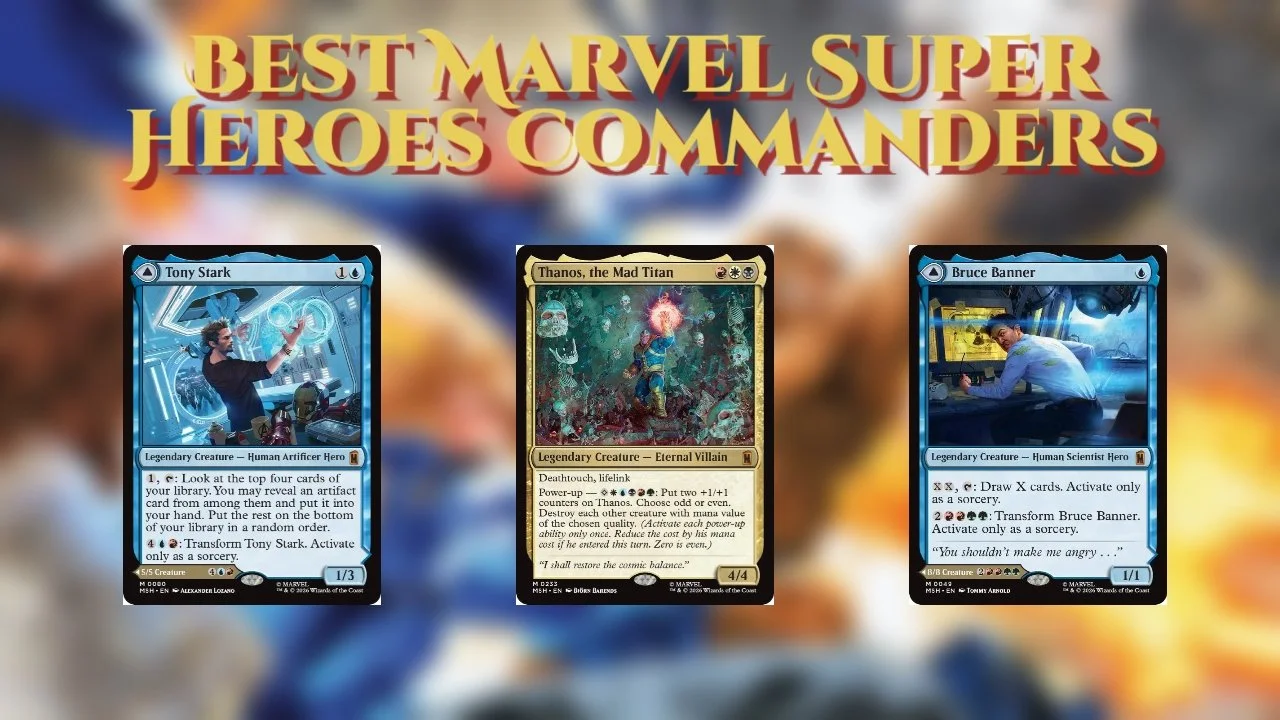
Quick note: Bruce Banner // The Incredible Hulk is not technically just Gruul since he is Temur colors, but he absolutely belongs in this conversation. If you open him, he is strong enough that you should at least consider splashing for him and leaning into the Hulk Smash game plan.
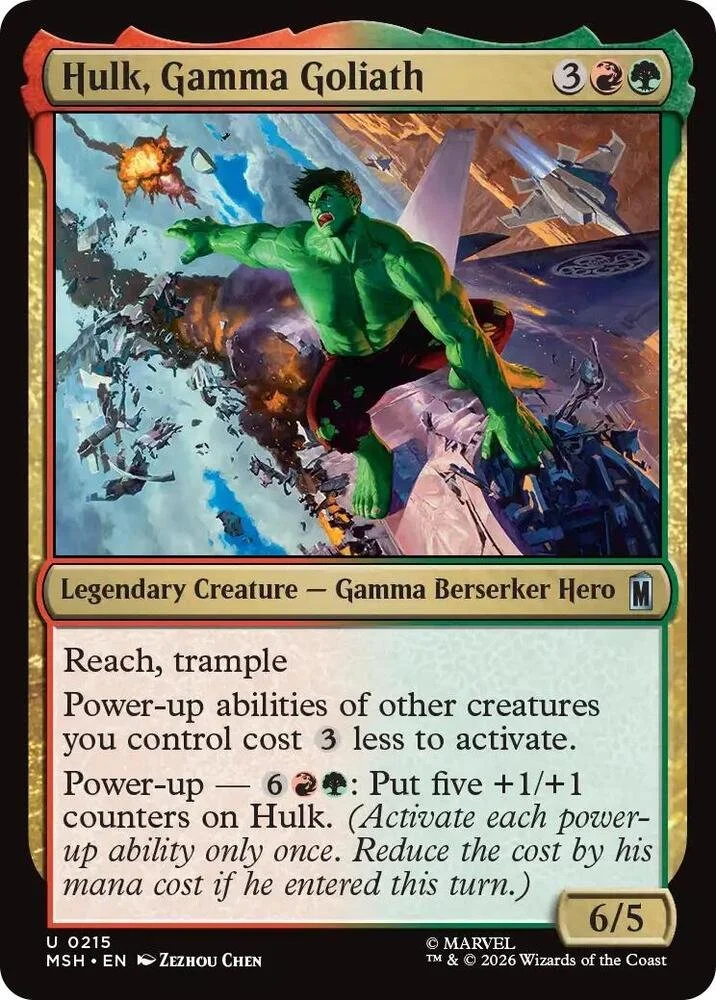
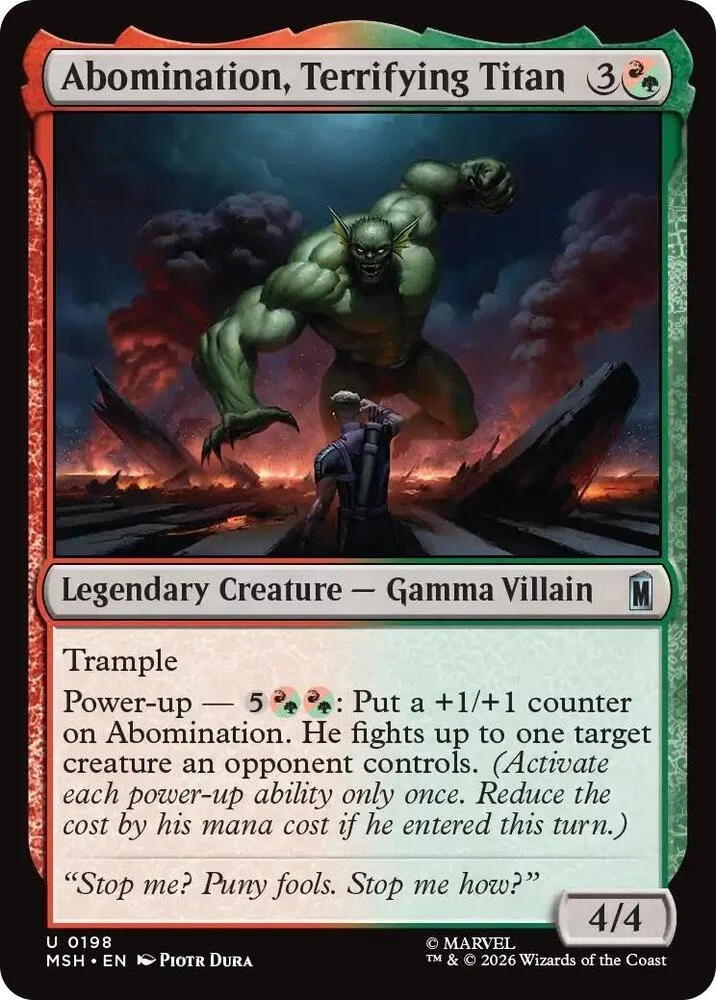
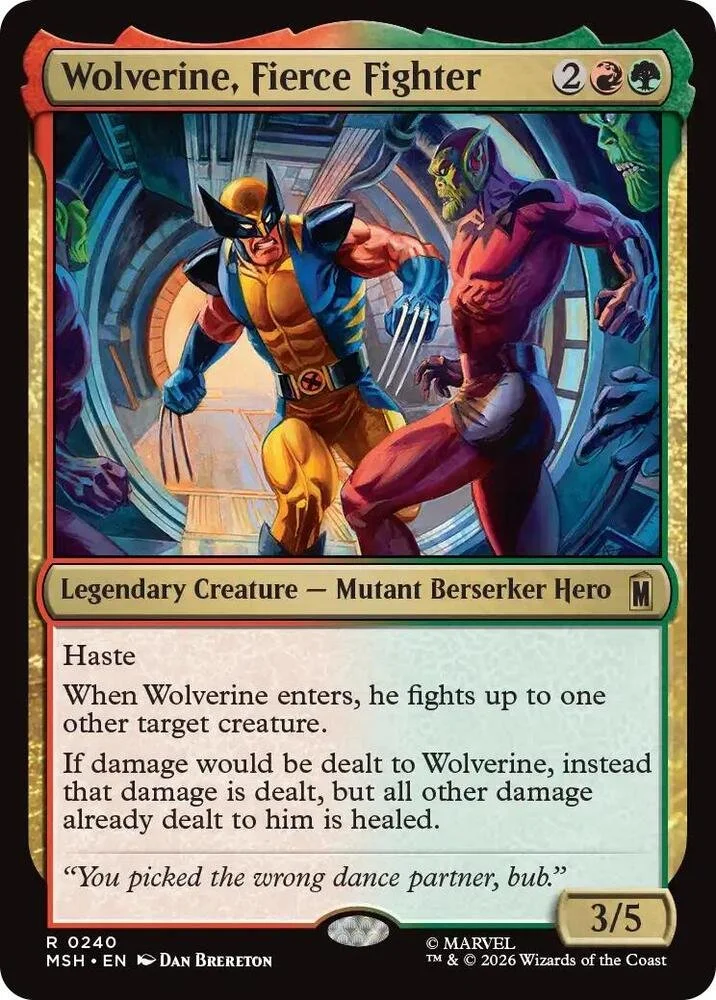
Hulk, Gamma Goliath — The Gruul signpost uncommon, and a phenomenal payoff for the Power-Up archetype. Hulk makes other creatures’ Power-Up abilities cost three less, which can completely change how quickly your deck comes online. As a five-mana 6/5, he is already a serious threat, but if he powers up himself, he gets six +1/+1 counters. YIKES. This is exactly the kind of card that makes you want to move into Gruul.
Abomination, Terrifying Titan — A perfect example of the type of creature you may want to save until you can cast it powered up. When Abomination powers up, it effectively functions as a removal spell attached to a massive body. That kind of swing can completely change the board, especially if your opponent was relying on one big blocker to stabilize.
Wolverine, Fierce Fighter — Wolverine does not have Power-Up, but he still fits the Gruul game plan incredibly well. He fights another creature when he enters the battlefield, then heals after every battle, making him a strong blocker and a great creature to build around with +1/+1 counters. He gives Gruul interaction while still being a body that wants to fight.
Best Common Cards for Gruul Power-Up
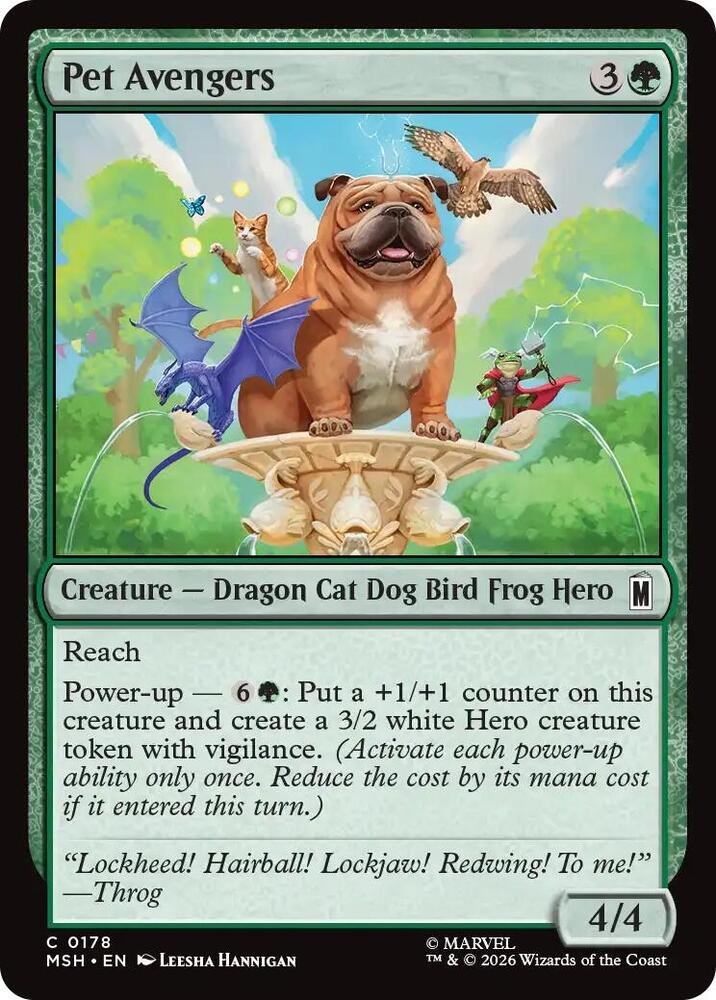
Pet Avengers — A four-mana 4/4 with reach is already a playable Limited stat line, but the Power-Up ability makes this card much more interesting. Being able to add a +1/+1 counter and create a 3/2 creature with vigilance gives you both a bigger body and another threat. That is exactly the kind of value Gruul wants.
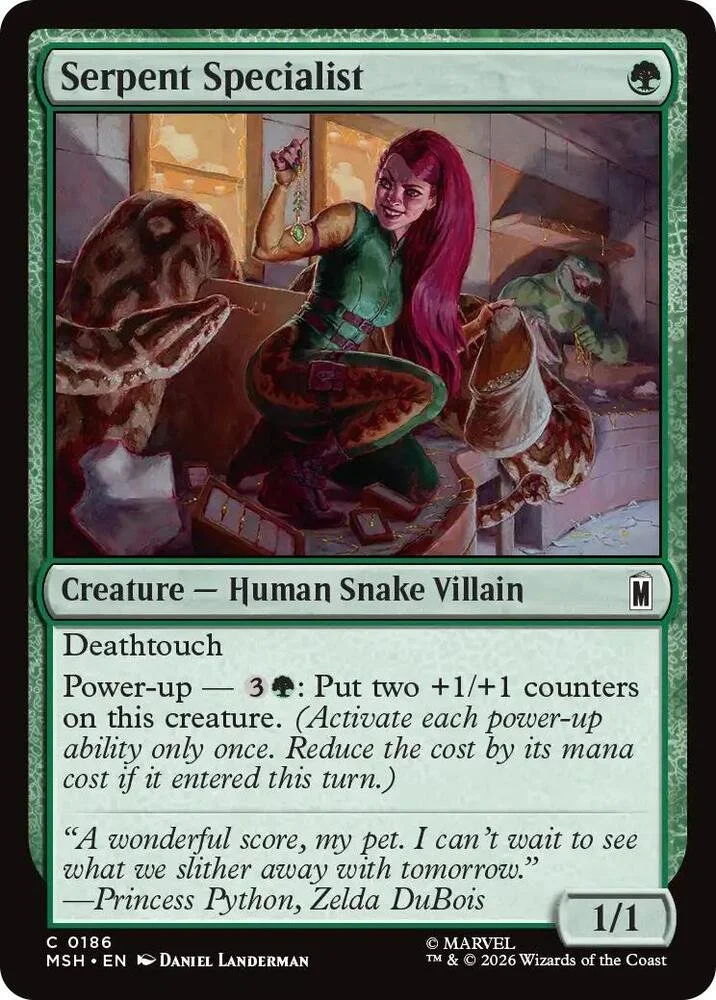
Serpent Specialist — A one-mana 1/1 with deathtouch is already an excellent early blocker, but its Power-Up ability lets you put two +1/+1 counters on it and turn it into a 3/3 deathtouch creature. That can make combat extremely awkward for your opponent, especially if they were hoping to attack with one large creature.
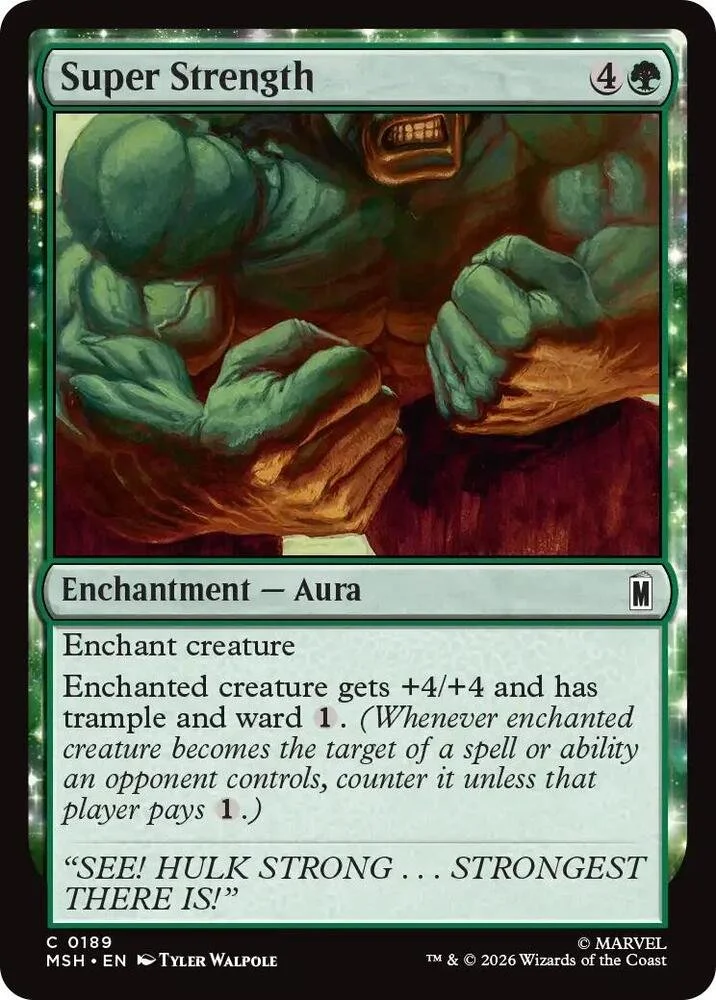
Super Strength — An aura that basically functions like its own version of Power-Up. Giving a creature +4/+4, trample, and ward 1 can turn almost anything into a real threat. The trample is especially important because Gruul needs ways to push damage through once its creatures get huge.
Best Uncommon Cards for Gruul Power-Up
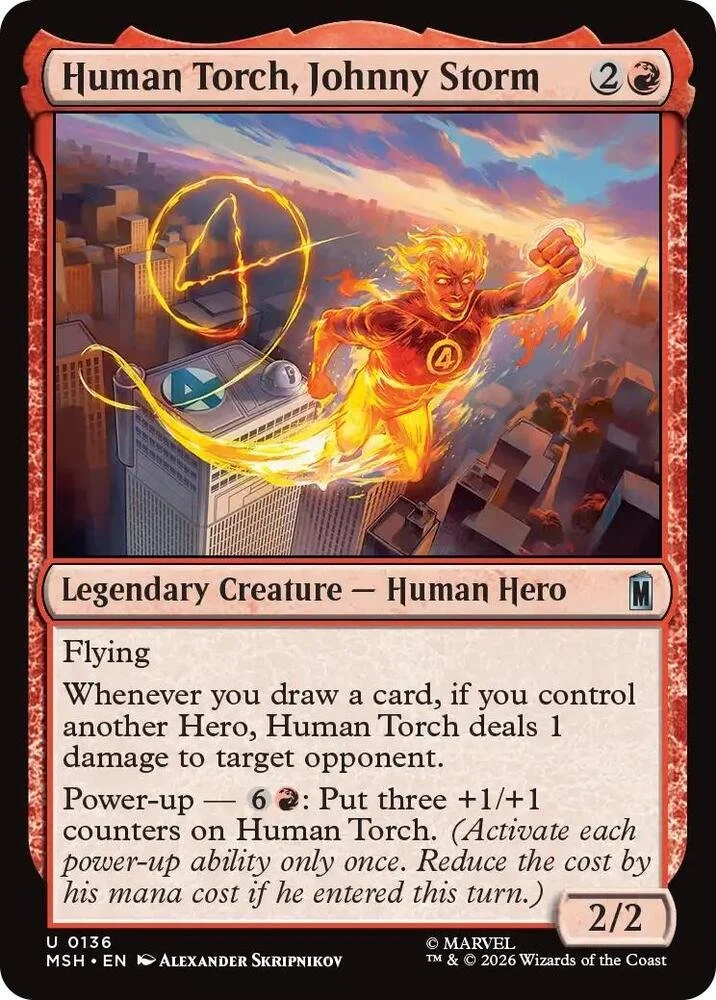
Human Torch, Johnny Storm — A strong Power-Up creature that gets three +1/+1 counters, but the best part is that it also deals one damage to target opponent. That gives you both a bigger threat and a little extra reach, which can matter a lot in aggressive Gruul decks.
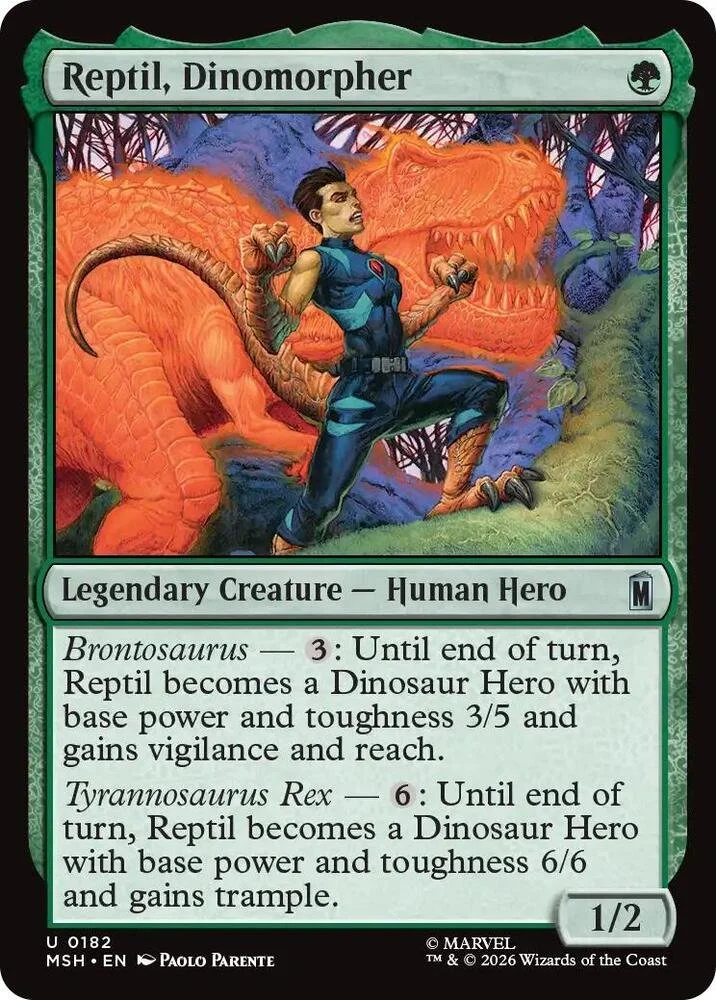
Reptil, Dinomorpher — I really like Reptil in this archetype because he almost feels like he has a built-in Power-Up every turn. His ability to transform into different dinosaurs lets him adapt to the board and continue growing into a relevant threat throughout the game. As a bonus, Reptil is a fun deep-cut Marvel character that fans might recognize from The Super Hero Squad Show, which makes him an easy card to root for.
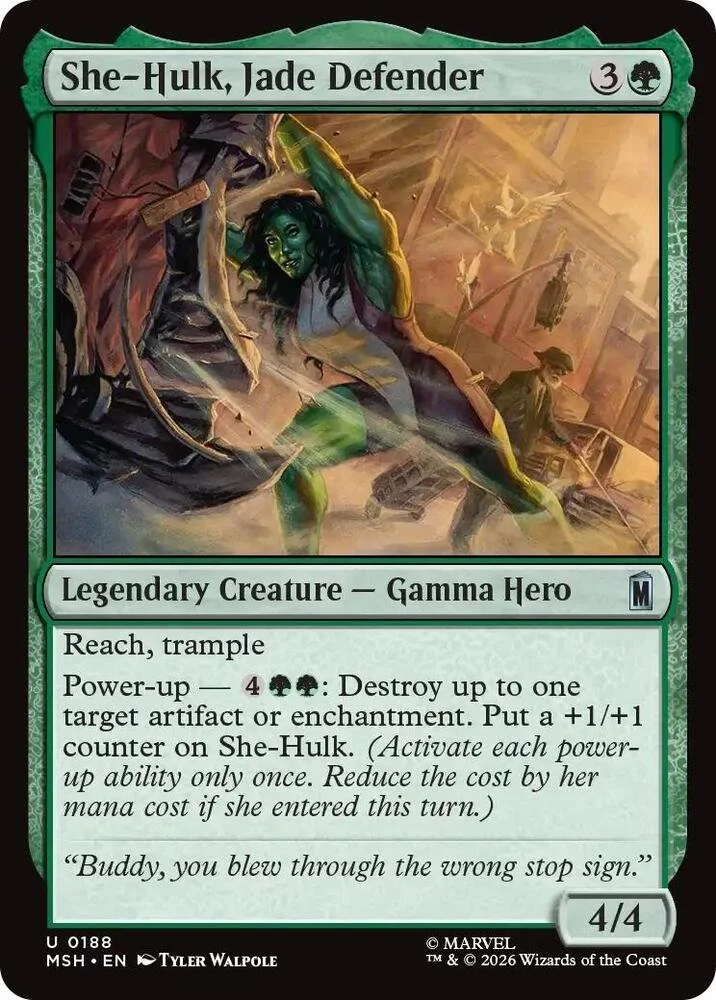
She-Hulk, Jade Defender — She-Hulk has a great Power-Up ability because it gives you artifact or enchantment removal attached to a 4/4 body with reach and trample. That is a lot of utility on one card. She blocks well, attacks well, and gives you an answer to problem permanents when you need it.
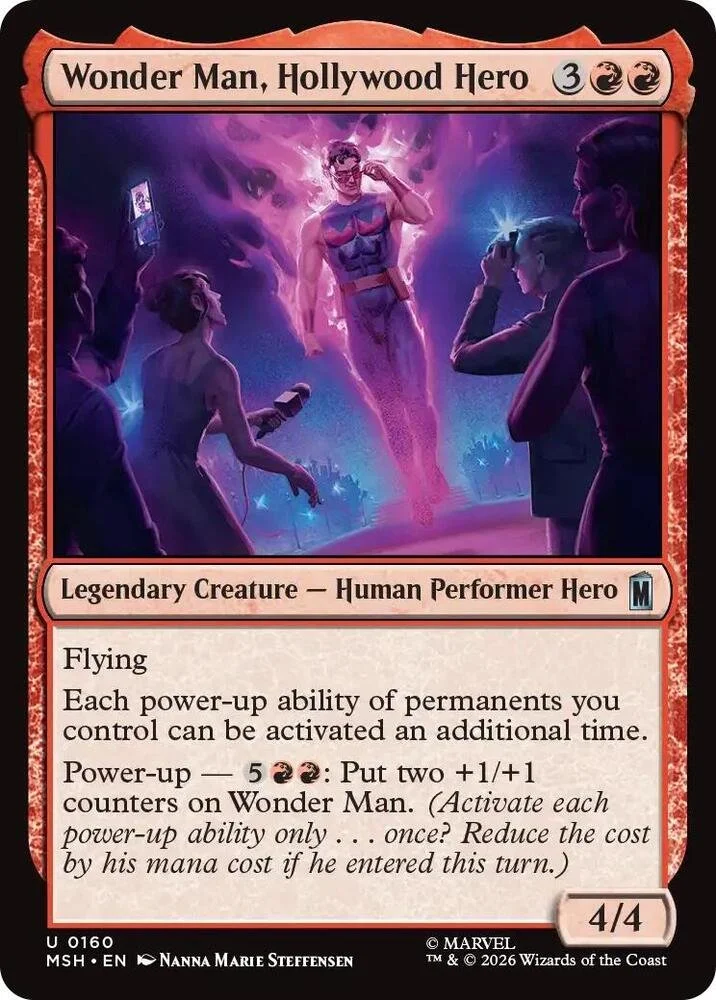
Wonder Man, Hollywood Hero — Probably one of the best creatures you can have if you are playing the Power-Up deck. Wonder Man lets you activate each Power-Up ability an additional time, which gives your best creatures even more late-game potential. If you have several strong Power-Up cards, Wonder Man can make your deck feel much harder to outscale.
Best Rare and Mythic Cards for Gruul Power-Up
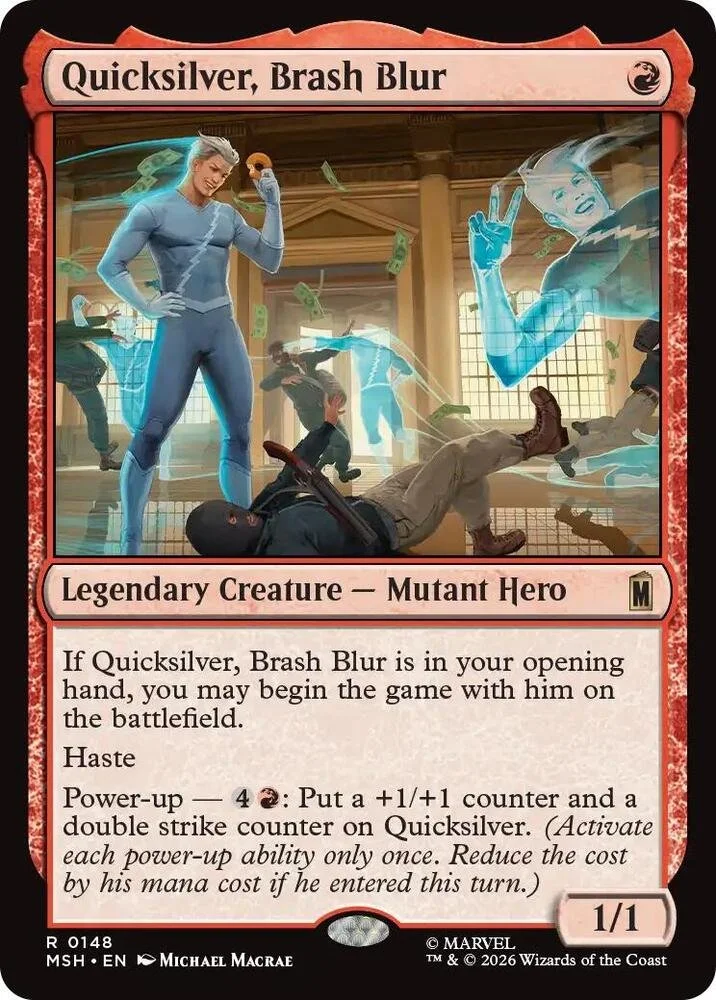
Quicksilver, Brash Blur — A hasty creature that can start on the battlefield if he is in your opening hand, which already gives you an aggressive advantage. Later, you can Power-Up Quicksilver to give him a +1/+1 counter and double strike, turning him into a very dangerous attacker.
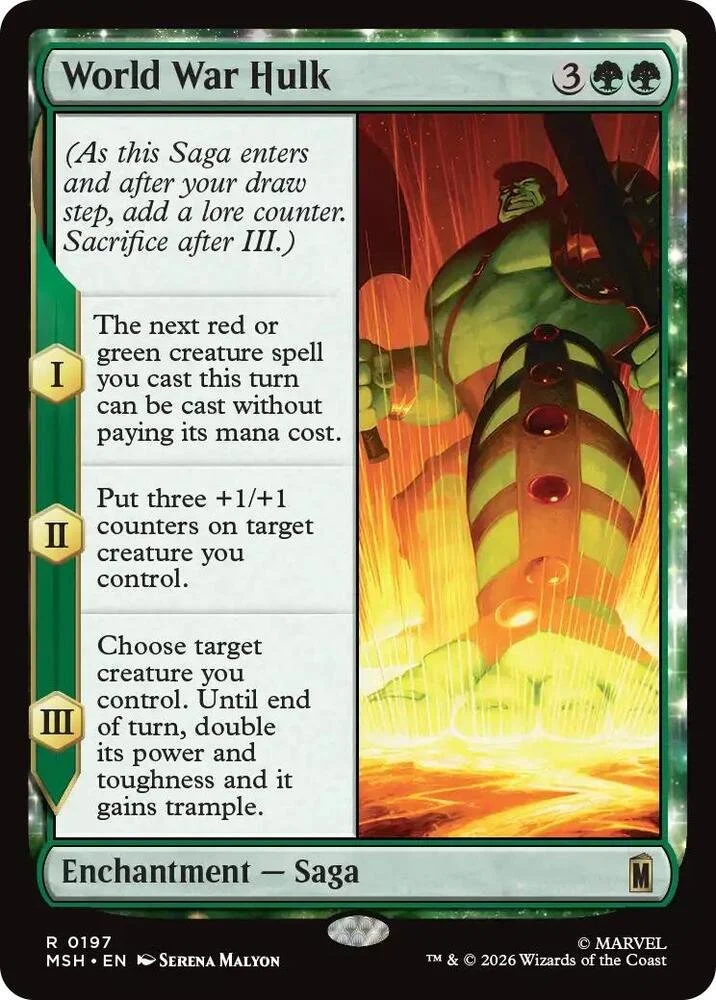
World War Hulk — A saga that does everything Gruul wants. It lets you cast a free red or green creature, puts three +1/+1 counters on a target creature, and then temporarily doubles a creature’s power for a huge swing. This is the kind of rare that can end games out of nowhere, especially if you already have a big powered-up creature on the battlefield.
Selesnya / Green-White — Heroes
Very similar to Rakdos Villains, Selesnya is the Heroes matter archetype in Marvel Super Heroes. If Rakdos is about Villains entering the battlefield and pressuring your opponent quickly, Selesnya is about building a board full of Heroes and turning that board into something your opponent cannot easily fight through.
This archetype is less about pure speed and more about going wide. You want to play Heroes often, gain value from having Heroes on the battlefield, and eventually turn your board into a massive attack. Selesnya also borrows a little bit from the Teamwork theme, since going wide gives you more creatures to tap for additional spell value when needed.
Game Plan
Selesnya Heroes wants to build a wide board, keep its creatures alive, and turn Hero synergies into bigger attacks.
You are not trying to race as hard as Rakdos Villains. Instead, you want to develop your board, stack small advantages, and make your Heroes matter as a group. Once you have enough bodies, your anthem effects and combat tricks can make even your smaller creatures into real threats.
The basic plan looks like this:
Play Heroes early and often.
Generate value from Hero synergies.
Go wide with creatures and tokens.
Use buffs and protection to win combat.
Borrow Teamwork value when the opportunity is there.
Selesnya should be one of the easier archetypes to understand, but that does not mean it is boring. A good Heroes deck can attack from a lot of angles because it can build a big board, gain life, protect key creatures, and suddenly end the game with a team-wide buff.
Draft Priorities
For Selesnya, you want a strong Hero count first. After that, you want cards that reward you for having Heroes, protect your best creatures, or turn your wide board into a lethal attack.
Your main priorities are:
Efficient Hero creatures.
Cards that care about Heroes.
Hero buffs and anthem effects.
Token generation.
Protection spells and combat tricks.
Strong rare Heroes when you open them.
There are a lot of strong rare Heroes in this set, so Selesnya can get a huge boost depending on what you open. Nick Fury also technically allows for a WUBRG Hero deck, but I would not recommend forcing that in Limited unless your fixing and payoffs are absurd. Most of the time, staying focused in Green-White will give you a much cleaner deck.
Win Condition
Selesnya Heroes wants to win by building a board your opponent cannot profitably block.
Your early turns are about playing Heroes and creating a stable battlefield. From there, you want to grow the team, protect your important creatures, and eventually swing in with a board that has been buffed by counters, anthem effects, or Hero-specific payoffs.
This archetype is at its best when it makes every creature matter. Your small Heroes help enable your bigger plays, your buffs make combat awkward, and your protection spells keep your best threats alive. Once the board is wide enough, one strong attack can be enough to close the game.
Selesnya Key Multicolor Cards
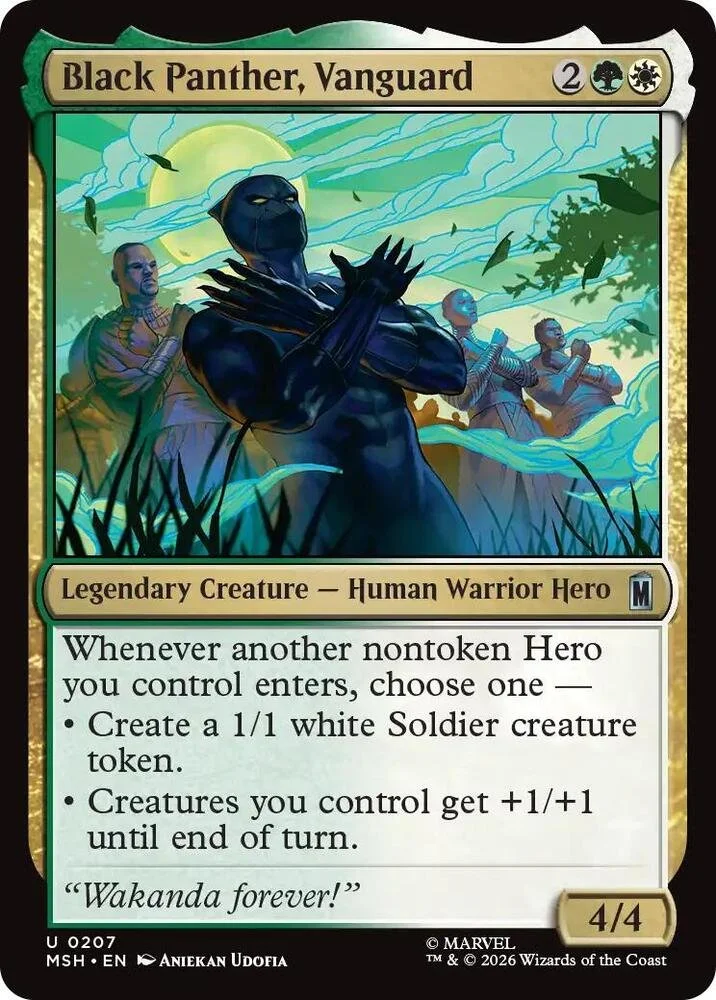
Black Panther, Vanguard — The Selesnya signpost uncommon and a strong payoff for the Heroes deck. Black Panther gives you flexibility by either creating a 1/1 Soldier or giving your creatures +1/+1 until end of turn. That is exactly what this archetype wants: more bodies when you need to build out the board, or a team-wide buff when it is time to attack.
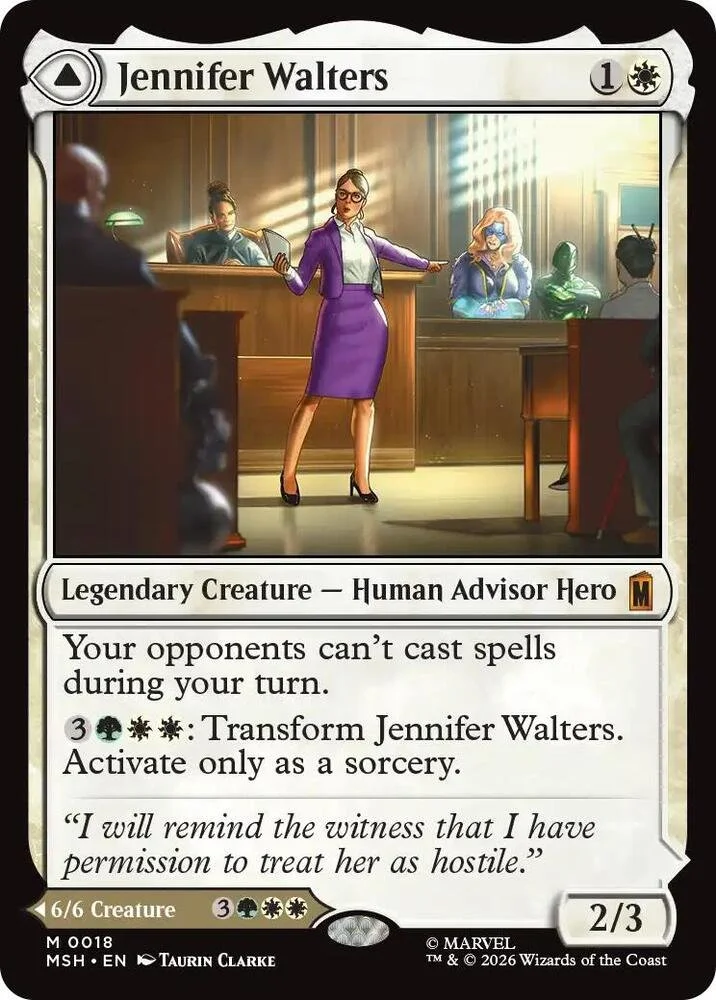
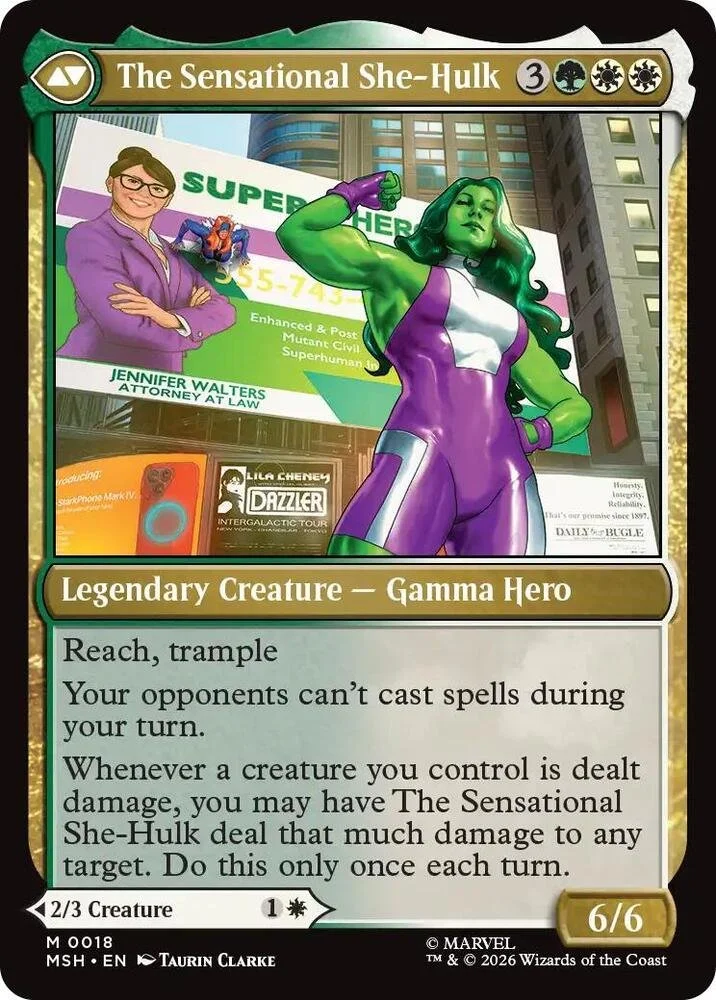
Jennifer Walters // The Sensational She-Hulk — An excellent Hero for this archetype. On the front side, she makes it so your opponent cannot cast spells during your turn, which helps protect your attacks and makes combat much safer. Once transformed, she can punish your opponent by dealing damage to any target equal to the damage your creatures take. That turns combat into a nightmare for your opponent.
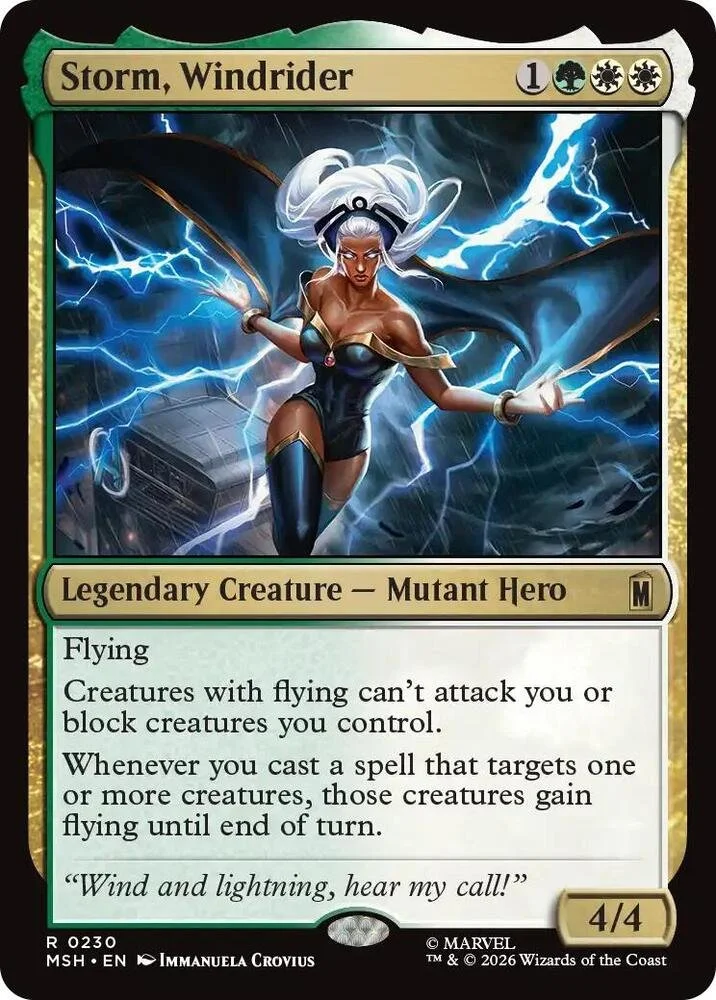
Storm, Windrider — A very strong defensive card that can completely change combat math. Preventing flying creatures from attacking you is already useful, but giving creatures flying whenever you cast a spell that targets them can also create surprise evasion. In Selesnya, that can help your bigger creatures get over a clogged board and finish the game.
Best Common Cards for Selesnya Heroes
There are a lot of generically good Heroes that you can use in Selesnya, but a few commons stand out as especially helpful for the archetype.
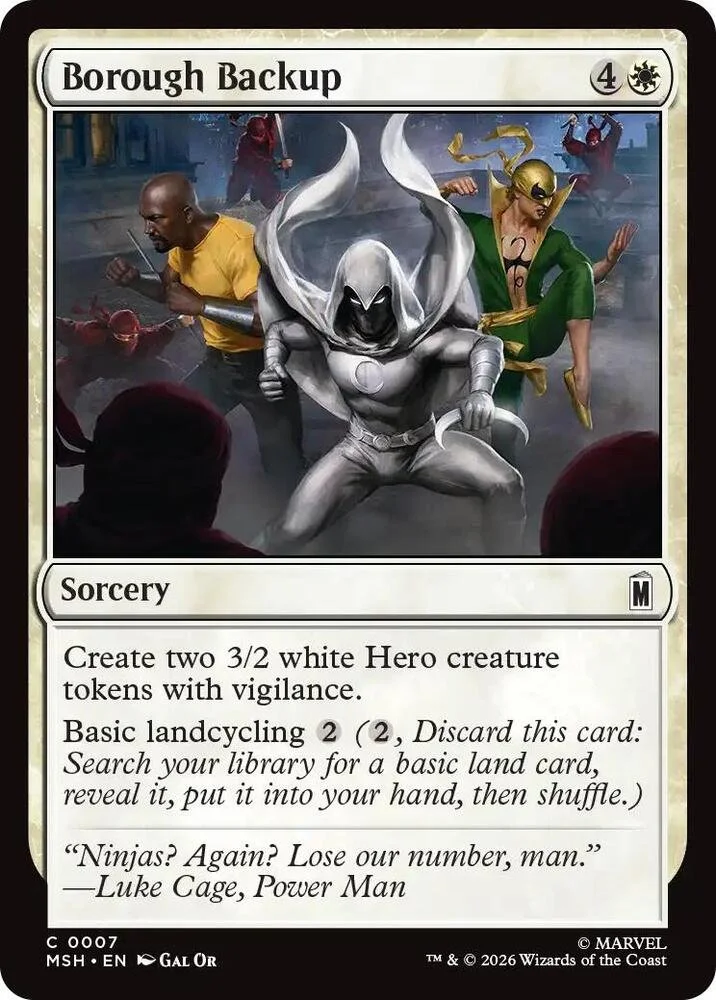
Borough Backup — A sorcery that creates two 3/2 Hero tokens, which is already great for a deck trying to go wide. It also comes with basic landcycling, giving you a way to ramp, fix your mana, or simply make sure you hit your land drops when needed. That flexibility makes it a strong Limited card.
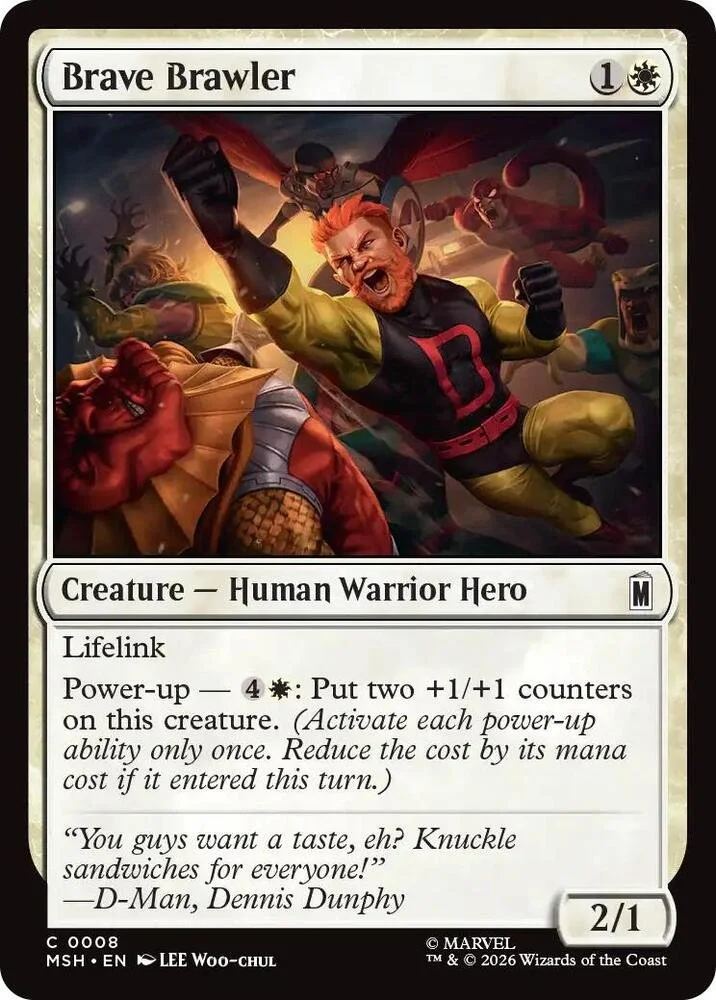
Brave Brawler — A two-mana 2/1 with lifelink, which is a solid early Hero for this deck. The lifelink helps you stabilize against aggressive decks, and being a cheap Hero means it contributes to your synergies early.
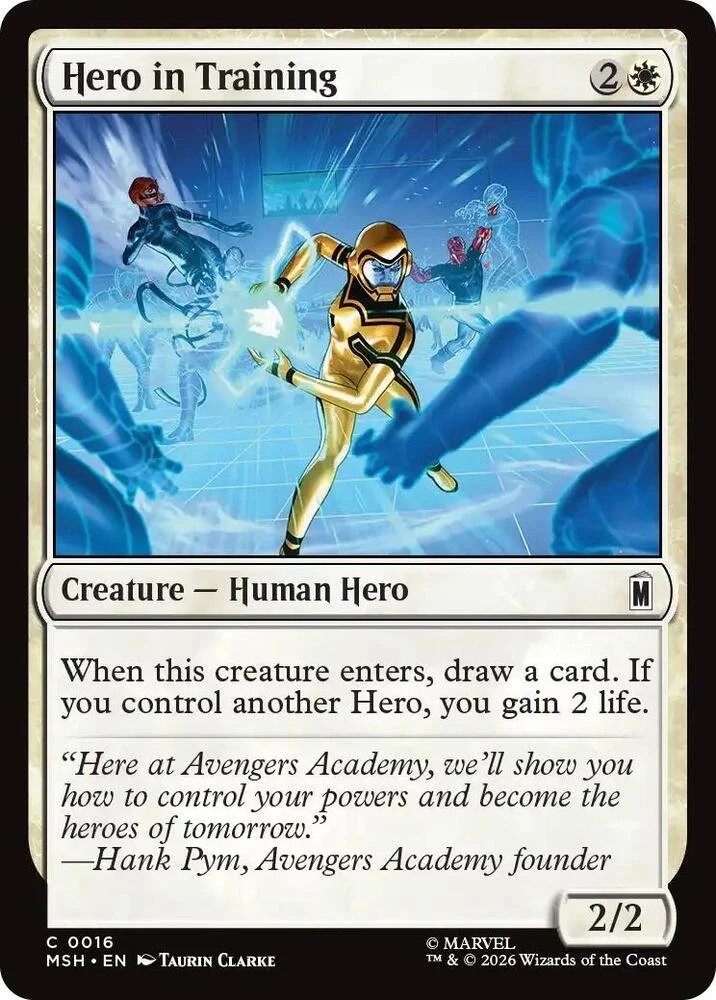
Hero in Training — A two-mana 2/2 Hero that gains you two life when it enters if you control another Hero. This is a good creature to have multiple copies of because it helps fill out your curve, supports your Hero count, and gives you small life bumps that can matter in longer games.
Best Uncommon Cards for Selesnya Heroes
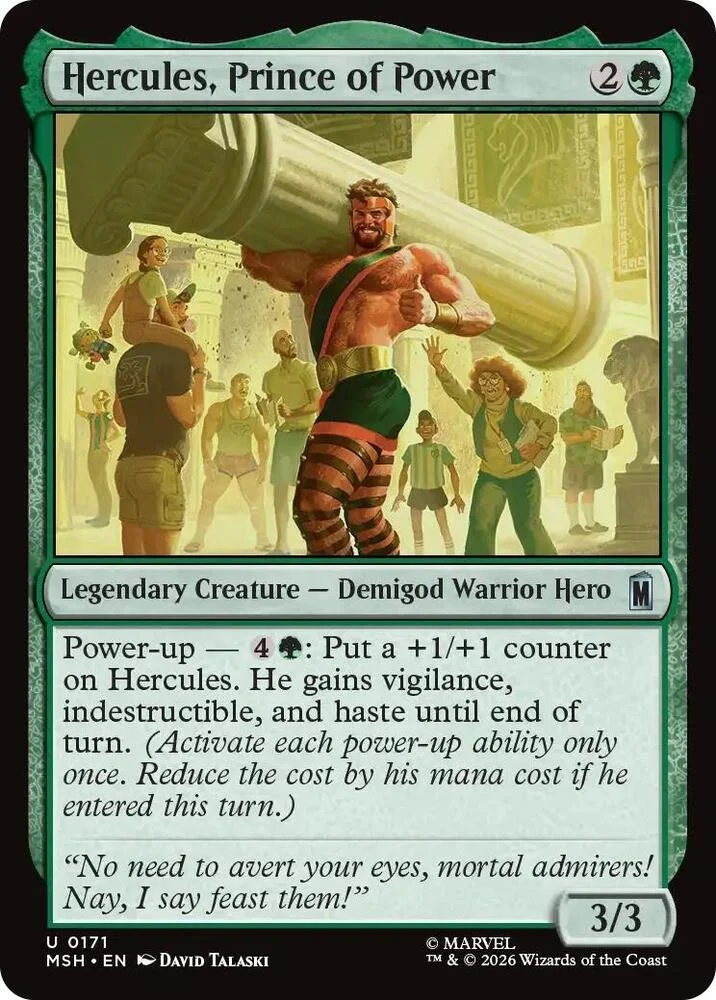
Hercules, Prince of Power — A strong card for almost any green Limited deck, except maybe the graveyard-focused ones. His Power-Up ability is extremely strong for one turn, giving you a huge combat swing. If the effect lasted longer, he would probably be broken, but even as a temporary boost, Hercules can win important combats or set up lethal attacks.
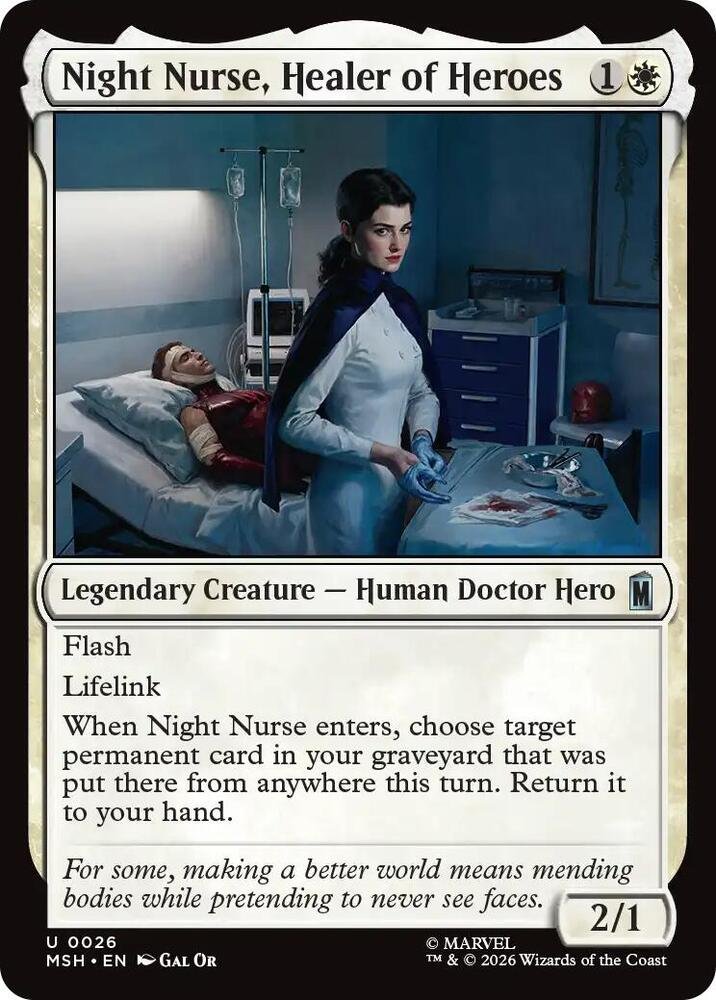
Night Nurse, Healer of Heroes — A very useful creature for bringing back your key Heroes. In a deck that may rely on specific payoff creatures or strong rares, being able to revive a Hero is a big deal. If you have ways to bounce Night Nurse back to your hand, she gets even better.
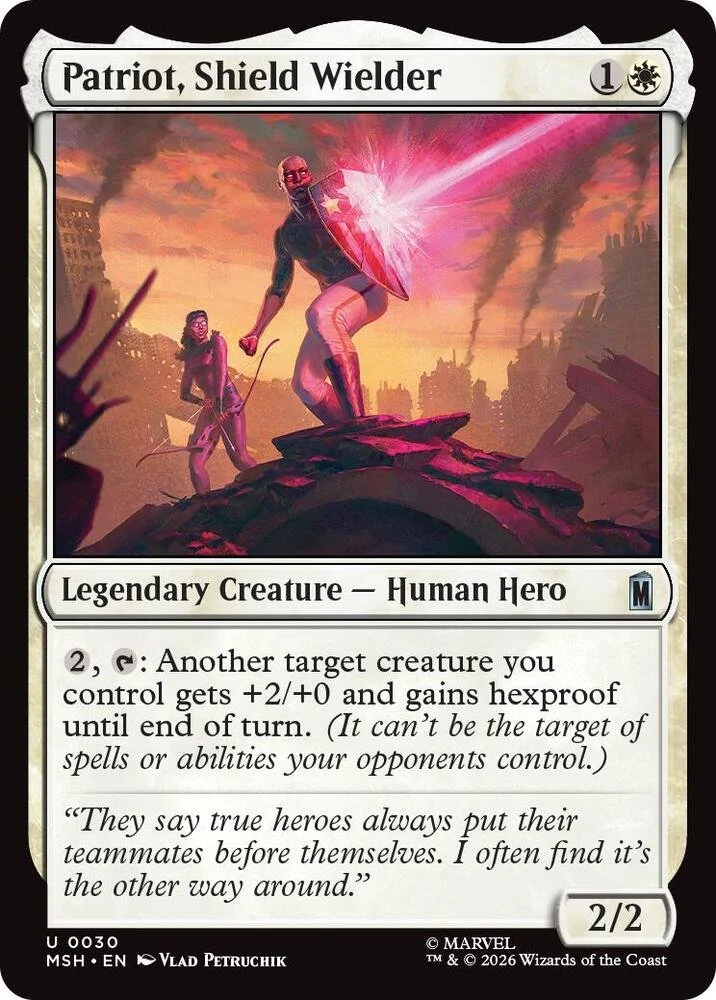
Patriot, Shield Wielder — A mini Captain America-style card that can temporarily buff and protect a creature for two mana. That is exactly the kind of effect Selesnya wants because it helps your creatures survive combat while pushing extra damage.
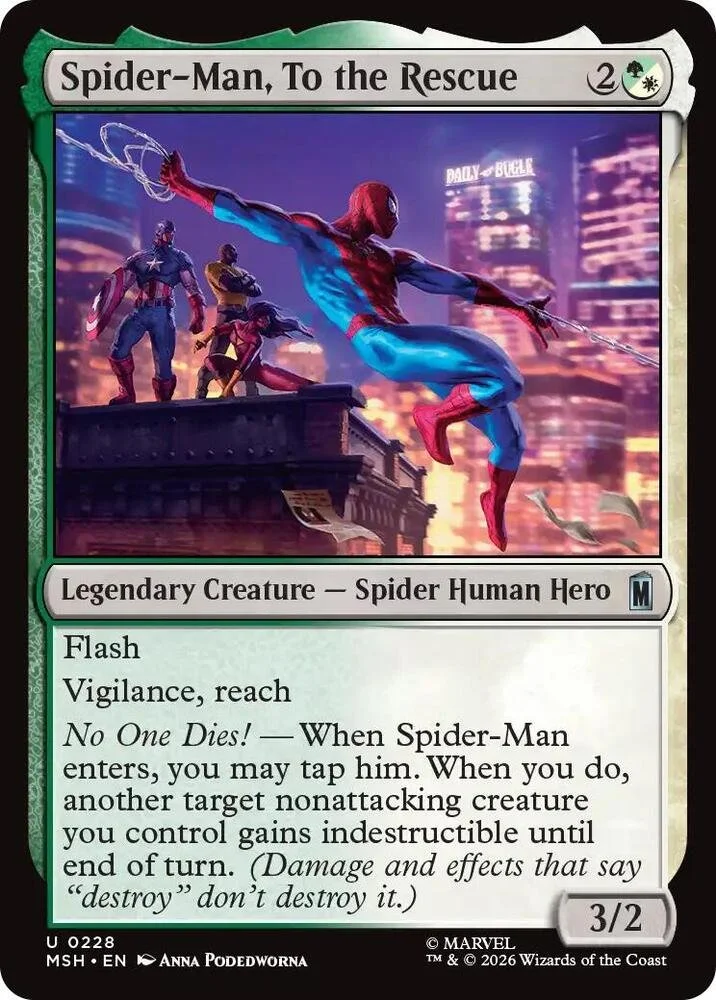
Spider-Man, To the Rescue — A strong protection spell that can save one of your best Heroes by giving it indestructible at instant speed. This is especially useful when your opponent tries to remove a key payoff or when you are setting up a big attack and need to protect your best creature.
Best Rare and Mythic Cards for Selesnya Heroes
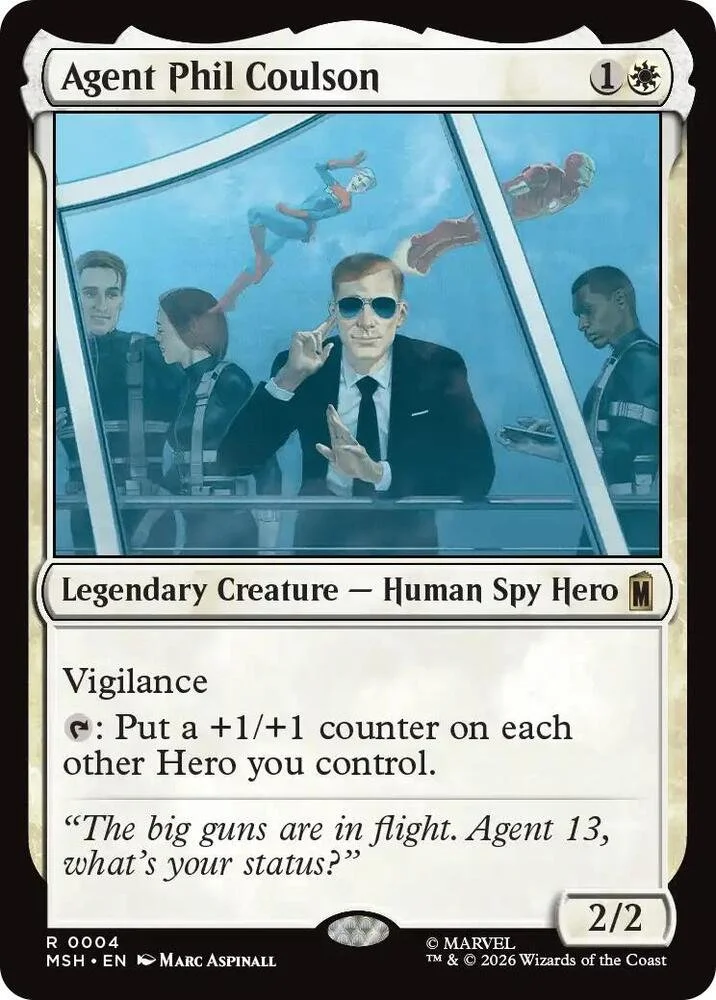
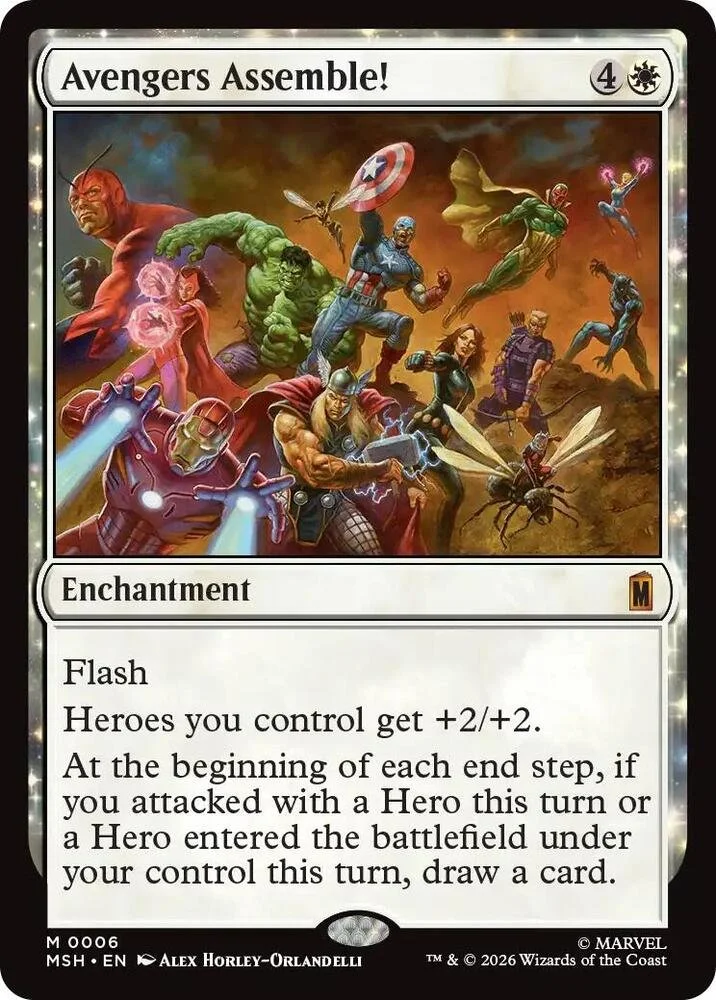
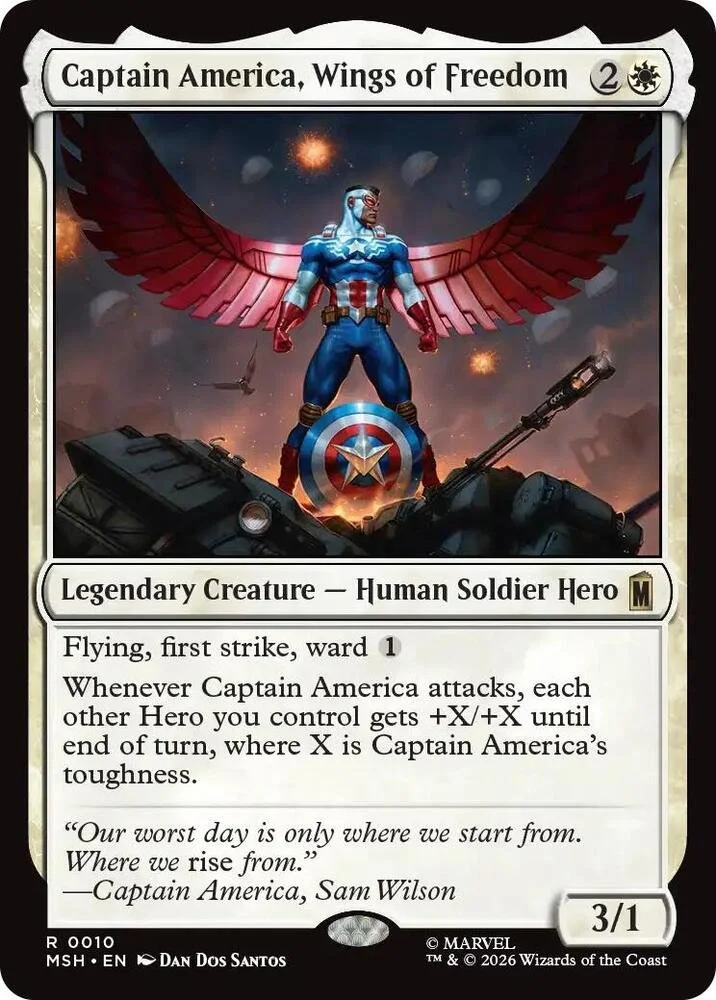
Agent Phil Coulson — A great payoff for a board full of Heroes, putting a +1/+1 counter on each other Hero you control. In Selesnya, that can turn a normal board into a major threat very quickly. He is exactly the kind of rare that rewards you for committing to the Hero plan.
Avengers Assemble! — Everything the Heroes deck wants in one card: card draw and a massive team-wide buff. Giving all your Heroes +2/+2 can immediately set up a lethal attack, while the card draw helps make sure you do not run out of gas.
Captain America, Wings of Freedom — A powerful payoff for attacking with Heroes. Buffing all attacking Heroes gives Selesnya a very clear way to close out the game, especially when you have built a wide board. If you are already in the Hero archetype, Captain America can turn your battlefield into a finishing blow.
Orzhov / White-Black — Attack Alone
Orzhov is the attack alone archetype in Marvel Super Heroes, and instead of focusing on the big heroic team-up fantasy, this color pair leans more into agents, assassins, and solo threats doing their job.
This is a pseudo-Voltron archetype. You are not necessarily loading up one creature with every aura and equipment in your deck, but you are trying to build around individual creatures that can attack by themselves and survive. Rather than going wide like Selesnya Heroes, Orzhov wants to go tall.
Game Plan
Orzhov Attack Alone wants to build up a single strong attacker, send it in by itself, and benefit from attack triggers along the way.
You are looking for creatures that can stand on their own, then surrounding them with equipment, auras, combat tricks, removal, and protection. The goal is to make one creature difficult to block, difficult to kill, and dangerous enough that your opponent has to respect every combat step.
The basic plan looks like this:
Buff up creatures that can attack alone.
Trigger attack-alone abilities.
Use removal to clear blockers.
Use protection to keep your best threat alive.
Win by going tall instead of going wide.
This archetype is a little more fragile than some of the others because you are often investing resources into one main attacker. Because of that, protection spells matter a lot. If your opponent removes your best creature after you have invested multiple cards into it, it can be hard to recover.
Draft Priorities
For Orzhov, you want a small number of strong attackers and a good support package around them. The best versions of this deck will have creatures with attack triggers, ways to make those creatures harder to block, and enough protection to avoid getting blown out by removal.
Your main priorities are:
Equipment, auras, and combat tricks.
Creatures with attack-alone triggers.
Creatures that are naturally hard to block.
Removal to clear the way.
Protection spells to keep your key creatures alive.
You will need a few creatures that can really stand on their own. Once you have those, the rest of your draft should be focused on making sure they can attack safely and keep applying pressure throughout the game.
Win Condition
Orzhov wants to win by turning one attacker into a constant problem.
You are not trying to flood the board with creatures or set up a massive team attack. Instead, you want to make one creature large, evasive, protected, or hard to trade with. Then, each turn, that creature attacks alone and triggers your payoffs.
At its best, Orzhov makes combat feel miserable for your opponent. If they block, your creature may have first strike, menace, deathtouch, indestructible, or a combat trick waiting. If they do not block, they take damage and you keep getting value from attack triggers.
Orzhov Key Multicolor Cards
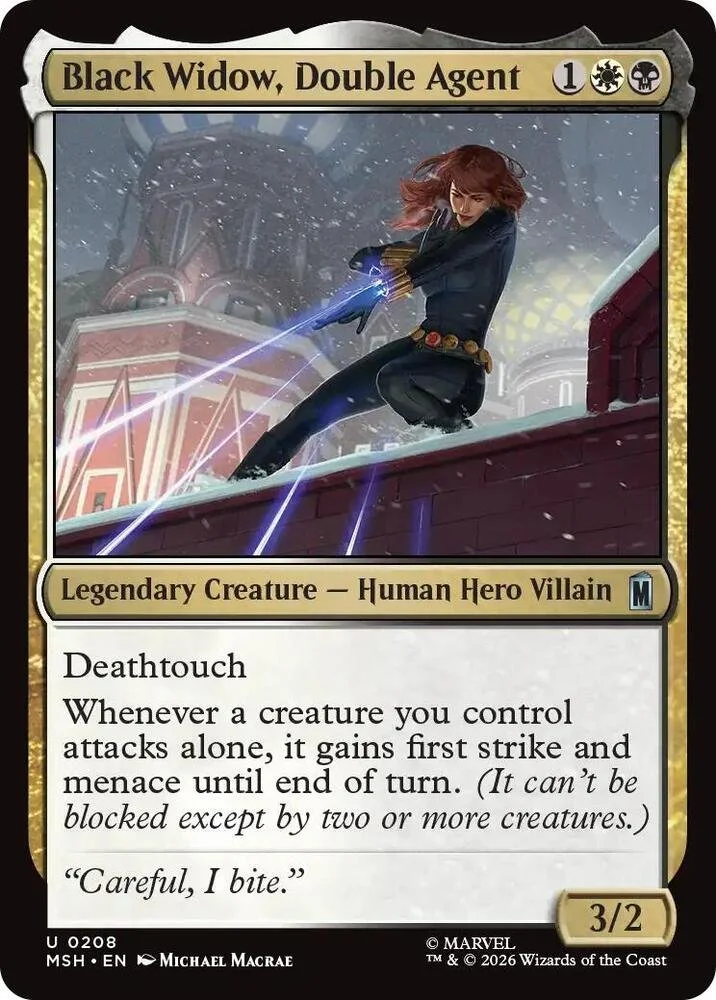
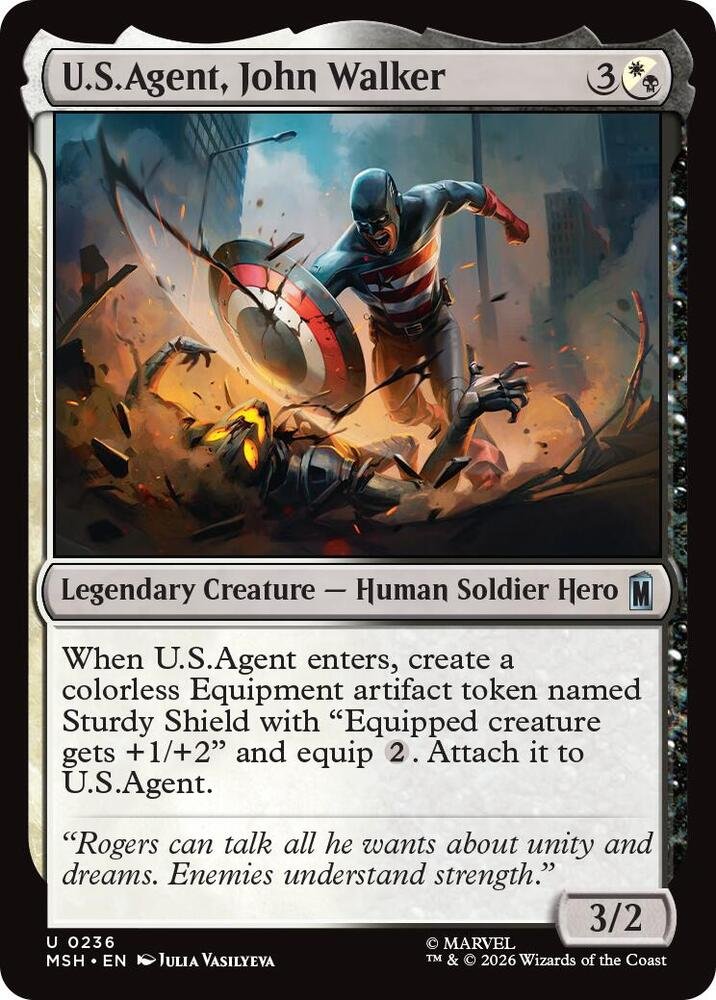
Black Widow, Double Agent — The Orzhov signpost uncommon and one of the clearest reasons to move into this archetype. She has deathtouch, which already makes opponents hesitant to block, but her real strength is giving a creature first strike and menace whenever it attacks alone. That is especially nasty on a creature with deathtouch, since first strike plus deathtouch makes blocking almost impossible to do profitably.
U.S.Agent, John Walker — Creates a token equipment that gives the equipped creature +1/+2, which is exactly the kind of support this archetype wants. Orzhov needs ways to make one creature bigger and harder to kill, and U.S. Agent gives you both a body and a piece of equipment to keep your attack-alone plan moving.
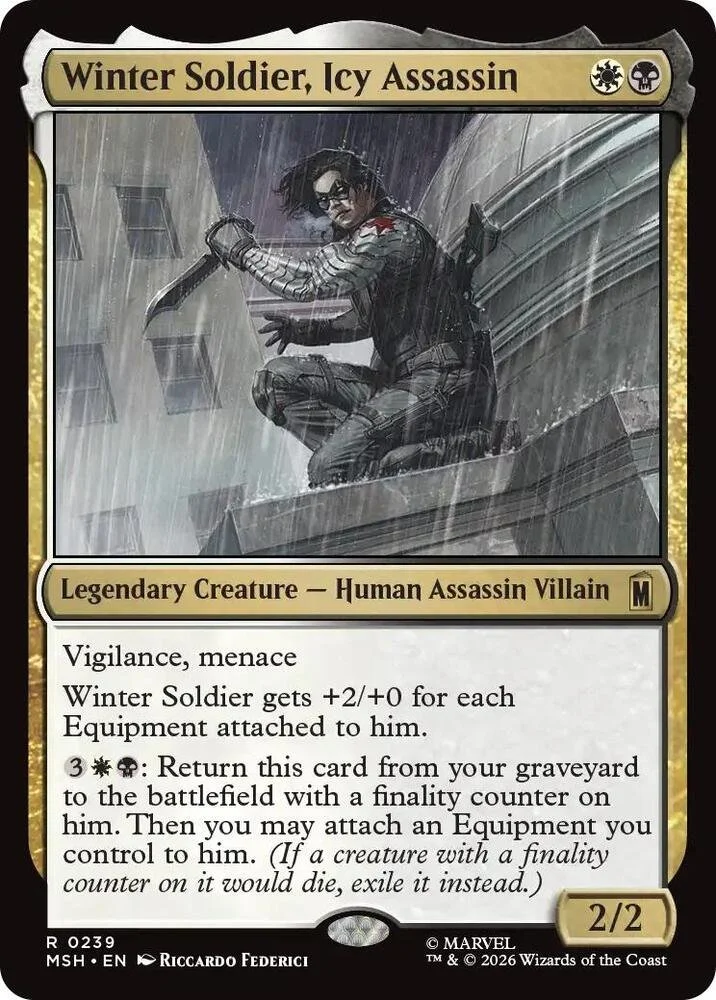
Winter Soldier, Icy Assassin — A great creature to send in alone, especially if you have Black Widow on the battlefield. Winter Soldier already fits the agent/assassin flavor of the archetype, and with the right buffs or protection, he can become a very annoying threat for your opponent to answer.
Best Common Cards for Orzhov Attack Alone
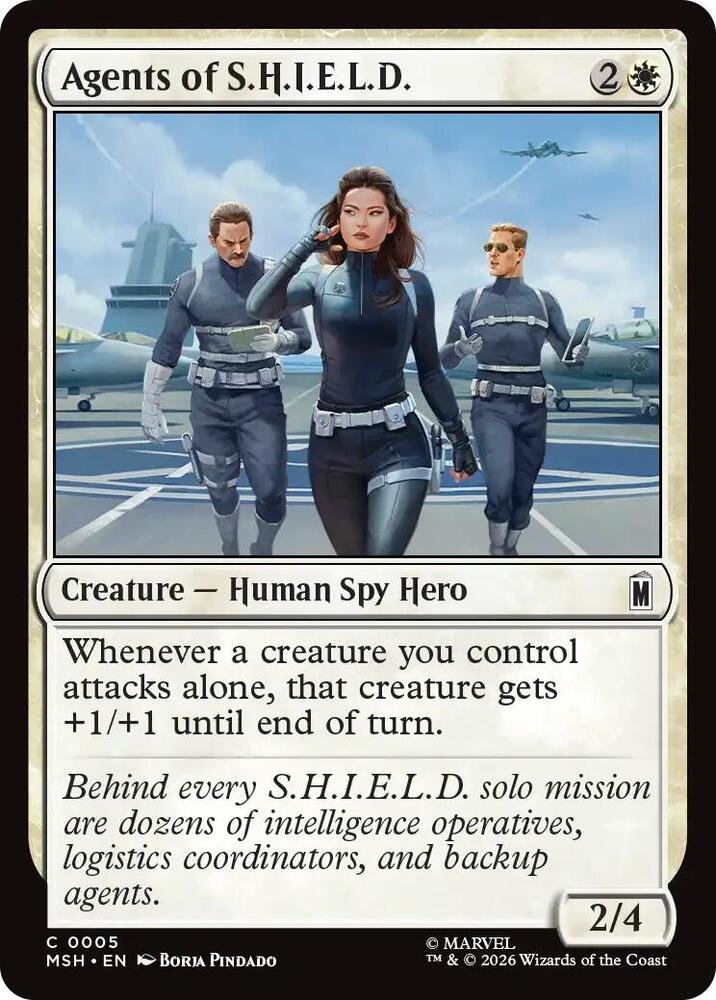
Agents of S.H.I.E.L.D. — A strong common for this archetype because it buffs a creature attacking alone by giving it +1/+1 until end of turn. This is the kind of effect you are happy to have multiple copies of because it keeps your solo attacker relevant and helps push through damage.
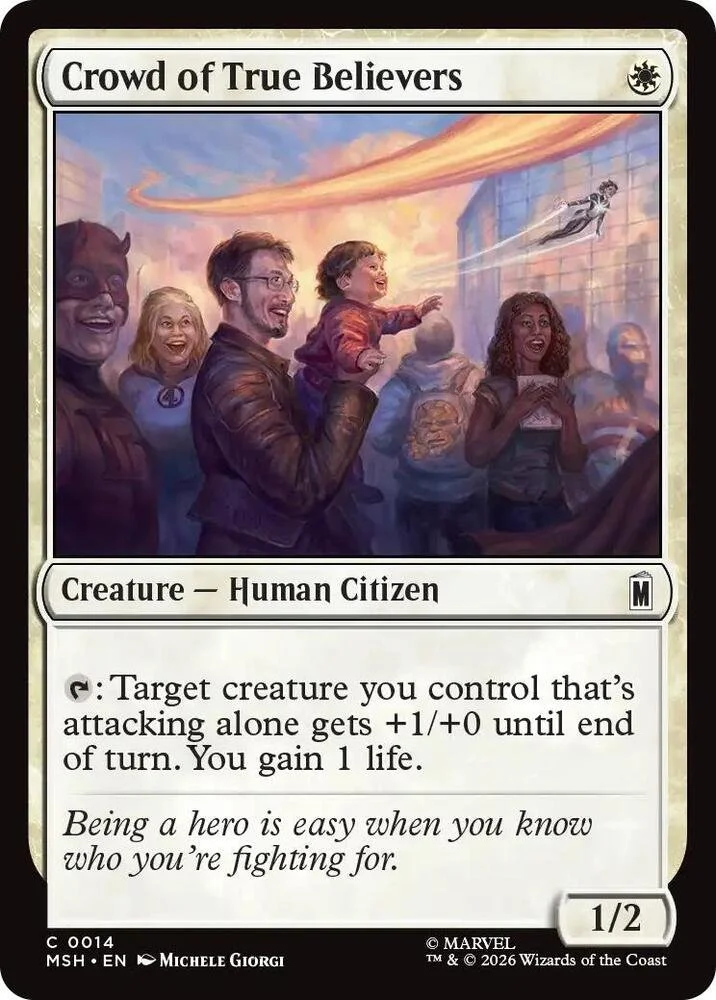
Crowd of True Believers — Lets you tap it to give a creature attacking alone +1/+0 until end of turn while also gaining you 1 life. It is not flashy, but it supports the game plan by adding extra damage each turn and giving you small life buffers against aggressive decks.
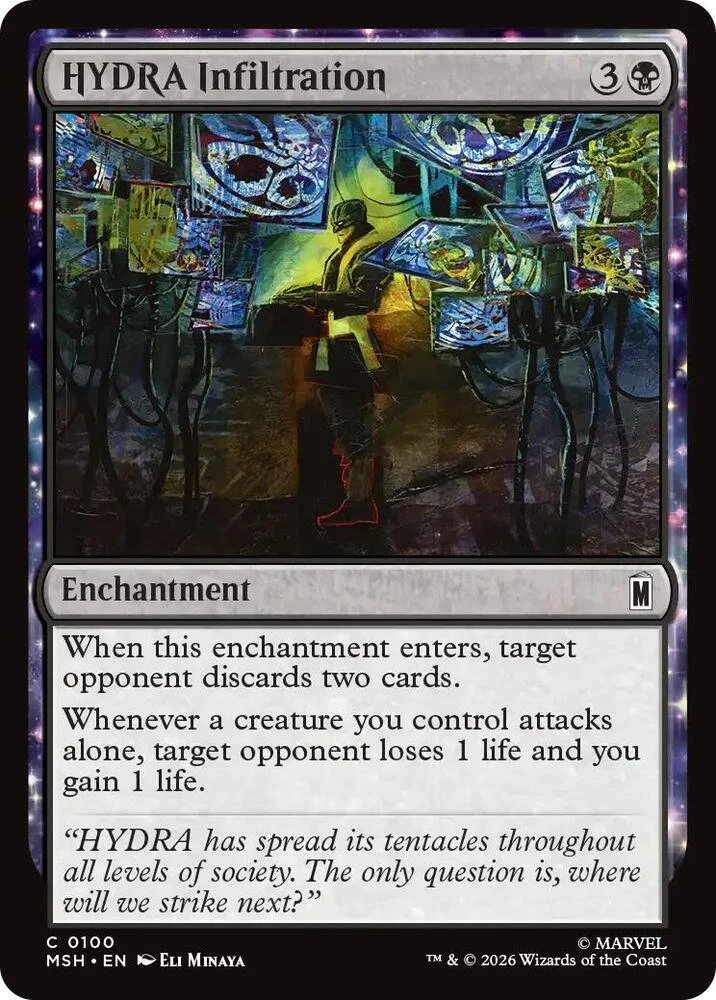
HYDRA Infiltration — A payoff that drains your opponent for 1 and gains you 1 life whenever a creature attacks alone. This gives Orzhov a steady life swing every turn and helps turn your attack-alone plan into a real clock, even if your opponent is able to block some of the damage.
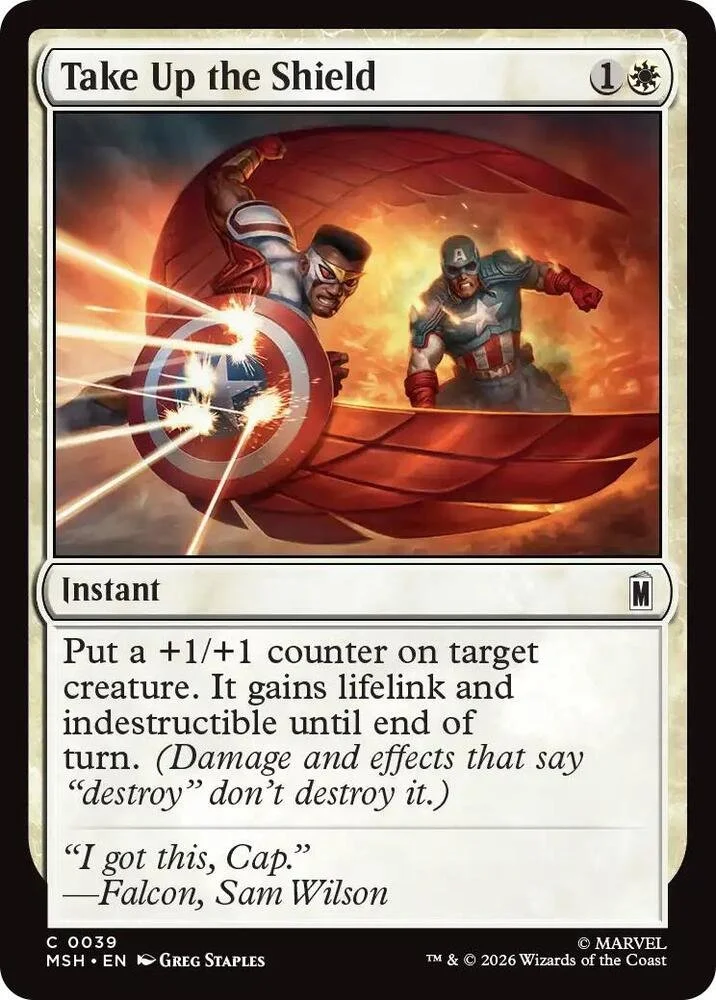
Take Up the Shield — A great combat trick for this deck because it can give your creature surprise indestructible. Since Orzhov often invests heavily in one attacker, being able to protect that creature at instant speed is extremely important.
Best Uncommon Cards for Orzhov Attack Alone
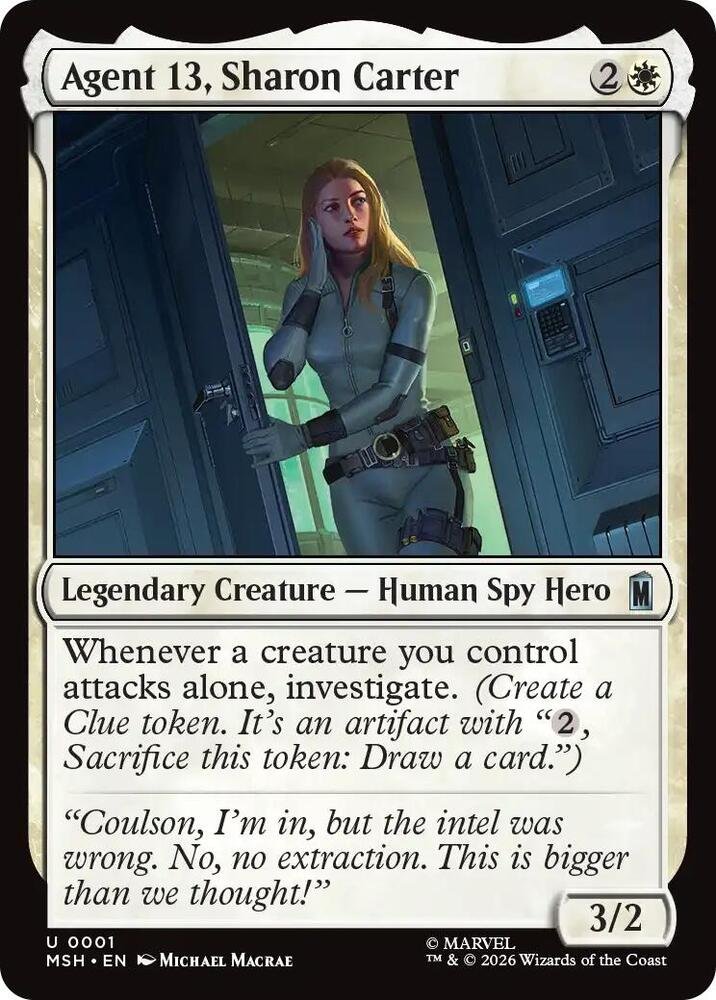
Agent 13, Sharon Carter — A strong value card for the archetype because she investigates whenever a creature attacks alone. That gives Orzhov a way to keep cards flowing while still following its main game plan. If left alone, Agent 13 can generate a lot of long-term value.
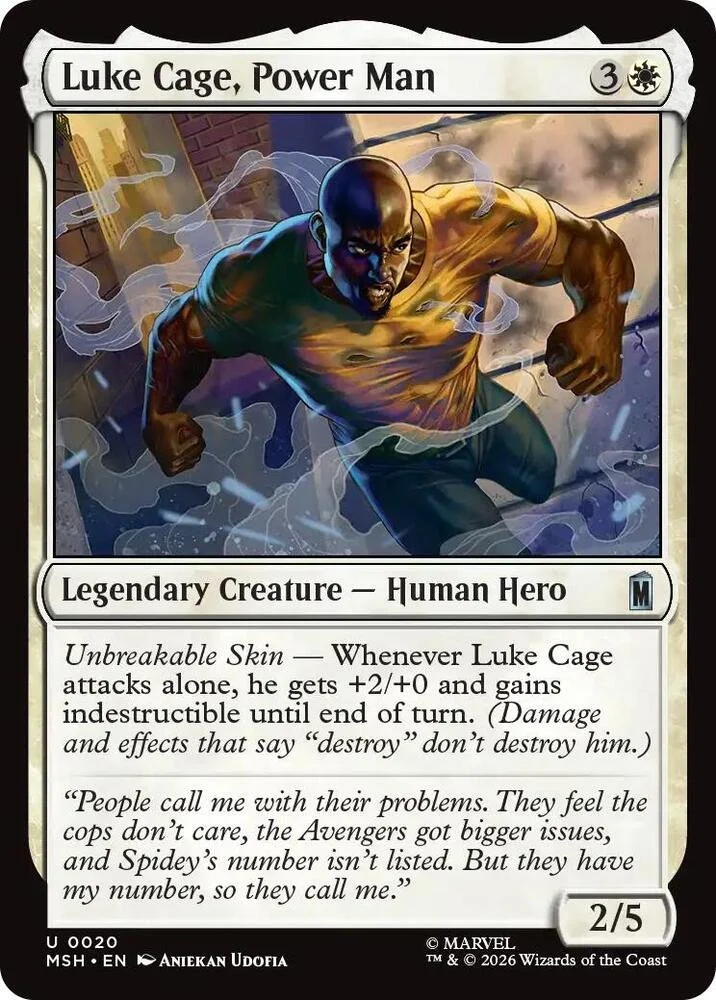
Luke Cage, Power Man — One of the best standalone attackers for this deck. When he attacks alone, he buffs himself and becomes indestructible, which makes him very difficult to deal with in combat. He is exactly the type of creature Orzhov wants to build around.
Best Rare and Mythic Cards for Orzhov Attack Alone
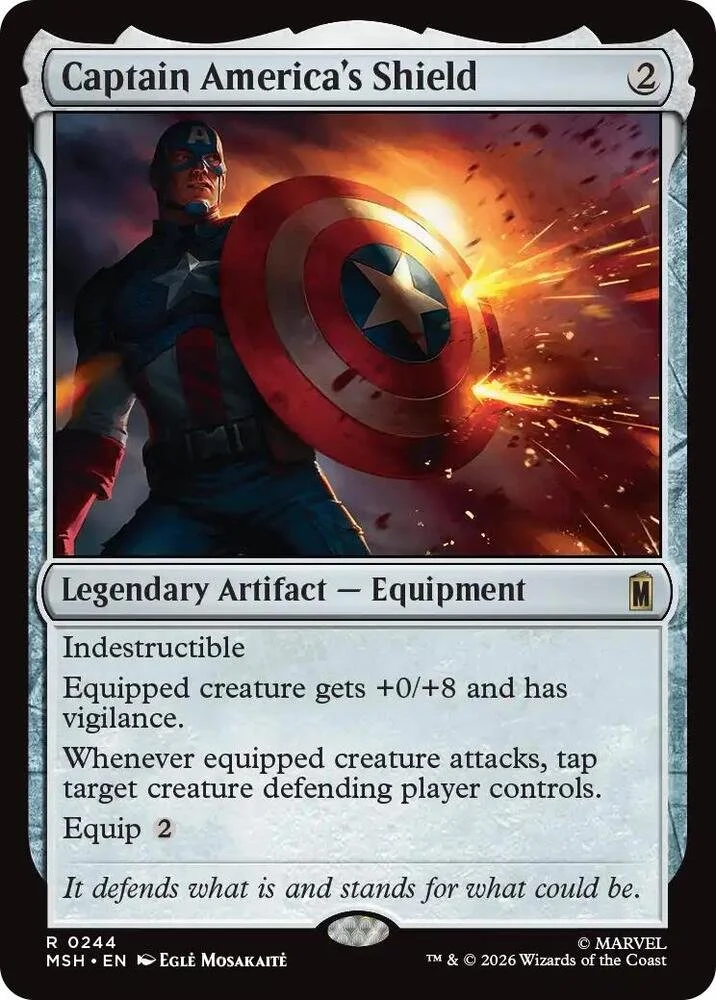
Captain America’s Shield — This is a semi-Voltron archetype, so strong equipment is always going to be valuable. Captain America’s Shield gives you a powerful way to build up one creature and make it much harder for your opponent to deal with in combat.
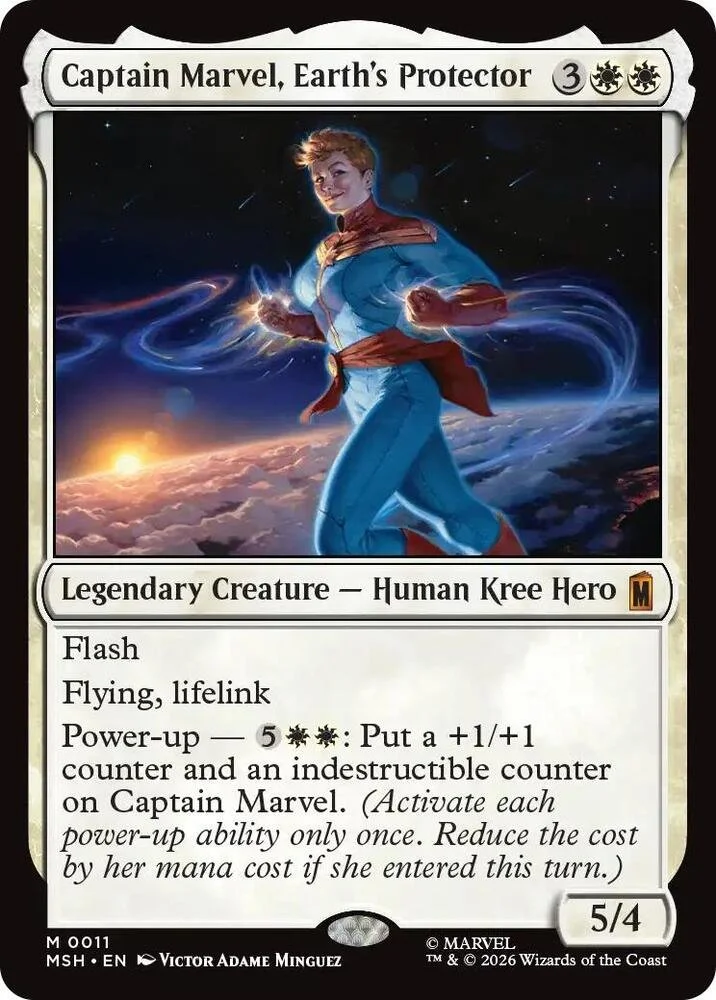
Captain Marvel, Earth’s Protector — A great creature for the attack-alone strategy. She is the kind of threat that can stand on her own, apply pressure, and benefit from the support pieces Orzhov is already interested in playing. If you open her, she is a strong reason to lean into this archetype.
Izzet / Blue-Red — Artifacts
Izzet Artifacts has been a pretty popular Limited archetype lately, and honestly, I am not mad at it. Personally, I think Izzet Artifacts is more fun than the usual Izzet Spellslinger deck because it gives Blue-Red a different texture. You are still getting card draw, tempo, and explosive turns, but now you are doing it through artifacts, equipment, Treasure tokens, and machines instead of just chaining instants and sorceries.
In Marvel Super Heroes, this archetype is exactly where the Iron Man side of the set gets to shine. You are playing artifacts, using them to fuel your payoffs, and sometimes using Treasure to cast your biggest spells ahead of schedule.
Game Plan
Izzet Artifacts wants to play as many useful artifacts as possible while turning those artifacts into damage, card draw, mana, or bigger creatures.
That includes artifact creatures, equipment, Treasure tokens, and any other artifact permanents you can fit into your curve. The more artifacts you can get entering the battlefield, the more your payoff cards start to matter.
The basic plan looks like this:
Play artifacts early and often.
Armor up your creatures with equipment.
Use Treasure tokens to cast spells ahead of curve.
Trigger artifact payoffs as often as possible.
Turn your machines into real threats.
The key with this archetype is making sure your artifacts actually do something. You do not want to fill your deck with weak artifacts just to hit a number. You want artifacts that help your curve, replace themselves, make mana, equip efficiently, or trigger your best payoff cards.
Draft Priorities
For Izzet, you want artifact payoffs first, then enough artifacts and Treasure generation to make those payoffs consistent.
Your main priorities are:
Creatures that benefit from artifacts.
Cheap artifact creatures and equipment.
Treasure generators.
Card draw.
Artifact-based removal or tempo plays.
Mana sinks or big spells to spend Treasure on.
Card draw is especially important because Izzet can sometimes run through its hand quickly if it is playing cheap artifacts and Treasure generators. You want enough ways to reload so your artifact engine keeps moving.
Win Condition
Izzet Artifacts wants to win by turning small artifact advantages into a bigger tempo swing.
Sometimes that means burning your opponent down through artifact-entering triggers. Sometimes it means growing artifact payoff creatures until they become too large to answer. Other times, you use Treasure to jump ahead on mana and land a powerful spell before your opponent is ready.
This archetype can feel scrappy at first, but once the pieces are in place, it can snowball quickly. Every artifact entering the battlefield can become damage, card draw, counters, mana, or pressure. If your opponent cannot disrupt the engine, Izzet can take over the game without needing one single giant threat.
Izzet Key Multicolor Cards
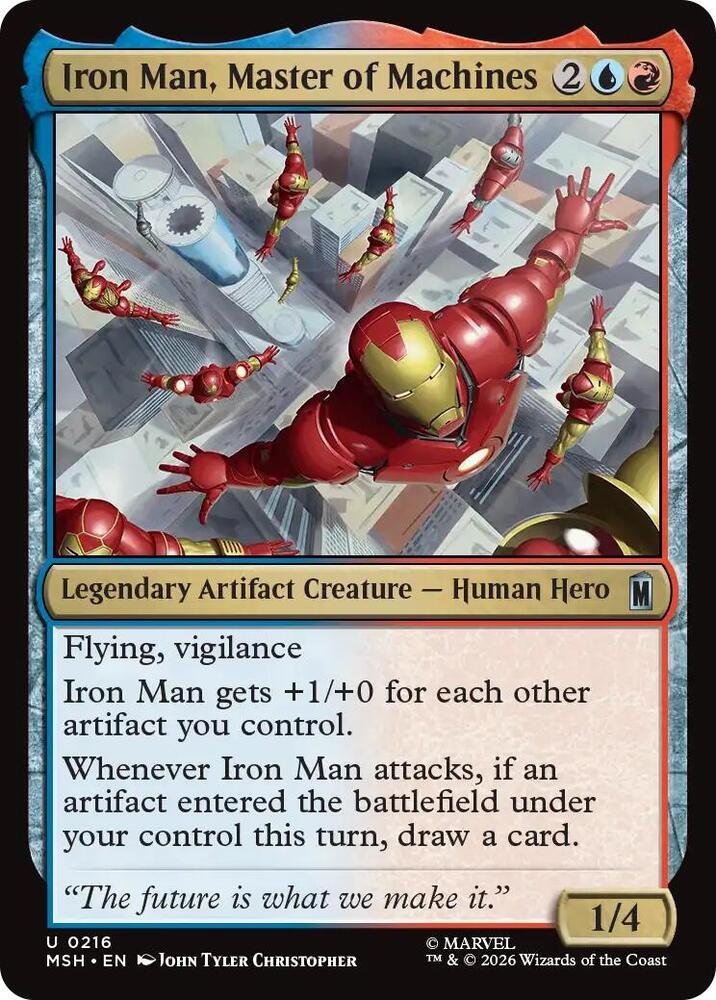
Iron Man, Master of Machines — The Izzet signpost uncommon and one of the best reasons to move into the archetype. Iron Man gets +1/+0 and gives you card draw when he attacks, as long as an artifact entered the battlefield under your control that turn. That is exactly what this deck wants to do anyway, so he turns your normal game plan into a repeatable source of pressure and cards.
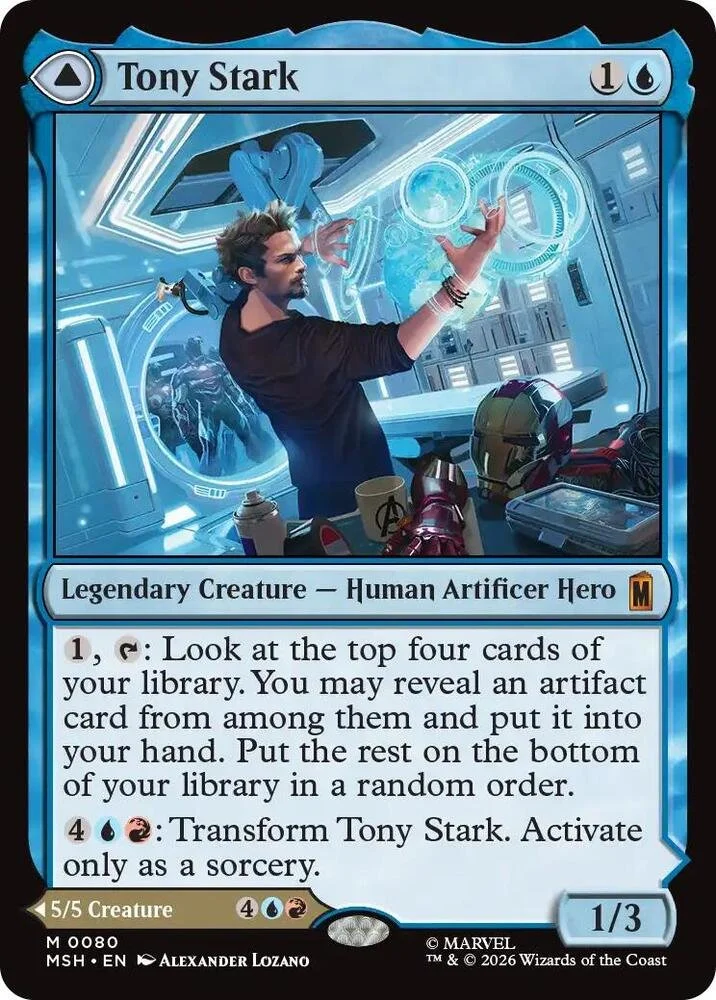
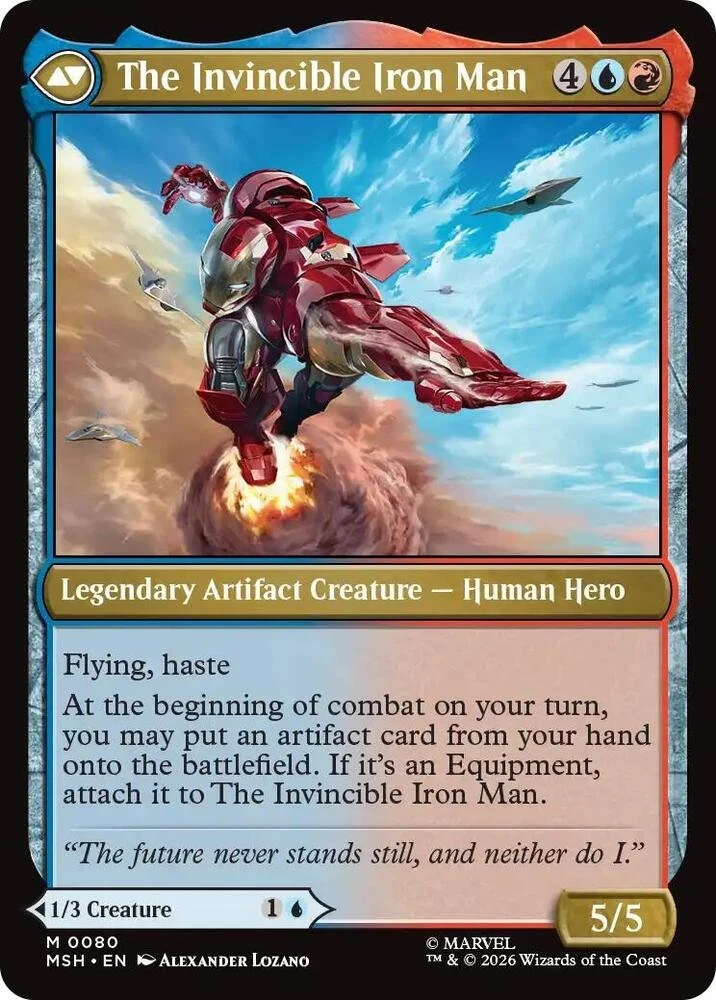
Tony Stark // The Invincible Iron Man — A great card for this archetype on both sides. Tony Stark gives you card advantage, while The Invincible Iron Man gives you free artifacts. That combination is perfect for Izzet because it keeps your hand full while also feeding your artifact-entering payoffs.
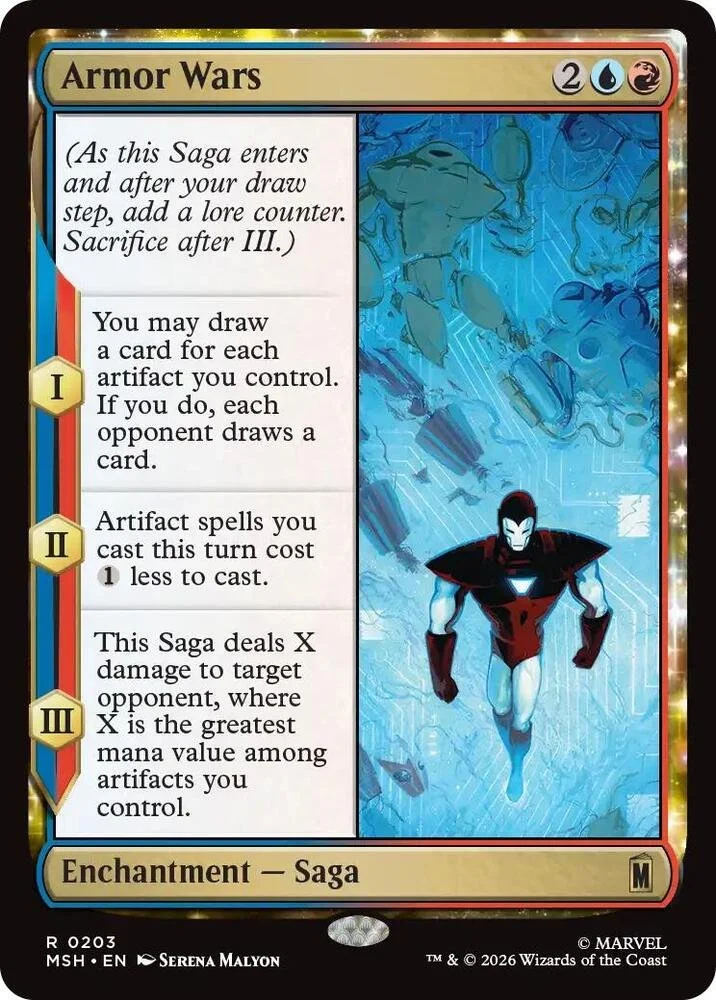
Armor Wars — A saga that can help you draw plenty of cards, make your artifacts cheaper for a turn, and potentially set up a game-ending final chapter depending on how far into the game you are. This is the type of card that rewards you for fully committing to the artifact plan.
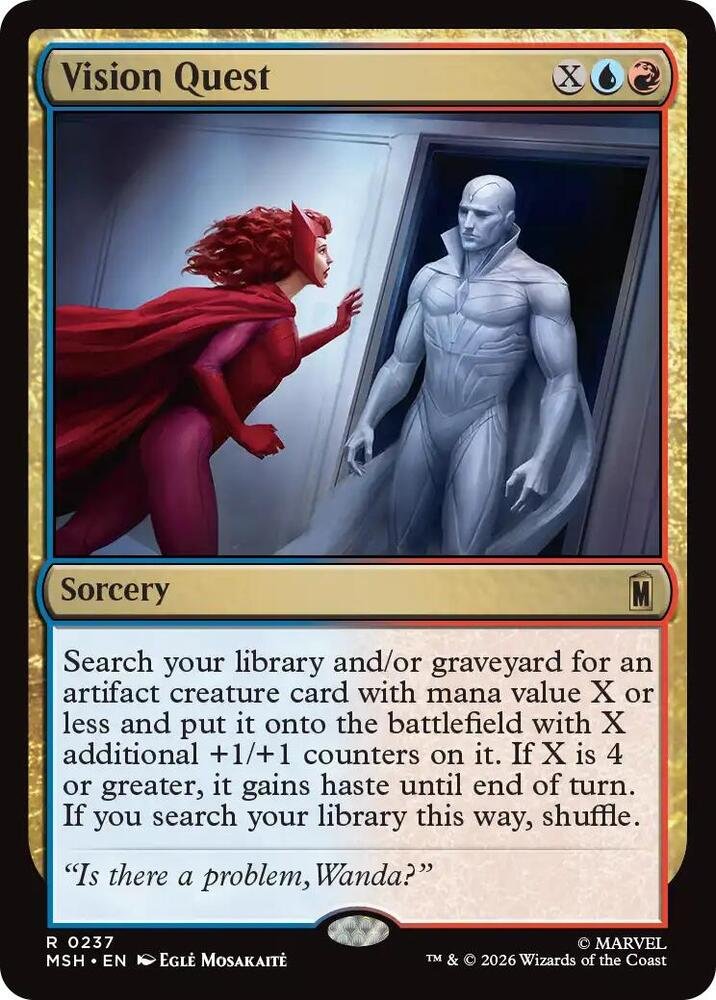
Vision Quest — An artifact tutor, which can be very valuable if you have a specific bomb, payoff, or utility artifact you need to find. In a deck built around artifacts, being able to search for the right piece can help keep your engine consistent.
Best Common Cards for Izzet Artifacts
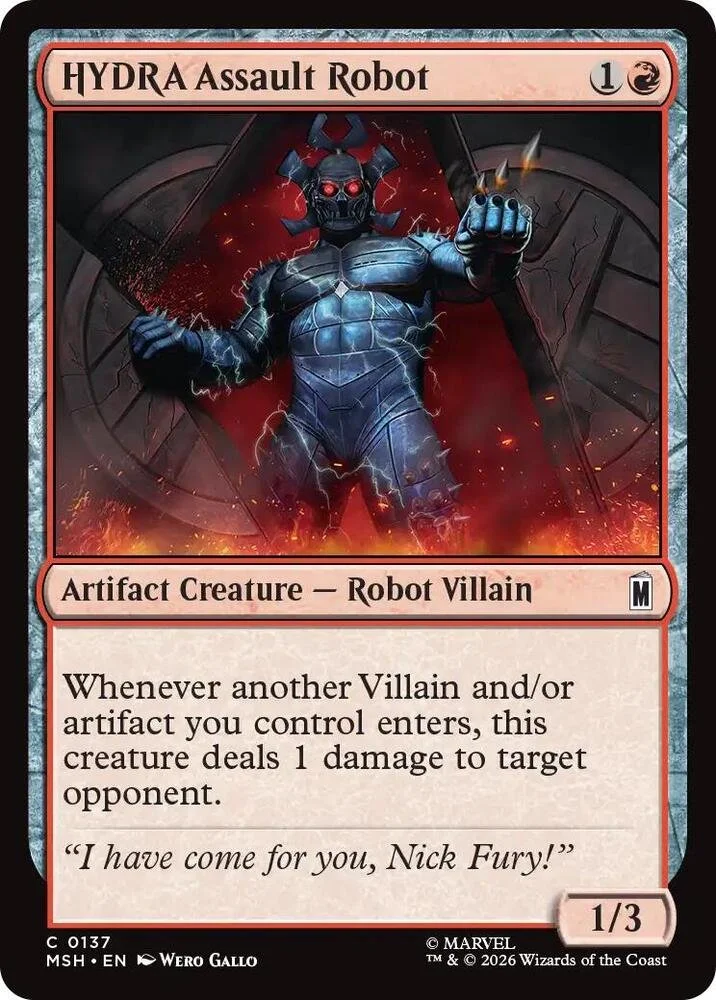
HYDRA Assault Robot — One of the cleaner common payoffs for the archetype. It deals one damage to each opponent whenever an artifact or Villain enters the battlefield under your control. In Izzet, you mostly care about the artifact half of that text, and with enough cheap artifacts or Treasure generation, this can chip away at your opponent very quickly.
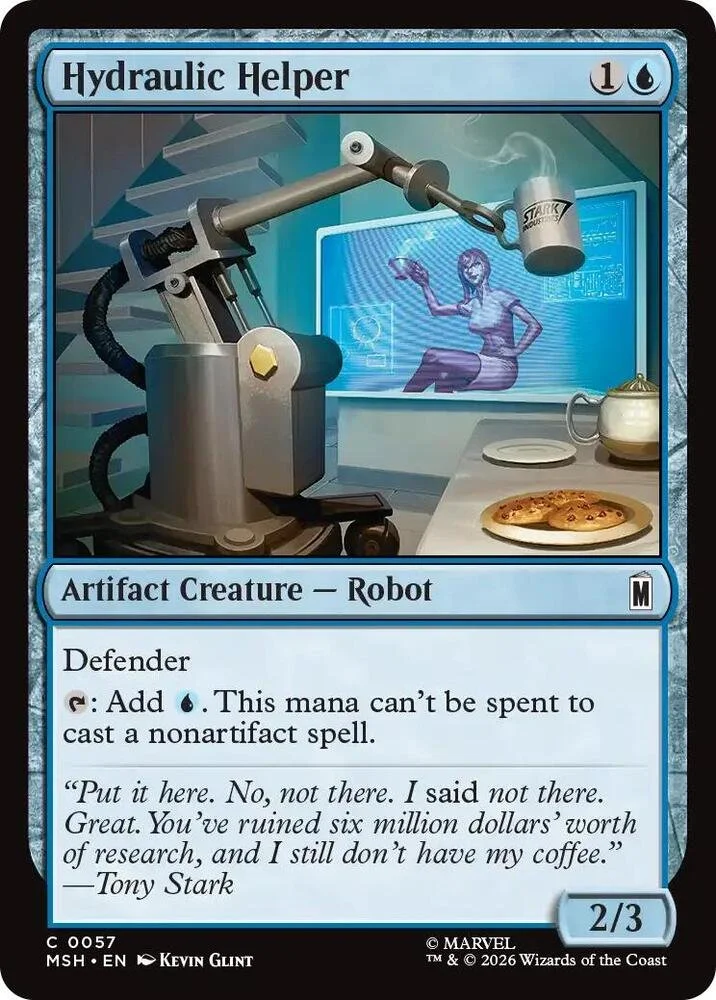
Hydraulic Helper — An artifact-focused mana dork that helps you cast more artifacts or get ahead on mana. It is not the flashiest card, but it does exactly what this deck wants by helping you accelerate into your artifact game plan.
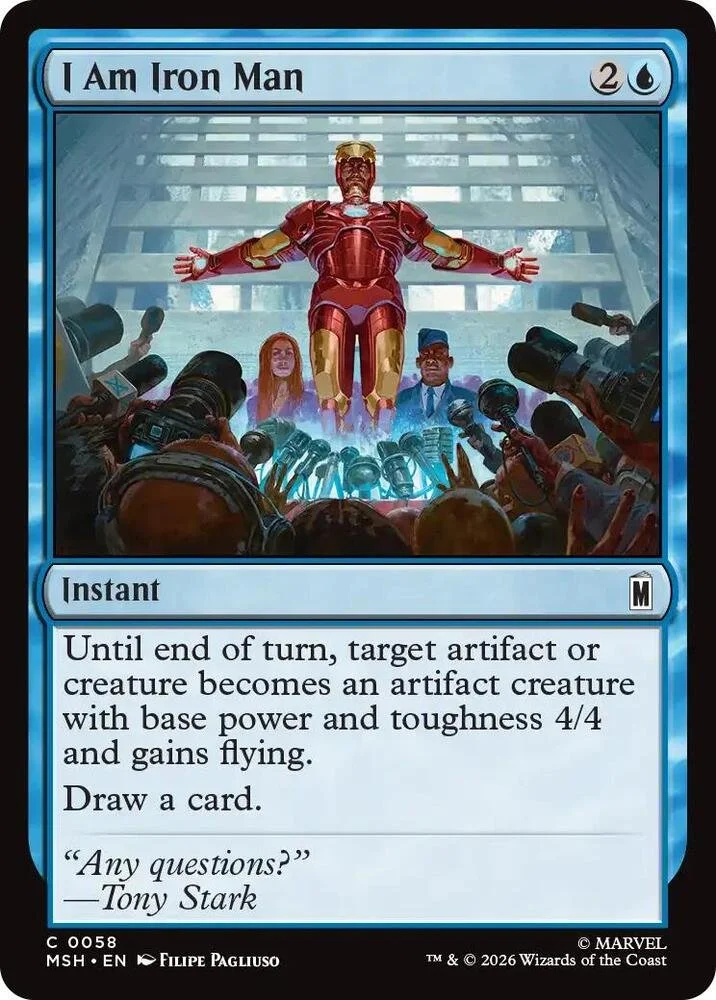
I Am Iron Man — A great tempo card that can turn any artifact into a 4/4 for the turn while also drawing a card. This can create surprise attacks, make a Treasure or smaller artifact relevant in combat, and replace itself so you do not lose card advantage.
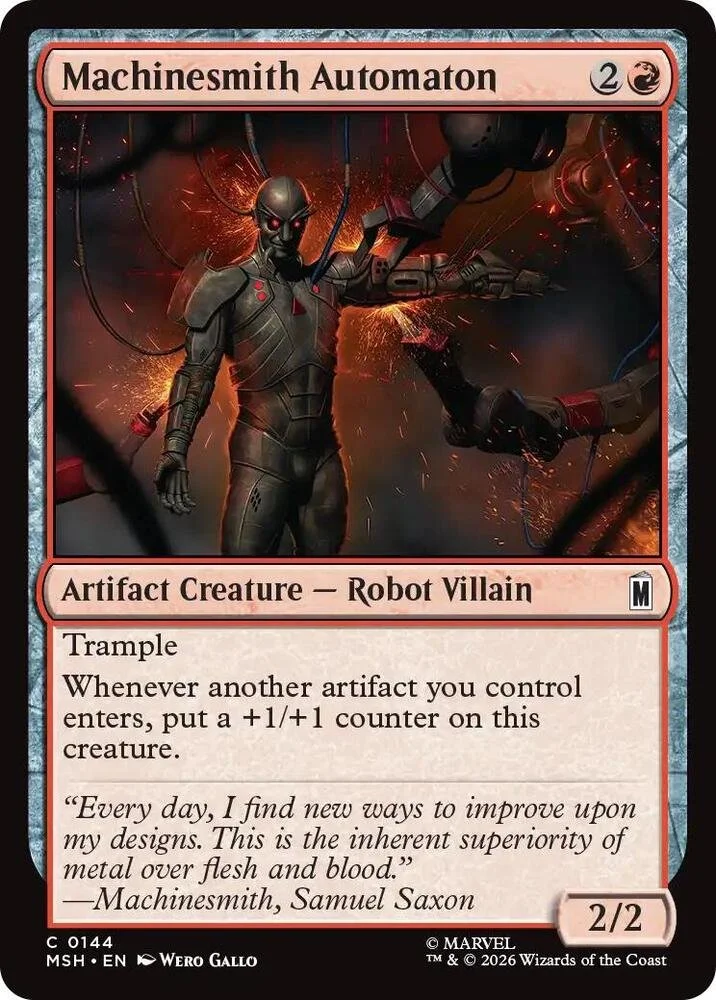
Machinesmith Automaton — A strong common payoff because it gets a +1/+1 counter whenever an artifact enters the battlefield under your control. If you can trigger this multiple times, it can grow from a normal creature into one of your most threatening attackers.
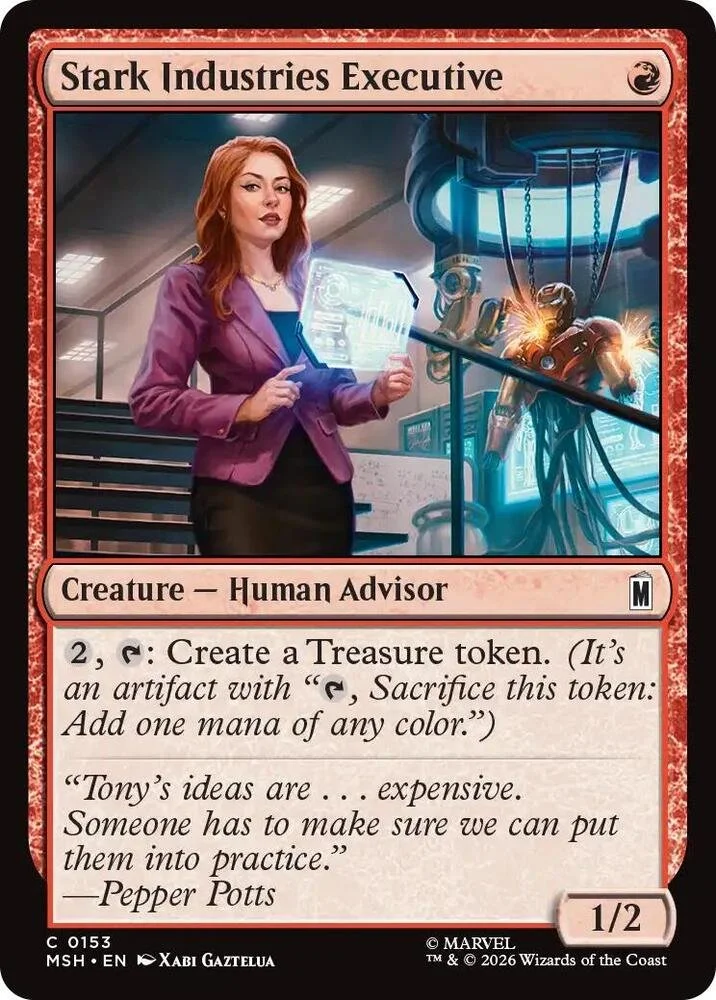
Stark Industries Executive — A Treasure token generator, which is exactly the kind of card Izzet Artifacts wants. Treasure helps trigger artifact-entering payoffs, fixes your mana, and lets you cast more expensive cards ahead of curve.
Best Uncommon Cards for Izzet Artifacts
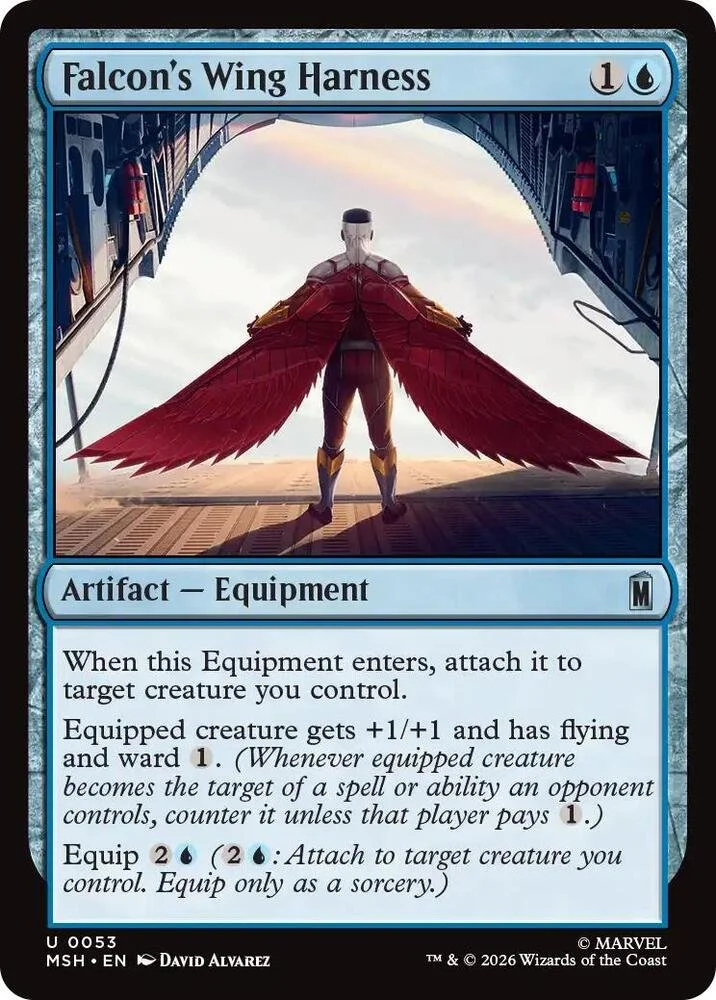
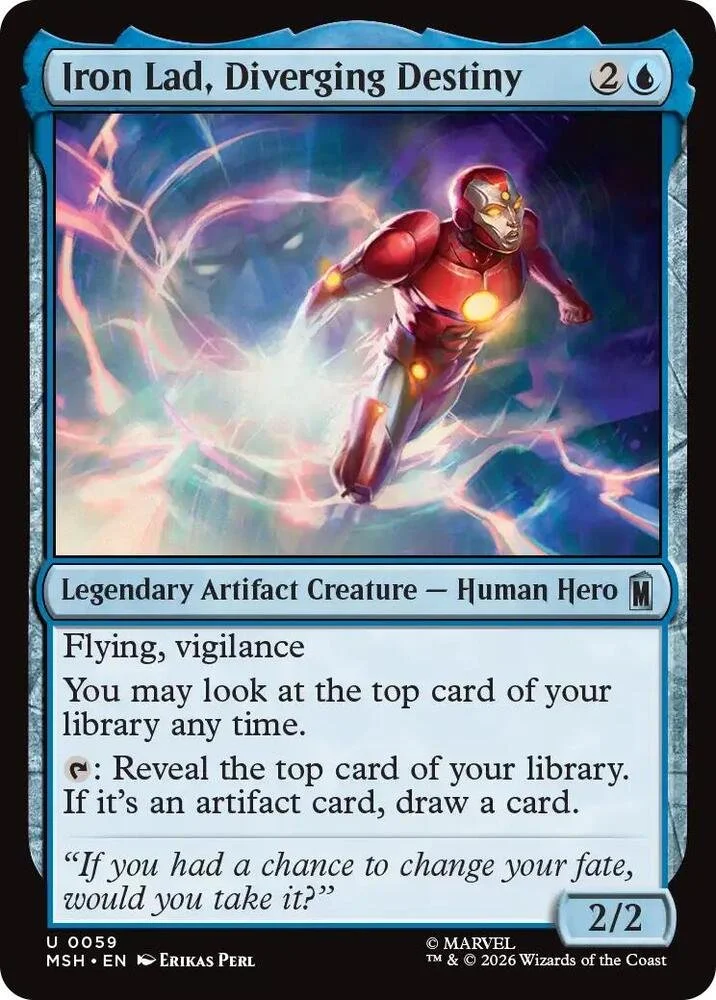
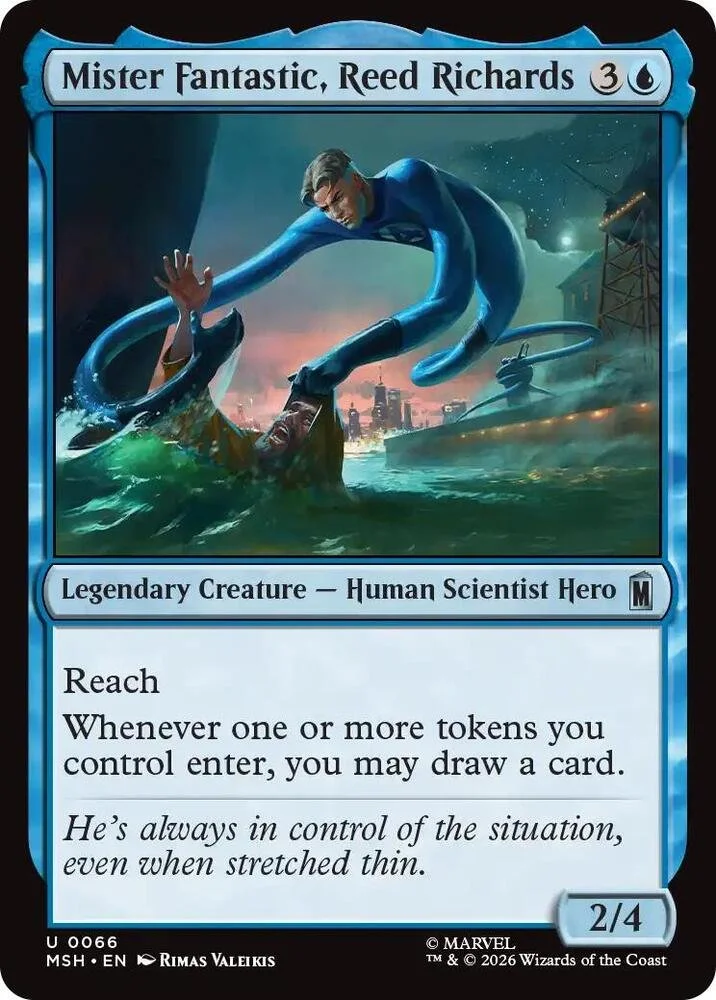
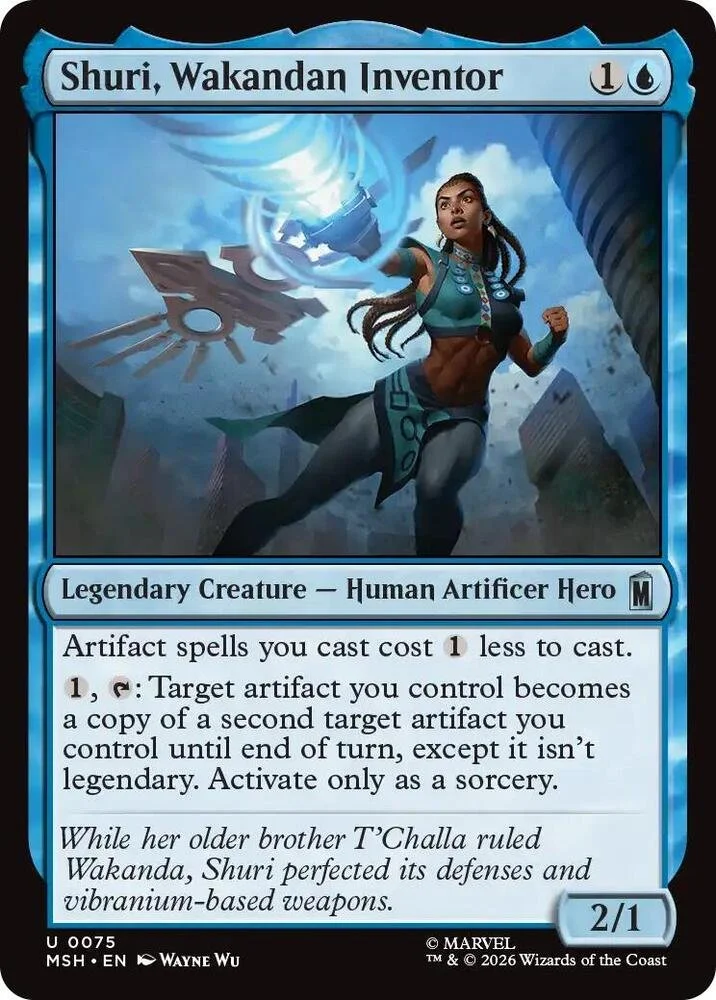
Falcon’s Wing Harness — A strong equipment card with a free attach when it enters the battlefield. That matters because it gives you an artifact entering the battlefield while also immediately impacting combat. Evasion and equipment are both very useful for Izzet’s tempo plan.
Iron Lad, Diverging Destiny — A card advantage piece for artifact decks. Izzet wants to keep the engine moving, and Iron Lad helps you find more gas while still fitting the artifact-focused strategy.
Mister Fantastic, Reed Richards — A strong payoff if your deck is making a lot of tokens, especially Treasure tokens. Whenever a token enters, you draw a card, which can turn your Treasure generation into a serious card advantage engine. If you are already making tokens regularly, Mister Fantastic can quickly bury your opponent in value.
Shuri, Wakandan Inventor — One of the best artifact support cards for this archetype. She makes artifact spells cheaper and can turn artifacts into copies of other artifacts, opening up some very powerful lines. Cost reduction is already strong in Limited, but in an artifact deck, Shuri can make your best turns feel explosive.
Best Rare and Mythic Cards for Izzet Artifacts
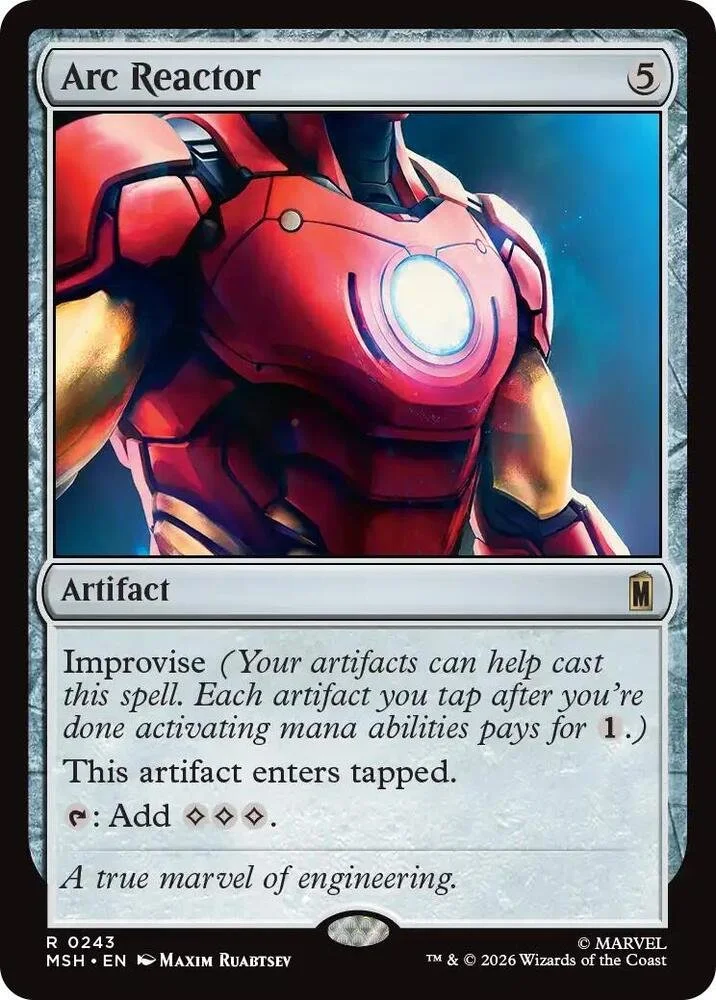
Arc Reactor — A mana rock that taps for three mana and has improvise, meaning you may be able to play it ahead of schedule. That is a huge deal in Limited if your deck is built to take advantage of the extra mana. Arc Reactor can help you jump into your biggest plays faster than your opponent expects.
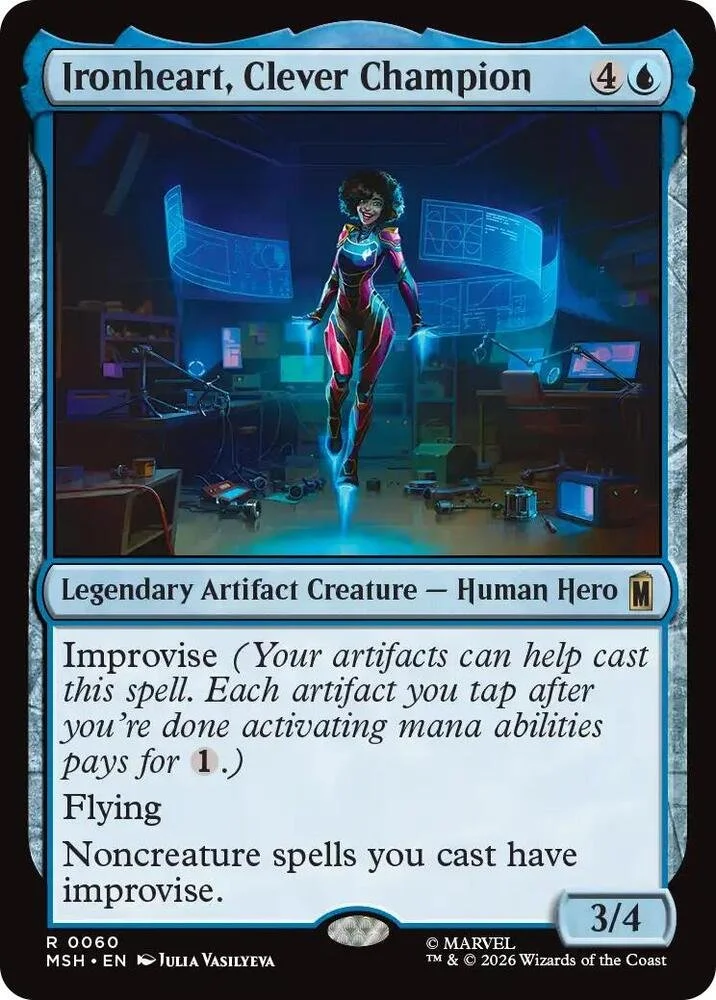
Ironheart, Clever Champion — An excellent card for Izzet Artifacts because she gives your noncreature spells improvise. That lets your artifacts turn into mana, which can create some explosive turns and help you cast powerful spells much earlier than normal. If you open Ironheart, Izzet Artifacts becomes a very appealing lane.
Golgari / Black-Green — Graveyard
Golgari is the graveyard matters archetype in Marvel Super Heroes, and it cares specifically about getting creatures into your graveyard, then turning that graveyard into value.
This is one of the more classic Black-Green Limited strategies. You want to mill yourself, sacrifice creatures, trade off in combat, and use your graveyard as an extension of your hand. The best versions of this archetype will not just fill the graveyard for the sake of filling it. They will actively benefit from having creatures there, then bring the right cards back when it matters most.
Game Plan
Golgari Graveyard wants to put creatures into the graveyard, use those creatures as fuel, and eventually grind the opponent out with recursion and value.
You are not necessarily trying to be the fastest deck at the table. Instead, you want to trade resources early, fill your graveyard naturally, and make sure your late-game cards are better than your opponent’s.
The basic plan looks like this:
Mill yourself, sacrifice creatures, and trade in combat.
Get enough creatures into your graveyard.
Turn graveyard size into bonuses and payoffs.
Bring back key creatures when needed.
Win through recursion, value, and hard-to-answer threats.
The important thing with Golgari is balance. You need enough ways to put cards into your graveyard, but you also need cards that actually reward you for doing it. If you only have self-mill with no payoffs, your deck is not doing enough. If you only have payoffs but no way to fuel them, they may never turn on.
Draft Priorities
For Golgari, you want reliable graveyard enablers and cards that make your graveyard matter. Sacrifice outlets are especially useful because they let you control when creatures die instead of waiting for combat or removal.
Your main priorities are:
Sacrifice outlets.
Self-mill effects.
Cards that benefit from creatures in your graveyard.
Ways to return creatures from your graveyard.
Creatures that give value when they die or return.
Removal to help you survive long enough to grind.
This archetype is going to be at its best when your cards overlap. A creature that mills you, dies profitably, or comes back later is much better here than a random body. You want every part of your deck helping the graveyard plan in some way.
Win Condition
Golgari wants to win by outlasting the opponent.
You are trying to make every trade better for you than it is for them. If your creatures die, they fuel your payoffs. If your graveyard fills up, your cards get stronger. If the game goes long, you can start bringing back threats and forcing your opponent to answer the same problems more than once.
This is not the cleanest “hit you for 20 as fast as possible” deck. It is a grindy value deck that wants to turn the graveyard into a resource. If you like decks that slowly bury the opponent in value, Golgari is the lane to watch.
Golgari Key Multicolor Cards
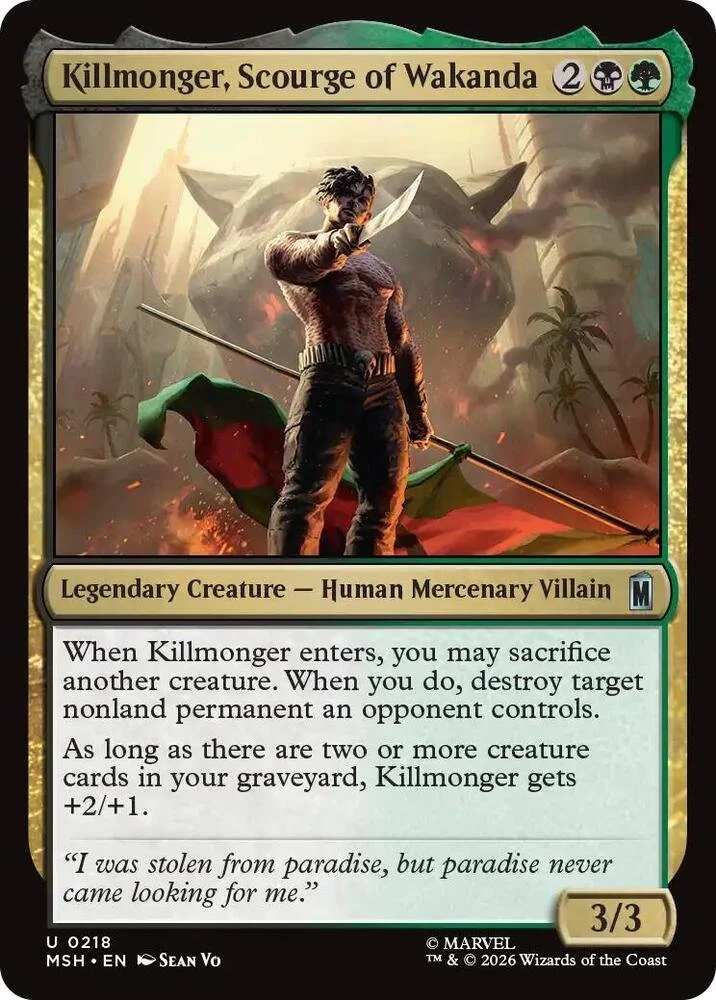
Killmonger, Scourge of Wakanda — The Golgari signpost uncommon for the set, and a strong fit for the archetype. Killmonger is a sacrifice outlet himself, which already helps your game plan, and if you have two or more creatures in your graveyard, he gets +2/+1. That makes him both an enabler and a payoff, which is exactly what you want from a signpost card.
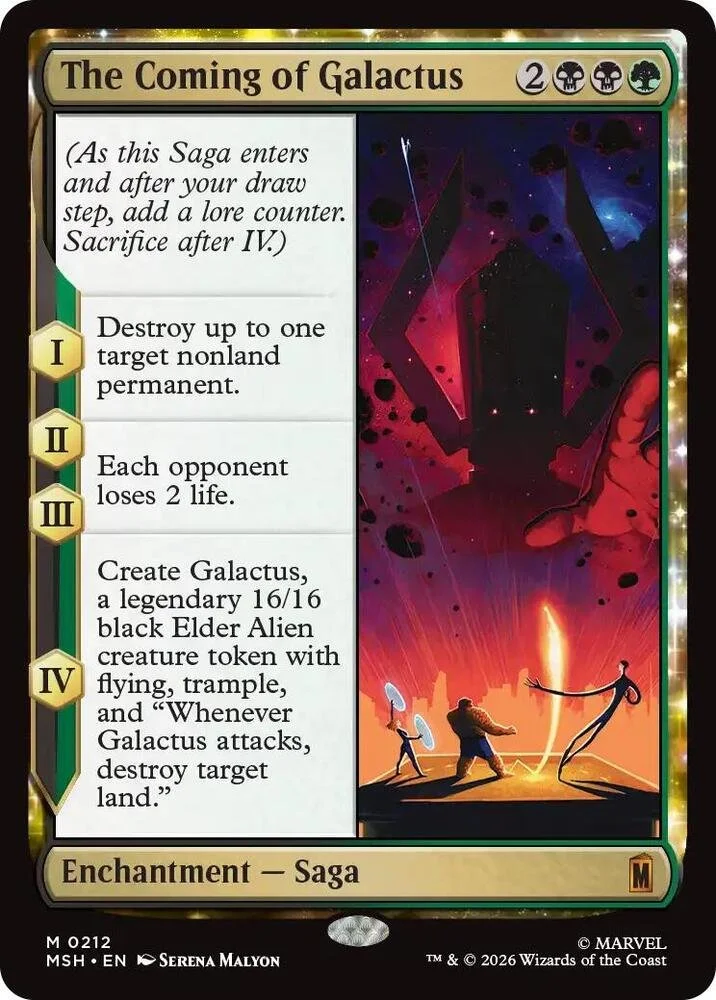
The Coming of Galactus — This card is ridiculous. It creates a 16/10 token that destroys lands, which is the kind of effect that can completely take over a game if it resolves. It is not necessarily a clean graveyard synergy card, but in a slower Golgari shell that can survive long enough to cast it, this is absolutely a game-ending threat. Also, seriously, what is going on here?
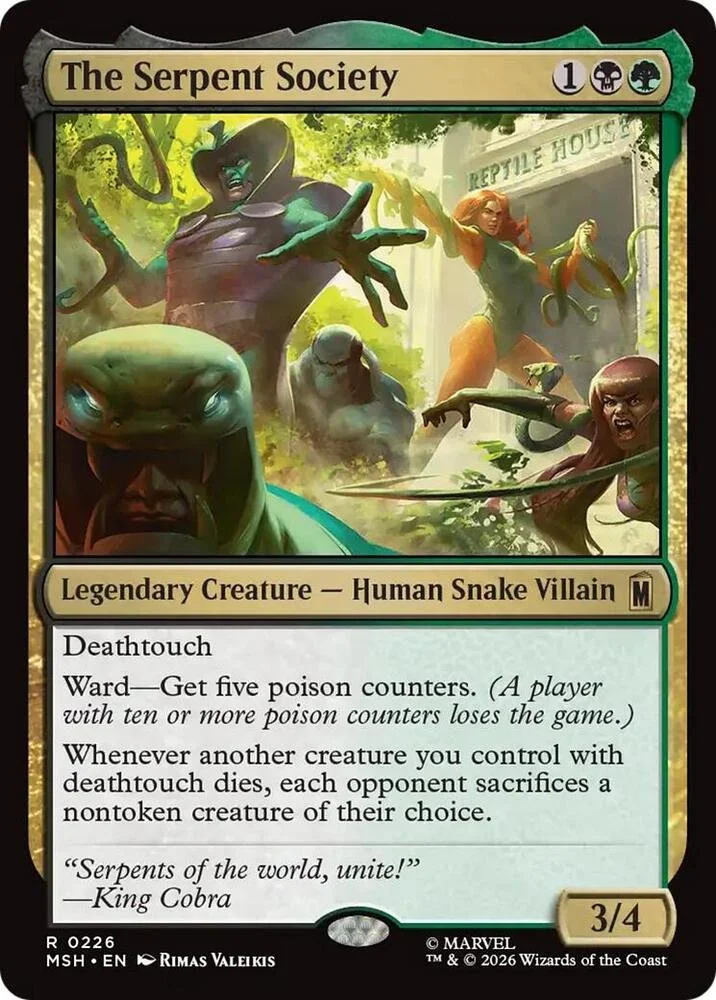
The Serpent Society — Not required for the graveyard plan specifically, but still an awesome card that can really punish your opponent. Golgari decks often want cards that create difficult combat situations or punish opponents for playing normally, and The Serpent Society fits that role well.
Best Common Cards for Golgari Graveyard
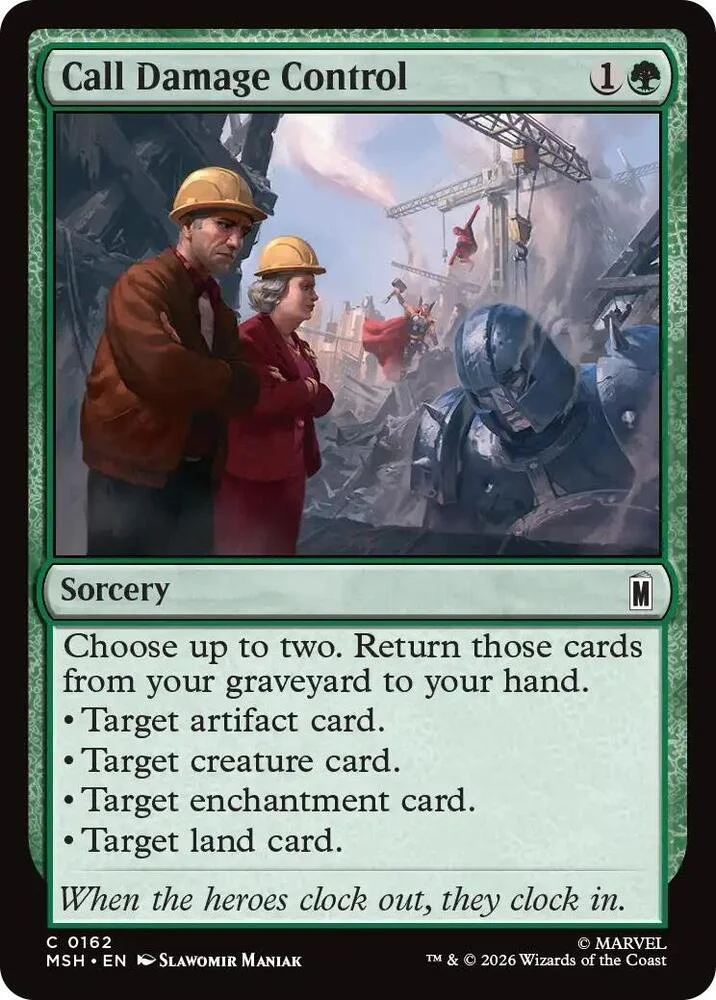
Call Damage Control — A flexible recursion spell that can bring back an artifact, creature, enchantment, or land card. That flexibility is very useful in a graveyard deck because it lets you get back whatever permanent matters most in the moment. In Golgari, this is exactly the kind of card that helps turn your graveyard into a resource.
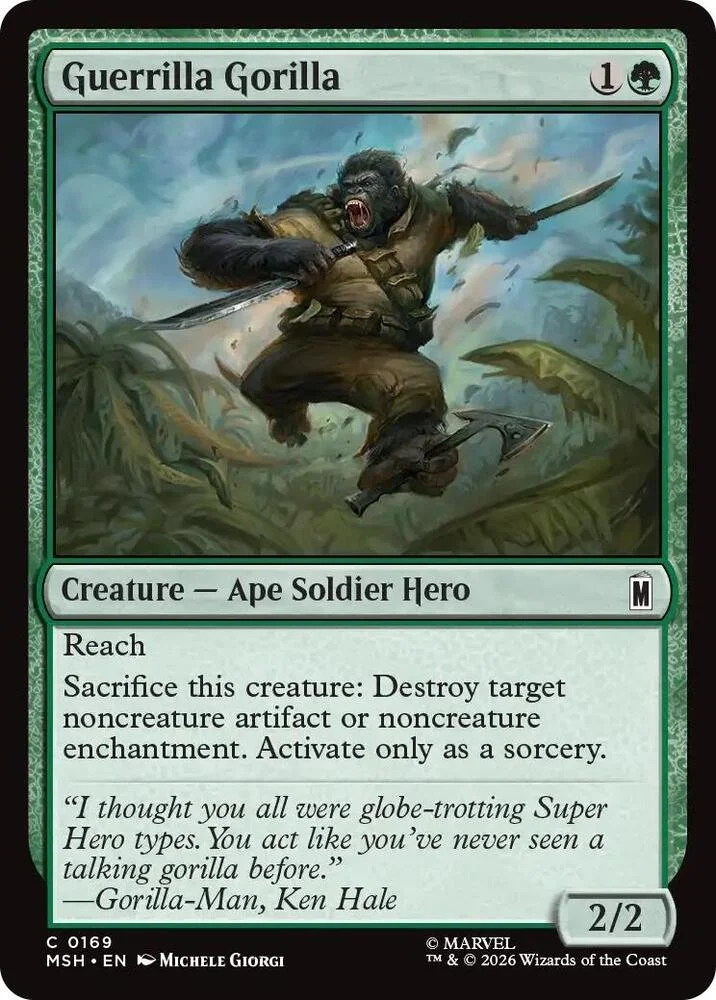
Guerrilla Gorilla — A creature that can sacrifice itself to destroy an artifact or enchantment. That makes it useful interaction, but it also helps put a creature into your graveyard on your own terms. It is a nice example of a card that supports the archetype while still doing something practical.
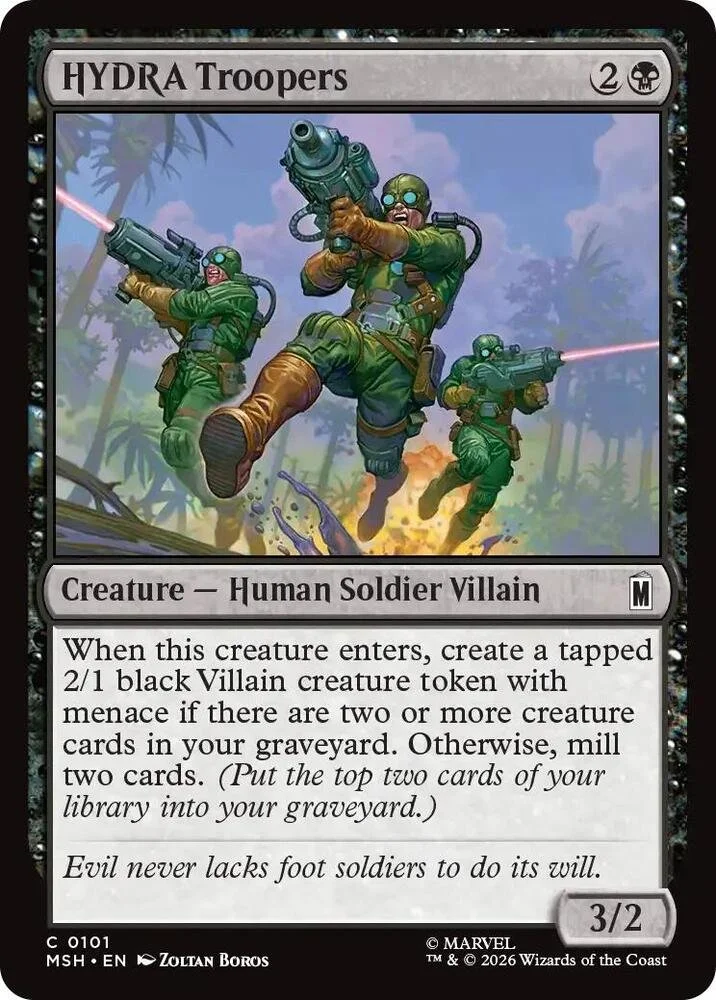
HYDRA Troopers — A payoff for having enough creatures in your graveyard. Once your graveyard is stocked, HYDRA Troopers can become a token generator and help you rebuild or go wide. This is the kind of common that gets much better when your deck is consistently filling the graveyard.
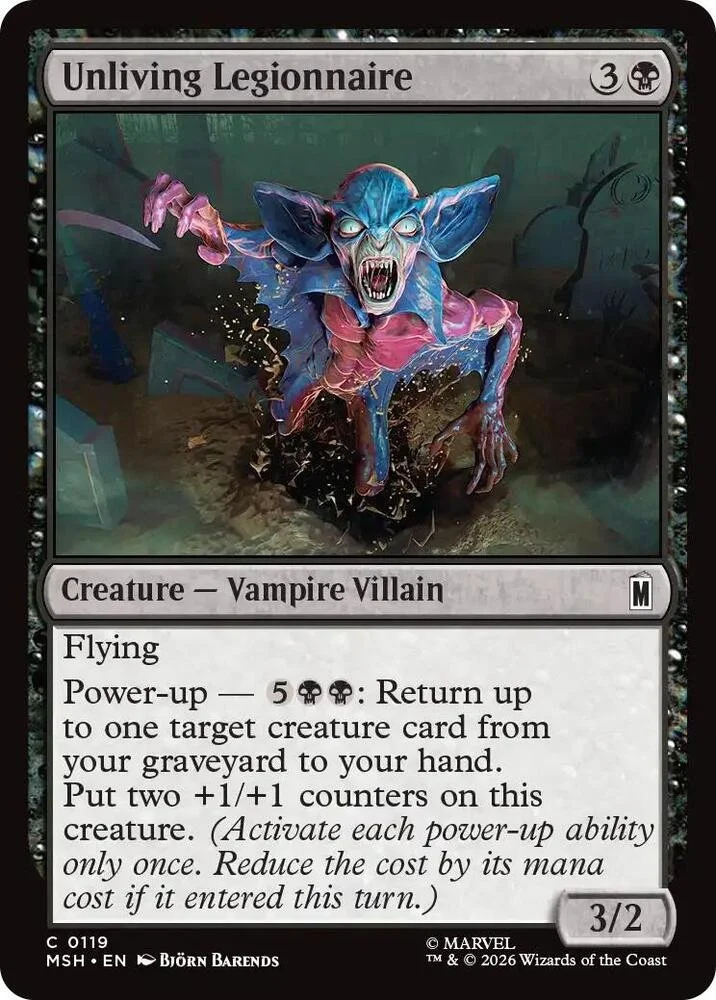
Unliving Legionnaire — A strong fit because its Power-Up ability lets you return a creature from your graveyard. That gives Golgari another way to bring back important threats and makes the card useful both as a body and as a recursion piece.
Best Uncommon Cards for Golgari Graveyard
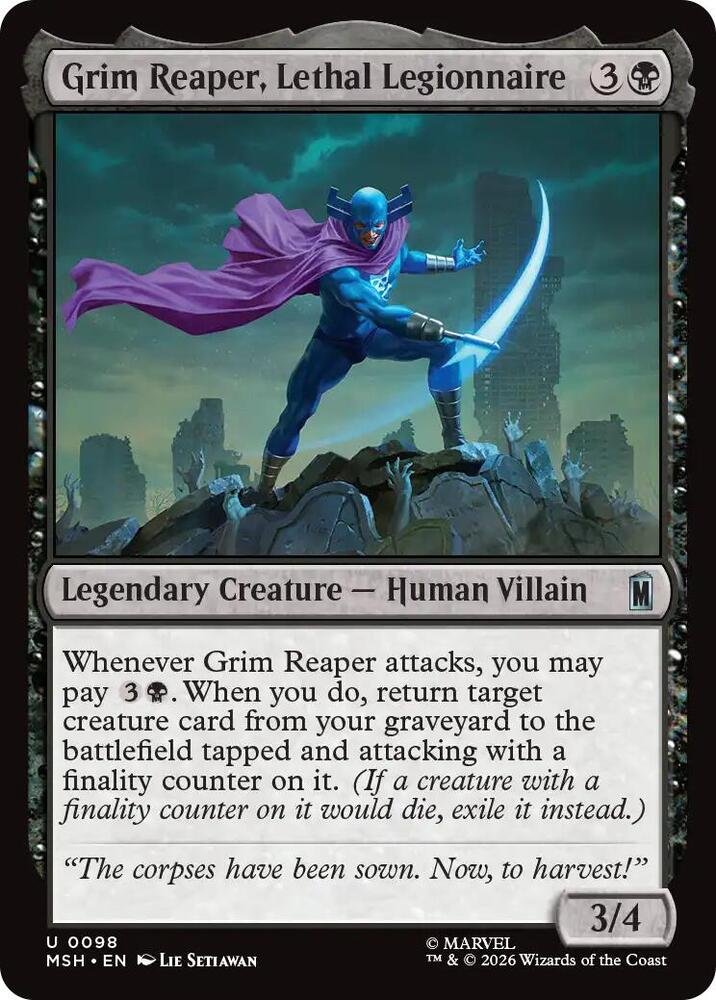
Grim Reaper, Lethal Legionnaire — A very strong recursion payoff because it returns creatures from your graveyard attacking. That can create sudden pressure and punish opponents who think they have stabilized. In a deck that is naturally filling the graveyard, Grim Reaper can turn those dead creatures into a real offensive threat.
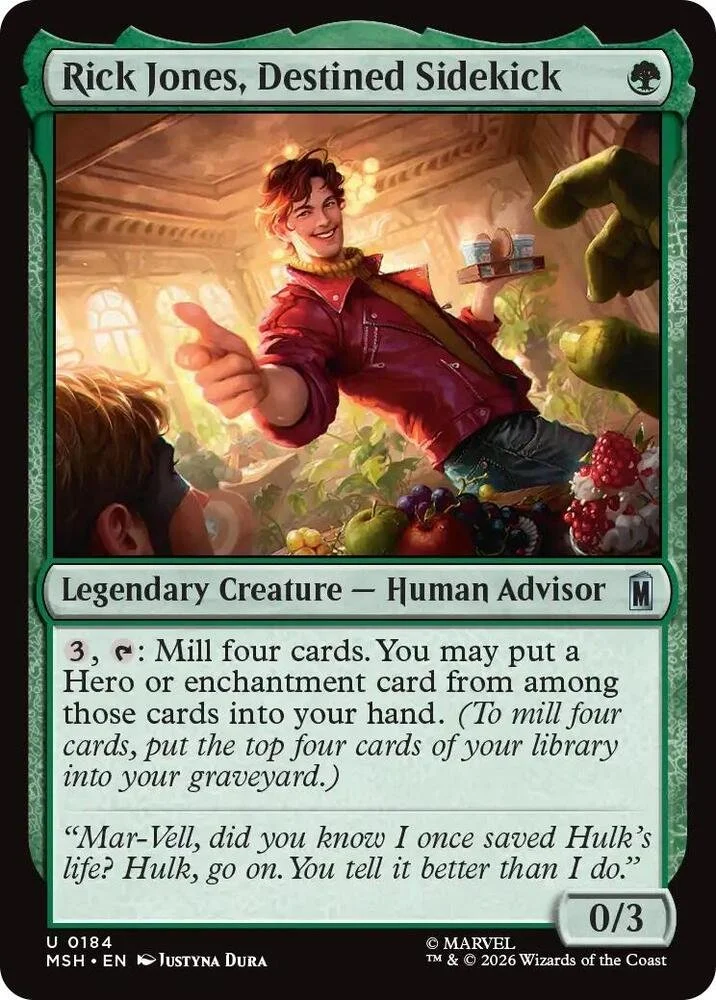
Rick Jones, Destined Sidekick — A solid enabler and value piece. Rick Jones helps self-mill, then can return a Hero or enchantment, giving you both graveyard setup and recursion on the same card. That is exactly the kind of overlap Golgari wants.
Best Rare and Mythic Cards for Golgari Graveyard
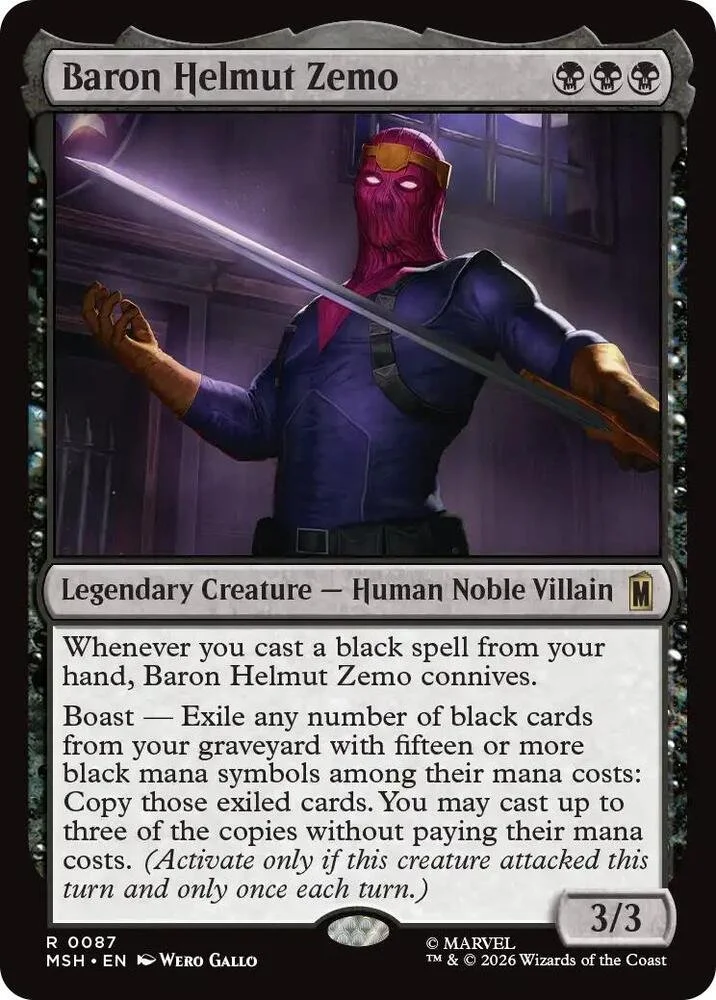
Baron Helmut Zemo — Connive helps you get creatures into your graveyard while also filtering your hand, which is already useful for Golgari. The bigger payoff is that Zemo can potentially let you cast three free spells later, giving the archetype a huge burst of value if you can set it up correctly.
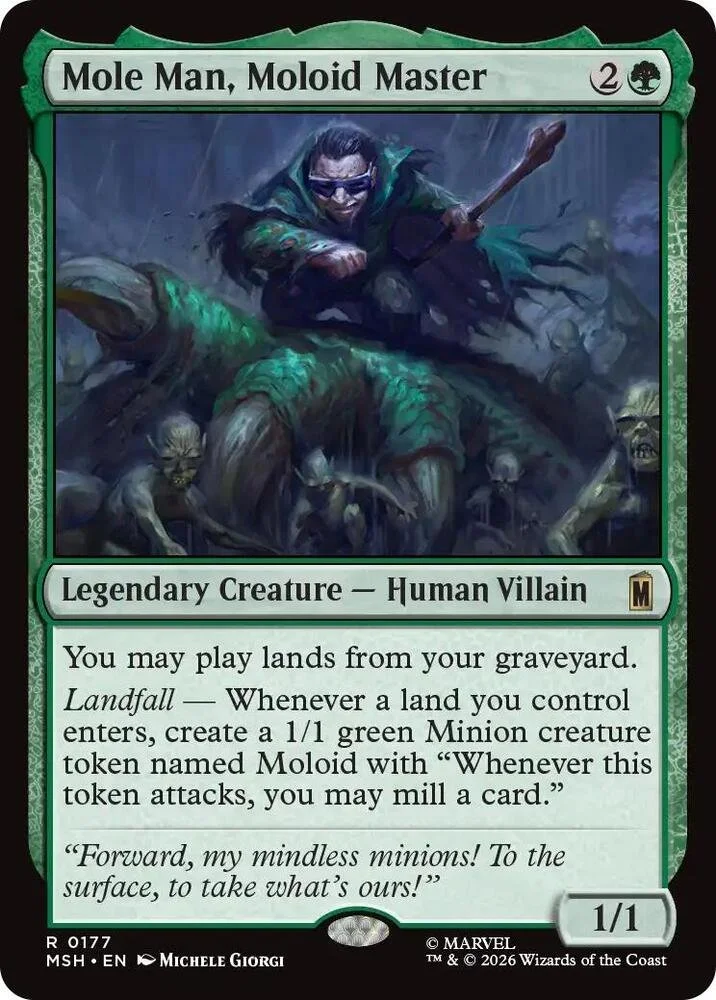
Mole Man, Moloid Master — A strong graveyard-adjacent card because it lets you play lands from your graveyard. His landfall ability also creates a 1/1 token that mills you when it attacks, which helps keep the graveyard stocked while building your board. Mole Man gives Golgari another way to grind value over time.
Boros / Red-White — Prowess
If you do not know what Prowess does by now, you probably have not been playing Magic for very long. It has become one of the most recognizable spell-slinging mechanics in the game, usually showing up in aggressive decks that want to turn cheap noncreature spells into extra combat damage.
What makes Marvel Super Heroes interesting is that Prowess is not sitting in the usual Izzet or Jeskai shell. Instead, we are getting Boros Prowess Aggro, which means this deck wants to play fast, cast cheap spells, and turn every combat step into a nightmare for your opponent.
Game Plan
Boros Prowess wants to build an early board, then use noncreature spells to trigger Prowess and push through damage.
You are not trying to sit back and build a long-term engine. This is an ultra-aggressive deck that wants to attack early, attack often, and punish opponents who leave themselves open. Every cheap trick, aura, removal spell, or saga can become extra damage if you have the right creatures on the battlefield.
The basic plan looks like this:
Play cheap Prowess creatures.
Cast noncreature spells.
Trigger Prowess in combat.
Use tricks and removal to clear blockers.
Stay aggressive and close the game quickly.
This archetype rewards timing. You do not always want to fire off your spells immediately. Sometimes the best line is to attack first, force your opponent to make a block, then cast your spell and blow up combat math.
Draft Priorities
For Boros, you want a strong curve of Prowess creatures and enough cheap noncreature spells to trigger them consistently. The deck needs to stay low to the ground, because if your hand is full of expensive spells, you will not be able to chain multiple triggers in the same turn.
Your main priorities are:
Cheap Prowess creatures.
One- and two-mana noncreature spells.
Combat tricks.
Cheap removal.
Auras with flash or immediate impact.
Card advantage spells that keep the pressure going.
The biggest trap with Boros Prowess is drafting too many spells and not enough creatures. You still need bodies on the battlefield. Your spells are only scary if you have creatures ready to turn those Prowess triggers into damage.
Win Condition
Boros wants to win before the opponent can stabilize.
You are using Prowess to make your creatures hit harder than they should, then stacking cheap spells to create explosive attack turns. Sometimes you win by curving out and attacking normally. Other times, you win out of nowhere because one or two spells suddenly turn a modest board into lethal damage.
This is the deck for players who like combat tricks, aggressive sequencing, and making opponents second-guess every block.
Boros Key Multicolor Cards
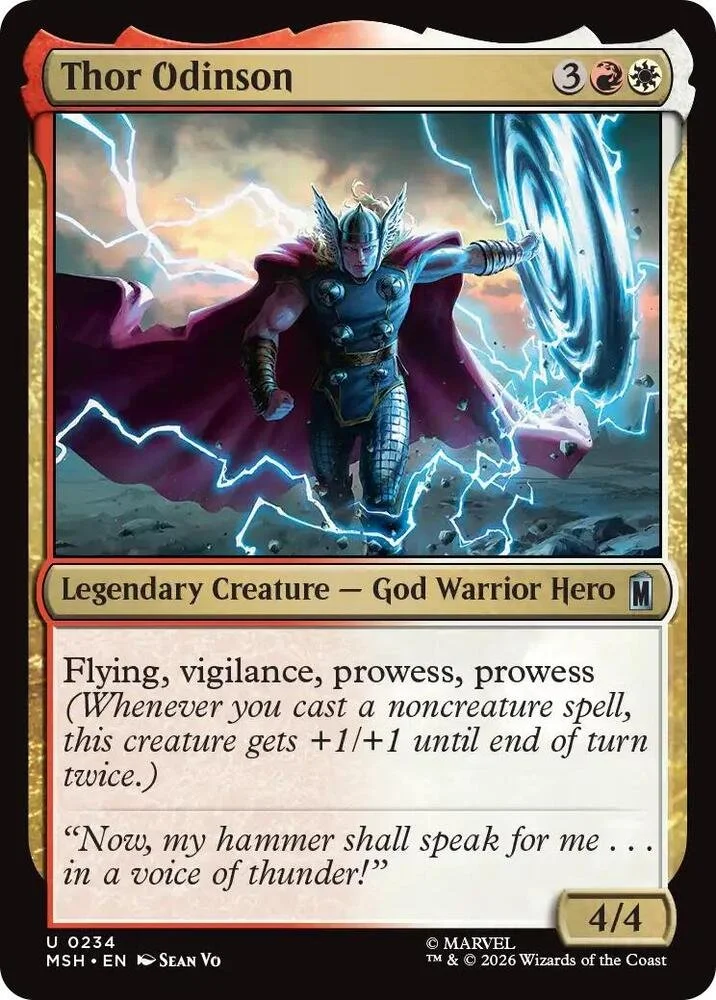
Thor Odinson — An awesome creature for this archetype, bringing flying, vigilance, and double Prowess. That is an absurd combination in Limited. Flying gives him evasion, vigilance lets him attack while staying back on defense, and double Prowess means every noncreature spell becomes a serious damage boost.
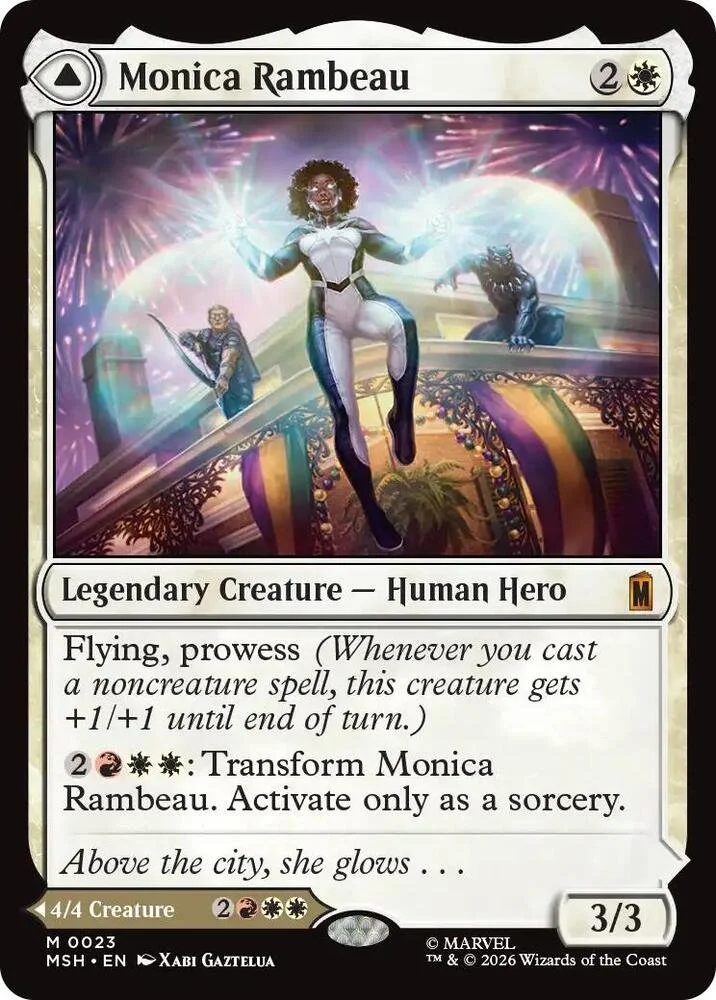
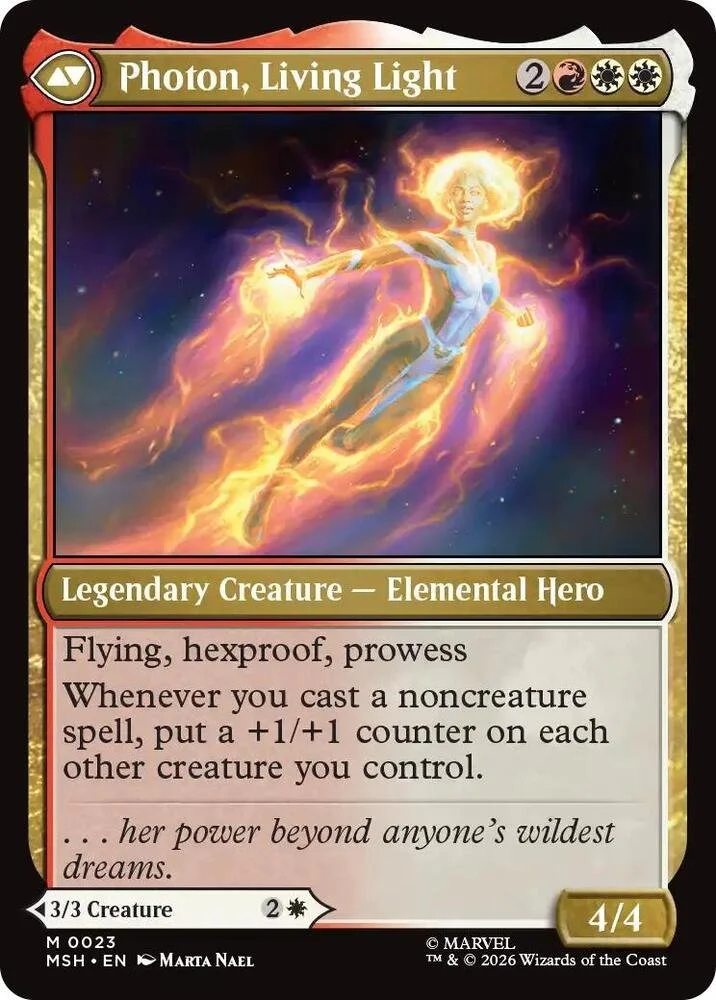
Monica Rambeau // Photon, Living Light — A fantastic Boros Prowess card on both sides. Monica has flying and Prowess, which already makes her a strong evasive threat. Once she transforms into Photon, she gains hexproof, and whenever you cast a noncreature spell, you put a +1/+1 counter on each creature you control. Permanent Prowess is awesome, and Photon can turn your whole board into a long-term threat.
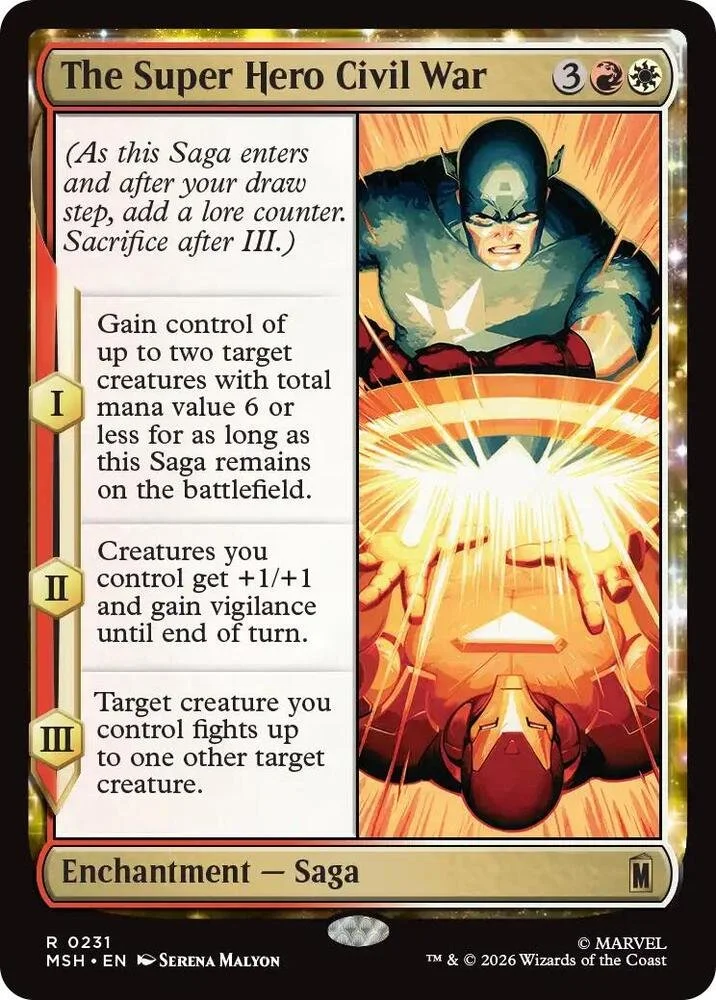
The Super Hero Civil War — A strong noncreature saga that fits the deck well while also triggering Prowess. It lets you temporarily steal a creature, gives your creatures +1/+1 and vigilance, and then has one of your creatures fight another. That is a lot of action on one card, and every chapter helps Boros keep pressure on the opponent.
Best Common Cards for Boros Prowess
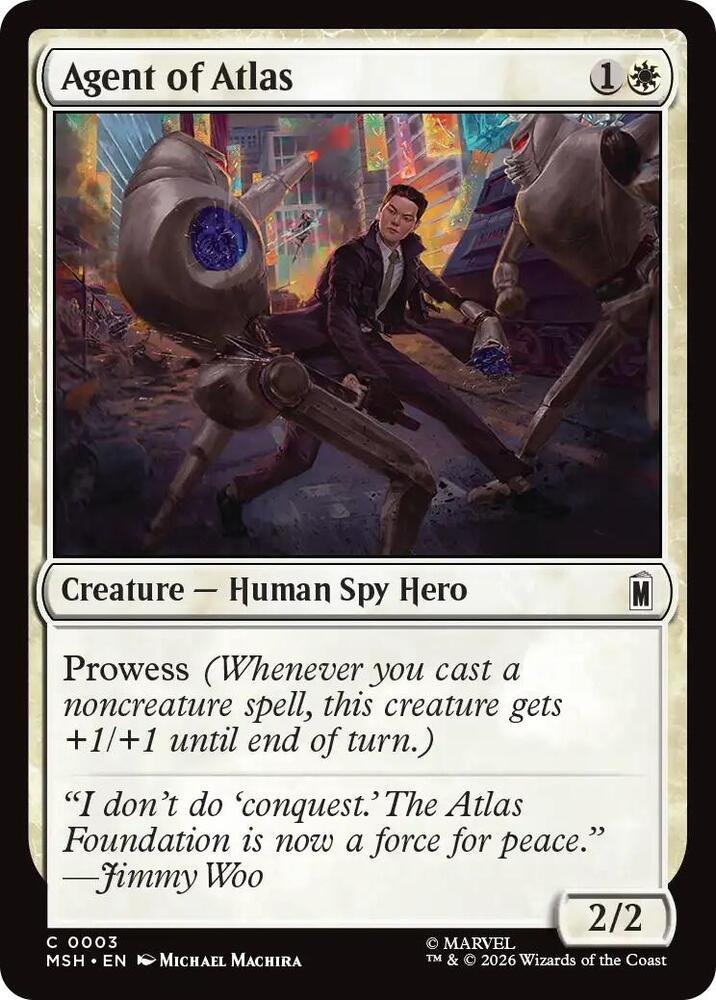
Agent of Atlas — A clean two-drop with Prowess, which is exactly what this deck wants. Cheap Prowess creatures are the backbone of the archetype because they let you start applying pressure early and make your cheap spells matter.
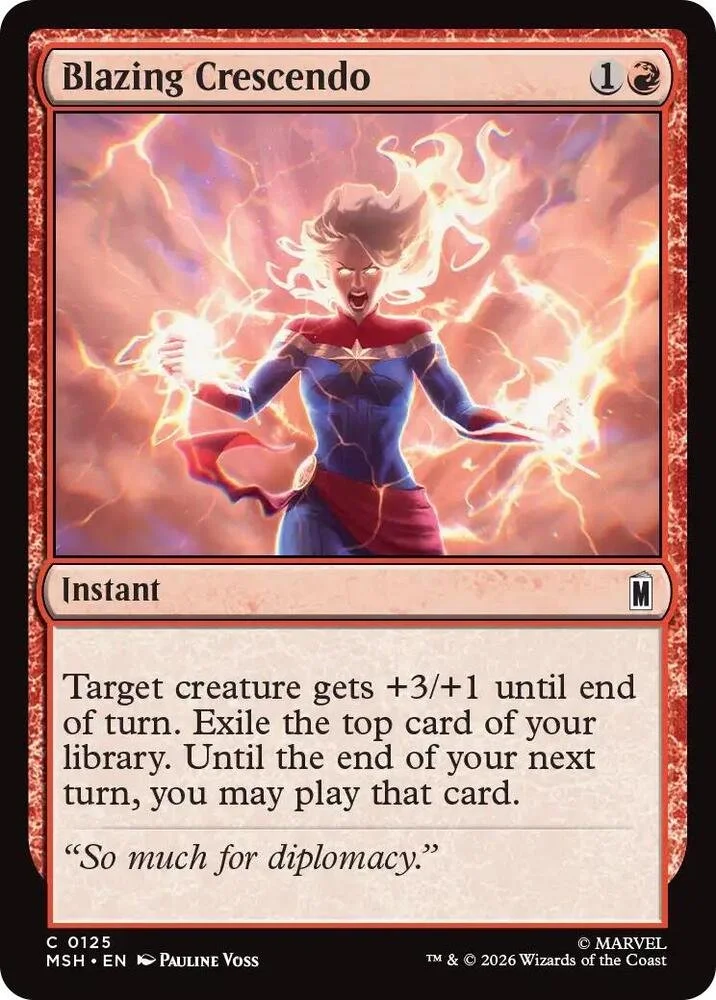
Blazing Crescendo — A great buff spell that also helps with card advantage. Combat tricks are already good in Prowess decks because they trigger your creatures, but replacing itself makes Blazing Crescendo even better. It helps you win combat without running out of gas.
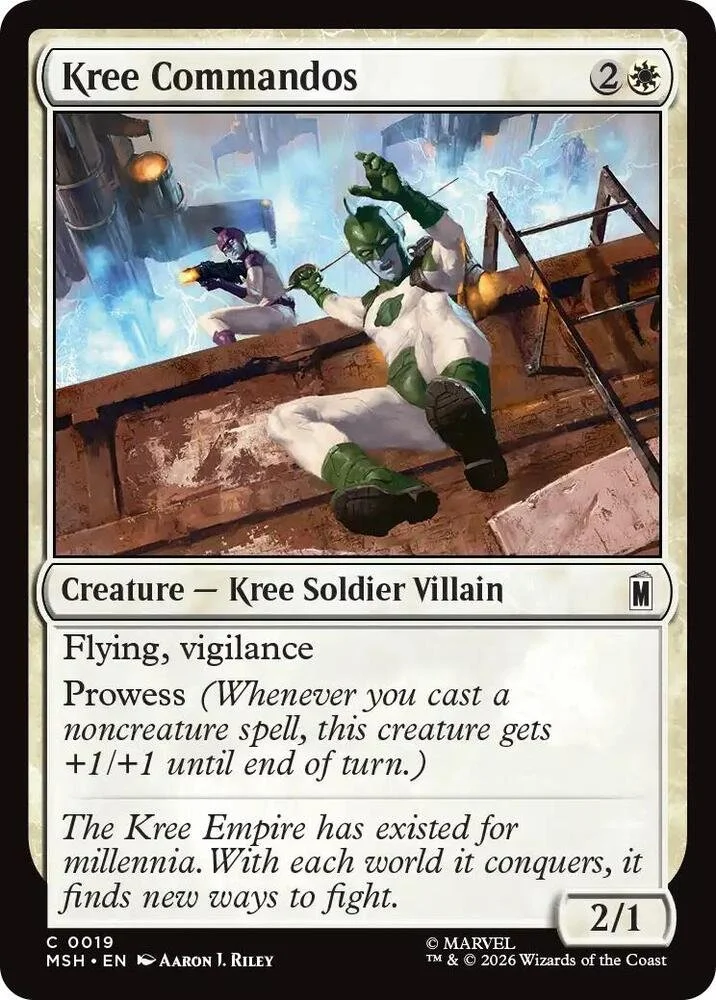
Kree Commandos — A strong common for this archetype because it has flying, vigilance, and Prowess for only three mana. That combination makes it a great attacker and blocker, and flying gives Boros a way to keep damage moving even if the ground gets clogged.
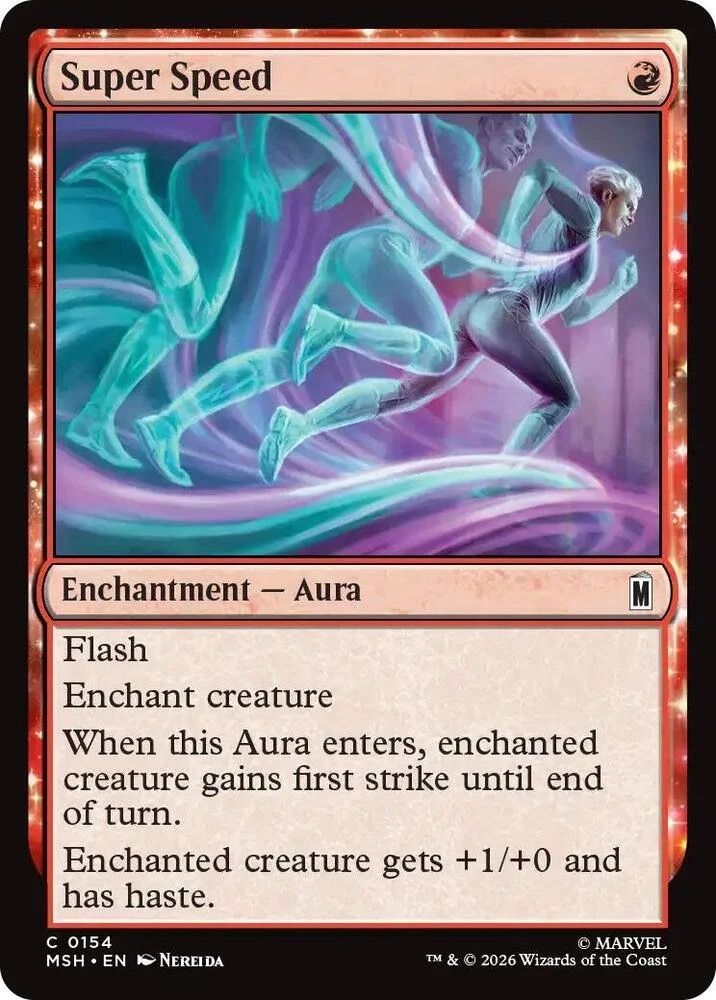
Super Speed — A one-mana aura with flash, which is exactly the kind of cheap noncreature spell Boros Prowess wants. It can trigger Prowess at instant speed, create surprise combat math, and help your creature push damage through.
Best Uncommon Cards for Boros Prowess
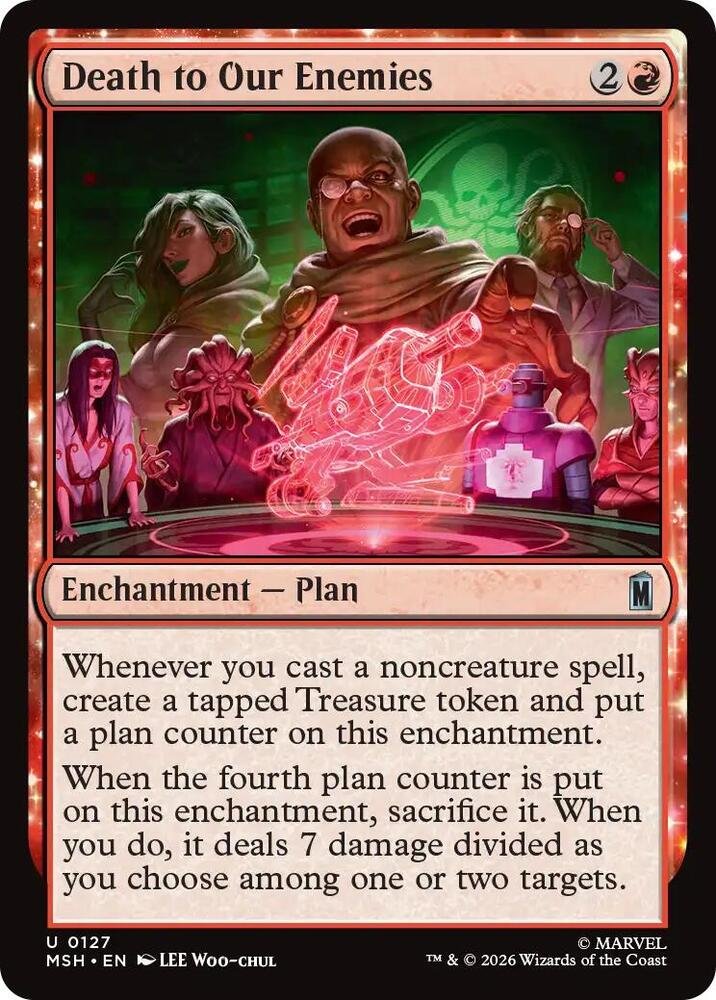
Death to Our Enemies — A Plan that rewards you for casting noncreature spells by creating Treasure tokens. Then, once the Plan pops, it deals seven damage divided between up to two creatures. That gives Boros both mana acceleration and a strong removal payoff later, all while supporting the noncreature spell plan.
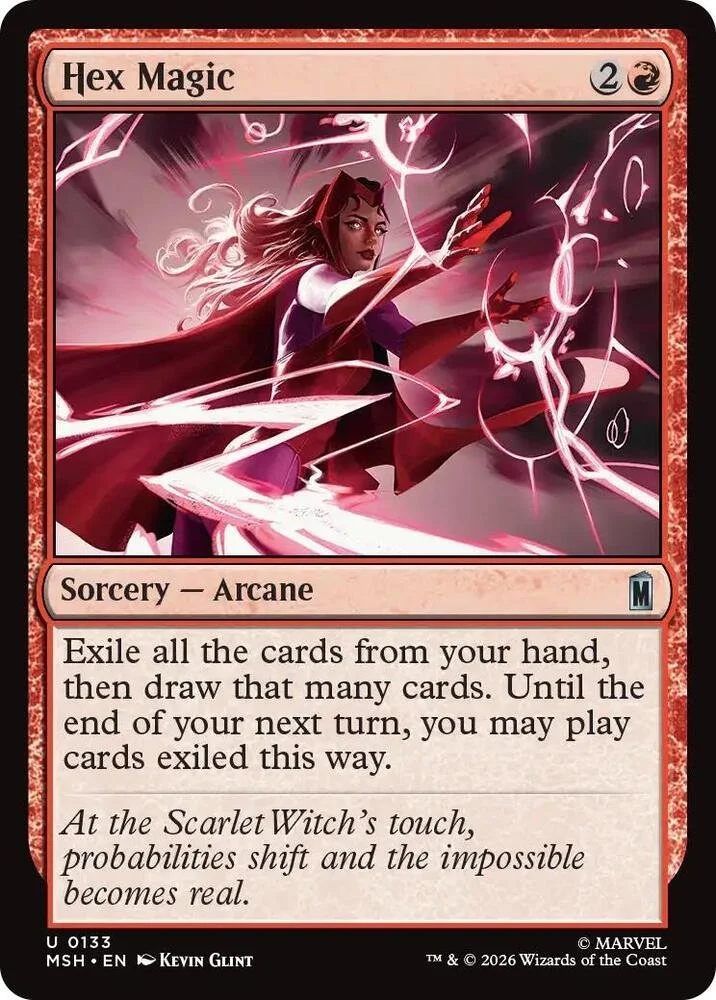
Hex Magic — An excellent card advantage spell for this archetype. Boros Prowess needs ways to keep cards flowing because aggressive spell decks can empty their hands quickly. Hex Magic helps reload while also triggering Prowess.
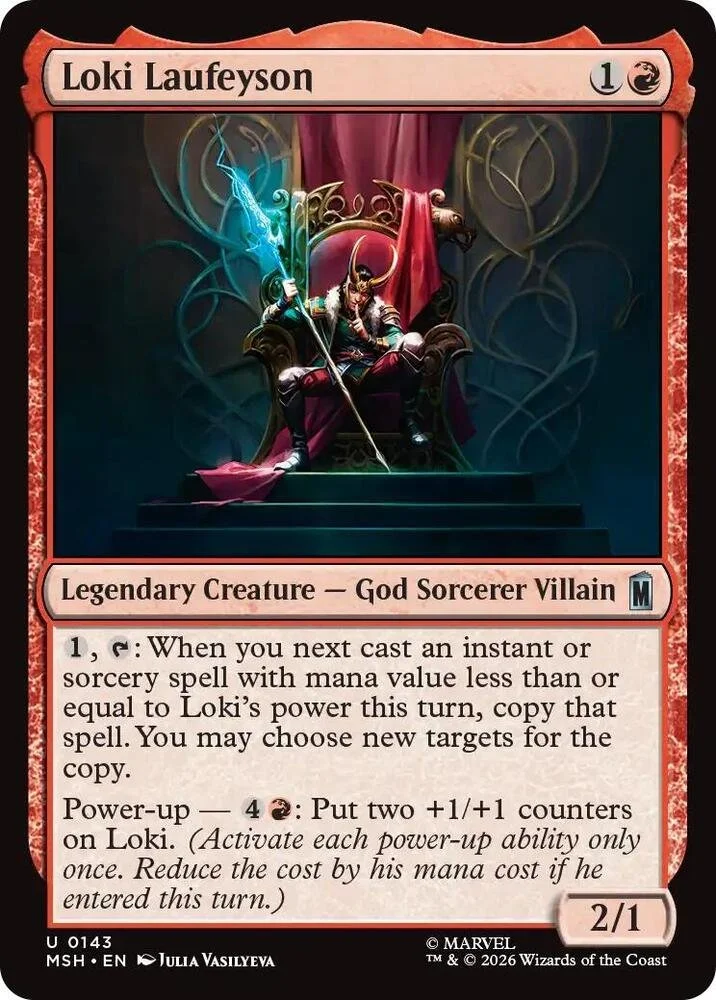
Loki Laufeyson — A very strong spell payoff because he can copy instants and sorceries. In Boros Prowess, copying a key combat trick or removal spell can lead to massive swings, especially if you already have multiple Prowess creatures on the battlefield.
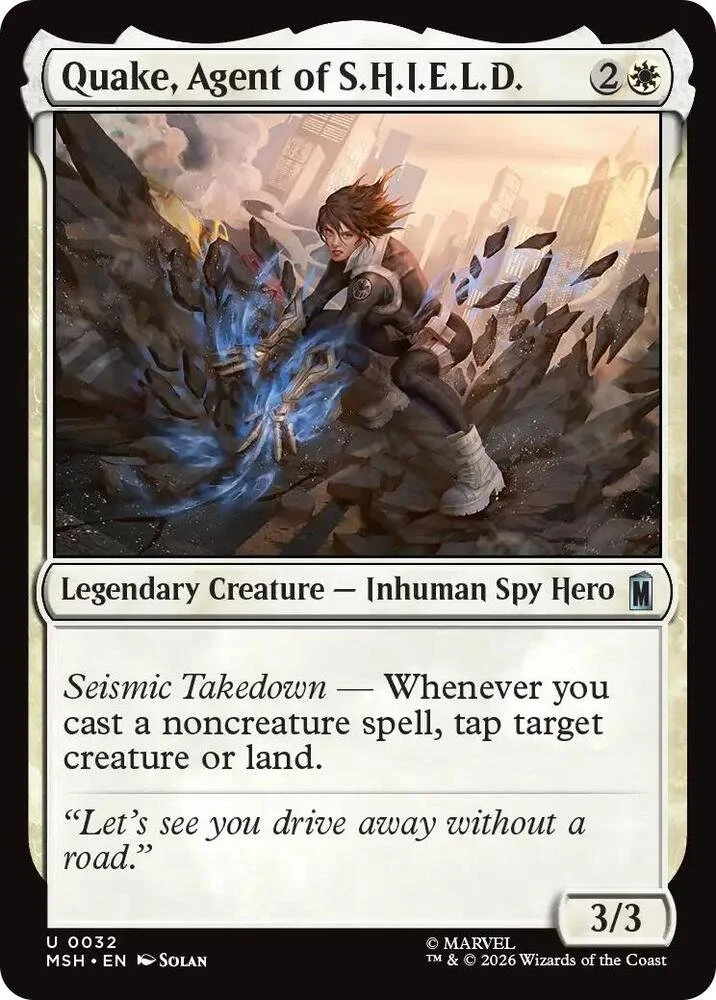
Quake, Agent of S.H.I.E.L.D. — A great tempo card for Boros because whenever you cast a noncreature spell, you can tap target creature. That helps clear blockers, push damage, and make your attack steps much harder for your opponent to manage.
Best Rare and Mythic Cards for Boros Prowess
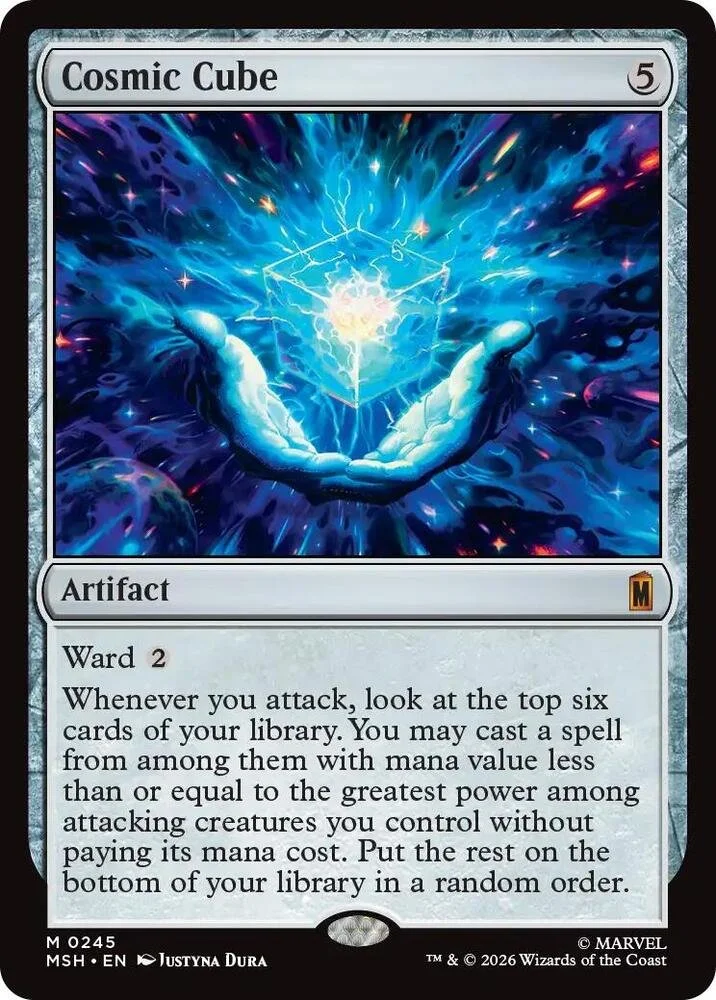
Cosmic Cube — An absolute bomb for Boros Prowess. If you have already triggered Prowess, your creatures are going to be stronger, and Cosmic Cube can let you cast a free spell to keep the chain going. This is the kind of card that can create a massive swing turn and potentially end the game.
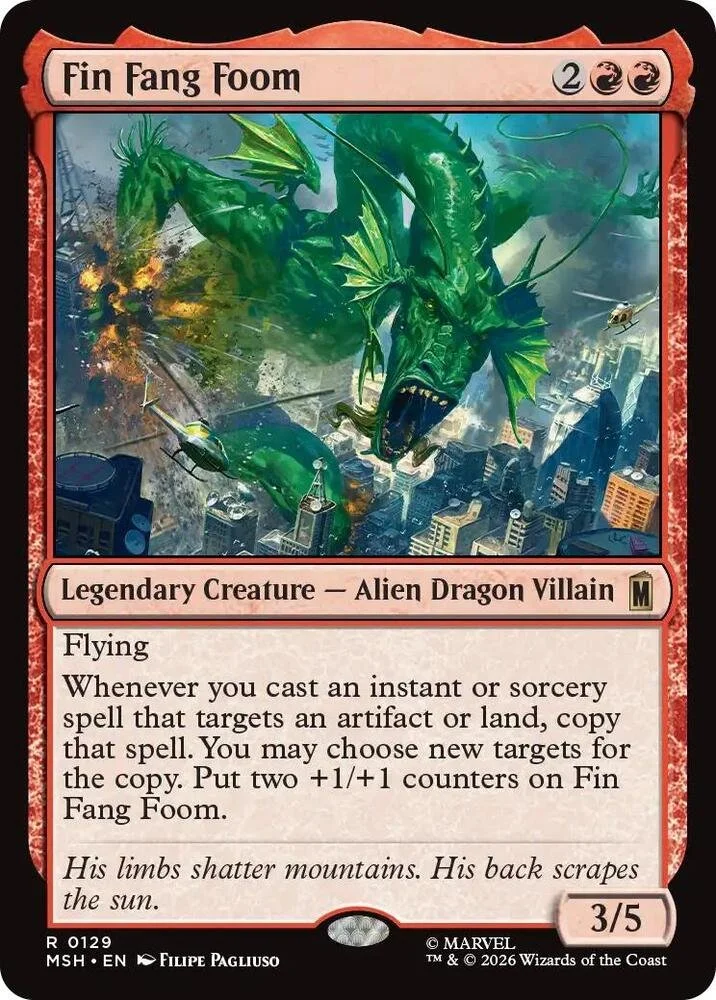
Fin Fang Foom — A big payoff that can copy instants and sorceries that target artifacts or lands. It is not the cleanest Prowess card in every deck, but if your build has the right spells, it can create some very powerful lines.
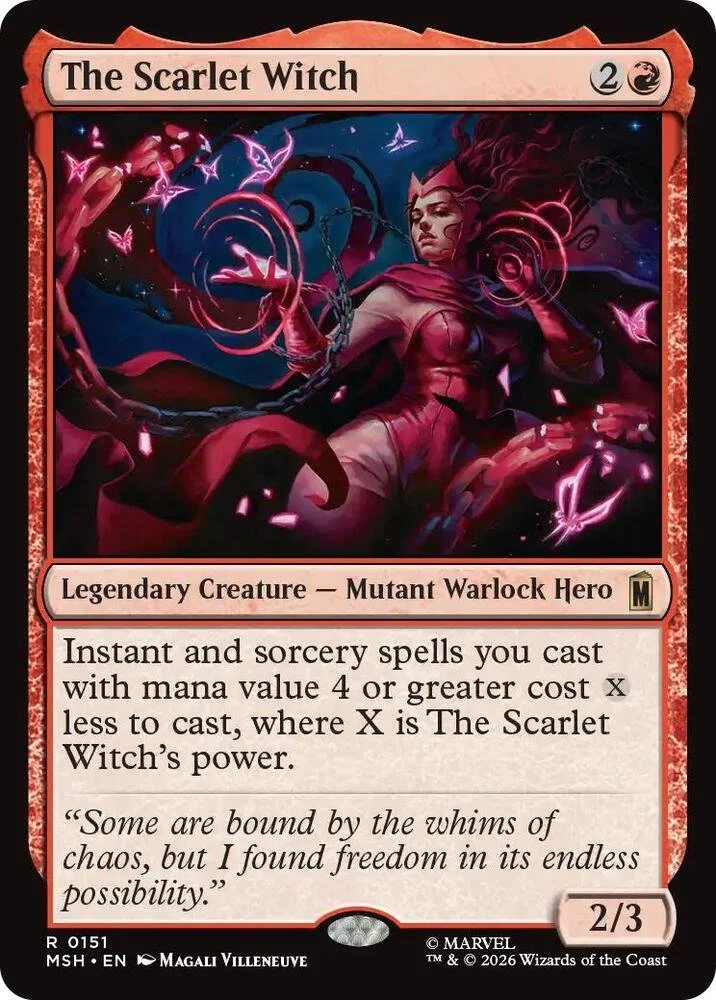
The Scarlet Witch — A strong late-game payoff that makes expensive spells cost less based on her power. In a Prowess deck, that is especially interesting because you can increase her power with noncreature spells and then use that to cast bigger spells for cheaper. She gives Boros a way to have explosive turns even later in the game.
Simic / Green-Blue — +1/+1 Counters
Simic is doing classic Simic things in Marvel Super Heroes: creatures, growth, and +1/+1 counters.
We have seen similar versions of this archetype recently, whether it was Increment in Strixhaven or Mutagen in TMNT. This time, the counter strategy is built more around creature abilities, combat value, and a little bit of Power-Up support. You are still trying to make your creatures bigger than your opponent’s creatures, but the way you get there is through repeatable counter placement and cards that reward you whenever counters are added.
Game Plan
Simic Counters wants to build a board, start placing +1/+1 counters, and let those counters snowball into bigger threats.
This is not a tricky archetype. You are playing creatures, growing them over time, and eventually stomping over your opponent with brute force. The strength of Simic is that your creatures can start as reasonable bodies, then become much harder to deal with as the game goes on.
The basic plan looks like this:
Play efficient creatures.
Put +1/+1 counters on your best threats.
Trigger cards that reward counter placement.
Use Power-Up or creature abilities to keep growing your board.
Win through bigger creatures and better combat.
The best versions of this deck will have creatures that either place counters or reward you for placing counters. Once those pieces start overlapping, your board can get out of hand very quickly.
Draft Priorities
For Simic, your biggest priority is finding cards that place counters repeatedly. One-time counter effects are fine, but repeatable counter engines are what make the archetype feel dangerous.
Your main priorities are:
Creatures that place +1/+1 counters.
Cards that reward you for placing counters.
Repeatable counter engines.
Creatures with trample, flying, or other forms of evasion.
Power-Up creatures that naturally grow larger.
Combat tricks or protection for your biggest threats.
The important thing is making sure your counters actually matter. A big creature is great, but a big creature with trample, flying, vigilance, or protection is much better. Simic can sometimes run into the problem of making one huge creature that still gets chump blocked, so evasion and ways to push damage are important.
Win Condition
Simic wants to win by making creatures too big for your opponent to handle.
You are using +1/+1 counters to grow your board turn after turn, then forcing your opponent into bad blocks. If your counter engines stay alive, your creatures can quickly outscale the rest of the table. Eventually, your opponent runs out of clean answers, and your oversized creatures start ending the game.
This archetype is not subtle, but it does not need to be. Simic wants to build the biggest board, make combat impossible for your opponent, and close the game with creatures that keep getting scarier every turn.
Simic Key Multicolor Cards
Quick note: Moon Girl and Devil Dinosaur is a very good card, even if it does not directly synergize with +1/+1 counters. You should still be happy to run it if you are in these colors. Absorbing Man is also strong, though his copy ability only works with artifacts, enchantments, or lands, so he is not a direct counters payoff either.


Ant-Man, Colony Commander — The Simic signpost uncommon, and exactly what this archetype wants. Whenever he attacks, you can pay one mana to put a +1/+1 counter on a creature. Then, once per turn, whenever you put one or more counters on a creature, you may create a 1/1 Insect token. That gives you both counter growth and board development, which is a great combination for Simic.
The Astonishing Ant-Man — A strong payoff for putting counters on him. Whenever you put a +1/+1 counter on The Astonishing Ant-Man, you draw a card, which turns your counter effects into card advantage. Then, if needed, you can remove counters from him to create 1/1 Insects. That gives you flexibility between growing one big threat and spreading your board wider.
Best Common Cards for Simic Counters
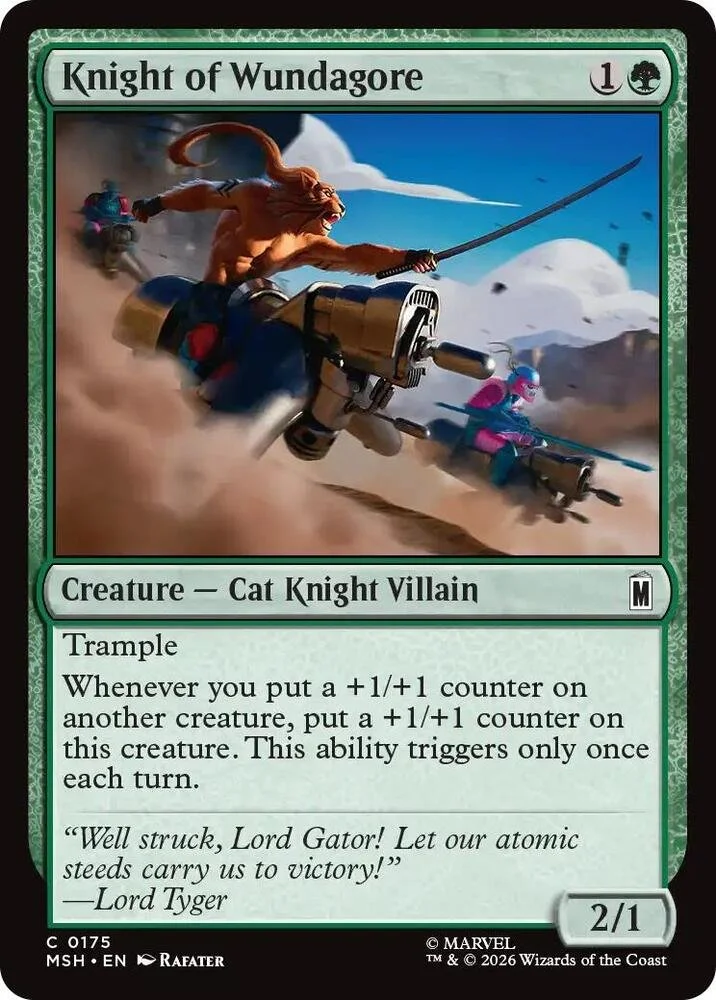
Knight of Wundagore — A strong common for the archetype because it gets a +1/+1 counter whenever you put a counter on another creature for the first time each turn. That means it rewards you for doing what Simic already wants to do, and over time it can become a serious threat without needing much extra work.
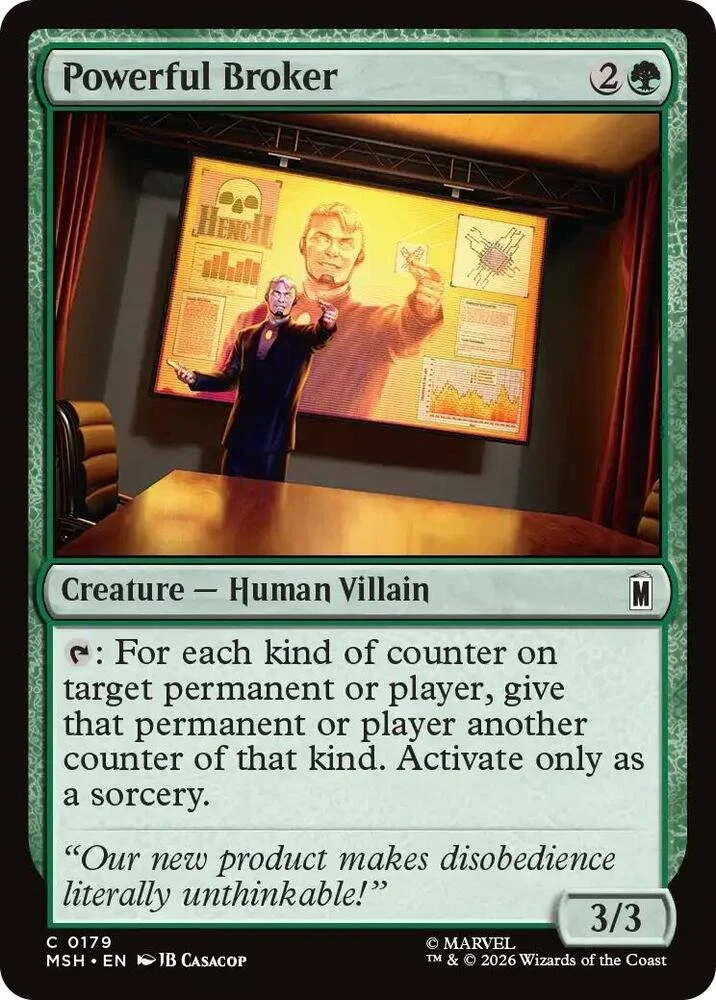
Powerful Broker — Essentially gives you a free proliferate-style ability, which is very useful in a counters deck. Once you already have counters on your creatures, Powerful Broker helps grow your board even further and makes every counter matter more.
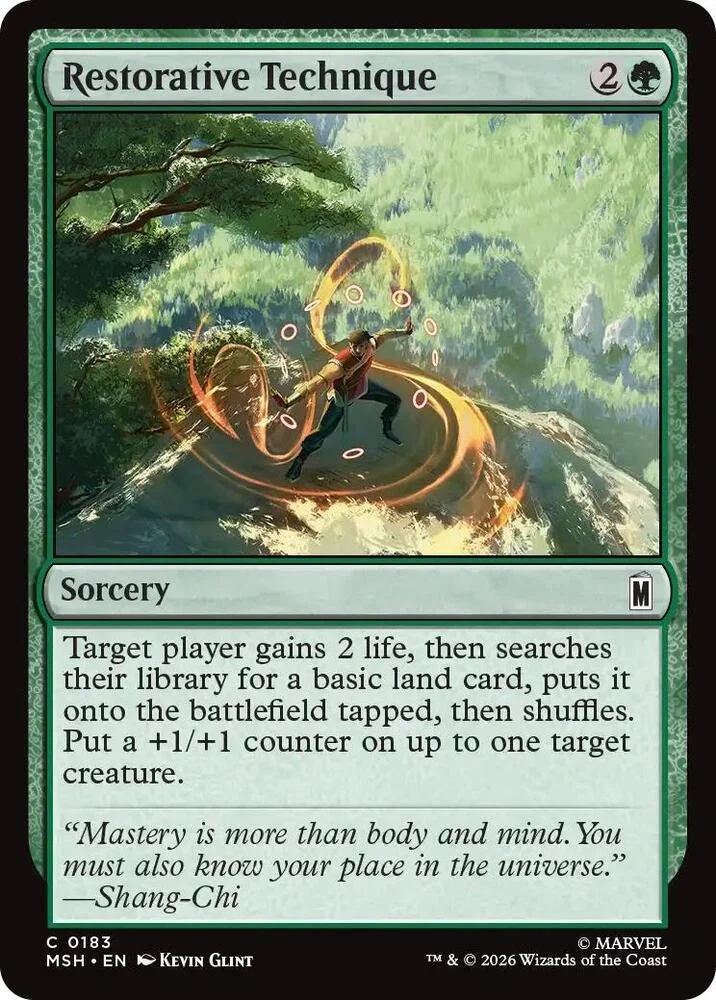
Restorative Technique — A flexible card that gives you lifegain, ramp, and counters all in one package. That is a lot of value for Simic because it helps you stabilize, hit bigger plays, and keep developing your board at the same time.
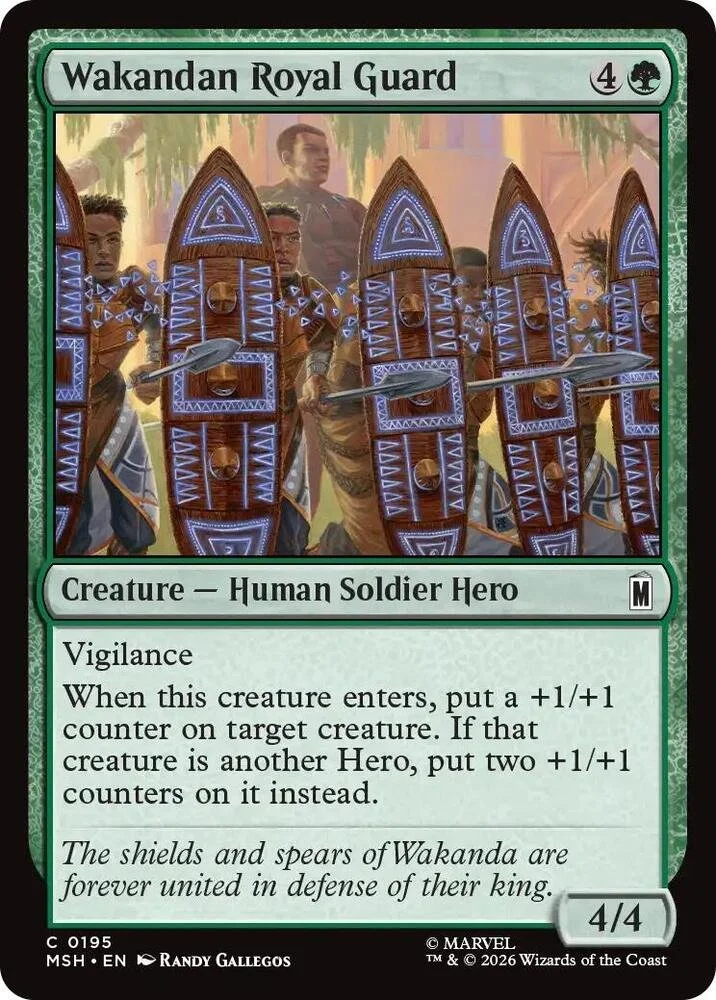
Wakandan Royal Guard — A 4/4 with vigilance that puts a +1/+1 counter on a target creature when it enters, or two counters if that creature is a Hero. This is a great common because it gives you a solid body and immediately supports the counter plan. Vigilance also matters because it lets your bigger creatures stay relevant on both offense and defense.
Best Uncommon Cards for Simic Counters
There are a lot of really good green uncommon creatures in this set, so these are some of the standouts for Simic Counters.
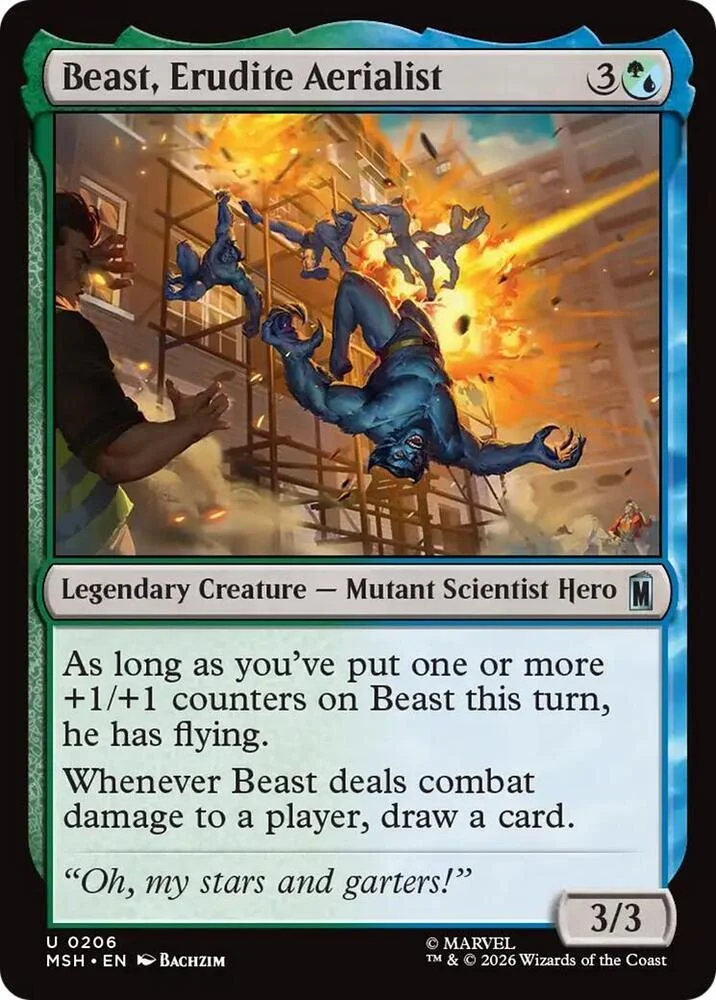
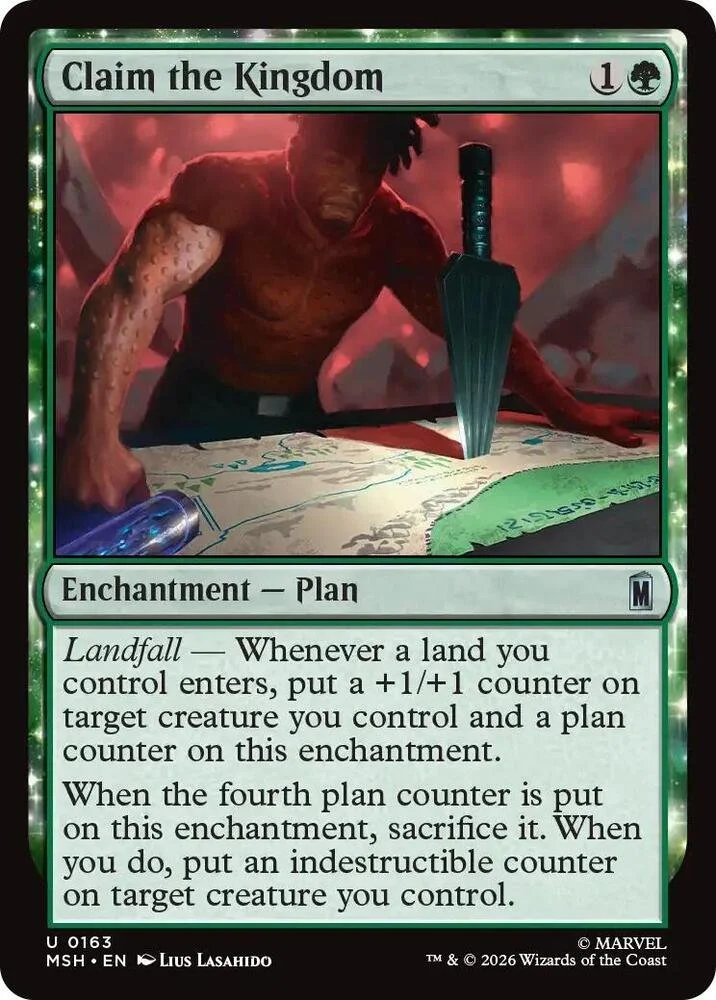
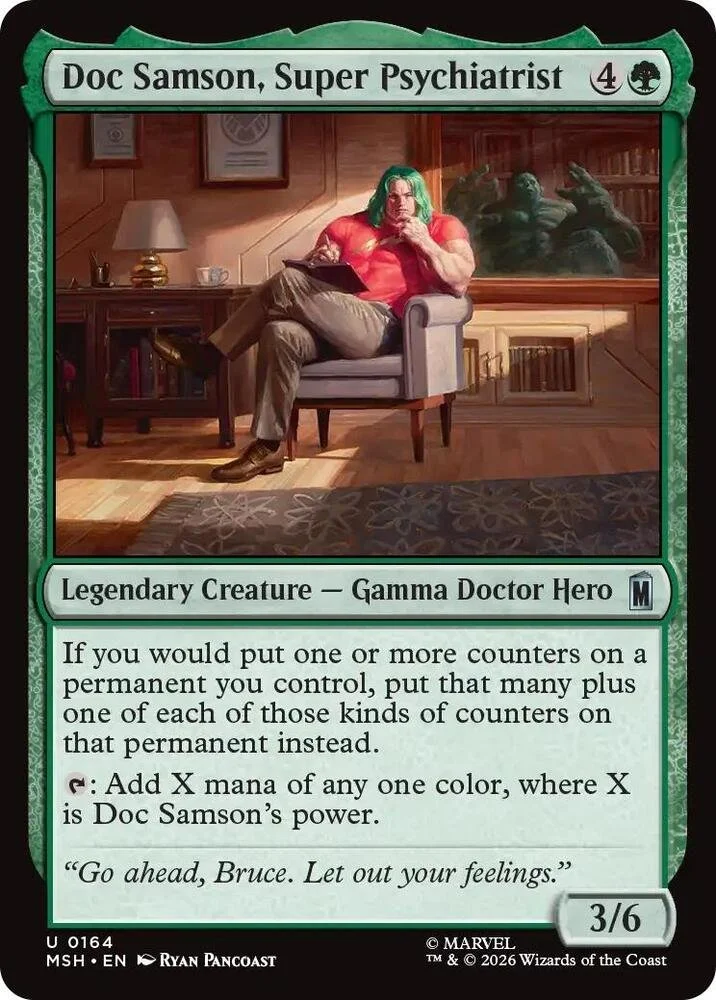
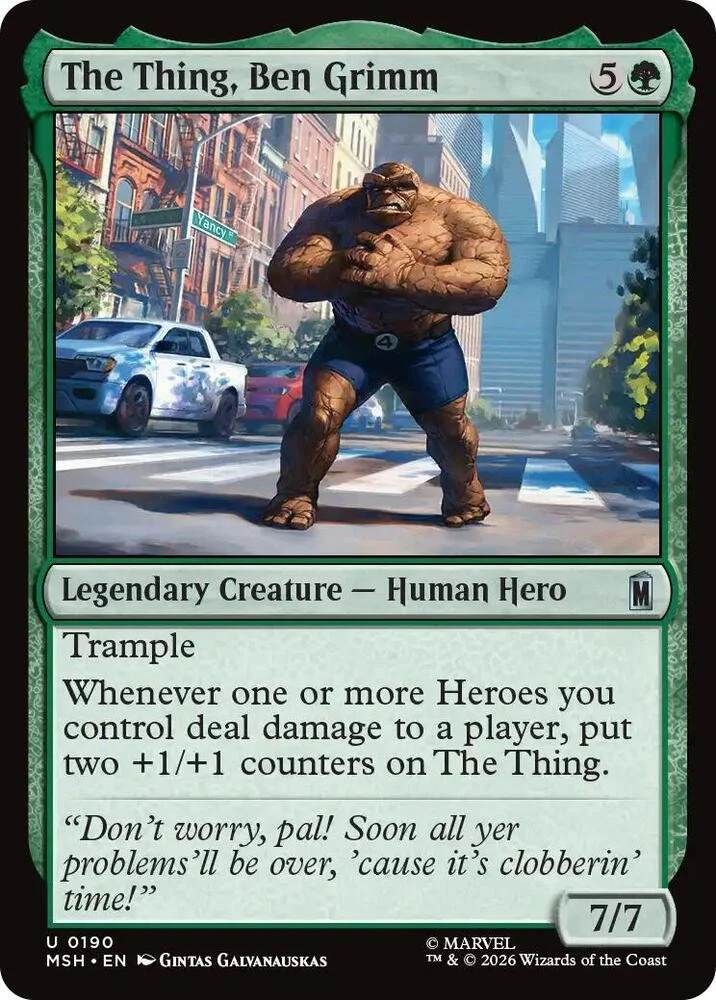
Beast, Erudite Aerialist — Gains flying as long as you have put a counter on him this turn, which is exactly the kind of evasion this archetype needs. Simic can make big creatures easily, but giving those creatures flying helps actually close the game.
Claim the Kingdom — A Plan that puts a +1/+1 counter on a target creature whenever you trigger landfall. Then, once the Plan completes, it gives a creature an indestructible counter. This is a strong long-game card for Simic because it grows your board over multiple turns and eventually gives one of your threats real staying power.
Doc Samson, Super Psychiatrist — A very strong counter payoff. He adds an additional counter whenever you put counters on a creature, which can quickly snowball your board. He is also a mana dork that taps for mana equal to his power, meaning the bigger he gets, the more he ramps you into your biggest plays.
The Thing, Ben Grimm — A massive threat that can get out of control quickly. He is already a 7/7 with trample, and he gets two +1/+1 counters whenever a Hero deals combat damage to a player. If your deck can reliably connect with Heroes, The Thing becomes terrifying very fast.
Best Rare and Mythic Cards for Simic Counters
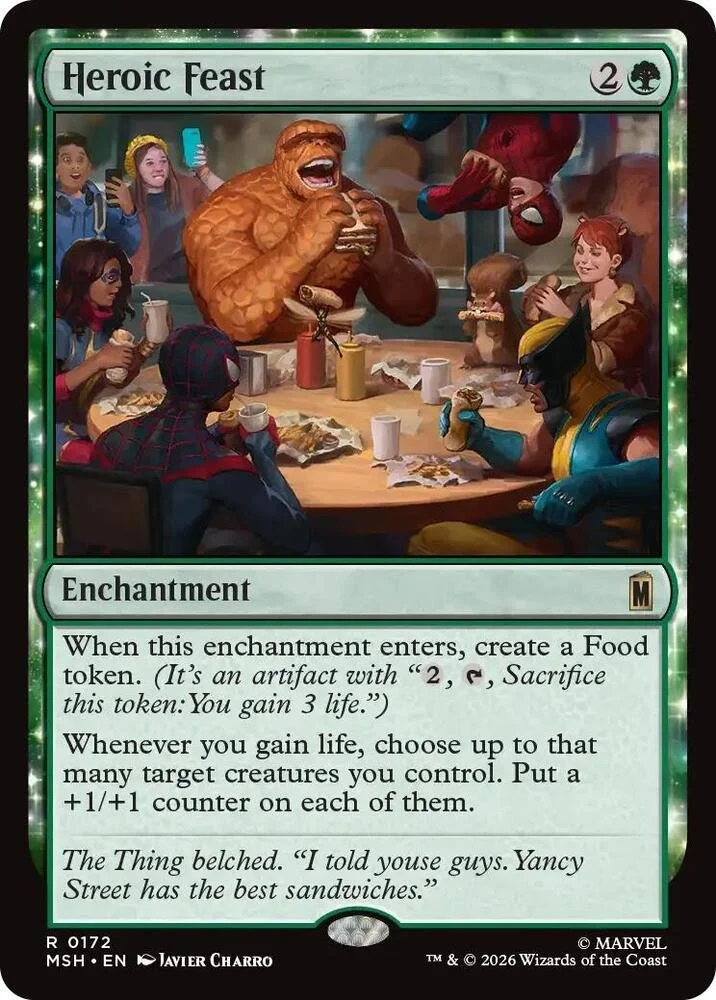
Heroic Feast — A strong payoff if your deck has enough lifegain to support it. Whenever you gain life, you choose that many creatures and put +1/+1 counters on them. There appears to be enough lifegain in the set to make this viable, and at the very least, Heroic Feast creates a Food token by itself. In the right Simic build, this can turn incidental lifegain into a huge board-wide counter engine.
Best Removal and Interaction Cards for Limited in Marvel Super Heroes
One of the most important parts of any Limited format is removal and interaction. You can have the flashiest rare in your deck, but if you cannot answer your opponent’s best cards, you are going to have a rough time.
Marvel Super Heroes has a pretty wide range of interaction across all five colors. Some colors get clean removal, some get combat tricks, some get bounce or counterspells, and some rely on fight effects or damage-based removal. Here are some of the best interaction cards to keep an eye on in Draft and Sealed.
White
White is well known for having removal of all kinds, and Marvel Super Heroes gives it a solid mix of combat-based removal and exile effects.
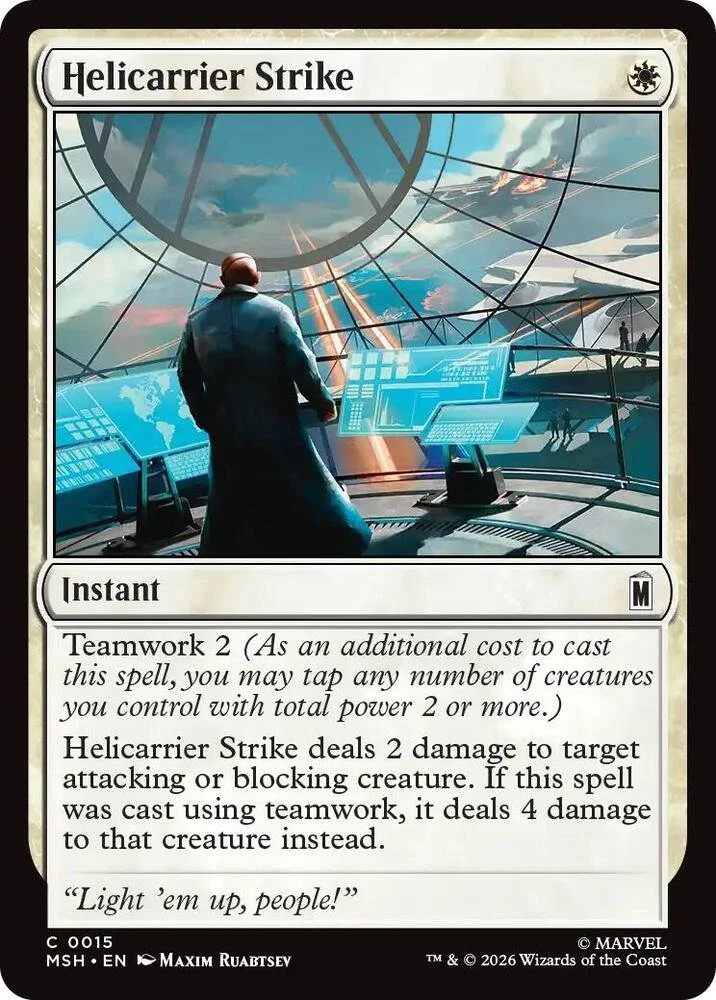
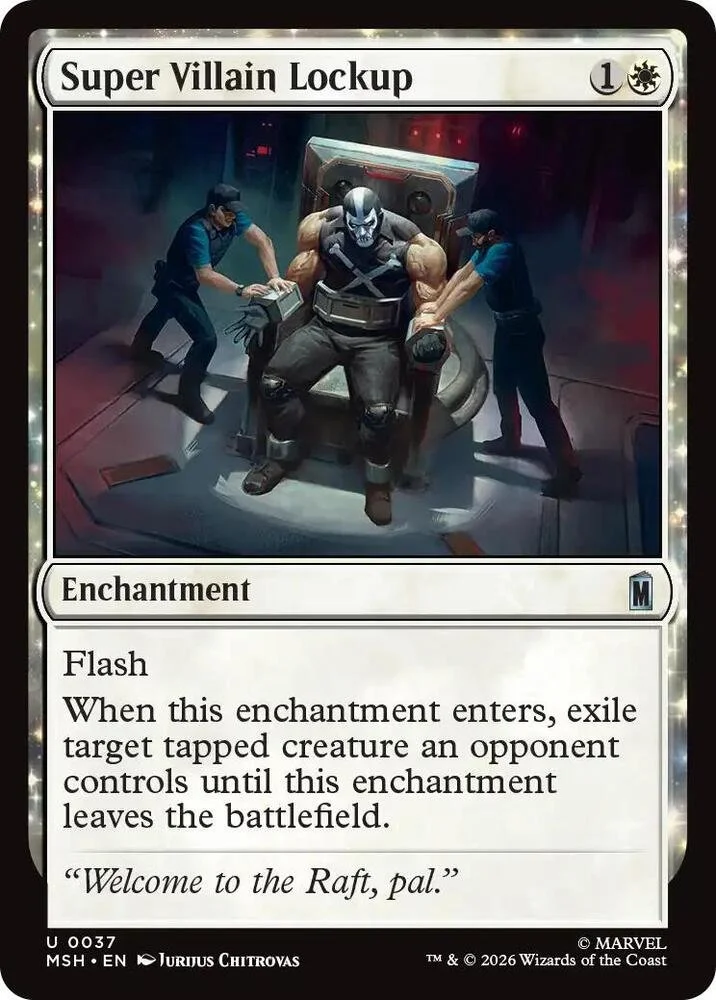
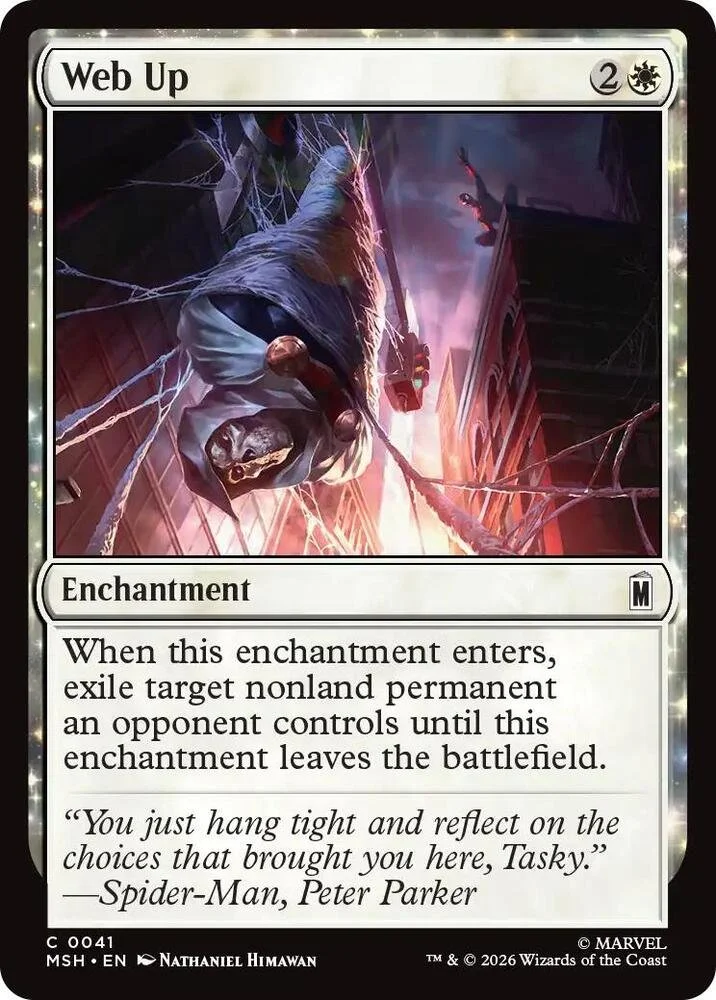
Helicarrier Strike — A Teamwork 2 instant that deals 2 damage to an attacking or blocking creature, or 4 damage instead if you paid the Teamwork cost. This is especially good in Azorius, where Captain America can help offset the tapping cost, but it also works nicely in Orzhov since that deck often attacks with only one creature anyway.
Super Villain Lockup — A generically strong enchantment removal spell that exiles a creature until Super Villain Lockup leaves the battlefield. The main warning here is that there does seem to be a decent amount of enchantment removal in the set, so this may not always be a permanent answer. Still, it is clean interaction and exactly the kind of card White Limited decks want.
Web Up — Reprinted from Marvel’s Spider-Man, Web Up essentially fills the same role as Super Villain Lockup. It is a useful way to remove a problem creature from combat and buy yourself time, especially in decks that care more about tempo or board control.
Blue
Blue does not usually get direct removal, but we all know what Blue is good at: slowing the opponent down, bouncing threats, blanking abilities, and countering key spells.
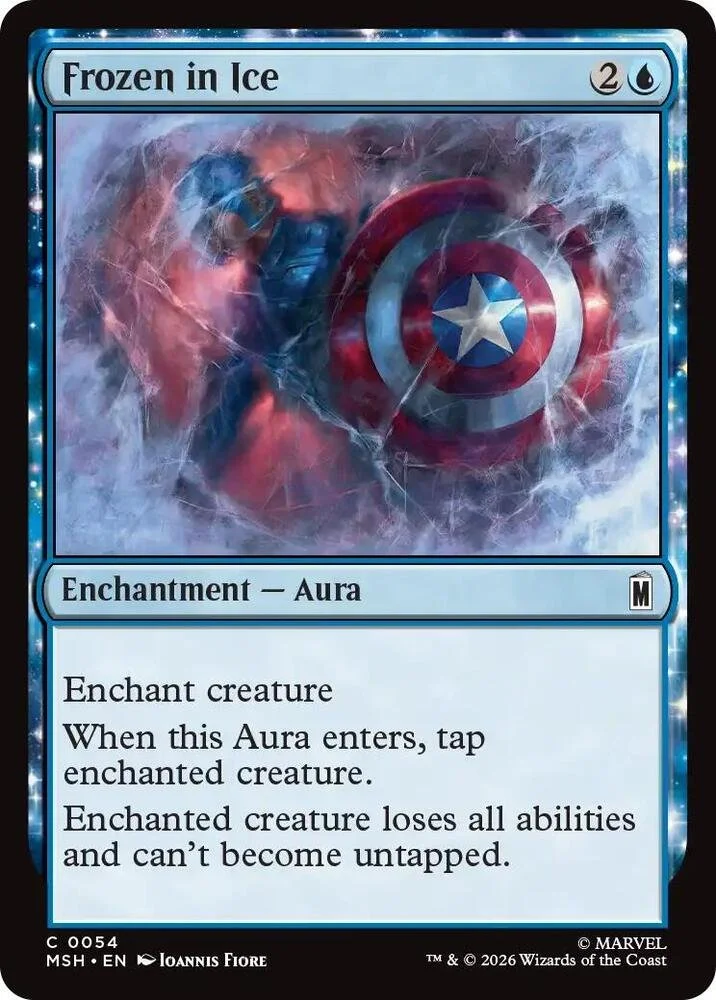
Frozen in Ice — A generically good aura that taps the enchanted creature and removes all of its abilities until the aura leaves the battlefield. This is not hard removal, but it can shut down a major threat, especially if that creature relies on abilities to be dangerous.
Trickster’s Stratagem — A strong bounce-style spell that works well in Dimir and Simic. It forces your opponent to put a creature into their library second from the top or bottom, then one of your creatures connives. That gives you both tempo and card filtering, which makes it more than just a simple bounce spell.
We Say Thee Nay! — A really strong Azorius instant with the Arcane subtype, which is kind of crazy. With Teamwork 2, this counters a spell unless its controller pays 2, or 4 if the Teamwork cost was paid. That flexibility makes it a very real piece of interaction, especially if you can hold up creatures to pay the Teamwork cost.
Black
While Blue may struggle with straight-up removal, Black absolutely does not. Black has some of the cleanest ways to kill creatures in Limited, and Marvel Super Heroes gives it a strong removal package.
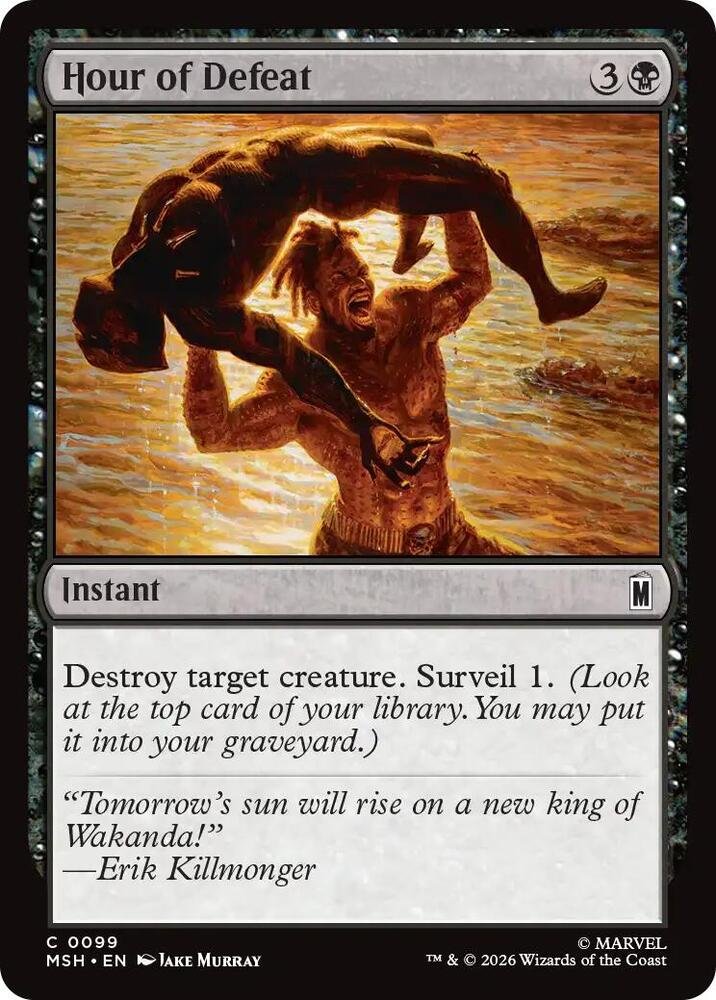
Cruel Alliance — A Teamwork 2 removal spell that exiles a creature with mana value 3 or less. If you paid the Teamwork cost, you also gain 3 life. This is probably best in Orzhov, but it can work perfectly well in Dimir or Rakdos too. Cheap exile removal is always worth paying attention to.
Dark Deed — A simple creature debuff that gives -4/-4. In this set, that may not kill absolutely everything, but most of the time, -4/-4 is going to be a death sentence. It is clean, efficient, and exactly what Black decks want.
Hour of Defeat — An instant-speed kill spell with surveil 1 attached. That little bit of card selection matters, especially in Dimir and Golgari decks that care about the graveyard or setting up future draws. This is one of the better pieces of straightforward Black interaction.
Red
Red does not always get traditional “destroy” removal, but it definitely knows how to throw enough damage around to remove creatures. Marvel Super Heroes gives Red several strong damage-based options.
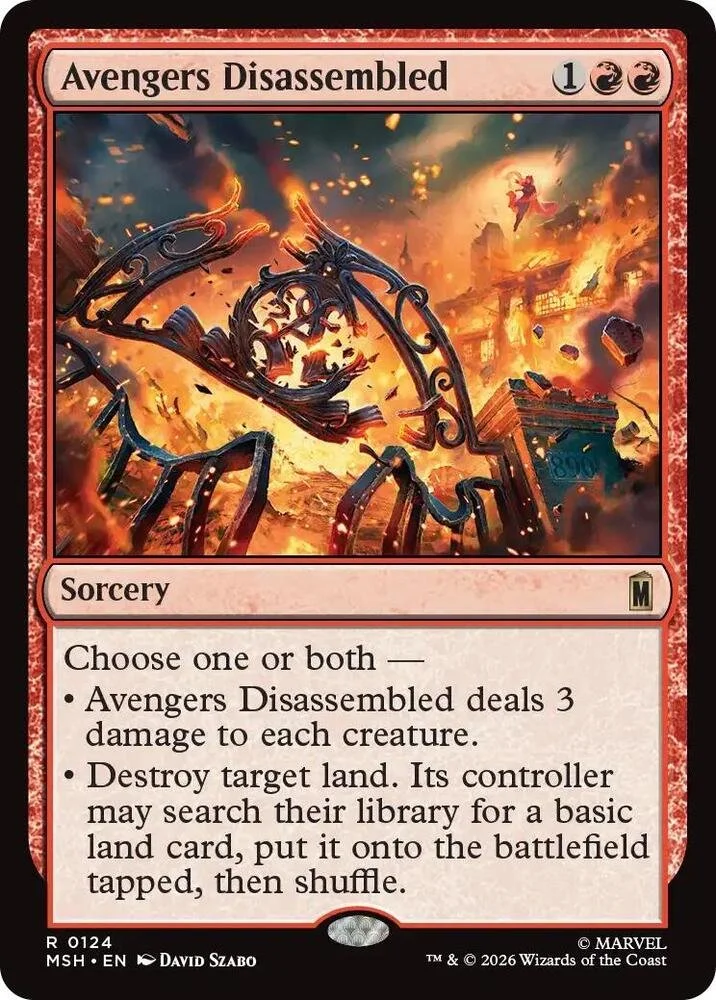
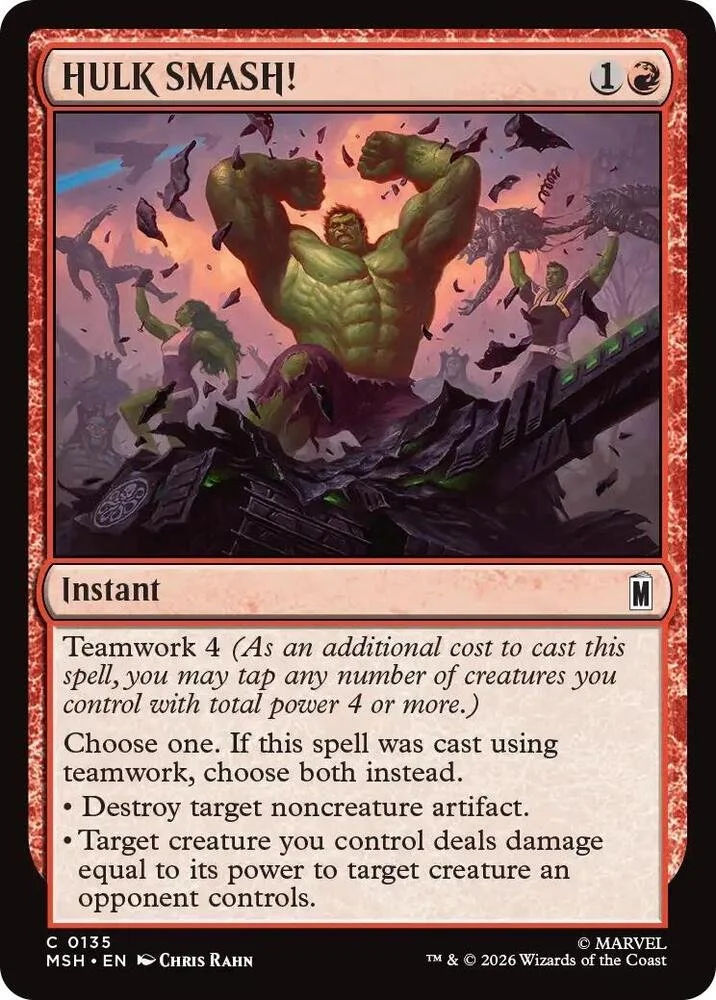
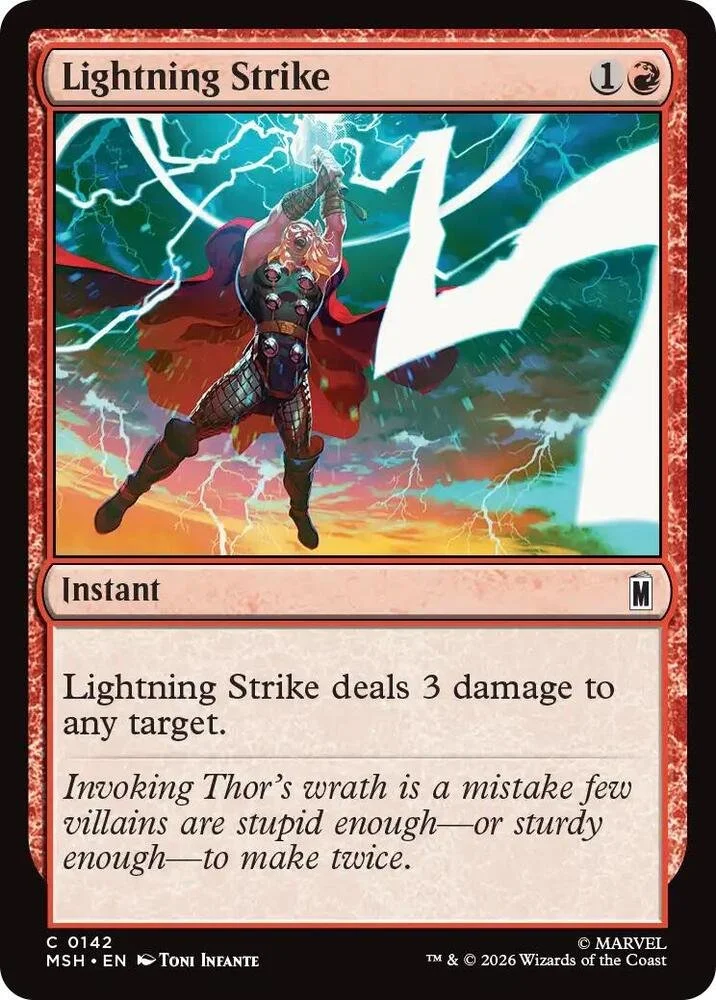
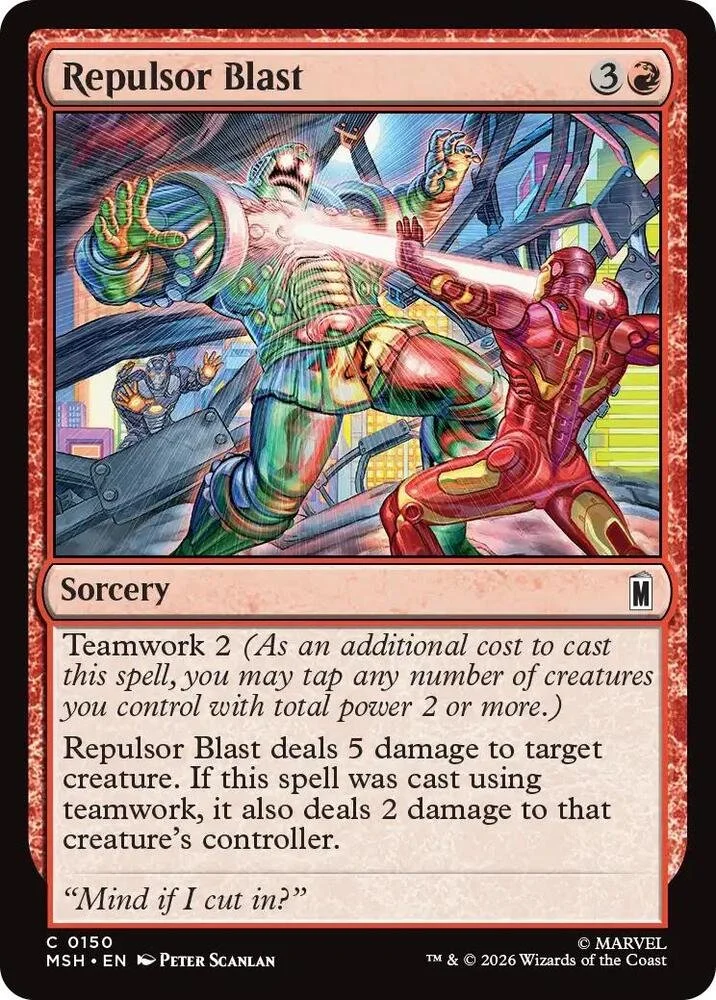
Avengers Disassembled — This card is wild. For three mana, it deals 3 damage to each creature and/or destroys a land. In Limited, a three-damage sweeper can completely reset the board against aggressive or go-wide decks. You will need to build around it carefully so you do not wipe out your own board, but the power level is absolutely there.
HULK SMASH! — A Teamwork 4 spell that can destroy a noncreature artifact, or have one of your creatures deal damage equal to its power to an opponent’s creature. If the Teamwork cost was paid, you choose both. This is especially strong in Gruul, where your creatures are already huge and can turn this into a very clean removal spell.
Lightning Strike — A classic Magic spell, and it is always good to see it. Two mana for 3 damage to any target is efficient, flexible, and reliable. It kills creatures, finishes off planeswalkers if needed, and can close out games by going face.
Repulsor Blast — A Teamwork 2 spell that deals 5 damage to a creature. If the Teamwork cost was paid, that creature’s controller is also dealt 2 damage. Five damage is enough to kill a lot of Limited threats, and the extra damage to the opponent helps aggressive Red decks keep pressure up.
Green
Green always has an interesting interaction kit. It usually relies on buff spells, fight effects, creature-based removal, and artifact or enchantment answers. Marvel Super Heroes follows that same pattern.
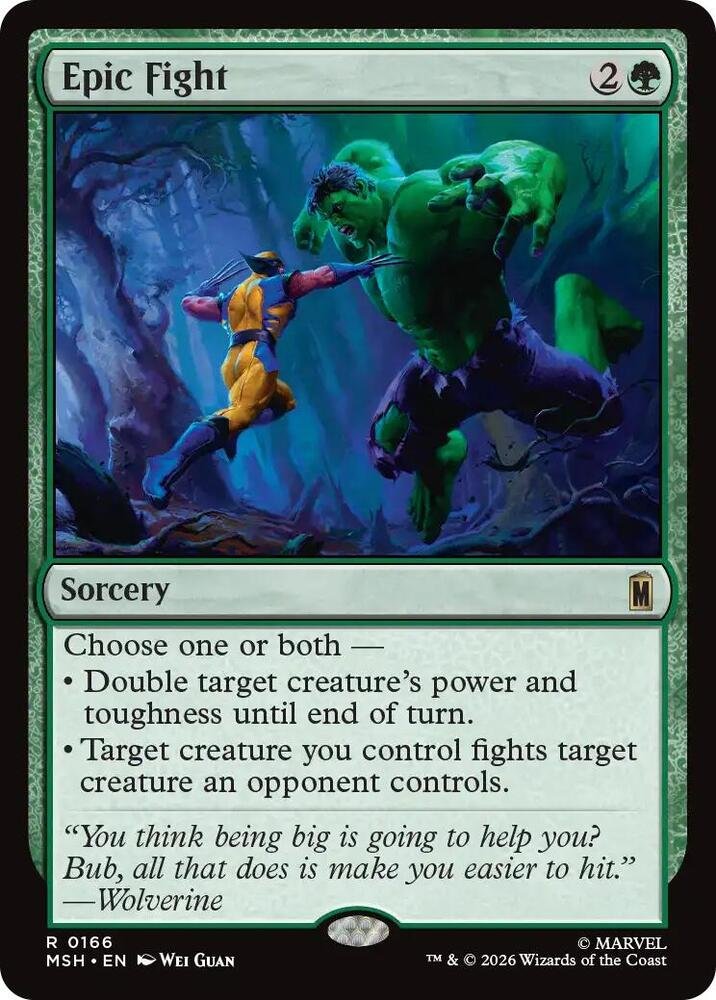
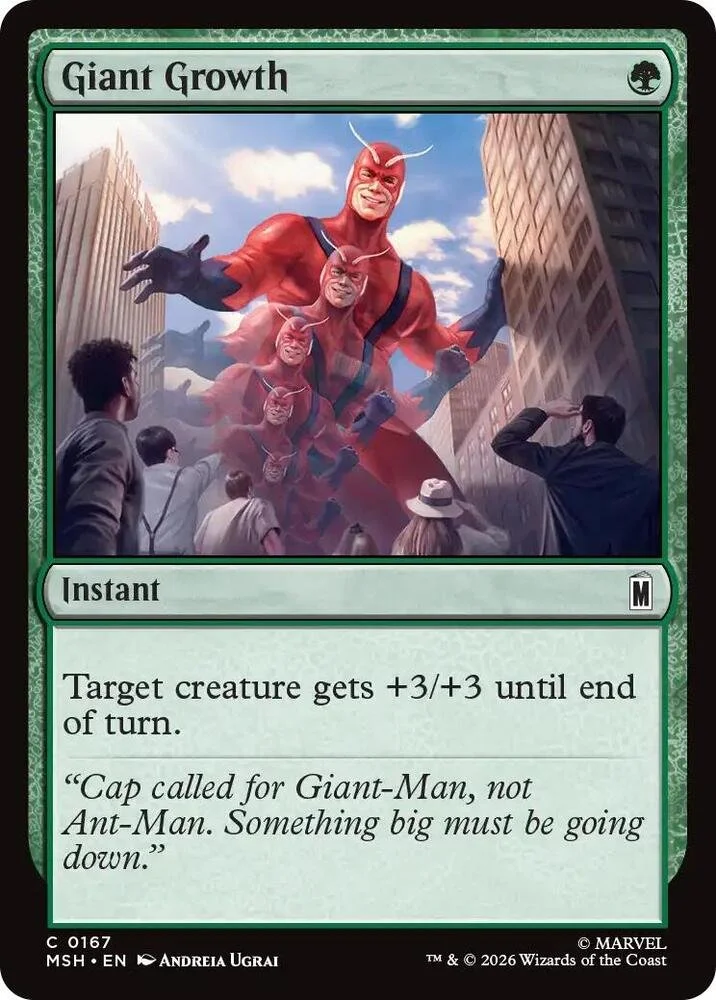
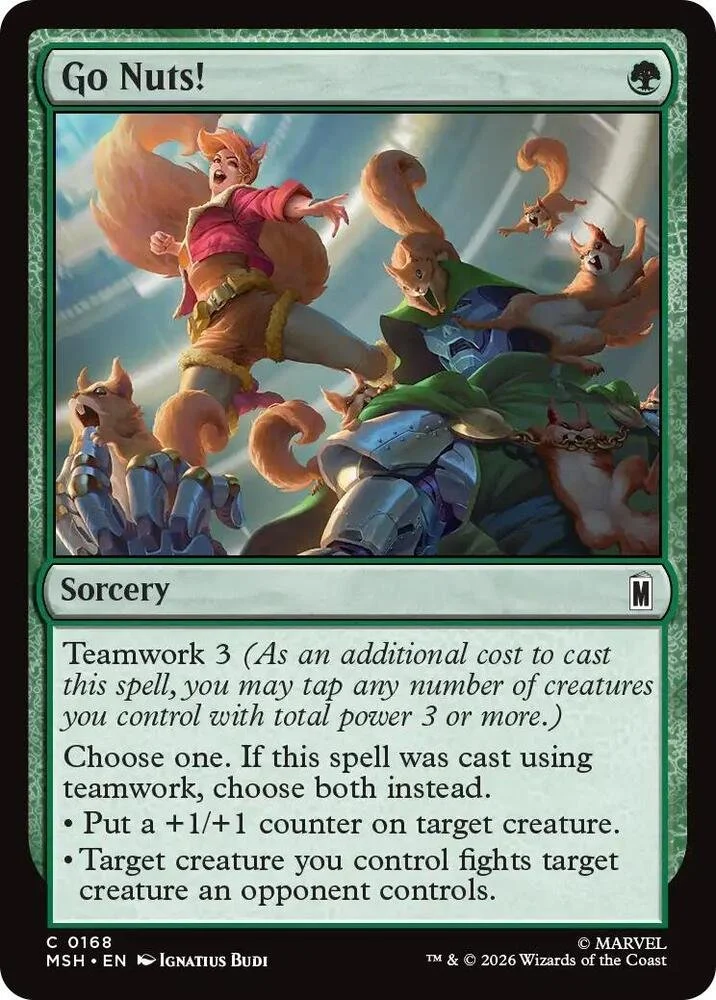
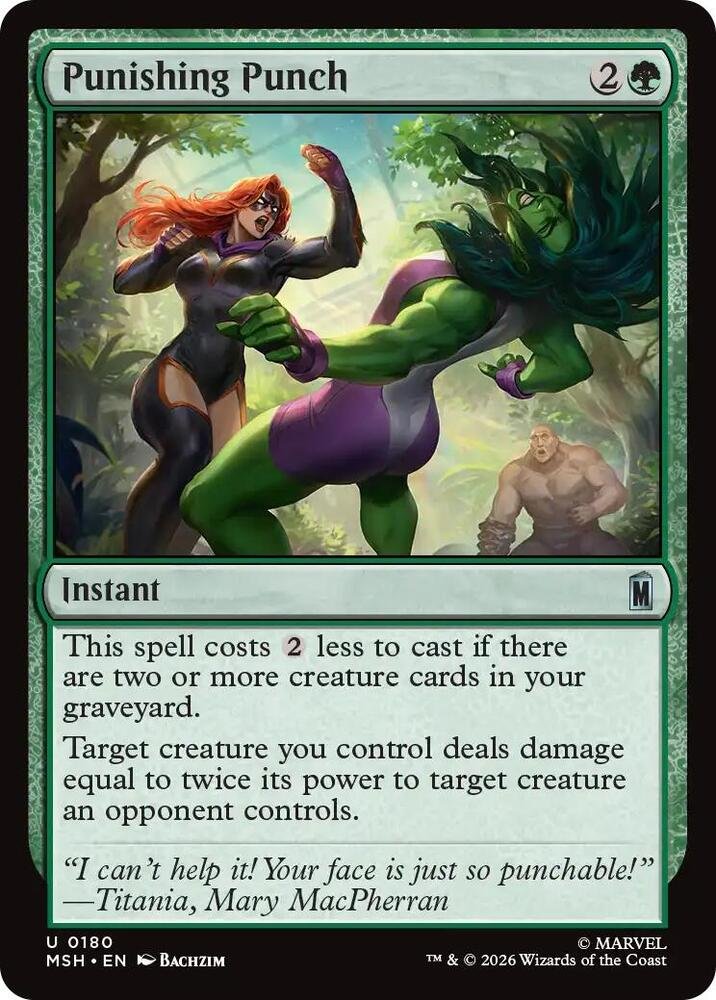
Epic Fight — A generally strong Green spell that you are going to play if you are in Green and have access to it. You can double a target creature’s power and toughness and/or have a target creature you control fight an opponent’s creature. The flexibility is the real selling point here, since it can function as a combat blowout, a removal spell, or both.
Giant Growth — Another classic Magic spell. Giving a creature +3/+3 at instant speed is simple, but it is still effective. It can win combat, push extra damage, and protect a creature from damage-based removal.
Go Nuts! — A Teamwork 3 spell that either puts a +1/+1 counter on a target creature or has one of your creatures fight an opponent’s creature. If you pay the Teamwork cost, you choose both. This is exactly the kind of card Green decks want because it grows your board while also functioning as removal.
Punishing Punch — Best in Golgari because it costs two less to cast if you have two or more creatures in your graveyard. It makes one of your creatures deal double its power to an opponent’s creature, which can take down some very large threats. In the right deck, this becomes a very efficient removal spell.
What Draft Archetype Is Best in Marvel Super Heroes?
This is always going to be subjective, especially early in a Limited format, but there are a few archetypes that stand out to me right away.
Dimir Draw Two looks like one of the smoother archetypes in the set. There is a lot of support for it, especially with Connive helping you draw extra cards, filter your hand, and set up your graveyard. Blue-Black should be fairly easy to build around because the engine is straightforward: draw your second card, trigger your payoffs, and slowly bury your opponent in value.
For newer players, I would probably recommend Simic Counters or Gruul Power-Up. Both archetypes have very clear game plans and strong creatures. Simic wants to grow its board with +1/+1 counters, while Gruul wants to power up big threats and smash through combat. Neither deck requires you to play a super complicated engine, which makes them good starting points if you are still getting comfortable with the format.
I also think Boros Prowess could end up being sneaky strong. If the format is as fast as it looks, a low-curve Red-White deck with cheap spells, efficient Prowess creatures, and combat tricks could punish slower decks very quickly. This is the archetype I would keep an eye on if you like aggressive Limited decks.
Deck-Building Tips for Marvel Super Heroes Limited Formats
When building your Marvel Super Heroes Limited deck, I would try to stick to two colors whenever possible. Splashing a third color is fine if you open a bomb or have a card like Bruce Banner // The Incredible Hulk, but you should not splash just because a card looks cool. If you are going into a third color, make sure you have fixing, and prioritize the basic landcycling cards to help smooth out your mana.
One of the biggest mistakes players make in new Limited formats is trying to play every powerful rare they open. Consistency wins a lot of games in Draft and Sealed. A deck that reliably casts its spells on curve will often outperform a greedier deck full of stronger cards that struggles with its mana.
You also should not be afraid to mix Heroes and Villains unless you are specifically playing one of the typal archetypes. If you are in Selesnya Heroes or Rakdos Villains, then your creature types matter a lot more. Outside of those decks, just play the best cards for your strategy.
A common trap in typal formats is forcing synergies that are not actually strong enough. If a Hero payoff is only giving you a small bonus, but a Villain creature is simply a better card, it is usually correct to play the stronger card. Synergy matters, but only when the payoff is worth the deck-building cost.
Another thing to keep in mind is that this looks like a fairly expensive curve set. There are a lot of powerful cards, but many of them require setup, Power-Up costs, Teamwork costs, or higher mana investment. Because of that, ramp and mana smoothing are going to matter. If your deck has access to ramp, Treasure, landcycling, or other ways to keep your mana moving, you should take those cards seriously.
At the same time, do not neglect your early game. It can be tempting to fill your deck with flashy six- and seven-mana cards, but Limited games are often decided by who develops their board first. Make sure you have enough two- and three-drops to avoid falling behind before your powerful cards come online.
Interaction is also going to be extremely important. This set has a fast-paced Limited ecosystem, and there are a lot of scary creatures that can take over a game if left unanswered. You will want removal, combat tricks, and protection spells. Do not build a deck that only does its own thing and has no way to interact with the opponent.
As a general rule, I like having at least a few pieces of hard removal in every Limited deck if possible. Even if your deck is aggressive, you still need answers to opposing bombs. A single unanswered rare can easily swing a game, so make sure your deck has ways to deal with problematic threats.
You should also pay attention to your mana curve during deck construction. A good Limited deck usually wants most of its cards concentrated between two and five mana. If your curve starts too high, you risk spending the early turns doing nothing while your opponent develops their board.
The big deck-building tips are:
Stick to two colors unless you have a real reason to splash.
Use basic landcycling or fixing if you are splashing.
Prioritize consistency over greed when building your mana base.
Do not overvalue Hero or Villain typal synergies unless your deck is built around them.
Make sure you have enough early plays to survive aggressive starts.
Respect the curve, because a lot of cards in this set are mana-hungry.
Play enough interaction, removal, and protection.
Include answers to opposing bombs and game-ending threats.
Gameplay Tips for Marvel Super Heroes Limited Formats
Do not be afraid to trade creatures early. There are going to be a lot of very scary creatures later in the game, and if you are too precious with your early creatures, you may fall behind before your bigger plays come online. Sometimes the right move is to trade early, preserve your life total, and set yourself up to cast your stronger cards on curve.
Life total is a resource, but in a format that appears to have aggressive decks and powerful combat mechanics, you cannot afford to treat it as unlimited. Taking six or eight points of unnecessary damage early can put you into range of combat tricks, burn spells, or surprise attacks later in the game.
With Power-Up creatures, think carefully about when you cast them. If possible, it can be better to hold certain Power-Up creatures until you can cast them from your hand with the Power-Up cost already paid. That way, you get the value immediately and reduce the risk of your opponent removing the creature before you ever get to power it up.
That said, do not become too greedy. Sometimes the correct play is simply casting your creature on curve. If waiting for the Power-Up mode means skipping a turn or falling behind on board, the immediate body may be more important than the upgraded version.
Teamwork is another mechanic where you need to be careful. Do not get overzealous and tap your entire board just because you can. Teamwork spells can be powerful, but if you leave yourself completely open, your opponent may punish you on the backswing. Make sure the extra mode is worth the risk.
A good habit is to ask yourself what happens if your opponent has a removal spell. If tapping your creatures for Teamwork leaves you vulnerable to a counterattack or causes you to lose a key creature, it may be better to wait for a safer opportunity.
You should also pay close attention to combat math. Between Prowess triggers, combat tricks, counters, and Teamwork effects, combat can become complicated very quickly. Before making blocks, consider what tricks your opponent could realistically have available. Likewise, when attacking, think about how your opponent might respond.
Another important skill in this format will likely be identifying who is the aggressor and who is the defender. Even if you drafted an aggressive deck, there will be games where you need to slow down and play defensively. Likewise, control decks sometimes need to turn the corner and start attacking before the opponent can recover. Understanding your role in each matchup can dramatically improve your win rate.
Most importantly, stick to your deck’s tempo. This set looks fast, but that does not mean every deck should play like an aggro deck. If you drafted a slower engine deck, do not suddenly try to race like Boros. If you drafted Gruul, do not play like a control deck. Playing off-speed is one of the easiest ways to give your opponent the opening they need.
Finally, always be thinking a turn or two ahead. Consider how you plan to spend your mana on future turns, whether you need to hold up interaction, and how your next attack step will look. Players who plan ahead generally make better use of their resources and avoid awkward turns where mana goes unused.
The big gameplay tips are:
Trade early when it protects your life total or helps your curve.
Do not take unnecessary damage in the early game.
Hold Power-Up creatures when the powered-up cast is worth waiting for.
Do not get so greedy that you fall behind while waiting for Power-Up value.
Do not tap your whole board for Teamwork unless the payoff is worth it.
Think about how your opponent can punish your Teamwork plays.
Respect combat tricks, Prowess triggers, and surprise damage.
Identify whether you are the aggressor or defender in each matchup.
Respect your opponent’s interaction.
Play at the speed your deck was built for.
Plan your turns ahead and use your mana efficiently.
Final Thoughts
Marvel Super Heroes looks like a strong Limited format with solid mechanics, flexible archetypes, and plenty of crossover between strategies. It feels like a real Magic set rather than a release carried solely by its IP.
The format appears fast and powerful, so removal, interaction, and good deckbuilding will matter. Stay open during the draft, respect your curve, and do not rely only on flashy heroes and villains.
Overall, Marvel Super Heroes looks like one of the better Universes Beyond Limited environments so far, with enough depth and variety to make Draft and Sealed exciting.
For more upcoming Magic, Lorcana, Riftbound, and tabletop releases, check out our 2026 TCG and Tabletop Release Calendar.