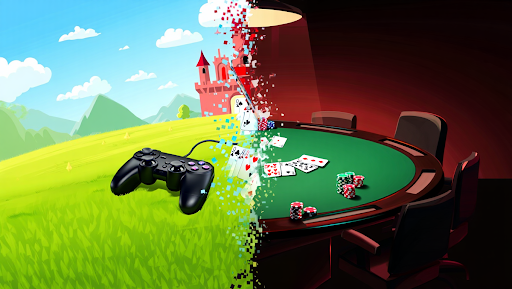
If you have spent any serious time with video games, you already understand more about online casino mechanics than you probably realize. The reward loops, the risk-reward calculations, the patience required to grind toward a goal — these are not unique to gaming. They show up in casino design too, because both industries are built around the same fundamental question: how do you keep a player engaged, and how do you make the experience feel rewarding?
The difference is that in casinos, the stakes are financial rather than virtual. That changes the dynamic significantly, and understanding exactly how it changes things is what separates players who get genuine value from the experience from those who don't.
The Reward Loop: Gaming vs. Casino Design
Every game designer knows that the core of an engaging experience is the reward loop — the cycle of action, feedback, and payoff that keeps players coming back. Complete the objective, earn the reward, unlock the next challenge. The loop is tight, readable, and satisfying. You always know roughly where you stand.
Casino design borrows heavily from this framework. Slot machines in particular are engineered around near-miss mechanics, variable reward schedules, and visual and audio feedback that mirrors what a well-designed game feel system produces. The spinning reels, the anticipation before the result, the escalating sounds on a win — all of it is deliberate and draws from the same psychological toolkit that game developers use.
Understanding this does not make casino games less enjoyable. It makes you a more informed player, which is the same advantage a gamer has when they recognize a pattern in a boss fight. Awareness of the system is the first step to engaging with it on your own terms.
Payout Speed: The Real-World Version of Instant Reward
One area where online casinos have genuinely improved to meet the expectations of a generation raised on instant feedback is withdrawal speed. Gamers are not accustomed to waiting days for a reward they have already earned. The gap between winning and receiving has shrunk considerably as platforms have adopted cryptocurrency payment rails.
The rise of best online casinos that payout instantly reflects this growing demand for speed. Canadian platforms now deliver withdrawals in under 15 minutes through crypto. Players no longer accept delays; a win late in the evening shouldn’t mean waiting days to access their money. The best platforms have recognised this and built their payment infrastructure accordingly. For gamers used to loot dropping the moment the enemy dies, a same-session payout finally makes sense.
When evaluating any online casino, payout speed is one of the most useful signals of platform quality. A platform that processes withdrawals quickly has nothing to hide. One that imposes 72-hour pending periods and vague processing timelines is adding friction that serves the platform, not the player.
Skill, Variance, and the Games Worth Your Time
Gamers tend to be better than average at distinguishing between games that reward skill and games that are purely luck-based — and that distinction matters in a casino context too.
Blackjack and video poker are the clearest examples of casino games where informed decision-making has a measurable impact on outcomes. Blackjack played with basic strategy reduces the house edge to under 0.5%. Video poker variants like Jacks or Better, played with optimal strategy, can reach return-to-player rates above 99%. These are not trivial differences. They mean that the gap between a player who has done the homework and one who hasn't is real and quantifiable — exactly the kind of skill differential that gamers already understand and respect.
Poker takes this further. Online poker is a genuine skill game over any meaningful sample size, and the analytical habits that make someone good at strategic games — reading patterns, managing resources, making decisions under uncertainty — translate directly. Many of the players who have built strong poker track records come from backgrounds in competitive gaming or strategy-heavy tabletop play.
Slots, by contrast, are pure variance. They are designed to be entertaining rather than skill-expressive, and there is nothing wrong with playing them as entertainment. But going in with clear expectations about what the experience is — a well-designed system of randomness with a built-in house edge — is the same approach you would bring to any game where luck rather than skill determines the outcome.
Bonuses Are Basically Side Quests — Read the Quest Log
Online casino bonuses have direct equivalents in game design: they are side quests with specific completion requirements attached. The bonus is the reward. The wagering requirement is the objective you have to complete before you can claim it.
A 40x wagering requirement on a $100 bonus means you need to place $4,000 in bets before any bonus-connected winnings can be withdrawn. That is a significant grind, and whether it is worth doing depends entirely on what games contribute toward it and at what rate.
The approach a gamer should take is exactly the approach they would take with any in-game system: read the terms before committing, understand the completion requirements, and decide whether the reward justifies the time and risk investment. Bonuses with 25x or lower wagering requirements are meaningfully better deals. Wager-free cashback offers are better still — the equivalent of a side quest that pays out in real currency rather than locked experience points.
Platform Quality Mirrors Game Quality
The parallels between evaluating a video game and evaluating an online casino are closer than they might first appear. In both cases, the questions that matter are: Is the system fair and transparent? Does it respect your time? Does the quality of the experience justify the investment? Are the developers — or in this case, the operators — trustworthy?
Licensed platforms holding credentials from recognized bodies like the Kahnawake Gaming Commission or Curacao eGaming are the equivalent of games from established studios with track records. They are audited, accountable, and legally required to pay out legitimate winnings fast. That baseline matters.
The best online casinos in 2026 are also genuinely well-designed products — fast interfaces, strong mobile performance, clean UX, and live dealer options that create a more immersive experience than static digital tables. For players who care about product quality, these details are easy to assess and worth paying attention to.
The crossover between gaming and casino culture has always been there. The players who navigate it best are the ones who bring the same analytical attention they give to games — understanding the systems, reading the mechanics, and making deliberate decisions rather than reactive ones.