Note from Author: Full deck building guides coming soon for each commander. I’ll be posting them as they’re written and linking them here.
Reality Fracture is one of the most character-heavy in-universe Magic sets we’ve seen. In fact, this set features 75 legendary creatures, meaning 75 potential commanders. That’s more than any other in-universe set and even more than some Universes Beyond sets. With that many options, there’s plenty of room to build something new or find a fresh face for a strategy you already enjoy.
Of course, just because a creature is legendary doesn’t mean it will make a great commander. Some are better suited to supporting your deck, while others can be the foundation for an entire strategy. With that in mind, here are some of my picks for the best commanders from Reality Fracture.
Best mono color commanders from Reality Fracture
As always, I like to choose at least one commander for each color of the color pie for all you mono-color players out there. This set had a lot more options than usual, which actually made narrowing down the mono-color picks harder than choosing the multicolor ones. There are some familiar strategies here, but also a few characters taking their decks in a very different direction.
Here are my picks for the best mono-color commanders from Reality Fracture:
Lyra, Archangel of Dawn - Mono-White
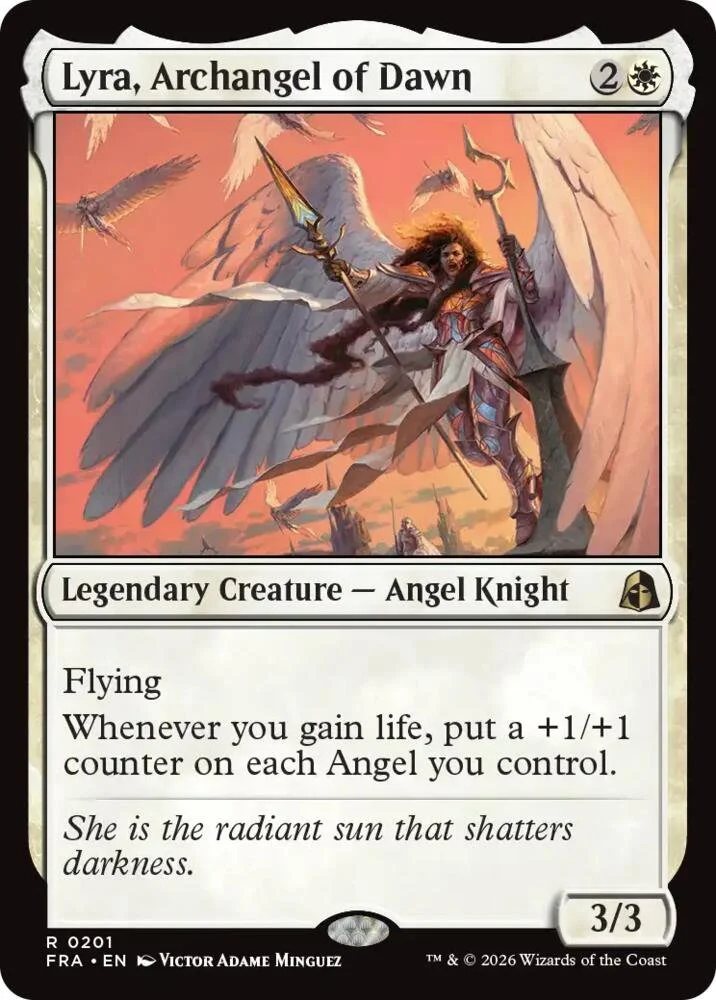
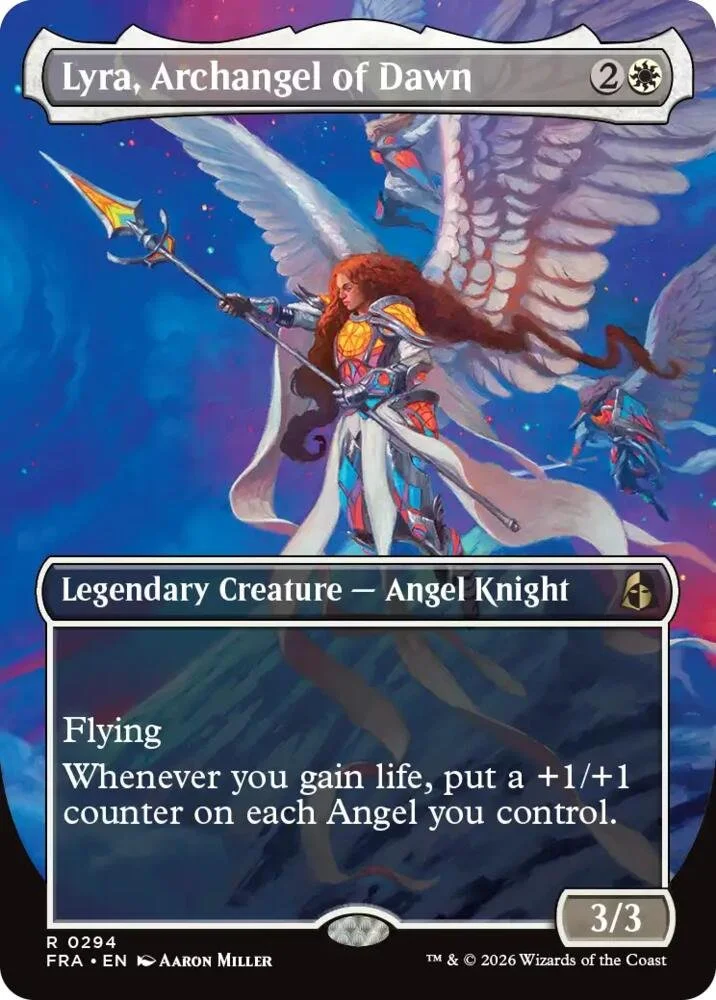
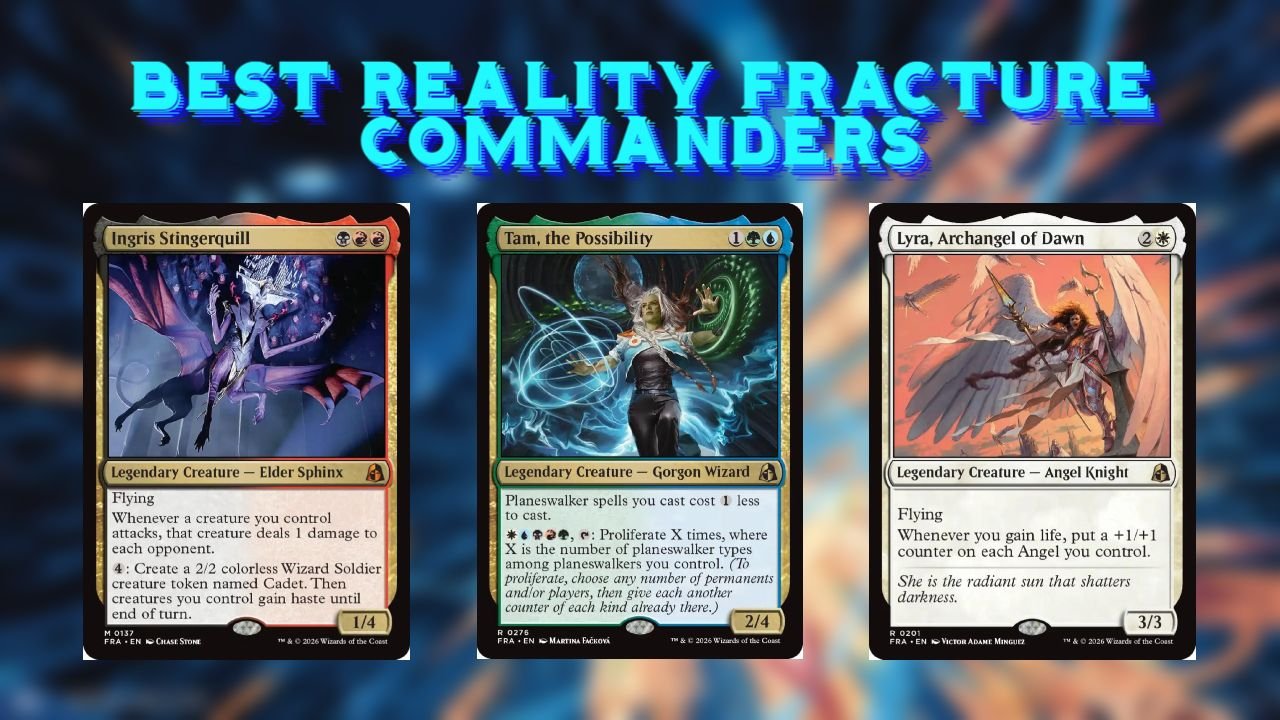
For mono-white, the best choice I found was Lyra, Archangel of Dawn. She’s a fairly simple commander to build around and fits into much the same strategy as Lyra Dawnbringer. If you enjoy Angels, lifegain, and building up a board of powerful flying creatures, this version of Lyra should feel right at home leading your deck.
Fill the deck with your staple Angels, add some lifegain and +1/+1 counter support, and you’ll have no trouble getting it to take flight. Those themes naturally work well together, giving you a clear direction without making the deck feel like it needs a complicated setup to get going.
I really like seeing cards like this among the ever-growing list of commanders. As Commander gets more popular, it feels like the commanders themselves keep getting more complicated. Having a straightforward option like Lyra gives newer players an easy place to start while still offering something for longtime Angel fans. She also looks like a fitting upgrade for the new Calling All Angels Foundation deck if you’re looking to take that strategy a little further.
Lyra, Tolarian Archangel - Mono-Blue
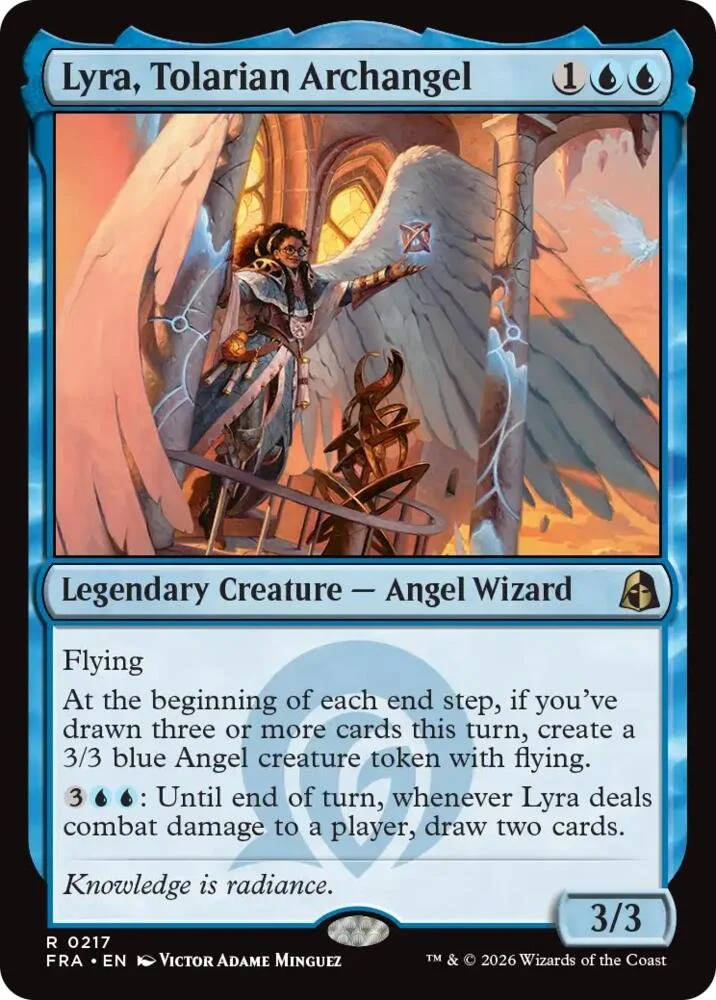
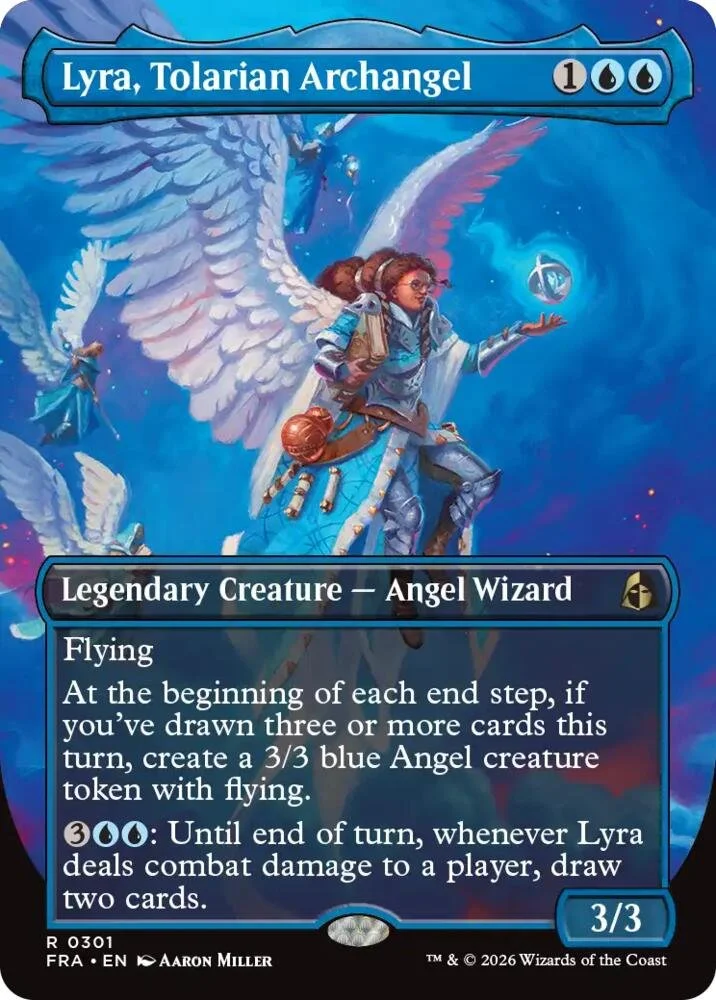
Oddly enough, my pick for mono-blue is also Lyra, this time from the Echoverse. Lyra, Tolarian Archangel takes things in a very different direction from her mono-white counterpart. Where Archangel of Dawn offers a straightforward Angels-and-lifegain strategy, Tolarian Archangel has a few more layers to build around.
There aren’t nearly as many Angels in blue, so I see this as more of a card draw engine deck than an Angel kindred deck. You can build around card draw triggers, use those draws to fuel token production, or focus on threats that get stronger as your hand grows. That gives you a few different ways to turn all those extra cards into a win.
Personally, I plan on taking the alternate win condition route and attempting to draw through my entire deck. There’s something really fun about making the thing you normally want to avoid into your actual game plan. Pair that approach with the right draw payoffs and enough protection to keep your engine running, and Lyra gives you a mono-blue deck with a clear goal and plenty of decisions along the way.
Winter, Tormented Loner - Mono-Black
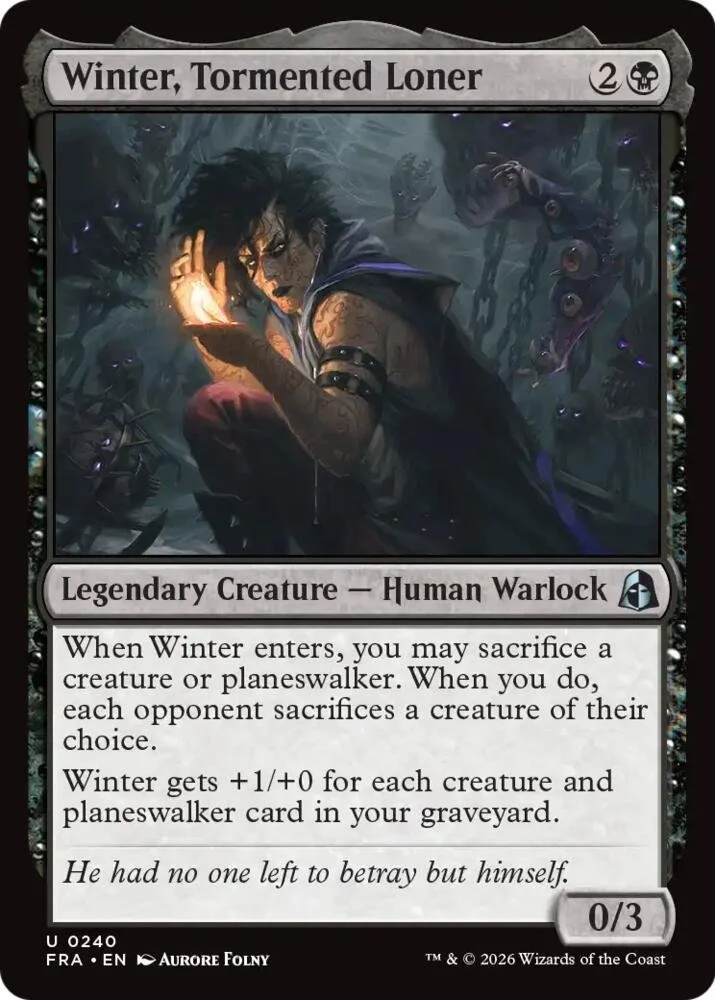

For mono-black, my choice is Winter, Tormented Loner. Winter makes the perfect punishing commander, giving you a reason to fill your 99 with cards that make your opponents’ lives miserable. Make them mill or discard, chip away at their life totals, weaken their creatures, or force them into decisions where neither option feels good. The goal is to put enough frustrating threats on the board that your opponents keep finding reasons to spend their removal on something other than Winter.
While all of this is happening, you’ll want to grow your own graveyard through self-mill and sacrifice effects. As your graveyard fills up, Winter becomes an increasingly dangerous threat, setting you up to start picking off opponents with commander damage. Ideally, by the time they realize how hard Winter can hit, they’ve already spent their best answers dealing with the rest of your board.
I like this approach because the whole deck puts pressure on your opponents. Leave your punishing cards alone and they’ll keep making trouble. Spend removal on them and Winter gets a better chance to finish the job.
Tomik, Izzet Sparkmage - Mono-Red
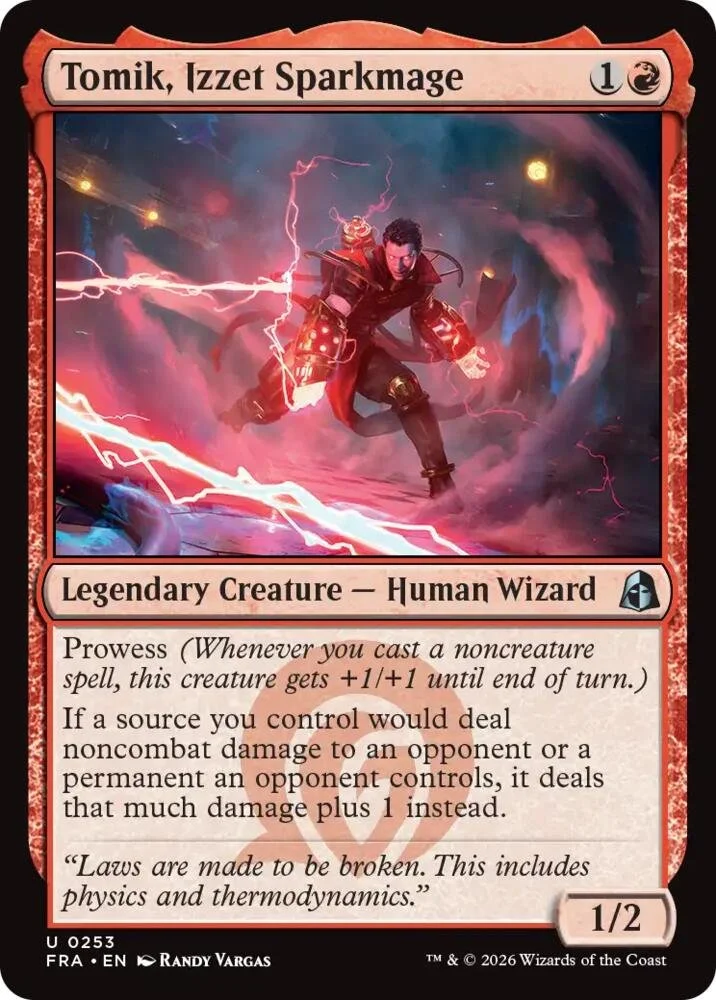
Burn and storm are two classic red strategies, so why not bring them together? Tomik, Izzet Sparkmage rewards you for casting noncreature spells through prowess while also providing a damage modifier for your noncombat damage. That gives you a straightforward starting point: fill the deck with cheap, Lightning Bolt-esque spells and let ’em rip.
From there, you can add more damage modifiers to make each spell hit harder and creatures that deal damage whenever you cast a noncreature spell. Suddenly, even a small burn spell can set off several damage triggers while making Tomik a bigger threat in combat. The more pieces you get onto the board, the more mileage you’ll get out of every spell you cast.
Personally, I like the idea of leaning heavily into the burn side of this deck. You don’t always need one enormous storm turn when a handful of cheap spells and a few damage modifiers can already make the whole table sweat.
Jiang Yanggu, Never Alone - Mono-Green
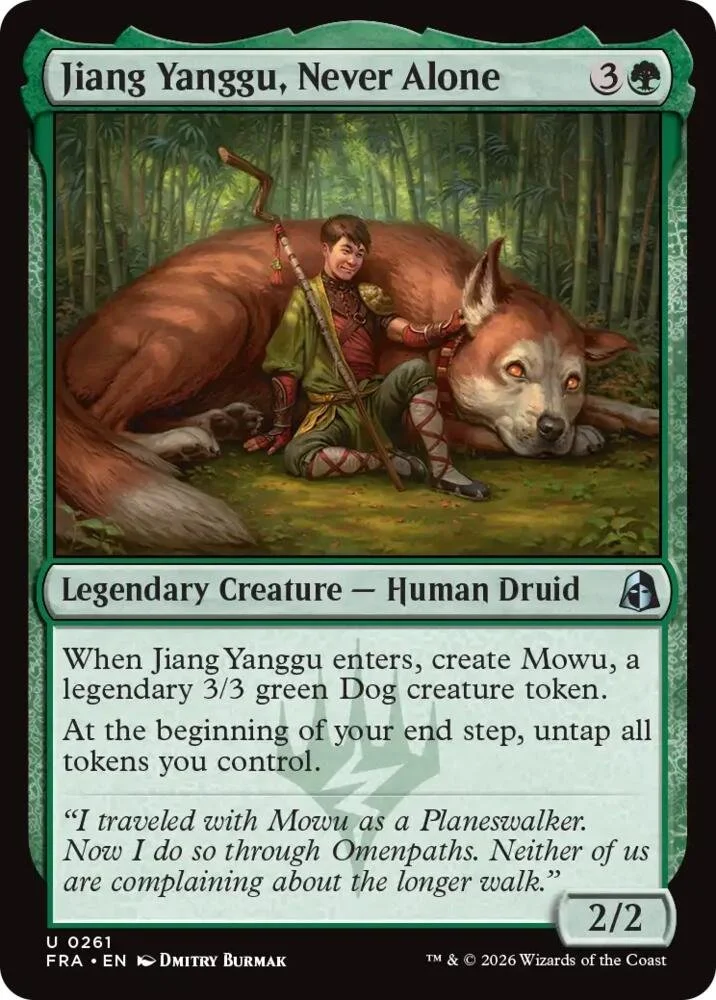
Rounding out the mono-color picks is Jiang Yanggu, Never Alone, and this deck is all about creature tokens. What kind of creature tokens? Yes! Whether you’re making a bunch of small creatures or a handful of massive ones, the goal is to build a board that keeps growing and keeps swinging.
Jiang Yanggu untaps all your tokens at the end of your turn, letting you attack with your army and still have those creatures ready to block afterward. That makes committing to a big attack a lot more comfortable, especially once you have enough tokens that leaving them all back would feel like a wasted opportunity.
Fill the deck with token generators, plenty of ramp, and effects that buff your entire board, and you’ll be swinging a massive army in no time. I’d lean toward fewer nontoken creatures to make room for cards that create several bodies at once. Keep the tokens coming, give them a little extra power, and make your opponents figure out how they’re going to survive the next attack.
Best multi-color commanders from Reality Fracture
Those five mono-color decks each offer their own flexibility and room to grow, but I think Reality Fracture’s strongest commanders are among its multi-color options. Having access to more colors opens up more ways to support these creatures, and there are plenty of legends here that give you a clear strategy to build around.
Basically every multi-color legendary creature in this set looks like it could make a good commander, but these are the ones whose designs stand out to me most for the command zone.
Denzilore Fatehold - Azorious (White/Blue)
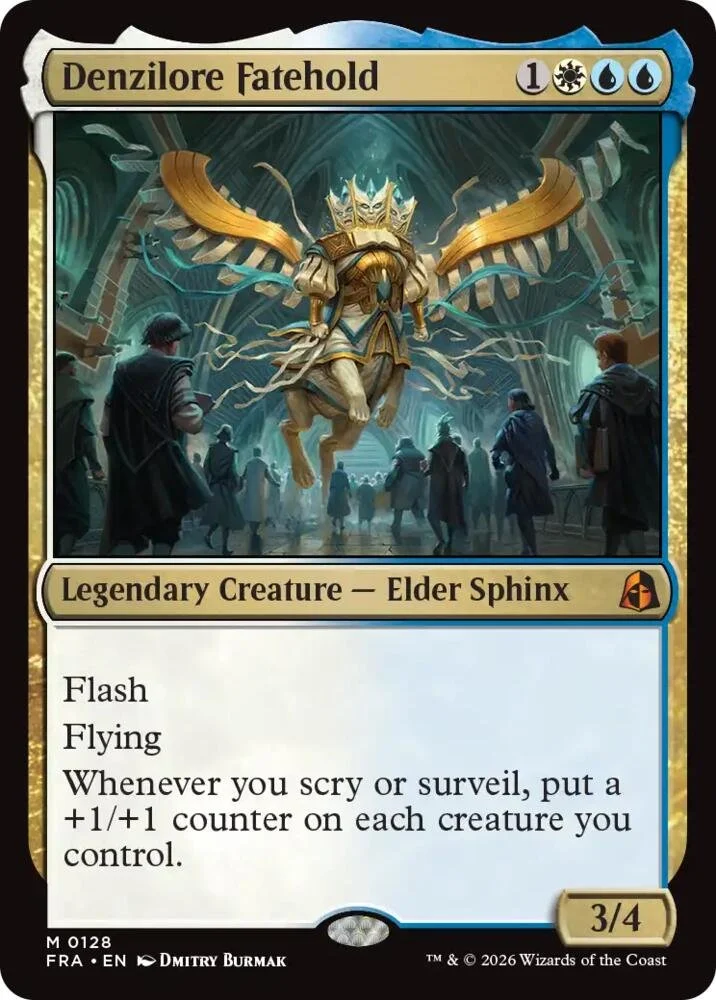
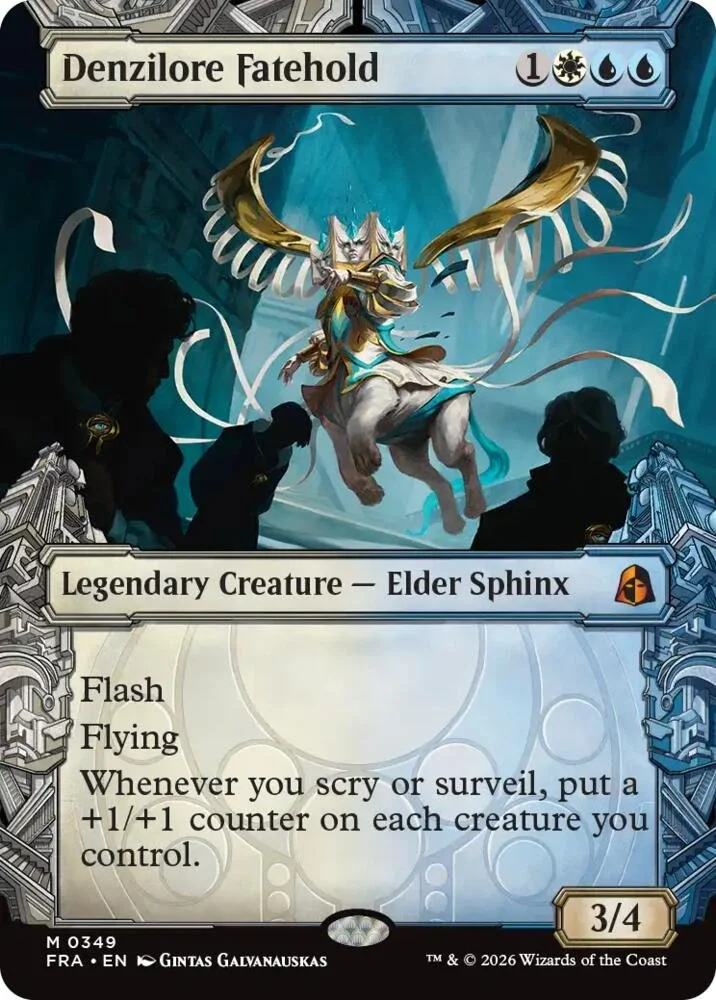
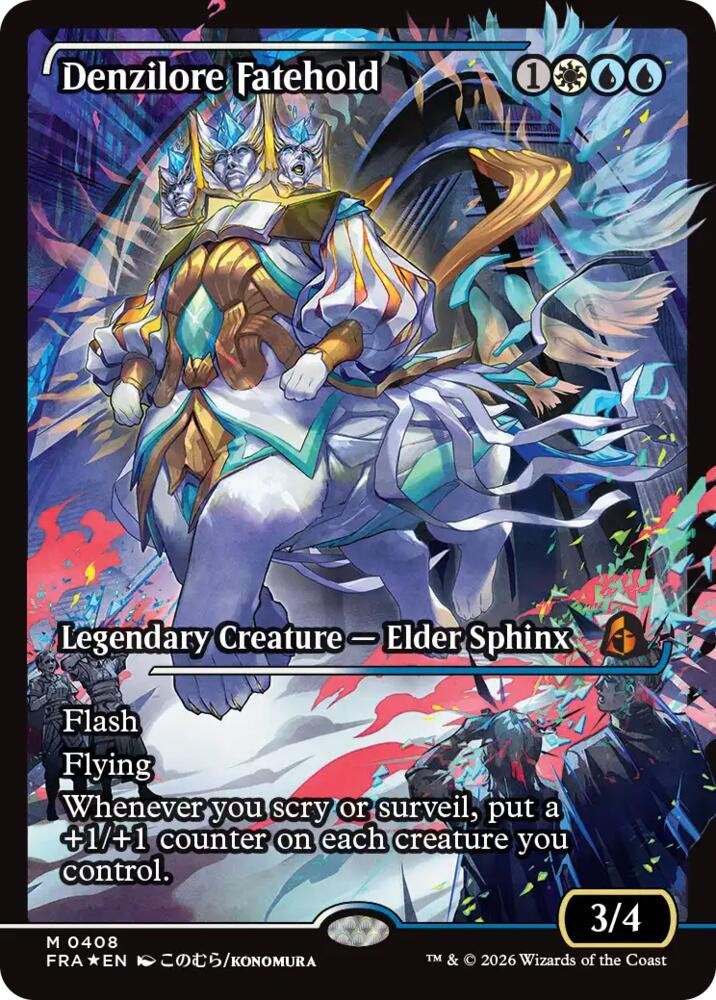
All five of the Strixhaven Elder Dragons make excellent commanders, and the Hexhaven Elder Sphinxes have plenty to offer as well. Denzilore Fatehold could lead a fairly traditional Azorius control deck, but what really interests me is his ability to turn scrying and surveilling into buffs for your entire board. That gives you a reason to build an engine that improves your draws while making your creatures increasingly dangerous.
One direction I really like is pairing token generators that care about scrying with repeatable scry effects. Azorius has no shortage of flying creatures, so filling your board with small Faeries or Birds gives you a great starting point. Once you start stacking those board-wide buffs, the creatures you were keeping around as blockers can suddenly become serious threats.
Denzilore’s ability not being limited to once per turn is what really opens up the possibilities. Fill the deck with repeatable scry and surveil abilities, other cards that reward those actions, and enough creatures to take advantage of the buffs. You’ll have a deck where setting up your next draw also helps set up your next big attack.
Uldaros Theorix
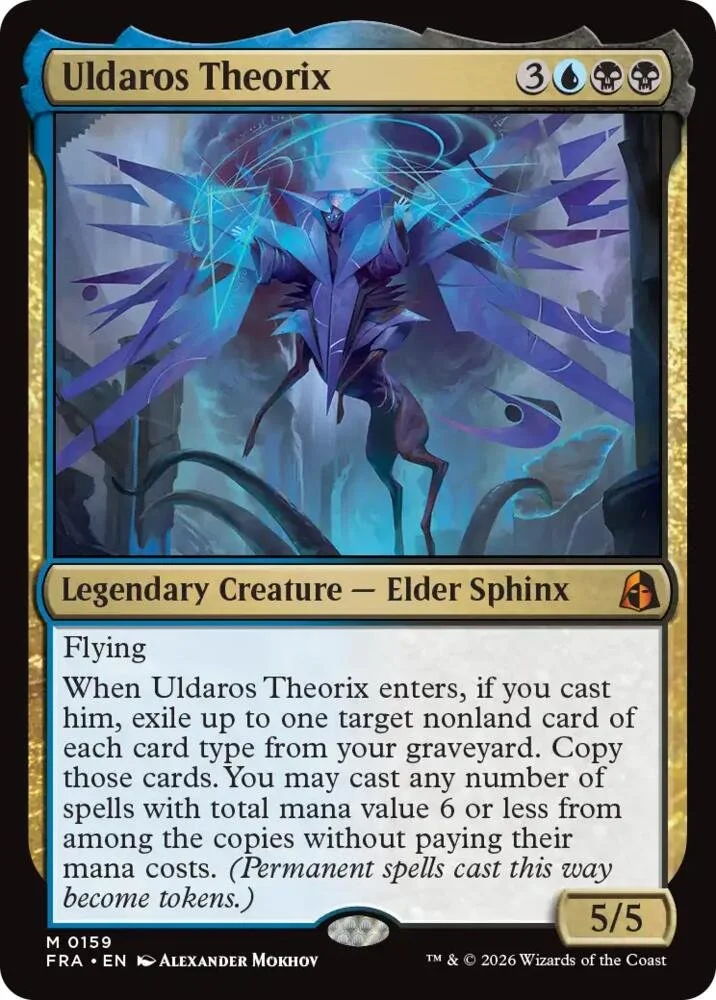
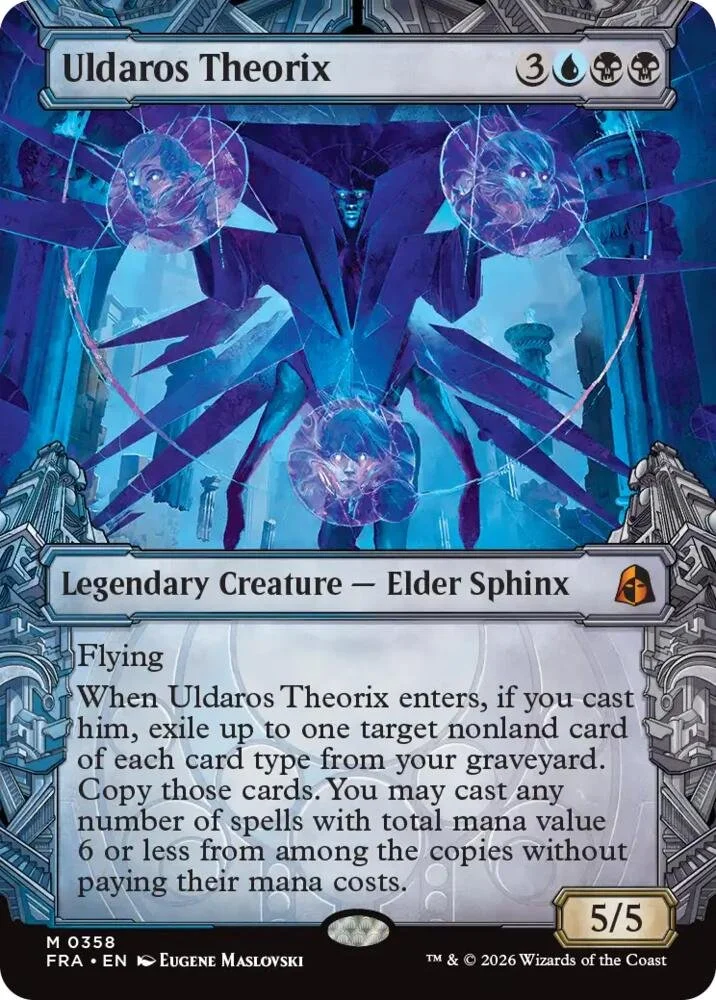
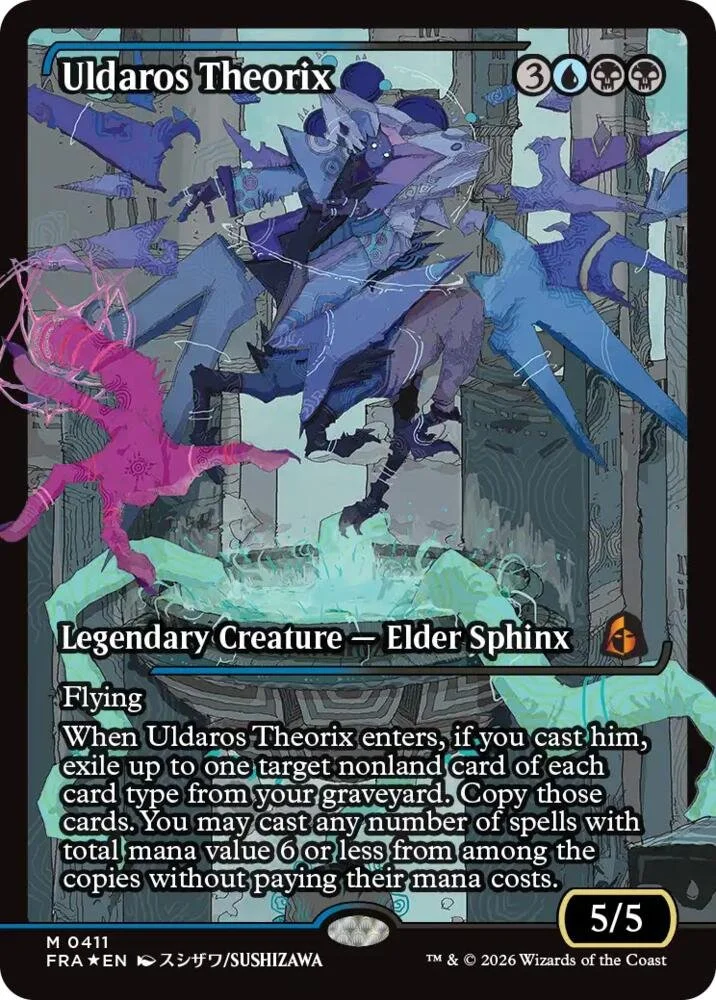
My second two-color pick is another of the Hexhaven school founders, Uldaros Theorix. This is a more complex commander that I’d recommend for players who enjoy working through interactions and finding ways to get extra value out of their graveyard.
Uldaros allows you to copy spells from your graveyard whenever you cast him. That cast trigger makes building around him a little trickier, since you can’t simply flicker your commander and expect to get the effect again. The most straightforward approach is to return Uldaros to your hand and recast him. That avoids repeatedly paying commander tax, but casting a six-mana creature over and over still takes a decent amount of mana.
The direction I’d explore is combining those bounce effects with ways to copy Uldaros’s spell or triggered ability, giving you more value from each cast. Regular creatures that enter as copies of Uldaros won’t repeat his cast trigger, so choosing the right kind of copy effect matters here.
From there, you’ll want to fill your graveyard with expensive spells through self-mill, surveilling, or discard effects. I like the idea of turning those big spells into a toolbox, giving you different options depending on what the table is doing. It takes more setup than some of the other commanders on this list, but getting that engine running sounds like a ton of fun.
Ingris Stingerquill
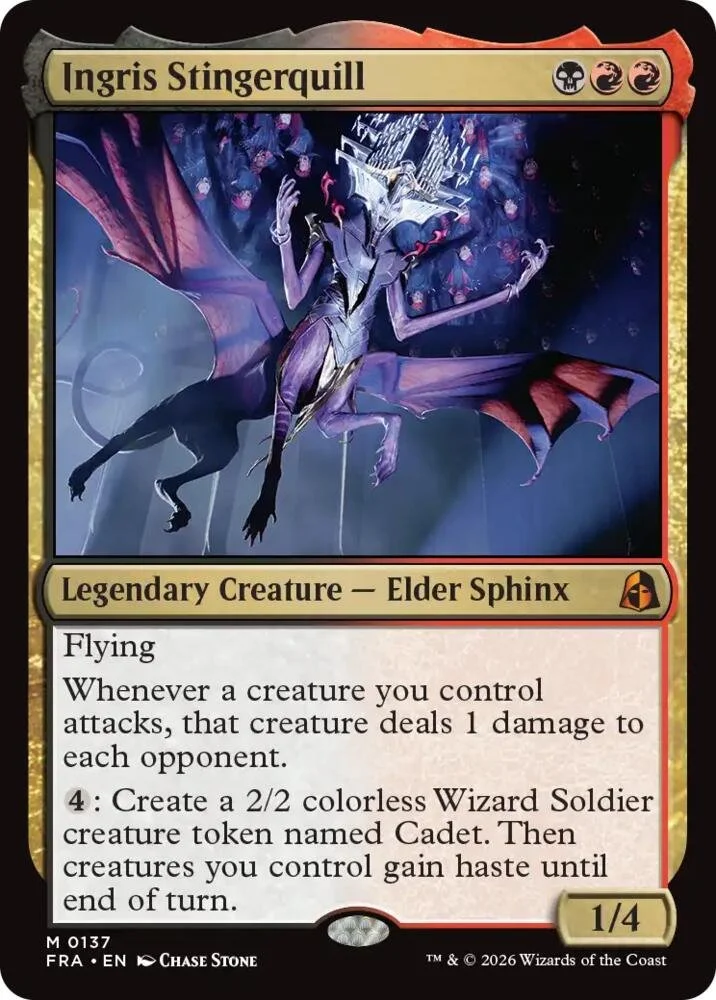
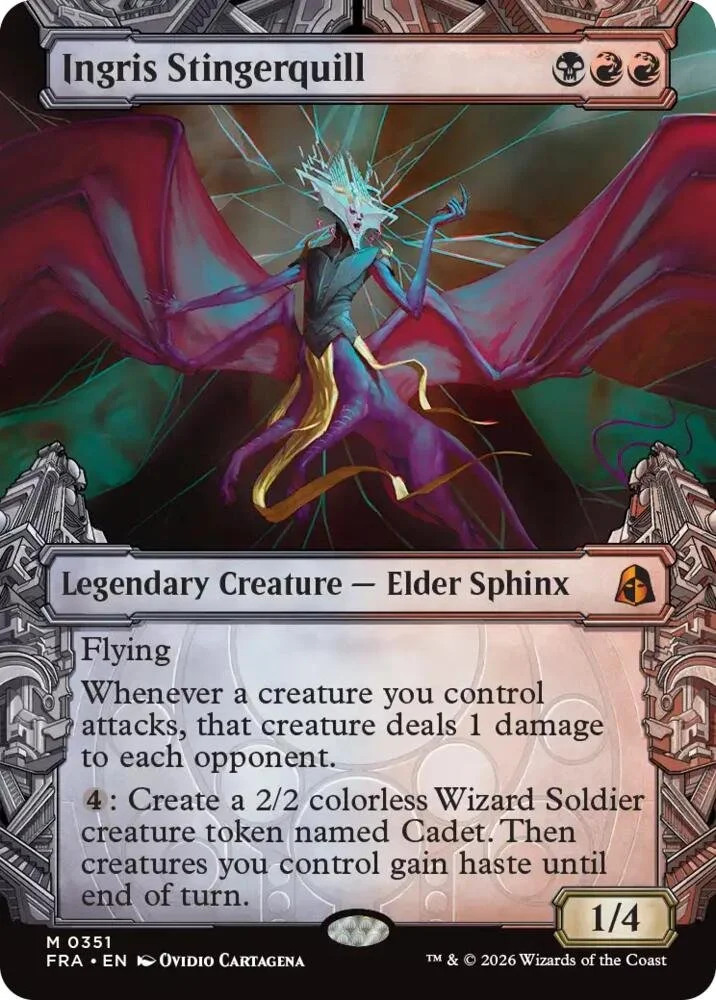
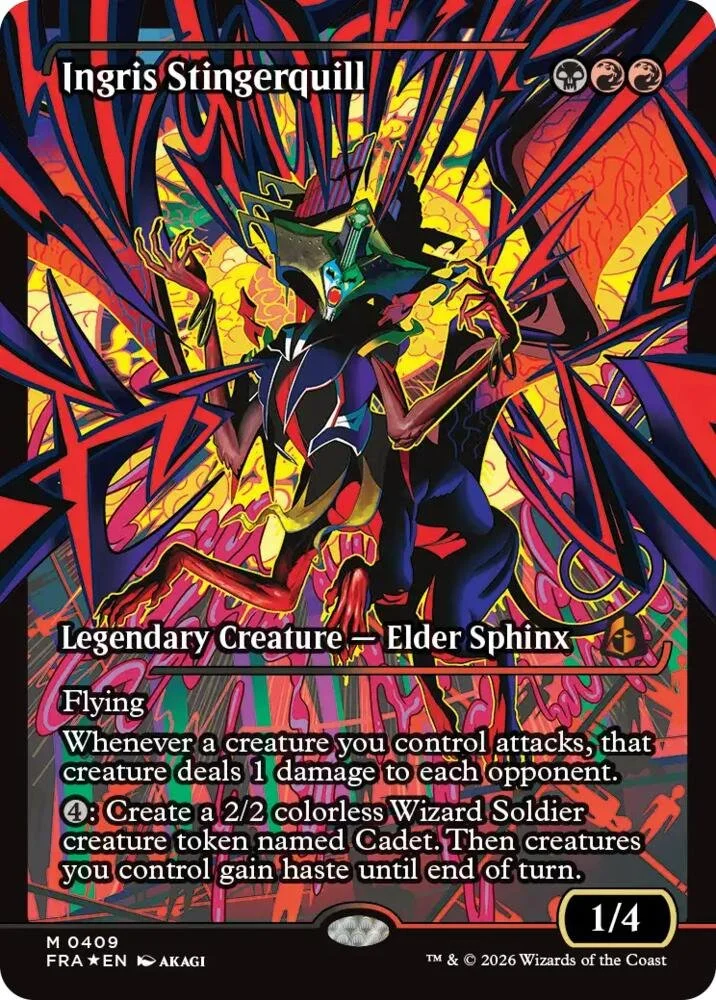
The third and final two-color commander on my list is Ingris Stingerquill. These three are my personal favorites among the Hexhaven founders, but that doesn’t mean the other two aren’t worth building around. These are simply the ones that stood out most to me when choosing the best commanders from this set.
Ingris is another noncombat damage commander, but where Tomik wants you casting spells, she wants your creatures attacking. That leaves you with several possible directions. You could build around expendable tokens, powerful individual attackers that are difficult to block, or big trampling creatures that keep the pressure on. Personally, I want to lean into Mobilize.
I loved Mobilize in Tarkir: Dragonstorm, so I’m always happy to find another reason to use it. Unfortunately, plenty of the cards with Mobilize include white, putting them outside Ingris’s red-black color identity. That’s okay, though! There are still options to work with, and you can round out the deck with other ways to create expendable attackers.
With Ingris in play, your attacking creatures turn combat into damage for the entire table. Mobilize adds more bodies to that attack, letting you pressure your opponents without needing every creature to survive combat. Add some sacrifice outlets to get extra value from the Mobilize tokens before they leave, and you have an aggressive deck that can make even a board of small creatures painful to deal with.
Vraska, Soul of Stone
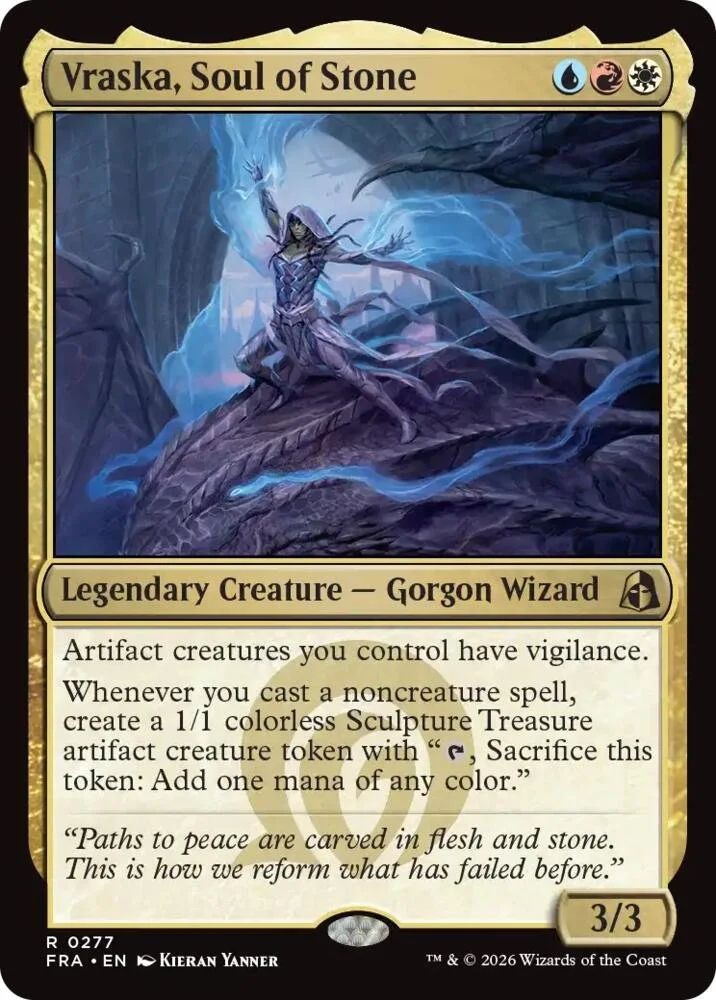
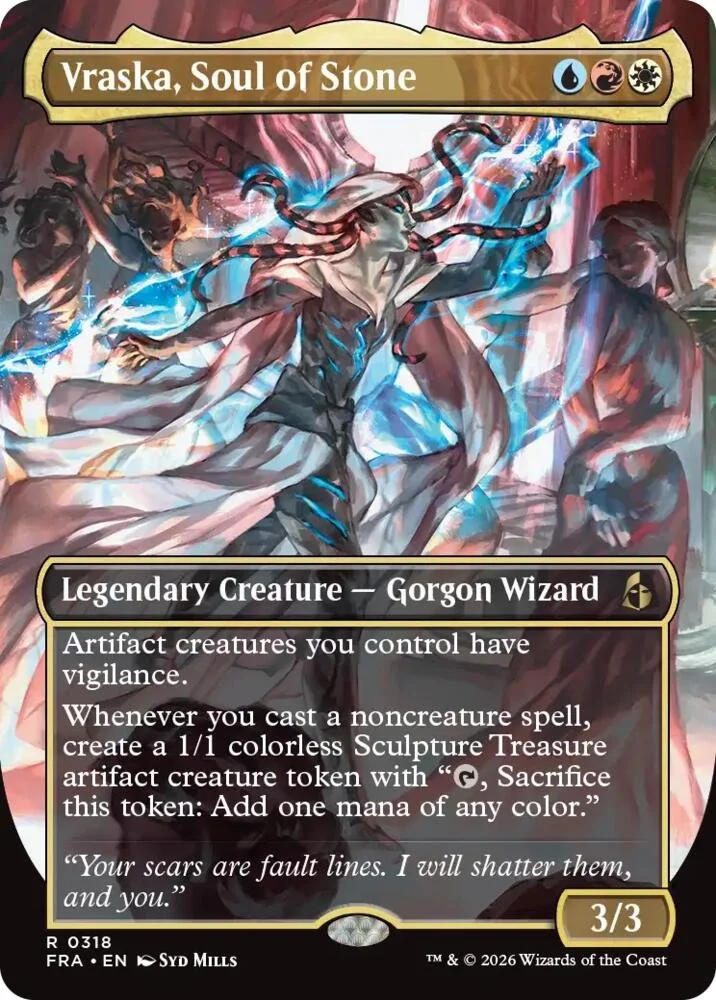
The one three-color commander that really stood out to me was Vraska, Soul of Stone. This Echoverse version is still a Gorgon, but she takes a very different approach from the Vraska we know. Instead of her usual Golgari strategy, this version brings us a Jeskai commander built around noncreature spells.
There are plenty of ways to build a noncreature spell deck, but Vraska’s Sculpture Treasure tokens are what caught my attention. These tokens are Treasures that are also 1/1 creatures, giving you a choice between keeping another body on the board or sacrificing it for mana. Early on, that extra mana can help you get your engine running. Later, you might find more value in keeping those tokens around to attack or block.
Vraska creates a Sculpture Treasure whenever you cast a noncreature spell and gives your artifact creatures vigilance. That means your Sculptures can attack without tapping, leaving them available to block or spend for mana afterward. I really like having that flexibility, especially in a deck that wants to keep casting spells.
My approach would be to focus on noncreature artifact spells, then animate those artifacts into creatures. You get your Sculpture tokens while building up a board of artifacts that can eventually join the attack. If your budget allows it, Mycosynth Lattice can expand the possibilities by turning all your permanents into artifacts, though you’ll still need other effects to turn them into creatures. There are several artifact commanders in this set, and this is the direction I’d take to give Vraska her own identity.
Codie, Ravenous Codex
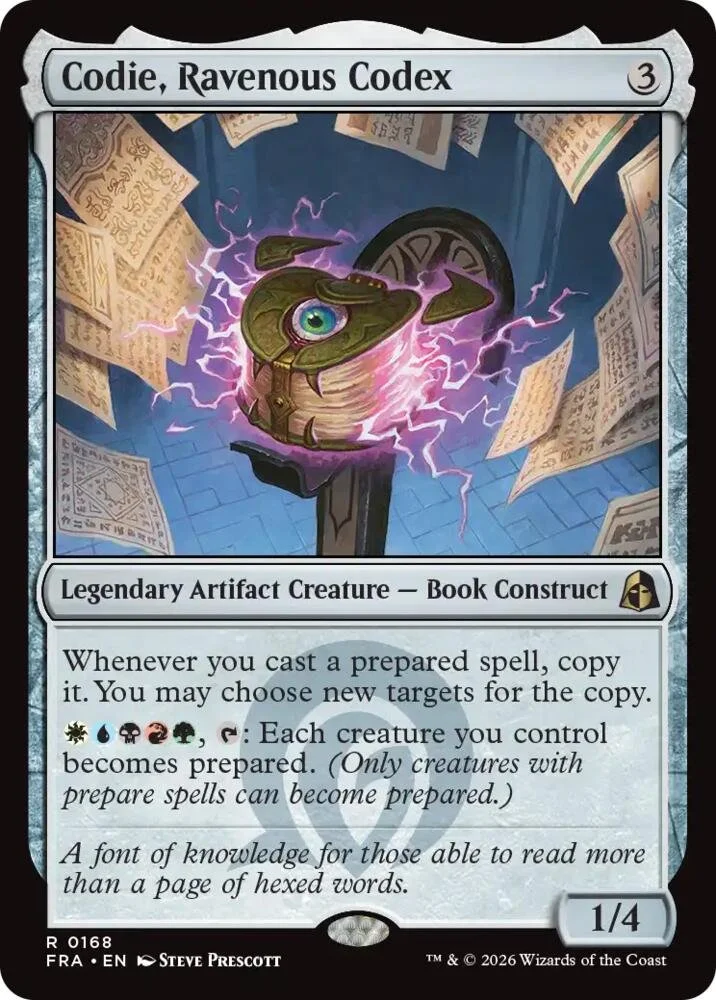
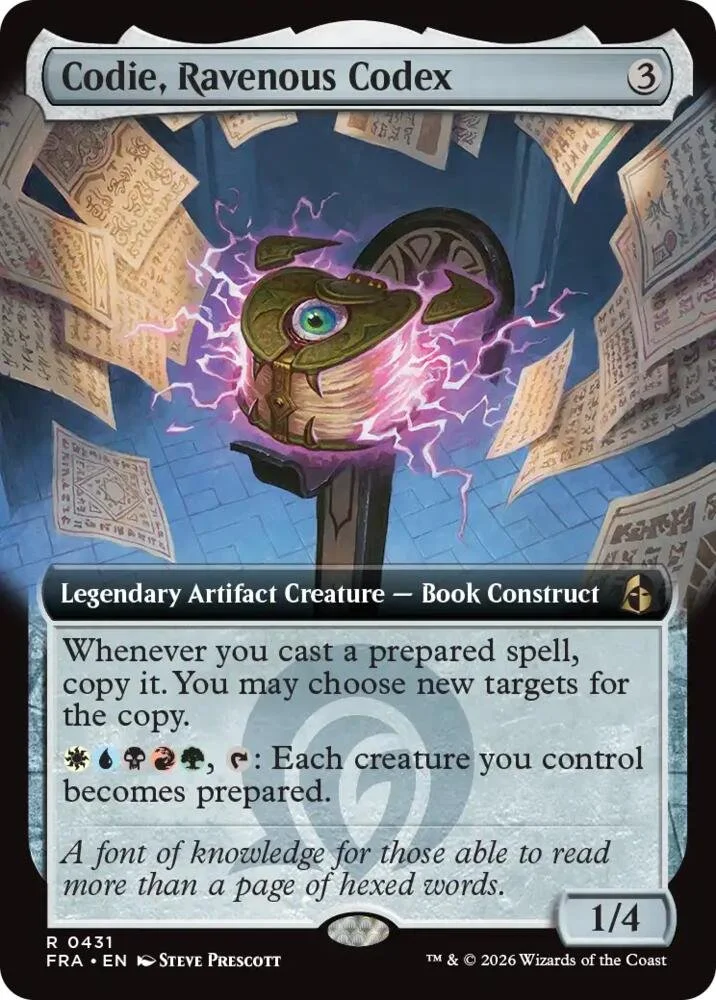
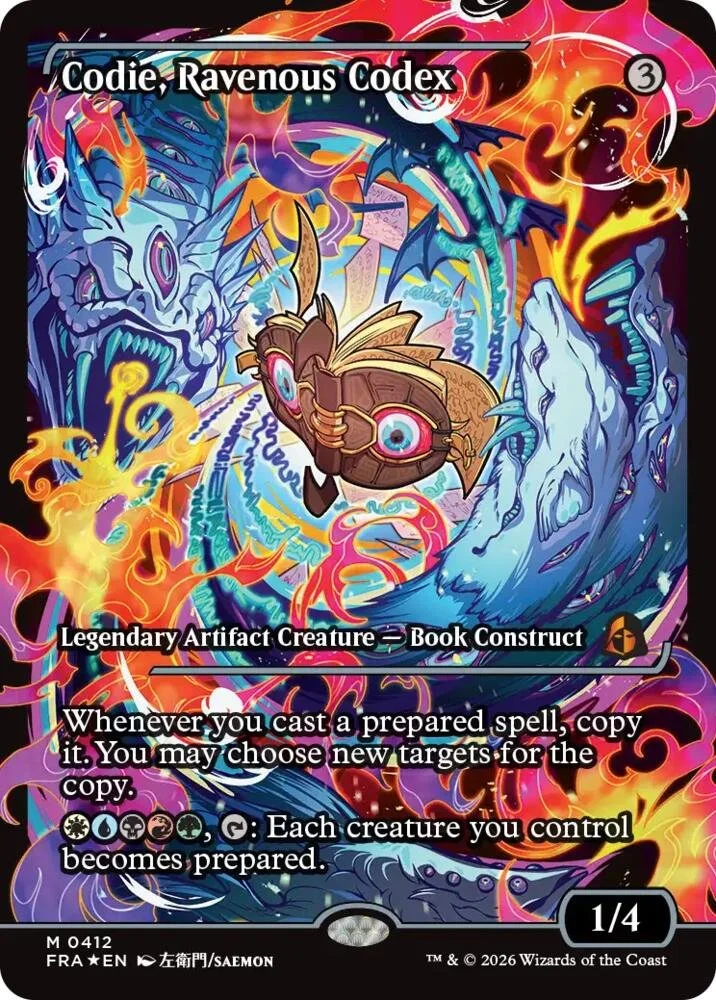
Codie, Ravenous Codex is one of three, that’s right, THREE WUBRG commanders in this set. Surprisingly, all three offer very different playstyles. Each encourages you to load up on a particular kind of card, but the decks you end up building look very different from one another.
Codie is the Prepared spells commander, copying those spells when you cast them. He also lets you pay WUBRG to prepare your creatures with Prepared spells again. That gives you another chance to use spells whose creatures don’t have their own way to become prepared, making those cards much more appealing over a longer game.
I think this is an extremely fun commander with a clear direction. You’re building around creatures that give you access to spells, then using Codie to get more value out of those spells and keep them available for another round.
There aren’t too many Prepared cards to choose from yet, so I imagine a lot of Codie decks will share the same core. Still, there’s room to personalize the support cards, and I love seeing Prepared spells get a commander that puts them front and center.
Karn, Gilded Guardian
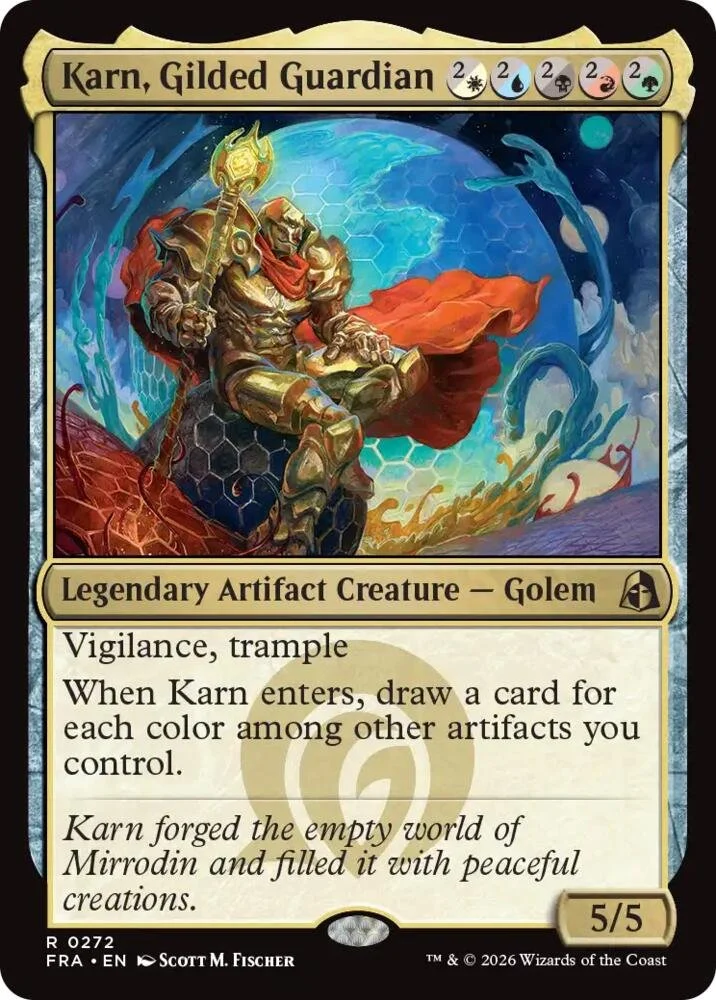
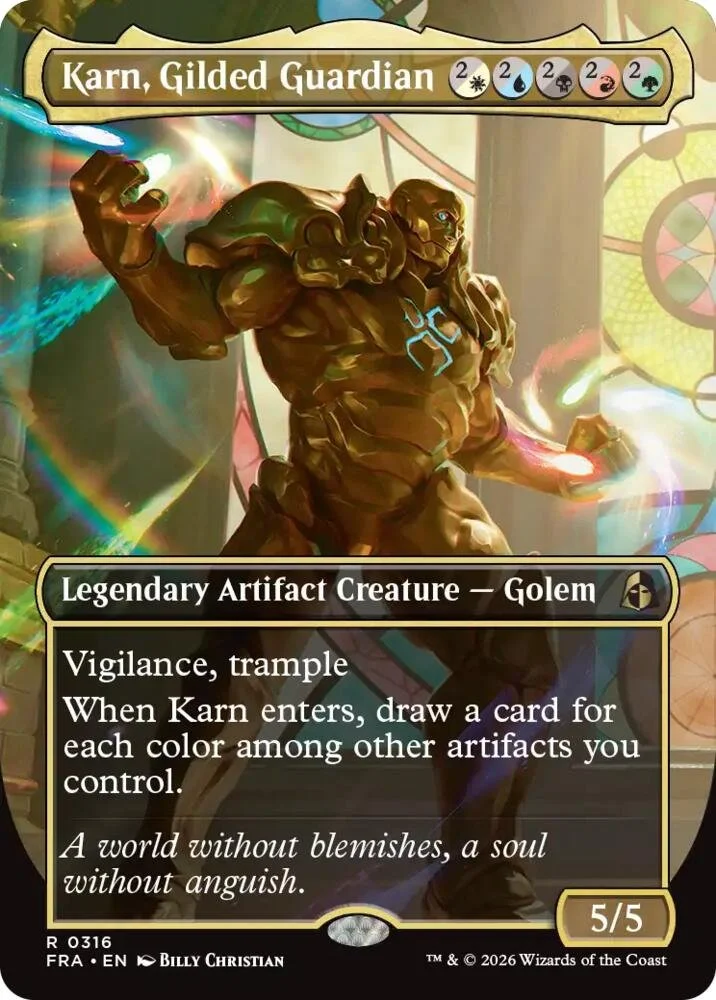
The second WUBRG commander I’ve chosen is another artifact commander, Karn, Gilded Guardian. Where I’d build Vraska around animating artifacts, Karn has me looking through multicolored artifacts and artifact creatures.
When Karn enters the battlefield, you draw a card for each color among artifacts you control. His ability doesn’t specifically require multicolored artifacts, but they make reaching all five colors much easier. If just two artifacts cover WUBRG between them, you’re already set up to draw five cards when Karn arrives.
That gives you a reason to look beyond the usual colorless artifact staples and explore cards you might otherwise pass over. You’ll still want useful artifacts that support the deck, but having several colors represented makes your commander’s entrance much more rewarding.
Since this is an enters-the-battlefield ability, flicker effects are where things really get going. Add cards like Conjurer’s Closet to repeatedly bring Karn back, and you can keep refilling your hand without recasting him. An artifact deck with access to all five colors and that much card draw sounds like a great time to me.
Tam, the Possibility
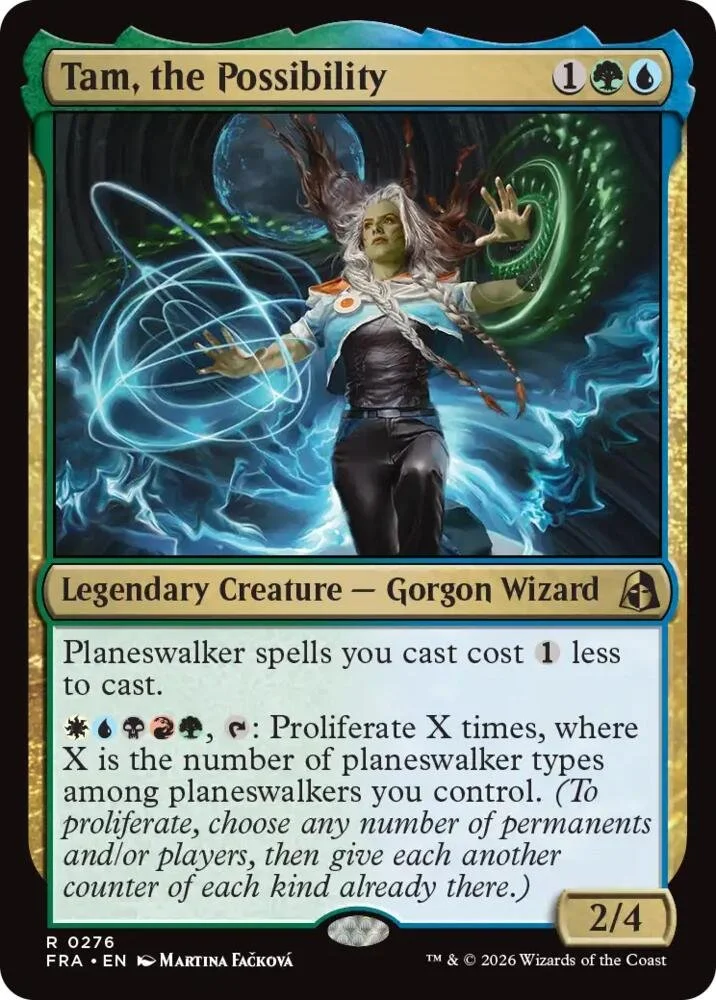
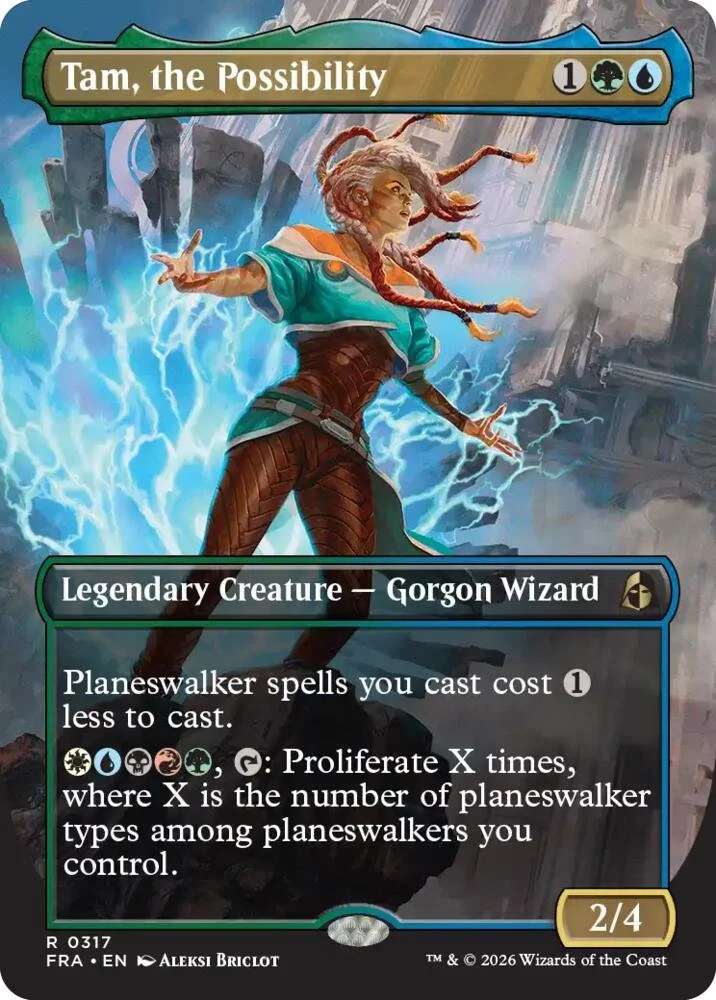
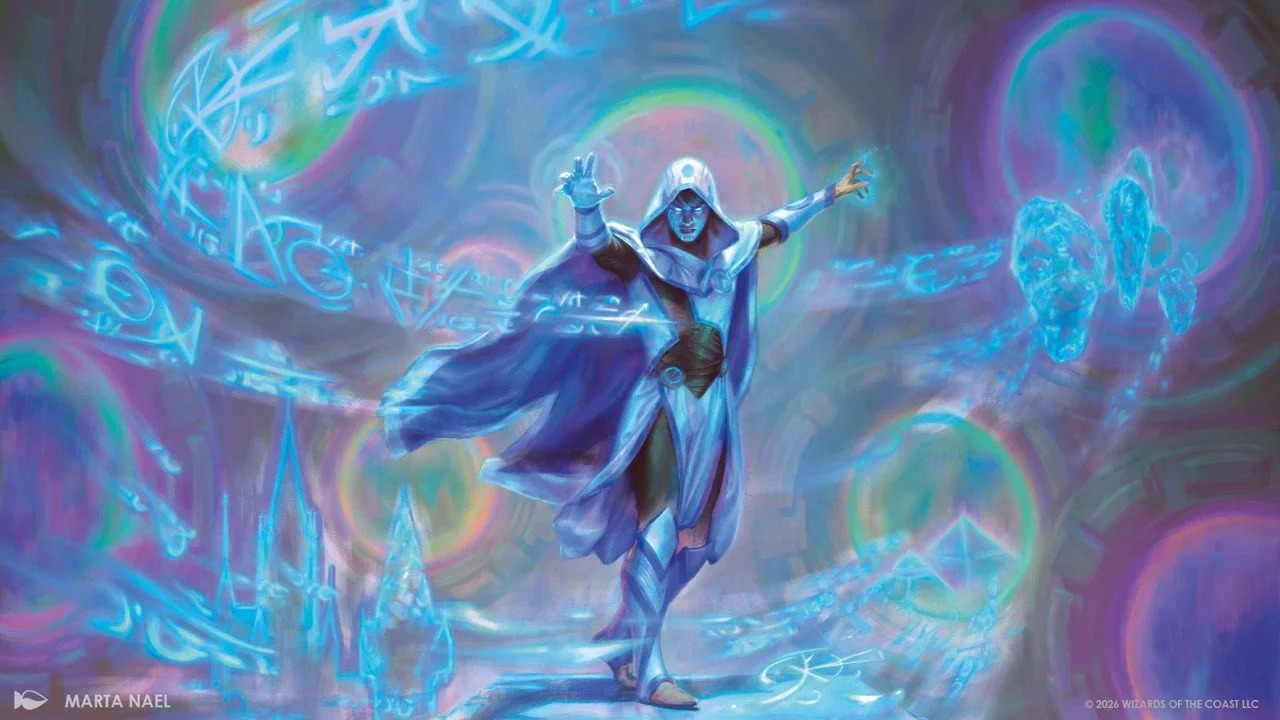
Finally, we have Jace’s successor, Tam, the Possibility. Created by Jace to inherit his spark if he died, Tam represents the culmination of his spiral into madness and the legacy he leaves behind. With such a major role in the story, I’m happy to see her offer something exciting for the command zone, too.
Tam is the newest Superfriends commander to join the fight, giving you access to all five colors for a deck packed with Planeswalkers. She reduces the cost of your Planeswalker spells by one generic mana, helping you get them onto the battlefield sooner and making it easier to cast several as the game progresses.
Her other ability lets you pay WUBRG to proliferate multiple times based on the number of different Planeswalkers you control. Once you’ve established a board, that can send loyalty counters climbing very quickly and bring several ultimate abilities within reach at once.
I’d fill this deck with Planeswalkers, ways to protect them, and support cards that help you get more out of their loyalty abilities. Keeping that board alive will be the challenge, but if Tam and a few Planeswalkers stick around, things can get out of hand fast. Atraxa has long been a popular choice for this strategy, and I’m excited to see another commander give Superfriends players a reason to try something new.
Final Thoughts
Reality Fracture gives Commander players a ton of options, and what I like most is how different these decks can feel. Whether you want a straightforward Angel deck, an army of tokens, or a more complicated graveyard engine, there’s plenty here to build around. The multi-color commanders are the standouts for me, especially with cards like Codie and Tam giving their strategies some exciting new support. These are my personal picks, but there are plenty of other legends worth exploring. I’m already looking forward to putting these decks together and seeing which ones become favorites at my table.